The 26 Year Old Hedge Fund Manager | Laurence Yang Interview
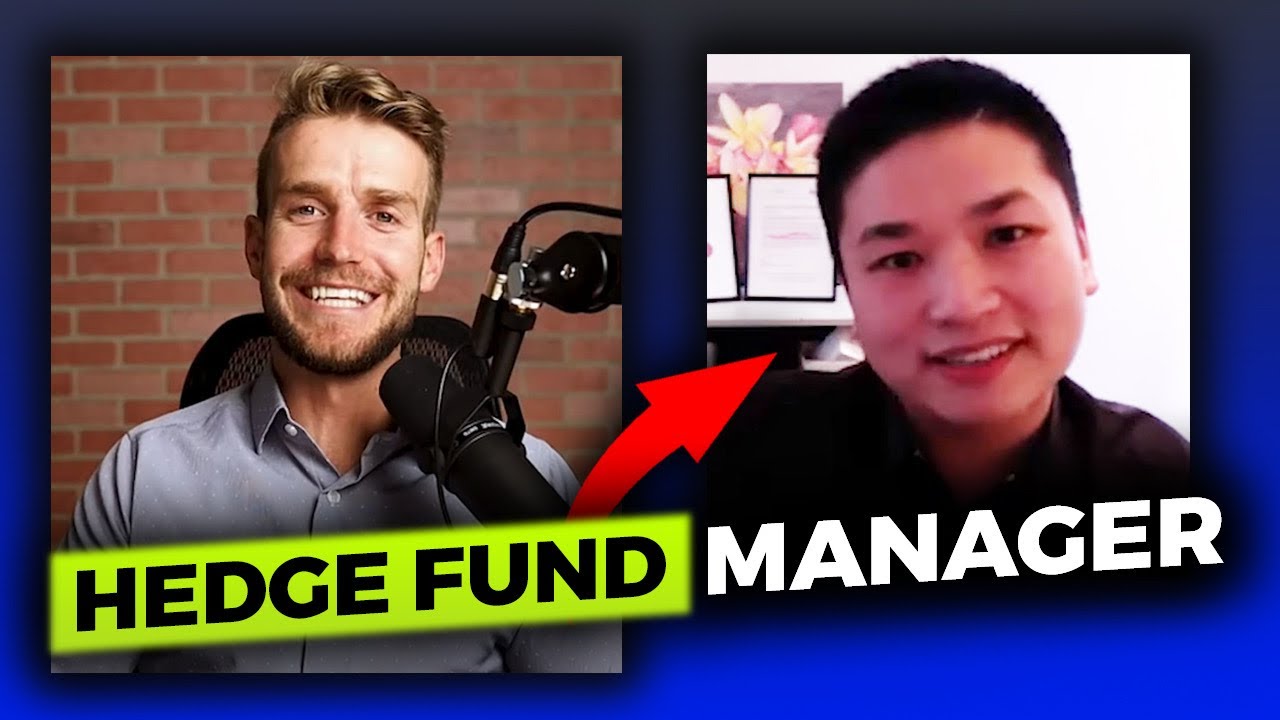
Laurence Yang built a $85 million hedge fund by age 26, starting from paper trading in high school to landing a $5 million account from a European billionaire family office at 22. His fund trades five asset classes using futures and CFDs, with strict rules: never risk more than 1% per trade and demand at least a 2:1 reward-to-risk ratio.
Chapters
All right. Welcome back to the show. Today we got with us Lawrence Yang. Lawrence, welcome to the show. How you doing today?
I'm good. Thank you for having me, Bridger.
This is gonna be a fun episode. So Lawrence is calling in from Australia. And actually, we first connected, you reached out and said, Bridger, your story sounds a lot like mine. You started your first fund, I believe, when you were 22 years old. Is that right?
That's correct.
22 years old, launched another fund, just launched a third fund, and you're 26 years old now. Currently has right here on his website $85 million U.S. under management as of June 14th, 2021, which is incredible. So I was like, we got to bring Lawrence on the show. He's a young guy running a hedge fund out of Australia. When with that resume, we got a 26-year-old kid, and I say kid, I'm the same age as you. I'm used to talking to guys that are 40, 50 years old on here managing €85 million. You're the Chief Investments Officer. You're the founder of this. I'm excited to hear your story. We're going to hear about how you've raised money, how you brought together your trading, all that kind of stuff on this episode. It's going to be really fun. What are you primarily investing in? What kind of categories do you go after? And what types of trades do you make?
So diversification is the key. That saying never goes old. So the flagship fund, you know, the one you're talking about, it's called a Premium Investment Fund, euro-denominated fund. We primarily invest in 5 different asset classes. So equity, that includes large-cap stocks on NYSE and NASDAQ. And we have— we're also investing in equity index, you know, indices futures, S&P 500, the Dow, and the DAX from Germany, Nikkei from Japan. So that's number one. And number two, we're investing in foreign exchange, forex. And number three, we're investing, um, more or less, um, crypto futures, like Bitcoin, you know, I think Bitcoin is the main one for crypto. Only recently, but to a much less degree, maybe we, you know, trade Bitcoin once, twice a year. The next one will be treasuries. So we trade ZN, you know, the 10-year note futures from the US and also ETFs.
Wow. And you mentioned futures. Are most of those asset classes futures or is it, do you buy regular equities or are you trading options on those? Doing all the above? What are you primarily doing?
We do derivatives. So let's say for commodities, we use commodities futures. And for single stocks, we use single stock CFDs. I know CFD is banned in the U.S., but in Europe and Australia, CFD is very, very popular.
Really cool. Take us back a little bit, Lawrence. How did you get into this? Tell us about your story of getting into trading. And then not just getting into it because a lot of people, test out trading. How did you actually get into it and then scale up, raise capital, and decide to go after the fund? Right.
Sure. So I founded Lawrence Holdings Group in 2017 at the age of 22. And 10 years before I founded my company, all the way back in 2007, when I was 12 years old, I witnessed my mother, who's a doctor and traded stocks only, you know, only as a side hobby. So it's not a full-time And she fivefolded her portfolio in just over a year. So '07, we had a major bull market before that. So that success story served as my early inspiration. So I started reading and educating myself on trading ever since. So '07, I was 12 years old. And, um, yeah, and then I have to admit my starting point as a trader was pretty bad. In 2012, I I started paper trading, you know, demo trading, basically trading with virtual fake money.
And you're in high school at this time, right?
Sorry?
You're in high school at this time, right?
How old are you? Um, 2012, I was 17. Yeah, high school, more or less. Yeah, I started paper trading. So I traded with, you know, I started with $100K virtual fake money and I was running the account with like 50 times leverage trading oil. And I tripled my account in just over 2 weeks, and I thought I was a master of the universe. And with that mindset, so I just borrowed $20K US, you know, from my mom, real money, to start trading. I said, Mom, I've got this amazing trading strategy. I'm the best trader in the world. I was born to be a trader. And what happened is I lost $15K out of the $20K, 75%, 3 quarters of that money. In, I believe, less than 4 days. And it was crazy because I was running real money with leverage. And then when we have a big floating loss, I started getting nervous. I closed the position way too early. So, um, you know, I realized when you start trading real money, the emotions kick in. It's a completely different story.
Like, why is that? You hear that? That's actually a common story you hear from people that trade is I was paper trading just fine. The moment it was real money, it was completely different. Why do you think that is?
Emotions. Like, you know, as amateurs, we start to visualize, okay, I could have done this. I could have bought a new car with this money. And you don't want to cut loss. Whereas, you know, with paper trading, you know, it's fake money, just a number. And that's exactly how you should approach your real account. Like, you know, just a number. It's not money. Don't visualize it.
Fast forward to when you were 22 years old. When you went out to raise your first fund, how much did you raise? And how, I mean, was it friends and family? Where'd you go to? Did you raise the money? Did you have somebody else help you raise the money? How did you go about raising that first? When I see the first audit of financials, it was about $15 million. Is that correct? Or how much was that first big raise?
So what happened is 2016 Christmas, I was in Germany for Christmas. You know, I went to the Christmas market. And then a friend of mine, his uncle works for the embassy. And then he said, Hey, Lawrence, I heard, uh, you know, my friend Justin, Justin said you are a very good trader. Hey, I'd like to introduce you to a friend of mine, and he is the manager of a multi-billion dollar family office here in Europe. Like, would you like to meet him? I said, hey, sounds good. And then I actually went and met him. And then after I met with the, you know, with the, the CIO of the family office, he said, hey, Lawrence, you should meet my boss. And then he introduced to his billionaire boss. And And we actually started with a managed account of this European billionaire, which for privacy reasons, I wouldn't mention too much about his details. But we started with $5 million USD, not euro. Like, you know, he said, hey, Lawrence, I've got this $5 million trading account, and I deposited money, and it's not doing so well. Would you like to take it over and just trade on my account? So I actually started— I didn't start a fund. I started as a managed account.
And like— So explain to us what a managed account is. You're logging in essentially as a user into his account and just making trades for him on his account. Is that correct?
That's correct. Exactly right. So ever since, like, you know, Bernie Madoff and, you know, his big scandal, the $65 billion Ponzi scheme collapsed, a lot of people, especially institutional investors, they demand separately managed account. They want, they want to have, you know, SMA, separately managed account. They want SMA to have direct ownership and transparency. So that's a very good way to get started. Even before you get, you know, you start a first commingled fund or incubator fund, I think a managed account is a very good way to get started.
And then from there, it was just— and you have obviously just gained more investors since then as an open-end fund model. Is that correct?
That's correct. So we actually signed up the 3rd investor in 2019, and that's about it. €45 million, 3 investors and myself.
Wow.
Yeah. So it's not about like, you know, how many investors you should have. Like, we only take, you know, not only qualified investors— I prefer the word— our primary market is institutions. So they are bigger than your individual investors, like, you know, who can only put $250K, but they are smaller than your institutional investors with a $250 million minimum asset allocation. They're not a good fit for us because of the, you know, the AUM we have right now. So that's why I see a lot of fund managers, you know, what I call the chasing the institutional unicorn investors. They're so obsessed. Okay, everyone wants to go to institutional investors, but if you read any reports from Priceline, every single year institutional investors, like, you know, asset allocators, they will have 500 requests from fund managers, and then they set up 10 meetings and 2 allocations. So it's fiercely competitive. So sometimes it's not a good, let's say, fit for emerging managers like us, whereas traditionally family offices has been the stronghold for you to scale your fund as an emerging fund manager.
There's a lot. There's, I think right now, 44 million new people have signed up for accounts in the United States, which is just crazy for trading accounts. That's many new investors have entered the markets. Thoughts for somebody just starting out? I know you had your teeth kicked in a couple of times when you were starting out. Any advice to them?
Know risk management. So, because that's another thing I have to say, when you raise capital, especially from qualified individuals, what I say, you know, quality professional investors, performance is not the most important thing, but risk-adjusted return is the most important thing. Let's say I can return 100% a year, an 80% drawdown, that's not very good, if you know what I mean. So you need to have— so no risk management, just, just let, let's say make sure the drawdowns are very low. And then remember, you are running a business. As intimidating as it sounds, some people are just born to be traders instead of running a, running a business, because a lot of fund managers fail because they don't realize they're actually running a business. So as intimidating as it sounds, some people should just go and trade, you know, friends and family's money because they are not good at running a business. You can be a great trader, but a very lousy marketer, and you're going to find a very, very difficult time scaling your fund.
What are a few things that, you know, you do to help mitigate the downside on your platform without giving away any, you know, trading secrets, stuff like that?
Of course.
Maybe some few things we can glean from you. How do you actually limit the downside?
The most basic one is stop loss. Use a stop loss. A lot of people, let's say, okay, I'm a 100-lot trader, I'm a 1-lot trader. That's just BS because you have to calculate your position size depending on your account. And then before you enter a trade, you have to know exactly where you're gonna get out. And then that stop loss, once it's hit, because nothing, absolutely nothing, nothing, zero, is 100% in the market. Nothing is 100%. The only thing that's 100% sure in the market is uncertainty. So, um, so before you enter a trade, you have to calculate your position size before, you know, you should know exactly where you're getting out and do not ever lose more than 2%. That's the conventional wisdom, like, you know, but personally I choose 0.5 to 1% because even 2% is too much. Think about it, €45 million, when you lose— when you— now it's €49 million. So if you lose 2%, that's almost €1 million. So I always joke with my friends, risk management is so important to us. If we lose 1%, we basically lost a Rolls-Royce.
Yeah.
But yeah, so number one, most straightforward is to calculate your position size and make sure the stop loss is hit, you don't lose more than 2%. My suggestion is 1%. A lot of gurus will tell you 2%. That's number one. And number two is, okay, let's put it this way, risk/reward. Reward ratio has to be greater than 1 to 2. So your reward, your take profit, has to be at least twice as big as your, as your, um, you know, um, risk. Let's say I want to buy Apple at $100 and your stop is $90. You're risking $10. You have to— your take profit should be at least $120.
Hmm.
Therefore, even if you only win 50% of the time, you still can make money. Because you know, I think winning ratio is overrated because you can win 90% of the time and the 10% of the time blow your account. Then balance say much. And I see a lot of signal providers online advertising. Okay, sign up for this 80%, 90%, um, you know accuracy like signal. That's just complete BS because don't fall into that trap because risk slash reward ratio. of 1 to 2 minimum is the holy grail to trading.
Okay. Wow. That's really cool. And if people want to learn more about you and your fund and what you guys do, where can they go to find more about you?
Um, the website, most straightforward one. Okay.
We'll link that below. And the website is lawrenceholdings.com. So lawrenceholdings.com. We'll link it below as well. You guys can check it out. You can go see the audited financials and what all the stuff they do. And I think there's an investor contact thing if you guys are interested in contacting Lawrence and learning more. So Lawrence, thank you so much for coming on. It's been a pleasure. Thank you. I know it's early morning there. It's kind of later in the night here, but it's been fun to have you on.
Thank you for having me.
Okay. Thank you guys. We'll see you in the next one. Bye.
More from Bridger

The AI stack is trying to consolidate to a winner take all, do you think it'll stay fractionalized


Before you launch a fund, triple check your fund attorney actually filed everything.








Different view on housing affordability and the fed raising rates not lowering rates