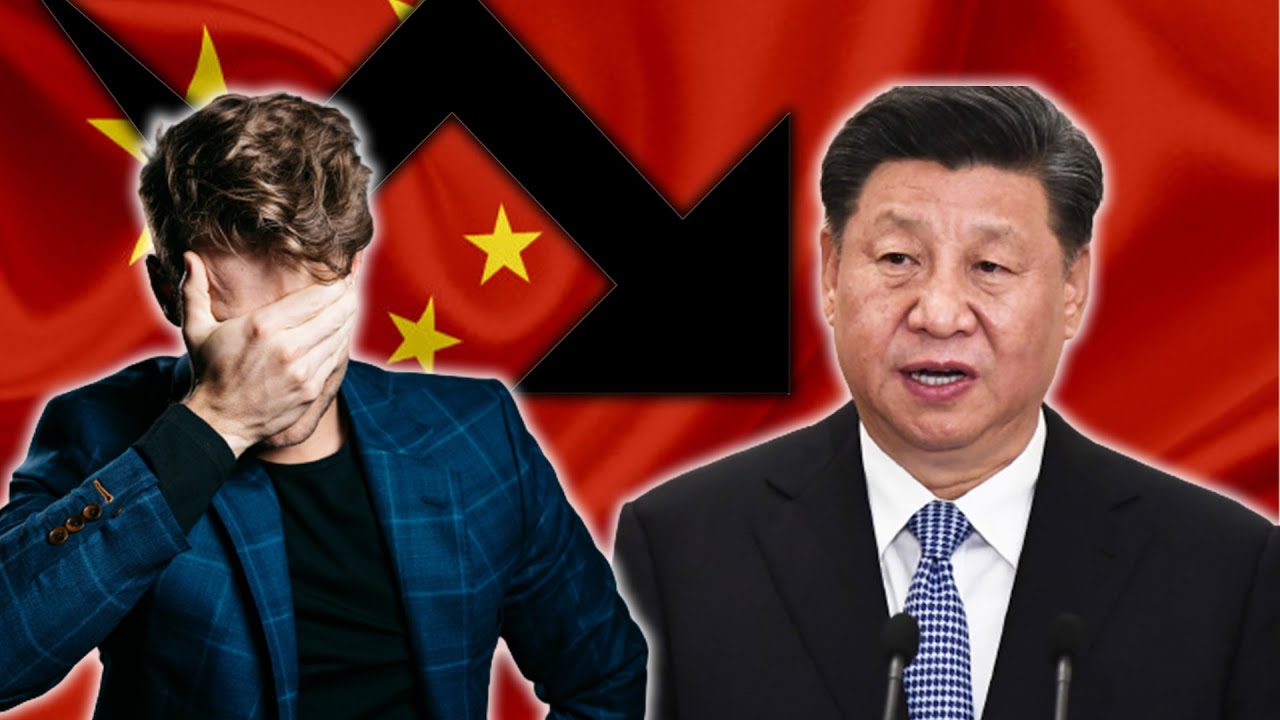
Bridger Pennington, founder of three investment funds, warns that China faces an imminent debt crisis driven by the Belt and Road Initiative's $932 billion in risky loans, Evergrande's $200 billion default, an aging population, and corporate debt used to service existing debt. He links the economic strain to military pressure on Taiwan and predicts a Lehman Brothers-style collapse in coming months.
Chapters
The China debt bubble. Yes, we were talking about one of the biggest black swan events that could occur in the next few months with a Chinese debt crisis. In the last few weeks, we've seen a run on the bank, them seizing bank accounts, China trying to invade Taiwan, and Evergrande defaulting on over $200 billion of corporate bonds. But I think these are symptoms of things that are happening way earlier in China's economy and could be bubbling over right now. Now, welcome back to the channel. My name is Bridger Pennington. I'm the founder of three different investment funds, and on this channel we talk all things funds, finance, and economics. So let's talk about the Chinese debt bubble. Let me take you back to 2013 when China put in the Belt and Road Initiative. This initiative was for China to lend money to developing countries for infrastructure and business development. Now since 2013, they've engaged over $561 billion in construction projects, $371 billion in investments, totaling. $932 billion. This affects 65% of the globe's population and one-third of the globe's GDP. Many of these countries in the Middle East and in Africa— countries like Russia, Indonesia, Pakistan, Iran, Nigeria, Venezuela, Ecuador, South Africa, Egypt, Kazakhstan, Bangladesh, Malaysia, and on and on— and many of these countries not being very creditworthy to pay back those loans. Now, some people have called this an imperial lending type of program where China is Lending money, hopefully putting these countries in debt so that they can eventually seize their assets or country and take control of certain things. This actually happened in Sri Lanka. So Sri Lanka's main port, for all intents and purposes, now is controlled by China. Now this is an interesting plan until these countries stop paying back. Since 2013, on average, they have restructured about $16 billion of almost that trillion-dollar debt per year. However, in 2020 and 2021, that number jumped for each year to $56 billion and has now increased even more into 2022. With rising interest rates around the world and a global recession starting to occur, these countries are not paying back China. Now, couple that with what happened last year with the Evergrande situation. Evergrande is one of the largest property developers in China, and they defaulted on over $200 billion of corporate bonds. Additionally, they were building over 2 million homes in China. People that had deposits had already paid for their home. They said, tough, sorry, we're not building a home and we're not gonna pay you back your deposit. Many are calling this a train wreck in slow motion and could be a Lehman Brothers type of event that's going on. Now couple those last 2 data points with China's increasingly aged population. Peter Zeihan, one of my favorite economists, has talked about this in depth. Many economists agree at best estimates, China's population by 2100 will be half of what it is today. You see, since the baby boom era, which happened to most countries around the world after World War II. We had a huge influx of people, but then China put in the one-child policy, dropping their birth rates down to below one child per woman. The last few years, China's tried to reverse this policy and try to add lots of kids, but many people now live in cities and other places and are having less kids overall. What this leaves us with is a massive population of baby boomers that are now hitting retirement or not working anymore, with a smaller age group that is in the working class that is now trying to support their parents and grandparents that are old and new Additionally, Chinese corporations are some of the most indebted corporations on planet Earth, and each year continue to borrow from the CCP to keep their operations open. Two years ago, it was reported that 65% of the debt borrowed was used to repay back interest on old loans. So you group these data points together: you have lots of money out from other countries not paying you back; you have the Evergrande situation of major defaults; you have a drastically aging population; and you have COVID that China locked themselves. down. Some of their major ports in Shanghai didn't open up until the last few months. They were in 100% total lockdown. This all boils up to the most recent news coming out of China. Just a few weeks ago, a Chinese bank notified all of their deposit holders that, hey, your deposits at our bank, your bank account actually isn't a bank account. It's an investment account. And because it's an investment account, you actually don't have access to any of that money. And that money can go to zero and tough. They had major protests in China. China had to put tanks out front of the banks to protect from these protests. And this all boils up to now recently with Taiwan. Major economists, even in Ray Dalio's book, he talks about this. Countries will first go to economic wars long before there's ever missiles or gunfire. The last few years, we've seen a trade war in the Trump era with China. We've then seen COVID lockdowns, no debt repayments, and an Evergrande default situation. If the Chinese economy was very strained, Naturally, what they would want to do is reach out to their little brother Taiwan, who has a flourishing economy, manufactures over 90% of the chips in the world. You would really want to grab that asset. And by the way, I actually lived in Taiwan for 2 years as a church missionary, and I loved it. It was an incredible experience, and we talked about this all the time. And by the way, this is not the first conflict we've had in Taiwan. Now, the US has said we will defend Taiwan. We currently have 3 aircraft carrier strike groups positioned around Taiwan. And just a few days ago, China was flying missiles missiles over Taiwan as an unauthorized air, and they're trying to surround Taiwan and even done this in Japan as well. Now, in my opinion, you would not be doing this right now if your economy was not feeling the strains that it has felt. One Wall Street Journal journalist wrote this a few days ago about China. They said oftentimes a giant that's being pulled out of the spotlight will sometimes lunge for glory to try to save and preserve its spot in the world economic game. That could be what we're seeing right now with the Taiwan situation. And this could be a signal that we are months or even weeks away from a Chinese bubble popping where the debt cycle hits. These debts are not repaid and we have a Lehman Brothers type of event in China. Now, if that happened, personally, I believe the US would be relatively insulated. Yes, we'd see major drops and huge economic strains, but it wouldn't be as bad as other places around the globe. In my opinion, the data stacks up that this China bubble will pop soon. But I would love to hear what you guys think in the comments below of what's going to happen. If you like this video, Check out the other videos on our channel, and we'll keep you up to date on the China bubble pop and the crisis going on right now. Thank you all so much, and I'll see you in the next video. Bye.