TOP MONEY MYTHS YOU NEED TO KNOW
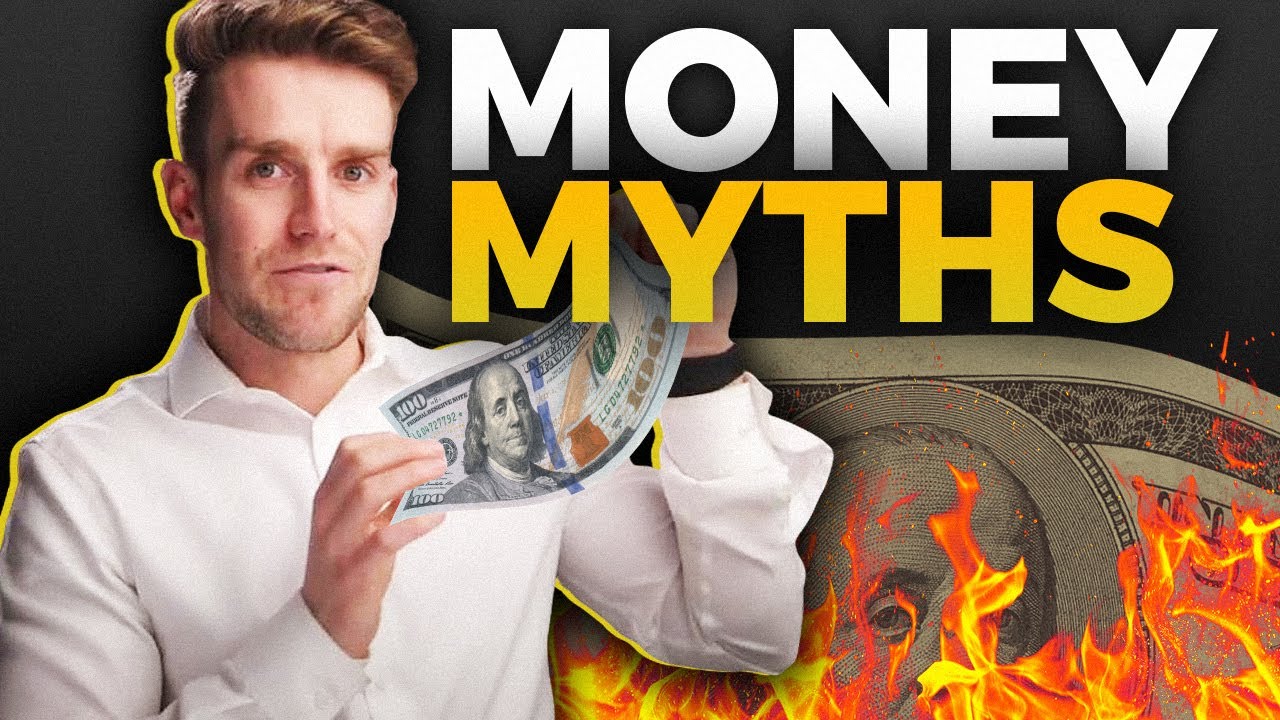
In this episode of Investment Fund Secrets, Bridger Pennington tackles two pervasive myths about money. First, he argues that the popular advice to "follow your passion" is misleading; instead, true passion often emerges from building efficient systems that generate wealth, and the real goal should be to discover a high‑return vehicle that funds the lifestyle you want. He illustrates this with personal stories—from early college dating conversations about passion, to discovering a love for coding and system building, to real‑estate wholesaling and eventually launching a fund. Pennington explains how a fund can scale wealth far beyond traditional jobs, emphasizing the importance of upfront effort for long‑term passive income. Second, he debunks the zero‑sum view that making money steals from others. He outlines how modern money is created: the Federal Reserve, a private‑sector‑run entity, sets monetary policy; banks operate on fractional reserves, allowing them to create up to 16 times the deposits they hold, expanding the money supply digitally. This mechanism means individual earnings are a slice of a growing economic pie, not a theft from someone else. He references historical banking developments (Rothschilds), modern private‑equity giants (Blackstone, Stephen Schwarzman), and the ethos of scaling up—building large‑scale ventures rather than small ones. Pennington also touches on the social responsibility of wealth, noting that many affluent individuals feel a duty to give back. Throughout, his tone is conversational, anecdotal, and motivational, urging listeners to think bigger, adopt the fund model, and reject limiting beliefs about money.
Chapters
Hey guys, welcome back to Investment Fund Secrets. So today we're gonna talk about false beliefs around money, that people think a lot of different things about finding your passion project needs to be your work and source of income, and also money, that there's a limited supply. Whenever you make money, you're taking it away from other people. And I've had a few people bring this up in our webinars and our online stuff, and I wanted to address, and I think this is something that my dad, who's, as you guys know, my greatest mentor ever, co-founder of a $20 billion family of funds, broke down throughout my entire life of these false beliefs around money. So the first one I wanna talk about, so I was early in college, I was dating this girl, and we were going out and we were talking about future plans and what she wanted to do with her career and what I was gonna do, and she kept saying, Bridger, well, you gotta find something that you're very passionate about that you just love, you could wake up every day and do, and then somehow, as long as you're passionate about it, You'll figure out a way to make money. And we talked about this a couple times, and I kept thinking about it, and we were dating, and we were like early, this was like first couple dates, so I didn't wanna like have this really strong opinion and like offend her and she leaves. I always kinda kept thinking about maybe she's right. I always wanna put people in the best case scenario, and I said, well, maybe she's right, right? Maybe that's something that I should do is go after my passion. So I thought, what am I passionate about? I said, I love skiing, that's one of my, I like, seriously, I love skiing. I'll like skip school or anything any day to go shred some powder. I was like, I love skiing, but I'm a pretty bad, like, I'm nowhere near to go pro, or I mean, I was like, I think I can make videos about skiing, or like online, or I could do marketing for skiing. I kept thinking about skiing, I was like, huh, that's interesting. Another thing I really liked was, I love playing basketball, I love playing sports, I love being outside. I was like, wonder if I was like, there's some people out there that like make money, and I, anyways, I did this whole, you guys have probably done this before too, you do this roundabout thought and you're like, Honestly, there's no plausible way for me to make money on my passion, and so the alternative then is, in her mind, was, well, you're just gonna go get a normal job doing something you hate, but at least it makes you a little bit of money and you'll be poor because you're not passionate about it. And I was like, I don't know if I completely agree with that. Anyways, I went through and I started taking some actually coding classes in college, and I actually really loved coding. It was information systems, and I loved it, Not because I love to like sit behind a screen, like put the headphones on and code. It was because I loved the idea of, I don't know if you guys ever coded before and made any type of computer program, when you hit, like you have, and it's not like when you're in the process, it's kinda hard, but once it's built and it perfectly runs, you can just hit enter and your entire code runs and whatever you've trained it to do, it goes and like, it grabs this, scrapes this website, grabs this email, sends them an email, blah, blah, blah, like all this stuff that it can do. With one click of a button. Like for me, it would build this entire spreadsheet, it would grab all this data, aggregate just big data that was nasty, it was 100,000 entries, it would grab it, format it, build a beautiful presentation with all these like pie charts and it was awesome. I was like, holy crap, that's amazing. And I was like, wow, he must be passionate about coding, about information, 'cause this is so great. And I realized something right there. was I wasn't passionate about coding per se, I was passionate about building something that did work for me. I'm inherently very lazy. I think a lot of— there's a quote by Bill Gates, he says, if you have a problem, put the laziest person on it because they will figure out the easiest way to solve the problem. And I think inherently I'm kind of that way too. It's like, if I don't have to do the grind, I don't want to do the grind. You guys know my story, right? The grind of doing 10 years on Wall Street of doing the MBA and the 2-year analyst thing and the whole write your ticket path, right? I've talked to you guys about it before. You guys know this consulting investment banking path on Wall Street? And I was like, man, that seems really hard. I wonder if there's an easier way to get to the same destination. If I could go 2 different routes and get to the same destination, let's see if there's another way. And there was another way of me launching my own fund. And I right now applying, if I wanna go apply for it, I match up pretty well with guys that went through investment banking and consulting because of how much experience the fund— actually our second fund, our third fund we're launching right now, it's pretty exciting. I can't tell you the details of it but it's pretty fun and that has given me way more valuable information to my life and so anyways, back to the story. I was coding and I realized like I love building systems, things that make my life easier and it inherently just makes everything easier. And so I knew I loved building systems. I'd started a couple businesses. You guys know my story as well. I've started like 7 businesses. In college, I started a couple businesses. And it was interesting. If you guys have ever started a business, I'm sure a lot of you listening to this have, it doesn't matter if it's a fund or not, any type of business, or even like a sales program, when you make that first sale or make that first taste of money, and you're like, holy crap, that was awesome. And you wake up in the morning, like we did an online marketing business early on, and you would fall asleep and you run some ads in the morning, you wake up and you made like $200. And I was like, holy crap, like I just made money while I was sleeping. Like that is cool. Or a sales, like on sales, if you make a certain number of calls every day, it's not like an hourly wage, it's like how much you perform, how much value you add is how much money you get back. And I was like, I started to feel this passion inside of me. It wasn't like a passion like I love to ski, That's like a hobby that I like to do. It was a passion of like, this is, I like this because it makes me lots of money. And I think any business owner, if you guys have ever, you know, the entrepreneur bug they call it, the moment like someone makes whatever X number it is, it could be $1,000, could be $10,000, could be $100,000, the moment, I call them wantrepreneurs, people that wanna be an entrepreneur, a wantrepreneur makes that X number, whatever that is in their head, Let's call it, and for me it was $10,000. That was my number. I really wanted to make like 10 grand on my own business. And I had done a— and I'll tell you another story, I guess. And I've done a lot of business tries, right? Before I did my fund, I had tried and failed and tried and failed. And I did this one business and we were connecting real estate, people that wanted to sell their real estate properties to potential buyers. And I would connect the two and I would make 5 to 10 grand if it happened. That was the model. And I was like, okay, and I had a few guys teaching me and I went through this model of, okay, I'm gonna find people that, I'd go call them up, hey, what's your dream house, right? What is your exact dream property or investment property that you want? Okay, and I'd go find those people and then I'd find cash buyers and I'd link the two together. And I remember my first deal, I found a cash buyer, I found someone selling a house and I put them together and I made $5,000. And I was like, what? I was like, I kind of, I remember looking at the check like, and I took it to the bank, I remember walking into Wells Fargo like, how did I just make $5,000? Like I have friends that work 40 hours a week, 5 days, 5 to 6 days a week for a month to make $5,000 that month. That's a $60,000 a year salary, right? Average starting salary out of college and I was like, I just made that and it didn't seem like it was that much work and I built this little system and about 3 weeks later, I had another one and I made another $5,000. I made $10,000 in the matter of 3 weeks and it wasn't that much work, right? And I was like, and you guys know this process called wholesaling, real estate wholesaling is what it's called. And I was like, holy crap. And then I was like, okay, I'm passionate about this. Like, I definitely have a passion for doing this because it's so rewarding to, you can make a lot of money with the same amount of work. And so back to that early conversation I had with one of that girl I was dating in college, and she was saying you have to start with your passion of what you like right now. I disagree. I think there are lots of passions that you haven't discovered yet, and it takes a little bit of work to discover the passion. The first time I went skiing, I didn't like skiing. I hated it, right? It was cold and it was snowy, and I kept falling. My skis kept breaking off, right? But I win enough times, I was like, oh, I'm kind of passionate about this. I think it's the same thing with businesses and with starting a fund, right? You get in and for me, I had shopped around all these different vehicles so I said I know I like— it doesn't matter what it is, whenever I make money and I feel like I didn't work that hard for it, I didn't work like, you know, 400 hours in one week to make that money, it felt relatively not easy but it was efficient way to make money, I was like wow, I like that. I like that feeling. And so I tried 5 or 6 different businesses and finally I stumbled upon a fund. And you guys know my story, my dad taught me what a fund was and I had this idea and we started our fund and it was like, holy crap. Like I can make, I'm making money when I sleep, on Sunday morning, on Monday night when I'm watching Netflix, like I'm still making money 'cause I've deployed capital into these investments and they're just turning and they're making me money. And yes, there's stress that goes along with it, yes, there's other things, but I was like, I was just hooked on this. Bug of like, holy crap, I can work this many hours up front and on the back end make a lot of money like my dad did. He worked really hard up front for 4 or 5 years, like crazy. And the quote you guys know, work like nobody else will so you can live like no one else can, right? And my dad did that. He worked like no one else was willing to work up front, and now people ask him, oh, John, you're so, you can do whatever. You guys don't see what happened the last decade of my life of I couldn't go coach my son's football team or I couldn't go on a trip to Hawaii, I was working. And now we go to Hawaii all the time or we go to do whatever all the time, right? And that's his lifestyle. And for me, I thought, I gotta pick a vehicle that can make me the most money possible and that's where I picked the fund, right? The fund model, I said this model is so lucrative. Real estate wholesaling, right? There's a cap, right? There's only so many deals you can do in a month, right? It was a cap, I don't know, maybe, I don't know what the cap would be, but let's call it $50 grand or $100 grand a month, which is still really good. If you did that every single month, that'd be awesome, but it's up and down, there's tons of competitors. I was like, hmm, that's interesting. I found out a fund, there weren't a lot of competitors, you get crazy tax incentives, and it's a lucrative model that you can scale all the way to the moon. And I was like, holy crap, if I can just build this system, this model, just like coding, like the programming, I can just hit enter and it just churns out money. I can build a money-making machine so that I can go skiing on the weekends, so that I can fly with my wife to California, we can play on the beach, right? Or so that I can have time with my future kids and I can go to their soccer games, right? If I can build a system now, it'll free up my life forever. And that is what I became passionate about. I didn't know that originally. I became passionate about, I want to have an incredible life, and really the only vehicle to get there is making a lot of money with the least amount of time. So I said, okay, I think a fund is one of the best vehicles on the planet to make a lot of money with, yes, time up front, but time down the future that it can save me in the future so that I can travel to Italy and go to the Great Wall of China and have all these great dreams of mine and have time with my kids and family and be that person. Okay, and that's what I became passionate about. I said, how can I make money the best? And it's funny, my wife, now different girl, I didn't end up marrying that girl. We broke up because we didn't have the same alignment. But I met my wife and we started talking about this and she totally agreed. And she was actually talking to a friend a little bit ago, same conversation. Her friend was like, I don't know what to do with my life, I don't know what's going on. And she just said, well, stop worrying about passion. Learn about a way that you can make the most money as fast as possible. She was like, what, what are you talking about? I said, yeah, if you make the most money as fast as possible right now, it gives you the freedom in the future and the ability to just do your passions. Not try to make your passion and business the same thing, just do your passions, just have fun, go skiing, go surfing, go hang out with your kids, whatever you wanna do. You can go watch Netflix for 2 days straight if that's your passion, right? If you have a lot of money, 'cause money gives you time. So that was my first thing I think a lot of people have misconceptions about. And I believe, you know, shop your vehicle, whatever vehicle you think is a really good way to make money. I believe funds, launching a fund in any way, shape, or form, venture capital, private equity, debt funds, I mean even starting a fund to raise money for a hot dog, you have one hot dog stand or you have a friend who has a hot dog stand, let's blow that up into 1,000 hot dog stands, right? That's still this fund model. You have a friend that runs a landscaping business, why are you doing it so small? Let's go across the country, let's expand, let's go big. That's what we do inside of a fund. Secondly, false belief I get from, this is a lot of, I mean, it's hard to say, don't be offended by me saying this, please, promise do not be offended, but it's a lot of poor people believe this. A lot of poor people believe this, is that when they make money, they are taking money from somebody else. And it makes sense, right? You think about, okay, there's only so many dollars in the world, every time I make dollars, It must be that there's poor people, there's people in poverty that don't have the dollars, and oh, there's people like Jeff Bezos and Bill Gates, they have all this money and they are the 1% and they are the reason that we all live crappy. And I would, I completely disagree with that argument till the day I die, at least with our current monetary system. That is not true in the least bit. You go, Bridger, how's that not true, right? I make money, what do you mean? Let me just tell you a few things that happen with money and how money is, I guess you could say, printed or deployed or leveraged, okay? How money is created. First off, the Federal Reserve, right? We all talk about the Fed. The Fed right now is lowering interest rates, raising interest rates. The Federal Reserve is not a government entity. Wait, hold on, Bridger. Yeah, the Fed is not a government-owned, it's not a government-owned entity. It's a private business, it's a private entity run by 12 different people that sit on the board, and usually most of them are from banks. The president of a bank will sit on the board. It's run by the banks. The banks run the Fed who prints the money that they use. I mean, it's the best business model in the world. If you can figure out anything in life, if you can be the guy who prints the money, you're in a good spot. And that's where, if you guys have heard of the Rothschild family, kind of a lot of, conspiracies around their family, but they invented modern banking as we know. Back in Germany, they launched the first central bank, and they said, hey, in Germany, they did this to Germany, they did it to England, they started doing it all throughout Europe, and they would go to these countries and say, hey, it's not a good idea for the government to print its own money, 'cause it can get out of control, people can manipulate it, it's just not a good thing. We need a private institution to do it. And they said, well, who can do it? And he said, we can do it. And they would step in, Their business model was printing the money for, that's the best business model ever, right? So they come in, they start printing money for, not printing money, but creating currencies essentially, and managing those currencies for different countries. Now the Rothschild family is, a conspiracy estimated today that they own about a third of all the wealth on the planet is in the Rothschild family. That's like, I think they estimate about $8 trillion this one family owns. controls and owns. And they only let their kids intermarry within themselves because they want to keep the money in the family. So the kids and cousins or whatever, they often marry each other to keep the money and bloodline all together and small. They don't want people just marrying whoever. That's how— like, this family is nuts. Anyways, besides the point, they launched modern banking. And the Fed kind of copied a similar thing. The Fed is an external entity from the government that's not elected. You can't elect somebody to be on the— a chairman of the Fed. They get appointed and they monitor monetary policy. Now one of the things that they get to monitor is, it's called the reserve, bank reserve rate. So this is why I don't believe, it's not a zero-sum game with if every time you make money, you're stealing money from somebody else. When you take a dollar and put it into your bank account, you go to Wells Fargo, you deposit it, you put $1 in, the Fed says, $1. Wells Fargo can create new money 16 times what they have in deposits. Let me say that again. So if you put a dollar into Wells Fargo, Wells Fargo itself can create, is allowed to create 16 times the dollar. So 16 more dollars. So if you put $1 million into the bank account, Wells Fargo can go make $16 million of loans and create that money out of thin air. They don't have to go print it. It comes off the line. It's just digital. It's all digital currency. We are not backed by a gold standard right now. It is digital currency. They just create. They can create $16 million. Okay? If that first off, when I first heard that, it kind of blew my mind. I was like, wait, what? Bank. This is how banks run. It's the best. I wanna launch a bank one day and just, anyways, these guys coupled with a fund is like the best model I think you can be in. These guys run the world, right? They run all money and they get to make the rules of the Fed so they can change that reserve rate and I believe they just changed it with the coronavirus. They can print almost unlimited amount of money, banks can't. The Fed put rates almost at zero. I mean, there's just an, it seems like an unlimited supply of money Being created. So when you're at your 9-to-5 job and you make money, you're not taking money from anything. You are slivering. There's a whole stream of money in the economy and it's getting bigger and bigger and you are just carving out a little sliver, $100,000 a year, or even a little teeny sliver, $100,000, let's call it $10 million a year. You could slice out $500 million a year, $500 million, and no one even know. I'm not even kidding. Nobody would even blink an eye. That's how much money is out there and how people like me and you need to think bigger. And that's what we're trying to do on this show and podcast and all the things is think bigger. Stop playing small. I love Stephen Schwarzman. He's one of the co-founders of Blackstone, largest private equity fund in the world. They control pretty much everything. Most major businesses and companies that you see today that you think are just normal companies, they're actually controlled behind the scenes by private equity companies, huge ones. Blackstone's one of the biggest. They own MGM Grand. I mean, they own just these Vail ski resorts. I mean, they just own a lot of different businesses and Blackstone, Stephen Schwarzman, he's quoted all the time. His favorite quote is, if you're going to do something well, you might as well do it big. If you're going to make one hot dog stand, you might as well make 1,000 because it's going to take about the same time and energy to make one where work as it will to make $1,000. Why not make $1,000 and reap the benefits of 1,000 hot dog stands versus just one? And his whole mantra is just play big. There's no reason in playing small, and you guys know that. If you're in real estate, you know it takes pretty much the same amount of work to do a $50,000 deal as it does to do a $2 million deal or a $5 million deal. Same amount of underwriting, due diligence, title work. Legal work, it's pretty much the same. Why not do the $2 million or the $5 million or the $50 million real estate project when it's a— and maybe it's incrementally a little bit more work, why not play big? And with your money and with what you're thinking, stop blaming billionaires, stop blaming the wealthy of the planet. They have figured out how to build systems. And maybe you don't like it, maybe you say, you know what, Jeff Bezos and Bill Gates, those guys, screw those guys, they're the worst, they take all of our money. And that's fine. You can think that. That's not going to change your bank account though. You playing small isn't going to change anybody else's. You might as well. That's the system that's currently in place. Now, if you want to vote for different candidates and change the system, that's totally up to you. That's fine. That's your opinion. But the current economic system incentivizes people to take risks, to build big, and to provide value to the world. Guys like Bill Gates and Jeff Bezos, have provided more value to the world than anybody else, and that's why they have so much money in their pockets. And you may disagree about that, but because they've added so much value to the marketplace, we keep paying them, and we keep saying yes, we keep validating yes, this is valuable to me. I will trade money in for a 2-day shipping of my phone case, right? Or I'll trade money in for a computer software. All right, same thing with Apple, right? And you trade your money for these products because they're good products. If they weren't good products and they didn't provide value, you wouldn't exchange your money for it. That's the definition of like economics, right? So stop blaming rich people. You can either criticize the wealthy or you can just become wealthy. And then it's funny, and I've actually, because of my dad, and you guys know I've told you his story, because of him, I've been able to hang out with wealthier groups and circles. And it's really funny. Before, I kind of thought wealthy people were evil and bad and out to kill everybody because it's always the rich person in the movie that's like the worst. It's actually some— there's most wealthy people, in my opinion, are very, very amazing people. They help the poor, they donate money, they have a full-time— they feel a responsibility and a weight on them to give back, to serve. And they, a lot of them, like, don't drive Lamborghinis, they don't drive nice cars, they live in a I mean, a nice house, but they drive a decent Mercedes. It's not the highest Mercedes, it's like a middle-class Mercedes, and they do well for themselves, but they try to give and serve and bless as much as possible, 'cause they feel this weight on them. And when you become wealthier and you start making money, you're gonna feel that same weight, and this weight to give back, to contribute, that you've been blessed. And I'd rather be on that side of the table than the side of the table that's begging and asking and saying, hey, I went after my passion of skiing, and I'm broke. I'm broke, I actually have no money and I'm 40 years old. Can I please get a handout from the government? Or can I please get a handout from one of these rich people? I'd rather be on the other side of the table saying, I have the money, I'd love to help you guys out and I'm gonna go skiing on the weekend. Anyways, longer episode, little bit of a rant in there. Hope you guys enjoyed and hit me up on Instagram if you guys have any questions, anything else you wanna talk about. Thanks, man.
More from Bridger



The AI stack is trying to consolidate to a winner take all, do you think it'll stay fractionalized


Before you launch a fund, triple check your fund attorney actually filed everything.





