Trump, Tarrifs, and DOGE April 2nd What To Expect
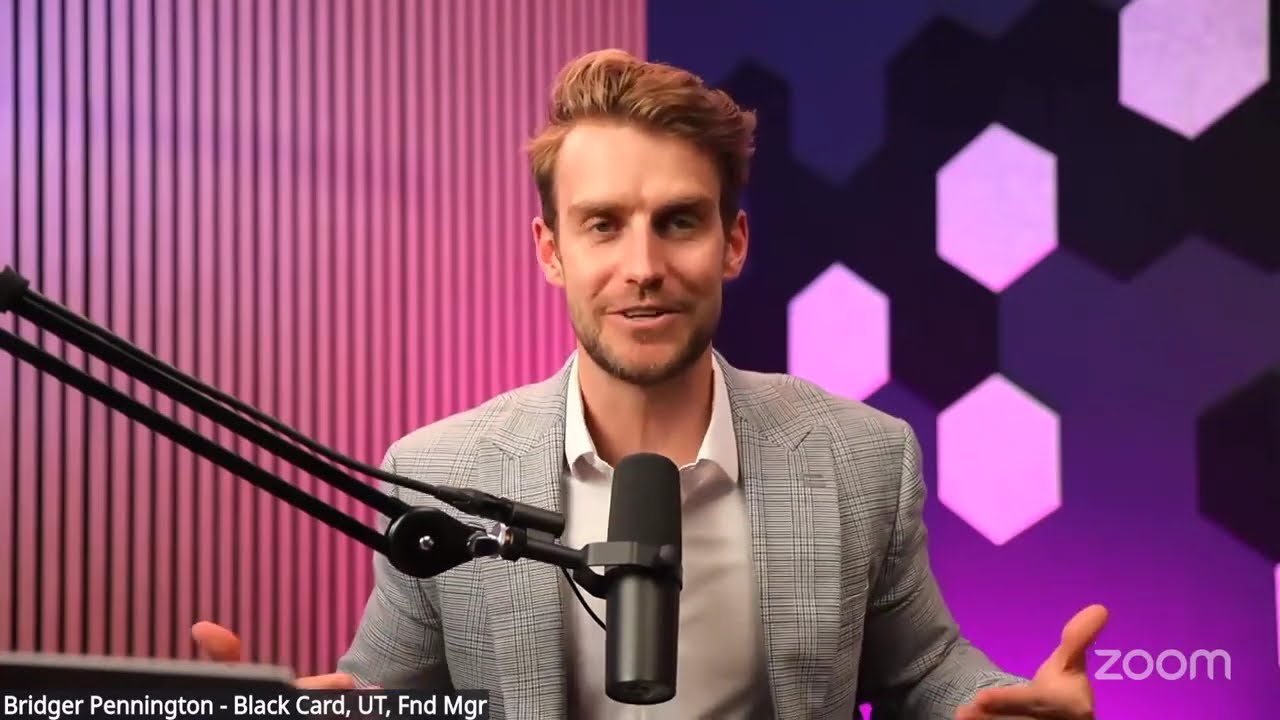
Bridger Pennington, founder of Fund Launch, breaks down how $3.7 trillion in private-equity dry powder and Trump-era tariffs are reshaping capital allocation. He's launched 300+ funds managing $4.8 billion in client assets and explains concrete opportunities in real-estate distress and debt restructuring, plus the mechanics of starting your own fund.
Chapters
What is going on, y'all? Welcome on today's call. We're doing a night webinar here. We're talking Trump, tariffs, Doge, April 2nd. This is an encore webinar. We did a call yesterday. A lot of people couldn't make it. They said, hey, can you go live again? And we said, let's give it a shot. So here we are. We're going live. Welcome on, people. As we're speaking, actually, if you can share my screen real quick. We— Trump just announced just a few minutes ago. We'll see if this works. Give us a second here. 25% tariff on imported vehicles. We'll see if this loads. Give a sec here. That's going to go in effect on April 2nd. So if you guys don't know what's going on April 2nd, we got a lot going on. It's a week from today. Ton of crap going on. I guess we're going to try our computer here one more time and we'll get going. Welcome in, all. Welcome in. Type in the chat where you're calling in from. This is a livestream. It's, you know, I'll say the date, March 26th, 2025. I'm here. Type in the chat where you're calling in from. People on Zoom or on YouTube, wherever you're at. Type in where you're calling in from. I'm calling from Salt Lake City, Utah. We got Matthew from Idaho. Hello, hello. You guys there? Ah, there they come. Houston, Bozeman, Dallas, New York City. I'm like, where are people at? I need a little engagement, you know. We need a little bit, a little bit of love. I want to make this engaging. We're going to take questions. We're going to do this live stream today. I want to answer your questions on funds. What's going on in the world right now? Give you guys a sense. We got Alexandra from Miami, Patrick from Fort Worth, Alicia from Arizona, Orlando, Manila. Columbus, Georgia, Mississippi. Welcome in, welcome in. Good to see y'all. Any luck there? We'll try it again here. I'm going to try our little cord. If not, we'll try a backup. Welcome in, y'all. Good to see you guys. So we're going to get the screen share going here in 20 seconds or less. I'll just share my screen like this. Can you guys see that? Boom, there it goes. Okay, so Trump announced 25% tariffs on imported vehicles. There it is. This is Wall Street Journal. By the way, I pay for the Wall Street Journal and I still get these huge ads. Like, come on, Wall Street Journal. Like, why am I seeing half of my page is an ad? I pay for the Wall Street Journal. But anyways, I guess I'm getting ads. So here we go. Christian, welcome on from Salt Lake City. What's up? What's up? Good to see y'all. Type in the chat, by the way, what kind of business you're in, what kind of industry. If you're in, if you're in real estate or you're private equity or you're buying businesses or maybe you're just brand new, give us a sense of what you're doing. But we're going to be talking a lot about the tariffs and stuff that's going on today. So let me share a different screen here. We're going to dive in. Let's see. Can you guys see that all right? Boom. Commercial real estate, business acquisitions. Cool.
Okay.
So the plan for today, we're going to talk about 3— yesterday we had 3 fund managers live. We did an outlook on 2015. I'm going to share some of the stuff my dad, John Pennington, came on. We had Jacques Bazinet and we had Tom Wilkinson come on and talk through what they're doing. We're going to share some clips from yesterday. But furthermore, I want to talk about By the end, I want you to have a sense of, a better sense of where the world is moving. There are tectonic plates shifting right now in the world. And I want to give you a better sense of what is going on in the world and how you could potentially capitalize on it. So briefly, if you don't know who I am, if you're on for the first time, actually, here's a quick question. How many people, if this is your first time ever being on a live call with me? Type a 1 in the chat if this is the first time you've ever been on a live call. I'm curious. Type a 1. If you've been on with me twice, type a 2. If you've been on with me 5 times, type a 5. If you've been on with me since birth, just type in since birth. Some people are on like, we do a lot of lives and people are on every single time, which is awesome. Type a 1 in the chat. Okay, a lot of 1s. I love it. This is a new time for— we have really never done a night webinar. Typically, we— somebody put in toddler. Since I was a toddler. So, You know, we do a lot of these. We have really not done one at night. This is a different audience, different time of day, different time zone. So, this is 8 PM Eastern. We're going live here. We're going to try it out. So, briefly, if you're brand new to this, I'll share briefly about me. I ran Blackbridge Holdings out of college. We did extremely well with this fund. I also, I currently run, so I ran 2 funds out of Blackbridge Holdings. We had an incredible track record. We actually had a competitor come and buy us out. We sold that fund. I currently run Ugly Unicorn, roughly a $25 million hedge fund in the crypto and blockchain market. Me and Dan Young, my partner, run this. It's been a phenomenal fund. Crypto is in a great spot. We can talk more about crypto today. And then we run Fund Launch Partners. We're looking to close on our $30 million fund this week. We have just— and we're looking to be oversubscribing this fund, which is pretty cool. This is a fund that's investing into our BlackCrew members' funds. And then I currently run Fund Launch. This is me and Mason, my co-founder. We, you know, a lot of you guys follow us on social media. We have lists of emails, all that kind of stuff. Here we are. And this is my beautiful family. So this is my greatest asset I ever have. This is my beautiful wife, Lauren. This is Paris. We had a baby just 6 weeks ago. And this is my son, Jonah. I'll share a little bit more about my family and backstory in a minute because I think it might be relevant for people here. I started my first fund when I was 22 years old. I am in Utah, for crying out loud. I never worked on Wall Street. I didn't go to an Ivy League school. I didn't do any of that. Same with my dad, co-founded a deca-billion-dollar family of funds. My brother's an investment funds attorney. My dad grew up in North Las Vegas. We really didn't come from this whatever traditional background. And now we're helping people in the untraditional space, people that are untraditional, go out and launch investment funds. So that's what we're on today. We're going to talk about all this with you all today. So let me share my screen again. Now, the crucial stuff, though, I want to talk about the here and now. I want to talk about what's going on with Trump, tariffs, Doge, and Fed rates all right now. This is real-world stuff that is happening literally this week, today. And there's a big cliff coming on April 2nd right now for the world. Would that be worth talking about? And then I can pull up my iPad. We can talk about funds. We can talk about other stuff. Would this be a worthwhile pursuit for y'all's time tonight?
Yeah.
Give me a yes in the chat, maybe, if that would be useful. By the way, I'll say this again. I, I ask— I'll ask you for participation. Psychologists tell us if you come on a webinar like this and you dial in and you just listen, you will remember about 0% of this long term. If you come on and you take notes, you'll go from 0 to about 2 to 5% long term. And if you come on and you— so you take notes, 2% to 5%. If you use your voice, your body, if you participate, that number jumps to 12% to 15% that you'll remember long-term. I believe your time is very valuable. I don't treat that lightly, you guys coming on live today. So I'm going to ask you to dial in. I'm going to go fast here in a second. I'm going to share a lot of numbers, statistics, which is very pertinent for right now in the world. And by the way, if we can understand where the world is shifting, we can understand where to hopefully— my dad, so my dad's an awesome dude. You'll hear a clip from him probably in a minute. Amazing dude. He grew up in North Las Vegas from not much. He started, I think, 14 businesses in his life, all different types of businesses. Finally, his last business, he launches an investment fund. It takes off. When he retired, they were at $28 billion under management, which is crazy. I'll share more of his story in a minute. Today, they're now over around $50 billion. He's now retired and he's just a regular dude. You'll hear from him in a minute. He's nothing special. From Las Vegas. We live in Utah, for crying out loud. If he can do it in Utah, if I can do it, like, you guys can do this. You guys can play in this game. But I want to share, he loves an analogy that he says, you know, a lot of things are going on in the world. In the past, when he has seen, there's usually tidal waves moving in different directions. And he used to fight things. He used to, you know, say, you know, on Twitter or Facebook, I'm fighting whatever. And he goes, I've learned as an older man, if I can just put my boogie board in the way of the tidal wave of capital, I can make a lot of money. Right now, we're seeing tidal waves of capital move in different directions. And so I want to share a little bit about some of those things that at least I'm seeing in the place. Does that sound fair? OK, you guys good to lock in? Put away the cell phone. Put away the Instagram. Put away whatever. And I'm asking you to lock in for the next few minutes because I'm going to share a lot of data. Sound good? You guys with me? All right, let's do it. Let's go fast. Trump tariffs, Doge, Fed rates. So let's first talk about— oh, where are we at here? Here we go. Let's see if I can get the next slide. Boom. There we go. Okay. Fed rates and market pricing. So the Fed did not move rates last week.
A lot of people are like, they're going to move rates.
The market was very accurate. This is the CME FedWatch tool. If you guys don't use this phenomenal tool online, This is what derivative traders are pricing in for rate cuts going forward. So this right now, this is as of a couple of days ago. The market for the May 7th meeting is pricing in an 88% chance of no change on the Fed rates. By June 18th, they're pricing in a 58% chance of a drop of 0.25%, kind of a hold here. And then you can kind of see the trickle-down effects of where they think rates are headed. Furthermore, this is the next slide here. You'll see this is the Fed actually produced these numbers. If you look here, it's very interesting. In this, in their September projections, they were thinking we were going to cut rates faster. As of last week, they just amended that and said, well, we're actually not going to cut rates as fast. Now, what is this? Why does it even matter for us? The Fed funds rate. This is what the Federal Reserve lends money out at, is one of the most important things on earth. that drives market, drives stimulus, whatever. The Fed raising rates, this affects car loans. If you want to go buy a house, get a mortgage, this affects mortgage rates. This affects any type of lending or borrowing. A lot of companies have variable debt. So when this goes up, they now have to pay more money every month to keep running their business. It squeezes and contracts an economy versus when they drop rates, it usually expands an economy. And they do this in different cycles. Right now, we've been through one of the fastest rate hike cycles in history. You can see right here to curb inflation. They then paused here. They said, we're going to start slowly cutting rates. They kept and they've held steady here. We will see what they do. They've kind of amended this to not move rates much. OK, now what happened that night? This is last week. Trump tweets this. The Fed would be much better off cutting rates as U.S. tariffs start to transition or ease their way into the economy. Do the right thing. April 2nd is Liberation Day in America. In the chat, what's happening April 2nd? Have you guys been following this? I mean, Trump is calling this Liberation Day in America. What's going on on April 2nd? So I did a big research study last week to kind of break this down. Anybody following this? This will affect like every part of the society. What's going on like literally this week? We're going to— I'm going to give you a few scenarios of how I think this plays out. We'll go from here. OK. April 2nd. Trump is planning to enact all tariffs on the world. He's been teasing tariffs. He said they're coming soon. April 2nd, like he says here, is Liberation Day in America. State of the Union address. If you guys listen to State of the Union, he's like, this is going to happen April 2nd. So, what is happening April 2nd? So, I did a little research study last week. Yes. Cool if I share that with you? OK. On tariffs, I'm going to share a few things. The previous average tariffs for the U.S. were 1.5%. With the planned tariffs, this is going to move to 4.8% just as an average of tariffs. OK? Furthermore, Trump plans to put on reciprocal tariffs. So if you tariff us, we're just going to tariff you the same amount. He on Sunday night, he said, we're not going to do these other. There was US the USMCA Canada Mexico tariffs for. He said we're not going to do any of those. We're just doing reciprocal tariffs. OK? So what does that mean? Now I'm going to pause for a second. Some people in the chat might hate Trump. Some people in the chat might love Trump. I don't care who you voted for. Okay? I don't care. It's not election season anymore. Okay? I have made money when Biden was president. I made money when Trump's first term. I plan to make a lot of money in Trump's second term.
I—
it doesn't matter who the president is. Guess what? I'm going to crush. You're going to crush. So we need to understand what they are doing. And furthermore, What Bridger Pennington does in, you know, Salt Lake City, Utah, really doesn't affect any of this. Me tweeting online and getting mad and talking to my friends really doesn't affect any of this. The goal of what I'm sharing is how can you position yourself to crush it for yourself, your family, and the community around you? That's what I'm hoping for you. Because really, Bridger, I like— honestly, me, I can't really affect what happens in the White House. But I can affect what happens in my life, my family, and the community around me. Does that make sense? Give me like a hurrah in the chat if that's making a little bit of sense to you. OK? So again, I don't care what side of the aisle you're on. This is important to understand. So let's, let's dive into the tariffs that are hitting April 2nd. And sorry, last thing I'm going to say on that. I'm rooting for the guy. OK? I rooted for Biden. I rooted for Trump in his first term. I rooted for Obama. Anybody in office. I hope they crush it. I live in America, dude. I live here. I want it to be awesome. I don't care who the president is. Please, like, I hope it works. I hope your plan works because I freaking want it to crush because I have to live here. Furthermore, I'm going to figure out how to make tons of money. Okay? I'm going to figure out how to crush it during this time period. All right. So let's hit some of these reciprocal tariffs. This is what's been going on for years on these tariffs. I did a little research study. So this is India to the U.S. So India charges 50% tariffs on motorcycles. So, like a Harley-Davidson motorcycle, if you send it to India, 50% tariff. They've done this for years. 150% on whiskey and alcohol. You know, Budweiser, for example, 150% tariff. Again, our average tariff is 1.5%. 50%, 150%, 20% to 70% on almonds and apples. Down below, Europe. Europe charges a 10% tariff on our automobiles. 25% on whiskey. 20% like Levi jeans. Made in the United States, we get tariffed like crazy. When Trump says we're getting ripped off by other countries, this is what he means. OK? To give you an example, automobiles. We charge a 2.5% tariff on automobiles. From Europe, they charge a 10% tariff, a 5x increase. So, for example, if you have a Ford and you're sending it to Europe, there's a 10% tariff. They've had this for years. But if we're buying a Mercedes from Europe, It's only a 2.5% tariff. There's a reason why you don't really see Fords or GMCs around the world. They're really only in North America or the United States. But there's Mercedes, you know, all in the United States, Audis in the United States, because the quote-unquote Trump saying they're ripping us off. So, the plan is April 2nd, anything they tariff us, we're going to tariff them. So, on April 2nd, there's going to be a 25% tariff on whiskey to Europe. It's going to be a 25% tariff on jeans to Europe. OK, let me give you a few more. This is China to the US, done this for years. 25% on soybeans, 72% on pork products. 25%. These are massive tariffs, huge tariffs. Again, our average tariff is about 1.5%. What was on this? 1.5%. Look at these. I mean, it's crazy. You guys can obviously read ahead. Let me show you Canada. Canada charges a 270% tariff on dairy products. So, April 2nd, the United States is looking like we're going to charge now a 270% charge on dairy products. Now, the plan is, and if you go listen to Howard Lutnick, he's the Secretary of Commerce, all these other people around Trump right now, they're saying, our hope, one outcome, and let me show you a few more tariffs here. I'll put them up here. These are what other countries charge us. Our hope is, number one, Canada says, well, yeah, we don't want a reciprocal tariff. You know what? We'll lower our tariffs if you lower your tariffs.
Great.
Lower tariffs together, expanding global trade. Okay, that's the first outcome. Second outcome is these countries hold their tariffs strong and we hold tariffs strong, and it diminishes trade and/or generates revenue for the United States and/or their countries. And we'll see. It's we'll see though. This is kind of brand new economic territory. Really, we haven't really gone into this before. A third, they could raise tariffs, and I mean. Love him or hate him, Trump is arguably the greatest negotiator on Earth. He wrote Art of the Deal. I mean, it's interesting listening to Howard Ludnick. He's like, we, you know, people don't realize we're playing 3D, 4D chess here. Like, this is, I mean, the negotiation hand. And furthermore, so you got Trump, one of the strongest negotiators on Earth with the strongest hand. The United States, I did a little research, is the consumer of the world. We consume— get this, I'm going to give you some numbers. We consume about $30 trillion a year, Americans. China consumes about $10 trillion per year. OK? So $30 trillion to $10 trillion. Rough numbers. Furthermore, China has about 3 times more people than the United States. So if you add those together, per capita, an American person consumes 9 times more. in a year than a Chinese person consumes. Now, there's a bunch of issues with that and environmental. I'm not here to argue those things. What I'm just telling you is the United States is the consumer. We buy from everybody. We love getting imports. And so, and then furthermore, so we're the consumer. The consumer is always right, right? When you have business, the consumer is always correct. Furthermore, when we send them our stuff, we're getting tariffs. So, if we put these tariffs up, What are the odds? What are the probabilities that a country like Canada lowers their tariffs? I think pretty good. I think there's a strong chance next week most countries lower and drop their tariffs. When the first tariffs went into effect last month with Canada and the U.S., Canada folded within about 18 hours. They said, OK, fine, we'll help you. We'll lower our tariffs. Mexico folded in about 12 hours. Preemptively, just a few days ago, let me go back. India has already announced they're cutting their tariffs by huge— I don't know what the exact numbers are, but they said we're cutting our tariffs before April 2nd. We don't want to have these hit April 2nd. We're already seeing these foreign tariffs come down drastically. I think it could unlock global trade. This might be the best thing for global trade that's ever happened. That's one scenario. It could be very negative. But again, I don't think these other countries—I mean, you're really going to call a bluff with Trump. I mean, you're putting a pretty strong negotiator with the strongest deck—the U.S. government, the U.S. consumer behind him—which is pretty interesting. Now again, I'm going to say this again: I don't care who you voted for. I'm just telling you the data. I'm telling you what I as an investment fund manager where the world is kind of shifting here literally in the next week. Okay. Now a few other things part of the Trump plan. Obviously, you guys have heard about Doge. Their plan, at least what they publicly said, they want to cut to get a 2% deficit to GDP ratio. We are currently at 8%. By the way, is this useful? By the way, should I keep going? Is this enough data? Too much data? OK, I'm going to keep going. Some of my data geeks. But I think this is just— I just geek out on this stuff. I think it's so cool. All right. So in the 2000s, the Clinton era, we had a 2.3% surplus. We were actually in a surplus in that era. The Great Recession, this jumped a lot, 9.8%. This is deficit to GDP ratio. We brought that down. And now after COVID, I mean, exploded again. OK? We are, everyone knows, we are spending like crazy as a government. You have guys like, I'm going to go to this next one, Ray Dalio right here. He's one of the most successful hedge fund managers of all time, ran Bridgewater, now retired and is preaching his guts out. He's on every TV show he can get on saying the United States is on life support. We have to cut $800 billion to $2 trillion now. We're in this long-term debt cycle. This can't happen later. It has to happen now. Now, is Elon going to make some mistakes? Sure. But when you make drastic cuts, even if he's 80% correct, that would be phenomenal. Like, you know, you've seen some of this stuff. 36,000 Adobe Creative accounts that are unused. USAID sending tens of millions of dollars to foreign governments. They're looking to fire. We'll see if a judge blocks this. 77,000 government employees. You guys have seen this is very hot in the news right now. You've probably seen all this. They're not going to do everything correct. But can they do 80% correct? Sure. And build back the other 20%? Ray Dalio says, this is a— if we don't do this, we might lose our sovereignty of our dollar. I mean, we are in a death spiral right now for our currency. This is one of the ways we can— and again, I'm giving you the data for the plan. This is the plan. The plan is we got to get to a 2% deficit-to-GDP ratio fast. OK? Now, I'll share this. I thought this meme was pretty funny. Only Trump can make liberals hate electric cars. I thought it was pretty funny. Now, polling shows 80% of America agrees with what's happening with Doge. 80%, which is pretty wild. Okay. Again, I'm in favor. I didn't vote for Biden. I'll say it publicly. I didn't vote for Biden in the 2020 election. But once he got into office, I was rooting for the guy. I was hoping he would crush it because I live in America. I want them to be successful. I want them to succeed. And furthermore, to make, to make it fair, I mean, it's pretty funny. We, you guys saw this last few days, Pete Hegseth. I guess they accidentally added a journalist from The Atlantic to a group thread all about the Houthi strikes. It's, this is a wild story going on. I don't think I've ever seen this before. This is— anyways, you got to laugh. You got to laugh at either party. Crazy stuff's going on. It's pretty funny. So we live in a world that is bonkers. So hopefully we can have a little fun while we're at it. But this is— anyways, and again, I'm in Utah. There's really nothing I can do right now to affect this. So how do I put my boogie board in front of the capital that is flowing this direction? Now let me share the other side of this. The other— so they want to cut about a trillion. Howard Ludnick, there's a fantastic interview they did last week, all in podcasted with Howard Ludnick. Every American should go listen to that. I mean, it is. It's about two hours. Howard Ludnick shares all the details. This guy is one of the most successful, successful entrepreneur businessman. How he plans to raise a trillion dollars to fix this deficit. And a couple things you see here: tariff other countries, five million dollar gold cards, unlock exports, encourage foreign investing in the United States. Let me touch on this one for a second. He shared. You guys have seen this. They they're starting to sell. It's a five million dollar. It's like a visa. It's like a green card, but they're calling it a gold card for foreign people to buy and be able to come into the United States, which is kind of cool. The first day this opened, they sold 1,000 of them. Which is, if you do the math, $5 billion of revenue. He shared there's— he believes there's roughly 26 million people on earth that have the capacity to afford one of these gold cards. He furthermore, he goes, if we sold, I think it's like 7 million of them, we could pay off our national debt with this alone. $36 trillion. Isn't that crazy? So, I mean, again, I'm rooting for— I like the plan. Let's go make this off. So, his plan is to raise $1 trillion through a bunch of different means. We're sharing in a second. One of these direct foreign investment in the United States since Trump came into office, This is what we've seen so far, which is bonkers. Let me zoom in for you on this. Can you guys see that okay? These are commitments from other countries and companies for U.S. investment pledges. The UAE has pledged $1.4 trillion investment into North America, United States. $600 billion from Saudi Arabia. Hyundai, $20 billion. Apple, $500 billion. Nvidia, $100 billion. I mean, this is— these are not small numbers. When you talk about how much stimulus this is for economy without spending our own dollars, this is wild. And someone on the chat yesterday was like, well, this only helps the wealthy people. Really? So if you're in the construction industry and Apple is putting $500 billion to work in new plants, new chip manufacturing, And they need steel. They need aluminum. They need plumbers. They need electricians to go build these plants. Really? Doesn't help the middle class? Furthermore, inviting in the most productive people on planet Earth with $5 million gold cards, when they move their assets here, they set up a family office. They're now hiring employees in the United States. Really? That's not going to stimulate the economy? It's not going to help have more jobs and more growth? I mean, this is crazy. So, the Trump plan is cut $1 trillion with Elon. raise $1 trillion to have a $2 trillion change in deficit. That's the plan. Okay? Now, a couple— sorry, are we good? Everyone feeling all right? Keep going? Okay. This is the plan. Okay? This is— and man, I hope they do it. I hope they're successful. This would be awesome. Short-term rates. Now, this is Scott Besnett, former hedge fund manager, incredibly smart human. This guy, again, this cabinet, the more I've gotten— like, I've just listened to these people. These are Elon Musk, love him or hate him, is the greatest entrepreneur, I believe, to ever walk the face of the earth. For sure, this generation and maybe ever. I mean, this guy is phenomenal. People are online like, Elon's stupid. Really? That's the wrong word. Now, you might believe he's evil. You might believe he's got bad motives, but he's not stupid. This guy is one of the most, if not the most productive human to ever walk the face of the earth. And the stats are there to show it. Howard Levnick. I mean, this is one of the most successful and just in their own outright careers, phenomenally successful. Scott Bestnett, the same way, very successful hedge fund manager. So, this is something interesting that's going on right now. Short-term rates. Our interest payments on our current debt is about $800 billion. After this year, estimates will say it's going to move to $1.2 trillion per year. Now, let me put this in perspective. We as a nation, that's a lot of money. We spend roughly right under a trillion, $950 billion a year on our defense budget. So military spending. Okay. Now, again, numbers get lost a little bit. To put that into perspective, if you combine the next 10 countries, China, Russia, France, the UK, you combine the next 10 countries' military budget, It would be still smaller than our defense budget in a single year. We spend more per year on our defense than the next 10 countries combined. Is that making sense? Furthermore, the interest payments on our debt is larger than that. To give you a sense of how much money this is, okay? A trillion— people throw around a trillion or a billion, like, it's— these are large numbers. Furthermore, our average interest rate— so a little research here is our average rate is 3.28% on $36 trillion. With high rates, a lot of this short-term debt has to be refinanced this year. I don't know why, but this is— so this is Janet Yellen right here, Treasury Secretary. The last 4 years, they issued $6.4 trillion of new Treasuries, of new debt that grew under the Biden administration, but all in short-term debt. And I don't know why. Maybe somebody else can answer this. Like oftentimes you do, you know, you do 3-year bonds, 10-year, 30-year bonds. They didn't do that. They put all of this debt short-term, which means I just mentioned earlier the rate hikes, right? Rates right now are at 4.25%, 4.5%, meaning $6.8 trillion has to be refinanced this year at a higher rate. Which takes our interest payments from $800 billion to $1.3 trillion. This is a big problem and that they've inherited and they've got to figure out. Scott Bessnett is like, we got to figure this out like now. So we're going to see. We'll see what they do. And I really don't know how they're going to solve for this problem. I mean, the plan is really what I just shared. We're going to cut a trillion and raise a trillion and then we're going to start paying down our debt. Okay? So if I had to summarize the Trump plan, again, I don't care who you voted for. I'm just telling you what's happening right now. Number 1, we're going to cut spending to get to a 2% deficit to GDP ratio. OK? That's number 1. We're going to cut spending heavily. Number 2, we're going to, like, just like a business, we're going to cut our spending. We're going to increase our income to get it to hopefully a balanced type of budget. Increase government income. We're going to do that through tariffs. So the External Revenue Service, we're going to have increased mineral and oil production and gold cards for immigrants. You know, any one of those could pay down our debt drastically. OK? Howard Ludnick is. He's spot on getting that solved. The other one is lower rates so that we don't have to refinance our $6.4 trillion debt at a lower rate, and it'll be a stimulus for economic activity, which allows for more GDP growth. We can grow ourselves out of this problem. Furthermore, increased productivity, crypto and AI capital of the world, encourage foreign investment in the United States, which we've already seen a few trillion dollars pledged to be invested in the United States in the first, what, 45 days of the Trump administration? I mean, that is That's one of the coolest things I ever saw. I was like, dang, this is awesome. Okay. Which would equal the golden age of America. Now Trump's like, we're going to be in the golden age of America. I'm rooting for him, man. I'm like, this would be awesome. He said the same. There might be a little bit of chop getting there. There's going to be some rebalancing, some readjusting. But overall, this is the plan. Man, I— dude, I would love to live there. I'd love to live in America with all this going on. I'm hoping they crush it. I'm rooting for the guy. Furthermore, I have two investment funds I run. So how do I position myself in a way that puts myself in front of the tidal wave of capital that's flowing in this direction? Okay, so let's dive into that. So what does this mean for me? Is this is this good? Let me pause and let me pull up the chat for a second. Anything? Let me pause. I miss anything here? Okay, cool. You guys like this so far? Helpful so far? Give you some new, maybe some new things you didn't know before? All right, we'll try it out. Keep going. So the next question is, what does this mean for me? Is this too much data? I like data. I'm a data guy. And I promised I'd go advanced with you. So here we are. We're going advanced. Okay? No time for pitty-patter. All right? So what does this mean for us? Now, as you know, I run a company called Funnel Launch. I talked about it earlier. And we help emerging managers launch funds. Emerging managers, you guys, me and you, are uniquely positioned to do extremely well in the markets. By percentage return, small emerging fund managers actually tend to outperform funds over $1 billion. And the reason for that, they're in smaller, more inefficient markets. People like us who can play in these, you know, The example is it's a lot harder to get a 20% return on a billion dollars than it is to get a 20% return on $100,000. Because it's just these large numbers. To get 20%, that's $200 million. It's just much harder. When you're in smaller, more inefficient markets, you can find more alpha and pieces in there. Now, if it's all right, I'm going to share a little story with you. Is that cool?
Yeah.
I'll share a little story of how I kind of got in this space. And it might— this might affect where Maybe where you're at, and this might speak to somebody in this chat. So I'm Bridger Pennington. I grew up in Utah. I mentioned this earlier. I am, and I'm a Mormon. You guys know, so I'm a member of the Church of Jesus Christ Latter-day Saints. Grew up in the church. What and what do Mormons do when they turn 17, 18, 19 years old? You guys know what happens? They go on a mission. You guys have probably seen missionaries around around the country, around the wherever you're at. These missionaries, they wear name tags. And they go out. So I'm a member of the Church of Jesus Christ. I'm like, yeah, I'm going to go on a mission. I put my papers in. I get assigned to go to— and you can go anywhere in the world. I got assigned to go to Taiwan. So I go to Taiwan to learn Mandarin Chinese. I go to Taiwan and I get there incredibly hard. This is 7 days a week. It's all you do is you preach. You're selling religion in a foreign country, in a foreign language. Which people are like, Bridger, how do you take so much rejection? Or how do you like go when you're raising capital? You get a lot of nos. Like, how do you get rejection? I'm like, man, everything is easy after getting home from a church mission. So if you ever see missionaries out there, you know, be nice to them. Okay? It's not easy going door to door selling religion. Okay? People generally don't want to hear from you. Now, that being said, it was phenomenal. I grew to love the people of Taiwan. I love the Chinese language. We served 7 days a week. I mean, every single day we were helping. and serving, and that's all we did. It was a phenomenal experience for me. It changed me as a human. Phenomenal. I come home after 2 years. 2 years, by the way. 2 full years from the time I'm 18 years old to 20 years old. I guess I was almost 19. So 19 to 21. I come home and I'm like, okay, it's time to get going. I gotta get into school. So I go into college and I, you know, I had a lot of ambition. And I was like, I mentioned this before, my dad was an entrepreneur. I grew up in a pretty normal household. My dad drove a crappy car with a dent in the door. And he had started all these. He was just starting businesses. And, you know, as some of you guys are entrepreneurs, as you know, sometimes it's awesome and sometimes it's crappy, you know? And so my dad is very conservative, kept his money close to chest and just kind of drove a crappy car. And that's just kind of how he lived life. I started 6 different businesses my first 2 years of college. I did a Chinese tutoring business. I did a— I built websites for people. I mean, I did. I wholesale my real estate people. I wholesale 2 houses, made $5,000 on each one of them. I was trying, I was on YouTube like, how do I make money? You know, I was trying all those different things. And my dad finally grabs me, he goes, Bridger, you're kind of like a chicken with your head cut off. He goes, I want you to go meet with my business partner. This guy could really help you out. And I said, okay, I'll go meet with whoever. So I go set up this appointment. I drive up to his business partner's house. I park the car. I look, it's this beautiful white mansion, like huge. And I'm like, holy crap, like who's my dad's business partner? I walk out, I go to the door, I knock on the door. I'm like, you know, I'm kind of worried, like, man, is a butler going to come in like, begone peasant, like, get out of here, you know? And so anyways, I, I knock on the door. Thankfully, he comes to the door. Bridger brings me in the room. It's this beautiful, gorgeous house. You got cars, basketball court in the basement. He's got a pool in the backyard, like amazing stuff. Anyways, make a long story short, I sit down, start to talk to him, and I go, how did you get all of this? How'd you do this? And he goes, Bridger, we, me and your dad and a couple other people, we started an investment fund. And we're in real estate. And at the time, we managed, he goes, we're managing $8 billion of real estate. And my chin dropped to the floor. I was like, huh? Like, come again? To put that into perspective, that is 2 times bigger than Cardone Capital. This is years ago. And today, you know, my dad retired when they were $28 billion.
Wow.
And, you know, this is, this is 5, 10 times bigger than Cardone Capital is today. 10x Grant Cardone. Love, you know, love Grant, but 10x on Uncle G. And I was, I was blown away. I was like, man, can I learn from you? Like, can you teach me? Can you be my mentor? And he goes, Bridger, go talk to your dad. Your dad knows way more about this than I do. I said, no, my dad's kind of broke. We live in a small house. He drives a crappy car. You live in a big house. I want to learn from you. And he goes, Bridger, sorry to break it to you, but Me and your dad make about the same amount of money. And my chin dropped to the floor. I was like, huh? Like, come again? He's like, yeah, me and your dad are pretty much equal business partners on this. I left the dude's house. I went straight to my dad's house. I was like, Dad, what the heck? Like, what's going on? Like, why haven't I been able to order? You know, we don't— we go to dinner. I can't even order dessert at dinner because it's too expensive. And yet you're managing billions of dollars in real estate. Like, what's going on? Where's the disconnect? Why are you driving this crappy old car with a dent in the door? Like, what's going on? And anyways, to make a long story short, my dad kind of laughed and said, yeah, let me, let me, we run these funds. I'm just more conservative in nature. But yeah, let me teach you about this. So we started to sit down and we started, my dad started to teach me about investment funds, how funds are built. Some of the stuff I'll share my iPad here if it works here. A lot of the frameworks around funds, how capital raising works, how, how to put together a deal, how, if you guys want to share that for me, all these, we'll get into these in a minute. A lot of these frameworks on how funds are built, how How you could go out and structure and scale a fund, how you could— what waterfalls are, how different fund types work. If I zoom out a little bit, this fund launch formula that we share with our clients. And so it looks like it's a little bit glitched there. All this kind of stuff is what we, we talked about. And so like anything else in life, and you can go back, you know, it's funny in life when you learn about something like today, even I'm talking about investment funds, you'll start to pay attention to that thing in your life. Anybody ever bought like a new car before? Like I drive currently, I drive an F-250 truck. It's a white truck. The moment I bought that truck, I started to see F-250 trucks everywhere. And it's not like there's magically more cars on the road that are my car. It's just you start to pay attention to that thing. And so I started to pay attention to funds and how funds work. So. What I did, and you guys, can you guys still hear me? People are saying it's cutting off. Is it working? Give me a yes in the chat if it's working. Hello? Hello? Still working? Still working? Some thumbs up. So, feeling good? Sweet. We're still here? All right. So then I'll make this story quick and then we're going to answer some questions, dive into some other stuff. I started to pay attention to ways I could do a fund. So, I was in college at the time. I was working a job. At that job, we saw an opportunity where we could launch a fund inside of that business. There were clients coming through the business that needed financing. And we thought, what if we gave them loans, did short-term financing, lent them money? They could then do all this other stuff and pay us back. We tested this thing. We ran it, ran it by my dad. We loved the idea. We started to think tank this fund at 22 years old in college. I started to put together the basics of this fund. I was so excited to put all this stuff together. And I— we have the fund ready to go. And I'm like, crap. How am I going to raise money? You know, I'm 22. I've never done this before. Who's going to, who's going to invest in me? You know, anybody ever felt that before? I'm like, man, who's going to believe in me? So then I thought, great idea. My dad, duh. My dad's got tons of money, apparently doesn't spend it on cars or taking his family out to dinner or Hawaii or whatever. Like we haven't had any of that. I'll go pitch my dad. And so I, uh, I set up a meeting with my dad to go to his home office and I'm like, dad, How would you like to be our first investor into our fund? And my dad kind of smiles and laughs and he says, Bridger, I have the money to invest, but if I invest in your fund, it would ruin the experience of you raising money on your own. This is a crutch that you'll never be able to recover from. Your first investor is your hardest investor to find. And if I do this, it'll kind of ruin you for the long term. And he said no, and he kicked me out. And I kind of walked out with my tail between my legs a little bit. And I took him up on the challenge. And the next 4 to 6 weeks, I went out and talked to everybody. From serving a mission, you know, church, I'm not— I'm okay with rejection. So I went and talked to everybody, got a lot of nos, but got some yeses. I raised In the next 4 and a half, 5 weeks, about— I raised $49,500 from, I think, 6 or 7 different investors. Teeny tiny micro fund. But it was enough to get started. We launched this little micro fund at 22 years old. We started to do loans. Our first group of investors got a 64% return on their money. So again, small amount of money, but good return. We then rolled that into our second fund. Our second fund, we raised and deployed millions of dollars out of that fund. It did extremely well. And then during that time period, I'll go back. We had a number of people ask us, you know, how did you guys do this? You know, your dad, my dad grew up in North Las Vegas. We didn't work on Wall Street. We didn't come from Ivy League schools. We're in Salt Lake City, for crying out loud. How did you do this? Furthermore, my brother is an investment funds attorney. And so they're like, they were like, how did you guys, you know, you have this unique family. Like, how did you do this? And so we started to put videos together online. We started to teach people on the internet, like this is 6 years ago, how funds are put together. No one else was talking about this. So we started to make videos and talk about it. And then the videos kind of got a little popularity. Anybody ever made a video of themselves online?
Yeah.
It sucks, dude. It's not fun. People are like, oh, it's so cool to be a content creator. I don't know. I hate being a content creator. I have social media accounts and stuff. I do it because I believe it will help people. It is not that fun being on social media. It's not that fun getting, you know, hate comments and you got to post and be up to date on the stuff. I don't know, whatever. But we do it because it helps. And what happened was we made a small little course online about investment funds. Anybody ever made a course before? You hope when you make a course, you know, maybe 100 people will watch this. Or maybe, you know, if 200 or 500 or maybe 1,000 people took our course, that would be crazy. Right? Like, wouldn't that be pretty cool? To date, I'll share my screen here, over 100,000 people have taken one of our courses at Fund Launch, which is bonkers to me. We've done now multiple 2,000-person live events. We've launched, and right here it's a little bit out of date, we've had over 300 funds launched just out of Black Card alone, which is our incubator to help people launch funds. Black Card is. 300+ people have launched funds. This business has been phenomenal. And we've grown this now over the last five, six years. We have sixty employees here. We think tank and help people launch their funds like crazy. This is what we eat, sleep, and drink. I make content online because I believe there's a younger bridger out there that doesn't have a dad. I was lucky. I'm honestly lucky to have a dad who just figured this game out. You're going to hear from him in a few minutes, but it's crazy how fortunate that is. And same, I have a brother who's an investment funds attorney. That is a That is a very unique privilege that I have. And I want to have you guys to have the same access that I had. And now it's led me to run— now we manage roughly coming up on, what, $50 million of investments right now? And we're growing. I'm running 2 funds currently. This is what we do day in and day out to help more people do this. So, that's kind of the journey we've been on. And now at this point, we are— let me actually, I'll share my iPad. My iPad working? Let's see if it works here. There you go. Kinda still glitching out a little bit. Check, check, anybody? So you guys played Nintendo 64? You gotta give it this. See if this works. Let's try one more time here. One more time. Let's see if it goes. If not, I'll talk through it. We got other slides, but not quite. All right. Say a little prayer for the AV. AV. Set up over here. All right, well, I'll talk through it. So we started to build together this program. So we had courses. We then built it into— a lot of people needed more help. And they were like, how do you guys structure funds? Like, can you help me on my team? So we started to help people. We then built this out. We've built a full incubator. What we call now is Black Card. I'll share it on my screen here, actually. Let's look. Let's pull this up. Black Card is a full-out incubator where we help people launch their full funds. So if you come here, I'll share my screen. We have 8 different law firms. So someone comes in our ecosystem, we have 15 different coaches, 8 different law firms, we have account managers, we have interns we place in there. We do 4 events a year to help them get in this space. This is our website right here. You can see here we've now launched over 300 funds, $4.8 billion of reported client AUM to help people play in this game. If I go to— you can kind of look here for Black Card. This is what we do. We have 1,000+ members, which is crazy as an incubator where we think, take, and work on those funds. Number one, we work with their deal and thesis, their fund framework. We help them on capital raising and then finally actually launching their full fund. This includes the legal setup, the compliance, the audit to make sure things are buttoned up and done the right way. We have a number of in-person events a year. They do one-on-one Zoom calls. We try to do— we try to remove every roadblock possible. To help people be successful. Furthermore, we have a full backend clientele with legal right here. Sorry, the software. We have a full software to build your website, all the email marketing, all that kind of stuff, a full suite of stuff to help make you successful. In the backend, you can see me and we have a bunch of other people here, some of our funds and then testimonials. You can just come down here and read and watch testimonials for hours if you'd like. If I load, I can just keep loading testimonials of seeing What people are doing. $10 million raised in Collins funds with $60 million AUM. I mean, these are people doing phenomenal stuff. I manage $309 million as of now. These are what people are doing right now in Black Card that we help day in and day out. So I'm going to get to questions here in a second. If this is something that's interesting to you, we're doing a kind of a special deal here. March 28th, 2 days from now, is the cutoff. We're allowing people to join Black Card. Black Card ranges— what's the price on Black Card? Black Card ranges anywhere from about $20,000 to about $45,000. It's a serious program for serious people that really want to scale and launch a full-out investment fund. If that's you, what you can do is go to fundlaunch.com/demo and you can actually come right here and you can book a call with my team. We're doing a cool promo this week where you can start for $5,000 down and you can join a payment plan. We just introduced new payment plan processing for, for our group. You guys can get in there. And we actually have a kind of a cool thing we're doing this month. And furthermore, this is the final deadline to come to our event in Dallas, Texas, next month. So if that's you, if you want to learn more about Black Card, our incubator with funds, you can go right there. Again, we'll drop the link in the chat. It's fundlaunch.com/demo. You can come demo the call with one of our team members and see if it's a good fit for you. OK? All right. With that, hopefully, I think we're working on the iPad here. If we can get that pulled up. While we're doing that, we'll leave this open for the next 30 seconds. We'll drop it in the chat again. I think Adam's on my team dropping that in the chat for me. Let me pull this open. There it is. So if you can book a call, go for it. Now let me share my screen again. We'll leave that link. We'll be live. And now it's first come, first serve on call. So you guys are welcome to join if that's kind of your— this is not for everybody. This is for people that are good at what they're doing and they want to scale through a fund to the next level. We'll talk about some of this. So— There's a little about me. Sound good? It's kind of the story. Now let's get to the next layer of things, of where things are happening right now in the world. And I want to pull up the iPad. We can answer questions and go from here. Here's my family again. It's my beautiful wife, Lauren, and our baby, brand new baby, Paris. Get this, by the way. Last 3 nights in a row, she has slept through the night at 7 weeks, which is crazy. My wife's all about sleep training, getting them on a schedule. Boom. My wife is amazing. We grew up on the same street together. I've known her pretty much my whole life. And she's a phenomenal woman. This is our son Jonah. He— and this doesn't work for all babies, but we try to get him on a little schedule. My wife like pounds the sleep schedule into him. Jonah was, you know, 12. He was sleeping 12 hours a night by 12 weeks. Paris right now is— she's 7 weeks old, and I think she's 7 hours a night right now, which is pretty cool. So kudos to my wife. Give my wife some love in the chat. She's phenomenal. Best. I absolutely love my wife. She's amazing. And she's watching the kids right now at home because I did a night webinar tonight. This is our first time we've ever done really one done at night before. So here we are. Okay. I want to talk about this for a second. So we help people launch funds. Number one, what even is a fund? Furthermore, like, how would I even approach doing this? Why would I even approach doing a fund? Okay. Like, what even is this game? So when we talk about funds, the First off, what even is a fund? If I just go down here, let me see if I can find the right one. We got some fun stuff we can talk about in a minute here. Let me go down. All right, we'll use, well, we'll just go full screen. I'll hit some of these in a minute though. We can hit some of your questions. Here's a little preview of the content you might see today. Okay, so what is a fund? A fund is a pool of money. Investors put that money into that pool. And then fund managers draw from that pool and go and make investments. Okay. So when I go— actually, I'm going to go back to my slides here and I'm going to share a little bit about what's happening in the world right now and how people are kind of taking over the world with these funds. So to find— let's see. Here we go. There are 3 companies right now taking over the world: Vanguard, State Street, and BlackRock. Combined, they manage over $22 trillion in assets. Which is bonkers to think about. Okay. We are seeing the rise of mega funds taking over the world. Our mission at Fund Launch is to democratize Wall Street, allow regular folks like me and you to go and play in this game, to have high finance accessible. Now, you don't have to go to Ivy League school to have access to this. But let me put this in perspective. Vanguard, State Street, BlackRock, they are the largest shareholders And I think 493 of the Fortune 500 companies. What's the job of a CEO? Like in the chat, what's the job of a CEO? Anybody? Like if you're the CEO of Facebook or Amazon or Apple or Microsoft, what's your job? The job is to return or increase shareholder value. That's the job. That's the description. Increase shareholder value. So if your largest shareholder, BlackRock, comes to you and asks you to do something, are you going to do it? Probably. They're your— that's your job is to— you answer to the shareholders. And the shareholders can even vote you out. If you're a bad CEO, they will kick you out of the company. That's your job. So a few years ago, BlackRock, for example, Mandated an ESG initiative. This is environmental, social, and governance initiative. This is back in like 2011, 2012. Have you ever wondered how all these Fortune 500 companies, like overnight, all of them were doing ESG environmental, social, governance movements? Like all of a sudden, it's because BlackRock mandated it. And if you don't do it, well, guess what? We're going to sell your stock. We're going to delist Facebook and we're going to take you out. And your large— second largest shareholder is going to sell your stock, which is really bad for, you know, the rest of the shareholders. Pretty interesting. So, what happened was all these companies started to comply. And now, now I don't— again, I don't care where you stand politically. Just interesting. Now, in 2019, 2020, BlackRock came out and said, well, ESG was kind of a mistake. Meaning it had good intentions, but the actual result of it was kind of bad. It was kind of negative. That's an interesting thing, though. You have 3 companies that can really control the Fortune 500 in a snap of fingers. One direction or the other. If you wonder why certain industries are getting consolidated, this is why. Now, my people in real estate, who's in real estate? Give me like a— give me like a— what do you want to say in real estate? I don't know. Give me a hoorah, I guess, if you're in real estate. I don't know. What do real estate people say? But give me a hoorah, I guess, for my real estate people. Hoorah! Wall Street's been buying up homes in droves. In 2021, 1 in 7 single-family homes was purchased by Wall Street. It's not mortgages. This is single-family homes. In 2022, it was 1 in 5 homes. In 2023, they did not publish the data, but estimates are about 1 in every third. So 1 in 3 homes purchased by big funds on Wall Street. We are seeing mass consolidation around the world. We have already seen a number of industries that have been consolidated. Let me give you—I'm going to go through this quick, but some of you guys have seen this before. I'll share. Let me share this video briefly. This might be interesting to some of you guys to show kind of what's. Let me try one more time. What's taking effect here? Can you mute me? News has become all too common on social media. More alarming, some media outlets publish the same.
Fake stories without checking facts first.
The sharing of biased and false news has become all too common on social media. More alarming, some media outlets publish stories simply aren't true without checking facts first. Unfortunately, some members of the media use their platforms to push their own personal bias and agenda to control exactly what people think, and this is extremely dangerous to our democracy. This is extremely dangerous to our democracy. This is extremely dangerous to our democracy. This is extremely dangerous to our democracy. This is extremely dangerous to our democracy. This is extremely dangerous to our democracy. This is extremely dangerous to our democracy. Interesting. If you wonder how these groups are controlled, There's only a few groups that pretty much own every media asset that me and you watch on earth. And here they are. Here's another way to look at them. I'm going to go fast. Disney actually bought 21st Century Fox. There's 5 media giants that pretty much control every channel me and you see. That video, by the way, is not— that was done back in 2019, 2020. They've done multiple videos like this showing it's not— you might say, is that a deepfake or AI? It's not AI. It's not a deepfake. This has been validated. These are independent local news stations saying the exact same message. And the irony is it's about misinformation and they're not checking facts first. Right. That's the irony, right? This is food and food production. There's only a handful of companies that control all the food pretty much that me and you consume. Okay. This is cars. Okay. I'll zoom in. You can see the same company that makes Maserati also makes Ram, Jeep, and Chrysler. The same company that makes Audi, Bugatti, Volkswagen, Porsche, it's all the Volkswagen Group. They're all the same. The consolidation happening around the world is crazy. So if you're like, ah, screw my Porsche, I'm going to go buy a Bentley, it's the same company. OK? You're buying from the same people. All right? So with all this consolidation, how do we play in this game? What does this mean for us? Okay, Bridger, this is cool and all. What does this mean for me? Okay, now we can go on Twitter or Facebook or whatever and, you know, say our little thing, or we can actually play in this game. Let me give you a few examples. We've seen a major rise of what we call the retail investor. In 2011, it was 11% of equity markets. 2023 was 25% of equity markets where the retail investor We are starting to see this democratization of Wall Street. That's why we call ourselves the Wall Street Rebels. I believe— well, I've already seen it with my own eyes that regular people like us can harness the same tools. A fund. This is what these guys— this is what all these groups have used are funds to go and acquire this much power. They use the same tools of investment funds to go and do all this. Regular people right now can do this. We have hundreds and hundreds of examples of regular people, the Wall Street rebels, doing this over and over and again in small little niche ways that we can take the power back from 3 firms that are taking over the world, that we can pull this back into and disseminate this across hundreds or thousands or hundreds of thousands of funds to have a true sparse distribution of gains. Furthermore, there is a lot of capital on the sidelines waiting to be deployed. Dry powder has spiked again. What dry powder is, is undeployed capital from— this is private equity firms. This is capital that they've raised but not yet deployed. If you have a business, if you have a fund, they are looking— $3.7 trillion is looking to find a home in the markets right now. Furthermore, we are seeing one of the largest wealth transfers on Earth happen right now. The Silent Generation and the parents of the Boomers and the Boomers will pass down $84.4 trillion of assets. Now, some of it's getting inherited. The vast majority is just being— people die and they go to probate and those things go to auction. They get sold off and disseminated down to the employees. This is happening over the next decade, decade and a half. And it's funny, you never hear about the Silent Generation. Maybe because they're silent. Oh, there's my joke for tonight. Okay, keep us lively. All right, stay on your toes. So this is what's happening right now. There's a massive amount of here. Now, furthermore, they are printing dollars at a mass rate. This is the M2 money supply in the United States. As more dollars are created, those dollars flow, generally flow through the economy into assets. making those asset prices go up. Anyone who holds assets, a.k.a. fund managers, people who go out and like you guys, they buy businesses. We have people in our group right now going in. They're buying Amazon stores, grouping them together as an e-commerce brand. We have other people buying. They'll go find, you know, you know that local bakery that's so good? They'll go buy and partner with those bakeries and brand it into 10 locations, 20, 30 locations. We have other people in our group buying laundromats, buying baby boomer businesses, buying accounting firms. We have other people in our group going out and buying real estate properties. They're raising money together, pooling money together to go buy real estate. We have other people in our group raising money to go buy crypto or go buy options. They're very good options traders going buy equities on the stock market. Okay. As money is created just by default, that money is going to going to find a home. The United States is not the only country doing this. This is China's M2 money supply. OK? This data goes only to 2019. They are printing dollars faster than we're printing dollars. Everyone thinks the United States is the only one with inflation. The rest of the world is actually experiencing inflation more than we are right now. This is China just 2 months ago. Look at their M2 money supply. It almost doubled in the last month. They are printing money ad nauseam right now for who knows why. But those dollars have to have a phone in nominal terms. In real terms, the assets are the same, but in nominal terms, those assets go up in value. Baby boomer wealth transfer. So again, that's how we play in this game. We help people with the Fund Launch Formula and putting funds together. Is this making sense? So we help people pool capital together to go buy a business, to go invest in crypto, to go invest in a franchise, to go play business at a different or bigger level. Is this making sense? Following along all right? So I'll stop sharing screen. You guys are amazing. This is awesome. What I want to do, we had yesterday my dad come on actually live for a minute, and I want to play a clip from my dad. And maybe if you guys can cue it up for me. My dad, again, he's now retired, co-founder of a deca-billion-dollar family of funds. We were here and I wanted to play a clip from him. And I asked him a question, you know, with all the stuff going on, what opportunities do you see right now? And with his experience. So if it's all right, I'm going to roll that clip. And we'll go from there. So, let's roll that clip and see if it works. Let me know if the audio is kind of weird or whatever. Just type in the chat if things are weird, but let me know if it's working. Should I play in this game? Where am I at right now? What— maybe, maybe reflect on your experience of being in the fund management game.
Yep.
During economic uncertainty like we have a little bit right now.
Okay. I got you. So, my first fund in 2004, we were doing short-term loans on real estate. My second fund in 2007, we were doing short-term loans on real estate. And then, my third fund that I launched in October 2008, which we redid for spring of 2009 and brought in a bunch of great partners, way smarter guys than I could ever be, they came in in 2009. We switched from lending on real estate to buying on real estate, right? I had competitors in my first 2 funds go out of business. They didn't pivot, right? They didn't see the Great Recession as an opportunity.
Yeah.
And we did. Wow. This is the best time to buy real estate. So, I had a few friends call me and they would say, John, how you doing? I'm doing good. What's going on? Well, we know you're in real estate and we know it's bad right now and we want to talk to you. How's things going? I said, have you lost your mind? In 80 years, 2009 is the best time to be in real estate. It's— are you crazy? And I converted some of those people to investors. They were calling to see how sorry they were for me and they could help me out. Yeah. And I was like, are you nuts?
Yeah. Yeah.
They didn't see it the way I saw it, right? It was the best time in 80 years to be in real estate. So, what I'm saying to you is, and if I hadn't started those 2 funds, I probably couldn't have started a fund in 2009. It'd been more difficult, right? So, but I was already in the fund game. I just pivoted to rather than lending on real estate to purchasing real estate.
Yeah.
Right. And buying directly from banks that REO properties. So, that's the game. And you've done a great job with your audience and your students of trying to teach them that what I've taught you and your brother and your friends, that the fund model— listen, one in your life, if you're an entrepreneur, one day in your life, you're going to learn how to make a lot of money. Okay? But you're going to hit a spot where it's really, really difficult to scale. Okay. I've started 14 businesses in my lifetime. 3 I lost money on, 3 I made money on. Obviously, the last one I made a ton of money on, right? And the middle ones, they all kind of made money, right? So, you can— but all of the 13, we get to a certain size and they just wouldn't scale. And then, my last one, we got— we started doing funds and it scaled. It was like you couldn't stop it from scaling.
Yeah.
So, I would say to people who are entrepreneurs, It took me 5 years to start my first fund. I started in 1999 and I didn't launch until 2004. There was no course, there was no books. You just had to learn it by yourself and have the confidence in 2004 to start your own fund, right, with my partner. And so, I would say to people, even if it's going to take you 5 years to start a fund, you should start studying it now because one day in the future, you're going to get to a point where you're having difficulty scaling your business. And if you switch to the fund model, you look back 3 or 4 years and you'll go, oh my gosh, this is the craziest thing in the world. As you know, when I retired, we actually had 114 limited partnerships. Mm-hmm. We were managing $28 billion assets under management with 1,000 employees in 33 states. Okay. That all started, you know, my first fund in 2004. The fund, the family of funds all started in 2004. But really, for that company that's gone public, that really their first fund was 2009, right? The one I started, or late 2008. So, I'm saying, and it just kept scaling and scaling and scaling. And again, I got brilliant partners. And these guys are absolutely incredibly brilliant. And if I would never merge with those other guys, I mean, we would not be anywhere the size we are today because they are absolutely brilliant. So, having brilliant partners, being in the fund model business, right? allows you to scale, which most entrepreneurs at some time in their life have a difficulty. But if when you're running funds, it's like opposite, it's, it's hard to not to stop it from scaling.
Yep. So to summarize, you start a bunch of businesses. This vehicle was a vehicle that took you to the next height.
That's right.
Forbes— Forbes tells us the number one category of billionaires is fund management. Number two is tech. Number three is fashion. So the stats follow what you're saying, and it's and it's so cool. Someone typed in here like, "Man, I wish my dad would have taught me stuff." That's why I'm bringing my dad to you guys, and we have a free course on Alt Street. We have tons tons of content of him and other people like him teaching all this kind of stuff that people just don't know about. The you know our our mission is here to democratize Wall Street. I know you have such a big heart and a giving heart to help other people and help younger generations. That's why you write books. It's not probably not fun to write a book. But you do it because because you're like there's a younger version of John out there that needs to know this stuff. That's right. And so if you guys can dollars go oh there we go. Can you guys hear me? Hopefully that was pretty good here from my dad talking about his experience in business and and how hit those kind of those scale points. So we're gonna bring on Jacques here in a minute. You guys want to attach my dad? He'll come on periodically. He's an awesome dude and go check him out on all. And his book is absolutely crazy. Dollars, Gold, and Bitcoin. It's pretty cool. You can share my iPad, see if that works. I'm trying to share. So let's see. Ta-da! Hey, we're working. All right, here we go. So if you're curious about the fund space, like I mentioned, my dad and other people, we have this whole thing and I'm going to— we're going to queue up the next video here. So give us 1 minute here while we're queuing that up. You can go to— let me go here. We— what we kind of did with Fund Launch, we started to help people incubate their funds. So someone would join, we'd help them in their asset class track here. Let's try this again. There we go. They joined private equity, venture capital, hedge funds, real estate funds, Canadian funds. We'd help them whatever track they're in. We'd assign them a personal accountability coach. They join our community of 1,000+ fund managers, and we have 15 different coaches that they can partner and work with. It's kind of a picture of the back end here. They have a scorecard, curriculum, coaching, a full backend software, and then office hours every single day that someone can hop on and get answers to questions. This is, you know, every single day we have somebody going live besides Sundays that they can get answers at multiple, you know, this one's a tax person, it's a hedge fund person. This is a professional speaking call. I do my calls every Wednesday. They can join in. As they move through this, we then, we focus on their deal, vetting out their deal. We then go to the frame. We have a full Fund Academy they can go through. Again, coaching in this section, and we actually will place interns into their fund if they want it. So we have— we put out a post on LinkedIn. We got 300 applications from current college students in finance majors, and we took 30 of them. And we took those 30 and we're now placing them into Black Card members' funds. We actually will place interns into your fund. Furthermore, after you're ready for there, we move to capital. There's a full capital raising section here. We have a pitch deck designer that designs and makes your pitch deck beautiful. Again, we have coaches in this space. We have Fund Launch 360 that designs your websites, emails, a CRM, all that kind of stuff. And then we have a capital committee that you can actually go and pitch real-world investors about once a month. We get about 15 to 20 real-world investors on a call and we select, you know, 3 to 5 funds from Black Card to come and talk and speak here. Furthermore, We find our favorite funds out of Black Card and we invest into them. We're closing, it looks like this week, on about a $30 million fund. Last year alone, we wrote checks. We committed capital into 6 funds last year out of Black Card with an average commitment of $1 million. So, we are actively investing into our Black Card members' funds right now. This year, we're planning to do 10 more funds. In 2025, we have a few under LOI right now. We're actively investing in these guys' funds. And then finally, over on the legal side, we have a number of different law firms that we partner with right here. So you actually can build out your LPA, your PPM, all the all the docs you need to launch a fund. Again, we have coaches that help in this section. And then also, we've we've kind of built when running a fund, you have a lot going on. You have tax and audit, marketing, PR, insurance, you know, third-party admins, etc. We give you partnership discounts on all of these. And then finally, if I was kind of to summarize everything, it's kind of like— it's not kind of like, actually it's like having— we have a legal team, an account manager, coaching staff. We have capital raising events. We're doing one next month. We have partnerships here, Fund Launch partners, and a software all designed to help make you successful. All think tank— Fund Launch is about 60 employees right now. All helping and think-taking to help make you launch and successful. Now, Funnel Launch is an incubator. Black Card is an incubator that we have. This is what we call Black Card. You gotta still do the work though. I mean, this is, we're gonna remove every single barrier to help you be successful. You still have to go out and do the work. Still your business, it's your fund, but we're gonna make it as simple as we can. And remove all the barriers to help make you successful in this. If this is something that's curious to you, Black Card is anywhere, depending on what package you want and what you need, it's anywhere from about $25,000, well, I'll say $20,000 to about $45,000. This is not for, you know, this is a serious product for serious people that are actually wanting to scale, okay? If that's something interesting to you, we're doing a special discount this week where you can join for $5K down. And then you can join on payment plans. We introduced a new payment process for people and payment softwares and stuff. If you're curious about that and you want to talk more, this goes through Friday. FunnelLaunch.com/demo is the link. So there you go. I'll give you guys 30 seconds or a minute here. You can just go, you can book a call for tomorrow or Friday to learn more about this, to see if this is a good fit for you and what you're doing in your business. Okay? With that, I'll leave this live for a couple seconds here. There's testimonials here. We have, you know, again, you're joining 1,200 members and collectively under Fund Launch, we manage $4.8 billion of AUM. That's what you're joining. You're joining an ecosystem of this group of people that is absolutely crushing as the, the, you know, the Wall Street rebels, the untraditional fund manager. This is what you're joining. If this is something curious to you or interesting, there's a link right there. You guys can go down below. All right. With that, let's, let's, we can do some Q&A for a little bit. We also have a clip from Jacques. Actually, let's play Jacques. Okay. So Jacques, maybe share my screen just for one more second. This is actually Jacques right here. He's a member of Black Card. We invested in his fund last year with Fund Launch Partners. They are currently raising a $200 million Real estate fund. Now I'm going to show you the middle of the clip. What Jacques doesn't say here, they've done deals now for over 26 years. They do about 1 to 2 deals a year, but these deals are large. They're, you know, $20 to maybe $80 million per deal, and they'll do 1 to 2 deals per year. They've always just done one-off deals. Now they said, we're going to do a fund. We're going to go and do this fund thing. So they're launching a fund. They're trying to— they're looking to raise $200 million right now. We actually partner with them and we're in their firm. Phenomenal over the last 20 years. If I remember correctly from yesterday, he said their average IRR over 26 years average is a 31% IRR over 26 years, which is phenomenal. If you guys know anything about this, this is phenomenal. Okay, so we're going to bring him live. It's a recording of me and him talking yesterday. He shares some data. I asked him the question, where do you see real estate going in 2025 and 2026? What opportunities you're seeing right now? Okay. So I want to play that video here in a second. Someone's asked before we move on. Yeah, there's the link there. How much is the price of Black Card? So no, it's $5,000 down. That's through the 28th, through Friday. It's a special we're doing. You can do payment plans for the rest of it. The total cost, though, is anywhere from $25,000 to $45,000, depending on what package you want. Like if you're doing an international fund, you want all the bells and whistles, it's probably going to be closer to that $45,000. If you just want kind of the bare bones stuff, it's probably closer to the $20,000. Okay? But it's $5K down to start. Once you're in, and one last thing I'll share, back to my iPad if you can. This is a lifetime product. When you join Black Card, you're in for life. You're in our eco— we want to be partners with you forever. We want to work with you forever. We want to be on your team forever. Now, is Bridger going to do events when I'm 90 years old? Probably not. Okay? So some of this stuff tailors off. There's— because we do 3 in-person events a year. There's stuff that's like Timestamped within a year or 18 months you got to use. But you're in the community for life with all the 1,200 members, all that kind of stuff. You're with us for life. So again, one last callback to my iPad here. Funlaunch.com/demo. Black card again is anywhere from $20,000 to $45,000 depending on which package you want. You can join this week for $5,000 down. OK? And it's funlaunch.com/demo if you want to learn more. Adam's going to drop in the chat here and $5K before March. All right. With that, I've got Jacques right now. Phenomenal dude. This guy is so sharp. I thought you guys would really enjoy this clip. He shares what's— what he sees going on in the real estate market right now. And by the way, even if you're not in real estate, this is— real estate affects every piece of the economy. So even if you're manufacturing, you're a trader, what's going on in real estate affects you drastically. So with that, let's roll the clip from Jacques. You guys can hear a little bit from him.
Look at the US economy, and your father made this point very, very well, which is when you're looking at price per earnings or return on equity, by far of any market in the world, US is always leading. So the smart money is coming to America. Now, of course, the dividend yield is lower in America, but that's because most Large organizations in America don't favor dividend yield; they favor return on return on equity. So, but at every perspective, the returns in America are greater. And this shift of saying, you know, people investing in real estate and why? If you look at right now how much dry powder is coming in America, we currently have $224 billion worth of. Dry powder looking for a 13 to 20% IRR in real estate. So where are they going to get it? Well, if you look in the last— in February of 2025, here's where your equities— here's where your returns are coming from. So delinquencies on properties in America, specifically my asset class, which is apartments, is up 213%. In February of 2025, so these are individuals who in 2023-24 were thinking that interest rates were going to stay low, that rents were going to continue to trend up at 3, 4, 5, 6% a year, and they were going to be able to capitalize on these properties. And that just didn't happen. In fact, the opposite happened: interest rates went up because interest rate had been traditionally low for a while. There was an excess of supply. So interest rates went up, there was an increased supply, and rents went down. So these people now have multifamily properties that are non-performing loans. They cannot make their loan payments with the net operating income that they're providing. And therefore, there's a 213% gap or over, you know, $3 billion worth of assets right now that need to be realigned. And what's happening is that these usually life cos that have lent money on these properties are now realizing that they have to do something to write off this bad debt. Yeah, they are reaching out to developers who they've worked with over the last 20 years and said, hey, we've got these properties, they're going to go to market, so we have no choice. We're going to have to bring these properties to market and we're going to have to take a 25 to 30% on these properties to be able to balance our balance sheet. We could give it to—
Yeah.
We could give it to a broker. They could bring it out onto public domain and take offers. But if we did that, the chances are that we wouldn't re-sign another loan with the people that they're marketing it to. So they're looking at the developers that they've worked with over the years and said, hey, what if you bought this loan from us and then we could do a simultaneous close and close you on a new 30-year ARM, but at a 25% to 30% discount over what the current loan is.
Gotcha. So, restructuring of debt, interesting opportunity, some distressed properties hitting right now. And if they can't restructure, they're then going to be distressed, obviously. So, a good buying opportunity for someone new and/or private credit funds that can come in and restructure that debt might have a good opportunity. Is that kind of what I'm— if I distill down what you just shared?
Yeah.
That'd be a good summary.
And you don't want to do this as a developer who's using the traditional syndication model because it's going to happen in the next 48 months. So, you want to make sure that you're not doing 1 or 2 deals, but you're capturing 5 and 6 deals a year over the next 3 years to make sure that as the market recorrects, you're taking all the advantage that you can of the current market forces.
Very interesting. Yes. Very well put, Jacques. Yeah, I like that's very interesting to see the the actual numbers of where properties have been you could call it misbought or mispriced. Many people thought rates were coming down sooner than they have been. They could refinance it out of it, and we're sitting in March of 2025 with rates holding steady with you know really not a clear end in sight of any any significant rate cuts soon. That's very interesting.
So the other thing I want to share with in the real estate world is I'm going to share a little bit about our history, but I'm not really trying to share our history. I'm actually trying to share everybody sees multifamily real estate as you know just one asset class, and in reality there's multiple different lifts within the asset class of multifamily. So here's here's our last thirty-one years, and we said that this dry powder is looking for a. 13 to 18% return. Well, here's— here are the lifts in multifamily. So if you do these acquisitions that we're talking about right now, historically those have brought in for us a 21% return. Ground-up development where you buy a piece of land, get it entitled, build it, lease it up, do a rent increase, and then sell it to a REIT that can't take on that risk Those multifamily projects have brought in a 45% IRR on average over the last 31 years. And the one that brings in the largest returns is historic renovations. Historic renovations, we've done one, and those of you who know about them, it's all about having the relationships with government agencies to be able to do them. Once you do them, they have the highest returns at 145%. Sorry, 143%. So, let's not look at real estate as just— or multifamily real estate as just one class. There's multiple classes within that asset class.
Very interesting. Yeah. To see where things are at right now.
All right.
There you go. From hearing from Jacques, wasn't that kind of interesting? Seeing what at least he is seeing in the market right now with real estate. Something my dad kind of dovetailing what both said together. When there is turmoil, when you look back at people like Paul Tudor Jones, funny, I did a study on the best fund managers throughout history. Many of them started their firms during market turmoil or crashes, you could say, in the market. We have seen this across the board. The best time, obviously, to Invest when there's blood in the streets. We've been through a lot of chop. I shared at the beginning of this call about the tariffs and all the uncertainty going on. The market has sold off a lot, waiting for what's going to happen with these Trump tariffs. Man, it's a it's a pretty fun time to be in the fund game. It's a pretty good find to be fun time to be in a game where you can actually scoop up. You have you have the means to scoop up assets on the cheap, on the discount. You don't have to be. You know, I used to think for a long time like oh, I'd love to get into real estate. And I'm just going to— I'm going to buy a house and then I'm going to do the duplex and then the fourplex and then the 16-plex. And then I'm going to slowly work my way up, which you can do, or you could do a single asset fund or syndication or a full-out fund and just go buy a 50-unit or 100-unit apartment complex. You pool capital together from investors and you go and buy that apartment. Now you got to do it the right way. You got to make sure you're buttoned up. You got to make sure things are— and maybe share my iPad again. You got to make sure you've got asymmetrical risk on your deal. You got to make sure you're— this is, you know, when you take money from investors, it's a serious game. It is. Let me erase some of this stuff. Sorry. It's a serious game when you go take money. So you got to make sure you're doing it the right way. You have to have a distinct edge on how your fund is structured. You got to make sure you're structuring it correctly with the SEC, with the FINRA, with all these other agencies, etc. And so that's where we come in today. I don't have to— I don't have time to go through every piece of this framework. If you check our YouTube channel out and our content, we put out a lot of this content. But furthermore, we try to help people like crazy through Black Card. I've got a few questions about Black Card here, which is totally great. Again, here it is. I would just say jump on a call if this is curious to you. FunnelLaunch.com/demo. There is the link. That's how much Black Card generally is, $20,000 to $45,000. The deadline though is Friday for this promo, for this special right here. So our event, our deadline for the event here is this Friday as well. We're doing an event next month in Dallas. You can come and be in the room proximately. Proximity is power, which is pretty cool. So we'll get it figured out here. Let me have a few questions in the chat and then I— we're going to wrap this thing up. I will— I may bring in my CFO. Actually, let me share this. People are asking about partners and where we're at. So maybe go back to my iPad if you can. So let's talk about partners in a fund. There are 3 distinct partners' roles in every fund. Okay? There is the expert investor, the person who's really, really good at the asset. You know, they're really good at crypto. They're really good at real estate. The fund manager. This person's good at funds, how to structure, how the SEC works, all that kind of stuff. And then finally, the capital raiser, someone who is good at going in, you know, pulling money together. Now, can one person do this job? Yes. Could 3 people, you know, one here, one here, one here, do this job? Yes. Could 30 people do this job? Yes. You know, there could be 10 here and 5 here and, you know, 15 over here. Okay. But all 3 of these jobs need to get done. So what I identify, who are you? What do you gravitate towards? For example, Bridger, me, I got— I spent the time and we teach this very well about getting really, really good at this. I'm very, very good at figuring out how funds run, how they're put together. I'm a decent capital raiser. I can get in some rooms. I would call myself, though, I'm an okay investor. Like, I'm not, I wouldn't call myself a world-class investor. So what I do, I go partner with people who are world-class investors. So for example, my partner Dan on our fund, we have a crypto hedge fund, a blockchain fund. It's called Ugly Unicorn. We manage roughly $25 million in assets. Okay? Dan had been in the crypto space since 2017. 2014. He had the largest crypto mining facility in the state of Utah in 2014. Huge warehouse, like filled with crypto miners a decade ago. And he's just been a phenomenal player in crypto. And so in 2021, we— I kind of approached Dan and said, Dan, what if we did a fund? He's like, I don't know how to do a fund. I said, well, I do. I can be the person here. You can be this guy and we'll both help raise capital together. And that's kind of how we've run our fund. It's been a great— a great way to go about it. Furthermore, I'll say this as well. What's the— you know, everyone's like, well, find great partners, right? Find good partners. When you learn this kind of stuff, it puts you in a unique situation, a unique spot. Let me share you a quick story. So here's the— I was at the time— so back to my story. I started a few funds. I was 20. I believe I was 25 years old at the time, maybe 24, 25, somewhere in that range. I was 25 years old. Let's call it 25. I got invited to a meeting from a guy named Mike. And this was a meeting to go launch a new fund. And there was 2 other partners that were invited to this meeting. I'll call them X and Y over here, okay, to not disclose their names. X and Y were— these guys were successful people. I mean, I think he was 40. He was 45 years old. These guys had private jets. I mean, these are very— they all drove supercars. I mean, huge houses. I mean, yachts. Like, these guys are legit. Business players twice my age. I get invited to this meeting by Mike. I show up. It's pretty clear when I walk in these two guys over here were pretty upset that Mike invited me. Okay? They were like, "This is you know this is our fund that we're doing without Bridger." It was pretty obvious. So I'm just sitting there. I'm like, "That's cool." Like I wouldn't you know I'm 25 years old, right? I'm just chilling here. So, they start talking about their fund that they're going to launch with themselves. I'm like, cool. You know, we're just sitting there. And I have a moment of courage. Any of you guys ever had like, you know, 15 seconds of just insane courage? That's from a movie, I think. 15 seconds of insane courage to do something. I'm sitting in this meeting. I'm like, screw it. I raise my hand. I'm like, hey, what are you guys going to do for your fund? Are you going to run an American Or European waterfall? Are you guys going to do— what are you guys going to do for a pref catch-up carried interest? Are you going to run a 3, a 3, a 3? I'm like, what are you guys doing? And they're like, huh? What do you mean? Are you guys going to run an investment advisor, registered investment advisor? Are you going to be an exempt reporting advisor? Are you going to run a Reg A or Reg CF? Like, what are you guys going to do? Are you going to do a Reg D 506, a 506? Again, 3? Like, what's going to happen? You guys going to run international feeder fund structure? What are you guys doing? And the whole room was like, what do you mean? I'm like, oh, this is pretty basic stuff for funds. Like they said, well, go to the whiteboard and tell us what you mean. So I go up to the whiteboard and I, for the next 7 to 10 minutes, I explained to them some of this stuff. In about 7 to 10 minutes because preparation met opportunity. I had spent the time learning all of this stuff and doing it over and over and over again. That when preparation met opportunity, I went and taught them this stuff. In about 7 to 10 minutes, they wanted me, Bridger, to be an equal business partner with them in this fund. 25% equity.
25%.
25% and 25%. I'm not joking. This is a true story. I was like, shoot, these guys are twice my age. I mean, I don't know how much wealth compared to crazy amounts of wealth. They wanted me to be a 25% owner. Why? Because I knew things they didn't know, especially about this fund manager role. I had prepared myself to be in that meeting. Now, what's interesting about the general public, most people have no clue how funds are put together and how they're run. So, if you can even learn the basic stuff, which is kind of the stuff I was just sharing with them, there might be a meeting a year or 2 years or 5 years from now where you go, hey, well, hold on. I understand how general partners and limited partnerships work. I understand how this stuff works. I understand how a waterfall structure works. I understand how asymmetrical risk works. These are all frameworks that we teach in Black Card. Now, to wrap this story up, this fund never launched. They were going to do like a $200 million fund. These partners just fought like crazy. Nothing ever launched. But the story is still true that they wanted me to be a 25% partner. And I always say, what's the easiest way to like, you know, people always want level 10 partners. You know, how do you get a level 10 partner? The easiest way to do it is to also be a level 10 partner. It's not that hard. Like, if you like people, it's like dating, dude. It's like dating. If you want to date a 10, the easiest way to date a 10 is to also be a 10. Now, sometimes there's people that are like a 6, you know, like, like, let's say if I'm a 6, I'm trying to date out of my league. This happens. We make TV shows about it and stuff because it's so rare. But the easiest way is to just also be a 10. And you don't have to be a 10 in every single facet of life. You just have to be a 10 in one area. And the cool thing about the world right now, it doesn't matter if you're young or old, if you have expertise, if you have merit, if you know something that people don't know like I did here, you can raise your status drastically and be invited in to be partners with people that are also level 10s in other areas. By joining, you know, whatever it is, you don't have to join Black Card. You can join whatever. We have free content online. Just sharpen the axe. My invite to you is keep showing up. Keep coming back. Sharpen the axe. If you're serious about this, we have Black Card. There's the link again if you guys want to grab it. But we have other stuff. We have, I mean, we have a free course online called Alt Street. Let me pull it up for you. Totally free. If you're like, bro, I'm a brand new beginner. I don't know what to do. Go to altstreet.com. This is totally free. We have 10 different classes from expert fund managers all over the world. You can come right in. This is masterclass quality. There's my dad teaching for hours. on funds. Head over to altstreet.com. You can start learning and sharpening the axe. And maybe a couple years from now when you're ready to launch a fund, we'll help you in Black Card. But like our mission again is to democratize Wall Street, to make high finance accessible to all. If that's you, if you want to be in those better rooms, if you want to have, you know, when opportunity meets preparation, you got to do the preparation now. This is the game you want to be in. The number 1 category of billionaires on the Forbes list is investment fund management is fund managers. Number 2 is tech. Number 3 is fashion. Okay. This is the game you want to play in. You're the only one stopping yourself right now. It's 2025. Like, we can, we can do this. Get in the game. I started this relatively young. We've made all these platforms to help regular Joes, regular Sarahs, regular people out there figure out this game. You can come in here and see All these amazing classes on capital raising, on how to put together a deal, how to find people online, how to find all your investors, on and on and on. You can find all this on AltStreet, for example, is a free platform. Black Card is a full incubator where we help you launch your fund and actually go with you on this process. So if you're interested in that Black Card, you can go to fundlaunch.com/demo. I'll pull it up again here. And you can book a call with our team. The demo, the stuff ends on Friday night is the call. All right. With that, this is our final call. I'm going to wrap up for tonight. You guys are amazing. Thank you all so much for being on today. Hopefully, it was useful. Hopefully, you learned a little bit something. We got the tariffs next week. We got Doge. We got the Department of Energy— or sorry, Secretary of Commerce Howard Lutnick. Excuse me. All the stuff going on for next week, April 2nd. We'll see you Well, guys then. All right. I'll probably do some more live streams in the future. But you guys are amazing. Thank you all so much for showing up. Should we do more night classes? I don't know. This is kind of a nighttime class. Was it worth it? Was it good? Was it a good time? I don't know. We generally do them during the day. This is really our first time ever doing a nighttime webinar. So I don't know. Let me know if this is worth it, a good time of day. Y'all are amazing. Thank you so much. And we'll see you on the next call. Thank you guys. Oh, last thing I'll share. We are— we did an in-person meetup at our office last week. We did a— I did a 2-day notice on Instagram. I posted on Instagram and on our email list. I was like, yo, if anybody wants to come, just come on Friday. We're doing a free training. Most people charge thousands of dollars to do trainings or workshop events. I'm like, screw that. We're just going to do it for free. Just show up. And it was phenomenal. We had about 50 people show up. One guy flew in on 2 days' notice from Atlanta, Georgia, flew all the way to Utah. And came. We want to do one next month again. So, I'm going to invite you guys to check the emails, be on the social media threads. We gave 2 days' notice last time. We'll probably give a little bit more notice for the next one. If you want to come be in person, come shake hands with us, whiteboard stuff out, we're going to call them Free Fun Fridays. It was— and we have a full basketball court gym in our office. We do it in our basketball courts, this huge full-court basketball court arena. You guys can come and be a part of that. So, check your emails. Make sure to check the social media threads. Be on point there. And we'll make sure that you guys get an invite for the next event. We're probably doing it mid next month. So with that, y'all are amazing. Thank you so much. Thanks for showing up tonight, playing all out. You guys are amazing, and we'll see you on the next one.
Bye-bye.
Bye-bye.
More from Bridger



The AI stack is trying to consolidate to a winner take all, do you think it'll stay fractionalized


Before you launch a fund, triple check your fund attorney actually filed everything.





