Why Most Hedge Funds Fail... (Backend Content)
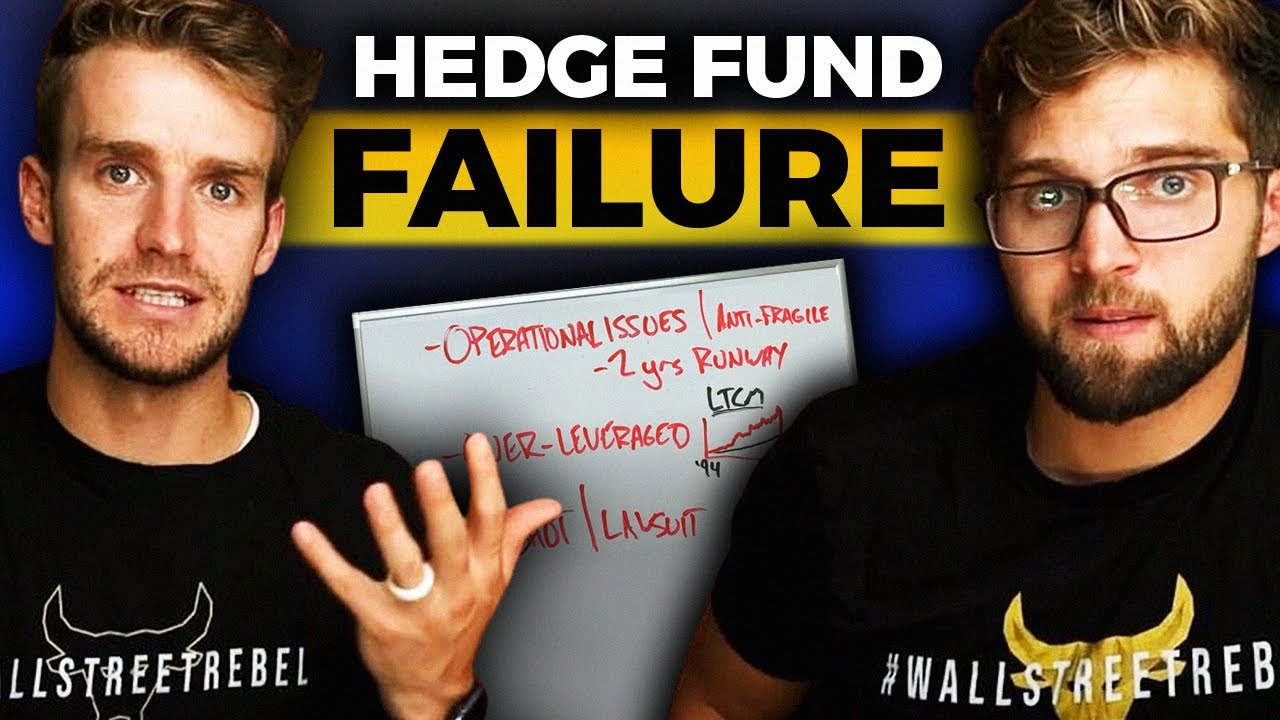
Bridger Pennington explains why hedge funds fail and how to avoid it. He covers operational mistakes, over-leverage using Long-Term Capital Management as an example, investor redemptions, SEC investigations, and recommends Antifragile by Nassim Nicholas Taleb and More Money Than God.
Chapters
All right, so we're gonna talk about why hedge funds fail. And actually, statistically, hedge funds are way more likely to fail than a real estate fund or an asset-backed fund like a private equity firm. Now, you have other funds— I'm not gonna say that for in general. Yes, you have VC funds that blow up and fail, but hedge funds specifically— we talked about this earlier— apply a lot of leverage. We talked about 20 to 1, 25, 30 to 1 investments, which is a two-edged sword.
Sure.
Again, they can make very high returns and then Also very big losses. Now, this video is not to deter you from launching a hedge fund. Hedge funds are awesome. They make a lot of money. But we want to give you a few reasons in this video why they would fail, and so that you can avoid those pitfalls.
We just don't want you guys to make the same mistake, right? I'm gonna outline 3 main reasons why historically why hedge funds have failed and how you can best avoid those. The first of which is operational issues. There's a lot of costs that hedge funds don't anticipate at the beginning. Transaction fees, you know, meeting your margin requirements, paying for the admin. Maybe you don't raise as much money as you think. So hedge fund managers have typically recommended that you have at least 2 years of runway before starting.
Okay.
And just to cover your, your expenses, think about it. If you were to go buy a real estate property right now, you could go do that for 0% down and have zero in the bank to save for, you know, things that go wrong. But things are bound to go wrong, right? Like, you should always have a hedge, you know, to avoid worst-case scenario.
Most real estate guys will have a miscellaneous account or a crap account, whatever you want to call it, where they just know there's, there's gonna be X amount of cost for some unforeseen problem in the future. That's what you're mentioning here is 2 years of runway for those unforeseen problems.
So I'm actually gonna recommend a book here, Antifragile by Nassim Nicholas Taleb. I think it's one of the best books you can ever read on understanding understanding risk because you really can't understand risk to its fullest. Okay, there's always an external outlier that's unanticipated that could happen to wreck your success, really.
Okay, so number one, we had operational issues. You recommend 2 years of runway. Antifragile, good book. Yep. What's next?
The second reason that— which Bridger mentioned at the beginning already— is because funds are overleveraged, right? They're betting big. They're going all in on a direction or a short or a position and and they end up being wrong, and then they lose all of their assets, right? They don't have a remaining asset to keep the fund alive. So let's talk about an example, okay? Long-Term Capital Management.
These guys were an incredible fund. They were trading the 30-year bond against the 29.75-year bond. Now you might be wondering, well, I don't even know that bond existed. Exactly. That was their trading strategy, was there's a lot of people that know the 30-year bond. There's not very many people that know the 29.75-year bond. Both of them though are backed by the United States government and are paid out pretty similar dividends, but the 30-year bond had way more buyers because it was just more popular.
Their entire portfolio consisted of, you know, the US Treasuries, Russian bonds, and then spreads on oil. And like, that was it, right? And they went all in on those 3.
And this was a very successful fund for a long time until Russia defaulted on their bonds. This caused a lot of Russian investors to flood the US markets, buy the 30-year Treasury as a safety net, to just do something else. They were shorting They were shorting the US, the 30-year bond, and buying— they were long on the 29.75-year bond. And it was so overbought, they had to cover their shorts, and it blew up their entire fund.
So just to show you here, from '94 to '98, you know, this is the S&P 500, okay? They had a good couple years. Long-Term Capital Management— let's do it in a different color— they were doing great. They were doing awesome, just killing the S&P. And then bam, like totally dropped. 44% of their assets just immediately, and they were gonna have to lose more. But then the Fed, along with other hedge funds, stepped in and decided to buy out their positions to avoid a, like, complete market crash, right? Over-leverage can lead to debacle and disaster if you are over-assumptive on your positions, assuming they're not correlated in any way, shape, or form. Like, how is The US Treasury correlated to Russian bonds and the oil spreads, but they were.
Or who would have thought Russia would default on their own bonds? Like, who would have thought that? And talking earlier about antifragile, I mean, that's hard to predict for, right?
Yeah, it had never happened before, and then it did.
Now, that being said though, you see this big run and what happened, the crash. However though, look at this run. These guys made hundreds of millions of dollars on this run. Yeah, it crashed. Yeah, their investors lost money, but they made a lot of money in the meantime.
Yeah, I mean, you can look back and be like, oh man, these guys are dumb. This fund was started by 2 PhDs and Nobel Peace Prize winners, okay? These are not— these are very intelligent individuals that ran this fund, and they still made a ton of money, but they made a wrong bet. George Soros was on the verge of bankruptcy. He was so overexposed in so many of his bets. Same with Paul Tudor Jones. Same with so many hedge fund managers. If the coin would have landed on tails instead of heads, then they would have been out of business. So I think it's wrong to look back with them, like judging, saying, oh wow, you know, you should have known better. But you just can't predict the unpredictable.
Another great book that walks through a lot of these stories you mentioned is More Money Than God. Incredible book, and it walks through the stories of hedge fund managers Throughout the last 4 decades. Pretty well-written book. It's got incredible stories. I don't know how they got all those insights.
I don't know. I've read it twice and I've learned a ton from it.
Very interesting book. If you're interested in hedge funds, great book recommendation that we're dropping in here as well.
One last point that I want to talk about on historically why hedge funds have failed, and that is because of— I'm just going to put, if you guys are Hamilton fans here, you got one shot, all right? Literally one opportunity to show that you know what you're doing. Unlike other alternative asset classes, if you have a bad year in a hedge fund, investors can liquidate their positions and run. You are vulnerable in hedge funds. It seems you're more likely to have a big loss with hedge funds than you are in other fund classes, which— what happens when investors lose their money? There's a lawsuit, right? People get mad. They say you didn't do something right, then you have to pay for those expenses.
Let's talk about lawsuits for a second too. Typically what happens in a lawsuit— and actually I had a good family friend just go through a lawsuit and an SEC investigation on his fund. What happened was investors lost money. The investors called the SEC, said, hey, I think there's fraud here. There's a lawsuit brought forward. The SEC comes and does an investigation. Guess what they look at first? Your LPA and PPM, those 2 governing documents that were designed to protect you In a case of a lawsuit, thankfully his documents were written very well. He did not go outside of their documents. Their documents said to invest in X. He invested in X. He followed exactly what the documents said, and the SEC, after about a two-month investigation, looked at it and said, "Well, he didn't do anything wrong. The only complaint we have is just negligence." Essentially just saying, "Well, he was an idiot, right? We invested in wrong things, and sorry investors, you lost money." And investors were mad. Obviously, it hurt his reputation, but. There was no really legal course against himself, and the SEC said it was free and clear.
I don't know if you're aware that there is a whistleblower clause in the SEC that if somebody, an investor, or maybe you're part of a fund and you see something where investors are being maybe a little shady or they're not following their offering documents, then they can report these findings to the SEC and get paid big, right? The SEC has paid out $562 million in whistleblowing fees, right? Because like the fines that they put on these funds are egregious. So, you know, they're tens, hundreds of millions of dollars, and the whistleblower gets to take a cut of that. So that's why you really need to walk a fine line. Again, not to discourage you from starting a fund, like you can do it. Okay. Yes, there are these hurdles that you need to overcome and be aware of. Mm-hmm. But you can navigate this space seamlessly.
And again, I said this before, you're the person with the money, right? You've got money. You can hire lawyers, you can hire people to help you do this because you run a fund. And that's why this game is one of the best games ever to get into.
More from Bridger

The AI stack is trying to consolidate to a winner take all, do you think it'll stay fractionalized


Before you launch a fund, triple check your fund attorney actually filed everything.








Different view on housing affordability and the fed raising rates not lowering rates