Care for Your Body and Heal Your C-PTSD
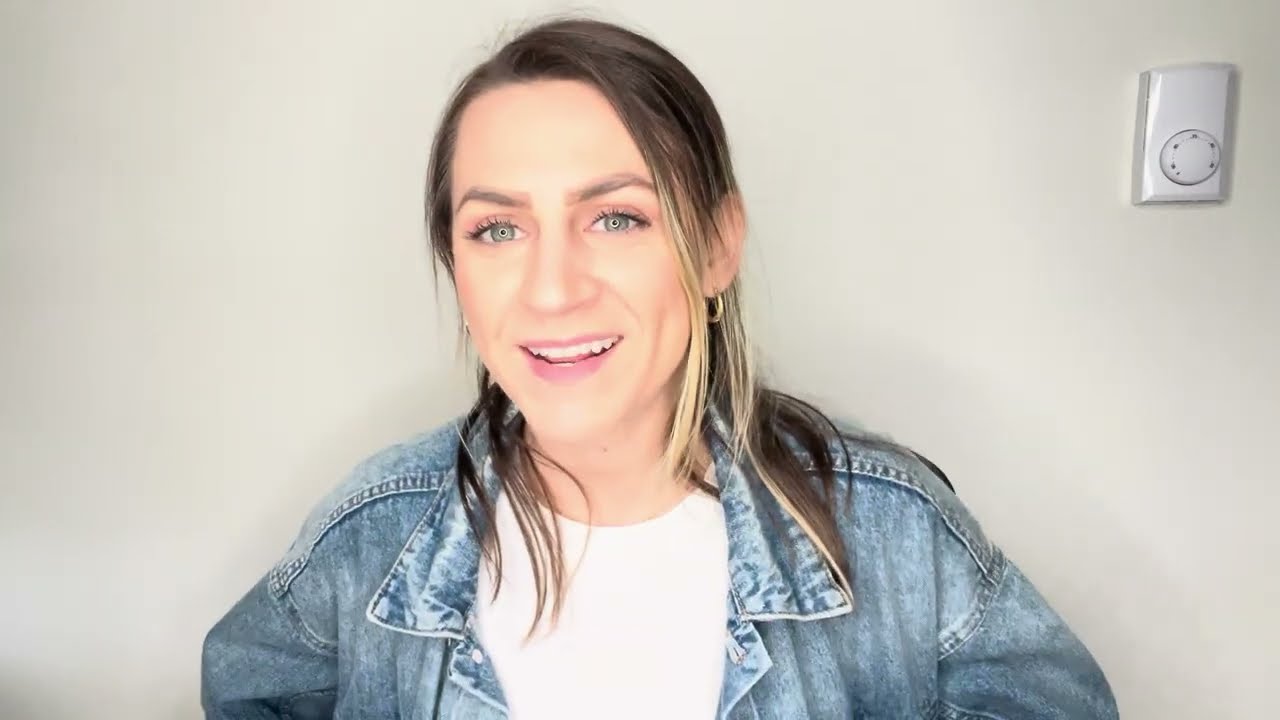
In this video Brooke Richey, a trauma survivor, vocalist, and holistic voice coach, explains how complex post‑traumatic stress disorder (C‑PTSD) lives in the body and how paying attention to physiological symptoms can facilitate healing. She introduces the concept of the voice as a "holistic organ of the soul" and argues that neglecting vocal expression traps emotions. Drawing on personal experiences—including repeated medical visits, a transformative chiropractic session, acupuncture for sciatica, and a detox for gut issues—she illustrates how tension, pain, and organ dysfunction reflect unresolved trauma. Richey describes body‑mind symbolism (e.g., right side = masculine, shoulders hold grief) and offers concrete somatic tools: speaking to tension, EMDR‑style butterfly breathing, movement, diet adjustments, and natural detox methods. She contrasts natural healing with long‑term pharmaceutical use, noting she only used prescription meds briefly as a launch pad. The video concludes with an invitation to her programs—Amplify Your Voice, one‑on‑one coaching, and prophetic sessions—designed to help creatives and trauma survivors integrate voice work, identity, and inner guidance for lasting recovery.
Chapters
Hey folks, welcome to my channel. My name is Brooke Richey. I'm a 20-year trauma survivor, vocalist, musician, film composer, and indie rock artist. And I'm also a holistic voice coach helping people reconnect with their identities, reclaim their voices. And what holistic— what a holistic voice is, it's the organ of your soul. You're the vocal organ, your voice in your body. It actually takes up over half of your body mass. And when we don't use this, we actually neglect pieces of ourselves, when we don't express the emotions, when we don't talk through the experiences. And so this is a huge part— this plays a huge factor when we don't use our voice in processing trauma, in personal development, and moving forward in our lives. And that's just what this channel is for, as well as to share my music, to connect with you all, and really just to help bring more peace into our world by bringing understanding to these things. So this series is on complex post-traumatic stress disorder and reverse engineering your symptoms so that you can heal your CPTSD, so that you can get rid of it in your life because it is so exhausting. So this video is on the physiological symptoms that come with your complex post-traumatic stress disorder. When you pay attention to your body, because we say this, The Body Keeps the Score, if you know that book by Bessel van der Kolk. The body really does keep the score, meaning people see you, a trauma survivor, as someone living in the past. That is not correct. You actually have the past dwelling in your body, and this is why it is so important to speak, to share, to connect. When you don't connect with others, when you're isolated, you don't move forward. You get stuck, you get stuck in the past. You're not actually stuck in the past. The past is waiting to be sorted out. It's waiting to be knotted out, right, or unknotted, right? I talk about that. I talk a lot of metaphors like a rubber band ball that you have to unknot, um, using math and doing reverse engineering of you have 4 parts of a memory and you need to find 2 of the parts that are missing. You remember bits and pieces, but not the entire picture, right? So physiological symptoms that go on with your complex post-traumatic stress disorder— any— you can pay— literally, you can pay attention to anything. I am one of the ones where I went to the doctor at least 7 times within like a 2-year time frame of something's wrong, something's wrong, something's wrong. And every time I go, they check my vitals. They check my blood. You're fine. You're, you're a healthy adult, young adult. And it makes no sense because I'm like, okay, if I'm a healthy adult, why is this happening? Why is this happening? Why is this happening? And they have no answer and it's infuriating. So here's what you can do. You pay attention to where the tension is in your body. For example, for me, when I went to see a chiropractor, In 2020, early 2021. No, it was 2020. Sorry. I go see a chiropractor in early 2020, so it's the very start of the pandemic, but we didn't know it yet for my area. And I go see this chiropractor, chiropractor, and he tells me at the end of my evaluation, okay, well, I've seen worse, but we need to work on connecting your brain to your body. And at that, when I heard that, I started to cry. I almost could not hold back the tears, and he saw it in my eyes, and he just invited me to call if I had any questions on anything, and then to come back in for my next appointment next week or whenever it was. But he calls me the next day to check in on me and to see how I was feeling. And that night after I had gone— and this was just using an activator gun. Activator guns in chiropractic sessions, it's just like a— you pull it and pressure, um, hits an activating point. It's kind of like a pressure point for, um, your spine, um, but not an actual pressure point. But the point of it is it gets things moving without doing all the manipulation and cracks, which are helpful, um, but you actually don't even need to do those things. So like, they, they still get the job done, but I go home that night. I start bawling. I am crying for four hours nonstop. I had no idea what hit me. I had no idea where it came from. It was an emotional release that I got from this one chiropractic appointment after years of trauma. Let's see, I think I was 25, 26 at the time. No, 27, 27. So this is about. This is going on 20 years of stored up emotions and trauma from my childhood. I've shared in my past videos my first event of trauma, which is my originating root of trauma in my life, was at 9 years old. And because that was never addressed, I developed a disorder. It started off as just, you know, dissociation and being really hyper, like a hyperactive around work and achievements. Like, I was the kid in second grade that cried when I got a yellow card at the end of the week when I had had straight green cards. I'm 8 years old. I'm the kid that cried when I messed up once and got a yellow card. So when you don't— it's not— yeah, when you don't listen To what's going on in your body, when you don't pay attention to your body, the trauma is just going to keep living there. Same for the emotions. But you can, you know, just like this, this is a perfect example. If you don't know what you're feeling, you don't know what the emotions are, to unlock them, move your body. You have to get some movement going. You have to get the blood flowing. You have to let your body be experienced, right? And that can look like in a lot of different ways. Uh, if you are single, you live on your own— I'm one of those, I've been on my own for about half a decade now— when it comes to physical touch with friends, with family, that's easy. But if you're not getting regular physical touch, if you're not Giving yourself love. I saw this thing, there's— you can just go like this. It's the simplest thing. You can go like this, you can go like this. This is an EMDR butterfly over your, your chest, over your clavicle bones, um, to calm yourself down and to get reconnected into the moment, into the present moment. But what I'm saying is, if you're treating your body like an empty shell, like It's a house full of cobwebs, and there's all the creepy things of emotions and past experiences of trauma that you never shed light on, you're going to stay stuck in complex post-traumatic stress disorder for as long as you do that. So the physiological symptoms going on, it— there's a slew of things that you could experience. That you got to pay attention to. So I guess I could just list off a few examples. So there's, there's this example of I had a knot of tension in my back, lower back, right in the, in the right side of my lower back. It was such a ball of tension of unreleased emotions that my pelvic bone was actually starting to turn in and my right leg pulled up by Over an inch when I had gone in. And because of that, it caused weakness in my knees, it caused tension in my hips, and that meant when I went to go do the things I love, like play sports, I would easily get a sprained ankle. And I re-sprained that ankle while I was playing because of the weakness in other joints in my body. So it's the holistic approach, right? This is what I talk about. It's a holistic approach. And your voice that plays a factor in this is your voice moves so many muscles. It pumps so much blood. It raises it. It raises the temperature in your body. It emits sound waves. When you don't use your voice, you're keeping it all in here. You're just, you're just holding on to it. You're storing it. So Here's things you can do. You can speak out the physiological symptoms. You can say, I'm feeling this tension under the skull right here on the base of my skull. I'm feeling this tension. And then you want to connect with that physiological symptom going on with that tension, and you want to ask, what are you saying? You actually ask this— the feeling What it's trying to say so that you can get the words to get the release you need so that you're not caught in this fog of complex post-traumatic stress disorder, so that you can be conscious in your decisions, so that you can have a vibrant life. Because I know you want that, but you're stuck in the fog. Here's another example. I had to do a major detox. I know I'm not the only one. But your body, it actually will— gosh, the CPTSD will cause so many issues because there's a brain-gut connection, right? If you ever— if you've ever read the book, uh, This Is Your Brain on Food, such a fabulous book, uh, to understanding how your gut health, your diet, is directly connected to your brain health. And your brain health is everything. That's how you navigate in this world. If you don't have a healthy brain, you're not going to have a healthy life. So your diet is actually a really easy thing. It's feeding the body. It's what you're nurturing the body with that determines what goes on up here. So with CPTSD though, you have all of these emotions stored up, all this toxic toxicity and the tension. And that is actually creating blockages in other parts of your, your body. So if you're someone that has— you've had terrible digestion issues, you've had terrible digestive issues that you can't explain, um, you're in your 20s and you— the doctor is like, yeah, you should probably get a colonoscopy just to make sure, like Fam, something's something's up, and you got to pay attention to your spirit and your emotions because it's that trauma that's speaking up there. I hope you're tracking with this. I hope this is helping. When you treat your body, when you dis when you neglect your body, when you neglect your body of the pains. that are going on, you're actually neglecting an experience, an emotion that was not addressed, that you didn't sit with long enough, that you didn't process. There's a part of yourself that felt something that wasn't cared for. And so here's how you start healing your CPTSD: you care for the physiological symptoms. Um, here's another example. I had so much tension in my body that I was like, I'm gonna go to an acupuncturist. And not even just that, I was dealing with sciatica in my right leg. Um, dealing with sciatica, I go to an acupuncturist. I kid you not, I'm sitting and I'm lying on the table, my acupuncturist leaves, uh, for 15 or so minutes, and my leg— like, here's my leg on the table Literally pops up like this because there was such— and it did it multiple times exactly like this— because there was such a blockage. This should not be happening. This shouldn't be happening. These things shouldn't be happening. And thankfully, she really helped me with it. And then at the time, I was— I had tension headaches. They would knock me out in the afternoons for 3 or 4 hours. And she suggested to me, you know, you might be dealing with a parasite. Just try doing a detox. I do a detox and I lose about 3 pounds. Yeah, maybe a little more. Like that should also not be happening. So CPTSD, it's actually really, really easy to reverse engineer when you pay attention to the symptom. And you treat the symptom with what it needs, not a mask. There's things that you can always mask the symptoms with— drugs, alcohol, prescription drugs even. I'm, I'm, I've never taken prescription drugs. Yeah. Once, but what I mean is long-term. I've never treated my CPTSD My anxiety, my depression with drugs. I've focused on the natural method of things because it's in the natural that you have the most clarity. And when you can't connect with yourself in your natural state of being, when are you going to ever truly know yourself? When are you ever going to be fully confident in your identity and who you are? I don't knock using prescription drugs. This was particular to me, um, but I think they're good to you. I think they're really good to use as a launch pad. So, um, meaning— and that's what I did, I, I used mine as a launch pad for about 3 weeks' time in 2017 or so. But listening to your body— and here's other things about this. So you can talk to the tension, you You can talk to the body part. You can talk to the illness. This is how I cured my HSV-2. I actually spoke to the illness and I don't have HSV-2 anymore. And that's because I understand and I acknowledge where the origin of the disease came from. So you can actually gain the power— gain— you can utilize the power to heal your body With the power of your voice, with the understanding around your symptoms, with processing them. When you pay attention, when you're consciously accepting, right? If I wasn't consciously accepting that I had this knot in my back, in the right back, lower right back region, um, that's just it. I would, I would still have it. My body would keep crippling in on itself. It would keep caving in. So about to wrap up this video. Um, the last thing on this is looking at what represent body parts represent. So this is your philtrum, right? And this The philtrum— this is just an example— the philtrum represents memory and the ability to forget. And that doesn't always mean just forgetting valuable information. It's more about letting go than it is forgetting. And when this— if this is twitching, and this is, you know, this is on the other side of things because I've had a Kundalini awakening. But if this is twitching, then you can look at what that means in regards to what you're talking about, what you're thinking about, what you're reading. For example, the right side of your body is the masculine, the left side represents the feminine. If you have wear and tear on the right side of your body, there could be 2 things going on. A few things going on, actually. Um, it's the left side brain, right? So your logical side of the brain is damaged. There's no logic going— there's less logic going on. Right side feminine, your creativity is damaged when there's ailments on the left side of your body. So And then just representation. Representation of what do your hips represent if you're male or female or non-binary? What do your feet represent? What do your knees represent? What do your shoulders hold? Grief is held in the back, in the upper right back. Sadness is held in the shoulders. Um, your heart space. How are you connecting with that heart space? Does it feel like you have, you know, a solid body here, or does it feel like a cave, like there's nothing, like it's hollow? You'll know the difference. And that's— those are the invitations. Those are the invitations your body is extending to you to connect and get the healing you need. So thanks for tuning in. I hope this is helping you. I know it's— I know it's a lot. Um, I'm here to help you. If you would like to join Amplify Your Voice, it's a program designed to help you launch forward in your creative paths. I've worked with a lot of creatives who, they have a lack of direction, and then they go through the program, and then it's like left and right they're doing this project, that project, and they're on fire for life again. They have the vibrancy again because they've done this inner work throughout the program of connecting with themselves, with their identities, and uprooting a lot of self-limiting beliefs along the way. Um, I also do one-on-one coaching, and I also do prophetic sessions. Uh, prophecy is not psychic. It's not psychic stuff. Um, it's not being a psychic. Prophecy is divine attunement with, with divinity, and it's being able to see The predictions of events that may or will happen and being able to mitigate, negotiate, and prepare for those events. And so with a prophetic session, we will— we would go through— I would actually get downloads. That's what would go on. I would get downloads for you prior during and post, most likely. And you would bring anything to me of things that you need interpretation with, that you need guidance on, you need coaching on, and we would go through this all together in our session. And the thing about prophecy is, especially for trauma survivors, if you look at it like this, um, prophecy is force— you know, foresight, right? It's the opposite of hyper-awareness. Foresight, hyper-awareness. Hyper-awareness, you're paranoid about everything that's going to happen. Prophecy, you know where you are, you're fine, and you are aware of things that can or will or are going to happen. So there's security over here, there's uncertainty and anxiety over here, and As a trauma survivor and someone who's done a lot of work and gotten off the trauma train, trauma is a portal to evil. And when you allow trauma after trauma after trauma, when it just keeps coming, it's because you're a magnet. You're a magnet for trauma, and it's only going to get stronger the further along you go in life. without healing that CPTSD, which is why it is so important. It's so important for you to listen. Speak, listen, take action, repeat. Do the inner work and your— of your internal reality and the external that you want to see will unfold naturally. Links for you below, and I'll see you in the next video. Thanks for tuning in.
More from Brooke


It’s really that easy. Join me today or tomorrow in Amplify Your Voice Workshop








