Get Out of Survival Mode! Here's How You Can Uncover Suppressed Memories and Trauma
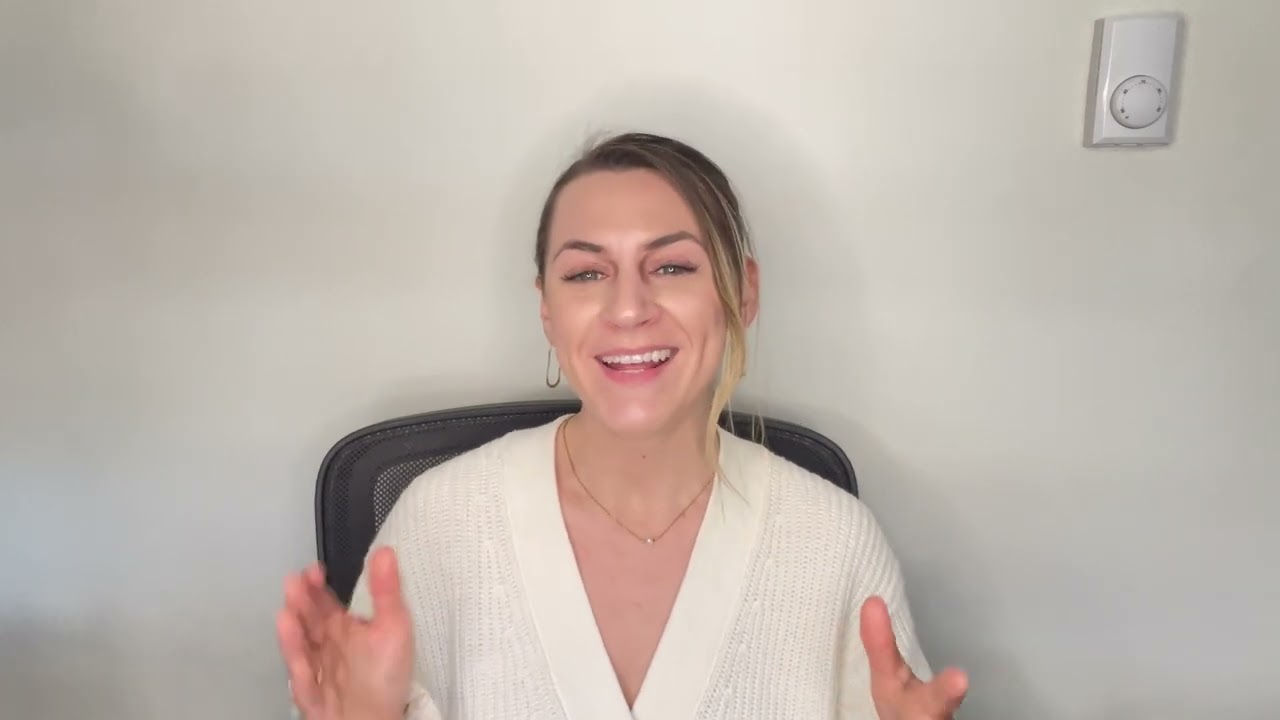
In this self‑help video, vocalist and trauma survivor Brooke Richey explains how suppressed memories manifest in the body and mind, and offers practical vocal‑based techniques to retrieve and process them. She shares personal near‑death experiences that motivated her healing journey, describes physiological signs such as knots and tension, and introduces voice journaling as a daily self‑dialogue practice. Brooke outlines several frameworks—including one‑on‑one inner‑child dialogue, speaking to a trusted imagined friend or deceased loved one, and using the voice to locate blind‑spot “pressure points.” She illustrates how suppressed trauma can lead to both negative and positive memory loss, using vivid examples of color removal and object changes in her teenage years. The video emphasizes the importance of vulnerability, consistent practice, and the bodily sensations (crying, heaviness, sickness) that signal release, concluding with encouragement to keep the practice daily for faster progress and freedom from trauma.
Chapters
Hey folks, welcome to my channel. My name is Brooke Richey and I am a 20-year vocalist, trauma survivor, and I've done a bunch of things in music. But this channel is really about blending all of my experience, my education, my love and passion of music and the power found in the human voice to help you all in your own journeys, whether that's your journey in music, that's your healing journey from trauma, I've experienced a surplus of trauma in my life, and that is where I feel I have a platform to speak out on. And so that's what this channel is for. This series in particular is on suppressed memories, and this is what came to me right as I was about to start this video, is girlfriend or boyfriend, you are still here. You are still alive, and you made it through whatever you've experienced. For me, I almost died 3 times in the last 2 years. And, you know, it's not something to laugh about, but I really did almost die 3— on 3 different occasions because of being on a trauma train. And when I hit my— and the irony of this is the triggering, like, kind of the tipping point for me was when I was like, oh yeah, I need this to stop. Now, and then there was 2 more occasions of me almost dying. But today's video, I want to talk with you about what this process really looks like and what you are— what you can be expectant of to discover while you start to uncover any memories, your suppressed trauma, and start to process those emotions that have been balled up. So in the last couple videos, I talked about your physiological symptoms and then vulnerability being your superpower here. So when it comes to the physiological, if you're having tension somewhere, that is actually something stored up in a knot. For example, I had a knot in my cheek, uh, for 2 years. Like, it was the most bizarre thing. Like, it was an actual knot. Like, if I would have gone to go see a, like, you know, esthetician, uh, or massage therapist maybe who specializes in They would have been like, yeah, you got like a knot in there, girl. Like, it was bad. And so that's what I mean, and your trauma is just gonna store up wherever it can in your body. And at that point, um, I had had it stored up in so many places, my body was like, I need more to store. Like, I'm trying to find more places where I can put this because I wasn't dealing with it. So suppressed trauma, what this process looks like. Voice journaling. I've talked a little bit about voice journaling. Voice journaling is the practice of exercising self-dialogue. You can do this in a few different ways. You can have just dialogue with yourself, your present self today. You can just stream of consciousness. If you know the book The Artist's Way, there's a practice that they do which is called like the daily pages, and you just stream of conscious every morning, write what's going on. Like you just let it all come out on the page so that you don't, you know, so that you can leave room for creativity in your day and that you can have energy ebb and flow. You're not stuck in this like, I can't do this because I'm like in a scarcity mindset because of all these things I'm holding on to that's sucking my energy, right? That's not going on when you do the daily pages or voice journaling. So voice journaling is really just that, um, but there's a few different ways And frameworks that you can use in order to let the memories, you know, loosen up. The image that always comes to my brain is one of those rubber band balls. You know, when like so many rubber bands are like bound or like tied up around each other that you can actually bounce the ball. And the bigger you make the ball, the farther it's going to bounce. So if those are your emotions and suppressed trauma in that rubber band ball, There's no way knowing, like, you have no control if you just like throw it and it just bounces everywhere off the walls. So you have to like take each rubber band off and get the knot undone, um, so that you can have an ebb and flow of energy and a life of ease. So let's say you have your rubber band ball of there's so much overwhelm going on. Girl, I know. Guy, I know. Friend, I know. Like, There's so much overwhelm. Okay, I need you to take a second and breathe. Hold it and release tension in your body. Okay, try and find where those places of tension in your body are. Breathe into them and see if you can let them release a little bit on the exhale. That is what voice journaling does For your mind. That is what voice journaling does for all your stored memories that you can't access because they're stuck behind your blind spot. So I've also talked about the concept of a pressure point. A blind spot is essentially a pressure point, um, in your mind. So that pressure point, how do you narrow in around that blind spot if you don't know where it is? It's blind, right? Well, here's what you do. You just start talking. You do the daily pages, you do the voice journaling. I— biased, I'm 20-year vocalist here. I've also experienced a physical injury to my throat and had to repair that when I was 18 years old. It took me about 18 months to repair after getting whacked in the throat with a surfboard. So that, on top of trauma that steals your voice from you, I've worked a lot with the human voice, and it's really the voice that does the most effective— makes the most effective shifts for you in your journey. So voice journaling, here's the different frameworks you can do. It's just one-on-one, it's just you and you. You can have inner child dial— inner child dialogue. If you don't know what that is, all you're doing is accessing in your It's kind of like a meditation. So you enter a space where you can let your guard down and you can address, for me, the 9-year-old that was traumatized by a family member and who ran away after the experience. So there's a few different physical locations that I can go meet this 9-year-old version of myself. It's at home, it's at the place where The trauma took place. It's at the place where I went and ran away to. I can go meet her at these places and have a dialogue with her. And the goal with this inner child dialogue is to get them to come with you now into your daily present moment. For years— and I've talked about this in past videos— for years I assumed it was my suppressed memory, which Completely. That's what we're here talking about. But I assumed it was my suppressed memory that I had to— that version of myself. I thought it was the 15-year-old me who experienced the trauma and then suppressed the memory by the next morning. I thought it was that one that I had to show up for. It wasn't. It was actually the 9-year-old me who had the shadow of the other experience from 15 years old over her. That entire time and over the last 20 years. So it's still necessary though that you uncover the suppressed trauma if you think you got it, if you think you have it, because that's the one that's keeping you in reactivity. It's keeping the shadow over maybe the younger self that had an originating root of trauma that you didn't know was trauma. You didn't know you were violated. You didn't know your boundaries were crossed. You were a kid. Or Yeah, like, um, that's, that's been my life, and I know I'm not the only one. And that's what I can talk and share with you guys here about, is that scenario. So there's a one-on-one with you and yourself. There's, um, inner child dialogue, and that could be any version of yourself, really. It could be from any stage of life. But the point of it is getting that child to talk, to open up, and To be honest with you, the more that you do it, it's— and the things that you might say might surprise you. It might really surprise you because it's been there for such a long time. Um, and you will have like a physiological— I, I just, I'd hope you do, um, response. So you might start crying, you might feel tension, you might, um, get heavy breathing. Um, at points in my journey I have had these head-heart connections with versions of myself in doing these voice journals, and I've actually gotten sick because it's been such a heavy weight that my system has been holding on to. And when it's finally released, it's like, it's like a chemical imbalance rewiring thing happening, and you can get— and you get sick. But that, that getting sick is actually a really good and positive thing because that means your body is flushing the experience. It means your mind is finally getting to process it. It means that your nervous system is finally making amends and peace with it. Okay? So don't be worried about those things. That's all a part of the process, and that's what this video is on, is showing you, sharing with you what the process kind of looks like. So you and yourself, inner child dialogue. You can also talk to a friend as if you're talking to a friend or maybe a deceased family member, who you felt completely at peace with, that you felt safe and protected by, that who never, who never broke boundaries. Um, you can, you can speak with them as if, you know, it's just, it's just the, it's just the framework. So like, these are the foundations of where can I be vulnerable, know that I'm safe, and let my guard down so that I can open up. And let the memories start to come back, because the memories aren't going to come back if you're not vulnerable. Okay, the memories won't come back if you're not vulnerable. And why this is so important is just like, if you look at your brain and your life experience like a puzzle, like a computer, and both things, like it's a specific filing system. Where you can't put one puzzle piece that belongs over here, here. It has to go there. Like a computer, like if you don't file things correctly, right? Or if you miswire things in the actual hardware of the computer itself, it's not going to work, right? You feel me? Same thing with your body. So the more you talk, The more you vocalize, the more you let your brain connect with language. And we're— that's going to be another video, um, sometime soon of the power of language, which music is a second language on the brain. Second languages and also just written and spoken language on your brain, that is what unlocks your mind. It's a renewing of your mind that you need. Um, because that blind spot, that pressure point, is like a hook on your brain, right? It's like a hook on your brain. Um, and we gotta get that hook out. So the last, the last thing, um, or maybe I said them all, uh, one-on-one with yourself, inner child dialogue, speaking as if you're speaking to a friend or a deceased family member that you felt very safe with. Um, it's all about getting yourself in a place Of free vulnerability. And so, about to wrap this up, as you continue to do this— and I would suggest you do it daily if you can, do it multiple times a day if you can— the more that you practice it, the quicker your progress is going to be. As you do this, things are going to start to, like, pique your interest. Okay, and these are the things that you want to pay attention to. So what I mean is, because you had this blind spot, you blocked out a really negative experience in your life, which means you also blocked out the positive. So because of that blind spot, a suppressed memory, you're blocking out not just the extreme negative, also the extreme positive. And Here's some examples of how I did this myself when I was 15. I had a room that was painted very bright colors, and within the next 6 weeks or so after this event happened, it was suppressed by the next morning. I decided to white out my room. I'm 15 years old. I completely whited it out, and then I even went as far to paint a gray line like about this wide, freehanded, around the perimeter of my room, 3/4 up the wall. So what did that mean? I was looking at the color of depression every day, anytime I was in my room. I had gotten rid of the color and I whited it out because I was so depressed, and I didn't know it because I had suppressed memory. So because I blocked out the color. Other things I did, um, were like I had this backpack that was really colorful, got a different backpack. I even had a pair of shoes that I bleached. Like, they were bright green Vans. I had a pair of bright green Vans, like just the slip-on ones, and they're like the— like just your forest— not even for— they're not forest green. I don't know, just like bright, bright green, like you— what you'd have on a turf field. Um, I had a pair of those and I bleached them. And, you know, I just, I started changing all the color in my life, getting rid of all the color. I even blocked out my best friend. I blocked out my best friend actually being at that residence where the suppressed memory was in association to. I hadn't, I couldn't remember for years that she had ever been there aside from birthday parties. And one day she was like, no, yeah, like I would come over, we'd go do this, we'd go do that. And completely it was blocked out of my mind. So this is what you can expect. The more that you talk, your memory, your mind is going to be renewed, which is going to release that grip on the blind spot. And eventually you're going to be able to see it. Um, Yeah, I think that's probably the best visual, is like a knotted up thing, because it's in there, it's in there. Um, it's just you have to do all the work to loosen up, free up the layers, right? So that you can finally see what it is that did happen to you, and then you will be able to process that experience, and that is what's going to set you free. And that is my hope for you. So thanks for tuning in, and I hope these are helping you. There are a list of links below where you can find my music. You can listen to Blackbird Collective. If you're local, you can come rock out with us at a show sometime. And you can also check out Amplify Your Voice and then some resources that I have for you for your healing journey. So thanks again and see you in the next video.
More from Brooke


It’s really that easy. Join me today or tomorrow in Amplify Your Voice Workshop








