How to Reset your Nervous System in 40-Days
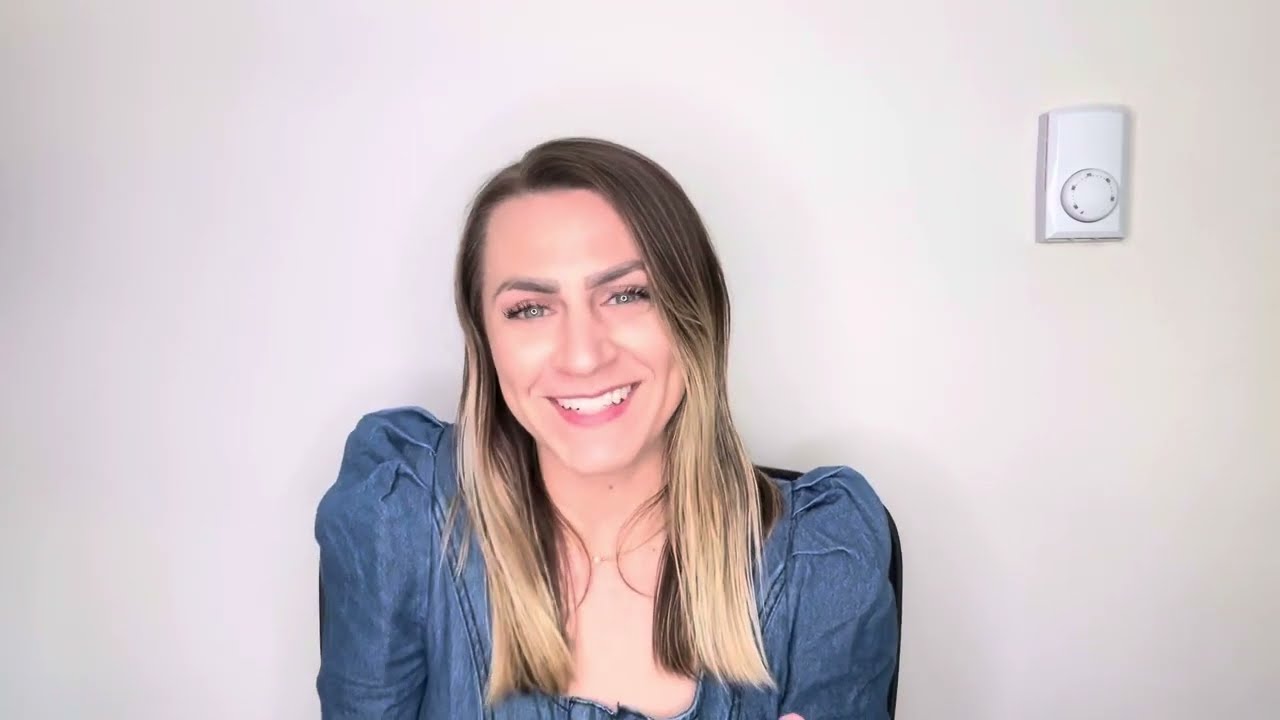
In this solo YouTube vlog, vocalist and trauma survivor Brooke Richey explains how deliberately slowing down for a 40‑day (six‑week) period can help reset the nervous system of someone living with complex post‑traumatic stress disorder (CPTSD). She describes her own 40‑day medical leave during which she limited activities to simple, restorative practices—baking, walking, journaling, crafts, and reading—while recording daily videos. By creating intentional “liminal space” and focusing on breath work, she was able to reconnect with neglected hobbies, uncover suppressed memories from the past 13 months, and notice her body’s signals about unresolved trauma. Richey contrasts this slowing‑down process with a fixed‑mindset approach, urging viewers to shift toward a “divine presence” mindset that reduces restraint and anxiety. She also critiques the omission of CPTSD from the DSM‑5, arguing that this leads to misdiagnosis and dismissal of sufferers. The video concludes with a call‑to‑action for her 6‑week program “Amplify Your Voice” and a free holistic voice development training, positioning the program as a structured way to apply the 40‑day reset principles.
Chapters
Hey YouTube and welcome to my channel. I'm Brooke Richey, a 20-year vocalist, trauma survivor, indie rock artist, and film composer, and budding motivational speaker because I like to be on stages. Um, thanks for tuning into my channel. I wanted to talk with you today about the power of slowing down and taking a pause when it comes to healing your complex post-traumatic stress disorder And everything that comes with that. And so let's just dive right in. The power of slowing down on your physical body, right? Because we're already in a really loud world. It's already really noisy. We get so much stimulus even just from sounds around us and the people you're working with, the people you live with. Like, there's always just this constant And when you have complex post-traumatic stress disorder, it's like you have this stimulus going on heightened to the nth power going on in your brain, which is why it's really, really, really important for you to learn how to slow down and where you can do that for yourself. So in the fall, I took about 40 days to— I— these videos are all private now, but I essentially had a 40-day period where I was making videos every single day, and this playlist was just a chance for me to connect with myself as if I was speaking with others. It was kind of a preparation for all of these videos I've been making now on suppressed memories and CPTSD and mental health and mindset. But, um, those videos, it was a 40-day period of showing up for myself every day. And this is what happens when you slow down and pivot, is what I'm getting at. When you decide you're gonna slow down for a set amount of time— this was also during the time when I took a 6-week medical leave, and it was uninterrupted. I wasn't, I wasn't doing anything. Like, by nothing I mean I was baking, I was going on walks, I was doing home projects, I was reading, I was journaling. I was doing crafts. Like, that is it. I was not doing anything. And I pretty much stayed— I kind of stayed landlocked. Like, I didn't go travel anywhere. I didn't really get in my car with that much. It was a very intentional, I'm going to slow down for these 6 weeks, 40 days, to reset. Because there's, there's been a lot. Like, there's a lot that I just went through in my life over the last year. At that time, it was October when I— was it October? I think it was October, or just before October, September. I'm taking this, these 6 weeks. And so here's the power of this. In order— in my slowing down in that 6 weeks, I was able to reconnect with a lot of loves that I have, like baking. Arts and crafts that have been neglected for a long time. These things that were just really helping my body breathe. And that's something I want to touch on a little bit too in a moment, just the power of breath in these moments in our lives when you choose to take liminal space for yourself. Liminal space is a concept where it's just open time. You know that there's a transition coming But you don't know exactly how the means to the steps of getting there. You just know that you're in this kind of, I want to say, a hammock of time of I'm readjusting everything, I'm reprogramming everything, resetting my system and things the way I view the world so that I can have a blank slate and And then start forward with a firm foundation and a solid step. I hope that tracks. But yeah, so the power of this, in that 6 weeks, I not only got to reconnect with these bits and pieces of myself that had been neglected for some time, that, you know, I'd say, oh, I love doing that, but I hadn't done it in 3 months, right? Stuff like that. Um, but I also was able to uncover other things that had happened to me in, in the past. And this was specific to in the past 13 months. I was able to uncover and connect the dots on things. And that's what I mean by uncover. I was able to connect, oh, these are the symptoms I've been having for the last 13 months. And now my mind, my nervous system, my body is finally getting in alignment. My nervous system and my body is finally able to speak up for that experience that happened 13 months ago, which I had some inklings about of, I think this might have happened, um, but I'm not entirely sure. And then when my body really Had a chance. That's the thing, it's the slowing down. When you slow down and you take a chance, it's like taking your car into the shop, right? You take your car into the shop and you're like, yeah, I only need an oil change. And then, you know, when you're working with a good car mechanic, when you're working with a good spot, they're like, actually, we have like 3 other issues for you. And, you know, like, don't get ripped off by your mechanic. Because this happens sometimes, but it's when they actually do find the problems that you were unaware about, right? And, you know, they could be telling you, you need a new alternator, you should probably switch that out. And if you don't listen to them, you could end up trapped in a tunnel needing to get a tow truck later. So, you know, take those things with a grain of salt and follow your intuition and whatnot. But That is the slowing down. It's taking your car into the shop, your vehicle, your body, your vessel, right? In 6 weeks' time, 40 days— 40 days is all you need to transition in your life, to fully pivot into a new direction, uh, get new habits in place. And it's not going to be those new habits, those new ways of being, the new ways of thinking— they're probably not going to be super solid in those 40 days, but those 40 days is what puts them into action, is what brings you into momentum with whatever it is. So, you know, I started recording these videos and I was like, you know what, I'm just gonna do these videos every day. I'm gonna sit at my table, maybe I have like— I'm eating dinner, maybe I'm working on a craft project. And if you've been following me for a little while, maybe you can You've seen some of the— some of those videos that are now on a private playlist, but it's the setting of an intention to do something new with your life, right? And so it's the slowing down. I want you to be able to slow down because complex post-traumatic stress disorder, the noise doesn't Stop until you say it's going to stop. The noise is going to continue until you say it's going to stop, until you start enforcing the boundaries for your mind, which I think this is a really— so 2 more things I want to talk about in this video. Um, the reset, right? So we're slowing down, take 40 days. To reset. The breath. When you feel like you're constantly in a place of restraint, maybe, um, you feel like you can't breathe fully, and that could be like you're holding your stomach in, which has to do with your core. That's your core chakra. Or maybe your throat constantly feels tight, or there's a burning sensation, there's a constriction going on, that's spiritual suffocation tending going on. Your, your throat chakra is injured. Life is supposed to be an ebb and flow. It's not supposed to be this strict black and white way of doing things. Boundaries, organization, things that go out the window for us folks healing from complex post-traumatic stress disorder. We need those things. But when you, you, you'll know, you'll know it when you, when you take a moment and reflect on this. You have to ask yourself, am I living this day With the hopes and expectations of the things I want to see happen without force? Am I living this day? Because this day is what you got. You don't even know if you have tomorrow. If you're hung up on yesterday, you're missing out on today. So this day, I want you to ask yourself, Am I living with the hopes and expectations? Am I in alignment with those hopes and expectations of what I want to see happen, of what I want to accomplish, of who I want to connect with, of the quality of my life? Are those things in alignment without force and restraint? Because if you're forcing it, if you're trying to, if you're keeping yourself in a place of restraint, You're not, you're not there. You're not where you need to be. And where you need to be is— but what I mean by that is a, a frame of mindset, a mindset. That mindset of, I have to force this to happen, this has to be the outcome, I've put so much time and effort in on this thing. It has to work out, right? Where's the joy in that? There isn't a whole lot of joy there. There's more joy, I would argue, when you say, "I'm excited to do these things and see how well." I accomplish my goals, my expectations, my hopes today. I'm excited to see what I can do today. I'm not hung up on what didn't get done yesterday. I'm excited to see what I can do today because life is what we do. Life isn't It's not what you think. I mean, your thoughts definitely become your reality, especially when it comes to a fixed mindset, which I know a handful of us here— raise your hand— have probably dealt with. That's what happens with CPTSD. You get a fixed mindset, especially if you have had a suppressed traumatic memory like myself. Um, But yeah, so it's, uh, I think back to those 40 days where I just free flow. That's what I, that's what I practice. I practice free flow dialogue with quote unquote someone on the other side of the screen. And I'm like, hey, I'm eating this for dinner, what are you having? You know, it's, it's really just, you gotta Simplify it. Just simplify the whole thing, because it's right now that you have. Um, last on this, the slowing down, the breathing, and I believe I said fixed mindset. I think that's what I said. I hope it is. We're going to talk about that. Um, your fixed mindset That comes with CPTSD will not save you because that's your traumas talking. Your traumas, your trauma wants more than anything to have a savior come in. And that savior could look like so many different things. It could be so many different things. That's what your trauma wants. Usually, it's not what you need. And that fixed mindset is just you know it can if I just do this right, that's a fixed mindset. If I just get this. Then I'll feel like I can do all of these things. If I just have, if I just get, if I just do this thing, if I just prove this to these people, whatever, then everything's gonna fall into place. Um, newsflash, that is a place of restraint. You're restraining yourself. Um, it's good to work for things, towards things, earn the things that you believe you deserve and that you should have. But that once I finally have this, everything will be okay— no, that's a fixed mindset. And To transition out of that, you just gotta focus. What do I have today? What do I have today? Divine presence, as I've talked about in my other videos. Divine presence. Because once you're exercising that divine presence, your CPTSD symptoms, which This drives me nuts. CPTSD isn't in the DSM-5, just as a side note, which means by default all of us with CPTSD, we get dismissed. Like, I don't, I don't see how there's any way around it. It's like, um, it's like having a medical diagnosis for cancer and cancer's not in the diagnostic book. How are you going to treat those patients? You don't. You're going to misdiagnose them. That's what's going to happen. So yeah, this is kind of a call-out. It's, um, why isn't it in the DSM-5 when so many people struggle with CPTSD? Because the thing with CPTSD Is us with CPTSD, it's an umbrella. CPTSD developed from something in our past because that thing was so traumatic and it was not properly processed. And especially for childhood trauma survivors like myself, to a developing brain, it is so traumatic. Hard. It is so, so— it— your, your developing brain is not meant to go through it. It's not meant to survive it. Um, but thank God we have— our brains are malleable, and thank God We have choice of free will. Thank God you can look at your own life and your character and the things you want and say, "That doesn't add up." How do I change it? What do I have to do so that this is no longer my reality? This fixed mindset, the disorganization, the dissociation, the anxiety, the procrastination. Procrastination, all the things. What do I have to do so that I don't have this struggle anymore? What do I have to do so that I'm divinely present? So I think that's what I got for this video. Thank you again for tuning in. If you would like help in any of these areas, whether you're a trauma survivor, whether you just feel like you're in psychological quicksand. I would love to invite you into Amplify Your Voice, my 6-week program, 40 days to reset your life. Think of it like a spice of life. I used to be a sprinkle saleslady in corporate America, um, selling sprinkles by the container load overseas. Um, so, and then that's just what I want to help people do here is get that spice back in their life, get that identity of yourself back in check, back in alignment, because you're supposed to be here, here in the present today, not with yesterday, not 5 million steps ahead in the future. You're supposed to be right here knowing that you're working and building towards something, but you're supposed to be right here, or commemorating people And things by the work that you do. But that takes being right here, fully present. Um, so link below for that. You can attend my free training, which is a holistic voice development training, to learn more about what developing your holistic voice really means. It is the intersection of your identity, your purpose, and your calling, getting those in alignment so that you can move forward in your life without anxiety, procrastination, and all this ick that we really don't like. So thanks again for tuning in. Links below, and I'll see you in my next video.
More from Brooke


It’s really that easy. Join me today or tomorrow in Amplify Your Voice Workshop








