The 3 Things You Need to Heal Your C-PTSD with Effective Voice Journaling
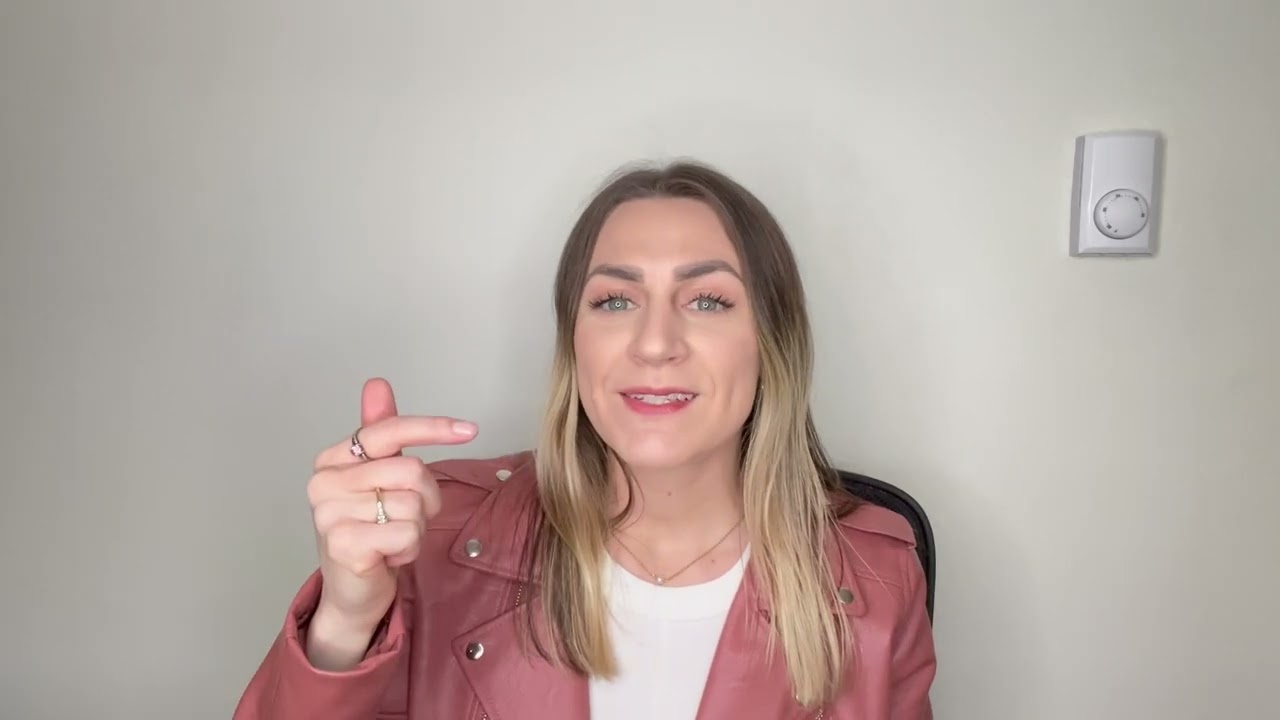
Brooke Richey, a vocalist and trauma survivor, outlines three steps for healing C-PTSD through voice journaling: build safety first (stable home, finances, relationships), find certainty in what you know about your body and emotions, then reframe trauma using metaphors like a canoe moving downstream to visualize letting go.
Chapters
Hey folks, it's Brooke Richey. Welcome to my YouTube channel. I am a 20-year vocalist, trauma survivor, indie rock artist, film composer, as well as a coach and hopefully soon-to-be motivational speaker because I really love being on stages. But thanks for being here. Um, today I want to talk about some really critical aspects about healing your CPTSD through voice journaling and how to get the best out of voice journaling for your healing. So number one, number one, top number one thing is when you're doing this, you need to be in a secure environment. And so that looks like a lot of different things. You need to have security of home, of finances, of people around you, so your friends and your family, because this is especially more for you, for those of you that have Maybe a suppressed traumatic memory. When you unlock this suppressed traumatic memory, you're going to be relieved. You're going to feel unstoppable and all-powerful, like you can do anything and that you're invincible. And that's an amazing, euphoric, triumphant moment for you. And I'm so excited for you to experience this. But I want you to make sure that you have people near you that you can share it with. when you reveal it so that you can be connected with these people as you're experiencing these new feelings of relief and emotions. And here's the reason, the reason why, because this is, this is something that goes into, um, The Talent Code, if you've ever read that book, um, and how talent is actually something that you work towards. Talent isn't something you're innately born with. It's actually something— it's a muscle. You work the muscle of talent. There's an inkling of something that you really enjoy in life, right? For me, that's been music, and I work on that muscle to get better at music. Okay, so the thing about this is talent is very much associated with success. And so you might do something that's like, this was amazing, this was so successful, I feel phenomenal, I'm a champion. And it's true that you are. But that headspace can actually be a pitfall. And I don't want to be a Debbie Downer, but I'm— what— why I'm getting at this is I want you to be safe. Because what you're unveiling, what you're working through, is really heavy work. And I just want you to be safe, is the thing. Because it's, it's a big deal what you're doing. It's a big deal making it known to yourself and to the world, your experiences. And that leads me on to my next point. So number 1 is you have security around you. Security. And if you need a refresher on what security looks like, just look at Maslow's hierarchy of needs, okay? And make sure that it's in order, that you're secure. 2 is this concept of Truth and narrating your story. Okay, when you're working through your complex post-traumatic stress disorder, you're working through those traumatic memories and experiences, the, the repressed emotions. Don't take this like I'm telling you what to do. I'm trying to help you get the best out of it. So when you're working through these suppressed emotions, The certainty factor is what is going to bring you security. Okay, so going back to that last point real quick, right? What is certain? You have to ask yourself, what is absolutely certain when it comes to those relationships to be connected with? Is this person a safe person for me to share this with, to have some accountability with? Is this, is this a person who isn't going to judge me? based off of what I share? Is it someone who has unrealistic expectations of me? You know, you've got to ask yourself these questions for that certainty factor, because the certainty is where you're secure. Okay, so now going in it, while you're going through these voice journaling prompts of yours, you've got to rely on what's certain. So for certain, for example, for certain for me, I was 15 years old when I knew something switched. Because I go to school and people are asking me, why are you angry all the time? And I tell them, that's just my face. I wear an RBF, I guess. And that was certain for years until I was able to unlock the memory, right? It was certain for me that something shifted in high school. I didn't know exactly that it was at 15 until I really got into the voice journaling, but What was certain was something shifted. Okay, and then the reverse engineering, as I talked about in my last video, you can reverse engineer your trauma and heal your CPTSD. So what else is certain? The certainty of feelings, tension in the body, and emotions that come up. Those are certain facts. Those are facts and realities of your experience. That you need to nurture, take care of, process, okay? And which is why you're here. If you're watching and you have CPTSD, it's because they weren't nurtured. That's it. There's no— there's nothing wrong with you. There's nothing that you did that caused this result. There's just a Disconnect in where your toolhouse is. Okay, that's it. And so that's what I'm here trying to help you find is that those tools and those resources so that you can heal and be on your way quicker. Okay, so number one, security, and then certainty. So maybe these should be reversed because it's certainty is where security is. So what's certain in front of me, right? Is it certain That if I do the work in healing my trauma, my complex post-traumatic stress disorder, that my life is going to be better. It might not feel like it, but you know that that root, right? And I want to call it a toxic root that's taking hold of your life right now. When you get that root out of there, yeah, of course it's going to be better. Of course it's going to be better. So certainty, security, those are kind of hand in hand. And the other thing is the reframing bit, reframing your narrative, which is bigger perspective. Take a closer look at the bigger picture, okay? Um, it feels like— I know it feels like this for you right now. If you're someone that's working, do— you're doing the work and you're doing such a good job, and I know it's hard, but it feels like it's never ending. When you get out, when you finally are— when you're getting out, you gotta— you got to believe that there is a day that you will be out. It's true. It's going to happen. I can speak from my own experience, but you gotta believe that there's a day you will be out. You'll be free. And here's something to help you with this because you're moving forward, right? This is, this is a hard thing about trauma. You're moving forward in your life while this trauma is still attached to you. And I want you to think of this as like You're in a canoe and you're— you have an oar and you're going downstream, and the stream, the current, is just pushing you forward. It's easy. Like, you're not— you hardly even have to use the oar. You're only really using it for direction. Okay, this is everyone in the world that isn't impacted by unresolved trauma. So if you're someone that is still working through that trauma This is kind of what goes on for you. You're in that canoe and you're moving until something hooks your canoe. And if it's a suppressed memory, I don't want this to be very vivid, but there's no other way of putting it. It's like that there's a hook on your brain and you don't know where it came from, but it's just pulling you, pulling you back, right? And so you're in this canoe and you're trying to move forward, but there's a hook on your canoe. That you can't see. It's in your blind spot. So we can keep it on the canoe, not on your body. Sorry about that. Um, but the reframing here, it feels like it's never ending that you're in this canoe. One day though, one day that hook is going to come off. And this is the thing, if you're gonna keep going down the river You can't canoe with your head turned back. So just keep this in mind. Keep this in mind as you're doing this work, as you're doing the voice journaling prompts. You are moving forward. You are. When it comes to moving forward, you might be in this temporary you're stuck because you're stuck because you're working through all the You're trying to process all the trauma, and that hook is still on your canoe, right? But in or in order to keep moving forward, you have to do the work that is going to lead you to that hook. So for me, for example, I had to do the work to lead me to that point in my life at 15 when I was finally able to piece all the pieces together. And realize, oh yeah, that didn't happen to my sibling, it happened to me. It's why I have this memory and that memory and that memory and that memory. And it's also why X, Y, and Z things happened within 6 weeks after that event, right? So narrating it differently. Reframing it. It's what's certain and secure that is going to lead you to finding that hook so that you can take it off and then let it go. And you don't look back after you've let it go, okay? You don't try and bring it with you. You don't try and lasso it from your canoe and bring it with you. You let it go. And what does that look like? What does that feel like in your brain? When you're in the fog, as I've talked about, it's all gray, right? When it's a very, very dark experience, it's just everything's clouded. Like everything's clouded and it's almost as if when you're in your mind, it's actually darkness. You're gonna find light when you get that hook off. And when you're moving forward, when you move forward, so I want you to actually envision this. Think about the event in your mind, or you're just in this swirl of confusion of complex post-traumatic stress disorder, and it's gray. Okay, now I want you to envision you are moving forward out of the fog. What's on the other side of the fog? It's light. Outside of the fog is light, not darkness. Light. Okay, so I hope this helps you. Drop any comments below. I would love to connect with you. I would love to help you even further if you are feeling so stuck and not sure how to get unstuck. I have Amplify Your Voice. My program designed to get you unstuck, to literally— it can help you get— find that suppressed memory if you have a suppressed memory. And by joining Amplify Your Voice, you'll be connected with me and other members of the community so that you're in a safe space as you do this. Um, other links below if you want to check out my music and support me in other ways through some affiliate links that will help you move forward in life as well. So thank you again, and I'll see you in my next video.
More from Brooke


It’s really that easy. Join me today or tomorrow in Amplify Your Voice Workshop








