The Top 3 Issues Caused by your Trauma's Ego and How To Fix Them
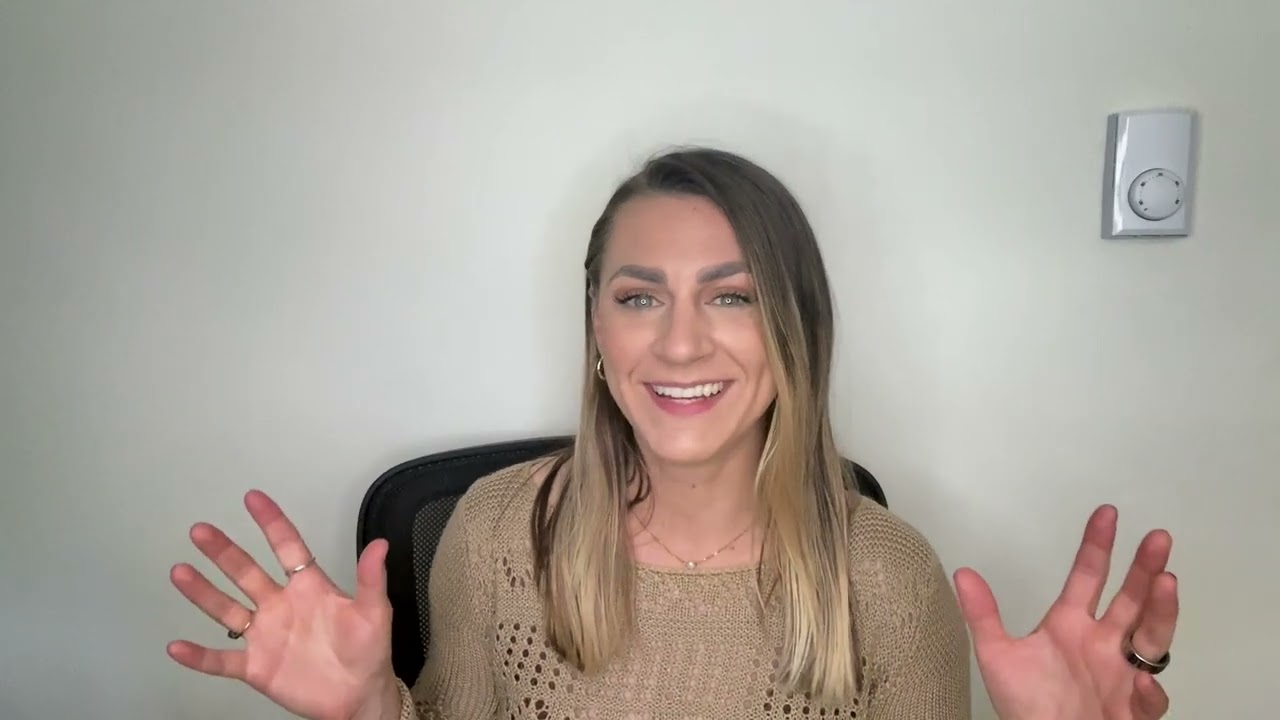
Vocalist Brooke Richey, a multi-trauma survivor, identifies three ways trauma's ego sabotages you: inflated pride that damages relationships, echoism that erases your identity after narcissistic abuse, and guilt-shame that hides your true self. She offers fixes like self-inquiry, listing your actual preferences, and voice work like singing or the 40-day Amplify Your Voice program.
Chapters
Hello, YouTube, and welcome to my channel. It's been a minute since I've posted a video, but I am continuing with this series on improving communication around trauma and trauma survivors. And I see a direct correlation with the miscommunication in our world that results in the criminalization of survival and the infinity loop of narcissism and abuse and victim mindset. There's just a lot of things that go on in our world that could improve if we improve our understanding of trauma and how it works. So in this series, I'm talking on that. And this video today is on the top 3 issues that come from your trauma's ego and how to fix them. And first and foremost, if you're here, let me stop right there. Thanks for being here. I'm Brooke Richey, a 20-plus-year vocalist and multi-trauma survivor. I Uncovered a 15-year suppressed memory just by coaching myself for 3 years. And I'm here to help people do the same thing and find their freedom and get on with their lives. I was stuck in chaotic reactivity and it was no way to live. And while the unknown is pretty scary a lot of the time starting out, it's much better to be in a blank canvas state day in and day out than a— you're living in a gloomy world that's full of darkness and scaries. So Thank you for, for being here. And if you're someone that feels like you're stuck, this place is for you. If you are a vocalist that is struggling right now, a singer that can't get past some certain hangups in your practice, this place is also for you. But really, it's for anyone who has some past trauma experience, who wants to develop their holistic voice. And that's what I talk about here, is about using your voice as the instrument to drive forward in life. Really, what you say becomes your external reality. So anything that's living up here in your mind, negative thoughts, that continues into— that transmutes into your external world. So it better be a nice place up here. And that's something you have to actively practice a lot more so if you're a survivor of any kind of trauma. So again, thanks for being here. So today, talking about these top 3 issues that come with the ego of trauma, because trauma does come with a big ego. And the reason for this is we feel like, by default, we experienced this thing that was a gross injustice against us, right? We didn't ask for it. We were forced into it. And And it was awful. It was awful experience, whatever that experience or experiences may have been for you. And here's the thing, it comes with the, the ego instantly. Your pride is turned on with this. Your trauma comes with a pride and an ego because you then are put into this default mindset of, I experienced this injustice, that means I shouldn't have to work like other people. I shouldn't have to put so much effort out like others. I shouldn't have to— like, like, I was given this really negative thing. Why? Like, why do I have to keep working? My life has already been so hard. Okay, this is a red flag for you to pay attention to in your own self, and you might see it in others too. But it's really— you can only make the change in the world that you make in yourself. So if You want to see the change in the world. Stop the scrolling. Stop going into the comments on Facebook and Instagram and TikTok and blazing people for things. Make the change in yourself because what you see is is is what's in you. Okay, or you're just really judgmental and you got to get over your pride there. Tough love here. Okay, just a little bit. But so here's the thing. The thing about this trauma ego, this destroys your relationships. So you don't want your trauma's ego to be running the ship, because when it's running the ship, what's really going on is that your reward center in your brain is tied to, if I experience something similar to trauma, I'm going to win. That means it's an unexpected Like to counteract, right? You're like, there's this expectation that's built in that if you just wait a little bit longer, if you just hold out, right, then the right thing is going to come your way. And really what this is doing is keeping you in neutral. Go back to my last series. I talked about how staying in neutral is really, really unsafe for you because you are just kind of opening yourself into this realm of la-dee-da, not doing anything. And then on the spiritual realm, there's a whole lot there. I don't— I haven't gotten into that yet on this channel, but, um, neutral is not, not safe most of the time. Neutral is good when you need to take a break. Um, that's what it's good for. That's the design of being in neutral. It's to take a break. The thing is If you let your trauma's ego run the ship, it's going to destroy your relationships. And how this is going to look is you just, you might want, we really like invites, right? Like trauma survivors, people that have experienced trauma, we don't feel welcome a lot of the time. We don't feel like we have a right to exist, which means we are walking a lot of the time with anxiety and dissociation. when we're going around in our day-to-day lives throughout the world. Like, there's this, this overarching general sense for a lot of us that we don't belong, that we don't have a right to exist. And this isn't true because we're here, right? And, you know, I was just telling someone this today, like, oh well, I mean, I've been here for 22 years in this state and nothing's happened. I mean, there's been a lot that's happened, but I'm still here. That's the point. The point is something's kept me here, which means I'm supposed to still be here. And you might really want the validation, the invitations, but you have to ask for it. I did something very bold and asked for this on a large scheme, on the larger picture, on the big picture. By making a GoFundMe. And by making this GoFundMe, it was a very large and public, I'm done with this. I'm really done with this. How do I get out? Because at the point that I made this GoFundMe, my mindset was so, so, so hooked on an addictive thought pattern. And that addictive thought pattern was feeding what? My trauma's ego. It said, the more that I do this, I'm succeeding. And that was my trauma's ego lying to me about that. It's not about that reality. And the result is, you know, I've done some things in my life, but I wasn't proud. of myself at the time when I made the GoFundMe. I was like, this is all wrong. Like, everything's backwards, right? It's so backwards. And so I think of this sometimes like if you're, if you're a parent, if you have kids and your kids throw all of the toys out of the bin, right? It's kind of like that where you're like, look, here's everything. I'm done with it. I'm done with this being so just Completely ridiculously entangled in my life. Now we're going to organize it. Now we're going to lay everything out so that we can figure out where everything is actually supposed to go so that you can be in alignment, right? So that's the thing. If you let your trauma be known, you're doing the opposite of what your trauma's ego wants. Your trauma's ego wants you to stay hidden, to stay confused, to stay in the closet. That's what it wants. So it's up to you if you're going to get over the ego and say, yeah, it's okay. Like, I don't— I'm not dependent on that. And it's also So it's a rejection of sorts when you share the experience. So anyways, I'm going to go on to point number 2. You might be an echoist. If you haven't heard this term echoism, it's some— it's a suppressed response to narcissism. And these people really struggle with self-expression. They, a lot of the time, don't know, don't know what they like, what they want to do. There's not a lot of definition. On their identity. There's a lot of confusion around their identity because whether you grew up with a narcissistic parent, um, or you've been in a long-term narcissistic abuse relationship, um, that is actually really what's known as coercive control. And coercive control, which has been used, um, on prisoners of war, that is what you're dealing with. It's the same equivalent. Of impact on your mind. And so becoming an echoist, what this looks like is you echo others, you mimic others all the time, but you lack the definition for your own journey. So you disconnect. So this is where the dissociation might come in for if you're an echoist, you disassociate from what you're actually doing. In order to just kind of echo what's going on around you, to kind of give off an impression that you're here, that you're doing it, and that's the safe space for you. So that's, again, that it's a neutral space. It's a neutral space of going on through life in a coping mechanism without ever really, really doing a deep dive in on you, on your identity. And your identity is everything. And I talk about this with the voice, where your voice is the organ of the soul, and your voice is a vehicle in where you navigate through life. As I said, what you speak, what you hang on to, what thoughts, what beliefs, those become your external reality. So if you believe that you can't do more than something, if you believe there's always a cap for you, Then there's always going to be a cap for you. If you believe that you can have— it's endless possibility, you'll have that. And, you know, don't want to jump back and forth too much here because if you have experienced so much trauma like myself, you tend to face a lot of overwhelm with decisions and whatnot. But the point of the matter is the day-to-day and the step to step of staying connected with yourself and not following into echoism. And so what this might do actually is like destroy your career and also ruin— not ruin your relationships, but it just, it leaves a lot of room for a lack of depth of relationships. You might find that you have a lot of relationships. And from a lot of different people groups because you enjoy that. But the depth of those relationships is what's lacking because it's not quote unquote safe to have a tight-knit group. This is a result of being an echoist, of dealing with narcissistic abuse. And the way to fix it though, is to get to know yourself very tactfully. So get to know yourself on the human desires and levels of just list off the things. List off your absolute favorite foods. List off your absolute favorite places to go. List off, you know, the types of animals that you like if you like animals. Like, you, you want to get really specific, because when you get really specific, that's when you start to emulate who you are with those bits and pieces of what you like, which is part of your character and character and your identity. It all plays into, feeds into one another. So if you're constantly saying as an echoist, oh, I'm fine, I'm easygoing, I'm going, I don't really care, you don't have an input, you know, that's kind of a disconnect from yourself a lot of the time. And so you have to get to just know yourself and say, okay, what is it that I really like? What is it that really brings me life? What's something that I actually look forward to doing if I put it on my calendar? If I'm not even putting it on my calendar, do I even enjoy that thing? That's a really great question to ask yourself. So third issue is trauma comes with guilt and shame for being a human. And this means that the ego that comes with this trauma doesn't want to be seen, like I've talked about. And this is exactly why you want to do work that's parallel to your trauma. What this can look like is exactly what you're watching right now. My trauma at nine years old, and I've experienced a lot of different kinds of trauma, but it was watching a film. It was a horrific experience for me. I was nine years old, and I consider it a mimicked form of familial trafficking, and that's a result of trauma being passed down generation to generation. Okay, so. The thing is, since that was on a big screen that I was watching this film, when I film these videos for you guys and I film this content, I'm doing the exact opposite of what my trauma's ego wants. And it doesn't want to connect with the— what complex PTSD does— the association. And so here's the fact, here's, here's the thing, then it's the opposite side of the coin, right? Of, okay, I'm going to keep turning the head to the heads. I want to keep having the heads show up. And I'm going to keep doing this and keep doing this until that's the only thing that I see, right? Or maybe tails, because tails has the eagle. And I'm talking for the American quarter. And that's, you know, that one flies. So a bird flies. Either which way you want to put it. The point is, When you're doing that work around the nature of your trauma, you're— that is a kryptonite to your trauma's ego. Because what's happening over time is the more— for my example, is the more I do these videos, the more I forget that trauma. The more— not forget it, but like the more it becomes less of a focus. The more The, the less of the hook, the, the, the hook becomes weakened in my brain for that visual. Because what do I get to look at now? Myself on the screen sharing this information with you guys, hoping to help you in your own journeys. So, and for anyone, um, with these 3 points, and I'm gonna wrap up this video, for anyone on the outside, so this series is for improving Communication around trauma in our world. For anyone on the outside, these are the things that you can look for. If someone is pulling away, it's this inter— it's really just an internal battle. And that's why we love invitations, because we don't feel like we have a right to exist a lot of the time because of that trauma not being processed and resolved. That if you just invite us out, Then, and whether we say yes or no, we at least have that as data entry of sorts for our brain of like, there was a request for you, we want you here. And this is a hard thing too because— this is a hard thing too because trauma, you know, it's this whole nature of you were targeted out. Right. Someone targeted you out to use you as a tool, to take advantage of you. And so a lot of the time, that association in and of itself is very hard to work through. I know, speaking for myself, I've struggled with that a fair amount. Um, but it's also a time thing of the more it keeps happening and the more that time goes on, And so long as the trauma— that person with trauma is doing their work, it will eventually like work itself out. So, um, and then what else is there? Um, when it comes to career, like someone in your workplace and that sort of thing, um, and they're an echoist, you can just ask more of them, um, and validate them too in their strengths. Mm-hmm. In their abilities and not being like a, hey, great job. Like, encouragement is always great, but like, what I mean is pushing them, pushing them a little bit, letting them know that they contribute a lot to that space. A lot. They contribute a significant, um, value in being there on In the workplace. So I hope this helps. Drop some comments below if you have any questions or comments. And if you would like help getting out of psychological quicksand, if you're someone that's dealt with narcissism like I have, and that's what I grew up with, um, getting out of that coercive control, if you want help with that, I have my program Amplify Your Voice, which is a 40-day reset. And so what you do in this 40-day reset is just working your voice with yourself, with others. It's, it's doing the same thing that I did to find my suppressed memory that was 15 years old. And you're creating something, you're doing something artistic, and that's learning and creating music. So because I'm a musician, that's what we're doing here. And if you'd like to join, I would love to have you watch the free training that's linked for you below. Whether you are on either side of the coin, whether you're someone that has dealt with so much trauma or you're someone that knows someone that's dealt with a lot of trauma and there's a lot of disconnect there, um, the best thing you can do for that person is set the boundaries. And that's on both sides of the coin. If you're the trauma survivor, set boundaries for yourself. If you are someone seeing the individual struggle, set boundaries with them so that they will keep showing up. I hope this tracks. Anyways, I'm gonna wrap it up. Thanks so much for being here, and I will see you in my next video.
More from Brooke


It’s really that easy. Join me today or tomorrow in Amplify Your Voice Workshop








