The Trauma Survivor and Narcissist's Avoidant Strategy: The Why, The Consequences, and The What Now
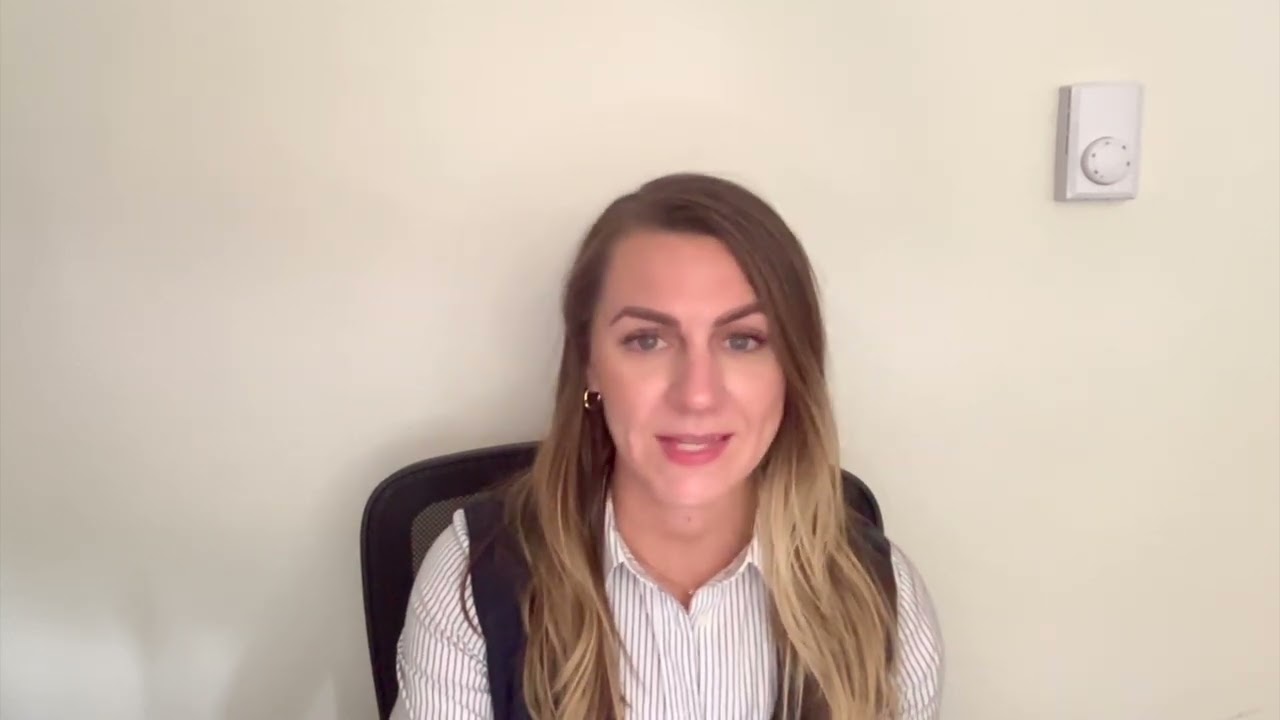
In this video Brooke Richey, a film composer, indie musician, and multi‑trauma survivor, explains how avoidance functions as a core trauma response, especially in people who develop narcissistic traits. She describes the neurobiological basis of avoidance, how it shows up as poor or inconsistent communication, failure to make plans, and hyper‑vigilant safety‑seeking behaviors. Using personal anecdotes—watching The Passion of the Christ at age nine and repeatedly confronting a flight‑related panic trigger—she illustrates how the brain equates safety with harm and how that loop can be broken. Richey outlines the consequences of staying in avoidance: missed connections, regret, and diminished self‑agency. She then offers concrete steps to rebuild confidence: deliberately facing triggers, using one’s voice as a regulator, setting clear boundaries, and understanding attachment styles and codependency. The talk concludes with practical resources (Amplify Your Voice program, Scapegoats United membership, Happy Hummer meditation) for survivors seeking to shift from avoidance to engagement.
Chapters
Hey folks, welcome to my channel. I'm Brooke Richey. I am a film composer, indie rock artist, and multi-trauma survivor. And as a vocalist for 20+ years, I am here looking at the cross-section in— what's the word— cross-intersectionality of using your voice to overcome trauma and to navigate in life. So your voice, it really is your body's regulator, and as a regulator, it helps you communicate to others Your needs, your wants, your desires, and where you want to go. It helps you navigate. The things you say become the fuel for your destination. Okay? So we're doing this series on communication with and for trauma survivors, how to understand, how to bridge the gap. And today's video is on understanding the avoidance strategy of narcissists and/or trauma survivors. And just quick note, narcissism is something that comes as a result of something that goes unprocessed, undealt with. Narcissism isn't something that someone just chooses to go do. It's a reaction. And really, it's one of the most severe trauma responses that someone can fall into. So with that, why does this happen, the avoidant strategy, and what does it look like? So it looks like Poor communication. It looks like inconsistent communication. And what those tend to look like is a lack of commitment, right? But that's not actually what's going on. It's avoidance of a perceived trauma, a perceived trigger to danger. And that's the unresolved trauma, right? So we're stuck in this loop sort of deal when it comes to that inconsistency in communication. It also looks like the failure to make plans. Failing your own plans, last-minute changes to plans. This is all avoidant strategy, okay? And so the why really here is just neuroscience. It's your body trying to keep you safe. And the, you know, if we want to go down the rabbit hole of the background of all of this, it's because something is going on unresolved, okay? Something is going on consistently unresolved. unprocessed, not dealt with, the emotions, the feelings all around that experience that was suppressed, suppressed and/or just neglected. It's not always a suppressed situation, like in my case, I having a suppressed memory for 15 years. It can just be neglect. It can just be neglect of your needs for caring for yourself. So this is really what's going on. The avoidance strategy Help someone stay safe. Speaking from an experience, and if you know my story, you already know, uh, I was forced to watch the film The Passion of the Christ when I was 9 years old, and this was by a primary caregiver. So here's the situation: my body then perceives safety with this scenario of harm, okay? And I know we've probably heard this before, but really to dial this down and really understand this My neurobiology at this point, my— the neuroscience going on in my brain is that I will not be safe if I am not harmed. I'm going to say that again. My brain, my subconscious mind is thinking I will not be safe if I do not experience harm. So this is the trick then, right? We have to unlearn all of this. We have to unlearn it because clearly it's not safe. And it's not safe for you to be in the state of hypervigilance. It's not safe for you to be in a space of neutral. Neutrality is good for some tactics. It's good for pivoting. It's good for cooling off, right? If your car overheats, for example, on the freeway, you, you can actually get further distance along if you punch it into neutral and coast for a little bit, and then pull over to the side of the road, right? Because then at that point you can just shut the engine off and then you can hit the brakes when you, you're on the shoulder. I actually had to do this recently. It was not that fun. Um, but I, you know, I wrote some music along the way. Um, but that's really it. So speaking from this example, right, to opt out of danger. I then go, this is what my body does, this is what my system does. It tries to hide. It avoids these perceived moments of danger, the trauma triggers, those subtle, those subtle cues that are like, danger's around, danger's around. It knows danger's around. And this is, this is the real, the real deal here. Your body then comes into a homeostasis, right? Of this is your safe place to be, of this hypervigilance, of this diverting from your needs, of this lack of speaking up. Your body actually thinks, your nervous system begins to think that this is where you're safe when you're not. You're not safe there. So it's all wired in, right? And what's the consequence? So with this topic of the avoidance strategy, we're talking about the why, The consequence and the what now. Okay, so the consequence then, the consequence of being here for so long is you're just missing out. And this isn't a FOMO kind of thing. Don't fall into those traps. But really, because that is your baseline in life, to live in this state of I'm safe when this is going on, because that's what your system thinks. It's just how your system's wired because of this These past experiences that need to be dealt with. That's it. So your body's actually working for you, but we need to pay attention to what the body's saying so that we can, you know, move out of that phase in your life, right? But that's the consequence. It's missed connection, it's missing out on life, and it's the worst of all, it could be a life of regret. And we don't want that for you. You don't want that for you. And the life of regret really comes in when, you know, there's opportunities for you to address a trigger and you don't address the trigger when it comes up. So take this really simply. Your self-agency, right, is not fulfilled right now. If you're, if you're here, if you're resonating, I'm talking to you. If you're here, you're resonating, and you're like, yeah, this sounds like me. I've experienced trauma and, you know, I've been working through it, and your self-agency isn't fully intact, your confidence isn't fully intact. Um, it's maybe, you know, you're doing this avoidance strategy thing. So here's how you can build this confidence. And we're kind of getting into the what now of how do we fix this, but it's really looking at that life of regret thing. You won't feel regret When you take on the challenge of facing a trigger, okay? And it's terrifying, sure. But when you face the trigger, you're able to diminish the power of whatever that, that situation was. If you're dealing with a disorder, it diminishes the power of the disorder. If you have ADHD, ADD symptoms coming up for you, which I know this is what our world has done, Um, for our parents' generation— I'm in my 30s— our parents' generation, it was bipolar, it was schizophrenia. For my generation, it's been anxiety and depressive disorder. For Gen X, Gen Z right now, it's, um, it's a lot of ADD. And what else is coming up for them? There's a lot of other things coming up for them. Um, ADHD is coming up for them. Okay. Because things just aren't being dealt with. That's, that's really all that we can gather from all this. And that's, you know, this is the consequence is, you know, deflection from looking at the fullness of the details, as painful as they are, as much as the shame and the guilt that comes up when you look at them, it is worth looking at because You want to have that fulfillment of that self-agency, of that confidence that I overcame this challenge that's impacting me. It's not impacting other people. And that's what we want others to understand, right? We want others to understand I have, you know, this mound of bricks on top of me, or I was hit by a train metaphysically— like, sorry, not metaphysically, metaphorically, right? I was hit by a metaphorical train from this experience. Okay, we want people to understand that, but the more that you shift your focus from people trying to— from getting people to understand you, and you shift it towards, I need to fix this, I need to overcome this myself, I got a challenge, I gotta face these challenges that are coming up in my everyday life because it's taking over my life. The more you shift your focus there, that is where you don't have the regret. That is where you get out of the avoidance strategy. That's where you overcome your trauma. That is where you're not living as a slave, right? You know, to these swirling rabbit holes of thought going on in your mind every time you face a trauma trigger. So here's the thing on this. Every time you do this, you get to put you know like a metaphorical coin into your mind's piggy bank of that subconscious piggy bank that's like oh yeah I did it oh yeah I did it oh yeah I overcame this already oh yeah I already faced this it's not so bad this time because I already faced it so speaking for example real quick on this I went back to the location I did I essentially did the exact same trip. And we're coming up on the anniversary where I had been trafficked 2 years ago, September 13th, 2023. And so I— 18 months later. So this, which is pretty quick, right? And I think it was only— I had been on one other plane, 2 other planes, planes, you know, small, small trips in between, um, that time. And this was the 3rd kind of plane flight round-trip flight that I had booked since September 13th, 2023. And of course, just a disclaimer, if you like this approach to healing your trauma of the Katniss Everdeen, I volunteer as tribute, I'm going to go face my trauma, do this where it's safe. Be, be logical about this. Follow your gut and your intuition. Your gut is never wrong. If it's a dangerous facing your trauma, don't do it. Okay, in this situation, I was completely safe and I changed the details of my trip. So being the details of where I stayed, I stayed in a different location. I put my own spin onto things. I did the things I really wanted and needed that second time around. So while facing a huge panic attack on the first flight over, It was totally worth it because now every time I go to the airport, I can say, oh wait, I already did this. I'm okay. I already did this and I came back safe. I'm okay. That's all I mean by all of this. And really, truly, if you like this approach to healing your trauma, by all means, go do it. Be safe. Be safe. Be smart. And trust yourself. That's the thing. Like, just, just trust yourself. When it comes to the voice and the what now, when you talk about the things you don't want, or when you're focusing on living a life in avoidance as opposed to a life of engagement, of initiation, that is what you're going to get. And I know this was so hard for me to grasp when I was first understanding this, but there's, um, man, I wish I could remember the artist right now. Don't let go, you got the music in you. Um, that song. You only get what you give, right? Okay. It's so true. The truth in that. You only get what you give. And Don't misconstrue this like I did, which, you know, we're not going to get into it, but you give of yourself when you've taken care of yourself first. And it's not even giving of yourself, it's giving of your talents, your gifts, your skills, all these things which produce what? More life. More creativity, more abundance, more growth. Okay, um, that is the shifting of focus when it comes to your voice and speaking about where you're headed. Okay, because here's the thing, you can change your cognitive behaviors. That's all this is. If you're someone here and you're like, how is this possible? You change your cognitive behavior, and you do that by speaking with your voice. In a safe space with safe people, with yourself. That's all you do. That's, that's literally all you have to do. And it, you know, at a very like primary level, that's all you got to do. There's still the healing, there's still, um, the connection, maybe reintegrating into things in your life, but Really, it's just moving the voice so that you can move all that stuff out of your system, out of your psyche. Okay, I'm kind of speaking to my trauma fellow survivors here. So if it comes to working around with a narcissist, someone who's struggling with narcissism, sometimes I'm— I don't love putting that label on people, even though I have in the past. Because I think narcissism is something that can really be undone. It can really be reversed. It just requires a willing person, is the thing. They have to really want to figure out something that maybe probably went wrong because they're struggling with the narcissism. And that's obviously on them. But here's what you can do to protect yourself. And this is also inadvertently going to help them. Boundaries are your number one friend. And I want you to think of being around narcissists as if you have this vat of energy, right? So here's, here's your energy over here, your energy container, your battery, and here's their energy container over here. And there's like a hole in the, in your energy tank. Mm-hmm. that they're pulling, leeching energy from, leeching from, and just keeps pulling from. They're not— there's no— and the thing is, you're not taking anything from them, but they're taking from you, if that helps as a visual. Visual. And when it comes to boundaries, right, uh, you got to be aware of when you're around this person or you have this much, you know, connection with this person. Um, I'm, I'm, I'm trying to look for the word. Just like, if you're consistently around this person, then this is going to be the result unless what? Some things are met that aren't being met for you. And of course, as we know with narcissists, there's a huge lack of accountability. They divert From being posed as the wrong one, as being wrong, as having failed, because there's major insecurities that are going on unresolved for them. So just take it with the approach of you can have empathy for someone struggling with narcissism, but you have to protect yourself and your energy while they sort it out for themselves, because If you know that that's the connection that they have to you, to leech onto your energy, disvaluing you along the way, not being accountable for for things that you bring up, that you know miss responsibilities and stuff like that, that is for you to protect yourself. So you want to look at. Attachment styles and the attachment styles that someone has to you. Are they securely attached to you, anxious avoidant, or disorganized? Are they codependent with you? There's there's only the four types, the first four I listed, but there can also be this aspect of codependency in any relationship, whether it's anxious avoidant, secure, or disorganized. If there's codependency in the mix. With someone who's struggling with narcissism, even though it is a secure relationship, that's kind of like you have to really insert those boundaries of, no, you can't be codependent with me, right? And that's only on you. You also don't have to even communicate your boundaries unless there's a pointed, you know, poignant point of poor behavior. Pointing it out, of laying it out with the person. You can just exercise your boundaries, and if they ask, then they ask, and then you explain. It's that simple. Here's the reason why you really want to do this, is because you're actually going to help the person struggling with narcissism. You can. I believe you can, because what it does is wake up something in them of something's wrong. And it opens the invitation of opportunity to them to take initiative in fixing the problem and the rift in the relationship. It— the relationship. If they don't want to, you stick to your boundaries and you protect yourself. The last thing on this, especially around codependency, is if a narcissist, someone struggling with narcissism, is attached to you. Um, they're attached to you for their sense of self-worth, and that is not good for them or for you, which is all the more reason to exert your boundaries. Okay, so if you're someone that's resonating with all of this, if you need help, I'm here to help you. I have links below. You can join Amplify Your Voice. That's a 6-week reset program. In 40 days, You are going to identify the root issues of your subconscious mindsets that are keeping you, holding you back, and we're going to pivot you and get you moving. We're going to create momentum in your life by using your voice with yourself, with others, and in the context of music. Okay? And we need that context in there because it's a real-life application for you. You can also join Scapegoats United. That's my monthly membership. And that is for anyone who has been scapegoated. And that is, I know, a lot of childhood trauma survivors like myself. And I just want to say, friends, you are not the scapegoat. You are not the little kid that's being overlooked anymore. You are the GOAT. You're the greatest of all time. And I would love to see you in that membership. I also have the Happy Hummer, and that is a 3-part meditation guide for you to regulate your body. And calm down, get grounded so that you can move on with your day wherever you are. You can use it wherever you're at. And links for all of this down below. I hope this helped you. If you know that this would help someone else, please like, comment, subscribe, share it with others, and I'll see you in my next video. Thanks for tuning in. Thanks for being here.
More from Brooke


It’s really that easy. Join me today or tomorrow in Amplify Your Voice Workshop








