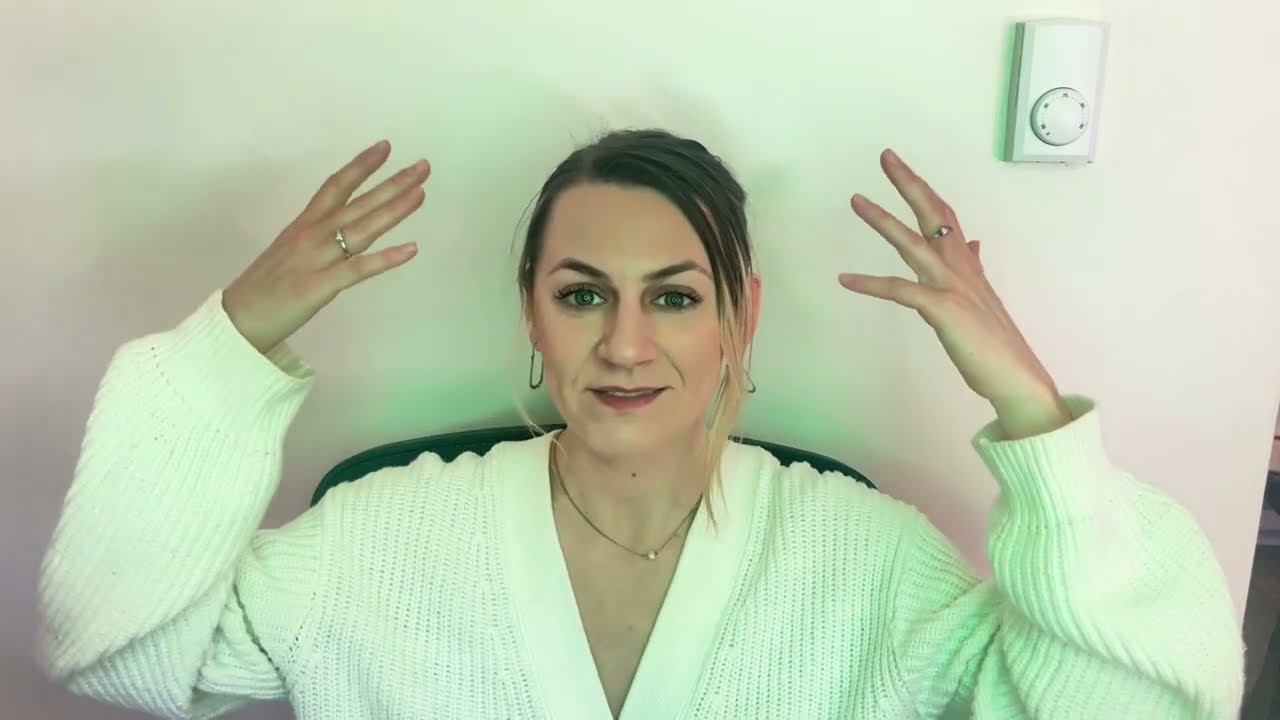
In this video Brooke Richey, a 20‑year vocalist, musician, and film composer, shares her personal journey as a trauma survivor and how she reclaimed her voice through three years of voice journaling. She recounts early childhood trauma, a later suppressed memory that lingered for 15 years, and the process of uncovering it by living in an isolated apartment with floor‑to‑ceiling mirrors, speaking to herself, and tracking physiological cues. Brooke argues that vulnerability is not weakness but a super‑strength that allows one to confront reality, uncover suppressed memories, and break the cycle of reactivity. She links unresolved trauma to reduced financial wellbeing and societal misunderstanding, noting that survivors are often perceived as threats because their experiences carry shame. Practical tools she describes include mirror work, vocalizing feelings, recognizing tension points, and using the voice as an embodiment of the self. The video concludes with an invitation to her 6‑week “Amplify Your Voice” program, which guides participants through self‑assessment, voice journaling, and personal growth.
Chapters
Hello and welcome to my channel. My name is Brooke Richey. I am a 20-year vocalist musician. I'm also a film composer. I've been doing that the last few years. I'm an indie rock artist, and I'm also a trauma survivor. I had my first experience of trauma when I was 9 years old, which is my originating root of trauma in my life. And 6 years later, I had a traumatic event that resulted in a suppressed memory of trauma that was stuck in my body for 15 years. Until I recovered it through voice journaling. I did that for 3 years and I was able to uncover it and then really get on track with my healing journey and taking back my voice, getting my voice back and living my life the way I want to, not in reactivity. So this channel is all things music blended with my experience in life, with how to heal trauma and looking at I, I just see direct correlations between, um, wealth and trauma, meaning if you have trauma, you're not going to have that much money, and if you have healed trauma, then you can have a lot of money. And also, it plays a huge factor in society. Anyways, I'm kind of going on a tangent for today's video, but, um, there's just a lot of direct correlations that get misunderstood when People who have not experienced trauma look at victims and survivors, especially in the heat of when they're experiencing trauma, and they see them as a threat. Makes no sense, but other than— We're seen and perceived as a threat, trauma survivors, because what we experienced is so terrifying and so full of shame for another human to To witness. I'm going to say that one more time. People perceive trauma survivors and victims as threats because the experiences we have lived through, traumatic, horrific experiences, are so full of shame and horror that no other human being actually wants to accept happened. So if you're here on this channel, And you are a trauma survivor, and maybe you have a suppressed memory. Don't give up. Like I know that's easier said than done, but just it's not a matter of don't give up. Don't entertain any other option. You have to work through this, and the reason why is if you watched my last video, your body is going to start to cave in on yourself if you don't work through it, and that's just leading to like. a sad life of crippling and dying an early death. And no one wants that. Like, I mean, I don't. So, um, getting to today's video, vulnerability. Your ability to, to be vulnerable is your, is your, um, it's your super strength. Um, here's why. When I spent 3 years, and I spent 3 years doing this, I lived in A not great apartment, but I had these giant mirrors that I had in my bedroom and my office room. And what I was able to do in these 3 years was look at myself in the mirror and vocalize everything that was going on underneath the surface. Because my best friend was about to get married and I was gonna be the maid of honor, and I was like, actually, you know, looking in the mirror, I don't like how this looks. I'm not okay with this. And so, you know, I got to work a little bit on the physiological stuff, but there was all— I realized, like, I've been here kind of before, of like, I was in really, really great shape in my life. Why did I swing this other way? And started asking myself questions about that. Why am I okay with this? Why am I here in this apartment that I don't love, that I could have figured out how to make it work at my other place? But I thought, no, I'll just move and like go through all the work of moving to just be in a place isolated for 3 years. But here's the thing, it served its purpose. And when I say isolated, like no one ever came over. I never had guests. Like, they're rare, like, visits from friends, family. And, um, yeah, it's just like it served its purpose, and it was the time in my life to really look in the mirror. And this is what you have to do if you want to uncover a suppressed memory, suppressed emotions. You have to really look in the mirror, and you have to get comfortable with looking in the mirror. And the best way to do that is to just voice journal about it. So in my last video, I talk about the physiological symptoms going on and how that's your number one place to even start your journey of maybe I have CPTSD, that I'm like, I don't know what happened to me, but something's wrong because I'm experiencing all these things. It's the same thing here with voice journaling and with being vulnerable. And so you have to be comfortable in the space of vulnerability that requires you to open up. Okay, I, I'm thinking back, you know, I'm trying to think back to times in my life where I've just completely shut down because it's requiring me to show more of myself in a place that I'm really not comfortable doing it. And when I look back at those experiences, I am so disappointed that I didn't show up. Okay, so your vulnerability is your strength. Okay, vulnerability is not weakness. Vulnerability is a strength. Because when you are vulnerable, you are looking at the reality. When you're vulnerable, You're looking at your reality, and reality is what is keeping you down to earth. Not being realistic, being like, oh, this because this is what your trauma wants. Your trauma wants something or someone to save you. But when you ask yourself that, do I actually want someone to save me? Do I actually want like someone to just swoop in and like knock out all like You know, like the work of carrying this load. Yeah, I mean, yeah, but at the same time, is that really what's going to help you? No, it's not. And that's really hard to face, but that's just it. Like, you get to— I guess you get to choose here. Like, you get to choose Do you want to work on yourself or do you want to just not? That's really it. So vulnerability is your strength. What else can I say about vulnerability? Vulnerability requires looking at the things you really don't like to see. And, um, so you're looking at your reality and that includes Because you're looking at your reality. You're looking at the things that really no one wants to look at. But if you don't look at them, like if you don't look at a problem, it's never going to get solved. If you don't vacuum under the rug, the dirt stays there, right? So this is why you have to look at it. And if you suppressed it, then you have to uncover it. So voice journaling, this is what I did for 3 years. I was looking at myself in a shitty apartment with These giant mirrors, floor-to-ceiling basically mirrors, and it was just me really. I had a cat for a while right when I moved in and had him for the 3 years I was there, but it was really just me. And I would talk to myself regularly, recording this on a phone. That's all you need to do to unlock everything that was going on. And Um, I sometimes I'm starting with my physiological state, like how I'm feeling at the moment. Um, but recognizing tension, recognizing those pressure points, right? Like I talked about in the last video, you— it's all about your self-awareness. And if you are refusing, constantly refusing, refusing, refusing to look at the things that are revolved around pressure, that have pressure points on them, you're never gonna move past it. You won't. Like, to be curt with you, you won't. Um, it's going to stay, you know, just tucked away, hidden somewhere, and it's going to weigh on your life. So I didn't want that for myself, and so I was like, it's time to figure this out. And Took some time, but I was able to do that without a coach, without a therapist, psychiatrist, without prescription drugs. I just used my voice. And this is why I love the voice so much. And I'm going to wrap up this video for us. Your voice— it is vulnerable to speak with your voice. So let me scale it back even more for you. Your voice This is why you do this and why voice journaling works. Your voice is the organ of your soul. What do I mean by that? Your voice starts down here, and you can't— I don't think you can see all of it, but it's down in your stomach. It's the midpoint of your being, and it extends all the way up, all the way up. And you can use all of this space even. It's like a facial cavity for resonance. This whole thing is your voice, the vocal organ, right? Made up with a bunch of other organs and, um, and muscles and whatnot, but it's the whole thing. It's, it's basically all of you. So if you're not using your voice to, you know, to do anything in your life You're not accessing you. Do you see how this is a problem? And I come from the belief of your best self is the best, um, thing for the— that you can give the world by being your best self. So, you know, if you just are ignoring your voice, we never get to know that best self. And then I personally think that contributes to more of the world's problems. Um, because I know I've been a problem child once or twice in the past, um, you know, and those are hard to come back from. You have to earn back people's trust, and it's better to just not have to do that in the first place. So I hope this helps you. And if you are someone who thinks that they might have a suppressed memory of trauma that is struggling to move forward in their life, that feels stuck in emotional reactivity, general reactivity of just constant fight or flight in survival mode, I am here to help you. I have a program called Amplify Your Voice. It's a 6-week program that walks you through the steps of where am I, where was I, and where am I headed. And it's really just designed to kind of Open the cage and let the bird out. Let the bird fly free. So links in— links below for that and a few other things to help you on your journey. And I'll see you guys in the next video. Thanks for tuning in. Bye.