How to Create Safety as A Coach and Leader - Alive and Free Podcast - Episode 98
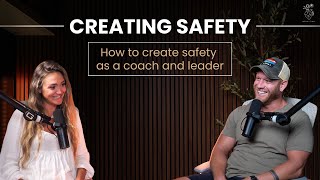
In this episode of the Alive and Free Podcast, hosts Spencer and Samantha Robbins explore how leaders—coaches, pastors, parents, mentors—can create emotional and spiritual safety for those they influence. They argue that many leaders either over‑emphasize truth without love or over‑emphasize love without truth, and they propose a balanced approach rooted in compassion, reflective listening, and validation before correction. Drawing on personal stories of ministry, street evangelism, marriage, and personal healing from shame, they illustrate how deep emotional safety enables people to confront pain, break shame cycles, and experience transformative love. The conversation covers practical coaching techniques (reflective listening, validation, compassionate boundaries), handling sensitive identity issues (e.g., gender transition, sexual orientation, attraction to minors) without compromising truth, and the importance of the leader’s own healing and relationship with God. They also discuss the role of fathering, humility, and accountability in leadership, and promote their resources—Alive and Free Collective, Coach Launch, and recommended books—designed to equip believers to become safe, love‑driven influencers who can foster radical, lasting transformation.
Chapters
Today we are going to be talking about safety as leaders and how to create safety for people that you're leading. So this is for you if you're either a coach, a pastor that meets one-on-one, or if you disciple people, you just happen to mentor people, or you're a parent. Um, we've just noticed, I think a reason why we feel, uh, very passionate about influencing leaders and helping equip coaches is because there's such a lack of skill and knowledge on how to create safety for people that you're leading. And we've just learned that, like, you know, there's people that kind of sit on both sides of the spectrum where, you know, people might be just like, truth, truth, truth, and I need to tell you exactly what's truth. And they kind of like throw out all of the love in the process as well. And then you have the other side of the spectrum, people like, I love, love, love, accept you. But then don't deliver the truth. And we wanted to have a whole dialogue and conversation about the way that we've created safety with the people that we've met with over the years. We've met with thousands of people, and for some reason— and I've, I've felt this in my own life, I know Sammy has as well— we've had just this unique, uh, ability, call it, or, or a gift from God, where I'll be in a conversation with, uh, anybody, and they'll start telling me the darkest secrets of their life. And, um, and so we wanted to articulate some of how we create safety and how we coach, uh, our students in our life coaching programs and how we've trained our employees and our staff on how to create safety for people so that you can influence and lead them super well. And so I hope you enjoy the podcast episode. We're excited to get into it.
Hello, hello, hello. I'm sick, so just disclaimer, if I sound super nasally and sniffly, it's because I am. And Spencer has really severe allergies.
Allergies.
And so welcome to this week's podcast episode with your sick hosts, Samantha and Spencer Robbins.
Hello, welcome. Yes, uh, well, I'm excited to get into the topic today because I know we had a bunch of, you know, episodes just on money and, you know, God's take on money and managing finances and stuff. I think it's great stuff, but I know we want to get back to the heart of, uh, exactly who we are as a— at Alive and Free. And a big part of who we are at Alive and Free is equipping, uh, believers on how to, uh, coach people, how to actually have a place of influence and help people find true freedom in their lives.
Yeah, I mean, for years we both did a ton of ministry on the streets. We were praying for the sick, seeing people get healed, walking people through, you know, giving Jesus their hearts and seeing them get saved and healed. And we saw a lot of deliverance as well. And after years and years of doing that, I saw so many people walk away with a healing but didn't actually have full transformation. And I, I kind of started feeling angry about how many people I was praying for to get saved. I'd prophesy over them, they'd be crying and get touched by God and have this encounter where they're like, wow, how did you know that? God's so real. Like, yes, I want to give my life to him. They might even see a physical healing too. And I'd walk away just being like, man, where are they going to get discipled? Where are they going to go to church? Like, I, I trust God in their life, but I've seen so many Christians fall away or burn out because they have no discipleship, they have no community, or they get plugged into a church and they don't get really good theology there, or maybe they're not actually being properly discipled. And I kind of had a fire in me after what, 5 years of ministry, 4 years of ministry, and I'm talking like all day, every day, like seeing crazy radical things on the streets. I know it was the same for you, babe. I just, I realized the value of emotional transformation and how if you know how to walk through pain and if you know how to listen to Jesus's voice and have him be your healer when it comes to your emotional pain, then it changes the way you do life and relationship. And it felt like a really powerful way to disciple people, like, and to make disciples of all the nations, because it's something that could be replicated. And I just was like, man, if believers understand how to get healing and how to, like, live wholeheartedly and healthy, how will that change their Christian walk? Because then if someone in the church, you know, say the pastor has an affair and the church splits, and now all of a sudden, this person you thought was the most like Jesus you ever seen is now very human to you, and you're seeing their raw brokenness and humanity, and that can be devastating for a believer. Yeah. Amidst the thousands of other things that can go wrong, which those of you, if you've been in the church for an extended period of time, I'm sure you have your own stories that you have really had to learn how to walk through and how to trust people again and how to trust the church and how to have that not become the lens that you view the Father out of. Because we can experience hurt from believers and project that hurt onto God. And believers are very different than the God that created them, and very imperfect compared to the God that created them, and very conditionally loving compared to this perfectly, unconditionally loving Father who did everything to have connection with us. And if we can learn how to move through pain, then we can cultivate a really beautiful, rich intimacy with God, with ourselves, and with the world around us. And that was what Alive and Free was birthed from. I did years of one-on-one coaching. Spencer did too. Um, for the first few years, it was just mentoring people for free because we wanted to help people and wanted to love and serve and see people get transformation. And then it turned into one-on-one coaching, and then we scaled it and had group coaching programs, like with the Come Alive program. And then it turned into Coach Launch, which we do now, which we are wanting to make disciples out of people who can make more disciples. We're wanting to like multiply this process so people are getting radical transformation. And it is the heartbeat of what we do is yes to the miracles, signs, and wonders, yes to the spiritual gifts, but yes to seeing people that are— Yeah, that are wholehearted and fully alive and connected to God and feel like they can hear his voice, like, you know, at the snap of a finger they know how to bring things to God and they know how to invite him in to receive healing. Like, that's, that's where we can create crazy transformation on a large scale, and that's what we're all about.
Well, Jesus was the light of the world, and he called us the light of the world and called us to a city set on a hill. And it's like, man, if— what could one believer that was shining like truly shining and emitting the light of Jesus, like fully just, just emitting pure love to the world. What could one believer like that do and accomplish? Like, what could the impact be?
Yeah.
And, and I think that to me feels so exciting versus 1,000 people prayed a prayer. Now, I'm not going to diminish that, like, having 1,000 people praying to the Lord, asking him to be Lord of their life is not— is not— I'm not saying that that's not incredibly valuable. I'm just saying, what about those 1,000 believers having the capacity to live wholehearted? Yeah. And connected to God, facing all the things that are keeping them constrained and imprisoned still as believers in their lives. And I think that always excited me in this journey, and it's the reason why I never even got into this for coaching. I got into this so that I could live free. And healthy. We had a conversation yesterday when I was on a coaching call with our students in the Coach Launch program, uh, and, uh, there was this pastor— shout out to Aaron— who I was talking to, and we were just talking about, you know, he had mentioned that there was a person that came to his church that was a man that was already transitioning into becoming a female, a gender, a gender transitioning process, and was pretty far along in that and came to this event at his church. And he's like, and, you know, we prayed for the person. And, uh, but basically it was— we were having a conversation, how do you address people like that in settings where you can actually influence them? And I was telling him, you know, I have, I have a lot of strong thoughts about this because we've been in settings and coaching settings one-on-one where I can tell a person is trying to get me to give them my opinion about their sin, their identity issues, about about, you know, they're trying to get me to reject them, just like other Christians have, just like other people have. And I make it a point to not give an opinion in those moments, not because I don't have one and not because I don't want them to end up in truth, but because I believe after a year or two years of building rich trust, like, uh, trust, love, connection over a 1 or 2 year process, when they ask me that question 1 or 2 years down the road where they know that I care for them, yeah, that I'm for them, that that conversation is going to go so much better and it's actually going to take root when they ask me that question again. I would way rather answer that down the road than right at a moment. And I feel like, you know, when I read about the woman caught in adultery, our church, a lot of church culture And a lot of, uh, a lot of Christians in— I think in our religious anxiety rush to go and sin no more and will not let ourselves get to that place where we actually love somebody so much that we're willing to destroy all condemnation and accusation over a person before we say that. We want to rush to, let's fix the sin first and then we'll deal with the heart. Let's, let's make sure that, you know, it's not okay to sin. I need you to know at this church, here's what we stand for before I actually love you unconditionally. Yeah. And I'm not saying to not say, you know, go and sin no more. I'm saying, I wonder if as a church culture, sometimes in our anxiety and as Christians in leadership positions, if we feel a desperate need to react to some of the wokeism that's out there, some of the the big, like, you know, crazy acceptance of all certain types of outcomes and sin and things like that. If we react to that by going, we need to take a strong stance here of truth, and sometimes we don't actually bring the truth in love, and there's no landing pad for that truth to actually take root in someone's life because they don't believe we actually love them no matter what.
Yeah, I mean, the amount of times that I have heard of stories, or I myself have been in a position where I needed help and I just had someone like remind me of the truth and tell me scriptures and try to get me connected back to, you know, hope, faith, and love and joy and peace. Uh, well-intentioned, really beautiful. I'm, I'm very open to it, but it doesn't, it doesn't create a ton of safety and it doesn't build a lot of authority in my heart for that person to be able to influence me. Yeah. And there are so many people that, you know, are too afraid of their own pain and don't create space and room in their life to face and feel and be loved by God and be met with compassion by God in their pain, that they are not able to give that away. And so their only response is to shove scripture down someone else's throat. And I, I used to be that person. I would pour over the scriptures constantly. And I was trying to renew my mind because I wanted it to transform me. And I was very quick to just be like, I'm going to discipline myself into believing this scripture so much and hope that it changes my life, or hope that it changes the way that I'm navigating through this life circumstance. And so when people would come to me with pain, I had a lot of joy and truth to give them. And that can be inspiring. I'm not saying that it's a bad thing. It's, it's definitely a beautiful aspect. But I was so avoidant of my own pain, it felt almost unbearable. And what I didn't know at the time is that subconsciously I was terrified to feel my pain because I associated pain with being rejected, abandoned, and alone. Yeah, I can look back to many times in my life where I wasn't seen, I was misunderstood, I was judged. My, you know, my parents didn't know how to hold space for my pain or didn't know how to comfort me or, or connect with me in a way that helped me feel safe and open up. And so I retreated and I withdrew. And then there were times I was in pain where people rejected me in the middle of it, and maybe there was something else happening in their life, but I created the narrative that I was rejected because of my pain.
Yeah.
And it wasn't safe to feel pain, and I had such a strong aversion to feeling any of that. And so how would I ever be able to hold space and create safety and bring compassion to someone else who was in pain? Yeah, you can't. You really cannot. Like, even if you can give away a love you don't give yourself, there will be an expiration date on it.
Yeah.
Especially as you enter into an intimate marriage, close, close relationship.
Relationships, it causes you to get triggered in all of the stuff you actually believe and think.
Well, you're— you don't have any emotional resilience, and you won't have a high pain tolerance or a tolerance to hold space for someone else who's in pain.
Yeah, because you yourself are needing space held for you.
Yes, and you haven't received it, so how could you give away a love you've never experienced before, right? But if we look at the scripture, time and time again, before Jesus ever performed a miracle, And Jesus moved with compassion, healed the sick. And Jesus moved with compassion. And we skip that part because we don't understand it or we oversimplify it.
Or love is a verb.
Right.
It's like, just do the loving thing.
And it's just like, compassion is being with.
Yeah.
It's connecting. And being with means connection. And connection is the opposite of shame. And shame isolates you. It tells you that there's something uniquely wrong with you. You're the only one struggling with this, and then you are alone in it to figure it out yourself because you're unlovable if you're in that state. And so compassion actually destroys shame, 'cause it's someone coming in eye to eye and holding space and being with you in the middle of it and saying, I love you even here. I love this messy version of you. I love you in your moods. I love you even if you withdraw. I choose you even when we're in pain. I was talking to a girl who's a really good friend and someone that I get to mentor,, it's such an honor because she's so humble and teachable and open and lovable. It makes it really, really fun to invest time. And we were talking about how to create connection in the midst of triggers. And I was telling her one of the things we learned in our marriage, it took us, I think, 4 years, was to realize that one of my core pains and fears was that I thought you believed that I wasn't the most important to you. And the root of that is you had broken attachment, and so it felt safe— it felt unsafe to let me in. Yeah. And so you kind of came off as, I'm committed to you, but I really am not that in love with you, and you're really not that important to me. It was the protector. That's what my narrative was. And your really big trigger was that you believed that I only wanted the best put together healthy version of you, and that I wouldn't love you if I knew who you really were, or if you were in mess, or if you were in pain, right? And so two things we learned to do was for me to put my hand on you if we're in the middle of a big trigger, if I'm regulated enough to do this, for me to put my hand on your arm and just say, hey, I love you no matter what. I love you even if you're messy, and I'm still here with you. And a way that you could love me was you putting your hand on me saying, you're the most important person in the world to me. I'd do anything for you. And some version of those statements. And we're, we're talking about the way that that can create safety in the midst of a big trigger, and it communicates compassion and unconditional love, which the more you experience that in life with Jesus and in relationships, the better version of yourself you'll become.
And how can you do that? If you are not finding your security in him.
Yeah.
And in the love that is unshakable. Yeah. And, and that's— that is what we're called to as Christians, is to actually be ministers of reconciliation to the world. And what did Jesus do? Did he demand repentance before he displayed goodness? No. That's what the— that's what the law did. The law came to demand you follow it, which we could not. And he came It says the goodness of God leads to repentance. So as ministers of reconciliation, we— our job is to actually bring goodness to the people around us and to watch them repent as a result, not expect them to repent as a transactional exchange for goodness from God. And that's what we do a lot of times, is we go, oh, you want blessing and goodness from God? You have to—
yeah, and it's like in the word every single day, renew your mind.
Why? Were all these sinners and tax collectors? Like, Jesus didn't hold back truth. We all know that. Like, he didn't hold back what was true. He didn't hold back what was sin, like talking about sin, those different things. But still, why did tax collectors and sinners, just like Zacchaeus trying to climb a tree just to see him from a far distance away, like, why were they just like, I need to get around him, I need to just see him, like, as close as I can get? And to be like, to have Jesus invite them into their, uh, his— to ask to be invited into their home to spend time with them, they would see it as a huge honor. And then after spending time, be like, I want to give everything I've ever stolen back to, to them and, and do it over and above what I, what I ever took. He didn't even ask Zacchaeus to do that. Like, you know, we have all these instances, like even, uh, the paraplegic that was brought to Jesus, and Jesus knowing there were, there were religious Pharisees is there. He started with, son, your sins are forgiven. And then the religious were like, who is this person that thinks he can forgive sins? And this guy didn't even ask for forgiveness. There's nothing in the scripture talking about this guy. That's what he was looking for. He obviously wanted to get healed. But here's Jesus going, your sins are forgiven. And then they're all grumbling and stuff. Then he goes, so that you know that the Son of Man has authority to forgive sins. Because he goes, is it easier to say your sins are forgiven or to heal this person and make him walk? And he says, so that you know that the Son of Man has authority to forgive the sins of the world, I say to you, get up and walk. And he got up and walked. It was a crazy miracle. And I think that's so powerful that Jesus, what he was doing was actually bringing such a love to the world, taking their burdens off first, and showing that there was this beacon of light they wanted to gather around. And as a church, as a people, as Christians, I see so much more of the religious, yeah, you know, this anxiety that makes us go, this is so wrong what you're doing.
It's afraid of sin.
Let's work through things so that you can get free from that. And it's like, no, that's not the point. The point is they would have never chosen that in the first place if they had the greatest source of love that they could ever access in the universe. And so why don't we give them a taste of that love? Yeah, that makes them want to turn away from these different things that have nothing to do with their identity. Yeah. And when I started going through a ton of healing and, and getting a ton of freedom in my life, I didn't get it from a pastor. I didn't get it from a leader in the church. And I'm not saying pastors and leaders— there aren't pastors and leaders that have this amazing capacity to bring unconditional love and acceptance. I'm just saying I ended up getting it from a life coach, and he helped me discover things about myself— intense shame, condemnation, all these things that were actually driving me into a deeper and deeper pit in my life. And he showed me that my shame and my condemnation was way worse than any of the sin I was living in. And actually, when we dealt with that together in his office, all the sin just started falling away. And I was like, that is so different than any other way that I had ever gone after this or approached it before in my life. It was always like, stop the thing, then we can talk about this, this stuff that you— that really matters, your heart.
I mean, it's the whitewashed tomb, you know. It's like the Pharisees trying to do everything right externally, but like there was no love and connection in them. They had no connection with Jesus, you know. And so many Christians spend so much time doing behavioral modification. Yeah, like, for example, if you struggle with pornography, how many people— if you've tried to get help, good on you. Like, I want to like commend you and celebrate you that you have taken any steps to get help. And to look at this and to adjust it. But it's probably not far off to assume that you had someone that said, here are 5 things that you can do every single day to try to stay porn-free. You know, reach out to a friend, share with the friend every time you do watch pornography, do breathwork, do— it's like all of these external things to modify this behavior. And, and there are people who it's worked for because they have a strong enough discipline but it never actually addresses the root of that. And, and hopefully you have experienced some other types of breakthroughs that have in your life. That's what I wish and hope for for everybody. But what is the thing? What's the pain? What's the wound? What was the need that you tried to get met that was driving you into the impulse of pornography in the first place? Because there was an origin where a wound happened and you were exposed to pornography and it comforted you and met a need in a time and then built strong neural pathways. So now every time you experience that wound and that pain or that bad belief or lie, now all of a sudden you're programmed to, oh, porn is the thing that can comfort me. Porn is the area where I won't get rejected. Porn is the area where I know I can feel like I'm enough. Porn is the place where I can have a desire fulfilled. You know. And if, if you can figure out what that pain is in the first place and learn how to grieve it and move through the pain and be loved by God in it and bring that same unconditional love towards yourself— not shame yourself, not judge yourself, bring kindness and compassion in towards yourself— it's now an internal transformation that will work its way out.
Yeah, well, there's almost like, even when we say like, oh, I, I I love, you know, I love people unconditionally. Sometimes what we're, what we're actually saying is, I, I love you, but this isn't really you. This isn't the real you doing this, you know. So I love the real you. But then what that tells us is like, oh, you conditionally love me. Yeah. When I'm not in this behavior. And so, okay, I'm actually working from the hope of love. Yeah. And not actually from being loved. And the truth is, is like you, uh, that person— imagine that person reaching out. Okay, they go, they go to get help. They're like, I know porn is not a good thing in my life, I, I need to go get help. Okay, so they go to one source. That source gives them, here's a list of all these things you can do. Make sure you have your accountability partner, they're going to speak things over you, truth, all the different stuff. Okay, um, that's one source. You have another source, you're going to go to that source. Okay, every time you struggle even after the fact, I want you to come here and, and I want you to call me, and I'm going to tell you how much I still love you, how much I think about your worth. I'm going to tell you who you really are, and that's what I'm going to do every time. And I will never bring any shame, no condemnation, or anything like that. And I'm going to encourage you to no longer continue this thing that's actually eating away at your soul, not because I think it you're bad or unlovable for doing it, but because it's eating away at your soul. Which source are people going to come back to willingly because it's such a great experience that actually changes them? This one, it's like, I'm gonna keep— it's gonna somehow build this mindset.
The first one.
The first one's going to build this mindset. I know, I put it in my hand.
You used to draw a picture with.
Yes. So watch these YouTube if you want to see it. No, I'm just kidding. Uh, but the first, the first, uh, you know, scenario, you're going to maybe deal with the behaviors for a time, but you're still going to be left with that question mark. Am I lovable even in my worst?
Yeah. Is every part of me lovable?
And when I was dealing with my porn struggle, I needed to know after I had gone through a moment that was a dark and painful moment an impulse and I gave way to it, I needed to know I was loved afterwards. So that's when I started asking God questions, was in my, my most vulnerable state, when I carried the most shame. And that's, that's when God started actually unraveling all of this. And I was— I started feeling like he was the safest person to go to after, during, before, to the point where I'm like, I don't even think I want this because I have a source of love I can access that loves me no matter what. Yeah, and that's what I wanted the whole time. And, and so the second scenario where you have somebody that's going to love you, speak identity over you, call you into your best, but still know like even if you never changed, I would still love you and be with you in this— that's a source that the world wants to run to for help. Yeah. And I think when we're in these one-on-one sessions, sometimes this anxiety creeps in of like, you know, this is a reflection of my leadership. I need to make sure people are living Hey, here, here, here. As parents, I feel this anxiety sometimes. We're like, Wilder will like slap a kid or like bite somebody, or, you know, and I'm like, I want to— like, my anxiety as a parent wants me to fix the behavior so fast that other people don't see him as a problem child and don't see us as bad parents. Those are like two thoughts across my mind.
Well, and, and consciously or subconsciously too, when our children are misbehaving too We're afraid of what it can turn into, which alludes to a belief that we believe that they're bad inside, that they aren't going to be good, that they aren't going to be kind, that they aren't going to be caring and selfless. And so we try to get rid of the behavior or punish it as fast as we can, but it's still rooted in fear. The fear that you actually believe your kid is bad. And if you believe your kid is bad, you're going to parent them in a way that treats them and trains them to believe that they are bad, which will create more shame, which will then perpetuate more bad behavior, right, to try to deal with and cope with the pain of disconnection they feel.
Yeah, definitely. And that's why it's like No Bad Children— like, is that a book that you know?
Oh, No Bad Kids.
No Bad Kids.
Yeah. And another one is Good Inside by Dr. Becky something that's incredible about shame.
So like, if you're a parent listening to this, you want a resource, check out those books. Um, but it is interesting that we, we bring all of that to our leadership. I literally had a friend call me the other day and we were talking and then he was like, yeah, I just got off with a friend back home. And, uh, you know, he— it's hard because his, his sibling, you know, she— his sister basically, uh, canceled and ended all contact with him and, and basically was like, yeah, you can't come to my wedding because she's marrying a woman., and he— and she called him to ask what his thoughts were about it. And when he shared his thoughts honestly, because he was like in a season of like finally being honest about stuff as a Christian, uh, she rejected him and said, you cannot come to the wedding. And he's like, what would you do in a situation like that? And I sat there on the phone going, that's interesting. I understand where he's coming from because he, you know, it sounds like he's steamrolled his heart for a long time and hasn't been honest in a a lot of interactions in his life and relationships. So maybe he's like, oh, this is a season, regardless of the consequences, I'm going to be brutally honest. I understand the pendulum swing, why that might benefit him. I'd say for me, if I were in a situation like that, I might be a little counter to how most people might address their sibling. You know, if I got a phone call like that, obviously I'd be doing a lot of, uh, God, what are you saying? And spiritual discernment, like, Holy Spirit, I, I really need you to bring love and truth out of my heart in a way that makes the most sense and it has the greatest impact. Experience your love. I want them to experience you. Yes. And I told them I'd probably, though, if I were just going based off of my own intuition and the knowledge I have now, I'd probably say, hey, thanks so much for calling. I appreciate you wanting to know my opinion about this. Uh, but I guess like Why do you need to know my opinion? And, and I'd probably go from there, and it's like, well, I, I just want to know if you support me. It's like, well, you know I support you. I guess, why do you need to know my opinion about this, this part of your life? Like, you're, you're choosing to do this no matter what. Like, this is a choice you're already making. This is how you want to live your life. You haven't consulted me about this before. Why do you even care what I think about this? And I guess If I were to say, if I were to say hypothetically, I'm not saying I even believe or feel this way. If I were to say hypothetically, I disagree, would you still want close relationship and intimacy with me as your brother? Like, would you still stay in relationship with me if I told you I don't agree with your decision, I don't support it? And maybe she's like, you know, I don't think I could. Okay, well then why are you even asking me this? It doesn't matter. My opinion is irrelevant to you. You're going to live your life. I love you so much. I'm your, I'm your brother. I support you in your life. And so why do you need to know this? And, and I wouldn't even give an answer because the writing's on the wall. She's going to live her life how she's going to live it. And I want to be able to plant seeds along the way. And now does that mean I don't have an opinion about it? No. But this isn't a person that has come under my authority. Yeah, that's actually listening to what God has to say. She has decided to not listen to those things or follow the word in this area or even confront this part of her life. She is fully adopting it and going with that pattern of thinking. So she's not, she's not a functioning believer in my world that I owe her anything. Yeah. So why would I let that become a wedge in my relationship with her? And I think to a lot of Christians, they're like, no, you just have to be bold and say like, what is— I'm like, I don't agree that that's true to somebody that's earnestly and sincerely asking me because they want to grow and change and they're in submission to the Spirit. Yeah. Well, I'm going to give my thoughts there because you're earnestly asking me. But even then, I'm like, I want to get to the root of like like a lot more that's underneath that.
Yeah, you know, yeah. I mean, it wasn't until I started receiving life coaching— because I went through healing from age 18 until I was about 22 and had a lot of beautiful healing encounters and experiences with God and learned a lot about theology that totally transformed the way that I lived. And it wasn't until I met you and we started talking about dating, I think I was 23, I was 23, that you basically were like, I don't, I don't, I want to date you, I want to explore things with you, but I don't even know if I feel safe to be with you because you don't have any leadership in your life. And he was saying that in response to me freaking out about him trying to date me. I was like, I don't know if you're the person I want to be with. And he's like, whoa, whoa, I just want to like take you on a date.
Date.
Like, I'm not saying I want to marry you. Um, so I basically got to a point where I knew I wanted to explore things with Spencer. And then right when we started dating, we started getting counseling together and life coaching together, and it expedited and accelerated my healing journey on a radical level because I was so used to healing in isolation I was so used to doing everything in isolation, and I felt really safe with God, and I had a ton of intimacy with God, but I truly believed that people weren't safe and that there was no one that was safe enough and that I had to figure everything out on my own. And so having leadership started letting love get into these places of my heart where I had a lot of distrust towards humanity. And Being able to be called out for the areas that I had shame and self-hatred, AKA conditionally loved myself, and have someone meet me with compassion and teach me how to bring compassion to myself in these areas was life-changing on a radical level for me. And the years leading up to that, I was safe for people, like safe enough, knew how to hold space for people's pain, was walking them through their pain. And I had a lot of people that would just come to me asking for help, and I was happy to just do it for free. I would just like serve them in that way. And the more that I learned to hold space for my own pain and meet myself with compassion and be met with the love of God in these moments, the easier it was to not be afraid of sin and not be afraid of bad behaviors. Because I really believed when it came to loving all of these parts of you unconditionally, like if I loved the version of me that was bulimic and had eating disorders, I believed that it would condone the bad behavior and make it stronger in my life. Almost like, man, I threw up yesterday. I remember telling Spencer, This is when I was 23. I hadn't, I hadn't had like a relapse with bulimia in a long time. I struggled with it whenever I was like 17 for 6 months and sporadically would trigger after that. And I remember telling him like, I threw up yesterday, I like broke a fast, I hurt my ankle, I can't run, I feel like out of control, my job situation is out of control as well. And when I broke my fast, I felt felt a ton of shame, and so I threw it up afterwards. And it was this thing in me that's like, I want to be a woman of my word. I want to be disciplined. I want to basically— I want to make myself as lovable of a version of myself as I can, because I believe that that's what would get me love and acceptance from God subconsciously and the people around me. And Spencer was like, when are you going to love yourself? When your head's over the toilet. And I truly just believed that it would reinforce the bad behavior I was trying to get rid of. Yeah. And that's what a lot of believers think. And, um, long story short, the more that I learned how to bring love into these versions of me that were messy and in pain, the more freedom I actually got. And that's what the love of God does. It transforms us. It's so radical. It's so lavish. It's so unconditional that it's almost offensive to our sin. It's almost offensive to our woundings. Yeah. And the more we have been able to train and to teach the coaches that we are equipping now how to give that love away and how to help people learn to love themselves in that way and to receive God's love in that way, the more transformation we've seen happen. Yeah. And it's all, it's all under the I'm saying this weird, but under the housing of creating safety. Yeah, well, like, you can't have true influence unless you know how to create true safety with somebody.
Yeah. And, uh, something— the way that we've coached a lot of our coaches that we've had as employees, the way we've coached our students, the way we've coached even employees that, um, are, you know, on even sales calls with, uh, with prospects and everything, it's a big portion of like the practicals of it, of the way that we coach people to create safety, is, uh, to listen and understand, reflective listening, to validate, and to bring compassion. Now, uh, where I see a lot of people go, uh, to the other side of the spectrum is like even some of those like, uh, I don't know, affirming churches— is that what it's called? Those affirming churches where there's even like— I've seen you know, homosexual pastors and, and stuff like that, like in Methodist churches. And I'm like, I'm not for that. I believe in unconditional love. I don't believe in unconditional influence. And I can talk about that in a second. But when I say validate, you know, we'll have somebody that gets on a coaching call and they'll share all of their process. And so maybe, like, just so we're on the, the homosexual, you know, topic, uh, I'll say, you know, uh, So somebody will say like, here's all the process and everything. And so I think I, you know, let's say it's a male client, I think I like men. And it's like, okay, if I validate— I'm not going to validate the conclusion he just drew in the narrative, right? I like— I think I like men. I'm going to validate all of the process, the emotions. Yes, I'm going to validate the ways that he might feel. I'm like, oh, I can imagine that'd be so painful. I could imagine, you know, you must have felt this. Like, I I can see that you feel this way. I can feel you're hurting in this way, that you think these things, the attraction this way.
It makes so much sense that you would have that attraction template based off of your experiences that you had, right?
Exactly. There's a lot we can go into there. Now, do I have to be like, but I, I, I wholly disagree with— it's like, no, I'm not going there yet. I, I know that at all. I know that that's not the best for him. Yeah, I know that that is not in God's design for him. I know that is not in his true identity and true self. I know that that was most likely a part of socialization and life experiences and inadequacies and pain and trauma. So I want to ask questions to get to the place where his heart needs love the most. And, and I think what a lot of people have done as a reaction to a lot of that, like, hellfire truth— like, I'm just gonna tell you truth no matter what, even if it costs you know, even if it costs our entire relationship, and, um, and I'm just going to speak truth without any gentleness, without any love, without any personal equity. I think the reaction has been, I'm going to validate your narrative and conclusions. Yeah, you were made this way. And it's like, what?
Okay, so real quick, just wanted to take a quick second to say that if you're tired of feeling stuck in sadness, disconnect, or feeling powerless to relationship triggers, Maybe you just feel swirly internally and you don't fully feel powerful to work through your emotions, and you really want to be more connected to yourself and to God. We really encourage you to click the link below the description.
Yeah, so we have like a full hub of all the courses we've ever created for emotional health, spiritual health. The best thing you could ever do if you have a vision for your life of who you want to be is to get help or mentorship from people that are ahead of you in some specific area, and that's in order to become the person that the loved ones in your life deserve.
In this hub called the Alive and Free Collective, we have a monthly coaching call with us, a monthly teaching and Q&A with trusted experts we love, and we have a community of believers on an emotional health journey. And like we said, all the emotional health courses we've offered and a vault of over 50 trainings from the top emotional health leaders giving their best guidance.
It's only $47 a month, and you can learn all about that if you click the link below. And if you want to learn how to be a safe leader and coach others and start a life coaching business, you can click the link below as well in the description to learn about our program Coach Launch. Okay, back to everything that's important. Sometimes we validate those things thinking that's the way you deal with shame, is I affirm this is just a part of your personality and who you are.
You know, like it's an over— it's an overcorrection on the pendulum. I don't want I don't want you to ever believe that you're unlovable. I don't want you to ever believe that you're rejected or that I would ever reject you. And so I'm going to condone and accept all of this behavior and the conclusions you've drawn. Yes. So that I don't ever make you feel X, Y, and Z.
Yes. But if you, if you like consider an extreme example, a man that is attracted to children, right? And we've seen those examples in our culture. That would be an extreme version. People go, you can't 'they can't compare that to this, this, and this.' It's like, well, actually you can, because they're identifying based on their attraction. They are following through with it. We would go, 'Oh, that person's disgusting, you know, get them away, get them in prison.' I think a lot of us subconsciously actually think and believe that. Now, that person is actually worthy of love in God's sight. So what's a way that you actually create boundaries in a person's life while also being able to bring a love that destroys their shame and all condemnation and also call them into greater? Well, one, they need boundaries. That's why prison's actually like a good idea for these people that can't control their impulses and are destroying children's lives around them. Yes, that should happen first. Number one, cool, boundaries. Number two, I want to actually have a conversation with you where we unpack, you know, why you haven't been able to talk about this from, you know, the beginning when you first started having these types of attractions. Oh, it's most likely shame, condemnation around you. Somebody didn't know how to talk you through these different things. And so shame is the biggest problem actually here. Let's talk about that stuff. When did you first start feeling this way? All those different things. I want to get to the root of all this stuff because at the end of the day, that person still is going to only ever change by the transformative supernatural power of God's love. Yeah, that's it. And so do there need to be boundaries that exist? Yes. Like, we even had an employee, uh, way back in the day, uh, that it, it came out in a conversation that she was kind of hiding that she was living at home with her boyfriend. And this was a coach for us that was coaching our clients. And it came out she was kind of hiding that from us. But when she shared it finally, she was like, yeah, so basically I prayed about it and God told me that he loves me and, and, and so we're all good. And she just decided like, this is actually okay. And I had to ask clarifying questions. I was like, wait, so are you saying like, this is God's best for you? There's no more process around like exploring any other options? No.
This is— are you open to input? Are you open to change? Are you like— have you already just concluded that you are okay with this and this is the decision you're gonna make?
And she was like, yes. And I was like, okay, well, you can no longer work for us as a coach. We love you.
Yeah, we love you so much. We think that you are amazing. You've been an incredible coach, but we cannot allow you to lead our Christian clients clients, because you will coach into people whatever your beliefs are. And if you have denial, for example, then you will coach denial into your clients.
Now, if she had come to us and be like, I have been wrestling with this. Yeah, I have. Like, I have really struggled with this. I don't know what to do about it. It feels terrifying, the idea of, of not living with my boyfriend. And I'm talking to God about it. I, I can't tell if it's it's my own lens and my own spirit just saying, I want this. Can we, can we talk about this? Can I get some coaching around this? Like, I need some help. If somebody brings this up in one-on-one sessions, I promise, like, I won't, I won't coach my own beliefs about this into them. Yeah, I'll literally just be like, hey, I probably can't speak into that. You know, it's something I actually don't know myself. If there was that kind of dialogue, I'd probably be like, that humility and I actually might be open to still having you coach people. Yeah. Um, but there wasn't that. And so my love for her was still unconditional. And I'm like, we're still, we're still like, I want to connect with you still. Like, I want to still have relationship. I don't know if you want that anymore, which she did not. But you can't coach our people anymore because the moment somebody hypothetically comes into a session and asks the question of like 'Hey, I'm, you know, really battling these, these thoughts and desires. Like, I'm living with my, my boyfriend, and I'm— I actually am feeling like, man, is, is God for this? Like, what do I do? Like, can you help me? Can you help coach me around this?' She's going to, in that session, bring her own stuff to the table. Yeah. And there's going to be a place of manipulation for her agenda because of her own need for validation or whatever in that moment. Yeah, and it's not gonna be for that person's best.
Yeah, I mean, it just— if we get broader with it, it makes me think of most of our clients that are in Coach Launch training to become life coaches, or already are and wanting to refine their skills in coaching, or learn our methods, or learn just business from us. And so, so many of the people come in and our content is very eye-opening and life-changing for them, and they're learning a lot, and they're trying to learn my coaching methods and the, the process that I've created to kind of unpack how I walk people through inner healing. And they're trying to grasp it and learn how to reproduce it and replicate it. And I, every single coaching call that I'm on, I reinforce, you have to walk this out. If you, in your own life, if you want to be an incredible coach and you want to feel authentic and you want real influence and you want Holy Spirit to really be empowering you and how you're navigating through these sessions, this needs to be happening inside of you. You don't need to be fully healed arriving, you know, quote unquote arriving, or being, you know, through this process or at the end of it or being fully ahead or 100 steps ahead of people. That's not the goal, because if that is the goal, you'll never get there and you'll never be enough, and you will always feel like a fraud, and you'll always disqualify yourself from helping and serving people. But you do need to be walking it out if you want coaching to feel life-giving, if you want it to be this overflow. Like I was just telling our clients last night on, on my call I never show up, even for a podcast, for a coaching call, whenever we're speaking and teaching, I never in the last 4 years show up feeling like I need to perform. I never feel like I have to remember the right things to say. I never have to remember my coaching methods. I never have to think about a strategy on how to get somebody healed. I never feel anxiety or pressure to show up in a certain way. I literally get to just show up and be myself. Yeah, like the hardest part and the only like doing besides being that I do is like getting my butt to the computer and turning it on and just deciding to show up that day, you know. Like yesterday, I'm pregnant, I'm exhausted, and I'm sick and had a busy work morning already, and I'm like, oh gosh, How am I gonna give another 90 minutes of talk energy? And the most amount of effort I had to put in was just showing up. And once I was there, it is this beautiful overflow. It feels like second nature, and I can be not 100%. I can feel sick, I can be tired, I can slur my words, I can do all of the things that are a part of me being human human. And I know and trust that transformation is gonna happen. Yeah, because I'm not trying to replicate, you know, A, B, or C method and regurgitate something I learned or read in a book yesterday on a page. Yeah, it's like I'm not— I'm not doing in any of my sessions. I'm just getting to be. And because I've walked through so much of my own healing, it's so easy to see and sense and decide and and dissect, detect, and discern what my client in front of me needs. Yeah. You know, or what the friend in front of me that I'm wanting to just love well, what they need.
And I just said, oh yeah, it just makes it so restful and life-giving.
It really is all about just like walking the walk. The more you are stewarding your own heart and your own healing and intimacy with God well, the more it will just leak out and overflow in, in your life and relationships, your marriage and your walk with God, and then in life coaching in return.
Yeah, well, it's like, um, I was, uh, I came to my coaching call yesterday and, uh, the guys that came over from your call— it's funny because you walked up to me 2 minutes before your call started and you're like, I don't know how I'm gonna do this, because you were like feeling so sick, so fatigued, it was so bad. You get up to your call and these guys come over to my call, they're like, man, it was hard to come over here because Sammy was like on fire. And I'm like, that's so awesome, just because I know that, um, even at, you know, your lowest in energy and everything, that the Spirit's just going to come out of you. It's awesome. Um, but you know, one of the questions that a guy had on my coaching call is he was like, how do you approach like actually helping men? He's like, I really feel called to help men. And I told him, I was like, I was like, well, you know, uh, Paul says that you have so many teachers, you don't have any fathers. I was like, men need fathering, and there's so much fatherlessness in men. And the reason why there's not many fathers is because they feel inadequate and illegitimate because they didn't receive fathering. And so these, these men that actually have the capacity to aren't stepping up, but really it's because they haven't positioned their hearts to be sons. To a father, to be sons to the Father. And, and I said, what equips you to be a father to someone else is when you first become a son. And I said, the reason why we, we see all these pastors have these crazy, uh, terrible, infamous things that have been coming out in like newspaper headlines that we don't want to see is because they haven't found a place in their lives to be small. Yeah. And so they're, they're teaching all this stuff and they're sharing but it's like, where— in what scenarios do they get to be very small with people around them, you know? And I was like, if you can be really small in your life— meaning humble and teachable— exactly, with the Lord, with leadership in your life, your capacity to father other people around you is going to be so great. And it's important you step into that role, and men need that. Yeah, you know, but, um, it just— and it's like, what is a father? Very loving, having very kind, always for you.
It makes it so much easier to, to lead humbly and without hierarchy. Yeah. Because there, there is that belief in the people that you're describing that they have to be the hero, the servant, the helper, the leader, the giver at all times and hold it all together. And they aren't being met with that unconditional love that's like, no, I can— I too can show up in my mess and I know that I'm loved. 'Cause I'm experiencing that in my life. Leading and life coaching is so life-giving and easy whenever it is just from this place of overflow, when you're getting loved in your mess and you can keep on giving that love away to other people who need that too. It's such a beautiful thing. Now for us, it's become just an extension of who we are. We have this beautiful business that we've had for 6 and a half years now. We just had our 7-year anniversary 2 days ago, actually, for our marriage. And that means that Alive and Free is 6 and a half because we started her right when we got married, which is probably not a great idea, but it's been such a gift. It really has. And there's an honor just in wrapping up. There's such an honor in in life coaching because it really does become this accountability too. Like, we've never— I've personally never needed to be life coaching to feel the accountability of being a person who is living this out and walking the walk. I've always just had vision for the wife, the woman, the mother that I want to be. And I want to love well. I want, I want to be transformed by I love and become more like love in the end. And for me, if I have become more like love, then life goal is met, you know. I don't need— I don't need to build a certain business or have a certain amount of kids or to do X, Y, and Z to feel like I'm going to meet with the Lord and he'll say, "Job well done," you know. I think it'll just be like, "You learned love and I'm pleased." But it really is a gift of life coaching, this accountability to constantly be being like, oh, what, what is that in me? Where's— what's that reaction that I just had? Like, yeah, what's the pain that I'm feeling? Man, my mood just really shifted in that interaction with my kid or my husband. What got triggered in me?
It's more of an accountability of awareness, you know?
Yeah, yeah. Like, God, how do you want to love that part of me, you know? And every time I show up and coach and get to overflow from the last 12 years of my life— I can't I'm 31 now. I feel like I'm just starting, but also feel so old. But when I'm getting to pull from the last 12 years, it's like this fresh reminder and inspiration of who I am, and it motivates me that much more to keep on running, you know.
And for sure, anyways, for such a good—
yeah, for those of you who are listening to this, that you— I identify as— I was going to make a bad joke— you identify as a leader, and you are someone that people are drawn to you, or people come to you for help or advice, whether it's co-workers or friends or strangers. Or you know that God is calling you to pastor or serve or lead or coach other people. Or maybe you're like some of our clients that are licensed counselors, but you feel limited to be able to bring the Holy Spirit into the work that you do the way you want to because of all the red tape. We have had many counselors and therapists that have walked away from their license to go through our course and become a life coach because they love the way that we do it and they want to be able to show up and function in a similar way.
And counselors have just implemented some of these methods just in their sessions too.
Yeah, so if that's you and you're like, man, I'm feeling this burn, or I know that I'm a leader but I'm actually not walking it out, then I highly encourage you to check out in the description some of our links below. We have our, our link to our Alive and Free Collective. If you are someone that you just know you need to get help yourself first before you can— you know, it's like that saying in the, in the airplane, like, put the life mask on yourself before you put it on somebody else, uh, then that's a great resource for you.
The life mask. The oxygen mask.
What did I say? Oh, because I kept saying life coach. Life mask. It was burned in my brain.
Put that life mask on.
Uh, you know what I mean. Oxygen mask on yourself before you put it on the person next to you. Yeah. Um, but if, if that's you, you can check out that link. And then if you feel like, man, I've been walking this out, I know who I am, I am passionate about helping and serving people, I'm I'm feeling called to this, then look in the description for our Coach Launch link and you can find more information right there. And maybe we will see you on the other side of one of our favorite things that we are doing in this season.
Yeah, totally.
That's it.
That's it. Thanks for the time, you guys, and I'll see you on the next episode. Bye. Later.
More from Bruce
How Do You Practice the Presence of God to Stay Alive and Free From the Devil.