This Psychology Tweak Finally Gave Me the Courage to Speak and Lead
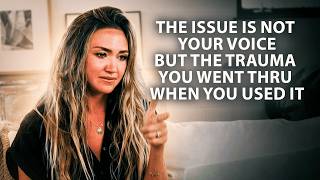
A coach guides people through healing "voice wounds" from being unheard or shamed as children. The session covers three nervous-system responses that show up as over-explaining, speaking too fast, or freezing, then walks through inner-child exercises to identify when speaking felt unsafe and break the belief that your voice doesn't matter.
Chapters
Your heart starts beating, you start stuttering through your words. How many of you have had like physical reactions when you try to go and speak? Reclaiming your voice. So our voice gets shut down from core experience that shape our beliefs about who we are and what we have to say. Those beliefs influence the way that we talk, how much we talk, what we say, and how quickly we say it, or how quiet or loud we say it, and who we will say it to. What I want for you guys is to feel like you have the confidence and the tools to cultivate owning your strengths. Here are 3 common nervous system responses in voice wounds, if you will. The first is fight. You might have intensity, defensiveness, overexplaining, proving, interrupting, or like coming in hot. The root of this belief is a huge core belief around the feelings of voicelessness is that what I have to say doesn't matter. If you lean in in the pain and you discover the origin wound, then you can actually reclaim your voice and release trapped emotion in your body and your nervous system. And as a result, result of that, you'll step into your identity and authority that God placed in you. Hello. Hi everybody, happy Thursday. It's normally our Wednesday call. Thank you for your pivot. We just got back from a little staycation. We got to stay on the island of Lanai for 3 days at like— we got the craziest discount because our friend works there and it just was paradise. But with kids. So it's like an exhausting vacation, you know. All you parents, you're like, this is not a vacation, this is an adventure with a view. That's what it is. All day long you're like, kids, kids, kids, kids. Anyways, it was so nice to get away for a little bit. So thank you guys for changing your schedules to be with me today. For those of you who weren't here last week, we decided we were going to do a training today on reclaiming your voice. It was a question that someone asked where— recording in progress. Thank you. We are going to be doing training today on reclaiming your voice. We had someone ask a question last week that kind of brought us to the topic of unlocking your voice and finding your authority. I'd love to first just hear and check in, how many of you, anytime you have gone to like answer a question or ask a question, even in like a school setting way back in the day or any type of environment where you're put on the spot, you all of a sudden feel like flushed or hot or your neck or your chest gets red and blotchy. Your heart starts beating, you start stuttering through your words. How many of you have had like physical reactions when you try to go and speak? Most of you. And I think that there is a very normal, natural element in your nervous system that happens whenever you are on the spot. There's a little bit of pressure, performance, whatever it is that comes up that I think is like a natural element to speaking and to using your voice. But for some of us, we have a very physical, strong reaction that is a nervous system response where we are so triggered that we actually aren't able to fully use our voice. And that's what this training is really about. It's helping you identify the root of where some of your pain and woundings around your voice happened so that we can go back, get love and comfort, and help get you the breakthrough to start reclaiming your voice so you can grow in your authority. Because you're going to be using your voice a lot in the coaching space. Even doing this training today, I have like a little bit of nerves because it's been, I think it's been like 3 years since I've done a live training. So just being on the spot spot of trying to present something and interact with you guys at the same time. It's a new energy for me. And the energy reminded me of when we first launched Alive and Free and I had to do live workshops. I think we did live trainings twice a week. And these were 90-minute live workshops where I couldn't even see anybody's faces. And I was presenting for 60 minutes straight to anywhere from 5 people, I think showed up the first time that I did it live, to like 200 people were doing it live. And I was having to like get everything ready ready and make sure that I could make it through an entire training. And that's a lot of nerves. It's a lot of pressure. And even as you guys are stepping into creating some like marketing content and things like that, you might be doing Instagram Lives and Facebook Lives, and you will have different things you step into that might trigger a little bit more of the pain around your voice and your authority. And what I want for you guys is to feel like you have the confidence and the tools to cultivate owning your strength, owning your power, and getting to grow in your authority so that you can lead well and communicate well. Now, this training isn't for adult you. A lot of you are like, I know how to speak, I know how to present. I like a lot of you have done different things in a professional space where you've gotten to grow this skill. But what's happening to us in these moments where we are triggered and have this nervous, anxious energy is our inner child is coming to the surface in these moments. And it might not be all of the time, but even if it's some of the time, we want to find a way to help comfort and nurture that part of us so we can step into that full authority. If you have questions, you're welcome to throw them in the chat as we go. And Michelle, I know that you're good at keeping track of them. If you could just keep track of them, I'm hoping that we have time at the end to get to some of them. But if I see any pop up and I'm in a space where I can kind of break and answer a question, then I'd love to do it like that. Okay. And this will be added to Coach Launch. It's why we have an official setup, and I will have, um, like a PDF available for you guys as well. So feel free to take your own notes, but don't feel like you have to write down everything I'm saying because you're going to get access to this. And also why I want a lot of you really leaning in isn't necessarily just about unlocking your own voice, even though I hope we do that today. This is really incredible content for you to be able to work your clients, like work through this with your clients. You will notice these different mannerisms that your clients have in sessions that are often a key to getting to the root of some wounds. You will be able to identify some of the things we're talking about, and it will be a huge component of what helps you get your clients breakthrough. Okay, reclaiming your voice. So our voice gets shut down from core experience that shape our beliefs about who we are and what we have to say. Those beliefs influence the way that we talk, how much we talk, what we say, and how quickly we say it, or how quiet or loud we say it, and who we will say it to. If your body panics whenever you speak, you get like the rash on your throat we were talking about you are losing your words or ending sentences early, this isn't just someone being weak or someone being spacey or ADD. It's actually a protective nervous system strategy that's formed in earlier moments when your voice didn't feel safe. This can even stem from the famous phrase like children should be seen and not heard, or being talked over constantly, or not being connected to intentionally as a child. Even if your parents didn't facilitate a space for, hey, how are you doing? Hey, what are you feeling? I want to hear what happened for you in that. If if you didn't have the nurture and the secure attachment of being heard, then you might have some of these triggers around using your voice. So essentially, we shut down our voice to protect ourselves from rejection. In the core experiences where we used our voice and we felt inadequate, we started to read all of the micro expressions and the body language of the people around us to try to get our cue for approval over our voice. How many of you have done that? I was famous for doing that. If I watched someone's eyes, glaze over, or they looked down at their phone, or they were just staring off, I immediately would speed through everything I was saying and try to finish it as fast as I could, because all that sent me the message was that you aren't interested in what I have to say. So I would accelerate as quickly as possible to protect myself of the rejection of feeling like it didn't matter. So essentially, when you speak, your nervous system is trying to run a prediction of what would happen if— like, if I sound dumb, they won't like me. If I fail or miss I speak, then they'll lose respect for me. If I speak, I'll be punished, shamed, judged, interrupted, laughed at, dismissed. If I speak, I'll be seen, and if I'm seen, I won't feel safe or secure. Some of us, it's safer to hide, so we just never want to use our voice because we're afraid of the exposure. Or, if I speak, I'll lose connection. Are any of these resonating with you guys? How many of you feel like this is familiar to something you've had to process in the past? Yes, a lot of you. So here are 3 common nervous system responses in voice wounds, if you will. The first is fight. You might have intensity, defensiveness, overexplaining, proving, interrupting, or like coming in hot. You know how it is to communicate with someone who's in a fight energy when they're talking, and you, or you guys might be one of those people. That's okay too. And it is exhausting because you can't get a word in edgewise, or someone is overexplaining explaining something so much and you're like, I got you the first 5 seconds of what you were saying and here we are 15 minutes later and you're explaining this from every angle. I cannot. Or the second is light speed talking, info dumping, getting it over with and avoiding hard conversations. And the last is the freeze-fawn. Your mind blanks, your throat gets tight, you're trailing off, you're maybe apologizing or softening everything, being really quiet or essentially asking permission to just exist. So most people with this trigger live in a blend of all three of these things. You might weave in and out of all three of these defense mechanisms. So I want to talk a little bit about like the manifestations of this before we dive into the, the how to get to the root of this. The stress-related histamine reaction can happen. It is just a nervous system dump. You are getting flushed. You might get stress hives. You might have like blood vessels widening, or you might get in this like adrenaline surge. You're essentially just getting activated in your nervous system. So many people, whether it's me, you clients, or your future clients, will think that these things are personality traits. I know for me, I thought that this was just a normal part of who I was, and I justified it. And they will find ways to rationalize it and justify it, just like I did. They're trying to make sense of it so that they can learn ways to not expose themselves by speaking. So we will avoid speaking, sharing, and exposure, even though it's not the solution. What it's doing is it's sweeping the unprocessed pain under the rug. So if you avoid the things that are triggering these reactions for you, you are just sweeping your pain under the rug. This is what we're doing with— in our emotional world too. If you lean in in the pain and you discover the origin wound, then you can actually reclaim your voice and release trapped emotion in your body and your nervous system. And as a result of that, you'll step into your identity and authority that God placed in you. So here are some of the tells to see if it's protective reactions and not personality traits, because I want to leave space for there to be preferences and personality traits. Those are there, that like we have justifiable reasons why we don't like to share, but we want to still work through the trigger and get healing in the wound. Because until you do that work, you won't know what's left over. If you heal the trigger, you get to the root of it, you've gotten the self-compassion and love, and you feel secure, now you can clearly see what's your personality and what's Does that make sense? So always, whether it's you or with your clients, always work through the triggers no matter what, because then you can have like a nice reality check of, no, this actually is a preference or a personality trait. The first one is talking really fast. Translation is, if I hurry, I can get out before something bad happens. This is escape behavior. It's your body saying finish quickly so that nobody can interrupt, dismiss, judge, or attack. The next is ending sentences early or dropping your voice off at the end. The translation is, don't fully land, don't fully take up space. This often is formed in environments where finishing a thought led to correction or ridicule or being cut off, or just assuming someone wasn't interested in what you had to say based on their response. The next is overexplaining. The translation is, maybe if I give enough reasons, you won't shame me. This is often from growing up with unpredictable criticism or having to prove your reality. And the last is apologizing for who you are. The translation is, if I stay small, then I get stay connected. Maybe if I don't expose my strength or power, then others won't feel insecure. How many of you have felt that way? Like when you did use your voice, when you were owning yourself, maybe you had a stride where you're like, I'm feeling healthy, powerful, confident, connected to God, and then you read the room and you saw the way other people got triggered into insecurity, and then you took notes and you were like, well, I don't want to make other people get triggered. I don't want other people to feel insecure when they're around my strength or my power, so I'm just gonna dim it down a little bit. Maybe now even if I'm healthy and powerful and connected, if I don't shine bright, then I don't have to see other people get triggered into insecurity. No one else is actually getting empowered by you playing small and by you shutting down your voice and your power. But again, adult you doesn't need to know this. It's your inner child. It's that little kid in you that's like, if I can be small, if I can make you feel comfortable, if I can make you feel safe by me pulling back my strength, then maybe then I can keep connection. Maybe then I'll get acceptance. Maybe then I'll be seen. Maybe then I'll get love. I'm talking about me too here, you guys. What I was just talking about with playing small has been the last 8 years of my life. And I get a lot of momentum and breakthrough, and I own my voice and my power, and then someone triggers, or I hear someone's triggered thoughts about me, and I'm like, oh, okay, be small. And then it takes 6 months, and I'm like, I'm big again, I feel good and connected, I'm gonna be powerful. And then someone rejects me, oh, I'm gonna be small again. And so I have been in this rhythm of like learning how to reclaim my voice, not in a not in Alive and Free. This is like my safe space to own my power. It's in intimate relationships with like girlfriends where I notice this behavior happen in me, where I'm like, I don't want you to feel triggered, you know, I don't want you to get this trigger that says you're less than me, or you feel overanalyzed by me because of the way that you hear me work and the way I create content. So I too am right here with you in the journey healing my inner child and reclaiming my voice. A last one that I want to throw in is sometimes you'll hear people laughing while they say something painful. How many of you do that? Try to minimize it? I'm just gonna like laugh this one off. The translation is, let me soften the impact so that you don't reject me. This is too much for you, so I'm going to make this really lighthearted so that it doesn't feel overwhelming. Your nervous system learned all of these strategies to try to feel safe. The root of this belief is a huge core belief around the feelings of voicelessness, is that what I have to say doesn't matter. I'd love for you guys to throw in the chat and fill in the blank. Like, what is your core belief around this? That was mine: what I have to say doesn't matter. When you think about some of the things I've talked about so far, what is that core belief for you? Put language to it, throw it in the chat. Survival. I'm gonna be rejected and not heard. Why even speak? Yeah. I felt like I was in the way. My family always said I don't know anything, I'm dumb, so I ended up avoiding talking to them. That's heartbreaking, Olivia. Um, not liked or legitimate anymore. Before I jump back in, what I have to say doesn't matter, it's gonna fall Death Ears. Yeah, opinions have no weight. Yeah, you're wrong. Felt unworthy or undermined, not enough to be heard. If you listen to some of these beliefs, these are two things. They're all lies that you've believed. Every single one of them is a lie, whether it has been spoken over you or whether you chose it yourself and partnered with that lie. They are all beliefs, all lies, and you have adopted it as a belief to try to protect yourself. Now, because these are lies you've believed, they're also rooted in core wounds. So here's a key, just with some of these comments you guys threw in, to where your inner child is still wounded. And even after years and years of inner healing, I'm sure a lot of you have been on a long journey, that still pops up. Might take a new circumstance or a new season or a new whatever to trigger it, but that inner child is still there, still needing healing. So I first want to say, if this is coming up, or if you have a client who's like, man, I can't believe I'm here again, I can't believe I'm struggling with this again, that the voice of shame, and we want to have compassion for our heart in this area and for our inner child and not rush for us to be fully fixed or have arrived in this area. I don't expect myself fully arrived. I've had a lot of practice speaking. I've had a lot of practice inner healing, a lot of practice getting triggered, and I still have triggers that come up in this area. And so just know you're not alone and be gracious and compassionate with yourself. The more you lean into this and give your heart what it needs— and we'll go through some of the practical tools the more breakthrough and freedom and authority you'll get to walk in. So triggers here are an invitation for healing, just like they are in any other area of your life or your clients' lives. These core beliefs typically come from experiences that are repeated over and over again. So this is all in early development usually, but being erupted— interrupted constantly, not erupted. We are not volcanoes most of the time. Being corrected more than understood. Being mocked, being told that's stupid or you're being dramatic. Being punished for talking back. Being shamed for emotion— stop crying, calm down, you're too much. Being ignored unless you performed perfectly. Being told your tone is the problem instead of your message being heard. Having secrets in the family system— that's where honesty threatened your belonging. And over time, the child makes a survival conclusion that silence keeps me safe, or if I'm invisible, I won't be hurt. So here are a few things that you can do with clients. We'll pivot to get to the real root of this wound. The first is, when did you first learn it wasn't safe to speak? Who did you most need to hear you? What happened when you tried to speak? What did you decide about yourself in that moment? What did you decide about authority, people, God, or love? What you're doing is you're hunting for the original decision or vow that you made. So I want you guys to pause for a second. You can close your close your eyes if you'd like, or if you need a pen and paper and you learn better like that, that's great. But I want you to pause for a second. I want you to ask yourself these questions and write down what you hear. So I want you to ask yourself, when did I first learn that it wasn't safe to use my voice? Another good tool for you or for your clients is a hand on your heart, and you could even say out loud, like, little Kevin, when did you first learn that it wasn't safe to use your voice? Because then you're talking directly to your inner child, and sometimes that helps you bypass your brain and straight to that root. I want you to write down what you hear. You might even say, heart, when's the first time you remember feeling like your voice didn't matter? And jot down just a note to help you go back to that memory. The next question is, who did you most need to hear you? It's so good for our hearts to let ourselves connect into these tender moments. You know that line, what you don't feel, you don't heal. Sometimes these are the hardest parts to face in this weakness and this vulnerability. But if we can lean in and learn how to hold space for our inner child, feel that pain with them, you will actually get relief in your present-day self, in your emotional world today. The other phrase that you all know is what we resist persists. Sometimes we are so desperately trying to escape that feeling of inadequacy or abandonment or betrayal trail, and it's the very thing that makes toxic cycles persist in our present life. Pornography, binging, addiction to exercise, escaping through working, needing to perform and achieve to feel significant— all of those habits and addictions are rooted in unprocessed pain. If you can get comfort here, you no longer need to go to the other things for comfort. Next question is, what did you decide about yourself in that moment, in that memory that came up? Write it down. And then, what did you decide about authority, parents, parents, leaders, people, God, or love, whichever one comes up for you. If any of you are having a hard time getting connected or having memories that are popping up, I want you to close your eyes right now and just say, Holy Spirit, I invite you to help me come in and connect. You can even ask him, what's the thing that's blocking me? 9 times out of 10, it's fear. So you could say, God, how do you want to love this fear away? Sometimes we need a little injection of his love to have the strength the courage to keep going deeper. And hopefully he's loved that block away just a little bit, and you can ask him, Holy Spirit, when did I first shut down my voice? And for you and for your future clients, this is an exercise of trust. Sometimes it is so easy to judge what we hear and memories that are surfacing. For those of us who've been on the journey, we've built that trust, so it's like, no, no problem, I heard God, I had the memory that surfaced, therapist, but we built that trust. It can feel a lot like a cliff jump for someone who's never gotten heart connected before to ask their heart a question or ask their inner child a question or to ask Holy Spirit a question. So for you or for future clients, the block exercise is a really great one. Like, if I'm not hearing anything or if it feels scary, Holy Spirit, what's stopping me right here? What's the block? And then another great thing is like just writing down what you hear and trying to not judge it. You can always reread it later and judge it if you want to. But in the moment, just try to, like, with open hands, lean into whatever you're hearing and trusting that it's him speaking. For a client who maybe has experienced a lot of, like, demonic activity in the past or has been a part witchcraft, New Age stuff, some of this can feel woo-woo to them and feel a little bit scary. Or you might have a very, like, hyper-religious person who doesn't believe that God speaks today or is very, like, weary or cautious around listening to his voice. They just want like, only if it's in the Bible. And you're going to have to create a little bit more safety for a client like that if they're going to lean into these feelings and lean into trusting his voice and trusting what comes up in these moments. And so some of it is just creating as much safety as you can, like, hey, if this doesn't land, or if you are feeling nervous about another voice speaking to you that's not his, will judge everything by its fruit. And you can give them like a little Bible lesson of the fruits of the Spirit, and you can say a little prayer like, Holy Spirit, I pray that your voice is the only one that is speaking and the only voice that I hear. I pray for any other voice to be quieted right now in Jesus' name. Great way to trust that it is his voice speaking after that. And if you are listening to a client walking through a session and it doesn't sound like God to you, then that is your job as a coach to step in and help redirect, you know, if you heard something that doesn't sound like love. In exercises like this, there will surely be moments where someone said or did something to you that impacted what you believe about your voice. Hopefully some of those memories came to the surface right now, but it's important to note that you played a role in this belief by agreeing with it. There's two components. There are people who definitely went through abuse, and we want to validate that, and we want to help them see how damaging that was for them. We want to help them see when it is abuse. You want to give them that reality check, like, hey, this isn't normal. This isn't healthy. That wasn't a loving mother. She was trying her best. We're not going to, you know, villainize her, but she was in a lot of pain and you never should have been treated like that. If you were my little girl, you were my little boy, this is how I would speak to you. This is what love sounds like. So you want to help them basically understand that what they went through wasn't okay. But the second component of this is even if we had someone that said something that was damaging to us, us, the real issue lies where we agree with it. We partner with that lie. And when you partner with a lie and you make an agreement, that's when you empower the lie. Then it just starts breeding in your life. If all of us were very securely attached children with really present, loving mothers and fathers, we would be able to have someone in our ear saying anything over us and it wouldn't stick the same way that it sticks with us who have been through hard times, right? Because you would have heard over and over and over again your identity from a loving mother and father. It's so much easier to brush it off. It's like, well, if that's not true, then why, why does that hurt if that's a lie? If someone said that to you and you know it's not true, and I know it's not true, and that's not who you are, it's like it's a quicker process, right? So we empower these lies when we partner with it and make those agreements. So in inner healing work, you may need to apologize to little you for agreeing with that lie. That you can do it right now if you would like. Yes, close your eyes. I want you to go back to the memory that surfaced for you in the time that we had a few minutes ago and imagine, if you will, that version of you standing in front of you today. So present you standing in front of younger you in that painful memory. And you can say whatever resonates with you. If there's anything coming up for you, please feel free to mute me and do whatever you need to do. But that might sound like, I'm so sorry that so-and-so said I don't know if they said that to you, but when that happened, I agreed with them and I told you that your voice didn't matter, that your voice wasn't important. I told you that people don't want to hear what you have to say, and I agreed with the lie that you should never make yourself vulnerable again. This is just an example, so take it whatever direction you need, but that agreement has made you terrified to take risks and terrified to use your voice. Will you please forgive me? And then I want you to say a few things out loud. I break the vow that I'll never I never expose myself or make myself vulnerable again. I break the lie that my voice doesn't matter. I break up with the lie that I have to play small or hide to keep relationship. And anything else that you feel like younger you needs to hear to feel safe or defended or protected by you, then please, by all means, say that right now out loud. Say it to younger you as if you are the one defending you. This is a moment with the client that I, or the friend that I mentioned walking through this exercise. This was the moment where, for those of you who weren't here, she was on her front porch with her boyfriend and he pinned her up by the neck against the wall. And she didn't feel like she had permission to have a boundary or to have a voice or to do anything in that moment. And she also didn't feel protected or defended by her parents. This is the moment where I had her aggressively say out loud until she could fully access her voice 'Get your hands off of me.' And she was so quiet, which was to me an indicator that she had not accessed her voice. Because if someone's pinning you to the wall and you quietly say, 'Get your hands off of me,' you think they're gonna listen to you? No. 'Get your hands off of me. Get your hands off of me.' And I had her do it over and over and over again until she was actually defending herself and had actually used her voice. So this might be a moment for you guys— say you had been through an abusive situation where you had a parent that that said, you know, you need to be seen and not heard. That might be a moment where you imagine little you and you imagine present you walking into that room with your dad saying, don't talk to him like that. He is precious. He needs to take up space. You should have loved him. You should have fought for him. You should have protected him. How could you not see his value? How could you not love him? How could you not protect the gift of his voice? How dare you treat a little kid like that, right? Do you feel that? Do you feel the power in that? How dare you not just love this child? You might need to go back. You might do that with your clients. I do a lot of that work with my clients where I might step in on behalf as a loving mother or as a loving figure in their world, and I might bring breakthrough in that way. If they're bringing me into a memory, I might lead by example and say, you should have been loved. You should have been given space. I'm so sorry he did that to you. I'm so sorry you didn't get to take up space. I'm so sorry that your voice was shut down. You guys can close your eyes. I'm so sorry for the ways that you have been shut down and dismissed. I am so sorry for the ways you felt neglected, the ways you weren't given permission. I'm so sorry that they didn't know how to check in on you and ask how you were feeling, how you were doing, what was happening in your world. I'm so sorry for the moments you tried to speak and you were fully ignored. You were talked over, you were accused, you were blamed, you were judged, you were told you were dumb, that your voice didn't matter, you were mocked and made fun of. I'm so sorry that you didn't get the love that your heart needed for you to thrive in your identity today. I'm so sorry that you weren't protected. I'm so sorry that you don't get to live in the fruit of knowing the fullness of who you are and the power that's in your voice because of the ways that you were abused and neglected neglected. And now this might be a moment where you, with whatever your inner child needs and your heart needs, you chime in and you bring in more of that defense, more of that love, more of that protection and permission. Do it right now. Whatever you needed to hear, whatever affirmation you needed, speak it over yourself. And if you don't know what to say or what you need, you can always ask younger you, what else do you need from me? What do you need to feel safe to use your voice again? If you're in a good spot, feel free to mute me. If you feel like you know where else to go, you can ask your younger self what they wish they would have experienced from a mom, from a dad, from siblings, from teachers, from pastors. Now I want you to imagine the most loving, supportive person that you've personally ever met. Rack your brain. Who is the safest, most loving representation that you've even met before? It doesn't have to be someone you even intimately know, but this can be an uncle or an aunt. This can be someone that you have watched a lot of their sermons and they feel really safe and loving and powerful to you. Think of that person. I want you to imagine them walking up to younger you. How would they love you in this moment? What would they say? How would they treat you? How would they affirm you? This is an adult you, remember. They're not walking up to adult you. Adult you has too many coping mechanisms. You don't need this anymore. It's younger you who is vulnerable. They're little. They have so many needs. How would they nurture you in this moment? This is what I call mining for love. You are looking for someone that has been a representation of love to you, even for a moment, so that your heart can receive that love in this moment of vulnerability. And very practically, this is redemption happening in real time. This is God going back in time and space to something that happened happened to you, and now you are re-experiencing it but with love, with safety, with compassion, with permission. For you or for a client in the future that has a really hard time thinking of a person who is a representation of love, that is a part of their homework that they get to walk away from a session with, where they start learning to search through their memories for people who showed up for them in the past. Oftentimes when we are functioning in our attachment wounds as adult, it is really hard to think of love and to have the memories of people who actually did show up for us. That is an indicator that we are, are in a triggered state, and some of us are living in that chronically. And so a really good homework exercise is to go back and ask Holy Spirit or ask themselves, what are moments that someone did show up for you in a way where you felt love? And you can also have them watch different shows where they're— they can even ChatGPT, what's a show with a really loving and supportive mother and father figure, so that while you're watching a show, you're actually getting to see an example of someone being loved and supported by a safe and loving mother or father. And this is really beneficial for our healing process because our— a lot of Christians will want to jump to just having Jesus be the one to come into these encounters, and absolutely need him. This is why I love our coaching method, because he is the healer, right? He, he is the OG of all of this. But because we haven't had real-life experiences where Jesus with skin on is in our room walking us through these things, love and compassion to our brain can feel abstract. And so what we are doing by bringing in a person we have experiences with, or we are even watching in a movie, is we're personifying personifying love, we're personifying compassion, we're personifying safety. And if you can pull from a memory where you experienced it, it actually helps your heart access that feeling of safety because you can't make it up. Your brain cannot make up something it hasn't experienced before. We will get to the Jesus part. I basically always get to the Jesus part of an encounter in every session unless I have a client who is like good in that area, then I might not spend time on that. If I know that they're connecting with Jesus on a daily basis, and that's not an issue. I might spend more time repairing their relationship with themselves, but I basically always get to that point. But I think it really is important for the healing journey for us to be able to rebuild that trust that people are loving and people are safe, even if it's only a few people. It helps us build safety attachment in our relationships and in life today. We don't want Jesus to be the only safe one. He, he is the safest, that is for sure. But there have to be people in our lives that are safe enough, loving enough. That's Pete Walker's term, is safe enough people, good enough parenting. We, we need that in order to feel secure, to attach in relationships. So we want to mine for love and train our clients to mine for love so that we can rebuild that safety and attachment with people in our lives. So from here, once we have repaired with ourselves, maybe we have asked for forgiveness for partnering with a lie, maybe we have broken vows. We've brought in another loving source to get a little bit more love and safety into this wound. This is how healing happens— being comforted hundreds of times in moments where you needed it. If you had these experiences— this is just perspective— if you had these painful experiences in childhood but you experienced them with love and safety and comfort, they actually wouldn't be burned in your brain and in your nervous system the way that they currently are. Our brain our brain will remember and highlight and emphasize the moments where we had pain and did not get comfort. It becomes like a negligible moment if you were loved and comforted. That's why it's, it's like so sad that we don't remember all of the moment that love was present and was available, but your heart's like, oh, we're good. Your brain's like, oh, we got this, we can keep developing and moving on. But it's like a marker, a thing that gets dug deep, deep, deep down into the sand because your heart and your brain, your body, your our nervous system is like, this is going to need love and care. We're going to need to go back here to get comfort again, and maybe again and again and again before we can release this and move on. It's a gift if we allow it to be. So now, after you have done self-connection and you've brought in a loving and safe enough person, now is a great time to bring in unconditional love himself, Jesus. If you are not working with Christian clients, you can always just say, we're gonna invite unconditional love in. I love not pushing Jesus onto people. I never need— some of my favorite experiences that I've had, even though I primarily have worked with Christian people because I'm so Jesus-y, I can't— there's just like no way around it. He's just ingrained in every fiber of my being because I have had so many beautiful healing experiences with him. So I would have a hard time changing all of my language language. So when I did work with non-Christians, I just told them, hey, I love Jesus, here's why, he totally changed my life. I don't need you to love Jesus for us to work together, but he, he is in a lot of my language, just so you know. So if you're okay with that, I would still love to work with you, and I'm never going to push him on you. But if you ever have questions, please feel free to ask. In this type of encounter, this would be the moment where I'd say, okay, with their eyes closed, I'd say, now I want you to invite in unconditional love into this memory. I've had several people that became believers in the middle of a session because he revealed himself to them, and that— there is no greater thing than that. I didn't have— I didn't convince them, I didn't push Jesus on them, I wasn't trying to save their soul or save them from the fiery brimstone of hell. There was no fear, no projection, no control, just love. And then they encounter him, and I'll say it might be like a warm presence. It might be a light that comes in the room. It might feel like a blanket's getting wrapped around you. But I want you to tell me, what are you experiencing after loved came in the room? And people to a T will describe Jesus, and that is their like first encounter with him, and that is just the best. But in this moment, whether it's a Christian or not, you could say invite in love. Or if it is a Christian, you can invite in the Father or Jesus or the Holy Spirit. I don't know who's gonna come or how they're gonna show up, but you me what you see, what you feel, what you sense when he walks in the room. And you guys are welcome to do this right now if you'd like. You can go back to that memory. We're doing a continuation of the same encounter, and love is going to walk in the room. And I don't know what he's going to be like or how he's going to show up. Maybe you just hear his voice. Maybe you see his face. Maybe you just feel a presence. And just lean in. What's he saying to you? Maybe you even ask him, Jesus, what do you have to say about my voice? Maybe you're ask, how have you called me to use my voice? What are your plans for me? Or maybe you ask, is there anything else you want to heal in my heart right now? And if I was in a one-on-one, this would be a moment where I just would say to my client, whenever you hear anything and whenever you feel ready, I just want you to share with me what you're hearing. And I may or may not guide this conversation because there are so many times where this is spottier with you guys because I'm training and walking you guys through connection and then training again and walking you through connection and then focusing on a client. Now focus on yourself. So the connection might be a little bit harder to tap into, but with a client, I'm walking them through the entire encounter and I'm not teaching in between usually. So whenever we access the memory, we also access some of those wounds and now they're in their emotional brain. And so they are more likely to connect quickly during an encounter. It's going to be easier to hear his voice because they're not, they're not in like the left logic part of their brain where they're judging and analyzing. Things will typically be a lot smoother in terms of them getting connected. But I'm wanting to ask them, I'm wanting to hear from them what they're hearing, so that if, for example, they hear something from Jesus and they're like, but I don't really know what that means, or but that like, that doesn't make sense to me, that's whenever I would just lead the conversation for them to be like, Jesus, what do you mean by that? Or, Jesus, will you show me a picture or tell me more? I'm wanting to continue the conversation because for most of us, we are so quick to ask Jesus a question and then like move on, even if something doesn't make sense. Or even if we just hear like one thing from him, we're like, oh, I got a sip of water, I'm good for the day. It's like, no, you're thirsty. That part of you has been dehydrated and in this Sahara it for way too long. We need to be chugging and leaning into this moment and pulling from as much of his love as we can. So I might have them continue to ask him more and more questions. I might even be like, how do you see me, Jesus? Or how else do you want to heal my heart here? Or, you know, what's, what's something I can do with you every day, Jesus, to work on this, this part of my heart? And then I might make that their homework. Whatever Jesus said to do, that's your homework. Set a timer, do it every single day for 5 5 minutes. So once they have hit this third base, that is a beautiful time to pivot in the session and go into more of a teaching moment. But I'm going to wrap up with you guys. Basically, after this initial encounter, exercise, session, whatever you want to call it, it's really just about retraining your nervous system to feel safe using your voice. So there's a lot of ways to do this. Um, basically the best way to do it is exercises, doing heart check- So on a daily basis, figuring out like what you're feeling and what came up and any moments that you were triggered in that day. Maybe you had a moment where you were in a practice session and you noticed your chest getting all red and you were feeling a lot of anxiety. Later on in the day, you might go back and be like, wow, when I was feeling all of that, what was coming up in me? What was I believing? Or what was like— how old did I feel in that memory? And you might ask yourself yourself, what do I need in that moment? Like, what does my inner child need to feel safe? Or you might have interactions where you are having a conversation with someone and you're feeling a lot of that stuff start surfacing in your body. You might ask yourself the question, is there anything that I need to communicate here? Are there any boundaries that I need to have? Do I need to speak up? A lot of this will be like reflection work initially, where there will be interactions you have, or you'll be in a session, or you'll be presenting, and later you're getting to unpack and kind of process to take care of your heart. What came up in me? How old did I feel? I'm gonna get love and nurture there, go through all the steps that we just did together. And then, is there anything I could have done differently? Or like, how could I have had a boundary better in that moment? And a lot of the nervous system safety will happen from you or your clients starting to exercise using their voice or having boundaries speaking up in different ways that they needed to, or creating more of the safety by going back and getting to the root of that wound to get love and comfort in. Oh, and then just like practical tools too— breathwork is a really beautiful one. Like, I was doing some breathwork. I was reading my son a book before I jumped into this training, and I could feel some of like the nervousness coming up in me just because I hadn't presented intended live in so long. And I just— I didn't have any triggers that were surfacing. It was more just like, I need to get this energy like moving through my body. And using the breath is a really beautiful way to start, no matter what, whether you're going to go deeper or whether you're going to end there. The breath and focusing on just deep breaths in and out is a really beautiful way to create a little bit more safety. One other nervous system thing I learned is you could do this with yourself or with a client. You look to the left and you name something you see. So you'd be like, uh, plumeria tree, window frame, left again, cloud, to the right again, arch, to the left, palm tree, to the right, table. And going back and forth actually helps reset your brain. I'm not going to dive into anything deeper, but there are— you could even like look up in ChatGPT different nervous system exercises to help create more safety in your body. But there are a of like simple somatic exercises that you can do or you can give to your clients to help them regulate emotions. And then lastly, just declarations like, what I have to say is important. I'm allowed to use my voice. And then I might ask God the question like, what do you feel about me? What do you think about me? How do you feel about my voice? Practical things like that. But you want those to be secondary tools for you and your clients. There are so many things we could do to modify our behavior, but I I really believe that the method that I just went through is a really great way to get massive breakthrough. And as a byproduct, it'll be easier to use your voice without just doing the exercises and then like hoping you feel good and better, but leaving your heart neglected. If you haven't thrown a question in the chat and you have one, now is your time. We only have 23 minutes. I figured that would happen, but I'm hoping to get through as many questions as I can. So the first question that came in that I see, Michelle, tell me if I'm wrong. Scott said, so fight, flight, freeze. Can you touch on fawning in this context? Yes. Fawning would more so be like self-abandoning truth in order to protect connection. So it's, I'm going to shut down what I have to say, or I'm going to not have a boundary here because I'm afraid of your reaction, or I'm afraid of losing connection. Does that make sense?
Yeah. Is it also agreeing with the liar, agreeing with, you know, whoever is abusing you or whatever? Because I see that as bonding. It's like, I'll be bad, just don't leave me.
Totally. Yeah. Yes, because it's still self-abandonment. It's like, I will abandon myself in order to keep connection. So whether I'm agreeing with you or whether I'm silently agreeing internally, or maybe I don't believe it but I'm not having a boundary out loud because I'm too afraid of losing it, either way it's self-abandonment.
Yeah, I heard somebody say that people that are codependent are afraid that whoever they're codependent on, they're afraid that they'll either take something from them or do something to them if they don't meet their needs.
Yeah, that's good. So good. Nathan said, I'd love to hear how you navigate that relationship. Nathan, what relationship? I don't remember what I was talking about. Is it still a question? It's not even a question in the first place, is it?
So you were just— you were really going in early on talking about just making yourself small in relationships and analyzing how people are responding to what you're saying and taking that data and then adjusting what you're saying or diminishing it. And it was all really resonating with me. And then you were also sharing like it's something you're processing, you still process, like you still work through that. And then you're like, even with some of like my girlfriends XYZ. And when you said that, that's when I like left that comment and I was like, oh man, I'd love to hear how you navigate that. Yeah, like these relationships with like friends where you start to really step into yourself and you start to get powerful, and it makes somebody who— I mean, it could be a family member, it could be maybe someone in your church or whoever, and you know that if you're saying that, it's just going to make them super uncomfortable. And I'm like, how does Sammy navigate that? I'd love to hear more about that.
Yeah, happy to share. It's sucks. So I'll keep it, I'll keep it small for the sake of time because I'm a details girl with this stuff. I could go all the way. I had a friend that I was starting to build with, and we were in the same like small group Bible study, if you will. She even facilitated a group where the goal was to like walk through Jesus encounters, and the focus of it was inner healing. And I'm like Great, this is my jam. I'm with a bunch of girls who are like kind of new to this, don't have that much experience. I love hungry people, let's go. And while they are like kind of clunkily going through this and everyone's like, what does this mean? How do you do that? I don't understand, I didn't feel connected. I'm just burning in my seat like, do I be me or do I be small so that I don't overstep? And I just am like, I know, like, I know the answer to this, but I'm, I'm happy to like hold space and I'm kind of witnessing what direction is this going. And I give some time for the girl to facilitate, and then I end up sharing at the end a few helpful tidbits. And people are really moved with like, how do you know this? I'm like, well, this is like what— this is what I do. I love this stuff. And I even pull her aside after and I said, hey, I feel insecure in settings things like this because I don't want you to feel like— I don't want to overstep. I don't feel the need to lead this. I don't feel the need to share or be the person, but I just don't want you to feel like I'm overstepping in something you're leading. But I do love this stuff and I feel like just happy to be a part of it, but I wanted to check in with you. And she basically says, no, no, I actually meant to reach out to you before the group because I want you to like be yourself. I want you to share. And I was like, oh, great. Love this. Now I have permission. And so the next group, I'm like, she asked me to lead it, so I lead it and so on and so forth. And I'm not a bulldozing presence. I know who I am. I just, so you guys know, in like personal private settings and in my life, I don't need to be the big person or the authority. I have like got the quiet confidence, but I want to step in when it's helpful. So I'm navigating that with my own own discernment. And months go by, and all of the girls are spending time together, posting stuff on social media. Everyone's invited but me, over and over and over again. And I end up reaching out months later, and I basically just sent a voice memo, and I said, hey, I wanted to send a memo. I'd be happy to meet. I just don't want it to feel high stakes, like we have to go sit down at a coffee shop to have a talk. But essentially, here's what I'm noticing. Here is some of the pain that comes up for me. I know I have triggers around feeling rejected in female relationships because of my history. Shared it with her. This isn't your responsibility to do anything different, and I'm not asking you to invite me in more, just to be clear. I'm just wondering, is there something that I did that has caused you pain? Because if so, I would love to repair with you, and I'd love to hear if there was any anything that I did so that we can like reconnect, whether or not that leads to friendship or us being acquaintances. So very non-controlling. I thought I did a great job. I have a little bit of practice with this stuff, you guys. And I even re-listened to it, played it for Spencer before I sent it, and I get the most accusational text message back like days later. And my, my message was very tender, taking a lot of ownership, but pointing out a few things to help her understand what I'm talking about. She basically— it comes in with judgment, accusation, and is saying like, you're too deep and it makes me feel unsafe and you make everything too emotional. And I'm like, this is so weird because the context this is happening in are like inner healing context and Bible studies where we're like going around asking everyone how they're doing. I'm confused, you know. So anyway, ways. I had a boundary, like, hey, I, I want to hear what you're saying. I'd be happy to sit down and have a conversation. I did hear a lot of assumptions and accusations about me. It makes it hard to hear any of your feelings because I'm not hearing them. I'm only hearing your assumptions. I'd love to clear this up and talk face to face so we don't mistone. And she was unwilling to meet with me, and so I just said, okay, like, peace be to you. And we have not talked since, and it's been over a year. And I am good friends with her sister, so there have been several other conversations that have needed to happen. The way I would love to deal with that is have a sit-down face-to-face after that and not allow assumption and accusation and hear her heart. I would probably lead it more like a coach, and I wouldn't want it to be condescending in the way I did it, but I would navigate it with a coaching hat on, trying to hear her feelings underneath it, apologize where I could, own what I can, and then try to find a way that we could best connect. But when someone is unwilling to do that, you just like— I've just had to grieve the feeling of powerlessness of you have all of these judgments about me that are most definitely inaccurate and there's nothing I can do about it. And you're talking to whoever about me potentially. And so it's been a journey about grief for me. And learning how to reclaim my, my voice and my power and my giftings in intimate settings, even when I know I will be misunderstood and judged and rejected. That's all.
Well, thank you.
Yeah. Fun.
Yeah.
Fun stuff.
Thanks. Yeah, that was extremely helpful. I can— I won't say it, but there was just like, I'm going through similar things.
Okay.
It was really helpful.
So thank you. Good. Good. Yeah, it's a, it's a hard journey. One thing the Lord has shown me and taught me and walked me through a ton over the last— I mean, honestly, since I started my healing journey, but last like 10 years— is for some of us, this one especially, he has designed me in, in the body of Christ to be like a magnet for people's insecurities. And so when I am myself draws out people's insecurities, they project them onto me initially. And the vision I got for it was like people's insecurities dirties are kind of magnetized to me and still attached to them with strings. But if they're willing, he'll chop them. So I'm supposed to be a vehicle for people's healing and freedom and liberation if they're hungry and humble and willing enough. But when they don't have those characteristics, then it just gets projected onto me and there's nothing I can do about it. I'm just like a trigger magnet. But it's who he made me to be. And so if I'm not functioning in my gifting and if I I'm not constantly going back to him and letting his voice be the one I hear— this goes for all of us in anything— but if I'm not getting my direct identity from him, then I can't function in the body the way I'm supposed to. Because I can't tell you how many times I've heard people just dump all their triggers on me and they call it process. They're processing with me, but they're just sharing all of their insecurities and all of the things that they feel because of me. And it's It's like, is it because of me or is it because of what I represent to you? So it's painful. And the more you guys own your authority and your identity, you will experience that in different facets, in different ways. There will be pushback, there will be insecurities. People will feel threatened, they will want to make you smaller because, because of that. And the best thing we can do is do the healing journey ourselves so we can continue to be a representation of love to them. It's like, I want to keep being me and keep creating that safety and love and whatever else, and hopefully they'll come back around over time. I've watched it happen over and over again in my life, and it's such a gift when you see God get to do the work and be your defender. Okay, Scott said, how do you address your own triggers without hijacking the session? Scott, I'm guessing you're talking about if you're triggered in the middle of a session around speaking and you want That is what I mean, because one of the things that you said was always, always, always address triggers, and I wasn't—
there was no distinction whether it was the client's trigger or not.
Yeah, great question, great question. Initially, when you are in sessions and if you are getting triggered, you will be too dysregulated and have too little practice to know how to regulate in the middle of a session. So does that make sense? It's a very dirty long sentence. Sorry. In the beginning— okay, so in the beginning it's harder. So my best advice is if you are triggered, then you can write down in your notes— act like you're listening to your client, okay? Try to still listen to your client and not miss what they're saying. You could even just write like, I'm triggered, heart, I'm gonna come back to you later, I'm gonna take care of you. This is like a compartmentalization technique where there's healthy compartmentalization that you need to do. You want to respect your client's time and money and energy, that they're, they're here and this is about them. You are needing to be the regulated adult in this situation, and you don't want to hurt any safety for them either, right, by you being dysregulated. This tool especially works whenever you are self-regulating and taking care of your heart the rest of the time when you're not in sessions. If you're a good steward over your heart, then when you have an hour-long session, if you're triggered in the moment, you can do some deep breathing, write a few notes that you need to, and then your heart will know Scott's gonna take care of me after this. A lot of the time, the hijacking in a session will happen when your heart doesn't trust that you will actually take care of it, and then it feels like it needs to monopolize the moment in order to get what it needs. So a lot of the time, to answer the question, you'll go back after and reprocess process through what happened in that trigger, what came up, why did that client trigger me, or what was the memory. Sometimes, you guys, like, if you have your phone next to you and you're in a session, it can be the worst thing that you do. Don't do it unless you have to, because you might have a text that comes through where you're like, oh God, now all of my attention is on what's happening with my toddler. How am I going to show up and hold space for them right now? I'm getting the red alert from my babysitter. Or, or the text from my husband, they're pissed at me for whatever. So keep your phone away from you because you don't want unnecessary triggers happening in a session that you need to regulate through. So hindsight, go back to the trigger. And then as you get better and quicker at working through triggers, there are a lot of moments where I can be triggered in the middle of a session and do just enough heart work that I can work through my full trigger while I'm in that session. And it is like, have y'all ever heard the term Jehovah's sneaky. The word that just came to mind, Jehovah sneaky. You know, Jesus, Jesus be sneaky sometimes. It's probably like a charismatic church term. They call it a Jehovah sneaky when Jesus does something that's just like so fun and cool where you're like, only Jesus could do that. Anyways, but there's like sneaky moments you can steal to help you regulate. Just like you might write down, what am I feeling? And then while you're listening to them, because you don't want to lose attention, oh yeah, I'm feeling, you know, whatever. I'm not going to make something out, it's going to take too long. But you might be able to just identify the feeling and get a little bit of comfort there, like, Scott, I see you. I'm not going to let you, you know, be taken advantage of. I'm going to take care of you. Like little things like that. But that is a quick process whenever you're doing it the rest of the time outside of sessions. Is that helpful? I feel like that was way longer than it needed to be. I'm so sorry, you guys. We got there. Is Nathan next, Michelle? Great. Uh, is it normal to just have a complete memory block when searching for that first agreement? Do you still have that question, Nathan? Why are you laughing?
I'm laughing because I just feel like I'm talking too much.
You're not.
I actually don't, because you answered it.
Great.
You were going— you said it's usually fear, so that's probably fear that I have to work through.
You're not talking too much. Thanks for using your voice. Thanks for taking up space. Thanks for being hungry. Thanks for being quick with your hunger. Like, when you're hungry, you get your questions answered quickly and more frequently. So take up space. Those who are hungry will be fed. How do you repair or break the lie authority can't be trusted from this core wound? Dana, did I already answer your question, or do you want me to answer it? I think I'm still like kind of struggling with it. Okay, I know we— I have to like keep repairing that core wound. Yeah, but in modern day, like in this current situation when I'm not fully healed, how do I not react to those like authorities? Great question. Can I ask what is the authority that is getting triggered right now? Um, it's usually in like work setting. That was my thought. I just didn't want to— I didn't want to make it about something else. Great question. There's a few components of this. The first is that a lot of us were taught to just like submit to authority and just respect authority. Now in the church, a lot of this has happened from dysfunction. The church wanting to have people to serve, the church wanting more power, more control, more tithe. There is a lot of dysfunction of this that's happened in the church. This is where like abuse happens, and the whole Sean Bowles situation. In work settings, now obviously you do need to have respect in the way that you're navigating through authority, and so So it's different than submitting to an authority like in a church, in the church world. Essentially, every time you notice that you have that trigger, you want to get to the root of it. And it's through the exercise I just walked you through, it's through as many moments of inner healing and encounter that you need in order to no longer feel triggered, at least consistently. Like, I can go— sometimes, you guys, I can go like months without having any big triggers come up besides like parenting triggers. Those are all, all the time, all the time with a 3.5-year-old. But in other areas of my life, I can go long amounts of time because of the thousands of laps around the track that I've done through the triggers. Over time, with you taking care of your inner child and bringing in comfort, safety, nurture with this wound, it will no longer feel like a threat when you are having those conversations with authority figures, even if they are unhealthy, and even if you have a justifiable trigger. These are the hardest when you're like, my boss shamed me and it was totally inappropriate, you know, it was totally out of line the way that they talked to me. You might have a justifiable trigger, meaning the thing that they did was wrong. And sometimes when you or our clients have justifiable triggers, it can be harder for them to get healing because it can be harder for them to take ownership of why that affected them. We should, if we were Jesus, you want to ask yourself the question regardless of your boss's behavior or your authority figure's behavior, why does this bother me? Because if you were Jesus and you were fully connected to love, you would be able to watch everybody do Lord knows what and be fine and be present and be connected and know that this is a reflection of them and not me. So if that's the standard, I use it as my standard, not to ever shame myself. We never want this to be a thing where we're shaming ourselves. Well, I'm not like Jesus enough, I'm not healed enough, otherwise this wouldn't bother me. No, no, no, no, no. It's like, if I were fully connected to love, would this bother me? Okay, it still bothers me. Of course I'm not fully connected to love. I'm, I'm evolving, I'm glowing up, I'm going from glory to glory. All right, why does this bother me? What, what is that trigger? What is— when my boss said that to me, what does that remind me of? What does that make me believe about myself? Your boss can't make you— I'm not saying this to you, Dana, but just in general— your boss can't make you feel less than. They can't make you feel disrespected. They can't make you feel not worthy. Your feelings are your responsibility. If your boss disrespected you and you felt disrespected, it's because you have a trigger there. If there wasn't a landing pad of judgment that you already had or a wound, it wouldn't bother you. You. So then we want to be compassionate with ourselves of, yeah, this hurts. That really flared up a big wound for me, and that's okay. I don't want you guys to hear me saying the black and white statements and make it a shame standard for you or your future clients. It's not. It's perspective of like, this is a really tender spot. This wound is big from my mom, from my dad, from the pastors, the way I felt betrayed by my best friend's dad who slept with her friend in high and I really trusted him and respected him. These are all real influences that happen. Okay, what does that bring me back to? How old do I feel in this? I'm gonna bring love and comfort to that little girl and take care of her because she needed someone to be safe, to see her, to love her, to give her permission, someone who believed in her, someone who knew who— how capable she was and reminded her of that over and over again. So it's an invitation for love to get to deposited into that wound over and over and over again. And over time, especially with the like looking for mining for love, you will be finding other safe authority type figures. You can even pull from me and Spencer. We are safe enough people unless you have big judgments towards us, which hopefully you don't. But unless you have big judgments towards us, we could be safe enough people where it's like, okay, there's two people that are authority figures in a business that are loving and kind and have a relationship, I'm gonna— and they love Jesus— I'm gonna imagine them walking into this moment. How would they love me? How would they see me? How would they believe in me? And even if we aren't like how you imagined us to be in your wonderful vision that you had, love will still get deposited and it will still create more safety from your heart to humanity. Last nuance: there are safe enough people out there, and we want to pull from those moment so that we can start building trust towards other people. We want to know and feel and believe that there are good, loving, safe people out there. And at the same time, we cannot elevate any of those people above Jesus. Easier said than done because we all do this. Spence and I actually just put a podcast out on this topic if you guys want to listen to it. It will do a deep dive into basically destroying the hierarchy and pedestal that we put leaders on and break down how it's like our inner child who is looking for that perfect person because we want to believe that they're out there. But when we elevate that person over Jesus, it will always get ripped down and it will always be devastating. And so at the same time as we're creating healthy attachment and building trust towards the authority figure, he needs to be the ultimate authority. And if you start looking to anyone else to be that, it They will fail you. There is only safe enough out there, and everyone else is just a repeat of all of the stories in the Bible where everyone's failing over and over again, and he needs to be the one who did it perfectly. Is that helpful, Dana? So helpful. Thank you so much. Good. You're so welcome. Michelle, give me the next question. One more question.
I have Dana.
She said, my relationship with my parents is still hard for me. How do you set boundaries with unhealthy parents or work on more difficult relationships? You can skip me and go to somebody else since I just had a turn. I'm gonna do that. Thank you, Dana. Unless the next question is the same and then God's like, boop again. I've got Olivia and church hurt. Okay. Hi, Olivia. Thank you, Michelle. Sorry for bossing you.
Hi.
Hi. What's your question?
Oh, um, how do we help clients overcome church hurt if their church doesn't help them heal and even shames them for their pain, which is what I went through? Um, with physical abuse and whatnot. As coaches, do we need to help clients see that church is not necessarily the place for healing, you know, in this way, and that faith-based coaching is where they are most welcome, you know?
Yeah, great question. Yes, you're spot on. The church should be the place for healing, right? We would like that. That would be so good. And also No, it is definitely not the place for healing, mostly because the people who are in ministry, most of the people, we don't want to do any all or nothing statements here, you guys. Most of the people in ministry don't have the skillset or the training to walk people through healing. There are a lot of pastors that are technically counseling people that have no business counseling them at all. And this is why I love what we do and the mess— the, the methods, the methods that we have, because I think that this is what the world needs. There are so many of us who are broken that we are looking to a church, we're looking to community to be the answer and to get the healing that we need and the breakthrough that we need, or we're going to the church service for the breakthrough that we need. And these are all really beautiful things things that should be healthy, but we're still looking to a bunch of broken people, and it still sets us up for more pain and more disappointment. If the church wasn't on a pedestal for us, it wasn't in our God spot, we probably wouldn't have church hurt. Is it okay and normal that we feel wounded and have rejection and pain? Like, I had a lot of rejection pain in the situation I was sharing with you guys when Nathan and asked the question with that girl. I had a lot of rejection pain that came up. I had to process through that. That rep— she represented community that was like mixed with like kind of my church group. We did go to the same church at some point. She could represent church hurt to me, and that could have compounded my woundings. And because I have the tools to learn how to healthily grieve, that isn't the case. But I needed to work through the pain that it brought up in me. I needed to get, like, compassion and comfort into that rejection wound over and over again until my heart was soothed, until I was no longer looping over that same trigger. You will have a lot of clients, and I'm sure you guys have been here, where you go through something and you're looping over the same trigger over and over and over and over and over again. And the memories and the flashbacks, and now what do they think about me, and what if that What if that person's judging me? You know what it's like when your brain goes there. And we, we really need to find a coach. You know the answer, Olivia, but we really need to find someone that has the tools if we're able to help us walk through these wounds. Because if you are just meeting with a pastor who's just telling you to keep praying about things and to just read scripture, those are two beautiful things, but it is lacking the tools the skills, the practical things that your heart needs to process pain.
So I, I left my church partly for that reason.
Okay.
But then I felt called to come back, and so they've been so wonderful and so supportive in other ways. And like you said, I just give grace in that they're just not equipped for this.
Yeah.
And that's okay.
Yeah. Yeah, it's great. It's beautiful. Stepping back into these environments that trigger you are— it's a beautiful tool because now you get to step back in knowing you're going to be triggered and getting to practice working through the trigger. And so I think that's really mature of you to do that, and it takes a lot of growth and maturity to be able to recognize like, okay, the church can be a gift to me in these ways, whatever ways those are, and I'm going to release all expectation for them to be anything else. I'm going to let God 'God, be that to me.' And I'm gonna— every time I am disappointed, I'm gonna let that be my reminder. 'Oh, I need to look to Jesus.' Every time I feel pain, I'm gonna let that be my reminder. 'I'm gonna look back to Jesus. He's gonna be my source. He's gonna meet this need.' Why do I think that the church can be this for me in the first place? It's like, it's so funny that we have these expectations, and we all do. I think we're made to be in community, and hopefully we will get there as a church someday, but it might be in eternity. That day is, sadly. But yeah, the more we can just bring our skill set to the people in our lives and to the church, the better these environments will actually get. So yeah, great question, love it. And before my laptop dies, I love you all so much. Was this helpful for you? Did you get anything out of it? I hope so. Again, this will be plugged into the course, so if you want to rewatch and if you want notes, it will all be there soon-ish. We're gonna edit it it and stuff, so it'll be a minute. But thank you for all of your wonderful questions. Thank you for your hunger and for being people who are wanting to take these tools and skills and bring them to the world and to the church, because we need it. We need all of you to shine like you are made to shine and to bring your gifting, your authority, and everything that God put in you. Like, we need that spread. So thank you for being here. Thanks for trusting us, and I will see you maybe next week. I don't know, I haven't looked at the schedule, but soon. Bye, you guys. Have a good night. Bye.
More from Bruce
How Do You Practice the Presence of God to Stay Alive and Free From the Devil.
How to Create Safety as A Coach and Leader - Alive and Free Podcast - Episode 98