Why the 3 Principles Are the Key to Well-Being | Dr. Dicken Bettinger
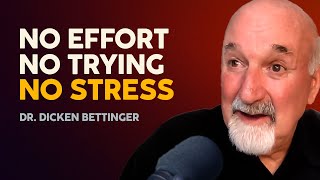
Dr. Dicken Bettinger explains Sidney Banks' Three Principles (thought, consciousness, creative mind) as a path to well-being. He describes how shifting to quiet presence rather than analysis transformed his parenting overnight, and points to resources including YouTube channels, the 3 Principles Global Community website, and a new four-month intensive training program.
Chapters
That's a life changer for anybody, is the power of thought is generating our thinking activity, and whatever we think, we'll feel. It's not a theory. Scientific. That's the doorway to well-being. No effort, no trying, no stress, no working on yourself, no trying to feel better, no judging. The discovery is for no reason you start to feel better. We can create a beautiful life for ourselves.
Welcome back to Live Into Your Brilliance, the place where we go on deep explorations to find those experiments that perhaps can help us solve our everyday challenges so that we can experience a life that we love. Myself and Billers are super, super excited for our guest today. Joined by Dicken Bettinger. Dicken is one of the most respected and beloved teachers in the Three Principles community. He's spent decades pointing people towards the truth of who they are, and I'll let him kind of give you a little bit more about his own story. But he's also the co-author of a beautiful book called Coming Home that I highly recommend. Everyone get a copy and have a read. And I believe there is another book in the offing, which I'm excited about. But we're super, just so looking forward to this conversation and seeing what it is that we opened up to and what we might experience. So, Dicken, you're really welcome on the Live Into Your Brilliance podcast. Thanks for joining us.
You're welcome. It's good to be here with both of you. And I look forward to talking about what you folks call the inner brilliance.
Yeah, we're looking forward to hearing how you articulate it, but maybe dig in what would be a cool place to start just for you to give people a sense of, rather than us try and do you justice, you'll do a better job, but just kind of your journey and what's kind of brought you to exactly where you are now.
Well, family is important. I've been married 56 years. I have 2 kids, and each of my kids have 2 kids, so I have 4 amazing grandkids age 5 to 20. A lot of what I've learned is understanding that whatever I see more deeply in one way or another gets passed on to my kids and grandkids. So that's, that's always been a motivator for me. I started my career teaching high school English, and I had so many kids coming to me with problems. It was unbelievable. I mean, I looked younger than the kids I was teaching in high school, so apparently they thought I I would be someone they could trust talking to. And, and so I got immensely curious and then passionate about learning what people could learn that would help them have an easier time of life. So I went and got my master's in counseling psychology, and then I came back and taught school a couple more years, and then it just became evident that I needed to go deeper in that exploration of well-being. Right from the beginning, I was interested not in mental illness. I didn't see people as having mental illness. I saw people struggling. And in the field of education, if someone is struggling, number one, it's not their fault. Number 2, they just haven't learned what they need to learn to have an easier time of things. Isn't that kind-hearted? Isn't that forgiving? Isn't that a beautiful way of saying we're all doing the best we can given what we've learned so far? And we're built to learn more, so anybody can have insights that can change the quality of their life. Anybody. No matter what situation. So rather than seeing people as having illnesses, they're just seeing we're all students in life. And so then I went and got my doctorate in counseling psychology and again continued to focus on people in the field of psychology that were interested in, in studying well-being, both psychological and spiritual. And after I got my doctorate and became licensed as a psychologist, I practiced in a private practice for 10 years. And then I came across the teachings of a man named Sidney Banks. What an interesting character. He wasn't in the field of psychology, but he has redefined the whole field. That when I met Sydney Banks, Yale University came out with a study that there were hundreds of different theoretical approaches to psychology. Everybody had a different theory and everybody had a different approach and everybody had different processes and techniques. And at that time, I was very interested in the technology of well-being. So I had studied with some of the best meditation teachers in the world. I was meditating 4 hours a day. I was also interested in what people in the field of psychology said would be helpful to improve your well-being. So I was training myself to wake up at the end of the REM cycle of sleep every night. So I would write down by flashlight 5 full-length dreams to work on the next day. I did affirmation notebooks. I did cognitive therapy, reframing of the content of my thinking. I did structured journals and unstructured journals, and I was reading about 3 different psychology or spiritual books every week. I was sleeping about 4 hours a night because I had a lot of self-work to do. At one point, my poor wife said to me, 'Dickon, I don't know anybody who works harder than you do on yourself.' And at that time, I took it as a compliment, and I thanked her. She didn't really mean it as a compliment. She meant, 'You're pretty self-preoccupied.' You're always working on yourself, thinking about yourself, trying to improve yourself. And at that point, psychology was a self-improvement paradigm based on the assumption that there was something wrong with you and that you had to work hard to fix it or to improve it. Everything. And I was also studying all the different modalities of psychotherapy and figured each one of them has something beneficial to offer. So I studied Jungian, Freudian, existential humanists. I studied cognitive psychologists. I studied behaviorists. And everybody had come up with things that would, to some degree or another, help people or could help people, primarily because we're human beings who are built to have insights. So it's possible for us to have insight learning about anything. And so it helped me, but boy, was that a lot of work. And innocently, the more education I got, the more I had to think about. So I was doing a lot of thinking, a lot of thinking, and I thought that was necessary, and I was doing a lot of hard work. And then I meet this man, Sydney Banks, from, he's from Scotland originally, grew up extremely poor. He had to leave school at the end of 9th grade to work full-time to help support his family. It was not an easy childhood by any means. And he became, as he got older, he became a welder. And he moved to Canada and was working in Canada as a welder at a pulp mill. In Canada. And he was very— he was a hard worker, sort of an introverted, shy person. His— but he wasn't very happy, and he didn't like to read, so he didn't really read much. So his wife was trying to get him to do things where he could learn how to have an easier time of life. And So a psychologist, this was in the early '70s, a psychologist who was very much at that time into that human beings have a lot of stored negative emotions that we have to get in touch with and get out and cathart. It was very popular when I became a psychologist, that particular theoretical frame point reference. A lot of pillow pounding, a lot of cathartic, a lot of yelling, a lot of trying to get it out. And it would temporarily help you feel better, but then the next time you were upset, you'd have to go through it all again. And so you got better and better at expressing upset and anger and hurt. Got better at it, just cathartic a lot. And it was very interesting at that time, the divorce rate skyrocketed because people started feeling like they needed to express their upset to their partners. And it doesn't take long before that gets old. So they went to a workshop with this psychologist, and it was for couples, and there was a lot of catharting, and Sid, who was an introvert and had a lot of trauma growing up, was like, this is so painful and so hard, and it's I don't know, I think I made a horrible mistake spending so much money for us to come to this workshop. And someone who was in the workshop saw how Sid was just not getting much out of it and said, Sid, I can see you're not getting much out of this. And Sid says, it's too painful and I'm too insecure. I've had too much in my past to keep going back through it all and dredging it up and emoting. It's too painful. I'm thinking of leaving. And the guy came back to him later trying to encourage him, and he said, Sid, you're not insecure. You just think you are. And Sid had a massive realization. What Sid heard, or what he gained by insight, and this was how he began to see insight can completely change a person. What he heard was that every bit of his insecurity, unhappiness, upset, was only being perpetuated by him holding on to thinking and thinking it's true. It's the only reason he would be unhappy. Normal to have those feelings, but to keep thinking about them is to keep it in place and to believe your most upsetting thinking as being truth. And holding on to that is what he later came to realize was the only source of psychological suffering for any human being. And as a psychologist, there were umpteen theories, and now here comes this guy with a 9th grade education saying there's one psychological problem. People get caught up in negative thought, think it's true, and then act on it. Ever for anybody. And I was working at that time with people that had psychiatric diagnoses, the full range. And to begin to consider, well, there's only one problem, and begin to consider for myself for the first time. And I began to see how often all of us buy into prevailing paradigm that says that if you feel stressed, upset, or unhappy, it's because something on the outside caused you to be that way. All you have to do is walk down the street and ask people, what are you feeling? And if anybody is not happy, you say, why do you think you feel that way? And I guarantee they'll point toward something happened or somebody said something or somebody did something or something's not working out the way they had hoped or they will say their past, they'll say their personality, they'll say their upbringing, they'll say their personality. In other words, the prevailing paradigm that has been around for a couple of hundred years is that our feelings are caused or created by something in the world. So that not only is our unhappiness caused by things in the world, but our happiness too is caused by things in the world, which leads to people going, I need to be in a relationship to be happy. I have to drink in order to feel better. I have to do drugs to feel better. I have to find something that will make me happy, which is the source of all addictions. So along comes Sydney Banks and said he had this first massive realization that was so powerful he didn't sleep for 3 days and 3 nights because he was having— he was so uplifted by this insight. I'm not an unhappy, insecure person. I'm a person who has insecure thoughts sometimes. And if I get involved in them and hold on to them, I'll suffer. But if I know that it's just thought and don't hold those thoughts, it's just a passing thought and it doesn't— and I'm built to come right back up again. In psychology, we call that being resilient. And then he goes home. And he was having so much compassion. He didn't judge the people in the workshop who were intentionally looking for painful memories and creating their own suffering and then focusing on it, thinking about it, talking about it, expressing it. He didn't judge people that were doing that. He said, well, they're doing what they've been taught. They're innocent. They're doing what they think is going to be helpful. But he had an insight that it doesn't have to be that painful and difficult. That any moment we feel tension, stress, or upset, it's a friendly indicator that we're holding thought in such a way that it's perpetuating that feeling. Period. And if you realize that, as started to happen to me when I learned this, Why would I hold on to any thoughts that perpetuate my own anxiety, my own upset? Why would I ever? And so I began to let go of what Eckhart Tolle says, 95% of the thinking we do is not helpful. And I started letting go of a greater and greater percentage of unhelpful thinking. That just kept me upset and blaming the world for it. Now I stopped blaming the world. I couldn't blame my wife and kids for upsetting me anymore. I was just experiencing my own thinking. We can talk more about that, but that's a life changer for anybody as people begin to realize that The power of thought is generating our thinking activity and whatever we think we'll feel. 100%. It's not a theory. Scientific. It's accurate. You have sad thoughts, you're going to feel sad. You have anxious thoughts, you're going to feel anxious. If you don't have anxious thoughts, you will not feel anxious no matter what's happening. No matter who you are. And then he had an even greater insight, which is an extremely rare thing for human beings. He had a spontaneous enlightenment experience. He had no teachers and no teaching. He had a spontaneous enlightenment experience. He suddenly saw in front of him a buzzing field of white light and felt pulled into it. Lost all sense of personal self. One time I asked my, because the way he described it sounded to me like a near-death experience. And tons of books have been written about people who have had near-death experience. And they all describe it as going into this white light, losing sense of self, experiencing love and feelings that are more powerful than they've ever, ever felt before because they're experiencing their sense of unity with the universe, with life. And I said, Sid, did you have a near-death experience? He said, no, I wasn't a near-death. I went all the way through that light to the other side. Spiritual death. You can find writings about this for history, but it's extremely rare. Spiritual death or ego death, death of sense of separate individual self. And he came back out of this experience, which he said only lasted about 4 or 5 seconds, with tears in his eyes. Just feeling like he turned to his wife and said, I've come home. I'm free. I've transcended the boundaries of time, space, and matter. What I've realized and discovered is our true nature, our true self. I will travel the world and this will change the whole understanding in the field of psychology and psychiatry, and I'll travel the world and share what I've realized about this. Now, you have to understand, at that time, there were no fundamental, universally agreed-upon principles in the field of psychology. There were theories, and everybody had a different theory. And the theories all fit into the paradigm that the world makes you feel bad. And if you work really hard, you can find things that help you feel better. And Sid is saying, we are connected to what he called the fundamental life forces, that the very infinite field of life energy out of which everything arises. Is full of intelligence. Now, all the physicists agree with this. Now, they say the quantum field is infinite, and it's the field out of which all subatomic particles are generated and created, and they pop in and out of form, and that there is an intelligence to that field because it knows how to create all of life. So He called that the principle of universal mind, to differentiate it from our brain, which is the computer. It's not the intelligence that creates and runs and operates the computer. He says there's another characteristic to this infinite field of life energy that we're all a part of because it's living us. It's living us. We're very comfortable with the fact that if you have a laptop computer, it won't live unless it's connected to an energy source, and the energy source comes from outside of it. And just as humans are exactly the same way, we would not be alive for one second if we weren't connected to an energy source, and the energy source is the field in which we exist., and it's an intelligent field. It's a conscious field. He called that the principle of consciousness because everything created out of that field has a degree of awareness. A one-celled paramecium knows how to find food. It has the intelligence to know, where to go to find food, and it has an awareness that allows it to be adverse to adverse conditions, heat and too much light, too strong a light and heat. It'll move away from adversity. So it moves toward food and has the intelligence to know how to— a one-celled organism has that consciousness. Human beings are conscious beings. It's what allows us to be aware of life. And the third principle, he said, is an infinite potential to create specific objects in the universe. I mean, you gotta love that all of us at one point didn't exist. And then there was one cell and then another cell. And they get together and they party. And pretty soon, out of nothing, you get more and more and more and more and more cells. Where are they coming from? They're being created out of this field of life energy. It knows how to create life. And then some of those cells are aware enough to become the skin. Others become the heart. Others become the lungs. They differentiate. And then they create organs, and then the organs begin to work together as a system, and then the system— so we have the respiratory system, the reproductive system, then the nervous system, and the digestive system, and then they all work together, and then this little creature is born, and it has built into it the capacity to to continually live in a process of creation, principle of mind, to be aware of life and to have its senses come alive, brought to life by this power of consciousness, and to be able to have mental activity so that it can navigate life and live in life. And continue to develop that mental capacity as it grows. That's the principle. Sid called that the principle of thought, this creative potential for infinite experiences. So each of us has different thinking and different experiences. But we all work the same way. We all are built, created from this field of intelligent, conscious, creative life energy. And he called those the three universal principles that can explain the creation of all psychological experience and functioning. And so for the first time in the field of psychology, it's a massive breakthrough creating a whole new paradigm. So instead of an outside-in, the world makes me feel the way I do, is the way I feel at any moment is being created from within. And I can become aware of that process. And I can become aware of I have free will, so I can choose to hold on to thoughts or let them go, pay attention to them, believe them or not believe them. And that's my greatest freedom. So free will, along with the gift of and powers of the power of thought, we can create a beautiful life for ourselves. So that's when I, I mean, I just feel so blessed that I had an opportunity to come across this teaching because it changed my life personally. It changed my family. It changed my wife and kids. And then over the years, it's changed tens of thousands of people. And now I travel around the world and give seminars on spiritual and psychological well-being. It's like unbelievable. And this understanding has been taken into universities, into prisons, into low-income housing projects that were rife with violence and drug abuse. It's taken it into schools at all levels, into big business for 16 years. I brought this into huge corporations in the United States. One was the third largest defense contracting company in the world, multi-billion dollar company, and they hired me for 15 years to train their executives and and people working in their companies in this understanding, because as people understand how our minds work, we're no longer passive victims to our experience. We become proactive agents who begin to use this incredible creative capacity that we're connected to to create beautiful things, helpful things, useful things in the world. And so that's what I've been involved in for, I don't know, it's 38 years or something like that since I met Sydney Banks. And I was fortunate to have him be my mentor for 23 years before he passed away.
That's incredible. Dickie, can I take you back to, I'm just really curious about the stage where you would have been at this extremely well-read, well-educated, like having gone, as you said, like you were only getting 4 hours sleep a night. What was it that opened you up to it? Because in one sense, I'm curious what it was that shifted in you that allowed you to go, oh, having studied all that, see this so clearly. And maybe the second part of my question is, how do other people open themselves up to really seeing this? In the same way that you clearly do and how you teach it to others?
Well, I go, I read, I would go into bookstores and have read every book in the psychology section, every book in the spiritual section. Plus I had all these practices. And I came across a book That was the first attempt to share Sid's teaching with the psychological world, written by Dr. Roger Mills, an astrophysicist that was a brilliant, brilliant man who came across Sydney Banks and went and heard Sid talk, and his life changed dramatically. And so he wrote a— he was so moved by this. He was one of Sid's first students, one of the very first in the field of psychology. And he wrote this book and I read it. And the subtitle of the book called it A Groundbreaking New Approach to Happiness. And I was very jaded by that point after 10 years of being— I had read many groundbreaking new approaches to happiness, which is, here, try my favorite technique for a while and then I'll help you feel better. And it would for a while and then it would like, well, this technique isn't working for me anymore. I have to find another one. And I had been through a lot. I'd been through a lot and done all kinds of therapy. So I bought the book because I was still very, very curious about the potential of finding answers that would be helpful to my clients. I genuinely was passionate about finding what would help people have less suffering. And I would be the guinea pig. I'll try it out. If it helps me a little, I'll share it with you. And I got halfway through this book and I realized this is not the traditional paradigm in psychology. This is not pointing toward external causes for what we experience. Is saying there's one source to what we experience, and that's this intelligent, creative field of life energy. That's where our feelings come from. They're created. And I looked at the back of the book, and there was a center in Tampa, Florida, and there was a phone number. And I called them up and said, who are you people? What do you do? Do you do trainings? They said, well, we have a week-long training, a 5-day training program for professionals. I go, 5 days? I'm working full-time. I have a family. You got anything else? And at that time, I mean, this is a long time ago. 1986 when I came across this book. And finally, I just, and I said, do you have any tapes? And they sent me a couple of cassette tapes and I liked them. I couldn't find anything that I could argue with. I was curious. So I went to this week-long training and I had The very first insight I had, and Alan, this is my way of trying to answer your question of what sort of convinced me to get more interested in this. And it wasn't reading about it as much as having my first experience of this. I had been at the training for 2 days and I kept saying, yes, bud, and answering all these questions because I felt like I was pretty much an expert in psychology at that time. And I could throw out all these erudite questions. And I was the guy in the back of the room who wouldn't stop asking the teacher questions. I'm sure he probably got sick of me after a while. They were very kind and very patient with me. And on the second night, I'm in my hotel room and I start thinking about a meeting that I have a week later. And I know it's going to be contentious and I know the people involved and I know it's— and I'm already having dialogues in my head with those people and having talks with them and sort of preparing myself for this. Very difficult meeting. And all of a sudden, and this is probably the first time I became aware of thought creates experience completely, in the moment, catching myself, I was using the power of thought to think about something that wasn't even happening, and it made me extremely anxious. And I had a lot of anxiety in my life, even being a psychologist of 10 years. And I, and I coped with it by doing all of these meditation and relaxation and, and quieting down exercises. And it helped me, but it didn't cure or get to the source of my anxiety. I was managing it. We used to have anger management. They didn't have courses on you don't have to live in anger. If you can learn how to manage your anger. And I had anxiety management. And so I'm sitting there and for the first, I realize I'm sitting here in a beautiful hotel in a beautiful city. Nothing going on. I'm all by myself. And I'm thinking up, I'm creating a movie in my head that's making me I was sick with anxiety. And I started laughing. And I just stopped thinking about this because the way I was thinking about it was not helpful. It made me more anxious. But the paradox was, because it's a principle, it's always true. So the next time I felt anxious, I was suspicious. Could this be thought? And you don't have to know what you're thinking to let go of it. Because most of the time we don't know what the thoughts are. But I guarantee if we're thinking about it, we're not present. And letting go of thought just means you come back to being present. 'Cause you can't be present and think at the same time. Isn't that interesting? This is why so many people talk about living in the present moment, living in the now. But until you understand how thought works, it's hard to live in the present moment 'cause you got a lot of stuff to think about. And you keep thinking about it even though it doesn't make you feel good. So something happens to you and you keep thinking about, I can't believe they did that to me. What am I gonna do? And I would I'd have dialogues in my head. Suddenly I'm catching myself doing that and going, why would I keep thinking about this if it's not productive and helpful? And by the time I left at the end of that week, I probably had 60% less anxiety overall ongoing. From then on, it'd come up, and sometimes I'd get caught up in thinking about things, but more and more I started catching myself, and I started catching myself when I felt frustrated or bothered or anxious or angry or hurt or sad and started seeing that as, oh, they don't exist. They don't last. In the present moment. And in the present moment, that thinking then flows through us naturally, and we get over our upset naturally when we're present. Now, trust me, this was a very new way for me to understand how every one of us works. We all are thinkers, and sometimes we get caught up in thinking that creates tension, stress, or upset. And either we're aware of that fact or we're not. And if we're not, we'll keep doing it. And if we're aware of it, we have a choice. That simple. So that was one of my insights during that first week. And the other insight was Sid felt like because we're connected to the spiritual energy of life, spiritual energy can't be broken or damaged. So our true self is unbroken. It's always there. It can't be broken. And when our minds quiet down, it'll work perfectly to create something beautiful in us. That intelligence in human beings that's formless, that's spiritual, is often called wisdom. In every culture, there are people that talk about the difference between the intellect and wisdom. Because you can have a very high intellect and be miserable and be cruel and be an unhappy person. But wisdom is when we quiet down, this intelligence brings us feelings that uplift and new and fresh thinking that guides us through any situation. So they say in case of a crisis or emergency, stay calm. They don't say think up a frenzy. They don't say think about this situation in a way that makes you more stressed and more anxious or more angry or more upset. And so that my second insight was every human being has perfect well-being already. And the only problem is it gets covered up when we get caught up in all this thinking. Because you can't experience well-being while you're thinking. If I'm with my wife and thinking she won't experience, I won't feel love and she won't experience me being loving, period. And she used to say to me, I was such a thinker. I'd come home thinking about all my life and I felt like I had to, to be a responsible adult. And here's my wife and kids and I'm just preoccupied. And then one time she playfully, she has a great sense of humor, playfully knocks on my forehead. She goes, "Dickon, are you in there? Hello? Knock, knock. Are you in there? Hello? Are you going to come out tonight and play with us? Are you going to stay in there all night?" And I would feel guilty and I would try to be present. But it was very difficult because I had so many problems to think about in my clients and my work and my life. And I didn't know about wisdom. I didn't know about when my mind got quiet, would get quiet, this deeper intelligence would guide me through life gracefully. And I could deal with any situation. So I got a glimpse of the fact that you don't have to do self-improvement to develop your well-being. Every human being has perfect well-being. And when we fall out of the thinking that weighs heavily on us, every human being is built to naturally be happy and loving. It's built into us. It's innate. It wouldn't be called wisdom if it didn't guide us toward being more loving and compassionate. So the combination of those two, those are two little insights I had, little, they changed my life. I came home and I saw my kids as being healthy and that sometimes they get caught up in thoughts like anybody. And that covers up their well-being temporarily, but they're not broken, they're not wrong, they just don't know that their stress is created by thought, so they keep thinking. And as kids get older, they do more and more thinking when they're upset. So most adults, when they feel tension, stress, or upset, you know what they do? More thinking. You watch them. You watch. People get upset and they keep thinking about it and talking about it. And with understanding, the opposite happens. You get upset and you go, oh, thank you for letting me know I'm blocking my wisdom innocently. I think I'll come back to the present moment and see what occurs to me fresh and new. I'll tap into that infinite creative potential. Wow.
So, Dickon, in your book, Is this what you describe as the dance?
The dance for me is that this infinite field of energy just dances in and out of form. It's the— in Hinduism, they call it the cosmic dance. In Buddhism, they talk about it as the generation from this field of goodness that there is generated different forms are manifested or created. There's different ways of, in Christianity, they talk about the mystery and out of this silent mystery, life has created. So they talk about the creator God. People, there have been people throughout history who have had experiential realizations of truth. That we are connected to the universal life energy. That there is something living us. That our body can't operate without a generative source of energy. One time I asked a biologist, he was quite well known, I said, I'm curious, the heart keeps moving throughout our whole life. What causes the heart to keep beating? See, I'm looking for source now. I'm interested in what creates life. And he goes, well, we know that the heart is a muscle and it's contracting and it just keeps contracting. So what do you think my next question is?
What causes it to keep contracting?
The heart to contract. And he goes, oh, well, we know that the heart's made up of long cells, different, they're called striated cells, they're long and skinny. And a muscle contraction is the muscle cell shortens. My next question, what causes the cell to shorten? He says, well, we know that there's, in order to shorten, it takes energy. It requires energy to tighten. And so there's a burst of electrical chemical activity within the cell that the cell utilizes to shorten. My next question, what creates the burst of electrical chemical activity on the cellular level? And he goes, well, some of us biologists talk about what we call the biological life force. And I say, what's the biological life force? He says, it's an energy source that can create bursts of electrical chemical activity. So when we're born, we're born into this. We have connection to this biological life force that can create bursts of energy, which is a form. Do you know what my next question is? What creates the biological life force? Now, this guy was really a very humble, open-minded, curious scientist. And you know what he said to me? He got quiet for a long time. And he said, you know, Dick, and no one has ever asked me that question before. And I said, well, I'm curious because biology is bio and ology is the study of life. Do you guys talk about the source of life and being connected to the source of life? And he said, well, I suppose now you'd have to start talking about the spiritual. Or about God or about whatever quantum field, whatever you think is the source of life. I said, yeah, that's what I'm curious about. And he said, well, that's a really good question, but we don't often think about that. Now, this is what Sid Banks realized about psychology. He did not judge anything in psychology. He says it's evolving. As a science. And he had a realization that could help psychology become scientific and be based on principles rather than theory. And he said it's an evolving science in that right now the current field of psychology and psychiatry only studied what's already been created. Thought content, feeling content, and behavior content. And every form of psychology examines what did you feel, what did you think, what did you do, which happened in the past. So you come in and you say, how's your life going? You say, well, yesterday this happened, and I did this, or I felt this, or I— and then you talk about it. So you're focusing on and talking about what's already been created. He says it's very interesting the field of psychology is not curious about what creates all of that content. And what happens when we access that creative source directly, something new and fresh can be created. So you don't need, you're not even interested in the old if it's not helpful. You quiet down and touch that creative source more directly so something new and fresh can be created. You are no longer a victim of your past thoughts, feelings, and experiences because the past doesn't exist. There is no past or future. There's only this moment of creation, and if you get interested in that, Everything can change for you.
What do you think causes people to sometimes resist the truth of this?
It's really understandable. I mean, we're spiritual beings born into a physical body. We open our eyes and we see things. And so we start thinking about what we see. And we don't see the power of thought. We don't see consciousness. We don't see creative potential because they're invisible. So when you've lived in a world where everybody has focused on and talked about and emphasized form, and then along comes somebody who says the vast majority of who we are and of our universe is formless, it's a stretch for people because the intellect can't understand that there's something beyond itself. So it has to be experienced. You have to see that when you get quiet, you feel more open, more spacious. More present, and then you start witnessing how out of nothing things keep arising and being created, and you're not doing it. They just keep coming. Things— you ask people, people get interested in creativity, and they've learned that Like in problem solving, they'll say, use your intellect to think about the problem because it's good at pulling together known information and processing it. That's good. Use your intellect wisely. But then at a certain point in problem solving, they'll say, now set aside your intellect. Get quiet. And they call it brainstorming. Lightning. And the storm is that when you go in from the known to the unknown, there's a sudden flash of insight, a flash of lightning, a storm, a flash of lightning. Oh, I see. What about this? What about that? Oh, I hadn't thought of this. What about this? And it's a creative process, is tapping into this creative potential. Field of creative potential. All great thinkers, you, like we would, there was a research study of 600 executives of companies. When do you get your best ideas? Isn't that interesting question? When, when do you get your best ideas? None of them said at work while they were thinking about the problem. They would say, in the shower, these are the top 3 answers, in the shower, in the car, when you relax listening to music, your mind's open, receptive, and on vacation. That's when I've had my biggest and best insights and ideas. It's not the shower. It's a quiet mind. Because if you're in the shower and worrying, you won't have insights. But often when you get in the shower, if the water is hotter or colder than you, you become very present. And only in the present can we get new thinking. You can't get it while you're thinking.
But Dickon, just riffing off Al's question there, you know, if you think about the work you've done with refugees or in prisons— you mentioned prisons at the top of the episode— and you think about folks who are in very different, uh, and to our mind, very traumatic conditions and environments where Um, you know, thinking about the top line of your Fortune 500 company is, is, it's a very different thing to thinking about, you know, you've lost your house and you're living in a tent in the middle of the desert with your 7 kids and you don't know where your next meal is coming from. And so I'd love to just get your take on how, how you talk and communicate this to people in those types of situations and if there's any correlation between talking to your corporate execs who—
There is. I've seen people in horrific situations be more loving and compassionate, be very loving and compassionate. And I've seen business executives who are some of the most unhappy people I've ever talked to. Just an example, one president of a company, very successful, thought that stress, he was proud of how much stress he could experience. He thought it was a good thing. He thought stress is created by your environment. And I'm living in a very stressful environment, but I can handle it. I can deal with it. And I followed him around for a day, and I saw just, he just had so much stress, it was unbelievable. And I met him that night at a restaurant, and he got there before I did, and he was in the bar, and he was on his third double martini. Now, at that time, if I had one double martini, I would be slurring and falling over. And I mean, honestly, I mean, I— and, and I asked him, and he said, That's what he does every single night. And it's the only way he can regulate his stress. And I've worked with, talked with people in bomb shelters in the Ukraine where we did a free 5-day program for people in the Ukraine. And people were calling in from bomb shelters. And it was Unbelievable. And toward the end of the week, they're talking about, they had just tears of gratitude because they were in a horrific circumstance. They literally didn't know at any moment when they might, a bomb might drop on them, literally. And they we're discovering that well-being can't be damaged no matter what circumstance or situation. Any human being who falls out of their personal mind into the quiet of the present moment and rests in that space will start to feel feelings of aliveness and connection. And that if you extend that feeling to other people, they would tell me this, they're amazed that in this bomb shelter, when they would fall out of all of the thinking, the worry, the upset, the fear, always, it's like going from their head to their heart. They would feel more compassion for the people around them, and they would start being kinder and more loving. And then they start getting a sense that it's possible to live from this understanding so that they could, even though they would feel fear at times, that's normal. Of course, of course, of course. I've been in a war zone. Thinking I would die and never see my family again. And still, when any human being lets go of fearful thoughts, they calm down. That's a nicer feeling. It's innate. Peace that passes understanding. It's an inner peace that has nothing to do with circumstance. It's available to all human beings. And then there's, in that feeling, that deeper feeling, we feel closer and more connected to what's around us. And that's true for any human being in any situation, which is why people like Viktor Frankl could interview 60,000 people who were in concentration camps who came out of it more loving and more compassionate than they went into it. Even in— and I used to think, how would I do in that circumstance? And given my misunderstanding about how the mind works, I would have been a mess. Now I've been in horrific circumstance, as we all do at times, and Now, as soon as I feel that tension, stress, or upset, I accept it. I don't judge it. I accept it. Of course, I'm feeling that way given these thoughts. Fearful thoughts can pop into your mind. It's not your fault you feel that way. You feel that way, but now you have a choice. Do you keep focusing on that and thinking about it and leave the present moment and do more thinking, Or with understanding, do you fall away from that thinking into the now and rest there? And then discover the greatest discovery is when we're not holding any thought. Automatic, that's the doorway to well-being. Sid called it the state of no thought. He says it doesn't mean you don't have thoughts. It means you're not paying attention to them or holding them. They're free to come and go. They're free to flow through you. You're just resting in the present moment. That's our natural state of mind. No effort, no trying, no stress, no working on yourself, no trying to feel better, no judging. You're not holding any thoughts, concepts, or beliefs. You're just present, our natural state. And then the discovery is, for no reason, you start to feel better. When your mind is quiet and you feel better, you do better. In any situation. Listen, I did sports for the whole first half of my life. And you discover pretty quickly you can't do well in sports if you're thinking while you're trying to play. And so they talk about, all athletes know this, about being in the zone, resting in the now and trusting your intuitive knowing. Wisdom, trusting your intuitive knowing to guide you. And so they say, wow, that guy has perfect game sense. You watch Messi play football and he walks around the field very quiet and just looking around and trusting where wisdom takes him to move. So he's in the perfect position for as the play unfolds, he's right where he needs to be. That's uncanny. They say he takes less steps than anybody else in the game. And he does better than anybody else because he's trusting that deeper intuition. Now, that doesn't mean he's learned the principles behind it. So it doesn't mean like I would— when I was doing athletics, I was so healthy. I mean, I loved playing. I enjoyed I just could not wait. I loved being, and I played sports all year long, and I was very good and captain on most of the teams I was on. I got picked in senior year in high school as being an ideal teammate because I was so positive and uplifting. And, and, but I, I didn't have any understanding. So when I'd step off the field, I was extremely insecure. I could not talk to girls. It wasn't until sophomore year in college I met my current wife, and she was the first girl that was— I didn't get all insecure because she was so present and warm and kind. I just eventually relaxed and could just talk easily with her. Can you believe it was like really before that I was— I had social anxiety like you wouldn't believe. Even though I was extremely healthy and present and successful in sports, I didn't understand how that works. So I'd get caught up in my worry.
A question on that then, Dick, and so just given what you said about yourself and also Lionel Messi, and I've never spoken to Lionel Messi, so I don't know if he understands the principles or has an insight.
Well, he does while he's on the field. It doesn't mean that, you see, I know lots of people that can get quiet and feel good, but they blame it on, it's because I'm on vacation.
Yeah, or maybe Lionel Messi thinks it's the football pitch and it just happens there.
That's right.
What I'm curious about is for myself, but also I'm imagining our listeners, and people watching and think, well, how do I access this? And how do I unlearn perhaps the habits of a lifetime that I've built up, which is to try and think my way out of problems? And what are the practices? I'm just really curious how you, where you'd point people to say, well, This is a place to look.
Well, one thing that's extremely helpful to learn is that you have a biofeedback system built into you. Your feelings. They're extremely accurate. Your feeling is either relaxed, open, like your feeling is opening up, or it's contracting. Period. Our body only does one of two things. It either opens or it contracts. And contraction is not a problem. We all feel tense or stressed or upset at times. Living in that for a period of time is what people hate and try anything to do to get out of. And if you don't understand that it's just holding thought creating that, you'll think it's this person, so I got to stay away from this person. But every time that person comes back, you feel horrible and you think it's the person causing you to feel that way. So as you begin to learn, your feelings are a reflection of what you're thinking and it's the The only way we can know the quality of thinking we're involved in. What begins to happen for every client is, just like happened to me in the hotel room, stress becomes your friendly reminder. There's only one problem here, my friend, and it's not outside of you. It's you. Giving attention to this thinking and thinking it's true. That's the only problem. If you didn't think it's true, you wouldn't even pay attention to it. One time I had an insight that if I had a switch on the side of my head, and every time I felt bad, I could flip the switch and it would change my inner voice from English to Chinese, which I don't understand. And now In Chinese, it's saying, you're stupid. What are you doing? Why are you doing this? What are you going to do about it? What's wrong? Now it would just be, jing dao dong, and I would be going, okay, whatever. I laughed for 3 days. One time it was before a conference, an annual conference, and I was asked to speak, and I was pretty new to this, and I was very nervous. My old habit's kicked back in in spades. And so I go into the conference room early and I'm sitting there worrying about my talk and trying to get it right. And guess who walks in? Sidney Banks. And I just know that from the door he could see see me in the front of the big room, and he knew immediately I was just caught in a misunderstanding. So he had immediate compassion, and he quietly walks over and sits down right next to me, and I'm mortified. This is like the imposter syndrome. It was like, oh my God, Sid now knows I'm so insecure, and he's probably thinking, how can this guy be talking at this conference He's a mess. And oh my God, I'm feeling guilty and embarrassed and ashamed. And finally, I had the courage to look over at him. And he's just no judgment. It's just so soft and so kind and so tender even. He says very softly, Dickon, don't you know? That when you feel this way, you can just ignore whatever you're thinking? And he stands up and walks away. And it ended up being one of the most deep— I had an insight at that moment. I didn't realize that just because you think something doesn't mean you have to pay attention to it. And if you begin to realize, my feelings let me know the quality of thought I'm in. And low-quality thought, the way I would define it, is full of judgment. Sid would say it creates a distortion in how you see things if you think it's true. I'm a horrible person. I'm stupid. You're stupid. You're a jerk. We tend to think those thoughts are true. I'm a failure. I can't do this. I don't know how to do this. Any of those thoughts, innocently, if we think they're true, we think a lot about them and try and resolve them or fix them or stop them or improve them. That's the whole culture we live in. Self-improvement culture. Why do you feel that way? What's wrong with you? You shouldn't feel that way. Feel good. Here, do this technique. Do this, do this, do this. And this is no technique. Let me tell you why it's not a technique. If you really realize that holding on to these thoughts is making you, is perpetuating that feeling, It doesn't make sense to hold on to those. That's wisdom. In the same way, if you put your hand on a hot stove, if you understand the pain comes because you're touching something too hot, you don't say, so what are the 7 steps for removing my hand? What technique shall I use? Tell me what to do. No one has to be told what to do. I've never told the client what to do. If they start seeing I'm holding thought and And that's the reason I'm staying upset. It's not the reason I'm upset. It's the reason I'm staying upset. I'm upset because the thought created that feeling, not because of what's happening outside of myself. It's extremely empowering. You are no longer a victim of life and people and circumstance. You're just experiencing your thinking, and that's normal to have all kinds of feelings. But without understanding, we hold on to the negative. Give it our attention and think it's true. With understanding, it's like the hot stove. You go, whoa, no thank you. I had a friend once who said, I said, how's it going? He said, oh man, you won't believe the crappy thoughts I'm having right now. I really could go there, but no thank you, I'm not going there. I could, I could, I used to. But I'm not going there. I'm not interested. Yes.
I've got a question/observation that I've been dying to put to you. And Al and I often sort of say on this podcast, awake people awaken something in others. And we've had the great privilege over the last couple of years of having amazing guests. And some of them are, you know, the OG 3P practitioners like yourself. And but I can say without a shadow of a doubt that when you're in the presence of somebody who has spent time practicing this and grounding themselves in this, there is an energy and a playfulness that comes through. And I think, like, you and Mavis, for me, like, epitomize this because there's a mischief in your eyes. There's a love of laughter and fun and levity. But what you're saying is world-changing. And, and I'm curious about that because to me it's almost like, yes, I get it, we're all bags of bones and, and we are just physical forms of, of this sort of universal, uh, energy and life. But it's almost as though People who embody this, live this, express it, practice it, become walking manifestations of that energy, and they beam that light.
This was Sid's vision for how the world can change. One person at a time waking up to truth and bringing more love and understanding into the world. Less stress, less upset, less judgment, less blame, and more love and more compassion, more understanding. And it not only has an effect on the people around us, which it does. When I became less preoccupied, less impatient, less judgmental and more present and more loving, it did affect my kids dramatically. They noticed it and they liked it. And then they got curious about what I had learned that helped me to be that way. They wanted to be like that more in their life. Now, Sid took it a step further. And this is mind-blowing to me. If we're all part of an ocean of conscious energy, and we're the waves on the ocean, we're part of a conscious ecosystem. We're all connected to the same life energy. It's living all of us. It's living my dog. It's living the trees, the plants, We're part of that field of energy. In ecosystems, what I learned in college about ecosystems is if one part of an ecosystem gets healthier, it's a complete system. So the whole system is getting healthier as one part gets healthier. So if we have insights that help us bring less stress and tension and upset into the world and bring more presence and kindness and understanding, not only are we having an impact on the people around us, which is considerable. Think of how many people you bypass or talk to or connect with every day. It can be remarkable. But we're also having an impact on the overall level of well-being of humanity. So Sid's vision was the only way long-term fundamental change can happen to create a healthier, happier world with less violence and less negativity and less judgment and less blame is for people one at a time to hear truth, be affected by that, and raise their own level of consciousness, which affects the world. When I had that insight, It wasn't intellectual. I had a sense of being part of an ecosystem, and we all are a valuable part of that system. And as we get healthier through insight, we're helping improve the whole system. I wrote a letter immediately, emailed the letter to the head of the annual Three Principles Conference in London, said I'd love to do a talk called Healing the World. That was 2017. It was a massive insight, the biggest insight I think I've had. And I ended up doing the closing talk for the conference on healing the world. And people really responded to this message because so many people were feeling helpless in the face of political turmoil and the world falling apart and getting more and more disheartened. And discouraged. And then they started to realize, but if I go within and literally bring more consciousness, more love into the world, that's the best way I can help create a better world. Not bringing more of my rage and upset into the world. We've tried that route of creating change, and it just creates more enemies, more polarization. And, you know, fighting for the right can end up just creating more polarization and, and conflict in the world. And so, uh, I started— I created— I was curious about this insight, and I started doing programs for people called Healing the World. And there was a 9-month program and And people would come to my home for 4 times, for 3 times for 4 different days. And we'd explore this notion. And unbelievable how people started feeling more hopeful that we could each be a change agent for social change, not just personal change. The bigger vision Sid had for principles or truth coming into the world that as more and more people realize it, immediately you stop blaming the world for your upset. That alone changes families, changes in some companies where we work, the divorce rate stopped. Because if you take blame out of a relationship, And people take responsibility for their state of mind and begin to see the benefits of bringing positivity to people rather than negativity. Very quickly, family dynamics can change. Very quickly. And then that has an impact on the community. Because each of the people in that family have contact with tons of people But it also is having an impact on the world. You're bringing more well-being into the system.
You've talked about understanding. If people could really understand, as I hear it, just how perfectly they are designed, like if they could really understand that, and it would change their lives. If someone's listening to this and they're saying, whoa, what's the best path for me to follow to open my eyes to this understanding? You said there you ran programs for 9 months and people go deep into this. I guess I'm really curious for you to share with us what guidance you would give to say to, for people who've listened to this and they're saying, I want to understand more. I want to go deeper into this. What guidance would you give them? What advice?
Yeah. I mean, the first place I try to direct people is go to YouTube and go to the Sydney Banks channel, which the publishers of his book put together. And it has a lot of his talks around there. You won't be able to understand intellectually what he's saying, but if you listen to him and get quiet, you'll begin to discover that quiet, deep feeling space within yourself. So some people are ready to hear that and can just by listening to Sid. When I started learning this, all I had was a couple of cassettes of Sid's early talks. And I'd play them over and again, listen to them as a way of getting into that quiet meditative state and then becoming familiar enough with it to realize I can drop into that without listening to the tape anytime, anywhere. So that's one way. People ask me all the time. I have a YouTube channel and I have lots of talks where I talk about this. And for some people, it's easier to hear it. I dumb it down compared to Sid. So it's a little bit easier to hear it from me. That's another way. The other way that I would suggest is go to the webpage for 3 Principle Global Community, 3pgc.org. 3PGC, 3 Principles Global Community. There's tons of free stuff on there. And also we do programs like I'm extremely excited. I'm the head of the program committee, and for the last year, I've been working on with a committee and with the board of the 3PGC, a program for people who are interested in deepening their understanding of the principles and then feeling comfortable sharing what you learn with other people in any context, professional or personal. And it's going to be a 4-month program if people really want an intense training, if you will, in this understanding. And 7 of the 11 teachers in this program is the first time we've ever done this ever. 7 of them are people that were mentored directly by Sid. This unbelievable program is the first time we've ever done it. Done this. We're all together on this, on the board of 3BGC. Why don't we offer a program? It's sort of the last chance for some of us old-timers to share in a program what we heard from and learned from studying these principles that came from Sydney Banks. So that's— I can't tell you how many people are excited about that program and interested in it. We tried to make it— it's over 50 hours of program, and we tried to make it affordable for anybody, plus we offer liberal scholarships for people, so we don't like to turn people away who are really interested in doing this. So that's another way, or you can contact one of the three principal teachers and do individual sessions with them. That's always a possibility for people because there's tons of practitioners out there all over the world.
I guess I'm going to say that all, by the way, that sounds amazing. Like that program sounds amazing. Um, genuine sound of bell. I'm like, I'm going to have to check that out. I'm going to say something now, and I guess, Bill, I'd be interested in your perspective and Dick, in your response. I'm not sure that in the conversations that we've had on here that we perhaps have pointed to the power of, and the word that comes to mind is immersion, like kind of immersing yourself in this understanding, like letting it wash over you rather than trying to understand it. And it's just maybe it's a thought, it's a realization I'm having now that I sometimes think that we want to kind of point to it, but without really being clear on the fact that, hey, if you really want to to experience what we're talking about. It's an immersive experience in whatever that looks like, whether it's listening to Sid talk, listening to yourself, going on some programs. But it's like, and you've said this to me, Dickon, when we spoke first, and you said it again on this talk, it can only be experienced. It's the experience. And so I guess I'm really curious just if that resonates with either of you that it's, oh, actually there is an immersive element to this. It's not that you read the book and go, oh, I've got it. It's not that.
It's different. Sid would say, immerse yourself daily in spirit. And what he meant by that is we all need to learn the beauty and power and benefit of when we're resting in the present moment, our thinking naturally quiets down the way if you put a snow globe down, it quiets down not through shaking it and effort and trying, but just by being, resting, not holding any thought in mind, letting it flow through. We get more familiar with the quiet within that's always here underneath the noise of our thinking. And as you get familiar with that space, you'll begin to see for yourself pretty easily that you start to feel better when you're in that quiet space. You become more sensitive to that feeling. You don't even have to label it. It just feels good. And you'll see that when you're in a quiet mind and nice feeling, You just know what to do. You can deal with anything. Like it changed my parenting overnight. I threw away my books on parenting. And when I didn't like what my kids were doing, if I was in a quiet, nice feeling, I'd talk to them. If I wasn't in a quiet, nice feeling, I'd do everything I could to just wait until my head cleared and I was in a better feeling. Then I'd talk to them about it. And I would bring consistently good feel— a parent from a good feeling instead of from being annoyed, bothered, frustrated, impatient, worried, upset. I stopped parenting that way completely and started parenting from a feeling of presence. And it got easy and it got fun.. And I couldn't believe how effective that was and how quickly my parenting improved. And my kids liked that dad better than the old dad. My kids would come up to me and say, Dad, you seem upset. We need to talk to you about something important. Go do what you do. Go take a chill pill or whatever you do and come back because then we know we're going to have a good talk.
Yeah, well, that answers my question. So maybe something below is for us to allow that to settle in as well for future conversations.
I like your word, though, immersive. No one can analyze their way to well-being. In other words, while we're thinking, you won't feel happy or peaceful. And only when we disengage from thought do we find what we're looking for. But we're not taught that, that we already have that. And at times during the day, I could follow any human being around. They become present. They feel good. But they don't know it's because they're accessing their innate well-being. Because if you ask them, why do you feel good? They say the sun came up. They'll say, yeah, but the sun came out yesterday and you are miserable. Oh, oh, well. You see, we have to realize where it's coming from. You have to know your upset is created from within and your well-being is the natural arising of that from within. Then you're free. Then there's less and less blame and less and less staying caught up in stressful states. You visit, you feel it, it's natural, you get over it quickly, you have resilience.
Dicken, we do have a fun way, or it's our fun way of kind of bringing our conversations to a close. And it's a little request we make of our guests, which is, if you had a bumper sticker for life, what would your bumper sticker say?
And why? The reason why I think this is funny is one time at a conference, I was talking and I, and I was talking about how when we get quiet and go beyond our conceptual mind and touch this, you can call it spirit, soul, presence, quiet. When you touch that, Sid would say, if you touch that, something beautiful will start coming into you. It must come into you. That was his last talk before he died. Public talk. And so I was saying, if you touch that space, then you have a shift in your level of consciousness. And I said, so I'd like a bumper sticker called Shift Happens. And you know what? On my last day in England, a friend of mine who was a rabbi came up to me with a package and he had the bumper sticker made and he gave it to me. So that actually came true.
Wow. You're definitely the first person that we've had on that's like, not only have I got my bumper sticker for life, but I actually have my bumper sticker for life.
That's the hope that any of us can shift to a higher level of well-being. And that's my whole life. That's what I was trying to discover. And then wouldn't you know, it was with a 9th grade educated welder that I learned what I needed to learn to see the truth of that for anybody. Very hopeful.
Beautiful. Very hopeful indeed. Dickon, thank you so much. Like this has felt for me, this has felt like an immersive experience. Experience. And really grateful for you coming on here and just spending time with us and to have the delight to actually sit and listen and actually have my own experience of what you were talking about.
So thank you so much. Wonderful. I'm delighted, Alan. Be loved. Being with you.
Thank you. Well, and, and I, you know, Dickon, from my side, I, I think I alluded to this a little earlier, but, you know, we've had such wonderful, beautiful souls, uh, on this podcast, um, for the last couple of years. But every now and then, a soul arrives who, in beautifully simple terms explains something that could blow the top of your head off. And, and I know you were being slightly irreverent saying that you dumb it down, but, but I, I, me, and I'm sure the listener, particularly those people who follow us regularly, I think to have somebody like you come on and explain it so beautifully but so insightfully has it's basically allowed the top of my head to be blown off again in an awesome, awesome way.
So thank you so much. How nice. It is mind-blowing. Can you believe I get to witness this happening for people all over the world? Just people just having hope and seeing that they have well-being and they can access it. In a quiet mind. Oh, it's so hopeful.
It's so hopeful. Well, I'd love to, I think we'll end on that hopeful note of this conversation. And to our listeners and watchers, as always, we hope that, who knows what your experience has been listening to this, but whatever it is, rest easy. And know that you are made of this stuff.
And as always, live in true awareness. We're made of that stuff.
More from Bruce


How Do You Practice the Presence of God to Stay Alive and Free From the Devil.
How to Create Safety as A Coach and Leader - Alive and Free Podcast - Episode 98