Mastering Healthy Conflict - The Alive & Free Podcast
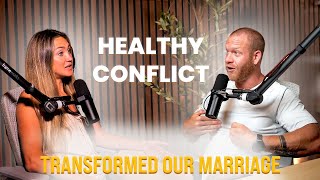
In this informal, diarized episode of the Alive & Free Podcast, hosts Sammy and Spencer explore what it means to engage in healthy confrontation and conflict, especially within marriage and Christian relationships. They begin with playful banter before diving into why many believers mishandle conflict—often by avoiding feelings, mimicking a passive "what would Jesus do" stance, or weaponizing newly‑found emotional voice. The hosts outline a framework for "true" confrontation: both parties own their triggers, recognize the fight‑flight‑fawn‑freeze (amygdala hijack) response, practice humility, and keep the focus on connection rather than winning. They share concrete marital anecdotes (e.g., feeling un‑pursued, punitive silence, freeze‑flight patterns) that illustrate common unhealthy patterns such as blame, punishment, secrecy, and codependency. Throughout, they weave a spiritual lens, emphasizing identity as God‑granted royalty and leader, the role of perfect love in casting out fear, and the practice of turning to God first for emotional regulation. Practical tools discussed include taking space, journaling, asking God for perspective, and using non‑blaming language. The episode also promotes their paid offerings – the Alive & Free Collective hub and the Coach Launch program – as resources for deeper emotional‑spiritual health training. The overarching claim is that conflict, when done well, is the birthplace of true intimacy and relational freedom.
Chapters
Hey there, what's up? We are gonna talk about fighting today.
Yes, and how to fight good bars, confrontation and conflict.
I don't know what that means.
No holds barred?
No.
Well, I would explain it to you, but it's not that important. Okay, so here's the thing, um, I love conflict. And confrontation. No, we're talking about fighting, like, like actual fighting. Yeah, like scratch your eyes out.
Yeah, like fighting. We're gonna scratch fever. Is that a real song?
Cat Scratch Fever? Yes. Oh, like back in the day it was like older people.
Why do you keep talking about things I have no idea about?
Well, how am I supposed to know how many things you don't know about?
We're not, we're not off to a good start today with like our connection. So I think we should work through some of that before we talk about—
I think you're just triggered, man. We used to do conflict way different than we do now, huh?
I mean, I wouldn't be triggered if you weren't so annoying.
Oh my gosh, if for once things could go my way and not just your way every time, that would be nice.
I would feel fine if you would just stop doing that.
Gosh, how many— like, uh, I feel like helping Christians work through conflict has been one of the biggest things we've done in a lot of our coaching. Yeah, that we've done. Yeah, because honestly, I don't think the church or like, uh, a lot of Christian cultures have known how to equip believers with how to do conflict well. Yeah, yeah, you know, it's, it's either avoid your feelings and emotions and just stuff them and and do the Christian thing of just being Jesus, you know, like, what would Jesus do? Well, he wouldn't have any feelings about this, so here's the way I'm gonna do it. And we like mimic this version in our head of Jesus instead of being authentic and getting there at a heart level. Then the other side of the pendulum is like, oh, I'm finally having feelings for the first time because I'm giving myself permission, and so I dump all my triggers and pain onto people.
And then there's a camp of people which we're not gonna be able to cover all the different camps of people because there's not just two sides of the pendulum.
Extremes in my head.
But there's one group of people too that get a voice for the first time, and they've been so passive for so many years, and they start learning a level of emotional health or self-awareness, and now they're throwing bombs of blame and accusation, and they call it having a voice, 'cause they have some emotional language, and it feels empowering to get to have a voice, but they also don't know what it looks like to have compassion and ownership and be, you know, disconnected from blame and their own narrative and story that they're making up in that moment, you know, from the way that they perceive something.
And honestly, if you guys want to check out that episode too, you can see that we have a podcast episode on weaponizing emotional health. Oh yeah, remember that?
I do.
I thought that was a good one. So, but what we want to talk about is confrontation and conflict because, uh, it's been something I feel like that has really set us free to be able to see each other in ways like True confrontation, when done well, are two parties that are able to own their own triggers, their blame, their pain, the different things that are influencing their emotions. You know, big triggers would be like a fight, flight, fawn, freeze response where you're like, your amygdala is hijacked. You're feeling like, man, there's a lot of charged emotion here, or I'm like completely gone, like I've left the building. And trying to do a conversation. Learning how to manage those things in the midst of conflict has been really helpful for us in our friendships. And we've seen a lot of believers get set free in relationships because of learning how to do this thing well.
Yeah, I mean, it's two things that I think we really need to do relationship well is becoming self-aware and getting healing. And then also learning how to navigate through disconnection with people. And if you really want to have a healthy marriage, especially because marriage— obviously the level of commitment, the level of security, the level of safety that you hopefully experience in marriage actually surfaces deep pain and trauma.
Did you spit?
It was like— that was like so much spray it and so little say it.
Pain and trauma.
It was like a glob of spit that came out of my mouth. Do we want to edit that out?
No, not at all. Keep going. Fun.
But what if I have a really good clip that I could have edited out for content right there, and now you just see me spitting everywhere?
There can be two versions. You can say the thing better, and then also we get to have our pure entertainment.
Well, now I don't even know what I was saying because my spit distracted me.
Something about pain and trauma.
Oh, okay, let me— let's start over. So whenever we enter into marriage the level of safety and security that we experience, even on a subconscious level, because of the commitment that you have with each other, it actually surfaces deep pain and trauma.
Yeah.
And I think it's your heart actually asking to be healed. It's your heart wanting to get to release and work through some of that pain from childhood. And we normally subconsciously pick a spouse who mirrors our caregiver who hurt us. Yeah, and it's our heart trying to work out that pain and wanting healing. And so there's two things that we need again in marriage to do it well. It's like being self-aware and understanding what's happening inside of you, being emotionally intelligent and aware of like, okay, I need to confront and work through X, Y, and Z inside of my own heart. And then also learning how to do conflict well with compassion, with empathy, with ownership, staying away from blame and accusation.
Yeah.
And whenever we have those components, it makes relationships so much easier.
Yeah.
Because like you can work through anything.
Yeah.
And it's the getting triggered and not knowing how to work through it that cripples and destroys most marriages these days. Okay, so real quick, just wanted to take a quick second to say that if you're tired of feeling stuck in sadness, disconnect, or feeling powerless to relationship triggers, maybe you just feel swirly internally and you don't fully feel powerful to work through your emotions, and you really want to be more connected to yourself and to God, we really encourage you to click the link below the description.
Yeah, so we have like a full hub of all the courses we've ever created for emotional health, spiritual health. The best thing you could ever do if you have a vision for your life of who you want to be is to get help or mentorship from people that are ahead of you in some specific area. And that's in order to become the person that the loved ones in your life deserve.
In this hub called the Alive and Free Collective, We have a monthly coaching call with us, a monthly teaching and Q&A with trusted experts we love, and we have a community of believers on an emotional health journey. And like we said, all the emotional health courses we've offered and a vault of over 50 trainings from the top emotional health leaders giving their best guidance.
It's only $47 a month, and you can learn all about that if you click the link below. And if you want to learn how to be a safe leader and coach others and start a life coaching business. You can click the link below as well in the description to learn about our program, Coach Launch. Okay, back to everything that's important. Yeah, I think the, the biggest thing, and I see that we felt— I felt in our marriage when we didn't do conflict well, is us trying to get the other person to be the thing our heart needs most. Yeah, you know, it's like that feeling, that out of control, like I'm not going to be okay until you absolutely change who you are, the way you showed up. You know, and it's this, this big codependency we enter into, into marriage. But I, I do think, like, you know, everything that you're saying, it's so true. But marriage, we have to get back to the purpose of marriage because I think society sells us this lie that marriage is about you satisfying your preferences, you being perfectly happy, you being perfectly satisfied by this dream one person on the planet that will meet and fulfill all your preferences to the point where your heart's so satisfied that life is going to be a dream afterwards. You live happily ever after, right? Every fantasy story we ever heard. So we're all wanting that happily ever after, but then all of a sudden we get into marriage, or we get into relationships even— doesn't have to be just marriage— and all of a sudden triggers come up, or you feel a certain way, or the person makes you feel a certain way, and you're like, oh no, all of that story and fantasy feels threatened, and now I'm blaming you because you can't be the one. Or, you know, it's like, that's— it's like a big trigger that comes up.
In those moments, your partner becomes the enemy of your heart needs getting met, your desires being fulfilled. Wow, I'm really having a good time today, you guys. There's a party going on in my mouth.
You're invited. There's got to be a T-Pain remix of like everything you just did at some point on YouTube. If somebody doesn't make it, we have to figure out how to make it.
So what I want to add though is like subconsciously that desire to have your partner be able to be all of the things and make you feel perfectly beautiful, handsome, loved, successful, seen, admired, and respected. Like you trying to get all of these needs met by your partner is you trying to never experience pain again. It's a subconscious attempt to never have a threat. To your, your life, which is like no pain. And a lot of us subconsciously are building our life around trying to not hurt. Yes. And we, we go about our relationships, our job decisions, our life decisions trying to avoid pain. Yeah. Unless you intentionally decide that, oh, working through my pain is the way out of pain. Like, facing it, feeling it, leaning in is actually the way I get long-term relief.
Yes. One thing that I think is so key for stepping into, like, confrontation conflict done well. Relationships— taking that level of ownership in relationships.
What? It's just the amount of mess-ups that my mouth is having.
Sorry, keep going.
I didn't want to interrupt you, I just couldn't stop laughing.
Uh, that level of ownership requires leaders. It requires people to own an aspect of their identity that they're leaders, you know, because ownership is only taken by people that identify as leaders. Yeah. And to a degree, entering into a relationship, you have to understand that God sees you as royalty. He sees you as kings. Like, he's the King of Kings. Well, who's he the king— like, which kings is he the king of? We are. Like, we are actually grafted into royalty when he purchased our lives and they were dedicated to God. Like, we're now seen as priests, kings and priests. And to understand that part of our identity, uh, and fully grasp it allows us to take ownership. Because if you watch the way— like, I love like Lord of the Rings, you know, when you watch Aragorn, who is this guy that, uh, you know, from the start carries this level of authority, and you're like, every, every room he goes into, everywhere he goes, he has this, this level of responsibility, this level of leadership, this level of servant-heartedness where you're like, this guy's a king. And then we find out throughout, as the story develops, he is an actual king. And you're like, oh, all of those traits were there because he was a king in every environment, regardless of how low he was. And that's, that's what Jesus demonstrated to us everywhere he went. His kingship allowed him to serve at a level that was so impactful to every person. And I think a part of us, you know, really letting the gospel permeate our hearts and our souls is letting it transform our identities, the way we view ourselves. We're no longer, uh, orphaned. We're no longer trying to seek everything else to get our needs and desires met. We find it in God. We find it in perfect love. And that's the, the journey of relationship with God that allows us to step into relationships in fullness. But we can't have the requirement from relationship for us to be okay. Yeah, so like, I think that first distinction is so important if you're going to do conflict well, because you're going, okay, I have to as a leader— and you don't just go, cool, I'm a leader, and you make it up. It's like there's a journey to go on. Like, I feel like a big part of Come Alive and what we've done with our, our programs and everything is to help people take full ownership over their hearts and their souls.
And I mean, we help people get connected to their real identity. Yeah. And work through any limiting beliefs that are blocking them from believing that and living in that. Yeah. But whenever you see yourself the way that God sees you, which you do over time spending time with him— the more you spend time with him, the more you become like him, and you can see who he actually created you to be, even if you never chose to live in that, like, alignment with knowing that you are a leader and knowing that you're loved, knowing that you're a son. It's like that identity exists regardless of your behaviors. Yes. And the more you're around information and truth and theology and a love relationship that exposes you to that, the more you become that. So I think that that's a big part of the come alive journey as you go through the transformation of learning who you are and the way that he sees you.
I did want to just say, like, so like backing out and like zooming out from conflict, because I think that putting that in place is important. You need to like take on the—
well, I wanted to add to that before we dive in.
Yeah, go ahead and add to it.
Well, it just reminds me, and we'll get into the nitty-gritty of like how we've done conflict poorly, like us in the past. Yeah, yeah. So we'll dive into some nitty-gritty. But I, I think too, like, in conflict, talking about being a servant and the servant of servants— some of conflict is like, who can humble their hearts the quickest? Yeah. Like, who can let go of needing to be right? Who can let go of needing you to be able to meet my needs in this moment? Who can actually get connected to God the fastest? And get to this point where it's like, you know what, I'm actually going to let go of the thing that we're both holding on to right now. I love you. I see that you were trying. I know you didn't mean to cause me pain. I'm sorry for the way that I blamed you and participated in our disconnection. I'm really seeking— like, I want to seek to understand you now. Yeah. Like, whoever can get to a place of emotional regulation, love and connection, and humility the fastest is actually the, the winner. Yeah, of the conflict.
Because humility really can't be accessed if you have the influence of shame, right? Because if you own humility in that place, your shame gets triggered into, oh, I'm not enough. Yeah. And I think that's why it's so important to work through triggers to be able to get to that place first. That's why we teach that so much. Yeah. You know, it's— if you're a scared 3-year-old, which is— a trigger can essentially make you feel that way. How well does a scared 3-year-old do conflict? Not well. So let's, let's talk first about— so what did conflict used to look like?
Let's talk about all of the ways you did conflict bad, babe.
Let's do it.
So, uh, I'm just kidding.
Uh, I just didn't. I'd say it like for a decade in my life or more.
Oh, we're doing like— no, let's do our conflict.
Well, let me just say this first. For 10 or 20 years, I avoided it like the plague.
Yeah, me too.
I just— I was like a people pleaser. You're not loving if you instigate conflict. Yeah, because you're not a peacemaker.
Well, and I'm sure a lot of you can relate with this— the way that your nervous system responds whenever something's going wrong in a relationship. You either want to go into fight, like either we're going to work through this right now, or maybe you're actually wanting to attack and you feel like they're a threat, so you become aggressive, or flight. You run away, you shut down. Or fawn, which is like, I'm gonna make sure that you're okay so that I can be okay. So we're gonna do anything to like make this right and resolve it and keep the peace.
I love you, I'm sorry, I'm sorry, I'm sorry. Please don't leave me.
Yeah, please don't leave me. Let's— we can work through this. Or freeze, like you left the building emotionally, you're fully shut down, you're numbed, you can't talk. So you go into any of those protectors. And in those moments when you're in fight, flight, fawn, or freeze, your amygdala is actually hijacked and your nervous system is in a state of panic, essentially, trying to run away from the tiger however you can find out how to. It's like, how do I— Well, that's what the fight, flight, fawn, freeze is. It's like we primally have this beautiful defense mechanism to help us cope. In a moment of danger, whenever you're being attacked by something or someone.
Adrenaline kicks in.
In present day, we— the tigers are often not the threat for most of us here. And so your, your spouse that is even loving 99% of the time can feel like a threat to your sense of well-being in a moment, you know, or, or can feel like a threat to the, like, love being removed in a moment, right? And so in these moments, you have this beautiful God-given defense mechanism And your amygdala is hijacked, and so you really can't function from a healthy, connected, integrated adult that has a safe, secure nervous system, right? You are flashing back to moments of pain or trauma in the past, and you're getting stuck in that. And healthy integration is actually being able to move into fight, flight, fawn, or freeze and have equal dependency on any of those trauma responses. But when we have childhood trauma, we often get stuck in one or two of those. Yeah. And we can't actually move through them in a healthy way. Right. And so, like, we've learned how to actually get out of that state of, of panic and regulate our nervous systems and get those heart needs met by God so that we can actually get connected to our logical adult brain.
Like when it says perfect love casts out fear, that's like the first thing I think about is, oh, if I was— if I knew I was perfectly loved and was experiencing in this moment those triggers would dissipate. Yeah, right. Yeah, the amygdala would be like, oh, I can turn— I can turn off. Yeah. And I can go back into frontal lobe engagement. Yeah, prefrontal cortex.
So a lot of us— I feel like I know more passive people than not passive people, so I'm going to talk to that. But a lot of us go into that trigger of panic whenever there's any level of disconnection in a relationship, and we don't have the tools to get integrated and connected and regulate our nervous system. And so we get stuck in the fight, flight, or freeze. We quit responding to the person. We quit hanging out. We withdraw from relationship. We, we freeze and shut down. We won't have a conversation even if they're trying to. And we're terrified of being honest, and we're terrified of the way that we feel. We're terrified of being judged or blamed for it. We feel like we're bad or we're wrong if we have issues, or we feel like, oh, I just need to love like Jesus. And we believe that Jesus is passive. Yeah. And actually, Jesus was the one flipping the tables. He, he was the least passive person in the entire world. And so we have to actually get connected with like, okay, what for us? Because Spence and I both had deep levels of passivity. Like, I was stuck in freeze for years and years, like a mixture of freeze and, and flight in our marriage. No, no, before you and with you.
Yeah.
Okay. But I was stuck in freeze and flight, and so it showed up as deeply passive and avoidant. Where I would just withdraw and freeze and wouldn't know what to do, right? And you did the same thing on a different level. You're probably more fun, uh, fawn and freeze.
Yeah, yeah. So I mean, if we're looking back, do we want to give real examples here, like in our marriage?
Yeah, let's go.
I feel like, uh, one big conversation that came up in conflict for both of us all the time was, uh, you not feeling pursued, or like I was taking you on adventures, or like, or things like that. And I would feel not enough and trigger into like, well, I'm not going to do anything then. Yeah. And it was like that every time we talked about stuff, it was supercharged. It was— we didn't have great resolve. We didn't talk about things well.
Well, let's get more granular.
Yeah.
So 3 months, 3 months into marriage-ish. Yeah. I all of a sudden realized that Spencer hadn't initiated sex one time that I could recall. And it like, it felt like my world was falling on top of me. Like, I felt the realization was deeply crushing to be like, oh, he hasn't pursued me for sex one time. Oh my God, what, what have I— I felt shame too. Like, oh my God, I've pursued every single time. I'm initiating. He must not want me. He must not be attracted to me. 'Oh no, I'm gonna be with a man that doesn't actually pursue me.' 'Oh, I'm gonna be trapped forever with someone who doesn't actually love me enough to go out of their way to win my heart.' And then, yeah, that would get merged with, 'Oh no, he doesn't take me on fun adventures. He's like not very spontaneous. He likes to sit at home and work and then just like eat fancy meals.' 'Oh no, I'm gonna be with someone who for the rest of my life doesn't want to do the things that make me come alive. I'm going to be trapped in this, right? And so I went into full-blown panic, childhood triggers with, with dad pain and future tripping galore. And I would panic. And I remember sitting him down on the couch when I had this realization and just saying, you haven't initiated sex one time. And then I just started bawling. Like, I can't even— thinking about experiencing that much emotion at one time feels like a different world.
I know, but it was real. Yeah. I mean, in— on my side, I— we had a lot of sex at the time, like a lot. So I was like, man, I don't have much more need other than the 2 or 3.
Yeah, well, I was beating you.
Yeah, you were. It was like I don't have much more need than the 2 times we're already doing it per day, which was my subconscious way of getting security. Yes.
Love, connection.
Right. But I— it's like you literally beat me to it. So I, I didn't get to have those opportunities or margins. Yeah. And it created a habit in our, in our marriage as well because it was prolonged periods of time. And so there, there was a degree of on both sides, but, uh, when I got the onslaught of emotions from you, I triggered into, oh no, I've just— like all the worst times with my mom that felt so painful in our home, I'm going to be trapped in a marriage where I'm not enough. I'm not enough for her. I am doing all this in work and I'm exhausted and I'm busting my butt for this, this life I want to build for us. Um, I'm okay just enjoying this, this, these small things, but Sammy wants so many more things and it just was like, just like hike a mountain and camp every once in a while.
Yeah, but yeah, but it was like those felt like bigger things for you too, though.
I never did that.
It wasn't natural for you.
Yeah, so it was like you're asking me to do something that is so unnatural. And so we had big feelings about it, and sometimes your language at the time came across as blamey. Yeah, it was all blame, and I I would like—
wait, can I give the example of like, you never initiate? Yes. Blank. Like, that's blame.
You never initiate.
And though factually that could be true, there's— I could have actually said it as, hey, I'm noticing that every time we've had sex, I've been the one to initiate, and that feels really painful for me. I'm realizing that I, I don't feel pursued, that it communicates to me that you don't love me, even if that's a lie that I'm just believing. It could be be totally false for you, but it feels true to me. And that feels really scary. Like, I'm, I'm believing the lie that I'm gonna be in a marriage with a man who doesn't actually love me, right? Like, can you, can you help me? Like, what, what's true about that? What's your side of the story? So the difference in those two things— one is very invitational, not assumptive, not accusational, no blame. And the other one is, I have a story that I believe so strongly and I'm gonna blame you for it, right?
And on my side, I think instead of rushing to this, the, like, partnering with the narrative that I'm going to be trapped forever, and like kind of just— it was like I tried to say the right things, and, and I was good at saying the right things. Yeah, you know, so like I think I would leave and go, Sammy's the problem because I took ownership and she didn't. Yeah. Even though it— I still was so triggered afterwards, and I let that develop into a deep-seated resentment towards you in our marriage that led to bigger problems down the road in our marriage because I wasn't able to put my heart on the line. You know, I was so scared that— I was so scared of your abandonment and your emotions in this. Yeah. That I wasn't able to go, I can't give that to you right now in the way you need it. Yeah. I don't know how. I feel so scared in this conversation because this reminds me of, of my mom. And I would share those things sometimes.
Spencer was healthier in his ability to articulate emotion and take ownership earlier on in our marriage, like to the point where— because you, you— I learned a lot from you, and you led our relationship in communication, vulnerability, and I really loved that and admired that, and it created a lot of safety for me in relationships. So I definitely leaned on him for the first, at least for the first year, I'd say, of our relationship, where it was like, Spencer's healthier than me, I'm gonna trust him to lead this. And so he was often being the man, like the man, and the bigger person, and the one who was choosing humility fastest. But a lot of it was externally saying and doing the right thing and still having big pain internally that you didn't know how to deal with.
I think now with what we know, like, let's, let's say that was the worst. We ended up in like these, you know, blame death matches where we kind of ended in this place though where one person would win, another person would lose. Would you say that that was true for a lot of time? Like one person would—
that was your— that was a belief that you carried. I never viewed confrontation like that, but that I remember you having to work through that belief of there's a winner and there's a loser. Yeah, and so I don't see it like that, but I know you did.
I don't think we had great resolve in those moments.
No, we were—
that's why I'm saying I think there's a winner and a loser at different times, is because I don't think we got to a place where we were able to own our needs and our, our pain until now, like until maybe a couple years ago. Yeah. And I would say now, the way— if we had a conflict like that come up, say you came with emotions if I was able to hold space, I, I would. But I think at the moment I start getting triggered, uh, either one of us usually is, is usually good about going like, hey, we need to take a pause.
That's normally me. Yeah, I'm not— I've learned that. I've learned him, and I know myself. I know that I need time to process through the trigger. I need a little bit of space so that I can come back to a place of health. And Spencer has a tendency to keep trying to fight for connection, even whenever he's too triggered and not doing it well. And so even if I'd say more often than not lately, I feel okay, but I can tell that if I stick around, it's going to be worse for you. And so there are a lot of moments that I take space because I know it'll give Spencer a little more space and really, really—
I've been taking space I'm like, I'm just like, hey, can't do this right now. Yeah, I'm like, can't do this right now. Let's come back to it.
But I'll— I will rewind and say, whenever we would have big conflict and disconnect before, I would go into such a state of freeze where I was so like, I couldn't talk if I tried. Do you remember that? Yeah, I remember. I would sit there sometimes for an hour or two at a time Totally numb, frozen. My thoughts would loop. I would want to say something but couldn't, or I couldn't think of anything to say. I just was in such a trauma response that it would— I would normally have to take a break. So for a long time, I'd fight my desire to leave because I thought it was healthier if I stayed, and I wanted to show like, oh, I'm fighting for us. Yeah. And then I learned it's actually healthy for me to take a break, and I actually need it. And so there was a lot of moments where I would run away from you. I'd go into my flight. I'd run away. I'd literally start trying to like look up Southwest flights, like, "I'm gonna go stay with my parents," or "I'm gonna go stay with my sister." "I'm gonna fly to a random island by myself." I'd have this like huge internally powerless pouty, "I'm leaving. This isn't gonna work out," even though we've never considered— I've never considered divorce personally. Have you ever considered divorcing me?
I've, uh, thought about it.
You've like fantasized about it?
Yeah, fantasized about it, but not like actually like this is gonna happen. Yeah, just more of like, man, how peaceful would life be not having to do this and being alone?
I've, I've randomly fantasized like if you die what my life will be like. Yeah, this is normal though, you guys. It's not that either one of us wants this. We're very happily married. I I truly believe, unless you die, which would be the worst scenario that I could ever imagine, truly. But I, I truly believe we'll be married until both of us die. Yeah. Unless there's something unforeseen that happens. Like, we both love each other and are so devoted to each other. And, and a lot of marriage, even though there's love and intimacy, there's a lot about marriage that is devotion and intention and and choosing each other constantly.
Yeah, well, it's choosing to, to let God do what he wants to do in you through the vehicle of marriage.
And it's, it's a beautiful example too of like, oh, I'm, I'm not married for you to make me happy. Yeah, I'm not married for you to love me well and fulfill my heart's desires. I'm, I'm married to love you and to build a life together and to represent God and for us to grow together and for us to pass down everything that we carry and we've cultivated, not only to our kids and raise the next generation, but also to the world around us. Like, marriage— yes, love, intimacy, devotion. We have so much fun together. Like, yes, there are so many things that can be fulfilling. Yeah. But if you're, if you're seeking it and choosing it for it to fulfill you, it won't. Yes, it won't.
Well, it really may until it doesn't.
Until it doesn't. Until you're too triggered. Yeah. But if I— so first thing is I actually want to normalize. If you're in conflict and you're thinking about divorce, or you're believing lies, or you're fantasizing about whatever the thing is, just know your heart is trying to protect itself and escape pain.
Yes, and escape Fantasy.
Very normal. It is so normal. And you don't have to tell your spouse those things. Like, if Spencer told me that he's thought about divorcing me or fantasized divorcing me while we were in a disconnection, I would be— I'd, I'd be in so much pain. Yeah. If he weaponized that vulnerability to hurt me, I'd be in so much pain.
And, or even like thinking, that's me being authentic. It's like, no. No, that's not me throwing a grenade. Yeah, that's, that's not me being authentic.
So in the past though, I would go into full freeze or withdraw for— there were— there was a time early in our marriage where I didn't talk to Spencer for 2 days after he did something that was painful for me, and I was subconsciously trying to punish him. Yeah. And also consciously thinking that if he sees how much this hurts me then he'll never do it again.
Wow.
Yeah. So it was this desire— it's manipulation is what it is.
And what it is, I'm never gonna share with you again.
Yeah. And it creates a culture in your relationship where you're killing safety and you're communicating punishment and conditional love. Yeah. Saying, if you do the right things, then I'll love you, show up for you, be emotionally available. And if you don't, then I'm gonna punish you to teach you a lesson. Like, I remember saying out loud, if you ever cheat on me, or if you ever do X, Y, and Z, I don't think I could stick around. Right. And I would say those things to plant seeds because I truly believed that it'd get me the outcomes that I wanted, when really, yeah, it killed safety.
It did. Well, here's why you want to hide. It's because the law enforced by punishment can create good performance up to your ability to actually perform. When you are no longer able to perform, you have to hide to protect yourself from punishment. And when you start hiding, that's when you are no longer connected, right? So the law can't produce connection. Yeah, the law can't produce thriving. It can produce good behaviors up to a point of your ability to produce those behaviors, and and then hiddenness when it's past the point of your own ability to perform.
And secrets left in the dark grow claws. Yeah, it's like when, when we hide, we're actually breeding shame, and shame becomes this monster that starts growing inside of us, and then we want to hide more, and we make worse decisions to cope with how disgusting we feel about ourselves.
Yeah, which is why it's so powerful that, like, love casts out fear. Fear involves punishment. You know, God was— God brought the abolishment of condemnation, punishment. He's like, there is now no accusing voice against you whatsoever. And in that place where there is perfect love, you can be exposed, 100% revealed to the light, and not have to worry about punishment coming your way anymore. And that level of vulnerability that you can be in a safe presence with God is the thing that allows you to show up in your relationships.
Yeah.
So what a lot of people are trying to do in conflict is they're trying to— like, even in vulnerability, we'll expose ourselves hoping for the other person to give us the response we need from God. Yeah. And when they can't, we blame them. And, and it's not— it's not meant to be a place where you get all your needs met. It's meant to be a place where you actually are expressing a part of God's heart up in a relationship because you've met with him. Yeah, like, I think that people need to go to God first in the midst of their biggest triggers so they can show up safer within a conflict.
Yeah, and that's what I was going to talk about, is like, I went from wanting to leave and creating days or hours of space to punish to then learning, oh, I actually need space for myself because I get too triggered and I'm believing such a blame narrative and you feel like such a villain that everything that I say is going to come out through that filter of you're the problem and you're the enemy of my heart getting what it needs. And so I'm actually gonna give myself a timeout and communicate it. That's a really healthy step is like, hey, I need some time.
Instead of just walking out the door.
Yeah. Hey, I need some time because I'm feeling really triggered right now.
I'm not abandoning you. Abandoning you. I'm taking space for my heart so that I can show up, like, with better ability to do this.
And if you're too triggered to communicate well, then you can clean up that mess when you get home and say, hey, I'm sorry for leaving. I, I wanted to communicate to you that I wasn't trying to punish you, but I was too triggered.
And you might even need to apologize and be like, there might be some consequences for just walking out the door.
I mean, some people— I, I know Spencer And I have this too, but Spencer doesn't walk out, so it never gets triggered. But Spencer had a lot of really nice— for you— abandonment. And so whenever I would walk away, he'd feel abandoned by me. Yeah. And so I'd often have to clean up that mess because I'd be too triggered to communicate well. So I'd have to, on the back end of working through things, saying, hey, I'm sorry I left like that. I wasn't trying to abandon you. I want you to feel safe, but I wasn't capable of being able to communicate well in that moment. But what I've learned is like, take space so that I can regulate and first get out of my crazy panic state and then get really connected to God. Yeah, like, God, how do you want to love me in this pain? I feel so unlovable. I'm feeling so not pursued. I feel like I'm believing that Spencer is X, Y, and Z. Like, how do you want to love me in this? And like, if I can start with making myself the object of his affection and let him love me in that space, then it, it automatically starts regulating me. Yeah. And journaling is a really great way to do this because when you're writing, you actually can't think about anything else besides the thing that you're writing. And so it helps your brain actually process through emotions. And so getting to that place though where you're getting loved by him and then asking for his perspective, like letting God lead you and love you and, and give you eyes for your spouse. There are so many moments where I went and journaled and Spencer felt like the enemy in, in the beginning, and then I was able to see him through the lens of love and compassion because of the Father and because of the way that he helped me see and understand him. Yeah. And so then I could come back, and it doesn't excuse the behavior. Like, if there was a behavior that was really painful, it doesn't excuse the behavior, and it doesn't mean we don't talk about that behavior, right? It doesn't mean Spencer doesn't take ownership for that behavior. But I can come in and say, hey, I see your heart, I see X, Y, and Z, but whenever this happened, that felt really painful for me, and that communicated X, Y, and Z to me. And it gives him an opportunity to feel safe enough because he was seen, but then also hopefully safe enough to take ownership for whatever that thing is.
Yeah, yeah, totally. I think, I think now it's really helped me to, in the moment of trigger, go, she can't help me or hurt me. You know, I know that was something we heard from Laura Duncan that was great input in the midst of trigger. Right? It's like, sure, someone can help you and somebody can hurt you, but what that statement really means is in the midst of my trigger, I feel like a little boy, and Sammy can't help or hurt the little boy in this moment, you know? So what I have to do is take ownership for it. No, I'm triggered. There's a little boy freaking out right now, and the person that can save him is Jesus. Yeah. And the what can save him— what can save him is perfect love. And, and I can't get that from you in this moment. I have to go, no, this is something that I want to bring to the Lord. I want to actually face myself and recognize I'm not entitled to marriage, I'm entitled to this relationship. Sammy, I have no control over the way you show up in this moment, or will, or will come back for connection. I don't have any control control over that. What I do have control over is my ability to submit my heart and this pain to Jesus in that moment and go, how do you want to love me? What's going on? That's the same questions, being able to go like, what would it be like to not need anything else in this moment besides God, what you have for me? If I just actually submit fully to that lordship, like he's Lord over my life, okay, what would it be like to actually submit my heart fully to that lordship and let him love me. I'll like, I'll listen to sermons sometimes to remind me in trigger brain. Yeah, from people that I'm like, they have such good theology, it reminds me again how good God is.
Yeah, well, and it helps you come back to identity. So like, in a lot of those moments, really simple questions you can ask God are, God, how do you see me? Or, who am I to you? And, God, how do you see my spouse? Or how do you see my boyfriend? How do you see my girlfriend? And if you can come to that place where that person no longer feels like the enemy or the villain to you, but you can see them through the lens of love, even if there's still pain there, but you could see their heart clearly and rightly, like, that is the best way to do conflict. It's like, I remember having big pain with my sister last year And shoot, you guys, my sister and I recorded the most incredible podcast when she was visiting me, really unpacking our relationship. And the, the— what is it— the memory card, it literally melted like inside our podcast equipment. It was the weirdest thing in the whole world. But we talked about this, and so I'll share it here because it was already going to be public even though it's not But we had a confrontation for almost a year where we were barely talking, and she felt like the enemy to me. Like, I— there were so many moments where I had accusation towards her, and I felt like, man, what are you doing? You're so unhealthy. I can't believe you'd be missing out on relationship with me. Like, we only have each other. Why would you— like, why would you hold hold such firm ground over this tiny thing. This makes no sense to me. And though there's like justifiable reasons why I'd see and believe those things, I didn't want to be in the posture where I felt powerless to her, and I didn't want her to be the enemy. And so I really intentionally spent time saying, God, how do you see her? And my goal was to hold the tension of, this is really painful for me, but also I can see who she is. I can see her true identity, and it makes it so much easier to show up and love well, you know, and have your heart open and be able to work through conflict. Yeah. And one thing that I, I want to say too is so many people believe a healthy relationship is one where you're never fighting, and they believe that like commitment and that ideal person, everything will just flow and you guys be so connected and so similar, and you'll never have hard things that you work through. And that is not the birthplace of intimacy, is the absence of disagreement or disconnection. Like, conflict truly is— like, conflict done well is the birthplace of true intimacy. Yeah, because intimacy means into me you see. Yeah. And so you're exposing yourself constantly whenever something goes wrong or when something hurts you or whenever you're believing a lie, it's like, okay, I'm gonna let you in to see me. Yeah. And the more we let each other in and the more we work through hard things and the more we fight for connection, which is what conflict should be, is working for connection, the more connected we feel. Yep. And we have way more intimacy than we could have had if that disagreement and disconnection never happened. Right. But the goal is learning how to do it well and honor yourself and your person. Yeah. So that it can create more intimacy.
The commitment has to be to love. Yeah. You know, can I love a person more than I need to be right about something? Yeah. That takes humility. Um, I know I was asked by Paul Young the other day in a conversation, can you love this person that I was talking about more than the outcomes you have in that relationship? And I was like, no. Well, not to— not, not in response to the question of can you, it was in response to do you love this person or the outcomes that relationship gives you more? And I was like, I love the outcomes more. He's like, yeah, you do. And I had to get honest about that. Wow, I love the outcomes this relationship brings me more than the person. I think a lot of people need to actually address that for their marriages. For their friendships? Do you love the person more than the outcomes of what that relationship gives you? And I think if we can get honest about that, that brings us to a place of like, whoa, that is showing there is a— there is something going on in me in deficit that's causing me to not be able to love this person actually fully.
And all you have to do, it's so simple: God, how do you see this person? God, how do you want to love me in this? My heart is struggling to connect to love. And a lot of our response when we learn that we're falling short is to go into shame. Yeah, you know, I'm, I'm bad for this, or there's something wrong with me, or I'm falling short of the glory of God, you know, or what I'm believing, a lie that makes me bad. I should be further along than, than this now. I should be healed by now. I shouldn't be triggered anymore. That is all shame. And it will hinder you from love. Yes. Because if you're hiding from it, then it's not going to enter in.
It's not going to get in.
Yeah. And so in those moments, it's just like, God, I'm having a hard time connecting to love. Like, do you love me? How are you loving me today? What does your love look like? How, how do you love this person? How do you see this person? And spend time like marinating in that as much as you need to. Until your heart is full enough, which it gets filled up by being loved. Yeah. And we don't want to put that responsibility on the people in our lives, right? It'll lead to disappointment.
Their love can be a gift, but it can't be the requirement, otherwise it's codependency. Yes.
You know, so it's like, take ownership and go to God, the source of all love, to get that need met. Yeah. And then you could be what you're actually called to be to the world around you, which is love.
But I think too, it's some of the language is really important too. I remember I was processing with a life coach back in the day, like way back in the day, like almost 10 years ago, and I was like, I see this guy at the gym and every time I see him I want to punch him in his freaking face, you know. And he's like, wow, okay, tell me more about that. I was like, I think I want to figure out how to have a conversation with this guy about it because I don't know how to and I'm scared of what I might say. And he's like, well, why don't we start with what you would say if you saw him right now? I'd be like, like, hey, you're fake every time I see you, and I want to punch you in the freaking face when I see you because you talked shit about me back in the day. And, uh, it's like, you know, we— he was like, okay, wow, let's, um, let's back up a little bit. So We talked and had lots and lots of dialogue about it, and I was like, okay, obviously that's me in triggered brain. Like, this guy bothers me because he, he said all these things behind my back to a girl I was dating at the time, and it caused her to tell me she doesn't know how she feels about progressing forward because of things he said as a friend to her. Yeah, that were lies. There of bold-faced lies. And I was like, and, and every time I see him, he waves and acts all happy to see me. And I was like, this is a fake relationship. And so every time I see him, it just like, it's like that little thing in my gut like turns just a little bit more every time, where I'm like, it's just a growing hatred. And I wanted to figure out how to talk to him about it. So after really learning how to take ownership language over my feelings about it, which as men is actually pretty hard. I think we want to just like, let's fight it out and get to a point where we're like, we cool? Yeah, we're cool. And we see that in movies and we're like, yeah, that's how men figure things out. And I, I don't think that's how a leader does it. I think as a leader, I wanted to learn how to have really well-done conversations that were me putting my heart on the line, also owning, you know, different things that I need to happen for connection to take place. And so when I originally, like, when I eventually was able to articulate this is what I felt, it sounded more like this: Hey, when I see you around, I find myself feeling extremely frustrated and filled with a lot of painful emotions. I know it goes back to something that, you know, this girl I was dating told me. She said, you said things behind my back, this, this, this, and this, that were not true. I don't know why you said those things, but every time I see you at the gym, you act like we're good friends and you act like we're buddy-buddy and ask me how I'm doing, and that feels like a fake relationship to me because of the things that you said behind my back. I think if you want any level of connection, including saying, 'Hi, how's it going?' I need you to take ownership for the things you said behind my back. If you don't want to and you don't want to acknowledge those things, things, then we have no friendship, we have no connection, because that's not real connection. So I don't ever want you to say hi and act like we're cool, ask me how I'm doing, you know. Um, and if you do, I won't respond, you know. So that was what I was like, okay, that felt really great. Yeah, that was like a real well-articulated way to, to confront him. So I saw him at the gym one day and I said that. He broke down crying. He said, I've been jealous of you for a long time. I was jealous over you in that relationship. I really liked her and she chose you. And he's like, I'm so sorry. We became good friends for a season as a result of that confrontation. That to me is the best case scenario of what confrontation can lead to, which is true connection of a heart to heart.
I often choose people and choose to commit to people that I know that will respond well to conflict and confrontation. Yeah, like I'll have testers and teasers as I'm growing and building with people, and this is all of a result from you and like how I've adopted this value for myself and the way that we've created culture in our life and relationships, not just with each other but in our friendships too. Yeah, but as I am starting to build like with a girlfriend, for example, and as I'm getting more invested, and if I can see like, oh, this is a girl that I would want to actually build with long term, I will start small and have honest conversations and see how they respond to it. And if they don't respond well, there's no humility, there's no ownership, then I, I let that be an indicator to me that they don't have capacity to do that. Yeah. And I don't make it a blame story about them, but it's like they don't know how They don't know how to, or they don't want that enough with me, or they're not hungry enough for growth in this season. They haven't been humbled enough to do that kind of work. And that's okay. But it's probably for you though, it lets me know that they're probably not safe enough for me to actually be committed to them, you know. And I've had, I've had girlfriends—
level of connection.
Yes, yes.
So I'll still be friends, but maybe we're not deep friends.
I won't necessarily further invest with you, right? And I won't let you in more, and we won't have more depth. And I've had girlfriends who've responded really well in conflict but then never adjusted anything after that. And that too is an indicator for me of like, oh, I really love and feel proud of the way that you take ownership and you're humble and you hear me and you seek to understand, but you also don't value the connection enough to adjust and to pivot. And that's a part of conflict too. It's not just like working through the thing and then it's like, well, I'm going to stay the same. Yeah. And never adjust. Sorry that hurt you, but I'm gonna do it again next week. Yeah. It's like, no, I'm sorry, I want to learn you, and I might not do it perfect, but I want to figure out how to do this better because I don't want that to be painful for you. And, and I, I love you enough to grow and to face myself or to figure out how to communicate differently or to figure out how to be more patient. Yes, because sometimes I'm not the most patient wife in the whole world. That's true. And sometimes I'm so direct that it doesn't sound loving and patient. It sounds like I'm being impatient. And so we're working on that. But like, seriously, it's like I have to— in times that I take ownership for— I'm sorry, babe, that that came off snappy. Sometimes I was snappy, and sometimes I actually didn't feel snappy at all, right? But you heard it as snappy, and I don't want to be like that. Like, I didn't mean to say that like that, and I actually felt a lot of patience. I was just saying it fast because the way you were getting in the car, and I wanted you to hear me, but I was kind of intense, you know? But I can learn to say that more softly. Yeah, you know, and I could say that with more warmth, or I can wait and in the moment. I can choose to communicate 5 minutes later when we're not in the middle of something. So I want to work on that, and I love you. Yeah, it's like we do, we do need to change in order to honor relationships too. Yeah, it's like, it's not like, oh, I'm gonna have conflict.
That's who I am, and so, and you don't love me for it, you want me to change for you to be okay.
It's like, no, we all change, we are all adaptable, and it's okay if someone's asking you to change something that you can't change or you won't change. Yeah, like if, if there were components that truly are like, this is who I am, and my spouse or my friend asked me to change it, there are definitely areas where— not areas where I'm— I haven't matured or need to grow or need to work on something personally. But for me, if there, if there was someone in my life that they were projecting something onto me and they were asking me to change or fix something so that they could feel okay. There are definitely conversations where I'd be like, I'm sorry that that hurt you. Yeah, I'm— I don't understand that, but this is actually a part of who I am.
I have a great example, actually.
Great, let's go, because I couldn't think of one.
I had a, I had a buddy that was watching my life, and it was getting a little messy while I was getting life coaching, and I was going through a lot of grief, and I didn't know it. But my, my heart was in a lot of pain towards God, the church, Christians, and I was having a real crisis of faith. And my life was looking a little messy, but I was seeing coaching every week, like twice a week, honestly, and working through stuff very intentionally. And he had expressed some things like here and there over the course of maybe a couple months, uh, and I would hear him but be like, hey, like, I'm good in this area, you know, I'm getting leadership.
I don't need you to lead me.
Yeah, I kind of shared that one day with him. I was like, I don't need any more input on this subject. You're asking me to do this. I'm not going to. And one day we had a big kind of falling out in our friendship where he was like, like a real friend would hear the advice and input of another friend and like take it. And it just feels as though like like, uh, you don't want to hear any of my advice or input in our relationship. And I was like, if you need me to respect your advice and take it for us to be connected in this season, then we will not be friends because I can't do that. I have leadership, I'm following that. And if you are not okay with the messiness of this season for me, you can take space. 'But this is, this is a season for me. I'm experiencing a lot of grief, loss, pain, things I'm processing through. I'm sorry that's affecting you poorly, that you have expectations on me in this friendship, but I can't meet those expectations.' Yeah. And we had kind of a falling out for a season. He needed to address and adjust those expectations.
Another point to why being self-aware, connected to yourself, having emotional intelligence is so pivotal for doing confrontation well. Yeah. Because I know you've all had the conversations or confrontations where you leave spinning. Yeah. Because you don't know what's what. I remember, like, with my best friend in the season where Spencer and I were really good friends, I had so much conflict with my best friend who I was living with and so many triggers, but I didn't know what was going on, and I didn't know why I was so bothered. And I'd process it with Spencer, and he'd give me language change and helped me understand like the codependency that was happening and why different things bothered me. And I learned so much. And I wasn't like listening to any emotional health content, no podcasts, I didn't have any coaching at the time, but it helped me understand so much what was happening in me. And then I was able to communicate it to her. Yeah. And so it, it's another point of like, please, please, please, please, for the sake of your relationships grow in your awareness of yourself and pursue getting help and health and healing, which you're doing if you're listening to this. So way to go, because you're getting a lot of free content here. But I think too, like, when you have content that's in a laid-out process, yeah, that's also applicable to you. It's so valuable whether you're going through a course or working with a coach or counselor that you really trust. But it's, yeah, it's another reason why that emotional awareness is so important because then you have a way to communicate it and work through conflict with people you love.
Well, the two recommendations I would say is go to aliveandfreeconsulting.com, click on courses, and there's Come Alive course down below, and there's also the Trigger Training down below. Those are two that there's a 100% money-back guarantee on those because we know they're good. If you go through those, you will get a lot of, get a lot of freedom. You will get a lot of breakthrough because we've built like Come Alive program, we've built 4 times, like rewrote, like rewrote it, refilmed it. A lot of work. There's a lot of, uh, course content on confrontation in there. Yeah, but a lot on learning how to understand you, the way you function, what you bring into relationships, which makes confrontation and conflict so much easier. And the trigger training is just like a very potent how-to guide to get free from and soothed in your triggers so that you can do relationship well on the other side of triggers.
So on that note, we're gonna wrap it up. Yep. I hope that this blessed you guys. I know we had kind of an abrupt ending, but we said what we needed to say. And yeah, we're not going to keep doing this with you guys. We're not going to keep looping. Yeah, in, in confrontation. With you.
We're over it, so deal with it, okay? This is me confronting you and saying deal with it. It's over.
All right, love you guys so much. Truly hope this blessed you, and we will see you next time.
See you in the next episode. Later, peeps.
More from Bruce

How Do You Practice the Presence of God to Stay Alive and Free From the Devil.
How to Create Safety as A Coach and Leader - Alive and Free Podcast - Episode 98