#H2HChat Brand Marketing on Snapchat with Nick Cicero
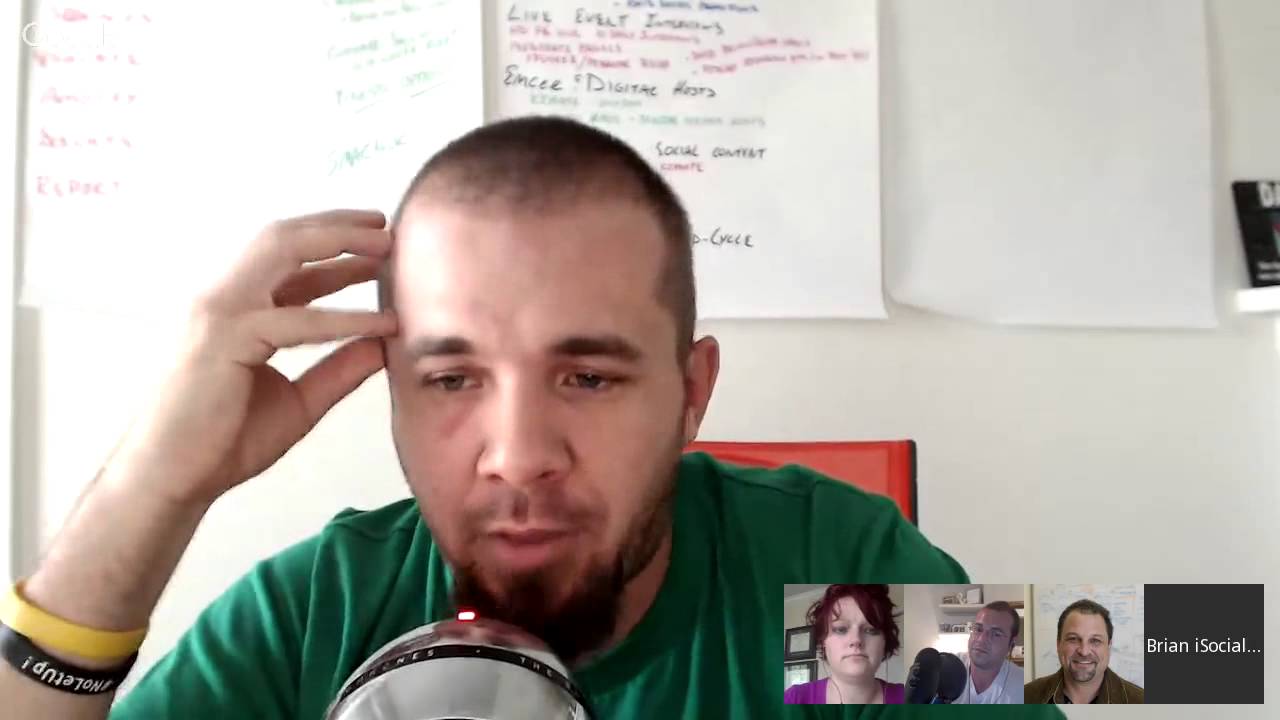
In this live #H2HChat session, host Suzy introduces guest host Bryan Fanzo and main guest Nick Cicero, CEO/founder of Delmondo, to discuss Snapchat as a brand marketing platform. The conversation covers Nick’s early discovery of Snapchat, the evolution of the platform’s features (one‑to‑one messaging, Stories, intent‑driven consumption, linear storytelling), and why these traits make Snapchat valuable for brands. They outline four core tenets of Snapchat value: one‑to‑one & one‑to‑many communication, intent‑driven viewing, multifaceted storytelling (photo, video, lenses, geofilters), and a still‑evolving ad ecosystem. The dialogue dives into measurement approaches—unique viewers, completion rates, growth above baseline—and how these consumption‑focused metrics differ from “appetite” metrics on other platforms. Nick shares concrete campaign examples (Mike’s Hard Lemonade 3V/3VI ads, Jack in the Box coupons, UFC, AT&T, Cisco employee takeovers, Lay’s beach‑day geofilter) illustrating paid ad formats, location‑based filters, and branded lenses. The panel discusses B2B applications, employee advocacy, audience discovery tactics (cross‑promotion, Snapchat Codes, Reddit, collaborations), demographic reach beyond the core 15‑24 audience, and challenges of tracking ROI (coupon screenshots, POS codes, vanity URLs). Throughout, the hosts field live Twitter questions about B2B engagement, employee advocacy, cross‑posting, audience identification, and small‑business strategies, reinforcing the theme that Snapchat’s constraints inspire creative, data‑driven marketing.
Chapters
Hey everyone. Happy Tuesday. Thank you all for joining us. I know this is not our normal H2H chat day, but we also don't have our normal host, so we figure it all kind of goes together. I am so excited today because this is our part 2 in our Snapchat series. But before I interview— I introduce our guest, I want to introduce our very special guest host many of you know and love, and if you don't, then you really need to look him up because he is the guy to follow for all things live streaming, Snapchat, pretty much anything you could want. He's a great friend, Bryan Fanzo, change evangelist and founder of Backlamp LLC. Bryan, how's it going?
It's going wonderful, and since the other Bryan's not here, we don't have to debate I is greater than Y.
I know.
Since the 3 of us all have I's in our first name and there is no Y's, In our first name, I think we are good to go.
Which is so important. Someone actually noted that in the H2H Chat Facebook group and asked me if I was going to start spelling my name with a Y. I realized I actually made the deliberate decision to spell it with an I back in the day when I changed it. I guess I'm actually on your side. I never thought of that before.
We'll have to relay that back to Kay after the show.
I know, right? Oh man. Let me introduce Nick before I hand the reins over. Our featured guest today. Is a great expert in Snapchat. I'm so excited to have him on continuing the conversation from last week. Nick is CEO and founder of Delmondo, which is a creative studio and technology company helping creators, brands, and media companies to produce and measure content on any screen. So far they've worked with a number of brands including AT&T, McDonald's, Spotify, UFC, working on mobile video strategy across multiple platforms, and critical to our conversation today, Snapchat. Definitely check them out. Nick, welcome to H2H Chat. I'm so happy you could join us.
Yeah, thank you very much for having me. I'm excited to be on. Long time in the making here.
Yeah, seriously. For those of you just joining us, or just as a reminder, H2H Chat H2H Chat is a tweet chat hangout hybrid. So you're watching us live and you're also tweeting in using the hashtag #H2HChat. The first segment is going to be an interview between Brian Fanzo and our awesome guest, Nick. During the second segment, I will be taking the questions that you all in the audience are tweeting in and posing them to Nick along with a few of my own that I get to slip in. It's my prerogative as co-host. Without further ado, Bryan, take it away.
Alright, thanks Suzy. I'm excited to— I watched last week's show and I think a lot of the conversation around Snapchat is an interesting one. It's very— it's grown and matured a lot over— the platform has grown and matured, I think the conversation has also grown and matured on really how we're talking about it. And I owe a lot of my Snapchat use, my Snapchat work that I do, actually to our guest there, Mr. Nick Cicero, because Nick and Nick actually had a podcast that actually, I think it was probably a month after I wrote a blog post calling Snapchat the dumbest app ever invented. Back in December 4th, 2014, I was listening to their podcast and they were doing an interview on Snapchat and it kind of reinvented my entire look at the platform and really how I think Snapchat kind of has grown from For me, for 4 years Twitter was my favorite app, and the first one I opened at night and the last one I closed at the end of the night. And now it's been Snapchat for about the last 6 months, which is a testament to not only the fact that Nick is a powerful influencer to get me to go back to another platform, but really to kind of relook at this. So Nick, I'm curious, I kind of shared a little bit about my story on Snapchat. I don't think I've ever even heard this part of your story. Nick and I have known each other from past lives in social business space for a long while, but Nick, From a Snapchat perspective, how did you come across it, and what made you kind of dive in all in before everybody else did?
Yeah, that's a great question and a great story. It sounds really simple. I was in San Francisco working at LiveFire at the time. Snapchat started to gain popularity, just as a lot of different apps and networks do when you live in San Francisco. Things just like— everybody knows somebody who's doing something. Snapchat was one that started to be mentioned to me by a lot of different types of people, mainly because it was getting so hot in the younger demographic in college, the college scene. And Yik Yak itself was— Yik Yak and Whisper, a lot of these anonymous-type apps were also finding and hitting their stride in their own different types of ways. I had watched a lot of the coverage. There was a lot of early coverage of Snapchat's growth as a company. But then somebody that I knew very well, Adam Britton, who was working a Snapchat campaign for 16 Handles, and I saw this and ended up writing an article about it for Social Fresh. Beat Mashable is actually covering it. We actually wrote the very first article about the very first Snapchat brand campaign ever. It kind of opened my eyes to a cool opportunity, very direct response. I think that their first coupon was long before Stories where they were just snapping people and getting people to snap them and snap them a coupon back that they could take in. They were just so far ahead of the game and I was watching Snapchat kind of grow. Honestly, I wasn't a huge user on it until A little bit later on, probably a good year or so later, I started to pick it back up again in 2014. When we started Del Mondo, probably towards the end of 2014, I was introduced to a creator by the name of Evan Garber by a friend of mine at Syracuse. Evan was a student at Syracuse when I was a grad student there, and he was roommates with a good friend of mine. He basically reached out when we started Del Mondo, and he said, hey, my roommate in college is a huge Snapchatter now. Whatever that means, you guys should talk. Snapchat was really just starting to take off. Evan had just done one or two campaigns for GE and The Voice. When I saw the art that he was creating and the story he was telling, it definitely opened my eyes to an entirely new way of storytelling. As soon as I started seeing all the cool, crazy stuff that Evan could draw and how you could tell interesting stories, he introduced me to a girl by the name of Cyrene Q. introduced me to this other guy, Mike Platko. And from there, we kind of met all of these other quote-unquote influencers, but nobody really knew what it was yet. They just knew that there were other really cool snappers that were getting some press for doing this really cool stuff. So when we finally built that community and kind of built these relationships with folks, we started to really see that there was brand value in doing more and more of these types of campaigns. And very quickly thereafter, Delmondo, which was doing influencer campaigns on all platforms, We really went all in on Snapchat probably in December. Within 2 weeks of forming the company, we had already landed some of the first Snapchat campaigns, and we were getting ready to pitch and launch those. Pretty early on, and you joked about last year writing your blog post, it felt like us. We've gone from just 1 person to 7 people now at Delmondo. It's so funny because last year it was a joke that I was just a Snapchat guy and not a lot of people We're one year later, and we have a team that's grown significantly, and we're working with some of the brands that you'd only dream about working with in terms of a wish list. We're seeing the value is really hard to ignore by a lot of the top brands today. It's been an exciting run, and I'm excited to see where we go because Snapchat's really just getting started.
You said that it's just getting started. I always caveat that my calling the platform out when I did was actually before a lot of my favorite features on the app before Stories existed, before Discovery existed, before a lot of, like, kind of, I'd say, the newer, more functionality comes in there. But, you know, as far as Snapchat is kind of growing and where you're talking— I mean, you were the person that I think was talking Snapchat, in my opinion, from a brand perspective and an influencer perspective far before anybody else. But when you start talking about what the value is, I mean, you're going to get the answer. Everybody probably listening to this has that notion in their head. Do I need another platform either for my brand, for my personnel, for my personal brand? Where does this— so when you're talking about like the value or features of Snapchat, where do you usually go that gets like the most bang for the buck for why Snapchat is valuable and why people should be using it?
Yeah, I mean, listen, there's no silver bullet for any type of marketing, and I think that if you had to look at Snapchat, you have to see— sorry, there's a siren going by me right now. But basically, if you think about Snapchat, the true value comes from its being a mobile-first platform that is growing in ways that really only sites like Facebook have ever matched. Snapchat and its value, it grew from young to old. As well, you can see a lot of the similar patterns of just the company growth itself. Twitter is a platform that kind of grew from old to young. And they're always constantly struggling to stay relevant with young people. I think that what makes Snapchat different from so many platforms, it really comes down to kind of like 4 key, almost like 4 key tenets that we share with our clients. The first is that it's one-to-one and it's one-to-many. Snapchat was not like Facebook or not like Twitter in the fact that it was kind of an open broadcast platform. In fact, it started as a closed system, and so we think that that one-to-one communication which now has evolved and opened up to one-to-one and one-to-many, is such a reason why people are coming back more and more. So the people that are actually spending the most time with— as much as they're watching other people's open publicly chatting with folks on that app as well, snapping goofy messages, using the creation tools that Snapchat affords to send a message that, like, frankly iMessage doesn't do. Like, I can't do the stuff in iMessage that I do in Snapchat. And I like to be able to do the cool things in Snapchat and just send a message to one person. And so there's that creation value from the one-to-one communication. And now that they've opened it up and made that Stories feature, it's a bona fide broadcast channel. And so when we look at Snapchat, you almost look at the left and the right sides of the app. On the left side, it's messaging where I can have discussions with people. And on the right side, it's all content that broadcast-type content that I consume, right? So stories from my friends, stories from celebrities, from brands, but it's also premium content from Snapchat Discover, or from Snapchat's Live Stories that they've also created as well, which the Live Stories essentially are curated from users' stories as well. It's like I'm watching many people. When you think about that left and right side of the app, you have an element that is very malleable. You have a platform that allows people to do different types of things and customize based on their needs and wants. That, I think, is one of the first key reasons why we think that Snapchat is going to Second is it's intent-driven. Snapchat Stories don't load in the background like Twitter or Facebook or Instagram. You actually have to actively start a story by pushing your finger down. Even the autoplay with the new opening up of an autoplay, you still have to touch your finger to watch a person's story to start your broadcast session if you want to even think about it like that. That intent-driven action, I have to actually make a conversation. I have to touch the screen to actually start a story. Now, when you think about Twitter, Facebook, or Instagram, we have all this discussion about autoplay video. We have the discussion of algorithms and feeds. On Snapchat, I'm always watching a person's story from start to finish. On these other platforms, I'm always at the mercy of the feeds. Think about something like Instagram. If you had to tap on somebody's Instagram photo to load it before you could actually see what that content was, You probably consume less photos on Instagram. That's why we think that the tactile need for having to touch somebody's story to open up without a real true huge preview or without passively loading that content, it means that engagement is deeper and it's more authentic in terms of that. It also means that people have a really high bullshit factor. If you are a brand and you're making content, or you're just a regular person, if you're any user on Snapchat, you're You actually are in the way of the people's messaging experiences. So not only do you have to make really good content because you might take up a valuable space so I can see other people's stories faster, but you're also just getting in the way of me when I wanna go message. If I'm, you know, Joe's Hardware Store and I wanna send a message to my brother Joe, it's gonna be tough because Joe's Hardware Store is gonna show up right next to Joe, my brother. And unless I really, really love that hardware store or really, really, really wanna watch their content, I need to, you know, I'm probably not going to keep them on there very long. But a television station, if you think of from a brand perspective, if you think of Snapchat as, you know, a television station, people tune in. People tune into a broadcast that they want to see. And so if you're creating broadcast-like content on Snapchat, people as they surf through other videos may be more inclined to want to stumble across your videos every time they do go into Snapchat. The last 2 pieces, I'll make it quick. Multifaceted storytelling. It's photo, it's video, it's text, it's drawing, it's geofilters. There are lenses that you can mess with your face. They now have 3D emojis that you can attach and tie onto things. On top of that, you can create as many videos and as many photos as you want over a 24-hour period, and they'll always be played from start to finish. And so this fundamental— the way that a story is told very linear inside of Snapchat is really, really cool. Think about how often somebody might see 2 of your Facebook posts consecutively. 2 of your Twitter posts, 2 of your Instagram posts. I would guess that probably Instagram is the only platform that I could even get close to slamming 3 posts in a row and having somebody actually see them, or maybe, you know, like a carousel ad or something like that. So on Snapchat, like, people are watching my story that I intended it to be told, whereas even if you're live tweeting this event right now, potentially with Twitter's algorithm, tweets that you create that are tied to this chat will be taken out of context and can be consumed by somebody else. It could mean a whole different thing to them. That's why the way that Snapchat Stories, I think, play back from start to finish is also really unique. The last piece is that Snapchat is still evolving on its ad product, although I think it is quietly— we'll talk about that in a little bit— but quietly it's becoming very, very powerful if you do it right. It just requires you to think. On top of that, it's so ingrained in the community, and since brands as well as You know, any of us have built so much equity on other social platforms. Yes, it's tough transferring over a new audience, but if you do find that your audience is best suited there and you do have a good opportunity to engage with that audience, Snapchat can be really powerful in driving more and greater engagement per piece of content created than often on Twitter and Facebook.
I love it. I love that you highlighted— to me, the linear story, for those that don't understand, if you go back and look at my Twitter feed And you want to watch what I've posted 23 hours and 59 minutes ago, you go in reverse order from what I posted most recently back towards that part, right? But on Snapchat, when you go onto my story right now, you'll notice that I'm talking about the Pittsburgh Penguins game last night. You actually watch my last 23 hours and 59 minutes happen upon you. So I love that you highlighted that. The other piece I love that you highlighted was really, I believe it's a one-to-many relationship when you post to the story. And it's a one-to-one reply, which I absolutely love, because the reason that I actually open the app first in the morning instead of replying to my tweets on Twitter is that anyone can mention you on Twitter, and half the time people are commenting on a Facebook post just so their friends see that, or that it stays in their algorithm. And it seemed to be a lot of wasteful engagement on a lot of the other platforms. But on Snapchat, because when someone replies to my story, or they even swipe up, they only The only person that knows they even took the time to engage is me. So for me, I've always looked at that as a massive amount of value for the time spent. Because if I'm a brand and I have to prioritize engagement, I want to actually engage where it's going to not only provide the most value, but it's actually stuff that I actually want to share and I actually want to reply to. Yeah. So I love that you kind of brought that up. You've done a lot of things with a lot of brands in this space. Not only has Snapchat evolved, but I think our culture has kind of evolved with it on kind of what we're doing and where things are going. So I would love to hear, I follow pretty much all of your Snapchat campaigns. I love what you've done, some work with UFC and AT&T, and you've done Jolly Rancher and those ones. But if you had to pick your coolest thing that you've done so far with Snapchat, what would be the coolest del mundo Nick Cicero project that you guys have worked on?
Well, there's so many more people involved with Del Mondo now, so it's hard to say. I'm definitely not the only one. You have guys like Mike Metzler, who works for us and comes up with some awesome concepts creatively and shoots even great stories. He shot an awesome story this weekend with Jack in the Box and Sarah Hopkins, Sehah. I would still say it's so tough because every day we get to do really, really cool things, and I think that we have a neat opportunity. Obviously Snapchat is a hot platform. It has a lot of attention. There's a ton of eyeballs and a lot of people don't know what's going on there. And so I think that we've done a really good job of helping people understand true value for that. We're not— certainly not like wasting people's money. So far, I would say like the coolest thing that we've gotten to do actually kind of, you know, has nothing to do really with what we have done in the past. I mean, we've always produced really great creative content. But last week and over the weekend, we launched these 3V ads for Mike's Hard Lemonade. If you're not familiar, the 3V and 3VI ads are Snapchat's paid ad platform for premium video content. We worked with some really cool companies like Horizon Media and this other great company, Space Oddity Films. We got to shoot vertical video and do that with professional production crew. We got to go out to LA. We had a full-blown camera crew, lighting, sound, 2 awesome influencers, Jason Nash and Steph Barclay. We told this really neat story, and it ran inside of the We Love Hamburgers story that took place over the weekend. The idea was that we knew months in advance what the story would be. We had a rough idea, probably the type of content. We decided to tell an original story because we knew that out of everybody who saw that story, if they were 21 and older, they could see just these Mike's Hard Lemonade ads, and they'd always be told in that sequential order, the same way that organic Snapchat runs. And so we took the mindset of what would we do if we wanted to create really, really awesome organic content on Snapchat? Well, we would tell a story in X amount of parts. We took that same idea and we broke it up and put it into ad units. And so we created these 3 10-second spots with Space Oddity Films, who were really awesome creative direction and production. And we shot original vertical video that was native to Snapchat that had really awesome color correction, and it told the story about friends that went to a barbecue and what would happen if everybody turned into a GIF. I think that one of the coolest things that really has gone understated right now is the ability to do paid content on Snapchat. That, I think, is the coolest thing that we've done. Adweek wrote up a really cool article about it. The reason that I think that that is so cool is, while I do think that it's really awesome for brands to create and build organic accounts and grow their own accounts, and we certainly do a lot of that work with brands right now. UFC is awesome, media companies, and others. I do think that there's a really cool opportunity to do paid content on Snapchat. The 3V and 3VI ads are obviously one way to get really deeper into the targeting of how we reach different types of audiences, knowing that we are getting— Snapchat is getting a lot of data about the users that are on its platform. But obviously, there's a cost associated with that. And so we found that it's very competitive in terms of what we're able to deliver in terms of the value. It's actually getting a lot. But even if you remove yourself from the high quality, the higher-end 3V, 3VI ads, just going down to the geofilter level, there's so many really awesome things that you can do with location. I just took a trip to Florida for Memorial Day weekend. I was in LaGuardia, and inside of the airport I had something from— I think it was Dentyne, Dentyne Ice, or Stride, one of the gum companies. One of the gum companies basically had a geofilter that said, chilling in blank this weekend. And it was targeted to people who were at the airport. So I was like, wow, that's brilliant. You know, they're actually targeting to me in the place where I'm going to be. Like, it's very common that people would snap that they're going on a flight, that they're on their way, and so they're giving an element of their brand to being creation. Or just think about if I'm at the airport and I snap my friends and say, hey, I'm headed your way, or headed here, headed there. You know, it's really cool to be able to do that privately even if you don't share publicly. Then when I got to Florida, I was on the beach and I saw a geofilter from Lay's that said, Lay's Beach Day, and the Beach Day was in skywriting. I was like, oh my God, this is so cool. I came from the airport, I went to Daytona Beach, I was on the beach hanging around, and here's this brand Lay's that's telling another geofilter that's speaking to me right in the place that I'm at, giving me something functional to build on top of. And I did. I shared the Lay's Beach Day onto my story. Totally unsponsored, no nothing. It was really cool. It made sense in my story that it was a beach day, and it told a really— it allowed me to tell a cooler story to my friends with some branded assets to it. When you look at the abilities to do advertising on Snapchat, obviously you have this really cool targeting ability on the high end, but even on the low end, psychographically, you can think about putting yourself in the minds of your customers. Fans, you've always said, think like a fan. But you are thinking about where the people are going to be. What is the type of content that they're going to be creating? What are the types of activities and behaviors that they're going to be doing? And so I do think that the ability to offer paid customization or paid stickers or geofilters or lenses, all of these assets, creational aspects of paid advertising program, I think is super exciting. And we have a lot more of these types of projects coming up. We have some clients that are in— in talks to do lenses and all this other really fun stuff. So we have some really cool ideas, and it's great because it allows everybody to kind of create together. And I think that that's kind of one of the most exciting things that I see Snapchat offering to brands in the future is the ability to create branded assets for individuals like you and me to just create cool stuff with.
No, I love that. And I love that, you know, I need like the Bryan Kramer like clapping whenever you say think like a fan. He gets that for saying human on the show. I think the funny part about a lot of things you said was, I made this comment early on that it's the first app that I actually enjoy getting ads. And that's as someone that, you know, I understand being a marketer, but like the ads, because ads are natively disruptive, right? They disrupt us, they make us, you know, stupid B-rolls on YouTube make me wait 30 seconds for my— I only want to watch 10 seconds of a clip. But part of the thing that you kept talking about Snapchat was it's native to the— it's vertical video, right? You didn't show it in horizontal video. And when the ad comes up, it comes up in a way that is not native to that platform. I think Snapchat more so than any platform has believed and understood its audience and its consumption model so well that it doesn't even allow ads to happen that aren't in that kind of native format of delivering content. So I love that you brought that up, the geofilters. You know, I've done 16 geofilters myself over— personally from a speaking perspective. I did one at the SAP event this past week, you know, and the return on investment on The geofilters for me from a word-of-mouth perspective, from even just causing buzz, has been pretty crazy. And so we've talked a lot about Snapchat leading up to this. I know we're kind of running up to almost the halfway part, but Suzy and I both are analytics freaks. We're big into the data. Nick, you were a data guy when you and I first met. We focus a lot on data. So something that I know a lot of brands struggle with is, for an example, I have 60,000 followers on Twitter. The day I got 500 views on one of my stories on Snapchat, I did a happy dance. And that doesn't seem like that should relate, right? Because it's like, I'm celebrating 500, and then I got 2,000, and I was like, oh my goodness, I got 2,000. And it was the level of engagement and that raw aspect to me far exceeded my 60,000 views on Twitter. But how do I convey that? How do we articulate that actual value of this new engagement, this new viewer? Like you said, it's They have to click on it. They have to actually be consumed. If they are replying, they're making that effort, unlike some of the other platforms. So when you're thinking analytics, you're talking about the data. How do you demonstrate the return on these cool products that you are working on?
Yeah, this is really almost like a newer way of thinking, I think. I've been kicking around this idea with a lot of folks, and I think that Snapchat has made a good job of prioritizing consumption metrics over kind of the appetite. And so oftentimes when we're measuring content, we measure based on our appetite. I have 100 million— I have a million Facebook fans. How many of them potentially could see my content? When we really know that the true value of having a million Facebook fans is a million data points that you could target your content to. And so when we think about the appetite approach to measurement, we think about Twitter for years offering potential impressions and Simply Measured, I love those guys. For the longest time, they only had potential impressions. Same thing with Instagram. We still only know potential impressions. We only know— we can only calculate potentially how many people have actually viewed these pieces of content. When in fact, really, that's with algorithms and with all the noise that's happening in crowded timelines, it makes it really hard to do an accurate calculation of an appetite of an audience. Because fundamentally on Facebook, your appetite and your capacity to consume content as one individual is changing by the millisecond based on every single action that you do on Facebook. Just looking at a core number of people that potentially have seen my content doesn't really do as much anymore. What we've been trying to get folks to wrap their heads around is thinking about consumption metrics. On Snapchat, they don't really tell you the number of followers. They tell you the number of people who are watching your stories. That's the only metric that they give you natively inside of the app. When you think about looking at the people who are watching your stories, that's a really Like we said before, in order to watch that story, to even get in to see that piece of video, you know that a customer has to be mobile. They have to be on their phones. They have to be logged into Snapchat, and they have to actually touch their screen to pull up your content. They've made a physical interaction with your brand before they— maybe they're a client, maybe they're a customer, maybe they're not. I think that that's really interesting, making a tactile connection with your brand. You're muted.
I bumped into my mute button on Snapchat. Now, I love that you talked about, like, I love when you talked about consumption versus appetite. I always laughed because when they compare social media to a billboard, yeah, you get click-through rates, and you can't get a click-through rate of a billboard you drive by on the highway because you can't actually tell how many direct people are impacted on that. So I love that you kind of related there, but I think, you know, kind of Wrapping this, the beginning part of this up, I know Suzy is going to bring in some of the questions from the audience. I see a lot of them are covering some of the things that we were going to talk about if we got there, so that's a good element that, you know, I love where the conversation is going. But I think one of the things that's probably the hardest is bridging your audience, getting people over there, and then ultimately, how do you even quantify that? Because to your point, yes, it's a different— you don't even know your total number of followers. But without me knowing some of those total numbers, and without me knowing some of those growth metrics, How do I even know that my social media manager isn't spending time wasting it out there, you know, snapping into the abyss and actually getting some kind of growth or return? Is there an element of cross-promotion? How do you look at it from there? And I think after we kind of answer that one, we'll kind of build the conversation to what some of the community has. But I think that's probably one of the most difficult pieces is how do you convince a brand that it's okay to celebrate 2,000 followers or 2,000 views of a story when they're used to celebrating 100,000 Potential eyeballs of a truth.
Yeah, you know, very quickly I would say that if I were a marketer that were watching, that was watching this stream today, and you wanted to know like what's, what are 2, 1 or 2 great metrics that I could go back and report, or 3 great metrics I guess, is always going to be your unique viewers. So like I said before, people are adding you, but check out the number of people who are actually viewing and opening up your stories. Then you would also want to look generally at the completion rate, right? So if people are watching my story, are they staying through it? So is that first number that I see, is it sustained? Is it really big all the way through? And then the last piece would be looking at averages. And so I think that this is something that we don't do enough, is actually like measure the change above a baseline. And so if I'm a company and I'm creating content every single day on Snapchat or 3 days a week or something, and I get 100 people for 3 weeks and my average out at about 100, and the next couple weeks I get 1,000 people sustained for the next couple weeks. Well, you're actually growing the number of viewers every single day or every single week on that account. And so I think that it's really important the best stat to measure could be, you know, your growth or your change above your average. So am I growing my unique viewers or am I growing the views per snap, the average views per snap? Am I growing my completion rate above average? And measuring that change, and I think that's the best way to grow. Obviously, success for lots of people is measured by having a giant engaged audience, and I think that we all would love to have a really, really large audience at some level. I think that it's a goal for everybody, but I think that when you consider how many people who you're engaging with, who your target audience is with, just really measuring those growth above the averages is how you actually can measure the consumption of your content as opposed to, am I just driving more attention to a Snapchat account? Because if you're not posting consistent content, fundamentally your brand doesn't exist on Snapchat anyways. There are very few brands who actually would ever have the manpower. And honestly, Snapchat just doesn't offer it as an app. Even though it's messaging, it's almost impossible if you're any type of brand to try to scale some of that one-to-one communication in a lot of different ways. I think that when you consider those types of things, you need to be looking at how you're producing content, how you're growing your audience, and then if you're hitting those averages goals. If you're growing above your average.
No, I love that. And I think part of the thing with the data is, my saying with Snapchat is pretty simple, limitations inspire creativity. I screenshot 3 times a day, every single day, my Snapchat data, because I can tell you the trends and the averages that I get on a Saturday versus a Sunday, versus, you know, and I can even tell you if I snap 20 times in a day what my average numbers are versus snapping 6 times a day. And I know at Del Mundo, I've actually been lucky enough, you know, Nick, you and I with our friendship, that you've been pulling data from me for a long time on not only just Snapchat, but also data that's in other apps. And we've even talked about live streaming moving in that space. Right. And I love the idea that we're re-looking at it, because for the brands that I talk to, they actually say, we have— we're afraid of a scale problem on Snapchat, so we would rather actually do a targeted ROI on Snapchat rather than worrying about having that huge following. We want these 30 types of users to engage with us all the time on Snapchat, and we don't want to get big because we don't want to lose some of that raw engagement, which is a mind-crazy thought process for a brand that's been so used to knowing, I want a million followers, and all of these arbitrary numbers that you kind of hit home. So I love that you covered that. I'm a big fan, you know, I've been working with you guys at Del Mundo for a long time. I love what you guys are doing. I love that brands are starting to think outside the box. Nobody wakes up in the morning and says, what's my favorite brand doing on any platform, I mean, give me a break. But on Snapchat, I can tell you there's probably 30 brands I watch every single one of their stories, and I couldn't even tell you 3 brands that I check every single one of their tweets. And that's the difference in consumers. So Suzy, I will flip it over to you to bring in some of the comments. I was watching the hashtag, it's flowing out there. So lots of good information. I will sit back and get my listening and learning on from Mr. Cicero.
Alright, awesome. Thank you so much, Bryan. Thank you so much, Nick. This is great. I mean, I know personally, I'm just like eating this up. This is really, really interesting. I'm like seriously taking notes. Our community is massively engaged. Thanks guys so much. I can definitely see that we got your attention primed with last week's conversation. We are also trending for— I think I lost count. It's about— I think we've It's been about 3 months running now, so way to go. Love the engagement, everyone. Continue to tweet in your questions. I'll continue to grab them as I can, but we have a massive amount. So Nick, we're going to do a bit of lightning round if that works.
Sure. Can I pick the first that I saw?
Sure, but then I need you to put away your phone, get off Twitter. We're going to focus on curating them. Go ahead. Go with your first one.
Okay, so I saw a tweet from Marketo that asked a question about B2B engagement on Snapchat.
Yep.
So yeah, so I think that if you are right, like, Delmondo obviously has done a lot of really cool consumer-facing work, and that's very clear that there's a lot of, you know, it's a consumer platform, Snapchat. It's fun, it's obviously a lot of pop culture driven. And so you tend to find yourself a lot of consumer brands. Now, that being said, we work with Cisco, and Cisco has been doing some really awesome stuff where they are basically allowing different employees to take over the We Are Cisco account, and it's about promoting their internal culture as well. And so I think that if you are a B2B brand and you're thinking about engagement, I would consider the audience and the types of value that they might derive. and consider the platform. So there's a story that you can tell on Snapchat that you can't— that fundamentally you can't tell anywhere else on the web or on the mobile like it. And so if I'm a B2B company, I wouldn't always consider using my Snapchat to sell. I might use it to inform or to entertain as opposed to trying to like garner leads from that. Or maybe I want to promote my internal culture. So I would say that if you're a B2B brand, fundamentally like you probably won't have the same direct line of sales that Some types of ad products that Snapchat today might have, but you can build a really awesome relationship with that type of audience. And so, like I said, if I were somebody like Marketo, I would be doing things like taking in crowdsourced questions from people who have, let's say, common questions about marketing automation, and each week have a live TV show that would be on the Marketo Snapchat account where they could then tell basically like talk about the top 10 questions that people might have and tell it in a really interesting, fun video type of way. And so that's one way that you might think about that. And you're not trying to sell people, you're trying to inform and trying to educate. And so I think if I'm a B2B brand, I'm coming up with valuable and useful content that is video-focused, and that's, I think, the most important piece.
Great, thank you. So let's do a follow-up, and thanks once again, Mark Ketto, for joining us. We always It's great to see you on here, thank you so much. I want to go ahead and do a follow-up here. Put the phone away, no Twitter, Nick.
I'm here.
Alright, alright. So Stacy DiPaolo, thanks so much for joining us Stacy, always love your questions. She says, and maybe you can build off of what you just said with Cisco, so she wants to know, do you see a role for Snapchat for employee advocacy? Advocacy programs for brands, any examples? You just gave We Are Cisco, which is awesome. What other examples? How can we build this out beyond just the employees taking over the account? What does this look like?
Yeah, I mean, you know, off the top of my head, it's, you know, there's— I think that there's a lot of things that you could do. I don't know, depending on the type of company that you are, but like I said before, Remember that Snapchat is a fun— it's just fun, right? Like, it's fun to make stories. It's a fun app that a lot of people are using personally. And so I think that employee advocacy is a great use of it because, like I said, it's lightweight. It's very social in terms of the nature, and it is personal in sending those messages. And so you can build a deeper relationship, and it can give you another look. Because I think that the companies that are posting on Snapchat open up, unlock their creativity more than they might have been before. You look even— you look at a tweet or a Facebook post today, It's here today, gone tomorrow, and we post a lot of content. Snapchat is a little bit higher involvement of content creation, and so I think that fundamentally puts a little bit different spin on the execution side of it. So it does feel like it's more personal and authentic, or it does take more effort to try to make that piece of content because it is video-driven or even photo-driven, where it's driven by creation and applying things together. Yeah, I think that's where I would go with this. Thinking, don't forget that it can be fun, it can be informative, and you're telling a story in a way that you can't do really anywhere else. There's no other place that can offer you that capability.
I would imagine though that there obviously is a limitation, having worked on some employee advocacy campaigns. Obviously it can be pulling teeth just to get a significant portion of the company to even try to use Twitter. Much less, I would imagine, Snapchat. So what are companies doing? I would imagine there's training involved, compliance issues. Is this getting built out, or where do you see that going?
I have no idea, so I can't really answer and speak to like any— I mean, I'm certainly no stranger to building compliance and governance type plans, but to say that that is extended into the Snapchat space, I couldn't say. Like I said before, I do think that like There are employees at big corporations that are very young today, and they are looking to receive content and receive news and updates about their company in a different type of way. And so that's why I like, you know, I don't mean to just keep jumping back on Cisco, but any brand, if I, when I think about employee advocacy, different ways about it, you know, I guess I'm more interested if I were that company, I would be more, I would be more interested in using Snapchat as a communication tool to communicate with my employees and less worried about making sure that they post or even much less respond back to me, but knowing that, that if I have important information or information that can be communicated in a fun, regular way, that I think that Snapchat could be a really interesting method if you were maybe a large insurance company and you had different opportunities, if you had, you know, different portals. And so I do think that the creation element of Snapchat can lend itself to Employees communicating with one another in a way that they haven't before that can be a little bit more fun and lightweight.
But it sounds like for investment with companies at the moment, we're definitely looking at the younger youth demographic or early adopter.
Yeah, I would say like—
They're actually going to invest in that, right?
Yeah.
So do you see Snapchat— this came up last week as well, so I'm building off of that. And then guys, we're going to jump back into the general flow here, but do you see Snapchat doing anything to broaden their reach among different demographics? So obviously, as you said, Twitter scaled older. Facebook kind of— Twitter went back older to young. I love that. And then Facebook, though, using the Facebook model of scaling older, do you see that happening with Snapchat, or is it pretty much in its solid demographic?
So People think that Snapchat is super, super young, and I'm gonna admit, like, the most active use is probably 15 to 24-year-olds. But really, 3/4 of Snapchat's audience is actually above the age of 18, the people who are logging in every day. So that's a pretty large portion of the population that aren't just, you know, tweens and teens that are goofing around. So first, there's that. Secondly, there's the introduction of all this premium content. So there's the entire Snapchat Discover section where every single day, I think, 14 or 15 publishers literally create an entire magazine or entire digital video magazine on Snapchat. Every day they're there and they're making 5 to 7 stories with videos that oftentimes are upwards of 10 minutes long. And so that and the types of publishers that are on there, Vox, Wall Street Journal, CNN, they would lend themselves to older audiences. Got it. So that's that piece. But then also you can't forget the significance of world events this year. We're in an election year. We have Summer Olympics. And both of these are huge major events that can help catapult a platform like Snapchat to massive global relevance for audiences that aren't in that core demographic. And so as evidenced by the announcements of Snapchat partnering with NBC to actually get Olympic updates and video clips that can be now broadcast inside of Snapchat, that is a huge sign that Snapchat is starting to reach a different type of audience. And so I don't think that it's just important that Snapchat reaching the young kids with this, with like an NBC Olympics partnership. The fact that they're creating their own politics show and the fact that politics, you could almost call this year the Snapchat election because geofilters and video ads have played such an important role in terms of the tech side. People are really only talking about when candidates do some stuff on Snapchat. They don't, minus Donald Trump on Twitter just because he tweets too often. I think that when you look at those two, cultural events, the election and the Olympics, that's going to springboard Snapchat into a much wider audience by the end of this year. And I think that, you know, you could look at different investments and valuations that have happened in the past weeks of Snapchat to see that the financial community seems to mimic that as well.
That's a great— that's definitely a great point. So we're going to move into a great question here from Jack. I can never say your name right. Jack Kosakowski, I'm so sorry, I completely butcher your name every single time. He says, how do you know who your audience is on Snapchat? Obviously, this is just huge. How do we figure out this demographic? How can we figure this out?
I guess there's 2 ways to think about it. Well, there's not, there's a bajillion ways I think about it in a few ways.
Just try for the simplest way.
Well, I mean, when people have amassed large audiences, or even when they haven't, you know, I have about 1,000 people that open up my Snapchats on any given day, and I've just simply asked. I'm like, hey, where are you guys from? Snap me and let me know, or snap me a geofilter where you're at and tell me. And so I've gotten some really cool stuff and some really cool snaps from people. And if I'm a larger brand that might have an audience that might be I think mining the other social platforms can be really relevant. So for example, if I am a brand and I have an engaged audience on Twitter or Facebook, Instagram, I ask them there. I say, hey, are you on Snapchat? Leave your handle, this, that. Like, we can garner audience insights from users on other platforms. And so that's kind of what Delmondo does is, you know, most people just think that we're Snapchat, but as Bryan mentioned, like, we have Facebook Insight data down to the deep audience insights. We have Twitter. We have every social platform API connected. It's not just about Snapchat because we know that Snapchat is so in the dark right now in terms of mobile. We still don't know a ton about mobile users, but we know that if we can engage somebody in a place where we can measure more about them and we can frame it in a context about Snapchat, we can learn more. Right. There's that side.
Okay, that's interesting. I could definitely see that strategy. Do you see Snapchat feeling that it's important to open up their API more to give us more insight? Yes. Love it. Okay, cool. Good, good, good. We are on the same lines then. So I have a great question here from Aizheng. Thank you so much for joining us. Your questions are always great, and thank you for promoting this chat so much this week. So they say, how about cross-posting the same content? Seeing the same content across platforms, they're suggesting that seeing the same content across platforms devalues the point potentially of having multiple sites. This is echoed by a question from our friend Julie Zeisman over at Little Bird. She kind of echoes this, saying, will Snapchat content translate to other social platforms? Or will it be a single-use channel? What are your thoughts?
Well, I don't think anything is really a single-use channel because, you know, a smart marketer thinks about a multi-platform approach today, knowing that there's value in so many places. You know, that being said, Snapchat content today is not as easily transferable to other platforms. Yes, it's true. You know, I think that even in Snapchat's terms, they say you're not supposed to do it, but I'm You know, that aside, I think that, you know, what I've always done and things that I've seen is, you know, taking photos, taking videos that help to tease content over to the Snapchat. And so, you know, maybe you don't need to post a video or a Snap that you made somewhere else, but you can download that photo and you can upload it as a photo, edit that photo to be like the appropriate Twitter size or the right Instagram size, and then tell people that you're over on your Snapchat. You can also tease with some videos. And so we've definitely grabbed like 1 or 2 video, 1 or 2 10-second clips from a longer Snapchat story and definitely tease them out to give a little taste of what could be on the Snapchat. Once again, we usually use the URL snapchat.com/add/your username. And so we've seen tremendous success of teasing out funny content that does help to drive more viewership. So I would say— That's the approach that I would do, but don't straight repurpose because nowhere really should you straight repurpose.
So I have a question here from our buddy JS Gilbert. Great to see you today, JS. Thank you so much for joining us. So he says, I've got dozens of followers who seem to know me, but I don't recognize them from picture, Snap name, etc. How do you track people? Now I know you said you ask them directly. Is there any additional way that you would suggest?
Not really to this point.
At the moment, that's what we're stuck with.
Yeah, I don't know what you— can you— I'm not really sure what you also mean by track people. Like, hey, I know that this person follows me on Snapchat, but I don't know them. Is that what they're saying?
Yeah, I think that's what he's saying. I think he's saying, how do I figure that out, right?
Yeah, like I said, I think that you just, you know, you kind of have to— you know, if you get people that you don't know, or you have to ask them, or maybe you add them and check out their content, see if it's It's good, then remove them. Adding people, I often do that, right? Add somebody quickly on Snapchat. It's pretty easy to remove somebody. You tap on their screen and you can add them. You tap on it and you can remove them. And so I've definitely added people, checked out their content, and removed them if I didn't think that it was a good fit.
Real quick, I just want to— what I've actually done is screenshot and ask them. I do campaigns where I'm giving out stuff on Twitter, and I was surprised that When I had just kind of— I was probably 6 months in, I found out that over 60% of my audience on Snapchat was not following me on Twitter. Wow. And the way I found that out was I gave away a book for everyone that screenshotted one of my snaps and posted it to Twitter, with the sole reason of, I want to know their Twitter accounts so I can get to know them more, because there's more data there. So that for me has kind of worked exposing that data, like for JS saying, hey, share with me there, or show up to this Blab. And then when I see them there saying, oh, where did you come from? You came from Snapchat. Alright, now I better understand my audience. But I think that's a— it is a difficult question for sure.
Yeah, yeah, that's a great tactic. I like that. Do you see in the future Snapchat introducing any sort of profile snippet where more information can be provided?
I could totally see that. I don't know what it would look like.
Yeah, yeah.
I mean, I could make it up, but I could totally see somewhere. That being said, you know, Snapchat, the idea They let you clear out people or change your— if too many people have added you, you can purge your account. There's all these browser things that they can do. I think that fundamentally Snapchat, while yes, we certainly have a lot of people that are driving and building really, really, really, really, really large audiences, I still think that overall, even those people that have those large audiences, the reason that they like creating their Snapchat Stories is because It's a place where you can have a relatively small but engaged audience. Honestly, I do know the 500— I know probably 500 to 600 people that follow me on Snapchat out of the 1,000 people that watch it every day. I definitely have a deeper relationship with the people that I'm actively snapping with because I'm keeping up with them more. Obviously, my time is spent there, but I spend a lot of time on Twitter too or flipping through the Twitter app. But I don't always engage with those people as often as I do with my Snapchat folks. I don't know. Right now, I think that it's a good opportunity to try to build a contained audience of people. But if I'm a brand and I'm on the flip side, you kind of have to own that it's turning into more of a television-type tool. And so you might not necessarily know 100% of your audience right away, which is why, as Fanzo and I both said, understanding and analyzing audiences on other platforms and audiences who engage about— there's tons of people who talk about Snapchat and post snaps to Twitter that also probably follow your account that you could mine data around.
Gotcha. So we're still very much at the hunt and peck stage with Snapchat. So I have another question here from Christy. Christy, thanks Thanks so much. I know I can always count on you for a barrage of awesome questions. She says, what are the best ways to discover new Snapchatters and to be found on Snapchat?
Wow. You know, that's a good question. There is obviously like a lot of really good sites out there. There are, you know, getting— if I'm— I would say that the first thing is, you know, owning your other social platforms, right? Is if you're deciding to make a clear clear commitment to your Snapchat, sharing all that information, communicating that to your other social audiences is probably the first and best way. The second way I would say would be to collaborate with other people. So whether that's inviting employees or going and working with celebrities or partners in your company or letting your CEO take over or letting something else, doing that type of stuff. Collaborations bring in new audiences. I think that's a great way to do that. Yeah, and then there are just a bunch of popular websites out there, Snapchat Codes and those guys, I think, probably do a really good job. And then obviously getting press. I know one influencer that we work with, Cakes1toDough1, she had a huge success on Reddit because she was part of a Reddit community and she started talking with them about how she was snapping. And now a ton of people in her Reddit community follow her on Snapchat. Leveraging your other communities that you might be a part of and think that you might be interesting to them in terms of mobile video storytelling concept, then go after that.
I have a question here from Jeremy. He says, how can small business people, marketers, loyal fans collaborate in meaningful ways on Snapchat besides swaps?
Yeah, I mean, like, swaps are just one way to do that. We call them takeovers. But if I'm a small business, I'm doing geofilters, and that's it. There's probably not a small business out there today that can't figure out a creative execution using a Snapchat geofilter that they could place in an area that would reach their target audience if you have committed to using Snapchat. So if I'm a local business, I am making sure that I have a geofilter around my store. Or I'm coming up with funny ideas or other geofilters and putting them in places where I know people are actively using Snapchat. I'm actually like using that more than I'm trying to worry about building my own account, I would say. So if I'm a small business, I'm looking at as much of the paid side of Snapchat as I can.
So last question I'm going to ask is from Rachel. Rachel, thanks so much for this question. She says limitations can inspire creativity. And I'll say based on what we've been hearing from both you and Fanzo in terms of your analytics, obviously Snapchat is encouraging social strategists to think of new innovative ways, right, going forward. So Rachel wants to know, how are brands tracking the success of their calls to action on Snapchat?
So I kind of like shared that a little bit before when I talked about, you know, some of the metrics. But, you know, in terms of calls to action, one— I'll just share like one example. So this weekend we did a campaign with Jack in the Box for National Hamburger Day. And so we partnered with Saehop, who's a really popular comedian, social star, and she went to Snapchat headquarters and created this awesome story about making your own custom burgers. But the cool thing about that is that Jack in the Box also snapped coupons to everybody. And so they basically had custom coupons that allowed you to get a buy one, get one free hamburger, cheeseburger, that could only be used one day only if you screenshot the snap and brought it into the store and showed somebody behind the counter and it had a unique POS code. That is a very clear— honestly, one of my first clients ever in social back in 2008 was Subway, 2009 was Subway. That was just one of the easiest ways that we tracked Facebook conversions right away is we would give out gift cards that had POS codes and we'd see the people that came in and then see how often they'd come back. For Jack in the Box, it's really cool because they're able to basically track the number of people who've screenshotted their coupon and taken it take it into the store and actually redeem that. And so I think that that is— doesn't get much more direct conversion than that.
Once again, we're talking about a very specific type of business, right? So we're talking about a B2C retail type business. How about moving— let's briefly talk though about opportunities in other ways, right? Like how else— I've heard sometimes about doing some sort of unique URL. That people are then somehow figuring out how to track. How do we get to the point where we can prove ROI to get buy-in for things like ads, geofilters, etc.? Thank you, Michelle, for pushing back with this. I appreciate that question.
I guess I don't see the difference. Do you mean if you couldn't give somebody a coupon?
Well, obviously, right?
If you could give them a URL, it's kind of the same thing, right? You have to screenshot. You can't click on a URL inside of Snapchat. I mean, you could— yeah, it's like you could create a vanity URL. Right.
So my point, right, is when we're dealing with companies that aren't B2C, that don't lend themselves, right, to Snapchat, how— what are some creative ways? I just threw the URL idea out as a suggestion, right? But what are some other creative ways that companies could be thinking about CDAs?
I mean, honestly, like, I'm not really sure what— you know, because if I'm a— if I don't lend myself necessarily to Snapchat, And I'm not trying to convert, then you might not need to convert using Snapchat. So maybe it's not as important. So, you know, like I said, I would think that right now it's either a screenshot to do some action. And so if I screenshot, I could send you to a URL, which is kind of hard, right? Because it's not easily clickable. Or I could screenshot and give you like a coupon code or a URL or any type of message that you then have to go somewhere to do something. Got it. I mean, those are really the only ways to get somebody off of Snapchat, right? Give them something that they can screenshot and remember and use later to go after.
Gotcha. Well, thank you so much for joining us. I love how this plays in so well to our conversation last week with Tim Staples. So thank you everyone who joined both of these. If you weren't able to make last week's, I'm going to go ahead and post the replay in the feed. Thank you so much once again, Nick, for joining us. Thank you, Bryan, for filling in for Brian with I will see all of you next week on Monday, back to our normally scheduled time at 12 PM Pacific, 3 PM Eastern. Thank you. Make it a great week.
Thanks, guys.
More from Bryan


AI Didn't Make Leadership Harder. It Made Fake Leadership Impossible | CODA Keynote | H2H 2.0
Why AI Makes Connection More Valuable | BOLD Awards Keynote Trailer | Human-to-Human H2H 2.0