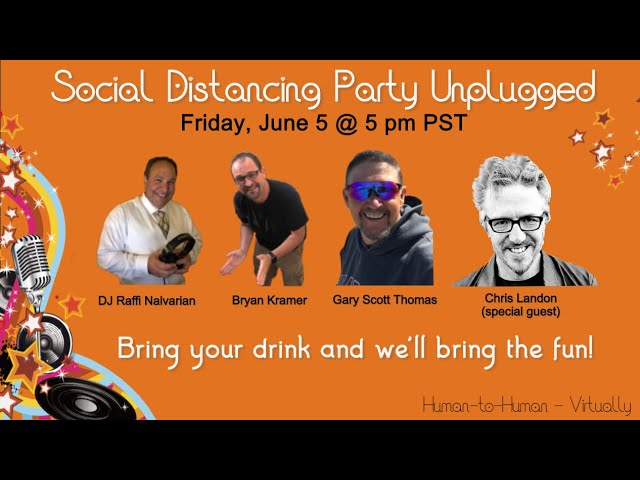
#H2HChat Generating Leads in a Modern Marketer's World with Dun & Bradstreet

In this live H2H Chat, host Bryan Kramer interviews Anudit Vikram, Senior Vice President of Advanced Marketing Solutions at Dun & Bradstreet, to explore the state of B2B lead generation. The conversation traces the evolution of lead generation from relationship‑driven, offline methods to today’s algorithm‑powered, digital processes, while emphasizing that the final purchase remains a physical act. Anudit explains how D&B helps marketers identify and enrich business data at scale, describing their unique ability to match, cleanse, and append records for over 240 million global companies. He outlines a step‑by‑step framework – audience optimization, strategic profiling, intelligent targeting, and campaign acceleration – that turns raw data into qualified leads. The discussion covers best practices such as A/B testing subject lines and sequencing, the critical balance between volume and quality, the importance of omnichannel attribution, and the need for a persistent identifier (the DUNS number) to enable measurement across tech stacks. Anudit also details the typical team structure for lead‑gen programs, ranging from a single‑person startup to a 5‑10‑person mid‑size operation, and highlights roles like market research, data acquisition, campaign management, and analytics. Throughout, they address audience questions on data hygiene, tech‑stack integration, social‑media lead tactics, and ethical considerations around data privacy. The session ends with practical advice on continuous measurement, incremental optimization, and where to connect with Anudit and D&B.
Chapters
Great. Yes, we are, we are live actually, and I'm very excited to be here. We're here on another H2H Chat, and that means that we are at another Monday at noon. And welcome back. Really looking forward to hearing about how everybody's summer is going. I'm here in San Francisco at a hotel right now, so not too far from San Jose, just a little Little jaunt over. But really excited today because I get to introduce not only a person but a company that has something that we're all familiar with, and I'm going to have him also introduce himself. But the topic for today is really going to be something quite fun. We're talking about how to generate leads in a modern marketer's world. world. And I've got with me the Senior Vice President of Advanced Marketing Solutions from Dun& Bradstreet, Anudit Vikram. And he is— he and I have been talking for a little bit here and having some fun, and man, there is a lot of cool stuff going on in this realm. So I know, you know, if you are in any kind of business, you're doing any kind of work trying to generate new business or new leads, this is going to be interesting for you. So without further ado, let me welcome our guest, Anudit. Anudit, how are you doing?
Good, Bryan, thank you. Thank you for having me on the show.
Yeah, thanks for being here. Why don't you just start by just defining, you know, kind of where we've been. What's been going on in the world of of lead generation? How do you see the past of leads? We'll get into the present here in a second, but I'm curious where you see it, where has it been?
Sure, so marketing has come a long way in the recent past, and lead generation has always been, I would say, the cornerstone of any campaign, if you will. I mean, there is no point of running a marketing campaign Or there's no point in running a business unless you can actually attract the right kind of customers and get them to buy your products. So lead generation or the methods in which we would think about attracting the right customers, identifying the right customers that you could actually get has been there right from the get-go. The past to the present has kind of— there's been a little bit of a paradigm shift, if you will. There was a time in the past when leads would be generated based on relationships for the most part, based on understanding of the market around you because of the connections that you had and because of the events or the conferences that you could actually go to and then identify the right customers there. And now it's come to a world where we are a lot more connected but still disconnected, right. You're doing this thing called human to human, which is kind of really nice because we feel connected this way. But frankly, the lead generation process nowadays has become more taken care of by algorithms and by machines in the back end. And it's all digital. We do things on the web. We fill forms on the internet. And we hope that it actually doesn't go into nowhere, but goes into some proper location where somebody is looking at it and then responding back to us. So I think it's kind of interesting how technology has made us so much more connected, but in a very disconnected fashion, and that's exactly how leads get generated now.
Well, I didn't warn you, I forgot to warn you offline that anytime you say the word human, this happens. So just in case you do do that again, you now know, consider yourself warned. So let's talk about now, present day lead generation. We've talked a little bit about how it happens, how it's been happening, but how we're looking at lead generation today in the digital world is much different. The traditional realm still isn't gone, but the easier of the two, if you will, is digital. And whether that's right or wrong, that's kind of what people are, I think, seeing. Do you agree with that, and where do you think it's at?
I agree with that. There are always two sides to the coin, right? So I think that many things are going digital for sure. I mean, our consumption of media has become almost completely digital. I am pretty sure that if we were doing this thing about 15 years ago, you and I would be sitting face to face. And right now we are sitting face to face, but we are sitting face to face across a computer screen. So our consumption of that media itself is very much digital now. And that has made a lot of changes come about in the way people run campaigns, the way people drive businesses, the way they design strategy. However, something which I think a lot of people don't put a lot of focus on, or they might just ignore it because it is just a given, is that even though— when it comes to products, when it comes to real-life tangible products, that we use, right? Even though our interaction with the product very often through the buying process is digital, the endgame is always a physical game, right? I mean, I always hold the product in my hand. I always buy it. I touch it. I feel it. I eat it. I do whatever I want with it. So, the actual act of conversion, the true act of conversion happens in the physical world. We might— we have come to a point now where there are consumer-based products that go through their entire buying cycle purely digitally. But the reality is that the consumption of the product is always physical. So to your question earlier, to your comment earlier about things becoming more and more digital, I think they are. I think digital is becoming, you know, if you look at the spectrum, I think digital is becoming a bigger and bigger part of the spectrum, but I still think the physical aspects of things are important to us.
Yeah, totally. I'm curious, how does How does Dun& Bradstreet— how have they had to evolve to keep up with the changing definition of lead generation, or the way that we change lead generation?
Sure. Yeah, that's great. And actually, I'm going to answer this question with a little bit of a nuance, which I want to set up in the beginning. I don't know, of all the audience that's watching us right now, But if I was to take a guess, I would say many people identify a lot closer as consumers than they identify as businesses. Right, even when I think of buying something, I have a business persona when I'm buying, you know, a product solution or a suite or cloud-based service or whatever it is for my business, but the majority of my time is spent buying as a consumer, as myself. And in the same way, like when people think of marketing or when people think of advertising, the first thing that comes to mind or the de facto in mind is actually the consumer-based process. Dun& Bradstreet is in the B2B space, which means our customers are businesses that are working with other businesses or that might be working with consumers directly, but most of our customers are working with our business I think I got muted for a second.
Whoops,
sorry. Yeah, I just figured that you— I was muted when I was talking.
No, no, keep going. I actually had a really loud noise here in the background. We're having a human moment. I'm in a hotel room and a vacuum just went off and I tried to mute myself so that everyone didn't get drowned out by the noise here and then I ended up muting you. So I apologize for that. That's definitely a human-to-human moment there. Alright, keep going.
Okay, so as I was saying, Dun& Bradstreet from a lead generation, from a marketing perspective is a B2B company, right. So our evolution has also come around as we are looking at how businesses evolve. Now in the past, businesses Or rather even today, businesses are from a marketing standpoint, from a lead generation standpoint, the B2B industry is actually on the, I would say, the laggards in the scale when it comes to doing the bright new thing, right. I mean, businesses typically have a business buying cycle, it's a much longer buying cycle. The way in which you sell something is a little bit more involved. You have 3 to 4 departments in a business that interact with you. You have about 17 people in the decision-making chain. And there are many, many different nuances that come into play when you talk about B2B marketing or B2B advertising. And that means that the very same speed at which the outside world, if you will, the consumer world has been evolving, where you basically have one-click shopping, or you just go online and then you go to Amazon, look for something, and that ad kind of follows you all around, like, did you actually go and buy the damn product? That doesn't happen in the business case. From our evolution standpoint, we've had to evolve in the way we identify businesses, right. So the biggest thing that we bring to the table which others don't is the fact that we can much better than pretty much anybody else identify a business when a business wants to interact with you, right. Or we have information on 240+ million businesses across the globe. And as different companies want to work with other companies, they come to us to give them information about these other companies so they can make those— they can make risk decisions, credit decisions, supply chain decisions, marketing decisions, you know, a bunch of them. And as the world has turned digital, the one thing that we've had to do is we've had to become smarter about identifying businesses that may not necessarily have purely physical presences, right. So that's a lot of effort on our side goes into identifying businesses in different ways, into understanding what are the new signals that businesses are generating today that may not have been signals in the past.
So let's talk a little bit about some of the companies that you've seen doing lead generation really, really, really well, and they are few and far between, so I'm putting you on the spot. But what have you seen that a company has really done well with lead generation, and what was it that made the difference from really well to really, really, really well?
Okay, yeah, there are many companies that do lead generation really well, right. I mean, most of the successful ones have done that, and then there are those select few, and They are always in a niche, right? So it's like a specific niche in a specific industry. As an example, you would have a company like Philips or Siemens that is looking to basically go out and capture a certain part of the market around, let's say, industrial light bulbs. Okay, and when these are very, very specific products which have a very defined market, and it's important to understand where the market buying cycle, where the buying cycle of your companies are when you're trying to generate a lead. So in a product like a shoe or a cell phone or something like that, as long as you show the people the right message, and as long as you pique their interest, you have a high probability of getting people to buy your product, even if they don't actually need it. But when you're talking about business products, when you're talking about, you know, multimillion-dollar sales and long-term contracts that are written and then need to get renewed on some kind of a schedule, knowing the buying cycle of your customer is actually very important. Knowing— just generating a lead is not going to be good enough. It is actually generating the right kind of lead so that the people that you call upon are at the point where they are about to make a decision to buy something different. Or, you know, or so in the simplest of senses, understanding that the customer that you want to talk to is actually at the end of a contract with your competitor is an amazing thing to know, right? So companies that do this really, really, really well— have that intelligence, have that data. They understand what is it that their customers have been using in the past that you can potentially change them to. What is the buying cycle of the customer, where are they in that buying cycle, and most importantly, how is it that you can actually maintain that relationship that gets you in the door at the right time. And in some ways, at the risk of getting that applause kind of going on again, In some ways, that kind of selling is actually more of a human-focused selling, you know, a lead sell, so to say.
So obviously data is very important, and understanding people as you go, profiling them and learning more about them helps you to guide and steer easier, the information that helps them more. And when you can help people more, you can be more of a thought leader, more of a trusted advisor, and less of somebody who's going to sell them. Curious, now we've talked about the past, we've talked about the present, where do you see that going in the future, and how do we stay away from the creepy line of knowing too much? Because now we're talking about an obscene amount of data that could be used for bad or for good. And sometimes, when I say for bad, I don't mean on purpose, but accidentally knowing too much can get you in a bad spot. Some people don't want you to know everything about them. Where do you stand on all that? What do you see in the future of lead generation?
Yeah, so I think from a— and again, on the consumer side, yes. You know, there are so many questions nowadays raised about privacy, about the kind of data that people have and what are they allowed to do with it. And we as consumers actually are generating more and more data about ourselves every given day and giving access to more and more people. I mean, I don't know exactly what the story is there, but I believe that if you use Pokémon Go, you pretty much have given access to your contact list to like a bunch of different companies. interesting there. Then we do things like we wear Fitbits and we wear these Apple Watches and we are generating data about ourselves day in and day out, and that can be used for things. I think in the consumer space, lead generation or the act of curating and managing that data and the privacy around data is absolutely something we should be careful about. Right. In the business space, in the B2B space, it's even more interesting. It's more interesting because it is more difficult to collect data about businesses, right. I mean, people offer themselves up. People go online, they sign in, they browse websites, they download white papers, they fill in surveys, they do a bunch of different things, and you know about people. But knowing about businesses is a little bit more complex, because businesses in some ways are defined by the people who run them, but at the very same time, while they are defined by the personalities of the people running them, they are dependent on the on the environment around them, on exactly what is happening to the business on the whole. And that's where I think what we have been doing at Dun& Bradstreet in some ways is amazingly cutting edge. It's understanding how businesses are working with other businesses. It's understanding where a business is as it pertains to its ability to buy certain things, or you know whether they are spending money in a certain Are they likely to buy more computer equipment? Are they likely to buy real estate? Are they likely to do certain things? Understanding that information about businesses and understanding it at scale, it's easy for somebody to get into market, identify 15, 20, 100 businesses and just know everything about them. But knowing everything or many things about businesses across the globe, that is something which is complex. And in today's economy, you know, the larger companies are in market across the globe. A company like an HP or an Intel or a Dell or even P&G or Unilever or any of these, right, when they are selling, they are not selling just to Americans or just to Europeans or just to Southeast Asians or something like that. I mean, they are selling across the globe. So in the future, the question is not going to be so much about how do I get it, but it is how do I make sure I have the right data or the right information which can be stitched across the different constituents that my customer is working in, whether it is working in a certain region within the US or certain regions across the world.
Okay, so let's go now into the trenches a little bit. We've been talking a little bit more philosophy and approach. Now let's talk about lead generation as it pertains to companies that want to do it the right way, and maybe there is no right way, but I'd love to hear that from you. As a part of that, what is the one thing that you've seen in collecting— eventually what we're talking about is email addresses, really at the end of the day it's getting somebody to convert. And what have you seen work? And as a follow-up, what have you seen not work?
Okay. So your first question was about what is right and what is not right as far as lead generation goes, right?
Yeah.
I don't know. Well, other than the fact that if you have bad data, then it's not right. What is right to one company might not be right to another company. I would say a lot of what you do around lead generation depends on what your end goal for that campaign or for that act is. Right. So if you are generating— if you're in the process of generating leads because you want to sell cloud services, for example, the process for doing that or the kind of data points you're looking for, the kind of businesses you go after, would be very different than if you were trying to generate leads for selling laptops, right? So I would say at the very core of it, and this is not surprising at all, what is right in generating leads is making sure that you have the widest and cleanest dataset available, right? And I'm stressing on the word clean because it is easy to get many records. It's easy to get a long list of companies or emails or whatever it is that you should be reaching out to. But getting a clean list is a little bit more complex. Making sure that the list that you have is deliverable. It is checked, if you're talking about emails, it is checked for spam traps, you know, things like that. That is important to do. One step before that is also understanding Doing the right kind of white space analysis, I would say. You know, being able to understand what is it that you're really going after. Being able to look at what is working for you right now. You know, I think the power of first-party data is becoming more and more obvious nowadays. You don't want to generate a list or a lead list based on just some, you know, third-party recommendation. You want to look at what is it that you have going for you right now. Who are your high-value customers? Who are the customers that are giving you the most, the best lifetime value, see the characteristics that they display, and then cross-reference that against the list that you have so that you can then be more targeted in what you're going after. And so I think analytics and profiling is becoming increasingly more important as we go through the lead generation process.
And are you, when you're talking, are you speaking on an enterprise level or are you talking about all businesses of all sizes?
I am actually talking about businesses of all sizes. Businesses of different sizes do it with different intensity, but I think, you know, at enterprises it is more important to be more spot on because every degree that you are off your target is a much, much bigger impact on your bottom line. In the smaller businesses, you can recover a little bit because the net impact of every small degree shift is not that much. However, that is only from a revenue perspective. For a small business, if you make a wrong decision to start with, you might actually get to a point where you're not able to recover very easily, right. So I can see both sides to it. I just think the intensity with which you do these profiling, you do the cleansing depends as the business either gets bigger or smaller, but you still have to do it.
Great. Hey, for everybody that is out there, we're getting some Some really great tweets, by the way. Lots of great people that are both quoting you and asking questions. But I wanted to throw it out there. If you're new to H2H Chat, you can go over to Twitter and follow this great community of people at #H2HChat. And also, if you're on there right now, please make sure that you're asking questions, because in a little over 5 minutes, I'm going to be taking your questions and asking those questions of Anudit so that we can get those answered. I've been collecting them as we go. So keep them coming, and the more the merrier. I'd love to get you all— get all your questions answered. Okay, so let's keep going on this line of thinking about the right things to do when you're down in the trenches and you're trying to get things done. But when you're facing, let's say, a new, a brand new approach to lead generation, you move into a company and you're looking at where to start, where do you start first?
Yeah. So in some ways, you know, a white space approach actually is really nice, right, because you have no biases that you're already working with. The way I see the successful ones do this is you obviously have some sense of your target market. I mean, that is something that you obviously know. You know that— let's say that you are selling I don't know, we'll just use cloud services again. Let's say you're selling, or we'll use one of the more mid-sized ones. Let's say you're selling server farms, right? You're selling servers to different companies. Now you already know that your typical customer is going to be a company of a certain size, you know, generating a certain amount of revenue, in business in a— and then you can kind of start dividing it in certain industries that you want to go after because you believe that you have a better stance in getting in there. The first thing that you would want to do is get to the point where you understand who are these businesses that exist. What are all the businesses in the US, let's assume that you're US-focused right now, that have more than 500 employees and are generating somewhere between $250,000 to $5 million in revenue, right? I mean, that's the first question you ask yourself. Now, just putting it in the D&B context, at D&B, for example, we know that there are 24.5 million or 25 million businesses, active businesses in the US. And we have a set of attributes that we understand about all of these businesses. So if you would come to us, we would tell you, okay, here is a file, here is a list that we can give you which suits your— which fits in your criteria. And then we have I spoke a little earlier about the fact that we talk about solutions. We have— because you're not looking at just buying that list. What you want to do is you want to be able to buy that lead list, and you want to be able to run it through a Marketo or an Eloqua or some platform of yours. And then you want to see how is it that those leads are then reacting, or how is it that that campaign is working for you. So we talk about taking that— taking your data, and we call it audience optimization. We talk about taking your dataset, if you have a dataset already or using our dataset, and then finding out what is the right, what is the best way to clean, to cleanse, match, append that dataset of yours. So now you know what is the universe of customers that you can go after. The next thing that we do once you have that audience optimized, so to say, the entire dataset, is you want to be able to profile that dataset. So we call it strategic profiling on our side, but you want to be able to take that large list and then you want to be able to do some kind of analysis on it to say, okay, here are the customers that we believe will react positively to our message. And then you create the appropriate message and you create that finite set of customers now that you want to go after. Once you have profiled the customer set, you want to then get into what we call intelligent targeting, because now you should be able to Reach them either through a direct mail campaign, through an email campaign, through an online campaign. Invite them to your trade show or to a conference or whatever that might be. And once you have targeted them intelligently, you should then be able to accelerate your sales process. You should be able to say, okay, I know this is the cycle that my customer is in. This is the kind of product that they will be most likely interested in. This is the message that will resonate best with them. with them, and then deliver that to them at the right time, at the right place. And that, I believe, is the quote-unquote mantra for a successful campaign.
Wow. Oh man, I hope everybody realizes what they just got from you when you just said all that. That is absolute gold. That is something that you don't typically hear for someone to just give away all that information. So if you did not pay attention to the whole thing, I really, really believe that y'all should go back and click the replay when it's ready in the next day, because that was— I'm going to. I'm going to go draw out exactly what you just said. That was fantastic. Now, in each of those, there's obviously things that you need to do to make each of those different pieces successful. And we obviously don't have time to walk through each one of those, but— excuse me— there is one thing that I wanted to ask you about, and that's just the general concept of A/B testing. As you go through and you're looking at lead generation, just because something doesn't work doesn't mean it doesn't work. You may not have tried the right combination of things. So before we move on to the questions here from everyone, which by the way are coming in in full force, you're going to have plenty of questions to answer. But before we do that, I wondered if you could just talk about the strength of A/B testing and where that's at and maybe where it's heading.
Sure. So A/B testing again comes in, it depends on the context you're putting it in. I would say like, let's say email campaigns, you know, A/B testing takes forms of testing out subject lines. And it's amazing how just taking a word from the end of a subject line to the beginning of the subject line and sending the same email back actually increases open rates on emails. Technology has changed quite a bit, which allows us to to run a bunch of different models and let you see what the probable outcome of different models are. And so you can pretty much do a bunch of testing without necessarily having to run a whole campaign to test it with. And then once you have discarded some things that you believe that model tells you is not going to work anyway, you can then start focusing on those specific messages that you actually want to send. In today's world, A/B testing actually has become more complex because it's not just sending 2 different messages sometimes, but it's also deciding the sequence in which a message should go. And the technology now has allowed us to be more cognizant of which consumer or which user or which business has actually received what message and how far back in time. And then you can almost storyboard a picture out to them, so you're not necessarily just repeating the same thing over and over, but you are changing some fine nuances in in the message that you send to them so that they are more likely to respond positively to you. I think, yeah, I mean, from the brute force days of the past, it's certainly become a lot more science. Earlier it used to be pure art. Now I think it's a lot more science than art as far as testing goes. So that's true there.
Which is too bad. Yeah, I agree. OK. Yeah. Man, you're generating some great quotes. I know everyone's getting a lot out of this after this session. I know you want to go back on Twitter and see what everybody's saying because it's really great. We've got— again, thank you all so much for all of this great communication and conversation that's going on. There's some really good stuff here. So I'm going to start to take some questions, but keep the questions coming. Don't worry if we don't have time for them. We'll address them and we'll get your questions answered, so don't worry about that. Just keep the questions coming as we go. I'll keep an eye on those questions, and in the meantime, I'm just going to start going down the list in order of when they appeared. Here we go. The first question is from Janet Fouts, our friend Janet, great friend of mine who just launched a great book, and she also has been a guest on H2H Chat as well. She said, is it about volume or quality? She didn't say pick one, but I'm going to say lean towards one or the other. What's your thinking there?
You know, I hate saying this, but I'm going to say this very often. It depends, right? A lot of things depend. I would say quality is paramount. Quality is absolutely paramount. It is very important to— actually, let me take that back a little bit. Quality is paramount, but quality is a continuum. There could be zero quality and perfect quality, and then there are infinite number of quality points along that line. And what is most important is to figure out what is the minimum quality threshold that is acceptable to you to get a volume that is acceptable to you. There is no point in having something which is absolutely gold standard quality-wise, but gives you a grand total of 1 lead. Right. I mean, there is— so the volume game is absolutely important. And you just need to be able to figure out how to move the quality slider enough so that you get volume available, which is Practical, for
the want of a better word. Right, okay. Janet is laughing on Twitter. Everything depends, as I thought she would. Okay, so that is awesome. Now I'm gonna go to the next one here, and the next one is by our good friend Ann Nguyen. She says, where is your prospect in the buying cycle? How do you develop the relationship to meet them
So where is my— I guess I'm going to answer that question a little differently in the sense that what we say is important to you is knowing where different prospects are in their buying cycles, right. So if you are a company trying to sell a product to somebody else, And you know that out of the 100 people that you're going to sell the product to, there are 30 of them that are coming up close to the renewal of their contract with their current provider, while there are another 20 of them that have just signed up into a new contract, then you basically need to decide how you can focus on those 30 that are close to renewing their contract with more on-point, for want of a better word, aggressive messaging about your product. While the other 20 that you just want to— you want yourself to be top of mind for them, you just want to give them more of a brand experience, more of just making them aware of what your product is. So the place where we help in these situations is because we understand, or we get signals about companies, and we understand where different companies are at different points in time. And we help customers, our customers in that case, make those decisions about saying, okay, here are the 20 companies that we will go after right now with this very on-point specific messaging about this product, while these other 30, 40 customers, we will just give them a blanket, you know, we exist, here's where we are, let us know when we should talk to you kind of message.
Right, right. Okay, so I'm gonna keep the questions going. I may come back around to that one. Just so I can make sure I hit everybody's questions here. Andy Golden, he said, what business solutions do you recommend to track lead gen traction and conversion?
There are a bunch of different solutions out there. Then, like, you know, not to repeat the whole thing again, but like I said, there are these 4 stages to the actual cycle, and the solution that you use Instead of giving you names of solutions, what I would say is more importantly is to understand that the solution that you use works well with the current technology stack or the current solution stack that you already have. So for example, if you have— if a solution X gives you the ability to create a lead list, but your campaign management platform is Eloqua and that solution doesn't allow you to import/export into Eloqua, then that solution is kind of useless. as far as you are concerned. To somebody else, it would still be perfect. So I guess I'm going to answer that question by saying it depends on the solution. But you should be looking at, as a buyer, you should be looking at how is it that that solution that is offered to you brings, one, the right kind of data, good volume at good quality, and integrates into your existing marketing stack.
Great. Yeah, no perfect stack is what I'm hearing, but there's something for everybody at every stage of the cycle. Yeah, absolutely. Like, for instance, my stack, I'll be honest, because we're small, so we used to use Marketo and Salesforce, and I ended up paying almost $20,000 a year on just using those 2 solutions. Now, that's not to say that they're not both awesome solutions, because we put them in the customers' environments all But for our business, we also are able to accomplish the same thing with another different set of tools and do it for much less. So it kind of also depends on where you're at in your business and what you can do. Again, we're not IBM, so we're not going to put in a pretty massive thing like Marketo. But again, it just depends. All right, let's get into another question here from our viewers. Good friend Paul Bradley Smith. He said, how do you organize and clean your data? I think this is a softball for you.
I'm trying to answer this. I'm thinking of how to answer this question without basically pitching my product.
Yeah, right. That's why I said I think it's a softball for you.
You know what, I mean, excuse me for this, but I'm just going to go straight into a product rant because that's the easiest way for me to explain this. Data cleansing, matching, and appending is a very integral part of the data management process that we talk about. There are 2— if you think of it from the Dun& Bradstreet view of things, there are 2 products that we bring to market. There's a product called Optimizer, there's a product called Workbench. And these products allow us to help you bring your data in, so we will be taking your CRM files, for example, or your, what we call as first-party data assets. And we will, in the very simplest of senses, run a scan against it. And we would say, okay, you gave me 10 records. You had first name, last name, business name, business address, city, state, zip. These were all the fields that were available in your database. Here, out of the 10 records that you gave me, city was missing. 5 out of the 10. And by the way, I have information and I can append that city in those 5 records for you, right? Or the email, the telephone numbers that you had, 3 of them are out of service right now, and I can append some of that information back for you. And I can basically what you call fill up your database, if you want to use that word, right? So we will do, you as a customer and we for you, would want to do 3 things. One, we want to make sure that the data that you have is clean. For example, IBM, you could have 10 records of IBM. IBM, International Business Machine, International Business Machine Inc., International Business Machine Corp., with a few bad spellings of business. And I don't know, there are many, many different ways in which you see that come into your systems. So the one thing that we will do is we will clean that up for you. Then we will help you figure out what are those elements in your records that are missing which will not allow your marketing campaigns to deliver the actual message properly. Sorry, what are the records that are missing? What are the elements in your records that are missing? We will help basically append those records in for you. So we do a match, which is we find all the businesses. Then we do a cleanse, which is we clean up whatever is kind of badly spelled or misspelled or duplicated or whatever. And then we do an append. Which is we fill in that extra information. And once that process is finished, what you have is a more pristine data set that is more likely to be deliverable, to be responsive, and essentially give you a better ROI for your campaign than you would if you hadn't done that.
Great. OK. Well, I figured that would be one of those— Got a pitch? Those great questions that come in that it's hard to answer without pitching your your product. I'm glad you just told them what it could do. Let's see. Shelley just said regarding crowdsourced, it's about sorting and cleaning data. This is a softball one for him. That's a great point. We have another question here from Mitch Jackson, our good, good friend Mitch. He is actually One of the best lawyers I've met and one of the kindest, nicest people and smartest people. He said, so what should be our primary goal when getting and using leads on social? For example, relationships, sales, adding value, for example.
I'm sorry, what should be the primary goal?
Primary goal when getting and using leads on social.
Example,
relationships, sales, Since
I'm talking to a lawyer, I'm just writing up a disclaimer so I don't get into trouble about anything. Getting back to being a little serious, it is very interesting how social has become such an important channel for the lead Jennifer. And it is even more interesting how important social has become in the B2B space. And that is because people, and I think it's kind of obvious to everybody, but I'll state it anyway, people trust and believe recommendations from known associates a lot more than any marketing message that they could possibly get. So I think when we are talking about lead gen and using the power of social, I think the single biggest thing that we should all focus on is making sure that the message that we are sending out on the social channel is appropriately tailored to that channel and to that set of people that we are sending the message to. One of the biggest things that social allows us to do is it allows us to hyper-segment and hyper-target. We don't have to send just broad generic messages to everybody. We can actually hyper-target our messages and we can segment out the users on those platforms and send them very, very specific messages. And I think that's what I take away always as my single biggest, I would say, point of thought when I'm talking about speaking with social channels or generating leads from the social channels, it is be on point with your message. Otherwise, it's going to be a slippery slope for you.
Great, great. Good stuff, good stuff. I wanted to congratulate you and congratulate everybody that has come on board to watch this today and has been tweeting. Thanks to everybody, we are now trending on Twitter, so that is fantastic. Congrats again to everybody for that. Alright, we're going to keep going with the questions, and the next question is from our dear friend, good friend Jennifer Quinn. She said, what is the biggest mistake people make with the lead generation process?
I don't know whether it's a mistake, but the biggest miss that people have with the process is that they don't necessarily necessarily factor in the complexity of different channels that come into play in the actual conversion of a lead, as well as the measurement that is required around the lead gen process. So just to go a little bit deeper into that, a few years in the past, when you were generating— when you were in the lead gen mode or when you were running a campaign, you knew that you were running it for radio or for TV or for whatever it was, right, and you could define a certain message, you could send it down that way and you would be able to get responses back for that channel. Today, the customer that you are talking to is actually talking to you or interacting with you across a bunch of different channels. You might start your interaction with the customer in the offline world, or actually more often than not, you start the interaction in the online world where you show them an ad or you send them an email, but then very often the closure of that actual campaign comes in the offline world. And so the one mistake that people make sometimes is not understanding, not properly understanding the attribution of one channel to another. And not getting enough feedback loops back in place so that you understand what part of your lead gen process is actually working and what is not. You might think that the $100 that you spend on TV is actually generating the lead for you, when it might have been the $20 that you spend on email marketing that got people to tune into the channel and see something, and basically respond positively to your message. And I'm just making that up, obviously. But the point is that you need to understand that the world is an omnichannel world now, and you have to have a way of being able to measure across the different channels that you are talking to your customer.
Okay, great. Let's talk about the team that it takes to do all this, and obviously the team size slides depending upon, you know, the scope and the size of the company, but let's maybe do a different— do maybe 2 or 3 different kind of teams depending upon the size of the company. What's your approach? What's your take? What's your philosophy on what a team looks like for building lead generation, great lead generation program like what you were talking about?
Sure, so the way I'll answer this question is I'll just talk about different roles that are required, you know, in this process. And depending on the size of the company, you might have one person doing all the roles, right. I mean, I was at a startup at one point in time, and frankly, I mean, the CEO and the CFO and the janitor were the same people, right. So that's the way it works in a very tiny company. And then, or you could be IBM where you would have one person who would generate a list, and you would have another person who would clean the list, and then you would have a third person who would decide whether the list was clean enough or not. So the team size obviously depends. But I would say to run a successful campaign, at the very minimum, you need— at the very minimum, the set of roles that you're talking about are, one, some kind of a market research type of role, somebody that understands or that is able to get enough information to figure out who is it that you want to go after. And then there would be a role that is more around data acquisition or data management. So you know who you're going to go after. What are the different data assets? Or what are the different things that you need to get so that you can create that list that you're going to go target people with? The third role would be a campaign management role, the actual lead gen campaign itself. to understand that nowadays there are so many different solutions that you will be using. There are so many different platforms that you might use. And like I said, there are many channels in which you're talking to your prospects and your customers. So somebody who understands those platforms, who can actually run those campaigns across those different platforms. And then an analytics role. And this is something that I don't say lightly, but Smaller to mid-sized companies don't do a very good job of analyzing what is working and what is not working, right? And sometimes it's because they don't have enough bandwidth, sometimes because it's difficult to hire so many different people to do different things, but having good insight into what you did, what worked, what did not work is very, very critical. And then, you know, from a lead gen process, I guess it's
Yeah, okay, so it sounds like in the best-case scenario you're looking at anywhere between 5 and 10 people, not counting the amount of salespeople that you could put on.
Yeah, I would say the smallest of smallest companies would be looking at 3 to 5, and then The mid-sized companies are looking around 7 to 10 people to do that. Very often people farm out some of this stuff. You could just go to a lead gen, a B2B lead gen agency or something like that, and you could just give it out to them. You use their economies of scale so that it doesn't cost you that much. But if you're looking to build a team, then yes, you would need to put in those people.
Got it. All right, we have another question here from— Ian Calvert, he is just an absolutely awesome dude, so cool with his questions and engagement all the time. He said, why do big companies in C-suite have different values when coming to manage relationships department to department?
Can you say that again? Why do companies have different— what?
Different— big companies in C-suite have different values when it comes to managing relationships department to department? It's a little esoteric, but
yeah. I can answer based on what I took away from that question, right. So if you're asking why is it that different C-level executives at different companies approach their relationships with different departments and different business differently. Then again, this is not a science answer. There's no right or wrong answer here. So I'm just talking about what I believe people react to. And very often it is governed by the size of the business that you're doing with the company. That's one. Second, it is the decision-making power that you actually have in that relationship that you have with the company. So very often the interaction that you have with somebody depends entirely on— well, not entirely, but very strongly on the business relationship that you would have with them within the context of the department that you're working in, right. And again, it's It's tough to answer that question without—
Yeah, there's a lot of context that can define that for sure. No problem. We're going to take just a couple more questions here to close this out. So if there's any dying questions that you have, throw them out there and we will make sure to address them. It's funny because Jennifer Quinn is telling me that I love— everybody that I mention I love. I keep saying how much I love that person and this person and that person. And I have a serious problem. I do love everybody. So yeah, it's a problem. So let's talk about how people can really take a lead generation system and fine-tune it. Sometimes a 1-degree difference inside of lead generation can make a 180-degree difference at the end of the day, just by tuning certain things, just by taking a look at and putting a magnifying glass to content or to subject lines or to the people, the team. What is your approach to looking at those, looking at the fine-tuned areas and saying, okay, what are we going to address first?
Does that make sense? Yeah, it makes complete sense. The only problem that I have in answering this question in 8 minutes is that 8 minutes is not enough to answer all of this. So let me answer this a little differently. As you said, you could fine-tune different pieces of that continuum, right. You could look at the subject line, you could look at the lead list, you could look at so many different things. But I think what people should be thinking about all the time, and maybe they don't think enough, is that a lot of effort needs to be put into the concept of measurement, right. I mean, today technology allows us to measure just about anything that we want to measure, right. And today technology also makes it a little bit more complex to measure properly because we are radiating information or we are generating information in so many different ways. And so if you think about what some of the larger companies are trying to do today is they are trying to spend a lot of time on One, collapsing the tech stack, right? I mean, how can I, you know, I'm Oracle, I'm Salesforce, I'm IBM, I'm whoever, how can I own as many parts of your tech stack as possible, right? Now when you think about it, why is it that they're trying to do that? They're trying to do that because if they own the entire tech stack, it's very easy to measure across the stack because it is the same identity that is being made visible in different portions of the stack. Which means that companies who are not necessarily owning the tech stack, they're trying to do something else, which is they're trying to figure out how can they define the identity that you want to use. Facebook says the Facebook ID can help you match an offline item to an online item. Google says that the Google ID will do the similar stuff for you. So there are 2 approaches to it. One, how can I become an identity provider so that my identity is a persistent consistent identity that makes its way across the different parts of your stack, whether it's your lead generation stack, your marketing stack, your ERP stack, whatever it might be, right. And on the other side it is how can I just own that stack. And we at Dun& Bradstreet, we think about it similarly. We say we have, you know, there's an identity that we create, it's called the DUNS or the Dun& Bradstreet Universal Numbering System, and it's an ID that is made available to all businesses, and we talk about this ID as being a persistent unique identifier that exists in whatever system you might actually be working. And so going back to your question about how do you maximize your lead— maximize the efficacy of your lead gen efforts, it is one, how do you build— make sure that you build your stack in a manner that can easily be measured across. Make sure that you have some kind of a persistent identity that you can float across the stack so that you can do your measurement appropriately. And last but not least, make sure that you measure your different efforts and you see what it is that is actually working so that you can tune that better, right? If something is working badly, there are 2 things to take. Either just shut it down and do something different or keep tweaking it. But understand that every time you tweak it, you can only get an incremental gain, not a radical gain. And so you just need to make sure that you understand your measurement philosophy and your measurement metrics well enough so that you can maximize the efficacy of your channel.
Does that make sense? Fantastic. This has been awesome. You just packed in more information into an hour than I think any lead generation expert that I've seen has been able to do, so I can't tell you how much I appreciate all your thoughts and suggestions here on how to really approach lead generation. And there's so much more, obviously, but where can everybody find you to reach out and perhaps either comment or ask you more questions? Is Twitter the best place to do that?
Twitter is fantastic. I mean, if you reach out to me at Anugat, you know, it's pretty easy to remember if you just remember my first name, which itself is kind of complex to remember. But you can reach out to me there. If you want to reach out to D&B, @DNBUS is our Twitter handle. Reach out there directly. Or otherwise, just go to dunandbradstreet.com or dnb.com, you know, dnb.com, and you'll find enough contact information out there for you to reach out to us.
Great. Awesome. Again, thank you everybody out there for Participating in another trending H2H chat. This has been fantastic. We've got so many wonderful people on here. I know, I know, there goes the love again. But, you know, just really appreciate you all being here and taking, you know, all the questions seriously and really putting out some good stuff. We have a really interesting guest next week. I'm taking this into a new little bit of a new direction. I think you're going to like it. The person who is going to be our guest is Remy Smith. She was my guest at South by Southwest. I threw an H2H party there at South by Southwest. She is 12— I think she's 11, actually. She's 11 years old. She has already produced her own cookbook that has hit all the all the Amazon best-selling lists. She has produced a company that has food that is good for children and adults to have healthy snacks. She believes that the world needs to eat and be a healthier place. She is so well-spoken. you guys are going to get your minds blown when you hear how she speaks about how the world could be healthier. So she's going to talk about her social media marketing, her advertising, her speaking, and all kinds of stuff, and how she grew up and has been written about in just about every magazine you can imagine and built this whole thing. So pretty, pretty fascinating. Really looking forward to next week. Finally, I just want to say again, Anoop, thank you so much. This has been fantastic.
Welcome. It was great to be here. Thanks for inviting me.
All right. Thanks, man. We will see you all next week, same time, same place. Cheers.
All right. Bye-bye.
More from Bryan


AI Didn't Make Leadership Harder. It Made Fake Leadership Impossible | CODA Keynote | H2H 2.0
Why AI Makes Connection More Valuable | BOLD Awards Keynote Trailer | Human-to-Human H2H 2.0