#H2HChat How 'Be Good to People®' Created an Epic Brand
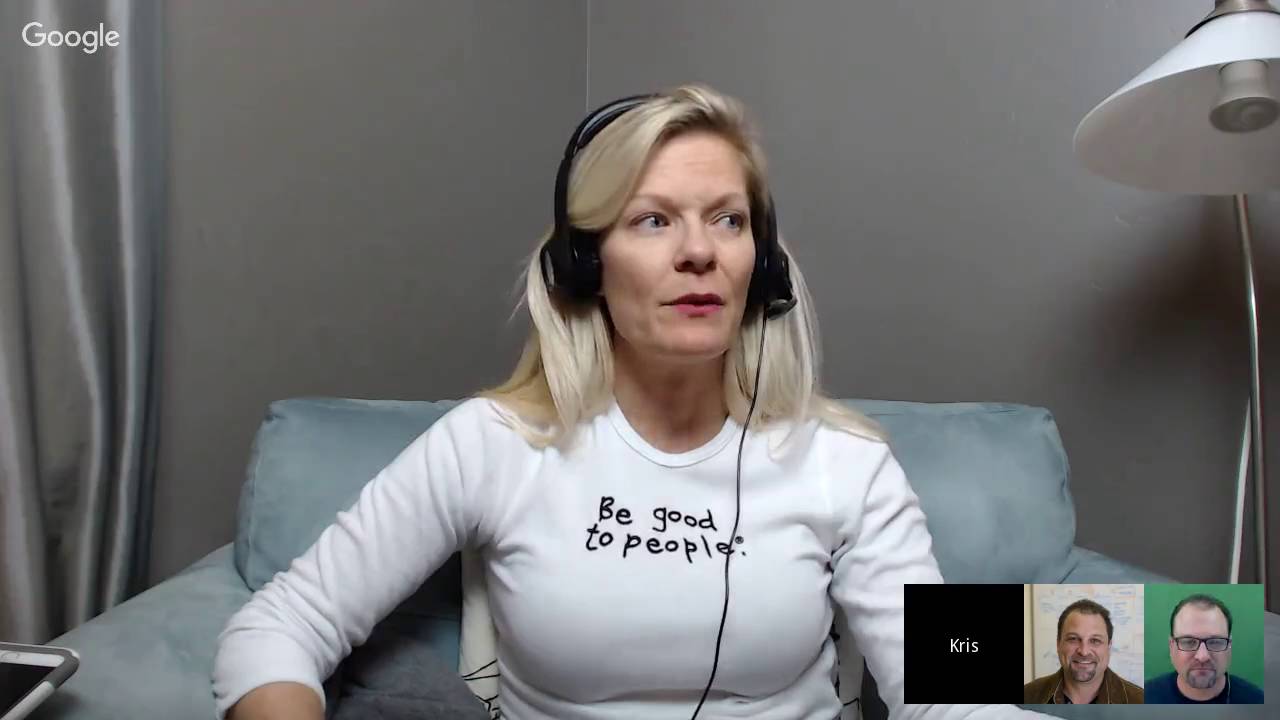
This content was created by Bryan Kramer. This content was uploaded by Bryan Kramer. This is a live YouTube H2H Chat (titled "#H2HChat How 'Be Good to People®' Created an Epic Brand") recorded October 3, 2016, in which host Bryan Kramer interviews Kris (founder of the Be Good to People brand and owner of Say No More Promotions) about the origin, growth and challenges of her lifestyle/promotional-products business. The conversation covers promotional product strategy, brand authenticity, grassroots marketing (farmers markets, Oprah encounter, PR), social media, product development synergies with her promotions company, plans to launch a nonprofit, and anecdotes about customer interactions and unusual promo requests. Viewers participate via the #H2HChat Twitter hashtag and several named guests/commenters join or are referenced in the live chat (including Kris’s husband Augie and callers like Mia Voss).
Chapters
Some talking points.
Hey everybody, how are you doing? We are back for another H2H Chat. This is gonna be so much fun. Um, we, we are here. If you're watching this, that means it's another Monday at noon and we are on H2H Chat. If this is your first H2H Chat, make sure that you are also on Twitter using the hashtag #H2HChat. Um, share your comments, what you think. Anything that you have questions on. In the second half of this, I'm going to be posing some questions back so that you guys will be able to get some ideas about, or answers to your questions about what's going on. Without further ado, I am really excited to welcome you to this HGA Chat. We're going to be talking about how, how to, how to be good to people. How cool is that? Is that not cool? Like, how, how can you get more simple than that statement of be good to people? So I love it. So, um, so, so, Kris, welcome. How are you doing?
Thanks, Bryan. I'm so psyched to be here. Finally we get— can you believe we've never talked in person before?
I know, right? We've tried so many times.
We have tried. Um, I'm so— I'm doing so well now that we're connected and it's We're here. I'm— I could not be more excited to be doing this H2H chat.
Me too. Me too. Well, let's, let's kick this off and let's talk about— because you have a long history of not just this brand, but of working with promotional products and looking at things, you know, differently throughout time as promotional products have changed, perhaps how the internet has changed that, that, that industry. And, and, and where it's going. So I'd like to kind of like travel through all of that during the course of this hour.
Awesome.
What do you think about that?
I wish we had like, you know, 3 or 4 hours because I could really talk about it all day long.
Good.
Sounds good.
Awesome. So we will, we'll get started. Let's just give everybody a sense as to where your career started. Like, how did you get into this, this industry even to begin with?
In the promotional products industry? That's actually pretty funny. I graduated college. I went to University of Kansas and I graduated and I had No idea what I wanted to do. I was interviewing with Hallmark, because Hallmark was like the big brand in Kansas City. Everyone wanted to work for Hallmark. And so I was interviewing, but I didn't have an offer yet. So I was at Kinko's running off my resume. And this guy started chatting me up and, and was like, what kind of work are you looking for? And it turns out we talked for like an hour at Kinko's. And then he's like, well— So he was in consumer, consumer promotions. He did kids meal marketing, you know, like Happy Meal sort of thing in the food service industry. So he invited me to his condo for an interview. So I'm like, what, 19 years old and met this guy in Kinko's. So I called my parents and I'm like, guess what? I met this great guy at Kinko's. He has a company. I'm going to interview at his— in his condo on Wednesday. Wow. My parents are like, no, you are not. And I was like, what do you mean? And they're like, no, you're not going to do that. So of course I went anyway because I'm sort of a rebellious kind of gal and it was legit. He was a small business owner and I ended up working for him. We had like a 2.5-hour interview and he was— I was his first employee and I worked for him for about 7 years and my first or second week in the office, he went to Asia because we did all our manufacturing overseas and so I'm like 19 years old and he left me in this condo. And went to Asia. And this is before cell phones. Faxes were like kind of the new technology. And one of the reasons he hired me is I had gotten an Apple computer for graduation from college. And he wanted to, he liked that he wouldn't have to buy a computer for me. So I'm sitting there and the pipes broke in his condominium when he was in Asia. And so I like, you know, I couldn't call him or anything. So I had to deal with that. And that was just kind of the beginning of my 7 and a half year career with him. Wow! Yeah, it's pretty crazy, but I fell into it. I didn't know anything about it other than my dad used to own fast food. He owned Burger King restaurants. So that was appealing.
Paving the way.
Yeah.
Paving the way. Okay, so let's talk about the promotional products industry in general. You know, it used to be that you go to, you know, it was my favorite thing in the world, by the way, when just to walk through any kind of expo hall I would come home with more gifts for my family than I knew what to do with. And they always stole my cool stuff and I got stuck with the other stuff that was like not as much fun. Yeah. And that really started my thinking on like what really makes a good promotional product versus a bad one. So what do you, how do you define that? How do you define good quality promotional products that really, and that drive the message of what your company or your brand is really trying to portray? Sometimes they just throw like an iPad at it and you're like, because it's cool, is that really the way to go?
You know what, it depends. It depends on what you're trying to achieve. And so that's one of the things we spend a lot of time listening to our clients and finding out what their objectives are. You know, are they trying to drive traffic to their trade show booth or are they trying to drive people to the website or to their social media? So when we find out what their objectives are, that kind of helps us tailor, and of course around their budget and their quantities and lead times and things like that. But it's really funny. I think there are a lot of people who have this misconception that to do promotional products that work really well, you have to spend a lot of money. And, you know, that's really not the case at all. You just have to put a little bit of thought into it. And generally, if you're in a rush situation, it's a little bit harder to do that. A lot of You know, we're all rushed. And so with, when you're not planning in advance, that can be one of the biggest hindrances to having promotional products that actually drive some ROI for you. Because then you get into that whole slap a logo on a product. You don't have time to get your sample in. You don't have time for a pre-production sample. And, you know, depending on your quantities and, and what the product is, you can really kind of screw yourself. And, you You know, I always tell people, if you're, if you're handing out something just to hand it out, and it's a pen that doesn't write well or a flash drive that you wanted the cheapest price, and so it's not certified and tested, and they get, you know, the person gets it and it's not working, you're not only not giving a good brand impression, you're giving a negative brand impression. So— Yeah. I could definitely talk about it all day long.
It's definitely, it's very It's very interesting to me when, when, you know, you see, see this, this kind of thing show up at a workshop or at an expo or at a conference or, or just in the mail. And very little alignment a lot of times was put into the brand and it was just more for the cool factor. Yeah. And I just think that kind of separates the quality versus the Than not. Would you agree?
Yeah, 100%. Here's a great example. I always tell people, a lot of times I'll hear from clients, oh, I don't want to do a pen. Everybody does pens. But I always say, there's a reason that everybody does pens, because people use pens all the time. So the key is maybe do a pen that has a unique quality or feature. Maybe it has a magnet so they can stick it on their file cabinet or a stylus on the end so that they can use it on their their PDAs or whatever tablet device they have, or have it be a flare pen because that's kind of different. We all have great, you know, retro feelings about a flare pen. So just put a little thought into it every time.
Yeah, yeah, at least just a little, please. At least just a little. Okay, so let's talk about how you then escalated your business, your brand. You probably didn't just come right out Be Good to People? I'm sure there was some, some things in there that happened before you ever got to it. What happened? How did you get there?
So Be Good to People and Say No More Promotions are 2 entirely separate companies. And so they really both have different story origins. To be truthful on Be Good to People, it really did just come to me because I didn't plan to create a brand with it. It was, I don't know if you know the story behind it or not. But I was out at lunch here in Eagle where I live, in our little mountain town, and usually I don't even go to lunch because I'm usually always eating at my computer. But I went out and someone, a woman, I know it was a woman, did something rude to me. And I just came back into my office and I really seriously stood in the middle of my office. I'm like, why can't people just be good to people? How hard is that? And I kind of said that to my team. And then I stomped back into my office and went to GoDaddy and put in begoodtopeople.com. I was like, I'm going to put this on a t-shirt. And begoodtopeople.com was available. So I was like, oh, I need to do this. And it was, it was not planned. And honestly, I had 2 babies at the time, and Say No More Promotions was going gangbusters. So I really had no plans to start a company, much less a brand. I put like maybe a month, month and a half, I was like, I'm going to do this. And my husband was like, oh, for heaven's, you know, can we not start a new company right now? But I just, I came up with the idea of it being black and white because it's that simple. All in that month and a half, I started the trademark process. And then we were just so busy and I couldn't handle it all. So I shelved it and didn't do anything with it until the next year, 2009. So for Be Good to People, the brand actually really came about, but it's evolved in terms of, you know, what our messaging is and stuff since then.
So have you ever been In front of someone when they're not being good to people and you're wearing the shirt?
Oh yeah, a lot, a lot.
And did they just look at the shirt and go, oh man, yeah, I know, sometimes, sometimes skip over it?
You know what, I have done it. I've done a— been at it, you know, when there's like a flight delay and you're at the gate and everyone's like crowding and they get closer and closer like animals, like on prey or something and I've stood there and just like looked down at my shirt and looked at someone. That was kind of my mildest form of doing it, but I will tell you on a flight, I was on a flight and I was in the exit row and there was an older couple, not that it matters that they were older, but there was a couple and the flight attendant, it was pre-flight and they were— they had been separated and the wife was like going ballistic on the flight attendant because they had been separated. It was a packed flight and And you know, it's one of those situations where it's like, okay, unfortunate for the situation for them. It was an unfortunate situation, but it was not the flight attendant's fault. And I really— that's kind of what drives me nuts is when someone gets mad at someone, like when your food is late and it's not because of anything your server did, it's because like the kitchen's backed up or something like that. I hate it when people get rude and mad with people when— Yeah. That person's just trying to help and do their job. So I actually— it got so bad with this woman that I actually stood up in my seat in the exit row and I turned to her and I said, do I need to get you one of these shirts? I didn't say that. And she kind of looked at me and she was absolutely shocked and then there were people that were kind of smiling and then I gave up my seat so that her husband, we could switch around in the exit row. Which no big deal. He had had back surgery, so he had like a bad back, but here's what's really cool. I said it and I was a little bit snotty when I said it, but it had just escalated to the point where someone needed to say something because this flight attendant was wonderful. She was just trying to, you know, get it taken care of. Right. So, but it was really interesting because at the end of the flight, she waited for me outside of the door on the gate, at the gate, whatever the gateway or whatever that's called and She apologized to me.
Wow!
I couldn't believe it because she did not seem like the type that would be humble and apologize.
Wow!
But she had a she had a two plus hour flight to think about it, and it obviously must have hit her.
Yeah.
You know, so that's one of my favorite stories.
Did she ask for a shirt?
She did not.
No.
But now that I think about it, she should have. She didn't know I owned the company, so I usually oftentimes I don't tell people. They just. say, oh my gosh, I love your shirt. I'm like, cool, you can get it at begoodtopeople.com. They have all kinds of cool stuff. So, 'cause I don't, you know, I don't need people to know that it's me.
Yeah, yeah. So what helped you to grow this brand? So the idea behind this is something that I think everybody's interested in is how do you grow a lifestyle brand? And what is it like to, what are the, give me the top 3 things that you went through, and 1 to 3, anywhere in there, that you, that it took you to really grow this brand? What helped you to do that?
Well, I would say that I don't feel like I've done the greatest job of growing the brand because I am risk-averse and I've had a lot of bumps in my entrepreneurial career where I've, lost everything and had to pick up and rebound. So with Be Good to People, I just wasn't willing to go out and spend a lot of money outside of the gate or go get funding and so I've really bootstrapped everything and so that's been really challenging because there's so much stuff. I've had the vision for where I wanted to go with Be Good to People and what I wanted to do from very, very early on and with being so busy and having the babies and trying to grow Say No More, because that's our That's how we pay our bills is Say No More promotions. And so it's been really hard, I would say. So do you want to know things that I did or things that I would say you should do?
Let's, let's talk about what you did.
OK, so, OK, so what I did is, first of all, everything's really authentic. So like, I wear my shirts all the time. And I, when we first brought actual product to market was in the summer of 2009. And I signed up to do the the farmers market here. There's a little cute little town right next to Vail called Minturn and they have this great farmers market. So I just started ordering product in and I really had no idea what I was doing because I'd never had to have direct-to-consumer sales before, nor did I know how to do ecommerce. And so I just kind of like the same way I started Say No More Promotions, I just kind of taught myself and winged it. And we just kind of learned as we went. But I never missed an opportunity to— I gave out, and to this day, I still give out way more than I sell, because I'm always trying to get the word out, because I didn't start the company to make a ton of money. And I think that's what distinguishes me from some of the people out there who have since kind of knocked off Be Good to People. A lot of them are seeing the dollar signs, and everything that we've done is authentic. And so— Yeah. I'm always giving stuff away. And I want the Be Good to People message to be as far and wide as possible. So for me, not starting the company for money is, has been a way for me to build the brand, because it's really true. I really know what a difference it makes when people see the message, you know, because you've had it around. Yeah. So, and I think just being authentic and not getting— we had an opportunity to get a shirt on One of the Real Housewives of a particular city and like she was actually a celebrity who actually wanted to wear it and was gonna wear it and she wanted to do it and I said no and it would have— yeah, because I just like I don't ever—
She's not good to people?
She may be, I don't know her personally, but that was not— it was gonna be used as sort of a, you know, tongue-in-cheek sort of message as a shirt and I just—
Oh. Yeah.
It's not authentic and everything, like I really have had a lot of opportunities to kind of sell out with Be Good to People and...
Yeah.
And I won't do it and another thing is like, you know, most celebrities will not wear a brand unless they are paid and I have had dear, dear friends who are dear, dear friends with celebrities and they won't wear it because either their agent says they can't or whatever and I'm like, I will never ever pay someone to wear a Be Good to People shirt. I'm just not gonna do it because— and I know there are a lot of companies that will, but I just, I'm not gonna do it because it's— if you have to be paid to wear it, then never mind.
I mean, if you have to be paid to wear something that says be good, there's a problem.
Yeah, and I totally, you know, I'm in marketing and branding and promotions. I totally get brands. I totally get placement. I understand it, but this is not that because the purpose of Be Good to People is Way more than selling a bunch of t-shirts. It's our products move the movement, and it's it makes a difference. So so that's building awareness-wise. Like I think staying true to who I am and who the brand is, and like drawing a really hard line with that has really it probably hasn't.
Uh oh. I think we lost her. It is just me now. So I don't— I didn't expect her to drop off, but, um, it— how are you doing? And we'll wait and see if Chris comes back on. Um, hopefully she'll, she'll refresh, uh, her screen and come back on. But in the meantime, I'm gonna call out some people because I see some good stuff going on. So we see right here Randy Randy, is your last name Theo? Hopefully it is. Or Thio, I'm not sure. How awesome is it when a brand alone is the main thing to create an impact? Totally, man. Isn't that cool? Like, how many people get to do that? Next one down, Mitch Jackson. Good job regarding Housewives of— not sure exactly of what. I too turned down the opportunity to represent one. No, see, wow. Just not congruent to who I am. See, this is a trend here on HQH Chat. I think that the trend is to be Uh, you know, I hate the word authentic, but, um, but it's, it's truly like a, um, a place I think where people are starting to pick and choose the right path for them. Uh, Dawn is wearing her Be Good to You, to People's, uh, shirt. She loves wearing it all the time. There's a picture on of her wearing it, uh, here. Um, let's see, we've got Paul Bradley Smith. Of course we've got him. He grew up skiing in Vail in Colorado, which is where Chris is from. Let's see. I think Chris just got back on. Sorry. That's OK. Sorry.
I don't even know what happened. It said the computer went to sleep, but it wasn't like fading or anything. So I—
That's all right. That's all right. Don't even worry about it. We had— I had some time to actually go through. I was just going to say, Stacy Di Polo, you're the next one on the list here to say, wow, GoDaddy's where Be Good to People Girl registered begoodtopeople.com. Um, so that's good to know. You registered it with GoDaddy, I, I suppose.
I
love your story.
Yep.
Cool. Yeah. So, so, okay, so we're gonna, um, we'll jump back into the question. Keep going.
Sorry.
Um, I just— that's no problem at all. Um, that's technology, and this is a life lesson in how we are good to technology. So anyway, go ahead.
Okay, so I don't even remember where I was because I was so thrown off.
You were, you were talking about your top 3 things. And the first thing that you, that you did was just not to sell out. Don't sell out the brand. Even if people want you to pay for it, you're not going to do that. This is a very conscious effort. And the biggest thing that I learned from that is when you're not looking into making money, you can make better decisions. So I really like that point. So what other things did you learn from growing the brand?
So being in marketing and promotions, like just seizing every opportunity you can to, to meet people and know people. And, and sometimes, but again, keeping brand alignment in mind. You know, we did the farmers markets, and then I contacted the local television station here and did, started working on some PR. Oh, and then a huge thing for building our brand was I went to this This is actually another good story. I went to Oprah's Life You Want tour and she visited like 8 cities, but the best part about it was I almost— my husband did not think that was a good expenditure for me because I had just come back from this summer camp for women that was on this— or it was a weekend camp and so for like a retreat thing and I came back and saw all my girlfriends like getting pictures with Oprah on this tour. So I was like, oh my gosh, I want to do that and I want to wear my Be Good to People shirt. So it was hilarious. told my husband I was going to— I got the last VIP ticket for Oprah's Life You Want tour. It's in Seattle. I'm going in a month and a half. And I literally had just gotten back from this weekend away. And he just looks at me, he's like, yeah, do you think that that's a lot of money to spend to meet a celebrity? I was like, it's Oprah Winfrey! Do you understand? And so, so I told him I would spend my own mad money on it. And, and I went. But it's a great example of Because when I went, I knew that I was going to get a meet-and-greet with Oprah. And I was super excited because I was like, if nothing else, I'm going to have a picture with Oprah and I'll be wearing my shirt. But what happened is, I've, you know, it's you put, you have to create opportunities for yourself. So in doing that, and you know, it's, it cost me money to do it, to go there. But of course, I'm handing out stuff along the way. I'm always handing out Be Good to People stuff because kind of ties into promotional products too for a brand. Always spread the word about your brand. You always want to have something that you can have a leave-behind with somebody so they remember to go check out your site or go check up your— check out your product. So when I got to the Oprah thing, I ended up meeting Gayle the day before I was supposed to meet Oprah. And meeting Gayle is what got me in Oprah Magazine because she saw the shirt and she freaked out. And I had stuff in my bag because I always have stuff in my bag. So that's, and then we were in Oprah Magazine last spring.
Wow!
So it was amazing.
That's success!
It was, it was, I seriously was like, OK, I don't know what else to put on my bucket list. That was like really a dream come true. And they were so lovely. So that was really cool. But, but it's the, the story behind it is, you know, if I had been too conscious about my numbers, and, you know, I really shouldn't have been spending the money to go, but I was like, nope, I'm gonna go, because if nothing else happens—
Yeah.
I'm gonna go and I'm gonna hear great content, and I'm going to get a picture with Oprah. And who knows what value that can be? And the funniest thing is, I think I've put my picture up with Oprah like maybe one time. But my picture with, from the magazine with Gail is like what I use a lot more. My husband's so sweet. He just came home from the office because he was on the chat, and he saw it go down. He's like, I'm on my way! He's seriously like the best man.
Is he going to just peek into the video real quick just so we can say hi?
Augie, can you come? Bryan wants you to jump on and say hi to— on the chat. He's seriously—
Just a quick wave.
Quick wave. Just go on the camera.
We gotta see the supportive guy. How are you doing?
Good, how are you?
Good, good.
Amazing.
Nice guy.
He's, he's seriously— all my friends call him Saint Augie. Because he's, he is really that great. And he's, he's amazing. And he honestly would be an awesome guest to have to talk about promotional stuff too, because he's, he's like Mr. Podcast. And he's, he's kind of, he's kind of running Say No More now. But, you know, so that's probably the second lesson is just, you know, create opportunities for yourself where you can talk about your brand and live your brand and stuff like that. Yeah. And then social media, building a brand. I seriously, if I, if I had to like quit my jobs and go pick another job to do, I would do social media in a heartbeat. I think it's so much fun. And so I think getting your brand, and it's hilarious that I say that because we're, I'm horrible at Twitter. I'm horrible on my Instagram. And I'm OK on Facebook, but it should be so much better. And Lynn Abate-Johnson has helped me so much with social media.
God, I love Lynn.
She seriously—
Who doesn't love Lynne?
She— I don't know what— if anyone didn't love her, they would have to be checked into a mental institution. Seriously, because she's amazing and then all your whole gang, Joel Comm and Ted Rubin has— that's a huge thing is knowing, you know, meeting people who have great influence and Ted has been sporting his Be Good to People stickers and his laptop and You know, just getting awareness out for your brand is awesome. And I think social media is such a strong way to do it.
Totally. Absolutely. So you just, just tell Augie, St. Augie got a tweet from Stacey Taylor Smith saying St. Augie doing great.
So,
so real quick, I wanted, I wanted to congratulate both you and everybody who's tweeting. We just trended on Twitter in the country. So we're ranking number 50 in the USA, so congratulations.
No way!
That is a fantastic thing to do.
Bryan, you're
awesome! And so congrats to you and congrats to everybody who's tweeting right now. I really appreciate that.
Yay, guys!
Mia Voss is on Twitter right now, so, um, she's tweeting as well.
Mia on the go.
Mia on the go. Um, she, uh, she says hi. And so, so anyway, um, let's— let me, let me tell you real quick, uh, we have Just a couple of minutes left, and then we're going to start taking questions from people asking you anything they want to ask about anything that we've talked about or other things that, that maybe we haven't discussed.
Not anything, Bryan. We gotta have a limit.
I mean, you have to adhere to the brand of Be Good to People when you ask your question. Right. But make sure that you pose your question on #H2HChat. Oh. We need to trend in UK too, Vicki says. So let's go do that. OK, so, so we want to make sure that we are taking your questions. So make sure to use the hashtag #H2HChat and then send me a question. I'm going to ask, ask her your question for you over the next little bit. OK, so shoot those over right now. And I'm going to, I'm going to close this segment out with, with the last question here. And that is, where is the brand heading? Where do you expect, where do you want to take this brand? Obviously, given everything you've really put your heart into, what's next?
So great question. My thing I am most excited about with the brand is that our nonprofit should be official in the next probably 2 weeks. It's been something I've talked about forever, and I've gone back and forth, back and forth, and all we are, this is, we're moving forward. It's probably going to start very small through the end of the year because I have all these holiday markets to do, but big plans for 2017 with the nonprofit. And really, the nonprofit's going to be the voice and action of Be Good to People. So lots of programs for schools and probably some leadership programs for corporate markets, but that might be on the more on the for-profit side. But my dream is to have someone come and run the for-profit side, because my heart and soul is being out and talking to people about Be Good to People. So that's really what I want to focus on. So maybe we'll get funding. Maybe I'll get a partner. I don't know. If anybody has any ideas— All right, you
guys heard
that here.
If you guys are looking for, uh, to partner in, this is a great spot to do it. Yeah. Um, okay, so, um, here's, here's Vicki. Uh, Stuart just said, what is the funniest thing you have been asked to make promotionally, and did it work?
Uh, that is a great question, Vicki. Thank you. Um, funny story, we did, uh, condom lollipops one time.
Wow!
Those are safe. Those are safe. Yep. And then one of the other funny things when we were, when we were in San Francisco, because I started Say No More Promotions when I was living in San Francisco. At the time, 2 of my biggest clients, one was an adult online and catalog paraphernalia business, very popular one based in San Francisco. And the other— In air quotes. And the other big, one of our big, big clients was an evangelistic association that was, you know, like super, super Christian. And it was an interesting contrast to be working on the one, both of those, both of those clients at the same time.
It
felt a little weird. So, but I think condom lollipops, that's one of the funniest things we've been asked to do.
Oh, I bet, I bet. Um, well, I, I bet they, uh, I'm not even gonna— everything I'm going to say will not come across well.
Stop, we'll go to the next question.
Yeah, let's go to the next question. Um, okay, so, so, um, is this your— is your business built around promotional products, or is it built around the Be Good to People brand, or is it both? How are, how is your business actually structured?
So there are 2 entirely separate companies. They have total separate legal structure and they, we, you know, the similarities are that I happen to own both of them 100% and they are in the same office because we own our office space here. But we, and I participate in Say No More Promotions on a high level and strategic with our higher-level clients and the marketing and So I still have the overall vision of it, and I own that. But Augie is day-to-day operations and is really in charge of like the stuff that I hate doing. And he runs, and he's really, he's really actually grown into the position. He used to be a trader in San Francisco.
Oh, wow!
Yeah, talk about, he really can learn anything. And he is really, he's running our team well, and he's, he's amazing. So So they're, they're entirely separate. So the interesting thing is that, that obviously Be Good to People, we have products. And so we get our products through Say No More Promotions. And I have, I get to use all of my, oh gosh, 20-some years' worth of product development experience and manufacturing experience. Wow! It gives me a lot of kind of a leap ahead in terms of developing the product line for Be Good to People. But retailing and stuff like that's, that's all new to me. That's been really a steep learning curve. And ecommerce sales, that's been pretty steep. Hmm. But so I really, I'm involved in promotional products all the time still, but the structure of the companies is entirely different. What is really cool is we will often get asked, people will get a Be Good to People product, and we'll get a phone call from someone saying, oh my gosh, this pouch tote that folds into itself is so cool. I'd love to get these for my company. Where did you get them? And I'm like, I got them from this amazing company called Say No More Promotions. And so there's a lot of synergy. And—
Oh yeah.
We work with a lot of great suppliers who have helped us a lot, too, with, you know, we get, we get really good pricing on our products because of the volume we do with Say No More Promotions. And we have a lot of really great manufacturing partners. So There's a lot of synergy, but, you know, they are, they're entirely separate companies. So is that—
That's great. Yeah. Randy, Randy just asked a question. Sounds like the Be Good to People brand is perfect for brand storytelling. Do you see lots of user-generated content in the future or near future?
You know what? That's, that's exactly where we want to go. For the life of me, I would, I would give anything to have someone step up to the plate and say, we want to do video for you. I have so many stories that haven't been told through email, and things that I just— I don't know how to edit videos. I haven't had the money to go out and get like a team to go out and do it. And so our photography could use some work and our video storytelling. That's the biggest thing that's missing with Be Good to People and it's the most important thing because when people hear these stories—
Yeah.
I look at Upworthy and Dude Be Nice is a great organization that's doing really cool stuff and they have great video and storytelling and everything that they're doing, that's what I've been wanting to do for 7 years and I just— I don't know how to do all of it. And so I kind of just do what I can. And that's why everything looks pretty, pretty ghetto right now. But it's going to be better. It's getting better slowly but surely.
It's certainly, it falls into the category of work that I believe in, which is the underdog mentality. It's, if you were with a super brand, Nike, or, you know, somebody that that had the billions of dollars to invest in it, then it would look sleek and probably not go as far. And you want to root for the underdog brand, in my opinion. And I think you're growing it just great.
Thanks. Root for us. We're the underdog.
Yeah. Yeah. I think there's something to it. It's the underdog mentality. Troy said, my question for you is, what's the essence of what you want your brand to represent? Are you remaining neutral in its definition or do you have something specific you want the brand to represent?
For Be Good to People, I'm assuming.
Yeah.
So we remain neutral. We try really hard. We don't talk about religion or politics. Sometimes it gets out, like there was a post that we had scheduled. Finally, I schedule posts, and there was a scheduled post that had God in it the other day, and I was like, ah! I personally have a really strong faith, but with Be Good to People, it's really important to me that we don't— it's not a religious organization. It's not— we are Be Good to People, so we are very strong advocates for Yeah. For, you know, LGBT— LB— I can never say— gay lesbian rights, the right to marry, the right to be who you are. I don't— and politically, we don't talk about politics. We just want everyone to be nice to each other and get along. And it's— so it's really— we are— it's like H2H, Bryan. It's really— we are people on this earth. We are— we have to take care of each other. We have to, even if it's just smiling at someone. I think so much, so much change could happen in this world if we really, really, if everybody really just took this, this simple concept on. And great example, I know for myself, like I— people think I'm all sunshiny, nicey all the time, but I'm so not. Like I have such a short temper. I'm so impatient. I'm You know, everyone sees me when I'm like all smiley and stuff, but the people who know me well know that I am— I can be really, you know, really bad. I can be really a jerk sometimes. I really can and I cannot tell you how many times, because I'm blessed with having to be good to people around me all the time, like it has stopped me so many times from really being a jerk and I've got that in me and I was just born that way. I am a impatient person. I'm trying all the time to be better. But I truly, if I didn't have Be Good to People in my life, I would not, I would probably wreck relationships left and right. Because it really, it makes me, you know, be humble. It makes me make amends to somebody if I've hurt somebody's feelings. I never want to hurt somebody's feelings. And so in terms of going back to the original question, that's That's all there is to it. Like, it is really about being good to people. We get people a lot of times, and believe it or not, like they get angry, and they're like, you need to have and animals. And they get upset that we are talking about just being good to people. And it's nothing against animals. I love animals. But I can't even run my own brand that's Be Good to People, much less, you know, with Be Good to Animals. And we do have, we do have stuff moving in those, in different directions. Yeah. in, for animals and things. But, but right now it's, it's be good to people. And it's really as simple as that. And, and it's, it's about human kindness.
Oh, totally.
On a small scale, on big scale, however your scale is, just be good to people.
So we have just about, just about 15 minutes left. And for everybody who's watching, I want everyone to know that at the, if you stick with this through the end, we've got a great surprise for you. So hang tight on that. Um, uh, let's see, Mia Voss is still stumped by condom lollipops, so she's still back on that. Uh, just want everyone to know that she's still stumped by it, and, and I am too, but she, she always says things out loud way for— way before everybody.
She says what we're thinking, right?
Yeah, right.
No filter, my beloved Mia.
Yeah. Right. I love her. So much. So, okay, so your brand, how do you take this brand and now scale it so that it can become something bigger? What kinds of things will you be able to do? Are you gonna add more people? Have you added more people? Are you looking to grow the brand in a different way than maybe other brands have tried? What, like, you have this great sandbox to play in, already an existing brand with a sandbox of ideas, I'm sure. It's which do you want, which one do you execute on first? How are you picking that?
So I knew that you were going to ask me about this question. And so I hate talking negatively. So I'm, I really hesitate to answer this authentically. Because No, I mean, I can answer it authentically, but I actually am not going to tell you everything that we have planned, because unfortunately, I have been very open in interviews in the past about what we are doing and where we're going to go and what we're going to do. And there, there are some people out there who have listened to interviews and really stalked everything that we're doing and have taken liberties to do exactly what we're doing, but maybe like a word off or something. Right. And even with our trade dress and even though we're trademarked and we're, you know, we have to go enforce it. That's the other thing, Bryan, too, trademark stuff. If you don't defend your trademark, you could lose it, but to defend your trademark, really the only person who makes tons of money is attorneys. Like I have no desire to go out and get into a big lawsuit with somebody, but I have to do that because I have to defend my trademark.
Right.
Because people think that they can go and Do that. So normally and in past interviews, I've talked all about what we're gonna do and I would love so much to be able to do that and I even hesitate to post stuff on social media anymore because of this particular situation.
Wow, wow. See
that?
I'll start crying if I really talk about it. People brand makes it hard to be good to people. That's a whole case study into itself or something that we could talk about.
It really stinks.
So, and we have, we have our friend Mitch Jackson on here who is our resident H2H lawyer and is probably, you know, feeling you, your, your, your, your challenges right now. And he talks about that kind of stuff all the time. Yeah, yeah. So, so you two should talk. But, but give us just one, give us one thing, just one. You don't have to give us like your whole plan. Just give us one thing that you're already doing, it's already out in the public, and you feel like it's, it's pretty unique.
Yes, I think so. I think, as a general rule, we are going to be doing everything that we do currently, but we're going to do it bigger and better. We have a new website launching in, I don't know, Stacy, I know you're watching this chat, probably the next week, that is going to be pretty cool. And it's going to allow us to do a lot more storytelling, which I'm pretty excited about, because honestly, that's been The thing that drives me nuts is I, I always, I hate that it's like, I never want it to be so product-focused. I really want it to be story-focused. And we're, we're taking baby steps. So that's probably going to be our biggest thing, because I really believe— right now, I share all kinds of other people's content. I love Upworthy. I love Love What Matters. I love Life is Good. Like, I love all their stories. And so we share that on our social media, because I'm a big believer in not worrying about competition. Like, I think All of the stuff that's out there doing kindness stuff is awesome, except one in particular that is not actually being all that kind. But I, so I'm happy to share it because I want the kindness message to get as far and wide as possible. What I really, what the biggest change you're going to see is that we will be starting to have some of our own original content so that people can start sharing our content. And I hope that all the other kindness organizations that we've been sharing for years will kind of step up to the plate and help share our content as well, because I just think the more we share those stories, people love seeing those stories. People love seeing the Be Good to People stories because there's so much else garbage on—
Yeah.
Everywhere.
Oh, I think it was, let's see, I think it was Randy who said this. It might have been Troy that said, you know, all of the stories that you have by, by building those stories, by sharing those stories, by bringing them out, and especially by having user-generated stories, it would probably blow the brand up. But my question to you is, could you, could you handle that? Are you in a place where the brand could blow up and become a global phenomenon? Wow.
I think so. I had a, I had a really With the Oprah experience, I had no idea what to expect from that. And we were, I was just kind of like relaunching Be Good to People because I just started focusing on it. So I had to ramp up for Oprah really fast. And it turned out with, because with a magazine, it's not like a TV show where you just like get flooded with everything. So we had good sales, but I got a fulfillment center. I hauled all my merchandise to Kansas and did our fulfillment and everything. So I learned a ton. And then we ended up not needing that fulfillment because we have a storage, we have like a warehouse thing in our office. But I learned so much in the process. So I really am a big believer in all of the negative stuff that can happen to you, always, you know, you're, you're an idiot if you don't learn from it and, and use it as a great education in how to not do things next time or something like that. So I, I think we could ramp up and— I mean, I know for sure we could, because I know a lot about manufacturing. And that's one of the nice things, like in the corporate world, we've had, we delivered almost 3 million bags that we produced overseas during an iPad or the new iPhone launch, when all of our bags were shipping to one of our very large clients. That was a very tight deadline. And we produced them and shipped them, both ocean and air, and delivered them in less than 2 months. 3 million bags. So I'm really good, because our corporate clients have, have challenged us with some pretty tight deadlines. So we are— Say No More Promotions, like, we're some of the best at getting things done quickly. Really like it when our clients plan ahead, though. That's our favorite thing. But, but no, I have, I have 25 years of cranking stuff out. So I do think that I'm pretty good at pulling things together
OK, what is your current— actually, let's start. What's your past favorite promotional product? Something, something in the past.
Ooh, good question. Promotional product or logoed product? Like a gift. We did a, we did a gift that was pretty amazing. We had a, we, there was a new Four Seasons opening here in Vail. And so they were having this huge, you know, Groundbreaking with all the investment partners and everything coming. And we created a— I learned about CAD drawings. We created a 3D lasered, suspended solid crystal block on this custom base. So it was a 3D rendering of the new Ritz— sorry, Four Seasons in Vail. And so you could turn the crystal block around. These things were like $400 apiece. They were Incredible, and so beautiful. And so, so all of the, you know, higher-ups got this, this amazing crystal block. And that was really cool. Then there was one where we imported oil from Italy, from this, this—
Wow!
Mayakama, where we bottled, we created custom bottles, and it came over in this big vat. But that's probably, I mean, a lot of the highly custom stuff, Yeah. We're doing some really cool things right now, but— Oh,
that's great.
So
I think how— okay, so now futuristic stuff. I'm curious how long before we're shipping virtual reality glasses and the experience actually happens inside of your device?
Ooh, it's a very good idea. We're kind of in that transition phase right now. We just did a really cool one for where we shipped for the client. It was, I think it was a new product launch. Augie worked on it, but one of our tech clients, the recipient got this, this really cool, beautiful, full-color cardboard box. And when they opened it, there was a chip inside, and it was like a TV screen, and it played the video. So they opened the box, and they had their whole message in it. And it was so cool.
Wow!
But, and we also just did a huge virtual reality glasses order. But I can't, I don't know if it was a custom app. And see, I'm not involved in all of them anymore. But it is really moving. There's a lot of virtual. For Be Good to People, one of our new products that's coming out is, it's a keyring. And, you know, if you lose your keys, they just can shoot the QR code, the person who finds the keys, and then the person who owns the keys can update where they are. Like if they're traveling, they can go online so that whoever found the keys can get the keys to them. So that's kind of a cool thing we're doing.
I need that for my own house.
I know, right? Oh, I saw you talking about, or wasn't that— oh, no, no, sorry. That was another show. I thought you guys, and I thought you and Courtney were, and Mia might have been talking about that, but that was another show that I'm thinking of. We all need that in our house with our crazy brains.
Yeah, right, right. OK, so just a couple minutes left here. I wanted to ask you where you think the industry is heading. What will, with the digital divide and the The experience of immediacy over digital. Are you seeing informational products and promotional products that are logoed, or physical I should say, are you seeing a challenge there or do you think that this is the most important time ever to be doing stuff like that?
You know what, it's a great question. Our industry has changed so much since Saint Amour's 17— we're in our 17th year and it's changed so much. I don't think that promotional products, as we know them, are ever going to go away, because people still love getting free stuff. And they love a tangible thing and, like a drink, you know, a cool mug that you use every day. So I don't think it's ever going to go away. But we're certainly seeing a lot more virtual stuff and digital stuff. And we're seeing a lot more purchasing where people can buy online directly, and they eliminate the channel, you know, the distributor, which is what we are. So there's, I think what that's doing is it's getting rid of a lot of the amateurs in our industry, because I think that, I mean, we really consider ourselves promotional consultants because we've, we've done it so much. It's an industry that's really easy to enter, but it's very hard to do well in it. And so I think you'll see a weeding out of all the, the people that just jumped in to make a quick buck and want to slap a logo on a product. I think that the professionals in our industry are really embracing technology, and so they're the ones that are getting the more creative promotions, because that's what's, that's what's speaking to the millennials. And, you know, you really have to be able to change with the times, which is why I'm so glad that Aggie works on Say No More for the most part, because I'm still kind of like the old-school brain. And I, he's really into technology, and he gets all the new concepts. And I'm kind of one of those dinosaurs that I like paper. I like paper, paper journals, and I'm still good with paper. But, but—
Sounds like a great partnership to have Tech and traditional married together, literally, and in business. Indeed. Mark Strauss asked a specific question asking, is Be Good to People— do they have sticky notes?
We do have sticky notes. We have a Post-it note cube that's 3M, so it's 100% made in the US and the best sticky note quality, and it's $12. It's called the Legacy Post-it Note Cube, and it's on our website.
Okay, now is a good time to unleash the surprise to everybody that we mentioned at the very beginning. Do you want to go ahead and let everybody know what, what to do and what you're, what you're, what, what's, what's the surprise?
The surprise is, Bryan, a special discount code for your audience. And I'm, the reason I'm looking down is I'm looking at my phone to see what the code is because I've already forgotten because I have not a very good brain.
I think if I remember right, H2H20. Does that sound right?
Yep, that's right. And it'll give, um, it'll give everyone 20% off their order, um, through December 31st.
Wow.
And yeah, so that's pretty exciting.
That is awesome. So they go to begoodtopeople.com and can use the, the code H2H20, uh, H number 2 H 2-0.
That's right. We were gonna throw the hashtag in there, but I wasn't sure if my platform would take the hashtag.
Yeah, better to simplify. OK, so that is really kind of you. Thank you so much for doing that. And I know there's some people on here that were looking for where to even go. And, and now, now when you go on there through— I didn't even know that through the end of December, you can get 20% off any of the products on that site. So that is pretty awesome. Thank you so much for that.
Absolutely. Allison in my office who's listening just gave a thumbs up and texted and said it's good to go. So the coupon is active. And Stacy, who's also on my team helping with our new website and all kinds of million other things, is— she's listening too. So thanks, you guys, for helping out.
It takes a village, right?
It's— oh my gosh, I really want a big one.
Well, Dawn, our friend Dawn Renshaw just said, going to get a shirt for the hubby, but don't tell him. So we can't— don't Don't copy him on tweets or tag him on Facebook. This is a secret surprise for— I don't know if you know this, but her husband and I could be twins. We're— the two of us, when you put us together, it looks eerie like we're brothers. So—
Well, and I think she must be getting him a new shirt because I think he already has a couple shirts. Don is a huge, huge advocate who I met through Mia.
Yeah, yeah.
I love all the connections.
Yeah, right?
Thank you, Don.
And Vicki just said, thank you so much for the code. She really appreciates it.
Well, thanks. Thanks for being excited about it.
You got it. Well, on their behalf, you got it. OK, so, so last question before we take off. What, what is one thing that you, you feel like you have had the most enjoyment out of this brand? What has it given you that really kind of surprised you or changed things in a way that you never saw coming?
Hands down, hands down, the people that I meet through it. I have friends from 2009 when I started at the first market that I met who are lifelong friends and like family to me. So every time we do a holiday market or the farmers market, anytime where I'm out doing something for Be Good to People, I— because all the mean people just kind of go by, like they don't come in the tent, they don't stop to find out about it, they don't ask questions. Really, anyone who who I have encountered for the most part through Be Good to People, they're just amazing people. And I am so— I have— hands down, that's my favorite part. And the stories, hearing the stories from other people that just like make me cry, which we'll be telling someday soon.
Yeah, yeah, I can't wait. There's a lot of people on here definitely looking for that content. So if there's any, any Any, anything to help you reinforce that idea, you, you, you definitely got it on this chat. So, um, let me ask you this. Uh, one other thing is what, what, um, where is it easiest for people to find you? Is it on Twitter, on your website? How should people contact you if they have questions? Um, they just want to talk to you. They think you're a nice person. They want to be good to you. So how do they contact you?
Well, probably through the website, like, um, Just, you can email info@begoodtopeople.com and I generally get that. Hopefully someday I'll have someone getting it before me, but right now I get all of those at info@begoodtopeople.com and I'm on— right now I do all of our social media for the most part. Jess helps me a ton in Milwaukee on different— on Facebook things and stuff, but for the most part, it's me on our social media accounts and But email is probably the best way, and I'm horrible with keeping on top of it. So if, if you have emailed me and I— you have not heard back from me, or you heard back from me and then you emailed back and I haven't emailed back yet, keep hitting me because— with a 2x4— because I never mind. I just like, I'm seriously going so fast, and it's, it's kind of hard for me to keep up. But the worst—
We—
The worst thing for me in the world is knowing if I'm letting someone down. And I have let so many people down because I just can't keep up. And My heart that it like kills me. I hate that.
This is the plight of an entrepreneur is keeping up. We have to get you, though, an assistant for just your email. That sounds like one of your top priorities.
I would love that.
And just real quick, I wanted to say that Randy says thank you as well for the discount code. Troy said thank you. Definitely a great chat. Need to get more active on these. I hope you do, Troy. Don says hashtag mean people suck. Brian Moran said, I'm ordering shirts and thermal bottles right now.
Yay, they're awesome. They're just like the S'well bottles. Oh, they're so cool.
I like the S'well bottles, guys. And, and then Kara says, tech is fun, but the physical product is not going away. Love advice to include logo products in your business plan. So great information. Thank you so much for being here, for sharing your, your story, and congrats to everything. About everything that you're going, that you're going through right now. This is, this all sounds like good stuff to me.
Thanks, Bryan. And also, can I just say, so begoodtopeople.com, but then also saynomorepromotions.com is, is our website for our promotional products company too.
Great. Yeah.
All right.
And if you want to have your team put a tweet out and we'll try to put one out too to both websites, that'll probably be good. But other than that, we really appreciate it. Thank you so much. And we will be back again next week, same time, same place. I'm looking to see here. Yes, we have, uh, next week we have, uh, Scott Carr. He is the CEO of Modria. And, um, and so that'll be, that'll be fun. I'll send out some more information as the week goes on. But, um, again, thank you so much. Congratulations on trending. Congratulations on all your great work and success. And to everybody out there, thank you so much for participating in yet another— Thank you, Bryan. awesome H2H chat. We will see you guys next week on Monday. Cheers.
Thank you so much, everybody. Thanks, Bryan. Thanks, Maya.
More from Bryan


AI Didn't Make Leadership Harder. It Made Fake Leadership Impossible | CODA Keynote | H2H 2.0
Why AI Makes Connection More Valuable | BOLD Awards Keynote Trailer | Human-to-Human H2H 2.0