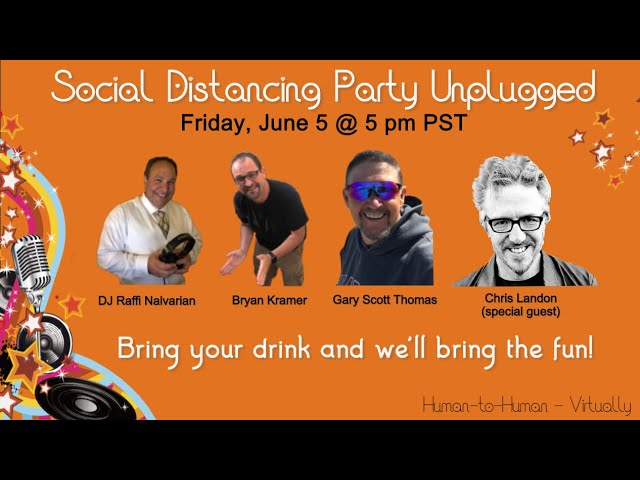
#H2HChat: How Creativity is Like Sex, Courtney Smith Kramer, Creative Director/Co-Founder PureMatter

In this live H2H (Human‑to‑Human) chat hosted by Bryan Kramer, co‑founder and executive creative director Courtney Smith Kramer discusses the premise of her upcoming book 21 Reasons Why Creativity Is Like Sex. The conversation weaves personal anecdotes, research references, and practical advice into a series of thematic “chapters” that map creativity to sexual dynamics. Kramer argues that creativity is a universal, positive problem‑solving ability present in every human body, not a talent reserved for artists. She outlines how to enter the creative “flow” through stimulation (e.g., showers, walks, day‑dreaming) and stresses the importance of dedicated, uninterrupted time (her own 4‑hour block). Core frameworks introduced include “Love In, Love Out” (energy put into work returns as emotional impact and revenue) and the acronym TITS – “Think It Through Seriously.” The dialogue also covers the detrimental role of ego and hierarchical structures in stifling ideas, the need for safe collaborative spaces, and methods for structured brainstorming (stickies, thematic grouping, re‑grouping). Kramer critiques the notion of measuring creativity by ROI, suggesting instead that joy, an “autoleptic experience,” is the true metric. She shares insights from the book‑writing process, including serendipitous interviews (a celebrity hairstylist, a Huffington Post writer) and the Red Bull “Hacking Creativity” project. Throughout, the hosts field audience questions about fostering creativity in non‑creative jobs, carving out creative time amid tactical work, and how to reward ideas without bias. The session ends with promotion of the book’s sign‑up link and a preview of upcoming IBM‑partnered events.
Chapters
Hey everybody, how are you doing? This is Bryan Kramer here back again for another HTA Chat. It's Monday at noon Pacific Standard Time, 3 PM Eastern Time, and lots of other times around the world. I'm not going to go through them all, but I will let you know that we're happy to be back for another HTA Chat because this really is a fun one. We're going to be doing some A topic we've never done before. I can say that for sure, 100% for sure that we have never done a topic like this before, how creativity is like sex. And so we are going to jump into that, but before I do that, let me say hello to Susie. How are you doing, Susie?
I am doing very well. How are you?
Good. Good. Yeah, it's— and are you still having a heat wave in New York, or has it finally gotten back to regular New York weather that it should
be? We're still about 10 degrees warmer than it should be, but it's not like it was a few weeks ago when it was like 40 degrees and I wanted to die. I mean, 40 degrees higher than it was supposed to be, and I wanted to die.
Oh, okay.
Yeah, no, 40 degrees. It's like 40 degrees here, but But yeah, I'm waiting for snow, like desperately at this point.
It's ironic that there's snow everywhere in the country but the place that's supposed to be the coldest place on Earth.
Don't even tell me. I mean, I moved from LA. And now there's like snow in Big Bear, like crazy snow. And like, this is just not— this is not fair. So gods of the weather, I beg you, please give me snow so I can cross-country ski.
Something wrong with the fact that we have the same weather that you do in New York?
I know. My parents are in Southern California. At some point, like over Christmas, it was colder there than it was here. It's just like, oh my God. Anyway, yeah. So now is the time to come visit, guys, if you want to have like around the same weather and don't feel like cold. Awesome.
Awesome. I know you've been getting ready for your class as well.
Yes.
Starting to teach a class on marketing, right?
Yep. Yep, social media and the brand. So I'm super, super psyched about that.
Hey, Suzy, did you tell them that you made his book required reading?
Yes, I did. I didn't tell you that. No, actually, I was going to tell you once I got it approved. Yeah, I have— I am using H2H as one of the key books. I was looking at Shareology, and for this specific class, it was not quite there. It's more of an intro class than getting more integrated marketing type stuff. So, so yeah, I'm using yours and then also Neil Schaffer's Maximize Your Social, and then a really cool book on Instagram that I'll have to send the title over.
Good. Awesome. Thank you so much for that. Totally appreciate it. And speaking of books, we are talking about another book that is going to be coming out this year, 21 Reasons Why Creativity Is Like Sex, and that book is being written by our very own Courtney Smith Kramer. Ironic, yes, that her last name is the same as mine. It's just ironic.
It's
not ironic, it's legal. And so let me give you a quick intro here. Courtney is the co-founder of Pure Matter and executive creative director at Pure Matter. And her upcoming book, like I said before, The 21 Reasons Why Creativity Is Like Sex, is going to be coming out later this year. So quick intro just so you understand a little bit about the book. Creativity is valued like a magical gift or talent that either you have or you don't. But Courtney says she argues that everyone is creative in their own way. This book, in a very cheeky obviously, but fun and professional way, explores the 21 reasons, which I might argue there's 22, Maybe we'll build a 22nd here just on this chat. Just kidding. Why creativity is like sex and why, if you're human— oh, I didn't, I wasn't ready for that. I'll hit it in a second. If you're human, you have something interesting and special to offer people, to offer people of, in the same kind. People kind. Each reason headlines, each reason of the 21 headlines a chapter that is full of personal anecdotes Insights from notable creative professionals, fun and cool examples, and wisdom that is meant to inspire but could also just leave you saying, that's what she said. So without further ado, I am ready to say hello, Courtney. How are you doing? It's been a while since I've seen you. Thank you.
I get my human applause. I said it again. Well, thank you for having me. By the way, This is my very first ever Google Hangout, so you have proverbially popped my Google Hangout cherry.
Oh my goodness.
Thank you for that. There it is.
There it is.
First of
many.
Second of all, I'm wondering if we should come up with our own sound for all of the that's what she saids that are going to happen in this chat. No, not a good one. Yeah.
So Courtney, um, let's dive right in. Okay, um, everyone out there, this is that time for the next, uh, little while where we're going to hope that you come up with some— and I don't think you should have a problem here— coming up with some questions for Courtney. So for the next little bit, please use the hashtag on Twitter #H2HChat because Suzy is going to be taking your questions, um, while I'm asking her questions for the first part. She'll be turning those questions back in and asking them of Courtney. So you can participate by asking some questions, so please do. Alright, Court, so let me ask you just kind of a fundamental question on what you think about creativity in general. What makes somebody creative?
A human body. Everyone is creative. Period. If you have a brain and a beating heart, you are creative. I think that a lot of people confuse artistry with creativity, and so therefore think that you have to be a dancer or a painter or a writer in order to be called creative, but that's simply not the case at all. Creativity is simply positive problem-solving. You know, so any— if you can tap into your passion point, what is your truth, what is the thing that just gets you so excited, and then be able to exercise your own unique point of view and way of solving any challenge that's around that particular passion, that's a manifestation of creativity right there.
Love it. Sorry to— let me ask you if it's possible to take your glasses off because your monitor is actually We're seeing more of your monitor than we are your eyes. It's really reflective.
How's that? You just want me to take my glasses off because you don't like it when I wear these.
This time, not so much. Now
I can't read my notes, but okay, I'll wing it.
That's alright, you can put them on here and there as you need them.
Hold on.
Okay. So walk me through what you think it takes You know, a person in accounting or a person in engineering or a person in math might argue that they're in the other side of the brain, in the other side of the hemisphere. Agree or disagree?
No, I disagree. You know, well, first of all, your career doesn't define your thinking, you know, and the things that make you really excited and passionate in your life. So someone who's an accountant could be, I don't know, figurine collector. That's a terrible example. But, you know, or they could be a woodworker or, you know, a biker, you know. So there's a lot of things that probably surround their life that have nothing to do with their profession of choice that they can do some serious creative thinking around.
So let's talk about that. What are— what do you think are the steps when you're in your least creative zone? If you're, you know, this happens all the time to me where I'm just like, I cannot think of a word for that. Or I can't think of a way to say that. I mean, Susie and I, all the time, we're like, oh my God, how are we gonna say that about an H2H chat? Or,
you
know, how are we gonna position this? Or what is the title of this gonna be? And it— we just hit a wall and, um, don't know what to do. So what, what do you— what are the steps to, like, or what's a thing that we could do to get more creative around things so that we open up and allow our inner creativity to come out and actually come up with the right headline, or being a little bit more creative anyway? Besides me turning to you and saying, help. Which I do all the time.
For word challenges, I suggest thesaurus.com. That helps. But for the bigger picture, trying to get out of your own head is what I hear you saying. Yeah. One of my chapter titles is Sometimes You Need Stimulation. It's one of the reasons why creativity is like sex, which is the highest level of creativity happens when you're able to sort of transcend that very linear thinking, very logical, straightforward kind of thought process. And when I say stimulation, of course, in this context, I mean go take a walk. One of my favorites, what I like to say, what do 80% of people do in the shower? No answer? Think.
Think.
Think. Oh,
okay.
Yeah.
Our
brains are going 2 different ways this time. Your fault, Courtney.
Yeah, think.
Sing. Yeah, we'll probably sing. Please. There's a reason why people tend to have an easier time letting their mind wander in the shower because there's something about the feeling of the water on your body and then the sound of the water in that sort of acoustic echo chamber almost acts as white noise in a way. What that does is it allows your mind to not have to focus, to concentrate on anything.
Mm-hmm.
You know, so when you're multitasking or when you're trying to solve a problem, say like a math problem, something that requires very focused attention, you're not in a space in order to let your mind wander and really explore the possibilities. And so when you're talking about how do you get past that block, you know, how do you open yourselves up It's really about being mindful and creating space for yourself to do that. So if it is in the shower, that's great. A lot of people, it's going to take a walk. For some people, it's just sitting in a room and turn on some music. But I feel like most people who haven't been trained, you know, sort of like formally trained in the creative services like I have, and many, many people watching this have.
Meaning you actually have a degree in college from—
Yeah, I have an advertising and a graphic design degree. So I feel like it was sort of ingrained in me just to know that I had to get out of my own way or make space in order for this to happen. But if you're not used to doing that, then that would be my recommendation to try. Daydream.
So how do you, how do you, you know, we're all busy. We're all, I like to think that every single one of us is ADD. Yeah, some more than others. As humans, we're busy. We've got so many different things going on in our lives. What, how do you set the time aside that's needed in between all those things and then focus? I mean, obviously there's taking a shower or go to the beach or, you know, whatever it is, wherever your zone is. But how do you know when it's time and what you need?
Well, I think like anything, it's just a matter of priorities. So making a choice to go for a walk instead of opening Facebook, or even going and sitting outside on your front porch and take a notebook instead of a newspaper. A lot of times, my personal beliefs are that when you get into what's called the flow, or the zone, or the groove— Why did you laugh when I said flow? Stop. The term flow actually was was coined by this Hungarian psychologist named Mihaly. Can't pronounce his last name; it's too many consonants in a row. But he he was able to actually identify all the steps that it requires to get into the flow, and and what that is is you know when you're able to. get into that transcendental place where ideas kind of come in. And I believe this is why every human can do this, is when you get to that place— I always describe it as like when my eyes roll back in my head, and then—
did I say human?
You did say human. You know, when I get to that place where my eyes roll back into my head and it's like things are flowing through me and I feel like I'm more of a vessel and I'm not creating this stuff myself. It's simply being— I don't want to say channeled, but I guess channeled in a way through me. I believe that that's where the best stuff comes because everybody has this, you know, sort of place that surrounds them and people all around them shouting, you know, these great ideas. But many people just don't take the time to hear them, you know, so that's my own personal belief.
And let me ask you a quick question about social media because I know that you have a lot of insights into things and ways that you believe. So in social media in general, or even in content, or how things— and in looking at how things have changed over the last 5 or 10 years, There's so much, there's so much noise, there's so much content, and we're all trying to find something that stands out, that kind of, you know, that thing that we can glom onto. In our brains, I believe that we sometimes, we opt in, whether we do it, you know, on paper when we actually submit our email address, we actually opt in in our brain because we think, wow, that's cute, that's funny, funny, that's smart. And sometimes we opt out because it doesn't jive with what we are. So how do you view content and social and all of this stuff, all of this noise in standing out creatively speaking or even just in general?
Well, that actually speaks to another one of my chapters which is called Love In, Love Out. And what that means to me is, you know, the laws of the universe apply even in social media and content development, which means the amount of love and energy and thought and effort, planning, strategy, everything that you put into a piece of content is going to be felt back. In equal amounts on the other side. So I feel like the reason why there's so much crap out there is that people just— they're too busy, they phone it in, they're just creating something to create something. And it doesn't surprise me that people are just passing over it because there's, there's no energetic reciprocity, if you will, out there. And you know what you're talking about, I hear, is Creating what that hook is and then making sure that the hook makes sense and then relating that back to your audience and what they care about. And then really, another one of my chapters is called TITS, which is an acronym which stands for Think It Through Seriously. Don't ever forget that. TITS up, people. You need to have that strategy and the plan and really Playing it out, or at least understanding what your end goal is so you can reverse engineer whatever that experience is, and making sure that it's going to be relevant and thought through so that on the other side, people are going to be able to fill that back.
So what do you think is missing? What do you think most people— what's one thing That, that you, you see over and over again when you walk in, whether it's, you know, into a brainstorming meeting or a client meeting or a situation, and you're thinking, how can we make this more creative? How do we get people to just start thinking more creative— creatively than where we're at now? Because most meetings, I, I don't know about you, but— Mm-hmm. You know, you walk in and it's agenda-driven and it's pretty linear.
Well, I think it's going beyond the first ideas. You know, oftentimes what happens is when you get a bunch of people in a room, and at least how we brainstorm in our company is we open it up to everyone, we have them come in. We are prepared enough to outline whatever the challenge is and who the audience is and all the research that we have around it. And then we open it up to free brainstorming. So stickies all over the table and Sharpies and helping people just sort of— that's helping them get into the flow when they're starting to free their mind of thought and linear thought and just rapid-fire writing down concepts or ideas or words or whatever comes to their mind. And then we take all those stickies and we put them up on the wall in the conference room, and then we group them according to theme, if you will. And so once those are grouped into themes, I think most, most people would be satisfied enough to stop there and say, okay, we got it, let's just present these themes. Well, what oftentimes happens there is You haven't gone far enough in that ideation process. You need to be able to look at those groupings of themes, which are most likely going to be just the quick obvious ones, and then they need to be regrouped in a different way. It's almost like you need to, you know, take— if, well, how I see it in my mind anyway, it's like a 3D experience and you need to shift it and turn it around so that you can look at, look at the other plane. And how— what are the similarities or the patterns between these themes that takes just a little bit more thought to create? Because what happens is, you know, the synapses in your brain, there are sort of hardwired connection points. And just as humans, we are As humans, those connections are sort of hardwired as something that, as a matter of process, what we keep going back to. But what happens is when you start looking at things in a slightly different way, it actually causes the synapses to shift and create new connections in your brain. And that sort of wakes you up in a way and makes you really start critically thinking about new possibilities. And that's the positive problem solving that I talk about in what creativity is, is changing the way that you look. As one of the chapters is, turn yourself upside down, look at things in a new way. Because that's where you're going to get to the really, really good ideas that are going to be well thought through that people are going to pay attention to.
How do— what are some of the ways that as you look at all of the— you know, there's a lot of different ideas and there's a lot of ways that you can approach a company in their marketing or in their product development or so on and so forth. What, what happens when you don't want to stomp out people's ideas? You want to create a place where everyone's idea counts, every— everyone's idea matters, right? But at the same time, and I can say this about myself, not every idea is great.
Confirmed.
I'm gonna do this to me.
Bryan's banned from our brainstorming sessions, by the way. Sometimes I'm
not welcome, but
Not because you don't have bad ideas, but because you're too ADD and you usually derail.
Yeah, yeah.
It is very funny.
It is very funny.
It does provide comic relief. So you pop in and then wave goodbye.
You know, I, I don't like nonprofit meetings. This is nothing against nonprofits, but nonprofit meetings are the meetings where we all talk about what we Oh, we tried that. Oh, we did that. Oh, that happened. Okay, we did that 10 years ago. And then everyone's saying what you can't do instead of what you can do.
Right.
So anyway, what— how do you keep everyone, including me— no, I'm kidding. How do you keep everybody feeling good about their ideas and knowing that, you know, you can't pick them all? You gotta pick, you know, eventually just one idea to go with, right?
Yeah, yeah, well, you're just teeing these up like softballs, I love it. So one of my chapters is called You Can Do It Solo, But It's Better With Others. And— hi, I got a laugh track, yes! It's like a lifelong dream to get a laugh track. So what that means is, you know, what, what are the benefits or the downsides to working alone versus collaborating with other people?
Yeah.
And, you know, there's, there's research out there that says, you know, in large groups, especially in a workplace environment, it can be really intimidating to get into a brainstorm session, especially if there's a hierarchy in the room. Or if there is one person that's particularly more vocal than someone else. There's people who have really good ideas that are going to be afraid to share them in a face-to-face verbal, you know, sort of sparring, if you will, because they're afraid. They're afraid that they're going to be rejected or made fun of or, you know, be told that that's a stupid idea. No one wants that. So There's actually some research shown that, you know, in those kind of environments where you feel like it's not exactly a safe space, oftentimes written collaboration is a more valuable way to gather ideas together in, you know, in a way so that people who are maybe feeling intimidated or just insecure about sharing their idea will have more of a chance of getting their idea out there and shared, even if it's in an anonymous way. You know, so there— it all just is sort of situational, you know, if you will, but you can do it solo, but it's better with others.
I hear you on that. We— so we're gonna be transitioning here in just a few minutes over, so everyone keep your questions coming for Courtney. You just hashtag it #HJHchat and lay down your question that you have for her, and Suzy's gonna Pick up some of those and, and pose them back over to Courtney. So one of the things that I wanted to just kind of conclude with is, is the— this could be a tough one, and I apologize ahead of time because it's one of those things that I think everyone is measured against their job or their role in some capacity. And if they're not, then they're looking for— measurement of some kind to know what success looks like. I know I do. So how is creativity— how can you measure success of creativity? What's the ROI? What's the measurement? What's the feedback? Or what is the thing that makes creativity, when you look at it, go, that worked?
I mean, I don't think creativity was invented to be a KPI. So I personally believe it's just how, how happy you feel. You know, it all comes back to your personal joy. You know, I've been doing my, my research, as I say, I'm eyeballs deep in my research right now. And what I've been learning is— I had to look up this term, I didn't even know what it meant, but it's called an autoleptic experience. And what that means is that you— it's the act of doing something for the pure joy of doing it. And that's why I'm writing this book, frankly. It has been such a great joy going through and writing it, and I am happier writing this book and probably future whatevers than when I'm not doing it. So I feel like it's, it's the greatest gift that you can give yourself is making time to do that because it truly is your unique thing to offer the world. And, you know, I think I read somewhere that just said if you're not sharing your gifts with the world, Then you should be ashamed of yourself because you're depriving the world of something that could possibly inspire, which in turn could inspire you back, and that's what makes humanity a better place to live.
Yeah, I agree. I know that it can be argued too when you look at things like, if you boil it down to just even one thing like an email campaign. The difference between a boring email that says the same thing and a creative email that has it written well, and maybe the subject line is enough to get me to open it, and the, you know, the words are enough to get me to click over, the ROI of that is— could be pretty great. Mm-hmm. And that said, I mean, we've looked at, you know, Super Bowl commercials versus, you know, tweets that actually went farther than Super Bowl commercials. And the creativity and the science both played together to make that happen. So this will be my last question is, where are you taking that in the book? What's your thought process on creativity and science and how they're working together?
Well, that would fall under my chapter that's called Touch Their Insides.
I haven't heard that one yet.
There's a lot of new chapters you don't know about. But what that means is it's the emotional connection with creativity that I think is speaking to exactly what you just mentioned, which is, you know, It takes extra time and thought to put humor or wit or something that's going to be touching, you know, into a subject line or into an email. And that goes back to the love in, love out, which is when you take the time to make that emotional connection. I know you wrote about this in H2H and Shareology both. It's about Tapping into that human emotional point, because the minute you make somebody feel something, you have a connection. They're going to remember it. Emotions create actions. That is the bottom line no matter what. Right? That's it. Emotions drive action. It can be happy, sad, make me laugh, make me cringe, make me Cry, make me angry, like any of those, but I will remember and I will make a connection with what you're trying to tell me. So touch their insides.
Awesome. Okay, well, this is that time where I pass the baton over to Suzy. I'll of course weave in and out, but I'm gonna go Attend the Twitter community peeps out there. I will be on Twitter a little more and listen in on what kinds of questions are coming in. The questions, by the way, can keep coming in. Just because we've started doesn't mean that we can't stop them, so please definitely keep them coming. I will go ahead and pass those off to Suzy as we go, but Suzy, she is all yours. You know what? That's what she said.
Premature stopulation on the Twitter questions.
Oh my. No stopulations.
Oh my, oh my.
Good luck.
We are getting some seriously awesome tweets and conversation going. You all may have noticed the appearance of spam bots because we are trending. Last was we were at number 49. Nationally. So way to go, guys. Keep that conversation coming.
Woo!
I have a great lineup of questions here. Lots of interest in basically kind of the application of where we have all this discussion of creativity, but taking it from this just amazing potential of creativity and everything you're talking about, but then applying it and making it relevant. So let's see. I want to go ahead and start off with a little bit of a toughie, I think, but it's a great one from Mike Haberman, one of our awesome IBM futurists and H2H chatters. So he's posed a series of questions actually asking about how employers allow employees to be creative and whether they even should, because there are some jobs that just don't seem to require creativity. So as you know, Mike is an awesome thought leader in HR. So how do we approach this? What are your thoughts?
Hmm, that's a very good question. I feel like things are moving so fast Today, and I'm not sure that we are allowing people enough time at the beginning of a challenge or a project or whatever to really critically think about it. And maybe even, you know, in terms of what Mike is doing, I think the collaboration and whatever the tools are that enable this shared collaboration together to really play out options of ideas as opposed to just taking that first idea of executing it. I think, you know, the more safe spaces we can create for people and allow them to share their many ideas, you just, you can never predict or foresee where these points of connection are gonna arrive. And there's amazing ideas that are sort of floating out there in the ether that just There's like one half of an idea over here and there's one half of an idea over here. And if they're not given the safe space to connect, then they're just going to continue floating away. So in terms of what Mike is asking, that's what I would do is allow more time up front, more planning and more strategy time, as opposed to just rushing it through to the execution stage. You know, we see that a lot even in our campaign planning. You know what? We see a lot— sometimes our clients can't understand why we want to spend more time upfront doing research and critically thinking about what are those points of connection between how the employees are thinking, how is their audience thinking, how is the industry thinking, and where are those points of overlap existing so that we know that we're on the right track and saying something that is going to resonate with every audience. If we're not allowed to do that upfront strategy, then we could just be throwing mud at the wall and we don't know what we're doing is working at all. So that's what I would recommend, is just more upfront collaboration time.
So it sounds like too, it sounds like you're also— since you're talking about everyone being creative, so not just the studio, right, not just the creative director. So are you also talking about in some ways A way that management needs to kind of think in terms of creating space for everyone to brainstorm?
Absolutely. You know, because you never know where a great idea is going to come from. And unfortunately, I think just because of hierarchies, politics, bureaucracy, that, that's the creativity killer right there. Ego. Ego is the creativity killer. Yeah. You know, that, and they sort of exist, you know, the creativity is sort of your manifestation of self. The ego is on the other side there to balance it, and they have to work in concert. Each were created for a good reason, but they also can turn on each other and sabotage each other. You know, so anytime the ego takes over, that's when we're talking about jealousy, greed, oppression, you know, criticism in a non-constructive way, you know, where sometimes if people feel threatened, they'll criticize another idea simply to try to tear it down to make themselves feel better. That's all ego. Creativity is the complete opposite of that, which is the— it's the openness and willingness to share and to, and to give the best of yourself in a way that is very non-threatening and in cooperation with everybody.
So this sounds— this actually reminds me a bit of Sean Murphy's book, The Optimistic Workplace. We had him on in November, and this is something— it's so interesting. It's kind of like there's— I love hearing this because in some ways it's, you know, we have him, he's talking about leadership, HR, talking about that Consulting at that level, and then you're talking about really the applications or the ways in which creative thinking and all of that. I find this really interesting. I have an interesting question here from Julie, our friend Julie Ziesemann. Hi, Julie. Thanks. She says, how do you carve out time for creativity when you're locked in tactics and execution? AKA website relaunch hell, which I know she's been dealing with a lot. How does that work?
Just like anything else, it's a discipline. You have to prioritize it and you have to make time for it, just in the same way that you would for working out or going to the store or whatever. It has to be fought for oftentimes. Like if we're talking about in the workplace, it's going to need to be fought for. And I understand, I totally— we've launched many a website and hell always goes with it. Always. So I totally get where you're coming from, Jules. But I think that it's— it just depends on what you're talking about. getting creative with? Is it an ongoing practice of critically thinking about concepts, or is it on a very specific problem that you need to find a solution for? But probably need to get a little bit more information about that because I think there's slightly different ways that you could address each one.
Yeah, yeah. So, so what— let's talk for a second. I just wanna ask a A follow-up on that. You said, and I loved your quote, that creativity doesn't have an ROI. I absolutely love it. But the bottom line, as you know, co-founder of Peer Matter, everything eventually you have to demonstrate some sort of ROI. Can you give us some insight into that thinking? Is there a way to— I know for Peer Matter, we want to come into a brainstorm and really focus on the outcome. We don't just want to spend 2 hours going, oh, what about this? What about that? This
is brainstorming.
I love it. Danger, Will Robinson. That's what I'm doing during the conference calls. I guess maybe how do you create a strategy for creative thinking, or is that applicable? How does that work?
Yeah, I think it just comes down to having higher expectations and standards of doing better work. To me, better work means You're thinking it through. You're titting it.
By the way, it's a new term that is popping up.
Tits. I'm not kidding. Weird that I would do this when I say tits. Totally opposite. But it's going beyond that first idea. It's being So respectful of the work that you're doing for your clients that you owe them better ideas. You know, like, I feel like when people return, like, shitty work, it's totally disrespectful to the client.
Hmm.
You know, it really is. It's like, it's basically telling them, you're not worth my, my energy and my, my brain cells. I'm just going to create this and move on, and then you're just going to be fine. Hmm. I truly believe that. That's the love in, love out, which is a law of the universe. You can't change a law of the universe. It just is what it is. The more energy you put into something, the more energy people will feel back, and that energy is returned ultimately into revenue. I don't know what the formula is for that. I certainly I'm not a mathematician nor a doctor of sex, but I can tell you it just works.
We have a great question from Dave Perry. Hey Dave, so glad that you can join us today. He's asking, in your opinion, what's the most effective source of creativity? I find this a fascinatingly broad question, so maybe in your experience.
That's so easy, wine. I'm kidding.
Why did I even ask? I could have answered that question.
Bryan used to have a quote that he had up, it said, write drunk and edit sober. I thought that was so funny.
I like that.
Right? There's no silver bullet, it's really different for every single person. I hate to say it, but it's just find what makes— gives you the most joy in doing. Find your autoleptic experience.
Hmm.
What is it that gives you joy? Is it running? Is it, you know, taking a walk? Is it lock— like making the time and locking yourself in your office and putting music on? Whatever. I don't know. It's honestly going to be different for every single person. It's not like an easy answer fix.
I love the answer in the form of the question, what is it that gives you joy? I actually just wrote it down because I feel like sometimes, especially I'm not trained in creativity necessarily, but I'm sitting there going, must be creative, must be creative.
Here's the thing too, when we talk about getting into the flow. You'll know when you're there when it's almost like time and space lose all meaning. Bryan used to make fun of me because he would say, oh, you're going to go lock yourself in your office and think about this campaign. I'm like, yeah, I just personally know for myself I need a 4-hour block of time uninterrupted. The first hour is spent organizing and Going through and like getting refamiliarizing myself with all the material. And something happens around that 1-hour mark for me where my brain starts making those connections. And all of a sudden, it's like how I see it in my head is I'm sitting in my office and the world around me is like spinning and in fast forward and then stopping and going in slow motion. It's almost like I'm in a wormhole. In a way, because when you get into the flow, time and space, it bends. I don't know how it happens, but it really does. If you read more about other books and stuff from other creative people who have talked about getting into the flow, they all say the same thing. It really is a secret to the universe, in my opinion. I truly believe that when you get into that flow, if you have 8 hours worth of work to do but you only have 4 hours to do it, it will get done in that 4-hour time if you're in the flow. I can't explain it, it just does.
That actually speaks to Mike Roseman. He actually just posted, he said, how long is too long? To, you know, give people enough time to critically think and collaborate. And sounds like we just got a great answer. You know, you just go through with the flow. I like it.
Yeah, the 4-hour mark is just for me.
Yes, yeah, but it—
How long is too long? There's another that's what she said.
Yeah, that's another reason. Oh my, let's see. Okay, so I have a great question from our buddies at Pay Compliments. So glad you guys could join us. I love every week they come, give us the absolute best questions. Love them. So here's their question. They said, ultimately, after a brainstorming session, someone's idea will prevail. How do you recognize and reward that without creating bias towards similar ideas? ideas in the future?
Well, I mean, hopefully you guys are solving different challenges.
If
you're trying to solve the same challenge over and over, I think maybe you better get an agency or something. Clearly the ideas aren't working. But assuming that if you're trying to solve for different things, then one would assume that they would have different creative solutions to help solve them.
Hmm.
You know, I mean, there's— in the context of a campaign, there's always going to be multiple factors that are coming in to create, like, solving that creative challenge, right? There's going to be audience, budget, the industry research, sentiment of the company, tolerance of, you know, creative ideas within a company. I mean, those are just 5. factors, and there's probably, who knows, 50 or 100.
Hmm.
And so it's gonna be, what is that combination of all of those factors that are gonna come together that are gonna sort of outlie the guardrails of the brainstorming? You know, like, here's the environment, you know, and now we need to find a positive way to solve this problem.
Yeah.
Or this challenge. And, you know, it was interesting, as I'm doing, you know, my research, I started thinking about that the word creativity in and of itself, like the suffix -ivity, I was like, what does that mean even? Like, who knows? Because there's only other, like, as it turns out, 90 other words in the human language that use -ivity as a suffix. Next closest suffix has 225. So the suffix -ivity is a special one. And so what I learned as you're—
Nativity?
Nativity? No, that's a bad idea. Go back to your little box.
And that gives you all a little taste of how things go at our house.
No, like relativity, productivity, subjectivity. What that suffix means is it considers the entire environment around that root word. In productivity, it's what are all of the things that are surrounding the production of this thing that you are considering to maximize the output, right? Yeah. So it's the environment, the tools, the people. That's a pretty complex thing if you think about it, like to fit into that little suffix. Human language is so complex, you know. So when you're, when you relate it to creativity, you're talking about what are all the conditions that are going into This creative challenge.
Hmm.
What is the environment? Who are the people? What are the considerations? What's the outcome that you're desiring? How, you know, like so many things are existing in there, which is why, you know, it's important to understand that. Because this is why everyone can do it, because really it's, it's the conditions in which you have to create. That, that's what that word means. I thought that was so interesting. Bringing it back to the question, what are the conditions that you are creating to create? Maybe look at that. I don't think that the same idea is going to come out of that.
Yeah, I love that. I also think definitely related to that, ideally it's not necessarily going to be coming from one specific It's not like one person's idea. It comes out of the community and all of that.
Although upper management will probably take credit for it.
That's just expected. My brain is at your disposal, Courtney. You know this. I have a good question here boiling down what you just said. Steven Ford is asking, can you give an example of how you have used this style, creative thinking, in the workplace? Obviously you're the creative director, so you do this quite a lot, but maybe how Pure Matter has, or a successful example.
It's how we approach every single campaign. Wait, hold on. I have a reason for that. I have to put my glasses back on, hold on.
It's acceptable.
Let's see, it is— oh, a quickie is nice but not every time.
Okay, explain the connection to me there.
Meaning that you have to have a process that you follow when you're going through the ideation and campaign building process, you know, just to use an example out of the Pure Matter world. The free thinking and brainstorming comes in whatever that solution is, but the approach to creative thinking should be a highly processed exercise. Yeah. Because it can't just be willy-nilly and all over the place, otherwise you'd never get anything done. It needs to be a very documented, repeatable iterative process in order to get to that place where you can then open it up to that sort of free-thinking place where you want to get into the flow.
That makes— I love that. We just have a little bit of time left and I want to get to this great question. Alan Berkson. Hey,
Alan.
I'm so glad that we could get him to join today. He's asking, can you get better at creativity? If so, how? Practical.
Yeah. I would say everyone has their own personal best
when
it comes to creativity because you're going to be at your best when you're exercising it toward the thing that makes you happy. And where the— your— what I call your truth, your passion point. For me, it's creativity and writing and making people laugh. And so every time I'm doing a combination of those 3 things, I feel like I'm at my very best and I become a better person. And so I feel like for you, whatever you're passionate about, then when you spend time concentrating and focusing and thinking about that, Experiencing and sharing the joy that gives you, then I would say you are honing— it's a muscle.
I like it. I like it.
If you exercise your muscle, it will grow.
Yeah, yeah. In the last few minutes, let's get a bit of a preview for the book. We're going to be giving out the website. At the end of the chat so that people can sign up for more information. I have a great question from Mitch Jackson. He wants to know types of people that you're interviewing. He says, who's the most creative person you've interviewed or researched for your book and why?
I'm only like 35% of the way finished. I decided that the journey of writing this book is going to be 100% serendipity for me, so wherever it takes me is where I'm going to go. Love it. I have a business coach, she's amazing, her name is Jane, and she of course learned that I was writing a book about creativity, and she had just recently been, I guess Red Bull did this thing called Hacking Creativity, They have a website up, it's really cool. If you go to Hacking Creativity, just Google that plus Red Bull and I'm sure you'll find it. Red Bull brought a hodgepodge group of people from every discipline together and did like a full-day workshop and used all of the data that they collected to seed this website, which you can now go to and you can also answer a shorter questionnaire. What it does is it returns a profile back to you and kind of gives you an idea about what kind of a creative profile or a creative thinker you are yourself. It's a fun thing. I did it myself. The cool thing that it does is it returns back people who are most like you who are a part of the experiment. Right. I was able to see my creative profile was most like This woman who is a celebrity hairstylist in Beverly Hills, the guy who started the Hollywood Film Festival, and this woman who owns a brand development company in New York City.
Wow.
Random, right? I reached out to all 3 of them and I heard back from the hairstylist and I said, hey, you know what, you're most like me in this hacking creativity. website. I'd love to talk to you about how your thoughts on creativity and your thought or your process. And so would you be willing to have a phone call with me? And sure enough, she did.
Wow.
Her name's Sharon Chow, and she's an amazing artist and thinker, and she specializes in hair color. Who knew, right? But we— I met a new friend. It was a completely serendipitous act that was given to me by my business coach and I just followed it.
I
can't remember what the question was.
I love it. What's the most creative person that you've interviewed for your book?
The short answer is I've only interviewed 2 people. I guess it's a 50/50 chance. Either lady that I interviewed was awesome. The other experience was, you guys all know I'm on Twitter, but I was just checking one day to see who followed me, and I noticed that this woman who was a writer for the Huffington Post and Psychology Today followed me. I was like, oh, that's interesting. I wonder why I was important enough or interesting enough for her to follow. I reached out to her and I said, hey, I'm writing a book about creativity. I would love to have some kind of science or research in the book. I don't know if you know anyone who has done any research on creativity, but I'd love to connect with you. She responded back and said, I've done— my entire body of work is on creativity.
Wow.
I would be happy to work with you. I'll be damned, this woman, her name is Caroline Beaton, she's incredible. I sent her all of my reasons, my chapter headings, and she returned back Categorically listed under the reasons, links and insights into research that other people had done regarding creativity. Who does that?
That's amazing.
She was amazing. Serendipity is a beautiful thing. I feel like it's present in all of our lives, but we're all control freaks and we feel like we need to do everything By my own plan in this way.
In some ways, just the very process that you're describing is an excellent example of this whole— what am I trying to say? This entire concept, your book concept, all of this. I tweeted out, by the way, The link for your book to get notifications, it's PureMatter.com/Courtney. Easy to remember. Thank you so much for joining us. I probably just got through like 50% of the questions.
Was there any sex questions?
I don't think so. I think Gabe has a few that he was throwing out there. Apparently, Pure Matter is playing a drinking game right now. They're all watching this and any innuendos, take a drink. Yes, so you may have some interesting questions from our team. Check it out, there's some people have some awesome stuff. Thanks guys so much and BK, over to you.
Awesome, awesome. And Suzy, can you look up real quick, I was trying to find it and I think you, if you wouldn't have a, if you have a copy of who's up next week.
Yep,
yep.
We have a great—
I wanted to quickly thank Court for Doing this. I know doing these things are always, are always very stressful, especially as you're, you're building the plane as you fly it. You're putting the book together right now. So, you know, everyone stay in touch for what's to come because obviously this is just, just the beginning. And as Susie mentioned, the link to this to sign up to get more about the book as she's writing it and then also when it comes out is in the Twitter stream. So go ahead and click on that link, sign up, and I'm sure she'd be happy to send those emails to you. And next week we are going to have—
We're gonna have a very special team from our friends at IBM. They're going to be discussing moments that count, when collaboration We'll have the registration page up soon. This is going to be ahead of their IBM Connect event, and we're super excited that they can join us.
Cool, awesome. Well, good. Everyone, congrats again. We were trending on Twitter chat— on Twitter again, and that's fantastic, and that's much thanks to both our guests and to you all for helping to take part in these every Monday. So really appreciate it. We're gonna have some fun stuff coming up, and we're looking forward to chatting with you soon. Make it a great week. We'll talk to you soon. Cheers.
Thank you.
More from Bryan


AI Didn't Make Leadership Harder. It Made Fake Leadership Impossible | CODA Keynote | H2H 2.0
Why AI Makes Connection More Valuable | BOLD Awards Keynote Trailer | Human-to-Human H2H 2.0