#H2HChat How to Write Great Marketing Copy with Shawn Pfunder, Editor in Chief, GoDaddy
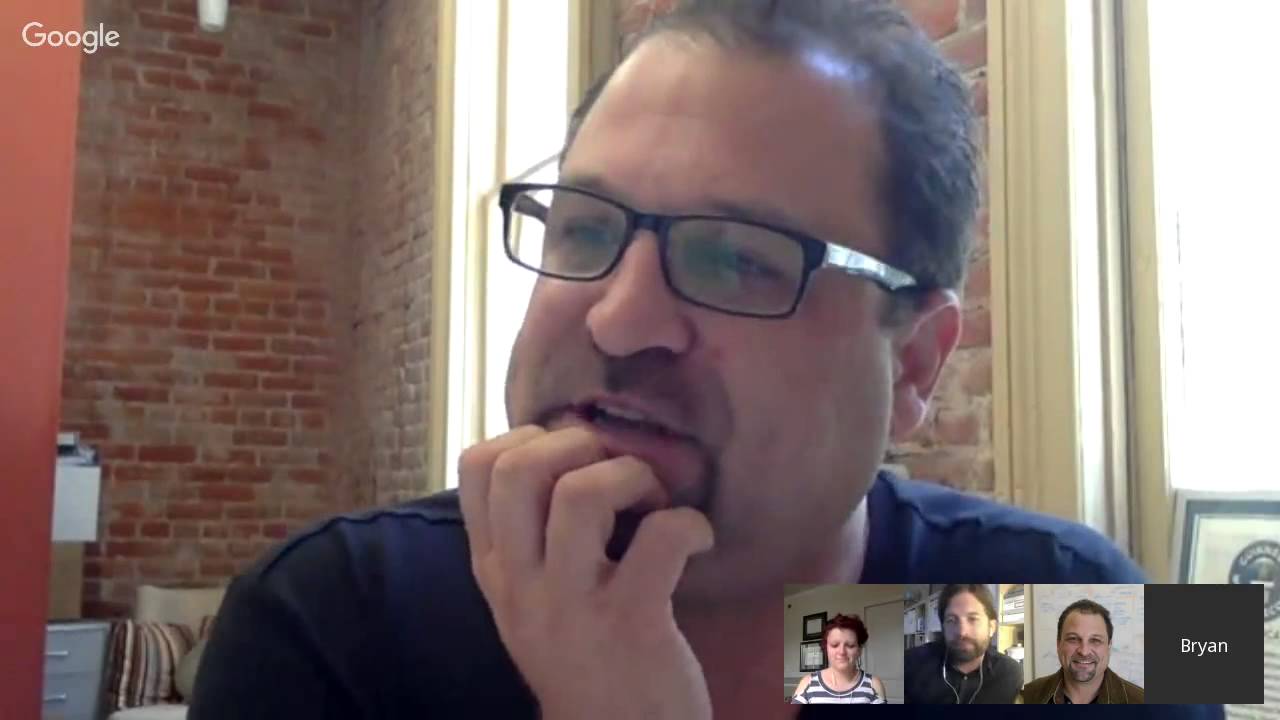
In this live H2H Chat hosted by Bryan Kramer (with co‑host Suzy), Shawn Pfunder, GoDaddy’s editor‑in‑chief, discusses the nature of creativity, how to nurture it in individuals and teams, and how to translate that into effective, discoverable content. He explains his personal journey from theater and creative writing to a career that champions the idea that everyone is inherently creative, and he shares practical tactics for making content both novel and useful. The conversation covers GoDaddy’s shift toward authentic, employee‑bylined content (the GoDaddy Garage), community‑building, SEO (re‑framed as “get‑found”), the importance of templates and sensory storytelling, readability tools, micro‑ and macro‑conversions, the evolving role of personal websites versus social platforms, the interplay of copy and video, and the impact of education and media on creativity. Audience questions touch on legal concerns, personal branding, long‑form versus short‑form content, and the future of content consumption. The session ends with calls to action for the audience to engage, read more, and attend the next H2H Chat.
Chapters
Hey everybody, we are back for another H2H Chat. We are so excited to be here. Before I introduce our special guest, I just wanted to give a quick shout out to Suzy. Suzy, how's it going over there on the left coast?
The left coast? I think I have the right coast. I would like to lay claim to it.
If you look at a map, it is the right coast.
You're right. Just saying that out there. I'm doing well. Summer has officially dawned, which means my air conditioning is broken, which is why I have this awesome little fan effect going on here. However, I'm hanging in there. It's good.
How
are things going with you? Yeah, it really sucks.
Yeah, that is not good. I think that air conditioning companies count on this type of year, and we could spend a I think we should do a future HKH chat on how products are timed to fail so companies can—
Yes.
That's going to be another future topic. Can
you imagine with like the Internet of Things, like smart air conditionings, that like this would be the evil companies of the Internet of Things, right?
Like, I'm sorry, Dave, I can't provide you— iPhones stop working every time there's a new one coming out too.
There was a report that just came out on that. Okay, another H2H chat, that should be our rant. We need to do a H2H chat hashtag BK Suzy rant. Yes. Moving on, we have an awesome guest.
We do, we do, and I met Shawn at, it was South by Southwest, and we had an awesome time talking about content and copy and also what he does. At GoDaddy. And so without further ado, I'll introduce Sean while he sits there and listens to his own bio.
That's right.
Here we go. I always— when people announce me, I'm like, what am I, dying? What are you doing? So anyway, Sean is the editor-in-chief of the GoDaddy editorial department. He's responsible for overall editorial direction and has the pleasure of supporting his staff of communication professionals many of which I actually also got to meet at South by Southwest. We work closely with— he works closely with product owners and industry experts to publish remarkable content that will help entrepreneurs and web professionals be more successful. They're always looking for other web experts, writers, artists, designers, and teachers throughout the world that want to help the underdog succeed. So that'll be interesting to talk a little bit about that. At GoDaddy, he gets to practice one of his passions, helping others to take the creative leap and discover the power that they had in them all along. Shawn, how are you doing today?
I'm doing great, man. Thanks so much for having me.
Yeah, no problem. No problem. We had a really fascinating discussion in between parties.
That's what happens at South by Southwest.
Yeah,
I was going to say, it's South by. That is a given.
It totally is. But it really kind of got me thinking. I think you were even talking about potentially— either you are— I can't remember if you said you were working on a book or you might be working on a book about how to help people define their creativity. Why don't you give us a little bit about you, like your background and where you kind of— you can go as far back as you like, but where did your creativity start from? Let's go there.
Yeah, you know, it's been around for a long time. I originally was a big theater guy, but I wrote a lot, and I wrote a lot growing up. I have 2 brothers, and I don't know if all families do this, but you kind of stake out what's your thing, and then it's like your brothers can't do it, right? So for us growing up, I had one brother that was into art, one brother that was into music, and so I stuck with writing and a little bit of theater. And then I majored in creative writing and kind of headed that direction. But the big thing I kept coming across over and over again that I became really passionate about was that it's that 5th grade drop in people where they decide all of a sudden they're no longer creative. Like they can't create anymore. That's— or they define themselves based on that. Like, I'm not a creative person. And the older I got, the more I realized that it was— it's like a dirty little secret with artists and writers and creative people. Like, they hear somebody else say that and they're like, you just keep thinking that and I'll keep working as I go along. And so I became really passionate helping other people learn that they're creative by nature. Like, this is their— this is part of what makes them human in the first place, is that they are— There it is. Is that they're creative. They create, whether or not it's art or whether it's writing or whether it's just making a recipe, that they are creative. And so that's, I guess, where I've kind of gotten to today. And that took me into GoDaddy, that took me into writing there, it took me into community work that we're doing at GoDaddy now where we're encouraging not only employees but other people to realize that they're capable of creating content, and content being art, content being something that has both utility but is also novel, and that everybody can do that.
Yeah, it's interesting to hear people say that, and I've heard this before, I'm sure you've heard it too, I'm not creative. I do X. I just do this.
Yeah, I'm a numbers person. I'm not creative, I'm just a numbers person. It's funny, during a There's one presentation that I do on presenting, on giving presentations based off of Nancy Duarte's really, really great book, Resonate. But during that presentation, I actually throw up the format of a haiku, so 5-7-5 up on the screen. And then I ask everybody in the room, okay, who in here is a poet? Like no hands. There's never any, or there's like the one person that's like, that's right. Like I'm like, and they're really dramatic about it. Blood of a poet, right? They raise their hand. You're like, oh no, this is going to be great. And then, and then I show them a picture of Star Wars or Wonder Woman or something, and I give them a minute and a half and I tell them to write a haiku. Everybody in the room, 5-7-5, and you get to watch everybody in the room doing that count. Like the, and everybody's like pressured into doing it. But as soon as they write that poem, as soon as they put it together, then I let everybody know. Okay, so now you're all poets. I mean, that's the definition, right? Is that you write poetry. And now everybody in the audience has written a poem. And you've just shown them like, this is something you're 100% capable of. And the poems are amazing. Mm-hmm. The people that have never— and I also find out people have never seen Star Wars, which is really amazing as well. But they write poems about this and they write poems about Wonder Woman, which is totally amazing. And they're beautiful. And then they're even surprised. They're like, well, like, I couldn't do this on my own unless you didn't show me. And then you remind them all of it is, they're forms that you fill in. It's, and that's just practice playing with those forms.
So how do you, How do you define creativity?
Creativity. Wow, that's a really great question. Well, 2 things. I think there's a— I heard, this was on, it's probably on Terry Gross or NPR, and I wish I could cite it, but I had heard a definition for art that helps with the definition for creativity, and the definition for art was that it's both novel, so something that's interesting or unique in some way, and useful. It has to be both in order to be art. And so in thinking about it that way, creativity then becomes anything that is both unique to you and is something like your take on something. So if, you know, maybe I have a particular way that I make enchiladas. And everybody tells everybody and they say, hey man, yeah, you gotta try Funder's enchiladas. Okay, that's utility. That's, I mean, that's the thing that might— I mean, that's not utility, that's what makes it unique. But then the useful part of it is that, you know, I'm feeding people. And so then it becomes that creative act. I think that fits with most anything. So if you're doing something that is unique to you in some way, And lots of people have this. Well, everybody does. Everybody's unique in some way. And you're helping somebody else, then it's creative. It's a creative act. And we discount so many things that we do, I think, as not being creative. Because typically we think creativity, we think of Sylvia Plath or Michelangelo or, I don't know, I was going to say counting crows, like Adam Derwent. He's really, really creative because he's brooding and he has dreadlocks, right? So he's got to be a really creative guy. Where everybody every day is doing something creative. I think it's just learning, learning how to follow those— again, we come back to templates and forms, things that naturally resonate with us as human beings. It's learning to identify those. That makes things better.
And you did say—
I said humans again. Yeah. So this is one thing that I just really dig about you, like when we were talking about it, just that concept. And I felt bad when we met each other, you're like explaining what you do. I had actually read Human to Human already. Wow. And I almost sent you a screenshot of when I purchased the book to prove it to you. Yeah. On Amazon. But it's something that I really, really love. It comes back to this authenticity. It's huge.
Thank you, man. I appreciate that.
Yeah, yeah.
And I know, you know, let's talk about GoDaddy for a second because we had some really interesting discussions about how you drive creativity within your team, within this great company that, you know, has obviously done some very creative things to brand itself. And so my first question to you is, how do you plan for— because a lot of it is content. GoDaddy is really proud— I would say that, you know, their strength is in their content.
Mm-hmm.
That comes back to a lot of what you and your team do. So how do you How do you drive that? How do you start that process?
You know, we've— and a lot of teams that create content and create a lot of content have kind of— I've noticed a metamorphosis where previously, maybe even the simplest way to say it is it was corporate content. You know, people would just create something and it was branded as GoDaddy content solely, that was it. It's almost like you're ghostwriting for a brand. And it's been more recently with the advent of the GoDaddy Garage, changing the way that we do engagement in social media, where I'm more interested in making sure that there is a person attached to it first. And then that person happens to be working at GoDaddy. And so on the garage, for example, the debate early on was, well, can we just buy the content, put the content on there, and it's SEO fodder or it's on-page? Like, it would still be helpful and we'd be helping people. Or do we give people the byline? Do we make sure that that's identified as like those individuals are the ones that wrote that content? The same in social media. Instead of interacting with GoDaddy as a brand, brand in social media, you interact with people that work at GoDaddy and it's actually their actual handles that you're engaging with instead of engaging with this faceless brand. And so as soon as we started to do that, that's when I think we really saw really, really great influential content. And it wasn't just stuff coming from GoDaddy, it was from influencers throughout the web, people that really understood how to do social media, how to take care of your taxes, how to start and run a business. Instead of me, I mean, I love to write, but instead of me or somebody on the team researching and developing it and putting our name on it, putting other people's names on it to create that authenticity, and it's their voice that's coming through. And I think that's where it comes back to the strategy or the content strategy, the content marketing, the inbound strategy, and I'm sure you've seen this a lot, really starts to overlap and blend into community strategy, and it ends up being basically the same thing. When we started writing a lot of the content marketing stuff, when we first started, the request from the CMO was that we really start to engage with the broader community. So small business owners, Chamber of Commerce, SCORE, SBDC, the WordPress community. That's what they were interested in. And we said, well, we could probably do that with content by taking something that they're creating or that they're passionate about and promoting it, compensating them for that, encouraging them to share what they know with the broader world. And that's where that really, really, really got good with those unique voices, other people sharing and becoming a part of it.
That's great. I am a massive advocate for how to get a community sharing in unison, and I want to talk about that. But before we get there, I'd love to hear how do you drive your team to be at their most creative?
Yeah, you just threaten them. You tell them you're going to fire them. Yeah, creator else, give them a box of crayons.
The sticker you put on their skateboard.
Yeah, that's it. Yeah, I think that, well, the number one thing that I've noticed with everybody that we've— that I've worked with, not just on the team itself but throughout GoDaddy, it's becoming— it's looking at the world a little bit differently. And there are great books on this, there's like the Reading Like a Writer, But what you do is when you see something that's working, when you read a blog post or they share— I have people on my team that will share content with me. They'll say, hey, you should check this out. This is really great. Then the question isn't, why do you think it's really great? It's like, how is it working? How does it— what they put together, why is it working? Why do you think that it's great in the way that it's working? For example, if you're If you're driving down the road and you see a— I would see Chipotle billboards, which I'm plenty addicted to, but I would see the Chipotle billboard and I would think to myself, that's a fantastic billboard. I love it. It will even be a billboard that has tons of copy on it. I'll even think like, you're breaking all the rules for a billboard because there's no way I'm even going to read all of that because I'm passing it at 70 miles an hour. Then I have to take a step back and figure out, okay, why is it working and why is it working with me? And then deconstruct that and use it in a different way. So it's the same as in writing blog posts or putting together tweets, or even lately there's that new movie, The Lobster, and there's a way that you can go online, you can determine which animal you would become, you know, if you didn't fall in love, you become a certain animal out of that movie. I had a friend of mine that said, hey, this is really fantastic, I wish, you know, I worked for an agency like this. And then we would take a look at it and say, okay, why is it working? Like, why is the design working? Why are these things coming together? And then you encourage your team, you encourage the people you work with to follow that pattern. So not take from it exactly, not lift from it exactly, but this is the way that art works, and it's been working like this for hundreds of years. Like, there's a pattern, and then you follow the pattern, whether it's a sonnet or a haiku or a film. Like screenplays are crazy formatted, like just almost, almost rote. Certain number of scenes in a movie, scenes are a certain length, cuts are a certain way, but we mix and match that over and over again and just fill in the, I guess, the templated buckets with different types of content. And the more that you can do that with a team where you give them the format or the template to follow and play with, the more their confidence goes up Now having said all that, I mean, I joke around about the threat. I totally press the team as far as goals with creative, like their own creative content, not content that goes at GoDaddy, but content on their own that they're gonna publish to Medium, they're gonna publish to YouTube, they're gonna publish someplace else that's about what they're passionate about. They've all got yearly goals, monthly goals, so they've all got like, yes, if you're gonna be part of this team, Then you need to play. You need to create content that you're passionate about outside of this. And I mean, that helps too, just setting that expectation coming on the team.
Okay, so let's dive in now to creating content that solves a problem, that solves a greater problem. And is consistently helpful and useful. Because, you know, actually, let's stop there. And the only thing I'd ask you to keep in mind as you answer this is there's massive amounts of content, more so than there has ever been.
Yeah.
Ever. And it's not stopping. And we are getting inundated with content, and there is a noisy world out there. Yet you guys are driving some very specific initiatives to cut through all that clutter. So how are you organizing your content approach to do that?
You know, there's 2 sides of it, and this is going to sound— maybe it's even pretty classic. When we talk about SEO, Which I hate. I hate that term so much. Search engine optimization is the worst term in the world. I wish it could just be like GF, right? Get found. GFO, get found online. You know, but when we talk about it, one way I like to describe that when I'm speaking with small business owners or even with the team is, are you who we say that you are? And I run into this trap a lot when creating content because I want to be witty and clever when creating something. I worked with my dad. He was a firefighter for 30 years. And one day in the middle of this, he was out in the garage making furniture, which is a very manly firefighter thing to do. And then it got too cold because it was in Idaho. Mm-hmm. So he came inside. And he discovered his grandmother's sewing machine, and so he started making quilts. So my dad became known as the quilting fireman of southeastern Idaho. Wow. You thought they were known for their potatoes. They're known for their man quilts. That's what Idaho's known for. And he wanted to put together a website, so I started talking to him about what to put on the website, and all I wanted to be was clever because it was my dad who lives in Idaho who's a dude that makes quilts, and so we're coming up with, well, let's call yourself like the Dude Quilter and let's focus on this guy, the idea that you're a guy that quilts. And it's that creativity that like, it's great, but it's just novel. Like that's where you're kind of falling, where we fall short on it being useful as well, is that even though we want to be creative or we want to stand out, we still have to be what the audience thinks that we are. And so ultimately we just had to decide on, listen, you're somebody that makes patchwork quilts, and that's what we're gonna have to say, and that's what we're gonna have to tell the world, and we're gonna have to focus on the creative or the remarkable aspect of it after the fact.
Yeah.
And so that's your— like, the first part is this utility of actually just getting found, which is you've gotta be what you say you are. If you're a Chinese restaurant, say you're a Chinese restaurant. Don't come up with some weird Pacific Rim something something. Just say it. Listen, we serve dumplings and we do Chinese food. And then get creative with the product or get creative further in with the messaging or the content you send out. So that's kind of the first bit of the strategy is making sure that we're covering that. So starting a business, building a website, Not getting goofy with that. But then the second part comes into, I think, more along the lines of the— and this is interesting— this is that I find it resonates with people more. It comes more in with the examples. And when I say that, it's almost like examples and storytelling, but I don't mean long-winded bits of storytelling. I mean appealing to people's senses. And even maybe a better way to say it is a lot of times when we talk about business, and you write about this in your book which I love, but a lot of times when we talk about business we get into acronym land where we just say the buzzwords. And there's great articles out right now about the Valley and startups where even people, entrepreneurs, have no idea what they're talking about because they're just speaking this fake language over and over again.
Yeah.
But the minute that you start to realize, or the minute you start to appeal to people's senses in some way, so like when telling a story, if I stay really high level and say something like, it was a bad day, then that's nothing. But if I say, it was a bad day, and then I explain what I smelt during that bad day, or I explain what I saw during that bad day, or what I heard during that bad day, then people become converted. They become more interested in what you have to say. So instead of just, it was a bad day, it's 117 degrees in Phoenix right now. When I walk outside, my skin starts to like contract together as if it's trying to save all the moisture inside of it so that I don't die. Yeah. And in my backyard, I've got a Great Dane and it smells horrific back there right now. and I should probably get back there and clean it up. That's a bad day. And so it's really short. It's not getting long-winded. It's not throwing other things in there. But when writing that content, you first have to make sure you're covering your bases on, are we who you say you are? And then second, where you get novel or unique are going to be in those little bits of examples and remembering that the person that's reading it—
Yeah.
—is the— you need to appeal to their senses in some way. And remember that they're the hero of the story. Like, they're— you're trying to do something to let them see, feel, hear so that you can be more helpful to them. Remembering them in that way. I don't know. I mean, does that answer your question or am I totally wrong?
Big time. Real quick, just because I keep forgetting and Susan keeps reminding me, I apologize. Everyone out there that's watching on H2H Chat, if you want to pose questions here to Shawn, Susan's going to be asking Mm-hmm. Him in the next 5 to 10 minutes those questions that you ask. So just punch into Twitter, #H2HChat if you're new on Twitter, and pose your question, and she'll be able to make sure that question is something that we can get over to him for the next half of this. Okay, so now that we've got that out, I want to make sure that we now cover the last little final bit of How you see content getting better over time. So you start with— we've kind of started with this idea of how do you build creativity and then into community, and then how do you drive creativity within your team and in your content that's cutting through the noise. Now let's kind of finish this part out with then— I mean, I don't want to say metrics, but— But the output and how that drives this cycle, the cyclical nature of what content actually is, because it's never-ending, but it needs to get better. It needs to do something. There has to be a conversion at some level in order to be a .com versus a .org. You know what I mean? Yeah. GoDaddy is a .com. So where does that conversion live? I'll leave it
there. Yeah, it's a great question and something that I'm obsessed with. I don't know if it's because I'm a creative type that wants to keep working on creative things, so I need to justify my existence over and over again. Content itself, you've got a few things that you measure. I mean, one of them is purely the traffic coming in and then the clicks that move on. And the way that you do that, or content marketing in general, the way that it works— let me back up really quick before I hit that. Great definition of content marketing is that you're trying to solve with content the same thing that you solve with your product or service. And it feels like you're giving away the goods, right? So if I go to a mechanic And the mechanic says, hey, come here, I want to show you how to change your oil to your car. Like, I'll go over and the mechanic will show me, and a lot of people will think, well, that's stupid, he just showed you how to change the oil to your car. No, not at all. Like, there's no way I'm ever going to change the oil in my car. I'm just not going to do it. But I'm going to keep going back to that mechanic because that mechanic is awesome, and I trust him because he just showed me how to change the oil to my car. So content marketing does the same thing, so as you get that content out there and you explain this to, or you show different people how to accomplish the same thing that you do with your product or service, that builds trust, that builds— this is somebody that's interested in that, that's how they found you in the first place, so they keep coming back, they want to learn more. Now that's as long as you're helpful. If you then don't become helpful and all you're doing is just pitching the oil change over and over again instead of showing them something within that realm that's useful to them or helpful to them in some way, then it's no longer content marketing and it doesn't work. Now, the tracking of that, there's different ways that you can do it, but one of the most popular ways is just monitoring the links that go over to your service or your Right. Or your website. So seeing what actually makes it over to your other landing pages, they refer to these as micro and macro conversions. Micro conversion, hey, I just showed you how to change your oil, go check out this guide for figuring out— go check out this guide for how to change your brake pads, which is insane. I can't even imagine changing my brake pads, but I might be interested in it, especially if I know that it's going to be witty and clever based on the person that I met. So when I go to get that guide, you know, he asked for an email address so that he can keep me up to date on really cool things in the future. And so I give him my email. That's a micro-conversion. I can see whether or not the content is working. Now, as far as content improving over time, and this is important because it's gonna have to keep morphing, because for a little while, all, you know, it was just how-to content because somebody just showed me step by step How to do this. And then that, that wasn't remarkable enough, and then it turned into how-to content that was on YouTube, and they would walk me through the different ways to do this. And then, and then it just keeps morphing into new things. If I had to predict or kind of see where it's going, it's that it's only going to become more personal, which means that your voice, or the thing that makes you you in some way, the fact that you say rad a lot, or that you really love Xanadu, Or that you like to roller skate a lot and you're a mechanic. That's going to become more important in getting part of these tribes. It's part of the reason that we've seen Snapchat specifically or Facebook Live. It's something that I totally suck at, which is getting my face on camera and talking to people. That's evidence 100%. That it's only going to become more personal because it's not as effective as if I go to an event and I just film the event with my camera. It will not get the same reaction and the same engagement and the same conversion as if I show myself at the event to everybody that knows me and then show the event and then show myself again as I go through because we're going to crave more and more. that personal interaction, and that's one of the best ways to do it. And that's, that's where content, as far as improving, is totally headed. It's just gonna get more and more personal with the writer. Like, we need to see the writer, we need to see the filmer, we need to see the person behind the camera.
Yeah, that's excellent, man. I could keep asking you questions here because this is a whole process that we barely even scratched the surface on. But I'm hoping that a lot of these questions come out in— or answers come out in the questions because our time is up here. I may jump back in to ask a few things here and there, but for now I'll pass the baton over to Suzy. And thank you once again for being here. This is great stuff.
Hey, yeah, thank you, man.
All right. Some really great questions and entering into some really interesting conversations. You've definitely sparked some really interesting discussion back and forth. So I'm going to work to bring that in. Please, everyone, please continue to send in your questions. BK is now monitoring the feed and will send them on over to me. We have a lot of good ones to get us. To get us started. So let's get rolling with this great question from David Pepper. David, so glad that you could join us this week. Always great to see your face in my feed. He says, what's the number one reason companies resist empowering employees or customers?
Oh man, that's—
Just a little question. It's an easy one to get you started.
I know, legal departments. Right? I think that's it. It's just risk or perceived risk. There was a time at GoDaddy for sure that, you know, while in a lot of companies that the policy was if you're on social media, like, say nothing about your company, or if you're on social media, make sure that you have a disclaimer on there that says these opinions are my own or something like that that goes in there. Because they're just always afraid of the risk of the way that they represent a brand or company. My opinion in talking with companies, larger corporations about it, these are people that could do something really nuts whether social media existed or not that could impact your brand in some way. I mean, you hired them and part of what you're doing in hiring is you're hiring somebody to represent who you are. And I know that that's— I know that that sounds risky. I know that sounds crazy. And I think in some cases I probably share that opinion. I share that opinion alone sometimes in the room. But 100% believe it. I think if one thing that we're working on now is the best thing that we could do from a community perspective is empower employees and customers and make sure that they know where really great communities exist now. So I'm not talking about creating a GoDaddy community. I'm not interested in creating a GoDaddy community. I'm more interested in joining awesome communities that are already doing great work and making sure that those employees and those customers know about them and then can join them and contribute to them and help out with them and In a lot of those cases, all you're doing is showing them the best way to engage and teaching them the best way to engage in those communities. Yeah, there's a lot of people that are still really gun-shy about that. That's totally true. Yeah, I think as soon as they see the results in a lot of those cases, like measuring the results and the reach in those cases can convert over some of the CMOs and legal departments that are totally nervous about it.
So, and this is where— so our conversation definitely is— there was a lot of response to David's question, and it was definitely kind of thinking in terms of trust and the points you touched upon. But one question as well, kind of taking it a step further, that I also wanted to bring up. So when you're talking about having your team sign their own name, right, be creative on their own, do all this different stuff, Which I think we call similar to developing your personal brand. They're also building their portfolio, which makes them more attractive in the workspace. Which
is fantastic. Yeah, I totally get it.
Epic employer, everyone. You rock. But you see what I mean. Yeah, 100%. So what are your thoughts?
So it's funny, somebody brought that up. It was a phone call a couple weeks ago and somebody brought that up and they're like, why would you do that? Because then they'll— Yeah. Like, it would look fantastic and then they leave the company and then you lose everything. And I'm like, no, you don't at all. Like, inside a company, you've got, well, you've got influencers. You've got people that are influencing other people out in a larger community that work for you and they're employees. And that's awesome. And you want to build them and you want to curate them and you want to give them guidance and you want to support them when they write an article or publish something to YouTube. Tell everybody that you work with and tell everybody in your community, like build them up. If they leave the company and they leave for something on their own or something better, then all you do is move them out of that bucket as employee influencer into— Yeah. small business or web professional or freelancer, influencer. Like, you still maintain a relationship with them. Right. And you still want to see them succeed. And you still, especially if their vision of the world is your vision of the world, like as a company. So maybe it's a little bit easier for us because the vision of the world or like our big goal is pretty easy to rally behind whether you work at GoDaddy or not. is radically shift the global economy in favor of small business, like freelancers, small business, nonprofits. We just love like the micro creative people. So more producers, less consumers. And so we want more of that because of all the goodness that comes with it. So when somebody moves on, we're like, hey, that's fantastic. Especially if they're starting off on their own, we're like, yes, go. Do something amazing. That only helps, and that only helps your employment brand. It only helps your brand. It only helps these people that are going in the community, and it only helps actually accomplish the vision or mission that you're interested in. Yeah, no, I totally get it though. It's great. That comes up frequently where people are like, wait a second.
Yeah, I mean, it's one of those. It's one of those aspects. I have to say, major fan of your answer right there.
2 thumbs
up. Nice. Great question here, hard-hitting question from my buddy JS Gilbert. Thank you so much, JS. He wants to know, is the need for personal websites diminishing given social media spaces and communities? I'm sure you never ever get asked this question.
Yeah, you know what, I'm going to be totally honest, I think about it nonstop and I have no idea. We're watching it a lot. Yeah, I had lunch with somebody recently where they brought that up and we were talking specifically about WordPress and they were saying, hey, what do you think the future of WordPress is? And I said, hey, listen, if personal websites aren't going anywhere, then there's a massive future for WordPress. Listen, personally, I hope they don't go anywhere, only because I've got a lot of that independent spirit, like an independent record label. Instead of everybody putting everything on Facebook or everything on— and I use Medium, I love Medium— but everything there, that you're still able to maintain something that is yours, that you can develop, that you can do something with, that that if all of a sudden the rules changed or the way that you advertise or the way that you promote changes, you've got some creative control over it. I don't know if that's the Xer in me just really shining through, like, no, you need to stay punk rock. But I can tell you, I've talked to some small business owners where I've even said, listen, I want you to get a OnePage Live. And their eyes glaze over and they're like, that's insane, there's no way I can do that. Say, well, if you're on Facebook, let's at least get your domain name to point to your Facebook page so that you have something memorable to put on your business card. Let's just start there. That's totally cool. Yeah. But, you know, I hope not, man. I really— I like that creative control, that independent web I hope we hang on to that, and that's going to be up to us, right, on whether we do it or not.
Yeah, I love the idea now of sites, this concept of sites becoming indie, an indie concept. I love that. Keep our own thing.
Keep your own thing. We'll use the man to market our own thing. Yeah.
I like it. I want to see that next GoDaddy campaign. It's the man. The man wants you to—
That's right.
I'm going to wait for that.
Stick it to the man campaign.
Yeah, stick it to the man. Start your own site. I love it. Then we'll know we're completely in a different generation. I have a good question here from my buddy Brian Fanzo who is tuning in. Today, so great to see you, Fanzo. He says, with the growth of video on social and web, what role will great— or let's see, can great copy support video play given all this extra video noise?
That's a fantastic question. Well, 2, for some people there's going to be tons of great copy just because they're completely uncomfortable winging it. That's me. So they'll be like, I need to memorize this and then recite it like they're at a poetry slam. For others, great copy is going to be— and this is where politicians have got this down, unfortunately, because it's creepy because it's so effective— but the great copy will be the phrases that you repeat. So the fact that I'll get people to clap if I say the word human. As you repeat those things, that's where the great copy is going to come in. So being able to repeat your message over and over again, or repeat the thing that makes it clear to people who you are. Just because it ends up in video doesn't mean, you know, you now have the luxury of speaking corporate speak nonsense. You're still going to want to review the things that are going to resonate the most with You know, we didn't talk about this as a side note to that that's helpful. There are programs and actual mathematical formulas that will— you guys probably know about this.
Sorry for the delay.
It's going to happen every time I say mathematical now. That's going to be even better.
Apparently, that's the new one.
No, there are actual formulas where you can put your writing into this formula and it will kick back what the reading level is for it. So 1st grade, 2nd grade, 3rd grade, 4th grade reading level. Hmm. One of the— that becomes really helpful when putting together not only scripts for video content or repeatable phrases, things that you're going to use, but when writing longer form because it will most of us want to read or consume content, this includes video, the language that people use during video, it's between 2nd and 5th grade reading level. And it doesn't mean that the things we're talking about are juvenile, it just means that the words that we're using are at that more, you know, I want to call it pedestrian, but it's just the way that we talk, it's the way that we communicate with each A couple of those, like one of them is called the Heming— Hemingway app, I think, and then Grammarly, Readability. Hemingway app.
Yeah.
Yeah. One of them is called— I think you just go to readability.org or something and do it as well.
Yep.
But really, really, really helpful as well.
That's awesome. I love it. So another question I have here is from Julie Zeisman over at Little Bird. Julie, I'm so glad to see you today. Always fun. So she says, is it better to be specific in your story and have a small but qualified funnel, or be broad and do nurture education?
Oh, wow. Instinctively, I want to say specific.
Yeah.
It's probably gonna be a combination of both, kind of what we talked about before, but the more specific that you get, the better, because that's where it's going to be, that's where it'll become remarkable. The, yeah, I mean, like, examples, I'm working on a piece right now that I'm late on, so if the person, my editor, is listening, like, I'm so sorry. But it's a piece on web content, like writing web content. And if I go broad, I end up trying to write a book because I keep wanting to use examples that people will understand. Like I ended up talking about— what were they called? Like minstrels that would follow knights around during the Middle Ages, and that was like the original content marketing, these minstrels that would follow knights around.
Oh, like in Monty Python?
Right, like they would follow you along with the coconuts and things, right? Yes, I love it. This is the pinnacle
of
content marketing because what they're doing is they're telling the story about what they would do and put it together. Well, that's because it's so broad as I start to dissect that or put together the education for it. But then as soon as I started writing up a piece that said, hey, instead of writing out paragraphs of content, Write each sentence on one line, and as you write just one sentence on each line on your legal pad or in Notepad or whatever, you start to see what the flow looks like of your words. You start to remove transition words like therefore and furthermore and things like that as you write. So the more specific I get, the more helpful I'm actually getting to the audience. However, I mean, I think that the whole Monty Python thing is rather clever.
I love it.
But I don't know if it's going to be specific, if it's going to be really that helpful or shareable. It will be a funny little bit that goes in there.
Yeah, which I would imagine from a social sharing perspective though, having that sort of relatable human funny aspect, how much do you think of that in the streaming context? Hey, I got applause. That doesn't happen that often.
I like how subtle he is when he does it. He's like, no reaction, and then smile, and then no reaction. It's fantastic. Hmm? Human. Yeah, that's awesome.
So I know like—
That's even better.
So I know like, you know, like the BuzzFeed Right, where like everything is completely dictated by let's find stuff and generate those clicks, and there's that tension. So kind of where are you in your headspace?
Well, one, like I think you still come back to helpful. BuzzFeed's actually figured out, I think, a way to be helpful in that space, which is interesting. It's what you call— we refer to as vending machine content. I can
see
that. You still want it to be helpful in some way. How helpful is the fact that BuzzFeed helps me figure out what kind of sneaker I am or which famous celebrity I should date or something like that? It's actually— I can't remember the best way to say this.
Which celebrity should I date is definitely helpful. It's something I think about all the time.
Right. Well, I mean, it's helpful in the same way that me knowing that I'm an ENFP, in a weird sort of way. Yeah, no, no, no,
totally.
It's helpful in this social theory aspect of, okay, which tribe am I in? Are there other people in my tribe? It becomes helpful in that regard. As far as the stuff that's just clever or funny or unique, it's huge. It doesn't have to be 100% or long dissertations. It could just be one sentence or two sentences, but something that differentiates who you are and what you're saying. And sometimes it's capitalizing on a metaphor. Sometimes it's capitalizing on an existing story that illustrates why small businesses despise Twitter. So then you tell a story about why they're completely horrified of going on Twitter and using Twitter, and then you're able to do something with it. But it has to be something that, again, is unique. Yeah. Because as soon as you see that show up in a feed, What's interesting talking to people that are— I've talked to quite a number of people where we'd always say put a number. It was the Cosmo way of doing content marketing.
Yeah, you're supposed to do like 17 reasons why. You usually include Miley Cyrus in there for some reason. I forget.
Miley Cyrus and a cat.
Yeah, and a cat.
You're golden. I've noticed that a lot of people now, they They just view it as spam. So if there's a number in it, it's spam. Like they know that it's a content marketer. They know that it's somebody just trying to take advantage of them in some way. That's gonna be interesting because so many of us have done that. Yeah. Top 5, top 10. Usually the only top 5s I'll look at now are the ones that are kind of high fidelity based where somebody tells me these are the top 10 bands from 1995. Because I want to argue or I want to just look at it and go, listen, you're dumb.
Those aren't really the top 5.
Those aren't the top 5. I want to come up with obscure ones that make me sound really cool. But outside of that, if it's top 5 things you should be doing on Twitter right now, I find myself even scrolling past them.
Oh yeah.
I have to come up with something that's more unique or more clever than that, but still helpful. Still helpful.
And still recognizable.
You are who we say you are. That becomes important.
I have a good question here from my buddy Ralph Capocci. Ralph, thank you for joining us. Always awesome to see you. He says, looking at society's approach to education, what do you believe is driving and/or hindering creativity? Once again, we only do small questions here on H2H Town.
That's it, right?
Yeah.
That's funny. I recently posted a video of a conversation I had with my daughter, who is a fantastic writer, like really, really great. And she was asking me for help with homework on an essay, and I went to give her the actual, hey, you work for me kind of help, and she started getting really frustrated and looked at me and she goes, Dad, no, I can't add an additional paragraph to this essay. Because then it will be more than the paragraphs that they've asked me to do. And I have her on camera actually saying, a good grade is more important. And then I say, than what? And she says, than actual good writing. Mmm. I think in our quest, in a lot of cases, to dictate exactly what a good education looks like based off of numbers or the way we write, Our quest to make that formulaic, almost like we're going into the ER and we need somebody to first check our vitals and then, you know, check, ask for chest, like, are you having chest pains? When's the last time you were at the doctor? We've tried to put that together to make it formulaic. Yeah. To accommodate for masses instead of creative thinking on the teacher's part. I think that's what has driven that. And I, I can understand why they do it in order to scale, I think is the way they might talk about it. Yeah. But man, it frustrates me beyond belief. And I actually think that there are a lot of writers— Ann Handley talks about this in her great book Everybody Writes. There are a lot of writers— or not writers, a lot of people, a lot of adults in the world that have written off writing because of the way that they were taught. Like, they think that it's got to be this, uh, the 5-paragraph essay every time that they write something.
Yep.
Um, like, I remember the first time I read Breakfast of Champions by Kurt Vonnegut when I was in high school, and my mind was like, like, I was like, wait, you can do that and people will buy that and people will read it? That's amazing. Yeah. That's incredible. I can draw, I can put illustrations in it if I want to, and it's a grown-up book. That's something that we don't see a lot because there's this attempt to make these things more rote. Now, having said, the other side of it, funding. Listen, music isn't being taught in schools like it used to be. Art isn't being taught in schools like it used to be. Theater not being taught in schools like it used to be. Our focus on And this is important. Listen, I work at GoDaddy. I work at a total geek company, and I got lots of developer friends. Our focus on STEM instead of STEAM is freaking me out a little bit. Yeah. I'd rather see a Code Day where you treat the teams of individuals, like the kids, almost like individual bands. And somebody plays guitar, which means they do the code, and somebody else plays keyboard, which means that they get to do the marketing. I don't know why I said keyboardists are going to be marketers. Somebody else plays the drums, which means that they might be the one looking at financials and what they put together, but more of that entrepreneur altogether spirit and the roles that you play instead of just, hey everybody, let's learn to code.
Yeah.
I think that that's important totally, and as far as especially in the world being competitive, but if we lose that artistic piece, that creative piece, we create another generation of people that don't know how to creative problem solve or think that they're just not capable of it, that their friend is. And so they'll just team up with their friend and let them do it. And I'll be the numbers guy. Right,
exactly. I'm the numbers person, you're the creative brain. That's so, so interesting. So for me, it was my breakthrough in high school was If on a Winter's Night a Traveler by Italo Calvino. And I would get in massive trouble for writing run-ons, and his first sentence goes on to the second page.
Yeah.
And it is like the best thing ever. And I just come out of my prior year with Thou Shalt Have Only 15 Sentences, chunks of this and that and the other thing. And then I read this and I was like, mind blown. Oh my God. But I mean, you know, that was— I was a reader, you know. And so, but it's so interesting if we can make content marketing, you know, show that content drives ROI and that bottom line.
Yeah.
And English isn't seen as this kind of throwaway, oh, you're not doing anything. Could be a game changer. Yeah. I love that. Thank you, Ralph, for opening up this topic. I think it's so fascinating. So I have a good question. I think I might want to round it out, end it up from our very good friend Courtney Smith who is tuning in today. She wants to know, and I think this is so important, what about long-form and even long-form episodic content? Do you see that as valuable to a brand versus several kind of short hits, right, little consumable pieces?
Yeah, that's a great question. Wow, that opens up so many things because then we get to talk about The demise of Western civilization and why people don't read anymore. Yeah, I totally do, and I feel that way not just for altruistic reasons where I think that, listen, I want more people to read or to have attention spans that aren't based off of Sesame Street. By the way, Sesame Street ruined us all. If you guys just look at like The segments on Sesame Street last like 15 seconds a slot, right? We thought it was MTV that did it. No, it goes all the way back. It's Sesame Street.
How dare you write a blog post about that, you will get so much hate.
PBS, man, that's—
PBS screwed us over, man.
We're saying it out loud. That's it,
our
attention span. But no, I think that people follow along. If you could look at something like the success of something like Serial, Mm-hmm. Or podcasts. I'm still hoping and praying and watching to see podcasts become more of the norm within the broader community, not just a lot of the tech nerds and the people that are kind of passing to each other and that, the creative class, but community at large. I think that illustrates or shows that we're definitely interested in it. Now, as far as long content, that's actual reading content, long-form stuff, The way in, or at least my opinion on the way in with that, still comes back to the readability of it, the reading level or the grade level. Listen, if I read something that is 800 words long and the reading level on it is 12th grade or 14th, right, it would even come through as, then it's gonna feel like I'm taking medicine. I'm gonna have to keep starting, reading over. questioning what I'm reading. Now if I read something that's 800 words long and it's written at a 3rd grade reading level and it's helpful, I won't even know that that happened. Right. We've got 800 words, it's going to be 3 minutes of time, 4 minutes of time if it's written at that level and will become really, really great. This brings up a bigger initiative that's going on in a lot of other countries. Man, it sounds like I'm getting political on the creative side. Come on, people, let's do it. But other countries, the UK being one of the prominent ones, actually implemented a pretty substantial literacy campaign, and literacy not in the sense of teaching people how to read, it was literacy in the sense of getting people reading. And you know, Harry Potter did that to a large extent, became like a gateway drug for millions of Americans into literature, into books, into long-form reading, into feeling comfortable doing long-form reading. And then I would suspect even a lot of those long-form readers read long-form content that's useful online. Well, what they did in the UK was actually contract out to well-known authors for them to write a book at a certain reading grade level so that it could become this gateway drug into longer-form content. and the patience and the creativity that comes with it. And to be honest, I think and I'm hoping that we see more of that only because that's what creates producers. If you wanna write, if you wanna create content, the first thing that you should be doing is reading a lot.
Yes.
Getting comfortable reading not just the backs of cereal boxes but long-form content, content that is going to inform you And honestly, just use your, use your noggin a little bit more. I know that if I'm not in a reading habit, I get into a slump and I'm less creative. And the more I read, the more books I read, the longer the content, the more creative I am as a person. So I hope that helps. Hi, Courtney.
Love it. Love it. Love it. I love it. We are ending with a call Everyone, go get a book, not just the back of your cereal box. I love that. Thank you so much. This has been just awesome. I feel like we could totally go for another hour, which is always a good sign. I didn't get through all the questions, so totally check out the hashtag #H2HChat. There's lots of people I know who would also love to chat with you. Thanks. Over to you, BK. Thank you.
All right, thank you so much. So, Shawn, aside from your Twitter handle, how can everybody find you?
Twitter handle is probably the best way. You can tag me on LinkedIn. I've got an open Facebook page. You can grab me there. I write for the Garage, garage.godaddy.com/garage. You can find me over there as well.
Great. Awesome. Thank you so much. Really, really good stuff today. Obviously just getting started because as you'll see when you go back and dig in, to your Twitter stream, you'll see that there's a lot of questions and comments. If you do have a moment here and there to respond to some of them over the next couple days, that would be— I'm sure everybody would appreciate that. Otherwise, I can't thank you, and Suzie and I can't thank you enough for being on here today and being a great guest.
Hey, thank you, you guys. It's been fantastic. I love what you're doing. I love that I could be a part of it.
Awesome.
Good.
Awesome. Just a quick note to everybody out there for next week on Monday, same time, we're going to be having a special sponsored hour by Little Bird. We're going to be diving into the meaning and the specifics around influence, creating influence, finding influence, what influence means, and we are going to have a third party on. We're going to have Dun& Bradstreet on as well, so it'll be a full panel. talking about how they have used influence to create demand generation for their business. So it's going to be a really cool live H2H Chat next Monday. I hope you all can join us. We'll have everything out in the next few days so you can sign up. Other than that, thank you everyone for joining us yet again for another H2H Chat. Have a great week, and we'll see you soon. Cheers.
Bye, guys.
More from Bryan


AI Didn't Make Leadership Harder. It Made Fake Leadership Impossible | CODA Keynote | H2H 2.0
Why AI Makes Connection More Valuable | BOLD Awards Keynote Trailer | Human-to-Human H2H 2.0