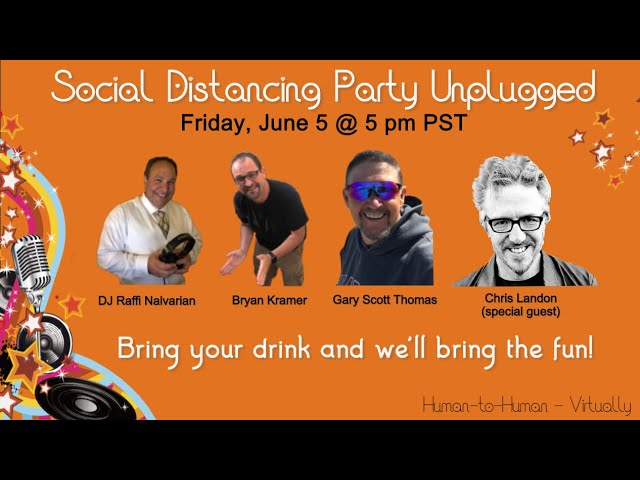
#H2HChat Shareology Edition: Creating Magical Moments of Customer Experience with Shep Hyken

In this live #H2HChat episode, host Bryan Kramer and co‑host Susie McCarthy interview customer‑service thought leader Shep Hyken. Shep shares how his fascination with "magic" as a child evolved into a career focused on creating "moments of magic" for customers. He outlines the evolution of customer service from personal, human‑to‑human interactions to self‑service and social‑media‑driven experiences, emphasizing that great service is now part of the broader customer experience. Key concepts include defining a service mantra, establishing service standards, scaling amazement across organizations, using the "moments of magic" index‑card exercise to surface and reinforce good service, handling complaints (including trolls) via rapid social‑media response, empowering employees (e.g., Ritz‑Carlton, Ace Hardware) to act without constant permission, and balancing personalization with privacy. The conversation also covers measuring service performance, the role of employee advocacy, and practical five‑step guidelines for frontline staff when a company messes up. Throughout, Shep’s tone is enthusiastic, anecdotal, and instructional, offering concrete tactics for companies of any size to embed a culture of consistent amazement.
Chapters
Hey everybody, how are you doing today? This is Bryan Kramer coming to you live on H2H Chat. That means it's another Monday at noon Pacific Standard Time. I am so excited to be here today. We have an awesome guest with us. Before I introduce him, I wanted to give a quick shout out over to my co-host Susie McCarthy live from New York. How are you doing?
Doing well. We don't have a hurricane hitting us, and so I'm doing even better. The predictions last week That potentially we would be dealing with flooding, and I was very worried because I'm so excited to have Shep on. I was going, no, not H2H Chat, don't mess with H2H Chat. Apparently the weather gods heard my prayers, and I'm super stoked for today.
It must be that nice haircut that you just got this week.
There you go, yes. What do you guys think? I
like it. I like it a lot. We are so excited to have with us Shep Hyken. Shep, how are you doing today?
Man, I'm doing great, and Suzy, it could have been instead of H2H, it could have been H2Ochat.
You're right, you're absolutely right. That does seem like a missed opportunity.
So Shep, I wanted to just give you a quick intro here to everybody watching. I think everyone knows Shep, but just in case we've got some newcomers here on H2H, Shep is a customer service expert. Professional speaker and best-selling author who works with companies and organizations who want to build loyal relationships with their customers and employees. He's written hundreds if not thousands of articles and publications. He's the author of Moments of Magic, The Loyal Customer in the Wall Street Journal, and USA Today bestsellers The Cult of the Customer and The Amazement Revolution, which was also recognized as a New York Times bestseller, and his latest book Amaze Every Customer Every Time. He's also the creator of Customer Focus Program, which helps clients develop a customer service culture and loyalty mindset. He has worked with hundreds of clients since 1983. He founded Shepherd Presentations and worked with some clients like American Airlines, AAA— I almost said AA— Anheuser-Busch, AT&T, Aetna.
What about AA, American Airlines?
That would be American Airlines, yeah. So I didn't slip up. Abbott Laboratories, American Express, and that's just starting with the A's. So Shep, welcome. I could go on, you've got tons and tons of experience.
I know, that's not the introduction, that's the bio. There's a difference.
Right, the bio.
Yeah, yeah, don't read the bio, read the intro. Intro is 2 sentences.
Well, we're expecting to hear examples from all these, you know, so now you're on the hot seat, right? We got the whole thing, we want to hear.
I know, I got to live up to this expectation. I can do it.
So share with us a little bit about what got you started, and I'm talking about in your, whether it was even in your career or even before that, did you always have a fascination with customer service, and where did that stem from?
So I'll go back and say everything I learned about customer service I learned in like 7th grade, 6th grade, and no joke about that. I was actually about 12 years old and I started a business, not even knowing I was starting the business, a birthday party magic show business. I was fascinated with magic tricks, so I put together a little show and I got hired to do a birthday party. And I came home that night and my parents, It was an after-school thing, so it's now dinner time. My parents and my brother and sister are sitting around, and my mom says, what are you going to do after dinner? And I thought the right answer was, I'm going to go do my homework. She goes, no.
Yeah.
You're going to write a thank you note. I go, oh, okay. And my dad says, yeah, and next week you should call the family up and talk to the parents and thank them again and find out if you did a good job. Make sure they were happy. And I thought, okay. Now little did I know that That's really part of what customer service and getting the analytics on whether or not you did a good job or not, I think that's good feedback. I wasn't as sophisticated as a net promoter score, like on a scale of 1 to 10, what's the likelihood that you would recommend me.
But
seriously, my parents taught me that. Now the other thing my dad said is, hey, if they said they were happy, by any chance does that little boy that you did the birthday party for, does he have a brother or a sister? Yeah, he has a sister. Find out when that show is. Were there any parents standing in the back? Because, you know, all my birthday parties, not only are the kids there, but the parents are hanging out in the back, you know, watching things. I said, yeah, get those parents' names. Call them up, introduce yourself, tell them what you do. So that was a little salesy, but my parents taught me show appreciation. The other thing my dad did is he said, you know, when you go to do these magic shows, they'll book you months in advance. By the way, within a year year and a half or so, I was doing 8 magic shows a week, sometimes 10 magic shows. Wow. Yeah, I was making— don't tell anybody— I was making more than my teachers were making at school doing magic shows. Oh my gosh. And I was only like 13 or 14. So, but my dad used to say, you know, if your show is supposed to be at 1 o'clock, I know it only takes you 5 minutes to set up, but don't show up at 5 minutes to 1 because the parents are going to be looking at their watches. Like 10 or 15 minutes before that going, I wonder if the guy's going to show up. So he said, make sure you're always there at least 20 minutes early. And while you're there, maybe stay just a few minutes longer, give them a little more value. So I had no idea this was all customer service. And then when I got a real job a little bit later on, like a summer job, my parents always had me do summer jobs in spite of how well I was doing with my regular business. I was in a retail world and I knew what it was like to take care of a customer and be nice to a customer and show appreciation. And they didn't call it customer service back then, they just called it doing the right thing. And that's where it all started. So I graduated college, I thought I was going to work for this company. I was director of operations and marketing for a convenience store company, retail gasoline and convenience store, and they sold the company. They brought me back in just a few months after I got out of college and said, you know, I know you plan on working here the rest of your life, but it's not going to happen. And so that's the story, and I said, what am I going to do? I think I'll just do what I'm doing right now.
Oh wow, so tell me about how you got started then from there, where did that take you into eventually bridging over to thought leadership? You obviously worked in the trenches, where did trenches convert to—
Sure, convert to expertise if you will. So, and I can't, it definitely was not fake it till you make it. That was not it at all. So I didn't know what I was going to do for a living. I really, at one point, I just didn't have a job anymore. That was it. I was told I could stick around with the company. Basically, they kept me around for a little while but then gave me some severance pay. And my mom said, hey, there's a couple of motivational speakers coming to St. Louis where I live, St. Louis, Missouri. Go see them. And I did. I thought it was a great idea. Zig Ziglar and Tom Hopkins. A lot of people know Zig, passed away, but great motivational speaker, probably the best in the world ever. And then there was Tom Hopkins who's still around today, great sales training. And at the end I thought, I think I could do that. That looks like something, you know, I had the entertainment background, I had a little business background, maybe I'll write a speech. It was kind of a motivational speech. I bought the Zig Ziglar audio cassettes. And for those that are young, many of you don't know what audio cassettes are, but I bought the audio cassettes on— they were called See You at the Top. And then I bought Tom Hopkins' book called How to Master the Art of Selling Anything. And I just, I listened to those tapes over and over again. I read that book, and within a matter of about a week or so, I was down at the business section of the newsstand where they sold magazines, and I bought every business magazine they had. I tore out every full-page ad, and I started calling these companies saying, do you have meetings? Because if they had an ad big enough to advertise in a major magazine, they probably had a sales force and a meeting, you know, where they were going to— and that's really— I was just smiling and dialing, and people would say, yeah, we have a meeting. Well, what do you need from me to consider me as a speaker? for your meeting. Well, what do you speak on? Oh, I do this fun program called You Are the Magic. And very quickly I realized that what I love to talk about as far as the ideas behind, you know, what would make that magical experience for the customer happen, it was all about customer service. I came up with this idea called creating a moment of magic, and that's where it all— that's really where it all started.
So it's interesting because Jeff Soto just tweeted, what's funny is that that you started in magic and he's still making a different kind of magic today.
Yeah, I mean, it all ties in.
It's really cool.
Thank you, thank you. But thought leadership is an interesting phrase. You know, what happened back— I realized this is what I grew up, this is what I was taught, this is what I— you know, when I worked in the gas stations, even though it was a self-serve station, I would go out and help elderly people pump their gas. If it was a cold day, I'd go out and collect the money on the drive so that people wouldn't have to get out of their car, you know, that kind of thing. That's all customer service, so I was living it, not really knowing exactly scientifically what I was doing. But when I started to read and research and interview back in the early 1980s when I started my business, that's where I started crossing over into the expertise area. And today they call thought leadership, but I think that's more than expertise, that's getting people to think. You know, we've got great social media channels like Twitter where we can throw comments out or phrases out, what we're thinking, and if it resonates, we find out because people respond. And I think that whole, you know, what we have today technologically allows us to move into beyond just being an expert, but hopefully being a thinker of whatever topic we're interested in.
So let's dive in a little bit and talk about past customer service, where we were, you know, what you talked about some great, great people, you know, Zig Ziglar, one of the greatest. Right. You know, and it's funny because, you know, this is called H2H Chat for human to human, and the reason that, well, I mean, part of the reason is because of my book, but the other part is because I think that, you know, there is a lot of, we talk about a lot of the same stuff, and where in the past You used to almost sell door-to-door. You would, you know, the used— sorry, the salespeople would go sell vacuum cleaners and air, you know, air parts and all kinds of stuff door-to-door, and that's how it happened. And you kind of trusted them because you looked, you know, that's how things were done. So I'm curious how customer support plays— played into that and what you think of
Well, I think if you look at the back, what customer service used to be and what customer service has become, and I think where it's going, pretty interesting. Customer service really, to me, it's all about people doing business with people. H2H, human to human, P2P, which I think H2H is probably a better way of saying it. It's human to human, and the real— Oh, thank you very much, thank you very much. I think that if you look back, and I remember this very clearly, I read a book back in mid-1980s that I think was really to me the quintessential book on customer service called Moments of Truth by Jan Carlson. I'd read an article by him back in maybe 3 or 4 years prior to that which got me started on the whole moments of truth, moments of magic thing. But the moment of truth was any time a customer came into contact with any aspect of a business and formed an impression. And that interaction, by the way, might be a billboard you see, it could be an ad in the phone book, which today they don't even have phone books that are easily available. But I was focused on what about the human interaction. You know, in the airline business back when Jan Carlzon was running Scandinavian Airlines, people had to pick up a phone and call and make a reservation. They didn't get to do it online. I mean, then one day I got a friend of mine who called me, and this will tell you You know, customer service in the past was all about people doing business with people, and I still think it is, but today it's changed. A friend of mine called me a few years ago and said, I just had the best experience on Delta Airlines. I said, what was that? He said, I bought the ticket online, I checked in online, I did not have to deal with one employee of Delta Airlines until I actually got to the plane. And I said, is that because you don't like the employees at Delta Airlines? He goes, oh no, I love Delta Airlines, I love what they did. They just created this amazing system that allows me to basically self-service my way all the way to the plane. And you know, if you don't have luggage, you might experience that today. So, but one thing he did say is he realized that if there were a problem, he could still pick up the phone and talk to a human, human to human, and I think that's where it gets really, really important.
I didn't warn you that every time you say human, that's going
Okay, human to human. But ultimately that's what's happened is that they've created the system to allow you to self-service. That said, Apple Computer is one of the front runners of something that we call the customer experience. It's been around for a long, long time. Customer service is becoming more of being part of the overarching customer experience. When you receive great service from Apple, but then you get your product after you've bought it, you go home and you open up the box and it's like, wow, even the box is freaking cool. I mean, this is really great. So they've added to the experience, they've added to that personal touch that takes it now to something that's more design level. So when you design an experience now, for a customer, you design with the customer service in mind and the actual aesthetics, the feel, the touch, and everything else that goes along with it. That, by the way, is where we're really headed, is that customer experience is really the ultimate in customer service because it encompasses everything that the customer experiences.
Okay, so let's talk about that. You're leading exactly where where I was intending to go into the future. We're all aware of social media and what's happened and how we can take advantage of— any customer can take advantage of social media, and that's what creates the H2H, not the B2B or B2C. What I'm curious about is more where are things going to change. I mean, you just described a process where a person can get pretty much to the plane. I mean, I've even walked onto the wrong plane, but let's not talk about that. So, you know, people can literally get to a plane without talking to a person, and that's great customer service, I agree. But where else can we go? What more can we expect?
Well, I think people, you know, like, let's talk about social media. We kind of just started. It sounded like that was the direction we're headed. Social media, I think, raises the stakes at every level. The consumer or customer, depending upon the type of business, B2B or B2C, doesn't make any difference, I think is smarter than ever before. I think they know what great service is. They know— The service experience I have to another restaurant, I might compare it to the great service I experienced experience from FedEx when the person was so nice when they delivered my package and they were earlier than 10:30. And that's what's happening today is that people are no longer— they don't say, hey, I'm in a manufacturing— I'm dealing with my manufacturer, but I don't compare him or her to the other manufacturer. I compare them to any experience I have. So people get what customer service is. They get what good service is, and they expect that now. And if we don't deliver, they go social on us. They will say, hey, just had a terrible experience with whomever. Not a cool thing. Now we have to go and we have to do damage control. But what people say is that customers, and actually I don't think they've said it quite like this, but this is the way I interpret it, that customers are holding the companies hostage and that they have this upper hand that if you don't take care of me, I'm going to start telling people bad things about you socially, which means it's going to potentially go viral and millions of people could find out about it. I mean, there is a great video, Carroll, Carroll is his last name. I can't believe I'm drawing a blank on his first name. Doesn't matter. He's a musician and United Airlines broke his guitar when they were— you know about the story, right?
Yeah.
Well, 15, 16 million people have seen the video of the song that he wrote about United Airlines breaking his guitar. And after about a quarter million people saw it, United said, hey, we'll fix the guitar. He goes, no, I'm having too good a time right now. I think at this point it's all good, but the point is—
Dave Carroll.
Yeah, there it is, Dave Carroll. So the point is that the customer could do that. On the other hand, I look at it this way, they aren't holding us hostage, they're holding us to a higher standard. Let's step up and deliver, and when we do that, they're not going to rant about us, they're going to go on these social media waves and they're going to rave about us. They're going to say, I love the great service that I just received at blank. You know, I just had a great experience with Delta Airlines, and by the way, I've had great experiences with many airlines, and you'll never hear me talk bad about an airline. If I do refer to a negative about an airline, we'll just refer to them as Hey, how about AA for Anonymous Airlines? Or American Airlines, whatever you decide. No, I'm just kidding. I've had good experiences with American. By the way, you know, a great experience with American, and I don't want to get off the tangent, but you know, Delta created this great experience for me. Well, what did I do? I actually said, hey guys, I want a picture of my Delta team, and I took a selfie of me and the 3 people that helped out. I posted it on Facebook. I put it on Twitter. I hope these people got a raise as a result of me raving about the service that they provided for me. I was on a plane a number of— gosh, it was over this past winter, so it was a few months ago, a number of months ago, and we were circling around DFW. It was American Airlines. And we're in the air, we're not going to land because of the weather on time. I'm going to miss my connection because every other flight has been delayed except for the one I'm connecting to. And the reason I know that is because there's internet on the airplane. I can open it up. I can look. I can see, okay, I'm not going to make it. All I did is I went on Twitter. I direct messaged American Airlines. I said, hi, can you hear me? I put my frequent flyer number in. I said, I'm on a flight now in the air. I'm not going to make the flight. Can you protect me on the next one? Within 10 minutes, I received a message back from American saying, you are protected on the next flight. Thanks for letting us know, glad we can help you. Great experience using social media. So you ask what's coming today, well now we're interacting, and I believe that's still a little bit of— okay, here comes the applause. It's still a little human-to-human interaction. Yeah! We're interacting in real time, we're just doing it via social media channels, and then, you know, and so social has given us a great opportunity. Sure, it gives the customer an opportunity to rant and rave. It gives us an opportunity to communicate on another level, and you know what else it does? As a provider of whatever it is, you know, what business we're in, we don't have to use social media just to respond. We can use it to engage, and I think that's where it gets really cool. We can create great solutions for customers to, you know, interact with other customers. We can put content out there that customers can use to enhance the experience. that they have with their products and services. And again, I mentioned self-service solutions, like when Delta provided, and all the airlines provide now that service where you can go online and buy your ticket. But we've now in companies, we're creating self-service solutions. I love— this is a great story. There was a ping pong table that I bought for my daughter. It's a German manufacturer name, I can't even pronounce the name. I could if I saw it in front of me. I got home, I opened it up, and the instructions were in German on putting this thing together. There were rods and nuts and bolts and everything to put— little pipes. I didn't know what to do, so I went online and I typed in the name of the manufacturer and the model number, and a YouTube video came up. It was as if I had somebody standing over my shoulder telling me exactly how to put this thing together. That's pretty cool.
Mm-hmm. I'm curious. If we just take a quick step back on— you talk about amazement a lot. That's actually, I think, a key theme, right? What I'm curious about is—
That's how you say amazement.
You have your own sound. So every time we have amazement, then—
Alright, I like that,
I like that. So here it is. How do you create and energize Consistent amazement. You know, even in small business, but then you play out into mid and even enterprise businesses, you've got a lot of touchpoints. You have a lot of different things that could go wrong. You just named throughout your process of going onto an airplane probably 10, if not 20, maybe more different touchpoints.
Right.
Of things that could go wrong. Or things that they could have done better in ways that they could have amazed you. But how can you energize a company to make— to turn that into those little touchpoints, those moments of truth you were talking about?
Right.
How do you do that consistently across the board in a company, not just one person, but 100 people or 1,000 people? How do you do that?
Scale it out. So there's actually 2 questions in that, at least that's what I'm hearing.
There's probably 5, sorry about that.
Or more. Number one, let's talk about what amazement is, and I think the first thing is to make it within the grasp of everybody that works with you, and to understand what amazement is, it's simply this. Amazing companies aren't over-the-top, blow me away. Those are the stories that we love to tell. Okay, but I mean, truth be told, when I typed in the manufacturer's model number and their name and a video came up, that wasn't like, oh, blow me away, best service I ever saw or had. No, it's like, well, that was nice. They did the right thing. They created a solution for me that was easy for me to get to. So my definition of amazement is better than average. That simple. The best companies in the world are Better than average all of the time, or at least so much of the time that when they do have a moment of misery, as I call these negative moments of truth, when they have a moment of misery, they have a system in place and they have people trained to properly take care of it. But generally, day in and day out, they're above average. Once in a while, they go way above average when they have these opportunities. And by the way, even the lousy companies, when people come and complain and they take care of the customer for whatever reason that particular day they do a good job, they're thought of as delivering an amazing level of service. But I think anybody can do that. When you come to me with a problem and I can solve it for you, I seem like a genius. But can I day in and day out give you the best service? And the way to do that is just be a little better than average all the time. So once we understand that that's within the grasp of everybody, now how do companies create this? How do you get them motivated? How do you get them to sustain it? How do you get the employees engaged? And I think there's— I have a real simple process for this, but it starts with having to define it. You've got to define what good service is about. What's your service mantra, if you will? And that's that, and this is why I suggest a one-sentence description of what your customer service is. Example, my favorite example, the Ritz-Carlton has their credo. They call it a credo, I call it a mantra, and the credo is 9 words long. When you come to work at a Ritz, this is what you learn. We're ladies and gentlemen serving ladies and gentlemen. I don't think it gets any easier than that. It's perfect. Okay, yeah, Susie, tweet that one out.
Yeah.
So here's what's— what that is. That's the service mantra. Now once we've defined that, we have to communicate that and let everybody know this is what we're all about. It's that simple. And you know, I work a lot with Ace Hardware, one of my favorite companies, who happen to be the role model of my last book. I use them as a case study. throughout the entire book. Their 3-word mantra, the helpful place. Helpful is their big word. They want to be the most helpful retail stores on the planet, okay, and they're a great example of that. So, you know, what is it that we're in business for? I just worked with a great restaurant chain, Uno, you know, Pizzeria Uno, Uno Restaurante, whatever you want to call them. Uno, they want to create, gosh, the irresistible experience. Now, Once you use these words, you need to define what it means to get there. So you have to have what I call service standards, and that's what drives these, you know, whatever it is your mantra would be. You know, in our business, we want to be amazing. So we want to be amazing to our customers, our clients. We want to teach our clients to be amazing to their clients, and we want to be amazing internally as well. So, you know, everything that I talk about drives that, but we all have to have these standards. So the Ritz-Carlton has their 10 Commandments of customer our guest service, which drives the mantra of we're ladies and gentlemen serving ladies and gentlemen. So once we create this and we communicate it, now we have to train to it, and everybody's got to be trained. And it's ongoing, nonstop reinforcement. Leadership then has to demonstrate what it means to deliver great service. They have to keep everybody in alignment. And the final piece of it is we've got to celebrate when it happens, and we've got to delight in it. We've got to be You know, let everybody know they're doing a great job. So really that's 6 steps: to define it, to communicate it, to train it, to use, you know, demonstrate it, you know, practice what you preach, keep it in alignment, and the 6th step is to delight and celebrate it. Simple as that sounds, it's not easy. For a company that's 3 people, it's very easy. We can change the culture starting tomorrow, okay. But if you have 500 people, it could take 6 months or a year. If you have 5,000 or 25,000 people, it could take 5 years. I sat in a room with a bunch of C-suite executives and somebody said, how long does that take? You keep saying it's simple. I said, it is simple, but it's not easy. How big is your company? 25,000 employees, $8 billion in sales. I said, 5 years, when do we want to start? You know what I mean?
And you used the word amazement like 5+ times, so I'm going to give you at least one here.
Oh, thank you very much. Thank you.
So here's the part of the show where we turn your interview over to the crowd and the tweet community of HTH Chat. All the wonderful people on Twitter right now are posing lots of questions, but we still want more questions, so keep them coming. And I am going to finish out with one more question with you, and then we're going to turn it over to Suzy where she's going to be posing questions back from the community on top of her own, I'm sure. But just one quick thing that I wanted to kind of wrap this segment up with is give me an example of a specific way that people can— that companies can actually turn something around in a customer service situation much faster than 5 years.
Okay, sure.
What is a way that that they just miss all the time and they could simply do this one thing and it would help at least get you going?
Okay, this is— and by the way, unrehearsed, you didn't tell me you're going to ask me this question. I think the audience needs to know this, you're putting me on the spot. But what I'm about to share with you is what I think is the number one exercise that we teach our clients in our training sessions. Sometimes when I may even do it in one of my speeches. For a large audience, and it is what I call the moments of magic card. So we want everybody to be on board. So a couple of thoughts. Number one, customer service is not a department, it's a philosophy. Everybody has to be on board, and it needs to be embraced by everybody from the C-suite to the most recently hired and everybody in between. Sure, a call center or support center is going to be trained differently than somebody in the warehouse, but You know, we talked about touchpoints before and this chain of events, you know, we were talking about the airline. Imagine this, we check a bag at the outside, you know, or when we walk into the airport, we go, we check in, we check a bag and you see it go down the conveyor belt. And 5 hours later we show up at our destination across the country and there it is on the carousel. Well, those are 2 major touchpoints. Touchpoints are things that I as a customer experience. But there's impact points, things happening behind the scenes. How many people touched my luggage from the time it went down that conveyor belt to the time it finally arrived on the carousel. So ultimately, even though people don't have direct interaction with me as a customer, they're giving me part of that customer experience. So we recognize everybody is involved in customer service. They either have an outside customer who pays for goods and services or an internal customer. So I know I'm getting long-winded and I'm getting to the big piece right here, but this is good. Are you ready? So here's what happens. Every employee has to write down at least once a week when they created a great service experience, either for the outside customer if they deal directly with him or her, or somebody they work with internally who they support. They write it down once on an index card, literally takes a minute, maybe 2 minutes. They hand it into their supervisor, their supervisor says, Great job, pats them on the back, gives them a little feedback. Maybe it's, hey, this was great, or maybe, hey, here's how I would have handled it, you know, next time consider this, whatever, but it's positive reinforcement, positive feedback. You're getting everybody to start to become aware of when they're creating a service experience. Now if you tell everybody it's due at noon on Friday, many people will at 11:55 on Friday start working on it and go, what did I do all week to warrant one of these? Little write-ups. Well, eventually within a week or 2 or 3, they'll start to realize when they're doing it, they'll write it down because they don't like the pain of having to go back and reflect. But what's happened is they become service aware, and a good manager, as I mentioned, gives feedback. And secondly, they will take and compile the best of the best, use them in training, and start to create a best practice manual that's very specific to that company because it's the employees, sharing their experiences. So that's my big, big tip.
I love it, I love it. Sharing your experience, I am a big fan of sharing. So I'm going to pass the baton over to Suzy. Trust me, you had it easy with me. No, I'm kidding, but thank you so much. I'm going to still jump back in here over the next little bit, but I'm going to leave you now to the community and to Suzy, and I will touch base here in the next little bit.
Bryan, you're awesome. Thanks for having me on the show, buddy.
Hey, thanks for being here.
Oh, this is great. Yeah, I love what I'm hearing, Shep, and you are lighting up our Twitter feed. So please keep those questions coming in. I, as you know, I will work as hard as I can to get through all of them, so Bryan is going to be my second pair of eyes as I jump on camera. So, all right, let's get started, Shep. We have an interesting variety of questions, so obviously there's— with our chat with our crew, we have a good amount of people interested in talking about customer service and social media, some people looking at the bigger concepts. So I'm going to start. Start with Dave Hammond, shout out to Dave coming at us from the UK. He mentions Annette Franz. Yes, I know Annette very
well.
She says, if you did the right thing in the first place, you wouldn't need customer service. He's asking true or false.
False, and I'll tell you why. I think that, and by the way, Annette's correct in her statement, but let's talk about what she's actually defining.
That's what I figured, yes.
She's defining customer service as recovery, okay, and yeah, if you did it right in the first place, you wouldn't— in other words, if you gave good customer service to begin with, you wouldn't have to follow up with more customer service to fix the problem. Right. So I believe that that's— so it's semantics. So yes, he's right and that's right and that's my friend, by the way, so she's always right. Remember, the customer is always right, isn't that right?
There you go. So we can add into that, Annette is always right.
Annette is always right, but the customer is not always right, just remember that.
Having worked in retail, I'm very happy to hear you say that.
So here, here's a good one. The customer is not always right, but they're always the customer, so let them be Treat everybody wrong with dignity and respect. Alright, tweet that.
Alright, that I definitely agree with, because ultimately it does come down, right, that we are all humans, the customer as well as the employees. I don't get applause, I do get applause. Alright, so that's awesome. one of our community members from the very beginning. Thanks, JS. Always got good questions. He says, do you think it makes sense for companies to spend large amounts of time and money to deal with trolls or complainers? Maybe we can add to this and say what proportion of time or how can they utilize these types of things to make it positive. I'd imagine— Sure.
A troll. That's a great way to describe those people. Trolls.
Yes.
So first of all, a couple of things come to mind. Number one is I hate to see rules and policies made that are there to prevent a tiny, tiny percentage, many times less than 1% of your customers, and punish 99% of the other good ones because of rules that are made. So keep that in mind. A great example of this, and I don't have the numbers in front of me, and I'm not going to tell you the name of the company, but their initials are Guitar Center. Oh, there I go. I love the Guitar Center. I go there, I mean, I go there all the time.
Judging from your guitar in the background, we can tell.
Right, right. So here's a really cool thing that I wrote about recently, and again, I can't remember the numbers exactly, but they used to have, when you walked into the Guitar Center, there was a counter. And if you were coming in with a guitar or merchandise, they would check you in. Obviously, because if you're coming in with something, they want you to go out with the same thing you came in with. Right, right. Okay, it's a security desk, because on the way out you have to check, you know, you're checked as well. They eliminated the security desk. Interestingly, they found out that the cost to run that security desk was far higher than the amount of merchandise that was being stolen or pilfered out of the store. Okay. So in effect, they recognized— and I know there were other cost-cutting measures that were involved in the decision behind this, but in effect, they realized that it was— it's like, why do we have this? It's penalizing good people, and we'll figure out a different way to catch the bad people, but let's not penalize the good people. So I just throw that out as a good example. The other thing we want to look at is we do need to look at what the problems and complaints are. So get everybody together in a room, not everybody, but different departments, a bunch of people, and say, hey, what are the biggest complaints that we hear? Write them down. How often do we hear them? Right. So start taking the most, for lack of a better term, the most popular complaints, okay, the most frequent complaints, and put them at the top and say, let's start prioritizing. What do we want to mitigate or get rid of? And if we start looking at And maybe you have 10 complaints. You can't do all 10 of them, but maybe 1, 2, maybe 3. So what can we do? We take these top ones, what can we do to get rid of them? And start to put a system in place that starts to eliminate or reduce the number of those complaints. Come back a quarter, we suggest doing this quarterly, come back a quarter later and say, how are the numbers looking now? By the way, you need analytics to track this because you can't manage what you Yes,
yes.
So make sure you're measuring. Hey, we receive this every week. How many times a week? 64 times a week. Great. Come back a quarter later. How are we doing? Well, we're still getting them, but how many we get? Well, we're averaging about 20 right now. Fantastic. We just cut out 2/3 of them. What can we do to get that down even further? And if you start looking at those systematically, start knocking them down one after another, you'll either eliminate them or start to dramatically reduce.
I love that. And hearing you say that, it reminds me of Jay Baer's hug your haters concept, right? Hug your haters. So he says that these trolls and these complaints are actually a gift. It's showing you, it's giving you that very, very valuable data.
Right.
Go back, find all that. We had him on a few months ago. Following up on that, though, one thing I want to say What I was going to say is, what would you do though when you have, say, a social media troll, so someone who is very publicly talking badly about the company?
So let's talk about what caused the troll to say this and do this. And that is, are they just a bad person? And if they're a bad person, there's ways of dealing with bad people. And I think most customers will recognize that this is a person that's never happened Happy with anybody. But let's say somebody gets on and says, hey, I got a real rant. You guys aren't taking care of me. I'm going public with it. Okay?
Right.
What do we do at that time? So as a company, number one, I hope we don't ever get to that situation. Number two, if we're not making that customer happy and they decide to go, let's just say since we're doing a tweet chat, they go on Twitter and they say, I just had the worst service from blank company. Then a second tweet, here's what they did. A third tweet, here's the rest of the story. So they're coming in with a bunch of tweets, and guess what, their friends are starting to say, yeah, I can't stand when companies do that, I'll make sure I don't do business with them either. Yep.
You know,
all of a sudden it's getting out of control. What should a company do? Right away, right off the top, the company needs to respond. So I'm going to make the assumption the company has in place a system that is monitoring these channels so that they can respond. And the first thing they need to say is, wow, I'm really sorry, this doesn't sound like the way we usually do business. Let me direct message you so that we can go and actually talk about this. And you usually, you never want to move somebody from like a Twitter channel to a Facebook channel, but it's okay to move them from Twitter to the telephone where you can start to have a good conversation. That's ideal. And then resolve that person's issue, resolve that complaint, and tell that customer, I'm going to go back on social media and I'm going to say thank you very much. for letting us take care of you. You're happy now? Yes, I am. Would you mind responding so they can see that we took care of you? Guess what? You know, I'm not going to say it happens that way every time, but you now are going to be looking at a majority of like maybe 8 to 9 out of 10 times a good thing happens out of the bad. Yeah. And that becomes a good PR opportunity. By the way, if you're perfect all the time, that's unreasonable. I don't think that's realistic. I know I've stayed at the I've stayed at the Four Seasons. Every once in a while they fall short, but when they fall short, they fix it right.
Yeah, yeah, no, I love that. And that's, you know, that's— you gotta have a strategy in place. You have to have it from the beginning to the end. That's one thing I'm hearing here is making sure, you know, it's all there. And that— so this actually plays right into our mutual friend Bryan Fanzo, who is able to Jump on the chat, we appreciate it Bryan. He has a question, he says, what role does employee advocacy, trust, and training play in great social customer service?
Okay, well, so we need to make—
Long question.
I know it's a long question, actually first of all we have to define what employee advocacy is, and that is to me it's an employee that loves our brand, okay. And so that's number one, they love our brand. That's real important. You don't want somebody working for you that goes, I hate these people, I hate the company I work for, I'm just coming here, you know, because that's not a good advocate or an evangelist of what you do. So that's number one. Number 2, how does social play into it? Employees will go to the mat for you. They'll fight for you because if they have a personal vested interest in the company they work for, if they're fulfilled in what they do. They'll step up, and to train them to use the social media channels properly, at this point I think it has to fall back on a department of sorts that handles, just like you have a support department, social is part of that support department. God bless you. And there he is. So here, I wish I could offer him a glass of water. See if you can get this.
Yes, through the screen. That's the next step in technology.
Right, right. But so we properly train the people to respond and deal with social media issues, and I think really that's what it's about. But I also want you to think about this, is that even if it's not on social media, now we're going to get— I'm going to get applause. We're going to get to the H2H side of things.
Bryan, that's
you. There you go. leaves work and is out that evening or out with friends and they're talking about what they do, you want advocates, you want evangelists, you want people to talk about the great experience they have, because I think that's a powerful place. Employees are your best marketing. Morton's, the steakhouse, now they've changed a lot since Landry's bought them, but their CEO a number of years ago was a guy named Tom Baldwin. And what he told me was, he says, at Morton's we don't advertise on the radio, on TV, and that type of thing. What we do is we do such an amazing job, our employees are our best marketing. They do such an amazing job and they evangelize on our behalf that they get the customers to go out and evangelize as well.
I love that. I love that concept. Once again, it's kind of taking this idea— I hate the term silos, right? Right, I'd like to have a wah-wah sound effect because it's just getting so overused at this point. There you go, thank you Bryan. Thanks. But it's, you know, I think too it kind of plays into this idea where you need to have this idea marketing needs to be looking at employee engagement, which often can be, you know, more HR-facing, more internal stuff. And I absolutely, I tweeted that out, making sure, you know, it's so important to get employees invested. In there. So Carrie Maslin has a good question we can use as a follow-up. She says, are employee service loyalty and customer service loyalty like the chicken and the egg? Is it kind of— is there a clear path there, or do we kind of, you know, end up— where do you begin on that path?
So I think you begin with the end in mind, but really to make it work, you have to start inside. Okay, so the end in mind is here I have a product. It happens to be an ink pen. Well, I need to make a pen that customers are going to want to use. Okay, so whatever my product or service is, it has to be something that customers want. Number 2, if I want customers to buy it from me, I need to create that experience that would make them want to buy it from me and not somebody else.
Yeah.
That's where service begins. So let's talk about the Herb Keller conundrum, as he calls it, a question that was posed to him. What's more important, to take care of your passengers, the customer, to take care of the stakeholders, which are the people on the board of directors, or to take care of the employees? And he said at the beginning when he first answered this, it was just really hearsay. He said off the top of his head, he said, it's definitely the employees, because if you make the employees happy, then they'll turn around and they'll make the passengers happy. And when the passengers are happy, they'll fly again on the airline. And when they fly again on the airline, that's going to make the shareholders and the stakeholders very happy. So it's not really a conundrum at all, and it's not a chicken before the egg. It's put the employees there first, take care of them, and give them what they need— the insight, the training, as well as the motivation through giving them a good fulfilling experience at work to want to go out there and take care of the customer.
I love that. I love that. So it sounds like when you have the employees out there, it sounds like a company needs to be thinking about investing in training. You mentioned training, but say let's talk specifically about social media. How do they go about empowering their employees so that they can really do that?
Okay, so obviously not every employee is allowed to be a spokesperson for the company on social media. Let's talk about the ones that you decide are. It's no different than empowering employees to do anything. So I keep going back to the Ritz-Carlton because, boy, what a role model. They empower their housekeepers to spend— do you know about this?
No.
Up to $2,000 on a guest to take care of a guest if there's a problem. This is the housekeeping staff, this isn't a manager, this isn't a front desk person, this is someone in housekeeping. They've given them this training in order to make them make good decisions, to help them make good decisions. And I'll give you an example. If I'm staying at the hotel and they accidentally leave dirty towels in the bathroom that particular day, I might say to the housekeeper, hey, any chance you could change my towels out? Whoever cleaned the room this morning— and this may be in the evening— didn't change the towels and they're still actually on the floor. Or horrified, this housekeeper is saying, let me take care of this right away. And of course they run in, they take care of it, they switch out the towels and they apologize profusely. And a few minutes later I might get a knock on the door and there's that housekeeper with a little note that says, sorry for this mistake that we made and here's a little box of candy. Maybe it's got 2 little pieces of chocolate in it. Probably cost $1.50, not $2,000.
Right, right.
Small little gesture to make me feel better about a bitter situation. It sweetens it up a little.
Yeah.
So what's cool is that the housekeeper knew that this isn't that big of a deal. They fixed it on the spot. They apologized. Here's a little, little, little something. Tiny, okay? And they didn't have to go ask permission, by the way, to get this done. They were empowered to do it. I think same with social media. We are going to empower people through training and watching them make good decisions and then patting them on the back when they make those good decisions so that they know they can make more good decisions like this when they are responding. That's how you teach somebody to respond via social media or deliver a level of service that maybe they weren't so comfortable delivering before or hadn't delivered in the past.
I love that. I love that story. And one thing, you know, it resonates very much with me. I was working in clothing, in retail, and I was able— I worked for a short time at a high-end clothing store, and I was empowered to be able to offer a small discount without having to go to a manager, anything like that, anytime the customer had any sort of issue. And I have to say, it made me as an employee feel great. Yeah. I felt— I've done other retail things as well where I'm just like, I can't make your experience better, and it really makes me disgruntled and upset. But if I could just give you this stupid meaningless little thing, it made me go, yes, let's go. So I love that. I love that. It's this back and forth. Awesome, love that. And yeah, I mean, what better example is there really than the Ritz?
Here's a great line, less than 140 characters. One to say yes, 2 to say no. One to say yes, 2 to say no. That is an empowered philosophy. It's not mine, by the way. I don't know who said it. No. But I included it in my last book because I thought it was worth it. Because if we can say to somebody who works for us, you don't have to come to me to get permission to say yes, but if you have to say no to a customer, let's talk about it to make sure there aren't any other options because you hadn't thought about it. I like that. Whether it's, boy, where was I? I don't know if the— I was at a restaurant, and I asked for my food a certain way. I don't know if the chef will do that. Let me go ask. Came back, oh, of course he'll do it for you. Well, of course. Okay. Chef will do anything. If you're a vegetarian, they leave the meat out. If you're gluten, they got gluten-free. I don't like mushrooms. Leave the mushrooms out.
Yeah, yeah, yeah, yeah. I like that. I like that a lot. I'm going to write that down someplace. So a question I personally want to ask, and I've talked to my buddy Brian Fanzo about this. We've gone back and forth at length, as has BK and I. What's the balance in this age of big data, right? We can learn so much about the individual at this point. What is the balance between between creepy and customized as far as a personal experience is concerned.
Oh yeah, I get asked that question all the time.
I'm sure, yes, I know it's not original, but—
Well, no, it's a good question, it's a good question, because I think you have to use— first of all, big data doesn't allow you to be creepy. Big data only gives you trends. It's little data, or microdata, that allows you to be— I don't like to use the word creepy, but allows you to customize the experience. Okay, and that allows you to, you know, when you go— and I'll give you an example. Technology allows us to track many things. On a micro level, if I log on to Amazon.com, it's going to say, welcome back, Shep. Do I find that creepy that it remembered my name? Hey, the last time you were here, you looked at this, and it shows the items below that I was looking at. Can we make some recommendations for you based on The fact that you've been looking at this and people who look and buy these things like these things. Does any of that seem creepy to you? I don't think so. Does it, Susan?
No, no. Not from Amazon.
Not from Amazon. Okay. So if you walk into a— well, walk into a restaurant and your name, oh, hi. Oh, welcome back. I see you were here. I saw— I can tell from your last reservation that you actually sat at this table. Did you like that table? Because it's still open again. Does that seem creepy?
No.
Okay, I think it's, you know, that's part of what good service is about, is creating that customized experience. You know, I think creepy is tied to the personality, not so much the information you have. Now stalking is another level. That's creepy.
I like that.
If we use the information that we have on a customer To stalk them, you know, that's a little creepy.
I like that. The example I remember, and this was where— this was kind of the point of debate, I think. I had a really good conversation with someone about this, and I wish I could remember who it was. But they walked in and there was a photo of— it was a hotel— and there was a photo of like this guy's wife right on the bedstand with like a little note. And they were like, on the one hand, you've done your research, but on the other hand, it's freely available information and it's nice. And I think it might have been their anniversary. I forget. There might have been Valentine's Day or something like that. That might have been my story. Oh, did you have—
That happened to me. I went up to New York. I stayed at the Muse Hotel, which is a Kimpton hotel.
I may just have stolen your story, Shep. Please tell.
That's all right. I came in on a Wednesday. And they said, and my meeting was finished on Friday. They knew that because I was there for a specific little mini, you know, small conference of about 20 people. And they said, but I see you're staying for the weekend. I go, yeah, my wife's joining me on Friday. Oh, cool, and just having a good weekend? I said, well, as a matter of fact, it's our anniversary. Now, I'm just talking to the person at the front desk. They're mentally taking notes on how they can enhance my experience. On Friday, when I walked into my room that afternoon, I was with my wife. There was a bottle of champagne, a card that said congratulations, and a picture of my wife and I in a frame that they had pulled. And I went, wow.
That might have been— yeah.
I'm glad they got the right wife.
Yeah.
One wife.
Yeah. So where is— is that too creepy? Is that an—
is that a risk? I'll tell you what else.
The risk that they took. And that worked.
You know what else they did that was really cool is in my speech I tell the story about a taxicab driver, which is one of my signature stories, if you will. They actually must have done enough research to go online, look at my website, watch the video of that story, because they had a chocolate taxicab. And this— is that cool?
That is cool.
Yep.
That is cool. So it is doing that What I'm hearing here is it's thinking, it's doing that research with a human thought.
Right.
Right, with the thought of the individual. I did not mean to do that. But with that thought as opposed to kind of the mass, you know, customization, I like that. I do like the concept, don't stalk your customers.
Right, but you can go too far. And by the way, I gotta tell you, now my expectations are so high whenever I go to any of these hotels. When they do this one time, we go, boy, I can't wait to see what they're going to do the next time. And I think we also—
That's dangerous, yeah.
We have to keep that in mind. So we have to keep everything in balance. And I mean, you know, the manager might have said, hey, I just wanted you guys to have a special— you know, we don't pick up on this, because this is what you could say. You were talking to our front desk person. They picked up on it. We don't often have the opportunity to pick up on information like that, but boy, when we do, we love to take advantage of it and really show our guests how much we appreciate them. And all of a sudden, they've now brought things back to normal for me.
Love it.
Next time, you know, I know if I don't talk, I'm not getting nothing. So as soon as I walk into the hotel, hey, how you doing? Hey, did you know it's my anniversary this weekend?
Yeah, yeah, right, right. It's this, it's that. Oh man, I love that. And I love, I love your turn. Say, this is how you're gonna say that. See, this is why you're the expert here. All right, I have one last question I'm gonna throw at you. This is from our good friend Antonio Santos.
Hello, Antonio.
He's asking from the employee perspective. He says, what would you advise to a customer-facing employee, and in his terms, when a company is messed up? So you're in that situation, you want to provide that experience, you're dealing with all these things, what do you do?
So are you— oh, and there's the click. So is the customer coming at me upset because Somebody at the company made a mistake is what it sounds like. The company messed up. So here's the first thing. Number 1, don't take it personally. It's not personally your fault, but recognize it's your opportunity to save the day. What you don't want to do is become defensive and say, hey, I just work here, and you don't want to get aggressive and make that customer feel like, you know, gosh, I'm really sorry I called. So here's Shep's 5-step process. Are you ready? Real simple.
Do it.
Simple doesn't mean easy. Number 1, acknowledge the problem. Number 2, apologize. And I'll go through these again and explain it in just a tiny bit more detail. 3, fix it or discuss what you're going to do to fix it. Number 4, do it with the right attitude. Number 5, do it fast with urgency. Acknowledge it. Boy, I can understand why you're upset about that. 2, apologize. And first thing I want to do is apologize. Well, actually the first thing you did was acknowledge it, but now You apologize. So let's talk about what we can do to fix this situation. Now you're in the process of fixing it. Number 4 is the right attitude. You can tell I've got it, but here's the important part. This is an attitude of accountability. Let's see what we can do. I've accepted ownership of your problem that you've brought to me, and I may have to give you to someone else to ultimately have it taken care of, but right now you're feeling good about doing business with me. It's accountability. Number 5, we're doing it right now, man. That's as fast as we're going to get it done. And if it's the kind of thing that takes a little while, Let's say I received a box and something was missing out of the box. I might say, boy, I can understand why you'd be upset. Not all the parts are there. I want to apologize for this taking place. So here's what we're going to do. Tell me exactly what the order is. I'm going to look it up right now. I'm going to see what you're missing. And then— so I'm taking responsibility. Then I'm going to go to the parts department and I'm going to have them overnight you a part so you'll have it there by tomorrow. Mm-hmm. All of a sudden that customer's going, Man, am I glad I called. I got the right person on the phone.
Right.
There you go.
Love that. Love it. BK, over to you. Shep, it's been a pleasure.
Hey, super thanks. I'll see you real soon. I can't wait.
Thank you, Shep, for all this great information. There's so many more questions and comments. Hope you'll take a second later on to look at Twitter and maybe answer a few if you have a moment.
Sure.
To everybody out there, I really appreciate— Suzie really appreciates, Shep really appreciates all of your Attendance and especially your energy today was awesome, just off the charts awesome. So it was amazing.
Thank
you. And we really appreciate it. So thank you from one human to another. And we also, you know, we wouldn't have this if we didn't have our sponsors. So thank you to Newstar, MasterCard, Cisco, IBM, Little Bird, HootSuite, Freshdesk, Speakeasy, Influitive, Mutual Mind, and Cox Communications. We love you guys. Thank you so much for supporting HDA Chat. To everyone out there, we'll see you next Monday. We're going to be— our next guest is Sue Zimmerman. We'll be talking about how to build your business on Instagram. So it'll be a lot of fun. Please attend if you're available. If not, we'll have a replay just like today. We will also have a replay of Shep's. We'll have that out in the next 24 hours, so please look out for that. Otherwise, we'll see you next Monday. Thank you again, Shep, and everybody out there, take care and have a great Monday.
Thanks, take care. Remember, be amazing.
Yes.
Amazing.
More from Bryan


AI Didn't Make Leadership Harder. It Made Fake Leadership Impossible | CODA Keynote | H2H 2.0
Why AI Makes Connection More Valuable | BOLD Awards Keynote Trailer | Human-to-Human H2H 2.0