#H2HChat The Gold Medalists Mentality with Dr. Jason Richardson
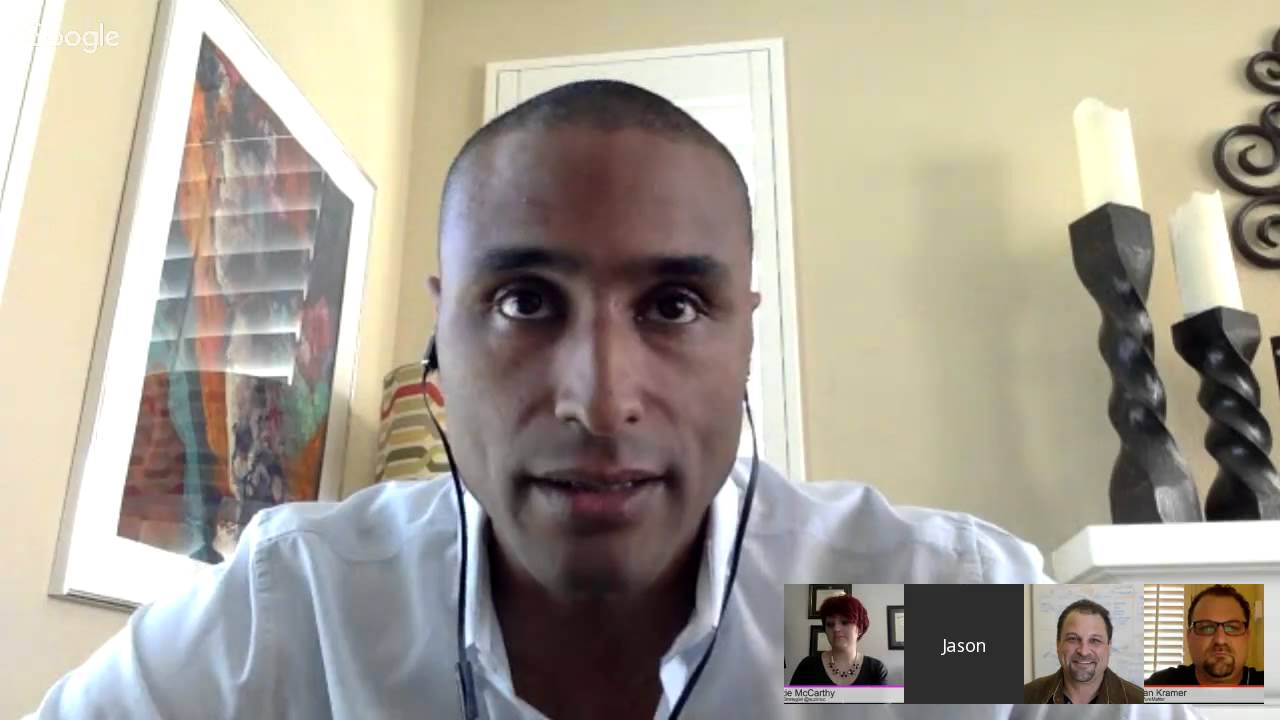
In this live H2H Chat, hosts Bryan Kramer and Susie McCarthy interview Dr. Jason Richardson, a former BMX world champion, Pan‑American gold‑medalist, and now a psychologist and author. Dr. J shares his unconventional path from working construction sites with his father to becoming a professional athlete, detailing his early struggles, a catastrophic leg injury in 2006, and a remarkable comeback that led to a gold medal at the Pan‑Am Games. He explains the core of his "Gold Medal Mindset" – a decision to win, cultivated belief, and unwavering commitment – and how these principles translate into his 90‑day trainings, "Gold Medal Mindset" and "Winning Ways," as well as his book It’s All BS: We’re All Wrong and You’re All Right. The conversation covers practical advice for individuals seeking a winner’s edge, the importance of language and self‑talk, the distinction between critique and criticism, and how to align diverse team members around a shared purpose. Dr. J also critiques the modern "culture of busy," advocates for intentional reset practices, and discusses defining ethical versus win‑at‑all‑costs success. The session ends with a rapid‑fire Q&A from the live audience, reinforcing themes of commitment, alignment, and actionable mental skills for both athletes and business professionals.
Chapters
Hey everybody, how are you doing today? It is Bryan Kramer and Susie McCarthy. We are live for another H2H Chat. Welcome back. I know it looks like I'm in a closet. I'm actually not. I'm in a hotel room in Atlanta, Georgia. I'm gonna get my grits on here. So I'm really excited to be here today. Hi, Bryan. I'd love to introduce you to our guest, but before I do that, just wanted to say a quick hello to Suzie and say, how are you doing today?
I am doing very, very well. Things are good. The sun is shining. My cats are very happy because the birds are starting to come back. So life is good. How about yourself? You're on my time zone now. This is so weird.
It sure is. I can actually see your emails when they come in.
Right? It's— yeah, which, you know, is good and bad, right? I don't get my little buffer zone right
now. So really excited, we are going to be talking with Dr. Jason Richardson. He has become a very good friend of ours, also wrote a book under Substantium, which is a subsidiary or a book publishing company of ours as well. We're happy to have partnered with Dr. J on that. Hopefully he doesn't mind I call him Dr. J.
No, I like it.
Good, good. So it sounds like a basketball player, Dr. J, which is not— you probably have played basketball, but that's not actually where you won your gold medal. And I'm going to get into that here in just a second. But a quick overview for everybody out there. He's known for his wit, his wisdom, and when rubber hits the road, the way of delivering the application of psychology for success. His own material draws from his experiences as a laborer on his dad's construction sites and his years as a professional athlete, which I'm sure we're going to talk about today, and his former education in business and psychology. This unique blend that I just mentioned is how he produces and how he helps other people produce high-energy messages that bring in listeners and provide him with the opportunity to relate to individuals in the audience on a personal level that resonates with everyone. So many people say things like, how would you— how would he know that? Or he read my mind. And Jason is often called to work with the world's best BMX athletes. as well as deliver his own blend of being a gold medalist and how to get a gold medalist mindset. He has developed entities such as Transcending the Creative Group. He's worked with Audi, Lexus College, Young Presidents Organization, Cycling Sports Group, and the list goes on. His newest book, It's All BS: We're All Wrong and You're All Right, With 2 corresponding trainings, the Gold Medal Mindset and Winning Ways. I could keep going, the list keeps going because this dude has accomplished a lot. So why don't I stop there and say, hey, how are you doing? And welcome to HDH Chat.
Can I go? Am I on? Are we good?
You are on. How are you today?
I'm doing well, I'm doing well, and thank you for the intro. You guys definitely Did your homework. But I'm doing well, or, and I'm doing well and happy to be here and ready to get my chat on.
Good.
What we like to hear.
It's what we like to hear. And as you may or may not know, there is a sound that could happen at any time you say, because this is human to human, and of course I'm on a slow hotel Wi-Fi, so I can't pull it up as quickly as I normally do. But when I do, it will sound like this. Or not. My Wi-Fi is definitely very slow. All right.
I'll operate at this, Pat. How's it go? All right.
That sounds good.
This is like the old kung fu movies that I used to watch. There's like that delayed thing. It's fine. We have a lot of relatability.
There we go. There we go. We're back at it again. Welcome back to old kung fu. Welcome. Why don't you give everybody just a quick sense as to your background? I know I read a lot there, but maybe just focus in on where you're coming from being a gold medalist and what it took to get there.
Yeah, and it's funny, you read my dad's construction sites. That is precisely the reason why I kept going so hard and rode so fast and so much, because I used to work construction for my dad, and not with him, for him. So it was literally picking up on the job sites, digging ditches, and we're talking Vegas summer heat. And it's hard to put a shovel to that ground because it's very dry. So you hit rock and sparks fly or caliche. Anyways, another buddy of mine, we used to race each other. We used to every now and then, like every probably 4th or 5th dig, we would just put the shovel down and go, you know, there's got to be a better way. So we found our ways to California and I decided to, after my freshman year in college, to— I talked him into buying me 2 plane tickets to some races. I decided to go race at those events and bombed out at that first one after my freshman year. Then the next week I went somewhere else and I did very well. Then I used that to pay rent in my buddy's little cubbyhole attic space and used the money to go to the next race. That was it. I was actually thinking about some of the successes I've had when racing, and I was thinking, man, a lot of that was born out of— I don't know if necessity, but definitely out of this lack of comfort because it was early on. I like to say I was running scared. Every dollar I got went to— I was an entrepreneur and didn't even know it. Every dollar I got went right back into the business to get me to the next race. And then, you know, as things went on, just got sponsored and started to hit the world stage more, and it became a true profession. So found myself at the World Championships in 1994. I won that, and then— and I didn't know how. And then, as I've said before, in 2007, went to the Pan Am Games, and I won that, and I knew exactly how. So, uh, there's a long span in there. I've had a 15-year career— I had a 15-year professional career. Technically, it's actually still going. I actually still race vet pro, uh, GT bicycles. Yeah, I know. GT Bicycles is, uh, kind enough to send me out there and let me moonlight. But, um, but a 15-year, uh, professional career with, uh, a lot of, lot of learning along the way, both in school and just in life. So you know, in keeping with the human-to-human spirit and the sharing spirit, I was always one of the pros that— I was always one of the pros that really liked to travel, and then, you know, we always had our pits at these races with our team setups, but I was always, you know, just walking about, just kind of saying hi to friends or mingling. Sometimes I'd go in the stands, and it's pretty cool every now and then on Facebook or just if I go to a race now, someone will say, oh man, I remember you talked to my son, or you talked to me when I was a kid, you know, Some people send me pictures of maybe a jersey or a number plate that I signed for them. Then traveled the world doing this thing, all the while marketing myself and learning what it's like to be a professional, especially at a high level. There's this confluence of experiences plus the education that that just led to this, uh, well, led to the book, It's All BS: We're All Wrong and You're All Right, but then really led to Gold Medal Mindset and Winning Ways. 'Cause I was like, okay, there's, there's more to it than, than just, you know, what I'm doing to get ready to go race. There's more, and, and there's also more to it afterwards, right? Because I transitioned from racing into a professional career as a psychologist, and, and the career of an athlete is, is short. Even, even though I went a long time, 15 years is nothing when compared to a lifetime. So... I believe my gift is helping people transition out of something and into something else, or in the best-case scenario, really helping them break out of their own shell to rip it apart and be their best.
Describe the experience, the moment, the buildup, the actual experience of writing. If I remember right, because I have some inside knowledge, because you and I have actually shared some time in San Diego with our wives, so I've got a little bit of the inside scoop. Yeah. Forgive me for mentioning the inside scoop here, but I think it's fascinating that you actually hurt yourself pretty badly, and you worked your butt off and got back on the bike, and it wasn't too long after that you actually— was that the time that you won the gold medal?
Yeah, so it's funny because I have about $60,000 worth of hardware in my right leg. I shouldn't say worth of hardware, a good portion of that was my life flight out of the arena. Yeah, well, there's one— you don't want to break your leg out of network. I'll just put it that way. But yeah, in 2006, February 4th, 2006, I broke my leg. And at that time, I was the— I wasn't the oldest, but one of competing in AA Pro, or as they call it now, Elite Pro, or Elite Men. And it's a pretty catastrophic injury. You know, let alone, you know, for anyone, let alone an athlete. But I mean, I literally could not bend my leg when I got home. It was kind of stuck. Use my fingers, just, it just, that was it. That's all I had. And then as I started to gain some mobility, I just, I wanted to go out and do things. I wanted to exit the sport on my terms. I didn't want to be forced out, and if I decided to leave, that would have been a respectable decision. My family was definitely thinking that was it. Even for the first couple weeks, I was thinking that was it. The rest of the community thought that was it. But that wasn't it. So I thought I would probably, you know, maybe go back to school and get get my contractor's license and bring my dad's business over to Cali. Then I looked into— I mean, I almost bought a tanning salon, for crying out loud. Imagine that, like a black guy owning a tanning salon. But nothing was fitting, right? So yeah, it'd be like Hair Club for Men and not need it. So it just kept back to— It kept going back to me finishing this story, which was this riding thing. And so that's what I did. I just— and also it gave me a lot of purpose to heal, not only the leg but just, you know, in here, in my heart. And so that was it. Everything, every moment was dedicated to healing and getting back on the bike and riding. And then so I— So I was riding, pedaling a bicycle outside in 3 months and then probably training in about 5 or 6 months and then I was racing 7 to 8 months later. And then the year after that, that following summer, so I was back on— my first race back was an invitational race in Bogotá, Colombia. Yeah, then a year after that I was in Rio at the Pan American Games and not expected to win and definitely not even the first guy called to go race. There was a couple guys who couldn't make the race because we had the World Championships coming up in a week or a couple weeks or maybe a week after that. And I got the call, I said, hell yeah! And my trainer said, what do you want to do? I said, I want to win! Haha. So that was it. It's interesting because in the book I use the example of a fist going through a bag. That's literally breaking through. You're pushing, you're pushing, pushing, and it's stretching, and it's stretching, and it's stretching. You can see the other side, but at the same time you're suffocating a bit. I remember that whole week leading up to it because there's very few times— candidly, I didn't win as much as I probably could have from an athletic standpoint, but that was one of the very few races where anything less than third just would not have been good enough. I mean, would not have been good enough on a cellular level. That whole week it was like— I even had homework with me, so that actually helped because I was in my master's program. I was pushing through that bag that whole week and I remember just going through my paces and doing my sprints and, you know, just, you know, my gym workouts leading up to it. And then it was time. And then, you know, I did literally just did not push through that bag until going down, you know, the gate dropped in the main event and I saw daylight. You know, I was out and I think another guy was on the inside and it was a little soft and he dropped off. And then, man, I just remember pounding on those pedals so hard between the first jump and the first turn. And then, you know, went around the track and I had won. And it was at that moment, it was like, okay, that's how we do it. But it was definitely a pretty intense moment to go through it again. I think I was like, what, 34 or so? You know, having to go through it, I'll say, as more of an adult than when I won the World Championships in 1994 when I was 18. So, yeah, so that the bag holds true and it's, you know, you hear Eric Thomas talk about when you want to succeed, when success is like breathing, but that is the truth. Like, you're pushing through that bag and it's such a responsibility, which is what I tell all my clients. Athletes groups or whatever. I mean, there is a responsibility to what you want in life. I mean, if you really want it and you say you want it, well then, okay, then you're already accountable just by, just by saying that you want it. And, and yeah, there's going to be a time where you don't feel like you can breathe, you don't feel like you can move, you don't feel like there's anything left, and except for to push, right? Rather than feel the pressure, apply the pressure. Then you break through, and we find another bag to push through. I'm sorry I give you long answers. That's all right. That's
what this is for.
All right.
That's what this is for. It's interesting because a lot of people talk about failure to success or success to failure to success and all these different things, but you actually lived it. I don't think people realize the severity of that broken bone that you were talking about, because it was not just broken inside your skin. It actually came out of your skin, and there was a lot of severe damage to you. I think it was awesome that you not only healed, but you came back and won. It's such a rocky story, if you will. Yeah. I'm curious how you now see it. I know you talk about this in your book, But the gold medalist mindset, the steps along the way that it takes to get your head, your mental condition there to be able to do something like that, whatever the outcome is or whatever the thing is that you want to achieve.
Right, and I think a lot of times it begins with a decision. And I'm not saying it would be nice if I won. It's not like Oh, it's not like a lottery, you know, it's not the lottery discussion. What would you do if? It's not that. Of course it'd be nice to win the lottery, right? You've got to play to win. However, this, it decides with a real clear decision, and so the brain likes clarity. And so for me— And for that decision then, as soon as my coach said, my trainer said, what do you want? I mean, it hit me quicker than lightning, than electricity. I want to win, like first place. This is it. And it's the decision to go after that. Again, I talk about the responsibility of that. Well, that does take responsibility because that's a— That's a big want. So as far as the mindset is concerned, it's interesting. If we go back from the decision, it's like, well, how did I come to a point to where I could decide that I want to win basically the precursor to the Olympics? Well, belief. I had the belief that I could win, that I was capable of winning, that I am a winner. And it's interesting because in sport, especially BMX, that might have been— one might say that was an easy belief for me to have because I had so much success in sport as a professional, but that's not necessarily the case. That belief was built, and it was built over time because I didn't have success at the beginning. When I first started racing, I was beat by a girl every week and my brother was the fast guy and it just didn't matter to me. There was no specific belief about it. And then I went through a point to where I actually thought that, maybe this isn't meant to be, I just like to do it for fun. And there was nothing there other than that I enjoyed it. But as far as building the gold medal mindset, the winning way belief, That came, that came through a lot of work, and that came through a lot of me again pressing forward and, and finding ways to increase my focus, finding ways to, and working with other people to help me with focus and with, and teach me about myself and teach me how to look at something different. You know, challenging perspective, changing results. That's a, that's a, that's a big big tagline of mine, if you will, because in order to get better or improve, it was my responsibility to look at what I was doing from different angles, or try to, or look at also my strengths from different angles and my sport from different angles. And, you know, I was— if I go back to, you know, when I first turned pro to Today, I'm actually a better rider right now than I was when I won the World Championships. That's crazy, and I'm 41. Wow. I'm not as strong. I'm not as strong physically, or maybe I am, I don't know, but I know that I'm better on a bicycle. The only way that has happened is because of this progression and looking at this thing differently. The same thing. So taking fundamental skills and then looking at them differently and approaching them in a very piece-by-piece pattern. And so in psychology, we talk about mindfulness, we talk about being in the moment. When you start reading athletic books, like, they start talking about flow and the zone. Well, all these things, we have glimpses of them, and I work with people, very successful people, who have glimpses of it, but I think the trick is to harness it and to recognize that it can be harnessed. Then also, if it's not there, this is the thing. If it's not there, what's your non-flow moments like? What's your non-zone performance like? Right, because if that's still a podium finish, Or still a win, well then even better, right? So that's— those are the key things, and I find a lot of, you know, young athletes, older athletes, young professionals, older professionals waiting for like this perfect storm, if you will, whether it's how they have to feel or how something has to be set up and then they can perform. That's not the case. I mean, Jordan won a championship with the flu, you know, months after his dad was murdered. There's not much flow there. There's not much zone there other than, you know, just some basic— I'm dribbling the ball and I'm putting that thing in the hoop as many times as I can, you know. And it doesn't sound exciting, it doesn't sound sexy, but that, that's the thing I like to teach. And that is the rubber hits the road type stuff. Those are the conversations I like to have with Multitudes of people, because I think we people think it always needs to— or not always, but it needs to be this big thing to do this big thing. Even Tony Robbins talks about massive action. Sure, but that's not— that doesn't necessarily mean that, you know, you need to be bigger than life or 6'4 and have huge hands to be a millionaire. No, I mean it— Massive action could mean changing your routine, taking 5 minutes out of your day to change your routine over the course of a year or 6 months or 3 months. That could be massive action. The change in a golf swing, it doesn't mean you go from lefty to righty. It doesn't mean that you choke up or not choke up. It could just mean that you just adjust your— adjust the head Just that much. And, you know, but you can do that consistently over time, and that becomes your, you know, your new normal, so to speak. So it's improving upon improving. And when people, when pundits talk about the rich getting richer, it's true. It's true in money terms, but it's also true in skill development. It's true in most anything— emotional awareness. It's true in relationship development, you put a certain amount of work ethic in, you put a certain amount of energy into it, purpose, intent, then those investments pay off down the line. They always do.
When you work with— you work with a lot of athletes, but you work with— and I'm curious if you can give us kind of an A tip, an in-the-trenches tip on perhaps the first thing that you do when a client comes to you and they say, I want to be a winner, I want to win something, I'm at the point where I've learned the craft but I haven't learned it enough to win something. What does it take to do that? What's the first thing you look at or the first thing you say to them?
Yeah, so I would push back. I'd push back to go, why aren't you a winner now? Why are you waiting? Why haven't you, you know, why do you think you haven't learned enough? I don't know that any of us learn enough or know enough. I'm not scared of the term I don't know. I'm only scared of that term when there's no effort behind it. But if there's— if you're muddling through it and you're struggling through it, I think that's where the win is. And so it's the thinking, it's the psychology behind that conversation. So I really get into the words that we use, and I really get in because that goes right into the That language you use goes into the neurology of our belief system. I really don't mean no offense, but we're on the H2H chat, but if you really think about it, are we chatting? Are we chatting or are we really— we're having a conversation. This is a talk, right? This is some valuable stuff that you guys offer. This is some— This is some meaningful, deep stuff here. Like, this is a talk. And so I like to get into the language. And when they're, you know, coming to me, usually they're in their crisis mode of some sort, especially an individual client. I really like to get into the language that they're using. So, you know, it's funny, I use this analogy of perfection, and it's funny that we only really know that something's perfect after the fact, especially if it's something that we did or an experience we had. We always look back and go, oh, that was, right? So if we can, if we can take that CEO or that group, right, that team that's developing the new whatever it is for the world and say, one day you may look back on these days that you're in front of me complaining about, one day you will look back on these days and miss them. Now I've introduced perspective. I was thinking that about myself, or my wife and I think about that about ourselves, about before we had kids. It's like, wow, what did we do all day? We love our kids, but we also miss those days too. Those days where you might have been broke and in college, or those days where life was more simple, or life was more complicated. I don't know. but we tend to look back with nostalgia and miss these things. And there's plenty of great races that were run, games that were played, that at the time mistakes were made, but they put a win on the board. And when you look back, you know, most Super Bowl experiences for the winning team are perfect. And so it's going into it as a winner, not waiting for the accolade to call yourself a winner. So having the courage to say, okay, I may not get what I want right now, however, I'm still a winner, right? A winner is doing this, a winner is creating the next big tech thing, a winner is becoming the next champion boxer, a winner is becoming the next musical prodigy, and creating that mindset, it's approaching it as a winner versus someone who's waiting to be a winner. It's kind of like happiness, right? We wait to be happy. I'll be happy when I get my new car, I'll be happy when I get a new job, I'll be happy when I get my— when I'm on H2H Chat. Hey, where's the claps? Anyways, but it's really important though. It's like, okay, cool, how about you be happy when that happens and be happy now? So it's the same thing. Why not be a winner now and then?
That's awesome. That is probably the most quotable thing you've said. Not that you're not getting a lot of tweets here. The tweets are flying off the charts. And the stuff you're saying is resonating not only with everybody here but with me. And I've got so many more questions, but unfortunately we're down to That said, I'm going to ask you one more question. Sorry, Suzy, I'm going to take one more, a little bit more time away from the Q&A. But that said, while we're doing this last question, we're getting a lot of questions, but if you have a question, if you have one for Jason here, please throw it out on the hashtag #H2Hchat, and Suzy will take those and re— Re-question them, reposition, re-ask them of him in the second half here. So definitely make sure that you throw your questions out. So my last question is really around business because we've talked a lot about the individual mindset. Mm-hmm. You kind of transitioned there just a little bit, but I'm going to play off of that into how you take this mindset away from what we've been talking about, which is our self-talk The way that we look at winning, the way that we look at where we're at today versus the future, it's really all great stuff. But then now we're— now I want to talk about how we take that into a team mindset. And when I say team, I mean into the corporate mindset. Mm-hmm. Where you're surrounded by different mentalities, different people who have different values, and they have different ideas as to what a winning mindset is. How do you pull all these different mindsets together and win, so to speak, get that gold medal mindset for everybody to cross the finish line, whatever that is, a product launch, something that is a high-ending resolution to why you're doing what you do every day in your job?
Yeah, so it's interesting, a crowd, right? they have, I guess, more of a general purpose than the individual, right? The individual's purpose is always in question. I think that was from an old movie, I can't recall which one. That said, I begin with what you want. What you want as a company, not to confuse that with a goal, and hopefully we'll get to that later, but what do you want? And then If you think about a company or corporation, it's still individuals. And so if you're a team, then my job is to help people recognize what people on that team want and what they're there for. And so it's interesting when I go into a setting like a corporate setting or team setting, I'll say, what's your job? Okay, it's this. What do you do? Okay, it's this. Okay, why do you do it? And that's where it kind of gets a bit squirrely, and I mean a lot squirrely. Even when you go from what your job is to what do you do, a lot of times it's, whoa, that's— is that your job? Because what you do seems to be— so a lot of times it's just getting in alignment and then having people on that team hear that, right? So now, and then we start getting to more purposeful questioning or purposeful conversation, why do you do it? It's very interesting. I was out there by myself and I still created a team. I still had a trainer and I had my mental guy and I had my chiropractor. That was my team. The reason why we were successful as a team when we were successful is because everyone on the team was getting what they wanted. Individually as we work toward a common goal. So they were getting individual needs met as well on their— or not as well, but on their way to getting the team's needs or wants met. And I think that's where things get a little bit hairy, and that's where the big boys and girls are well served to put their big boys and girls pants on and have that conversation because Because it does get into why you're here. And the funny thing is, I've done this even with kids on kids teams because a lot of times, sometimes the kid, they're playing football or baseball or in that science project because that's just, those are the cool kids or they feel belonging there. And so if you can learn to speak, especially as a team leader or within the team, speak to the people on your team and let them know that you're doing your best to help them get what they want or to help meet some of their needs. Not all of them, right? Hopefully you have your family and other friends that help meet some of those other things, but if you can help meet those other needs, then Then it's like, okay, this person's in it with me. What do you need? Now we're really sharing. Now we're really at a place where it's like, hey man, I'm going to help you win, because if I help you win, then I'm going to win by default. It's just going to happen that way. That's just the math of it. That's that nitty-gritty meet your maker conversation that I like to have with groups and teams. It's really interesting. Once you get those wants and goals and whys, why you're there, in alignment or in better alignment, it doesn't need to be perfect because it will be perfect after the fact.
Yeah, I love that conversation on perfection. That's a whole other conversation. Quite frankly, I could sit here and talk to you all day because I've got a whole stack of questions for you that we're going to have to address at some point. There you go. There's so much great stuff here and I can't tell you how much I appreciate you being here to talk about this stuff. I know that I'm taking up everybody's time here to now ask you the questions. I know Susie has her own questions that she too wants to ask you. I'm going to pass the baton over and I'll be on for just a little bit. Unfortunately, I have— A speaking opportunity that I have to be at on stage in less than 20 minutes. Otherwise, I would normally stay on these chats. I apologize for that, but physically I can't. I just can't be in both places. So, so, but you're in great hands, as everybody knows here. Susie's going to take over now, and we'll follow up again because there's so many great, great pieces of information that you have to share and questions that we have. So thank you once again. And with With that said, here is Suzy.
Thanks, Bryan.
Thank you very much, Bryan. And I'm confused. I mean, I think at this point with all the technology we have, you should absolutely be able to be in 2 places at once. I'm a little disappointed at this point.
I know, if Tupac could perform from the dead, Bryan, come on.
I don't think that's an excuse, but you know what, I'll let it slide. I'll let it slide. You should. Alright guys, thanks so much. Please keep those questions coming in. Tag them #H2Hchat and include my handle if you don't mind so it pops up for me. I want to go ahead and get us started. Now the style that we do here for the Q&A session is very much lightning round. So we're going to try and get through as many as we can. So I'm going to be throwing them at you. Let's get started.
I'll do my best to be quick.
I need my little buzzer.
It's so funny though, mental and psych questions and mind questions, they're generally never quick.
I'll do my best. Absolutely. Absolutely. Well, we definitely, we have a lot going on here. So first question that many, many, many have been asking, Lynn Dennis and Paul are all asking, explain the title of your book, We're All Wrong, You're All Right.
Can
you give us an explanation? What does this mean?
Yeah, so it's all BS. BS stands for belief systems, and I knew that BS stands for something else for other people, so it's definitely a play on words. So yeah, it's all belief systems. We're all wrong and you're all right. And that is a bit of a play on words again, but definitely to poke fun at me, the psychology champion guy, right? Like, I'm a dude in the world with a family who, you know, yeah, I have a world championship, I have a master's degree and a doctorate, and I'm ruining my kids' life too. So we're all in this together, but it's definitely, you know, it's a fun I'm entitled to say, hey, look, you have within you what it takes to get what you want and be who you want.
I like that. That's awesome. All right, everyone, I hope that's answered the question. Go ahead and tweet in more questions if you want. I had a question that I wanted to ask for some elaboration on. You mentioned when you go in and speak with businesses or people at businesses, you talk about, you mentioned the importance of alignment, saying what is your job versus what you do. This is something we've heard before in a few different chats and I'd love for you to take a minute or so and elaborate on that. Why is that important?
How do we do that? Yeah, well it is important because what I see is a lot of people have a job marketing director or information officer or whatever, but the stuff that they do isn't necessarily directing marketing or isn't information officing, it's something else. Do you like that, officing? Yeah, yeah. We learn that in doctorate school. I found that interesting, but the reason that conversation needs to happen, especially in groups and in teams, is so that one, hey look, everyone's, or most people are kind of in the same boat here. Everyone's kind of spreading themselves out probably a lot further than they thought they would have been when they got the job based on their job description or their title. Right. One. Two is, it's also so that we can open eyes and go, okay, wait. Stacy, why are you doing this job? Or why are you actually doing this when this is your job? Bob, why are you doing this when that's your job? Bob will say, well, it's because I'm in contact with the buyers and the sellers and they don't all the time have contact with Stacy. And so now it's like Oh, okay. And I don't know anyone's business in particular. I'm not a tech guy per se. I'm not a widget manufacturer. That was the buzzword in business school in the late '90s. But from a human standpoint, they then know their business, hopefully. They then know their business and they can start Having the discussions to help fill their own— fill those own gaps either in communication or in efficiency. Then we get to the more deeper thing, the more human dynamic thing, which is, why do you do it? Some people, it ranges from, I don't know, to, hey, this is a paycheck. I actually appreciate this is a paycheck one because it's Hmm. It's just, it's honest. I get that. And, you know, if it's a corporate culture thing, well then, okay, let's address that. But at the end of the day, you know, maybe not everyone is going to be there, you know, isn't the cheerleader for that section. Maybe they did kind of end up there because of life circumstances. So it's like, okay, How can we use that to recruit this person and motivate this person to where they're feeling that, you know, that what they're doing does matter a little bit more, or is indeed helping their family to a degree that wouldn't otherwise be helped? Right. It's funny, I have a friend who was in the Air Force, and he was telling me about the military and how, you know, There's a guy who who flips burgers in the mess hall, but that guy flipping burgers understands why he's flipping those burgers and those soldiers need to eat. And without that food, those soldiers can't go out there and protect our nation. And he started ringing it off, and he had me like, man, man, I'll be next week. I'll be on. I'll be on fries. You know, like what? I'll be managing the. I had that Coming to America moment, but he had me motivated to like go cook dinner, you know, because the way he explained the purpose of that and how that dude understood his position and what he was doing for his team.
Right, right, so connecting it all together. That sounds— we had someone on, one of our good friends, Sean Murphy, was on in the beginning of November and he's come out with a book called The Optimistic Workplace.
Oh, okay.
A lot of it is moving towards thinking through that, which brings me to a great question from our buddy, and oh man, I'm going to pronounce your name wrong, but Soufiane, I think. Tweet me and let me know the phonetic pronunciation please, but I'm so glad that he's joining us today. He mentions from the world of sport, a lot of coaches definitely take criticism, they focus, use a lot of criticism in training. He says, do you believe in the power of criticism?
I believe in the power of critique. Unfortunately, what's Said is not always heard, and what we see isn't always what's happening. And so this is, this is where it's incumbent upon the coach to really understand the player or the players. Some, some players do respond to how they can, quote unquote, fix their game or fix a flaw, and others, others don't. I do know That, and it's philosophical actually because there is this strengths perspective. I do know that whatever got you there is something that should always be, or I'm not going to say should, something we want to always nurture. And I also recognize that That there are— that everyone has their weaknesses, they shouldn't be ignored. So in the world of sport though, it's easy to say, you didn't do that, or you didn't do that, or you didn't do that, or how come, or you let them in, or, you know, you keep making mistakes, don't drop the ball.
Mm-hmm.
A lot of focusing on what not to do. So I think, I think again, if— and a lot of my training has to do with language, whether it's self-talk or how we talk to other people. Because again, it goes into that neurological linguistic program that says, hey, how about hold on to the ball?
Right, right.
Keep the water in the cup. Right. You know, all these slight shifts, you know, and then, and that's why we have training and that's why we have competing because we train to enhance our strengths and bolster our— bolster or help enhance— I don't want to say enhance our weaknesses, but minimize our weaknesses. And so, but once it's game time, and sports are easy because there's clearly practice time and there's clearly game time. Once it's game time, it's time to focus on, you know, I tell my athletes, run what you brung. Hmm. Let's put ourselves in a place to where what we have is enough. Regardless of what we have. And then when we get home, we can work on some of those things that we think could be better. Now, in the business world, it's game time 24/7, especially in entrepreneurial space or pretty much any space now where you're actually working all the time. And if you're not working, you're taking it with you. Hopefully not too much of it while you're having dinner with your family, but you're taking it with you. And so we want, we want to again have these open, candid conversations about, about what, what strengths got you there in the first place and what things can help promote efficiency and success versus what's not going on. And then the other thing too is working and training the athlete or the employee to say, hey, How can I get better? Right? Because now that— now that— now there's a power shift, right? Now there's— now there's more empowerment. So if I'm asking that question, I'm not being criticized. I'm looking for ways to improve.
Right.
Versus just getting off the field or walking away from my desk being barraged with, you didn't, you didn't, you didn't, you didn't.
Right.
Right? So if you can— if you can incorporate a mechanism inside your team or company To where every player is asking, how can I get better? Then those criticisms don't turn into criticisms. They just turn into ways to improve.
Right. Right. Right. I want to— you mentioned the life of the entrepreneur, right? Just in general, our work life where the tendency is to be on 24/7. This brings up a great question from our buddy Antonio Santos. Antonio, so glad to see you joining us today, always awesome to have you in our conversation. He says, what are your thoughts in relation to the culture of busy? So sometimes we're not actually working, we are just—
Right, we're all so busy. Yeah, it's interesting. The culture of busy, that was a very nice way of putting it, Antonio. I think busy has become, what's the word I'm looking for? It's become, it's almost cachet, right? It's almost like your rite of passage. Now that I am a person of X busyness, I'm important now. Because I'm so busy. Everyone's busy, get in line. But yeah, I think it's become status. Busy, it's more like the status of busy. Mm-hmm. The busier we are, the more important we are, or it's a way to kind of say, yeah, I just couldn't get to it. But, you know, people are tweeting, people are Facebooking. I know some of it's automated, but I know a lot of it's A lot of it's not. And yeah, the culture of busy. I think it'd be nice to get into the culture of efficient and the culture of, I would say, reset. Uh-huh. All of the people with whom I'm in contact with on a professional level, they know that there's a reset button. And they're in control of it, whether it's a team or an individual, and they have the ability to press the reset button. And it could mean a 5-minute breather, it could mean a 30-minute walk during lunch, it could mean literally just a 5-second let's get into character to get through this deal kind of neurological reset. Mm-hmm. And I think that's the culture I would like to promote, but I think busy Busy is just another way of kind of humble brag, self-deprecate and brag, and then, you know, kind of also it's like some kind of status thing.
Yeah, yeah, no, I definitely find that, you know, very much so. For me, everyone knows my— I don't work on the weekend. I will work long hours during the weekdays, but the weekend is for my husband and I. That's good.
So in psychology terms, that would be setting appropriate boundaries.
Good job. There you go. I think it's so important. It's always interesting the pushback I get for that. There's definitely a status thing there. So I have 2 related questions that I think are so important, one from our first H2H Chatter, Mary Ann Stewart. Hey Mary, so glad you could join us. And then our buddies at PayCompliment who always have the best questions joining us from Australia.
Oz.
Yes, so they are both interested in talking about the importance of how the win is won versus winning it at all costs. So Mary Ann talks about the difference between the vicious cycle versus the virtuous cycle. Our buddies at PayCompliment want to talk about how the win is won ethics versus winning at all costs. So let's talk about that a bit.
Yes, let's, and those are good questions, that's like existential, I like that. So define the win. I'm not asking that, I'm telling that. And that's something that is up to the individual, is up to the company, corporation, the team. It's defining the win. And so it's not from me, but there is a term that says, if you ain't cheating, you ain't trying. I don't know if it came from car racing or what. I think it did come from car racing. And at the end of the day, it's you, you have to look at in the mirror. when you wake up every morning. And I will— and I've given presentations. You don't have to be a nice guy to win, to take first, to get the deal. You don't. And that's sad for me personally. I mean, I think that, but for other people, they are unfortunately— not many. I'm an aggressive optimist, but— But there are people who are okay with win at all costs, who are okay with cheating, who are okay with backstabbing and backdoor deals and lying and all that stuff. You know, and— but I would bet to say that they have a very narrow definition of winning.
Hmm.
I would bet to say they have a very narrow definition of winning, and I would also bet to say that— I would also go out on a limb and say that At the end of the day, joke's on them anyway because they're probably not happy or their relationships stink or whatever. Like, you know, or they're just living to work, which I guess if that's your thing, but, you know, I tend to think that, you know, all of us were put here for a little bit of all of it or a lot of all of it, which is life and people and connecting and contributing and— Giving as well as taking, but more like receiving, right? So, I don't know that— I mean, if that's how those people define their wins, then okay, sure, I guess. But I would imagine they're probably always running to the next deal and always looking over their shoulder for the next thing. And I don't know that that's winning. I don't know that that's true winning. So, I think Just by the fact that those two asked that question, I think that they understand the way in which they'd like to win. And that to me is, you know, tells a lot about their character and, you know, when they win, how much impact it'll have, not just for them, but for the people connected to them.
Yeah, yeah. A lot of people are definitely enjoying, are now quoting you, the idea of defining the win. That's definitely resonating. We just have a few minutes left, but I want to definitely ask this question from my good friend Nancy Rubin. Nancy, thank you so much for joining us today. Always great to see your smiling face in my Twitter stream. She wants to know, is the gold medal mindset about winning? Or is it about committing?
Haha, she's deep. She's deep. She nailed me. She nailed me. Okay, so Gold Medal Mindset is to do more with sport and Winning Ways is to do more with business, entrepreneurship, that kind of thing. They're both 90-day mental trainings based on it's all BS. And yes, they are. She's exactly right. It is, it has to do with committing. Earlier I said, it's, you know, when you make that decision to win, and again, we define the wins, but you make that decision to get the account, to get the gold medal, to, you know, leave your corporate job and start your own business. It's not an it'd be nice if decision. It is a decision. It is a life changing deal, right? Like, I'm going to become this, or actually, I'm going to allow who I am to do this, is how big the decision is. So it is a commitment, and every day for 90 days there is something to do that challenges the trainee to shift their perspective or do something a little bit differently or say something a little bit differently or Pinch their tongue and face their fear and state their negative belief 5 times. Because, you know, we have these ridiculous things that we think about ourselves that are not true. So why not interrupt the pattern and, and show ourselves how ridiculous it is to believe that we're going to wait to be happy, or how ridiculous it is to believe that we're not good enough, or Or how ridiculous it is to believe that, you know, we don't, we don't have what it takes or we're not enough. That all that stuff is just fabricated in our brains so that we can somehow feel safe or protect our ego or explain our perceived failures. But, you know, plenty of people from all walks of life, all different kinds of race, color, creeds, whatever you want to call it, that are just smashing it out there. In business, sport, and life. And one thing I know they do have in common is a brain. They're taking action. I guess there's more than one thing, but they have a brain, they're taking action, and they're trusting, they're believing in something, whether it's what they can do, what they have to offer. Or the impact they can make. Those are big beliefs. Nancy Rubin called me out. Yes, it's about committing. I'll take it though. I take that as a compliment though.
There you go. We have an amazing community. We are 1 minute before the top of the hour. Time has really flown. Once again, as always, every week I've only gotten through about 50% of the questions. I would definitely, if you have a chance to check out the hashtag, there are lots of people who just have some great comments. So thank you so much for joining us. I know I'm personally feeling inspired. I can tell from everyone's tweets, they're all feeling very inspired. So thank you so much for joining us and best of luck. I know you're about to embark on a whirlwind of travel.
Yeah, yeah, it's going to get pretty busy, Olympic season. If anyone has any questions, please continue the conversation on my website, drjasonrichardson.com. Hit the contact and ask away. Get on the mailing list, ask away, or come have me speak to your company or team. I love doing it and just getting out there and meeting people and seeing other people get what they want. Awesome.
Awesome. Awesome. Well, thanks so much and thank you so much once again for joining us this week. Stay tuned to the hashtag for our big announcement about our guest for next week and I also have to say that Bryan and I have something incredibly exciting that I'm so psyched about that we will be announcing on next week's H2H chat. My lips are sealed but it's going to be awesome. So thanks so much. Make it a great week, everyone. See you next week.
Bye. Thank you.
More from Bryan


AI Didn't Make Leadership Harder. It Made Fake Leadership Impossible | CODA Keynote | H2H 2.0
Why AI Makes Connection More Valuable | BOLD Awards Keynote Trailer | Human-to-Human H2H 2.0