#H2HChat The Secrets Behind Online Ratings and Reviews with Daniel Lemin, Author Manipurated
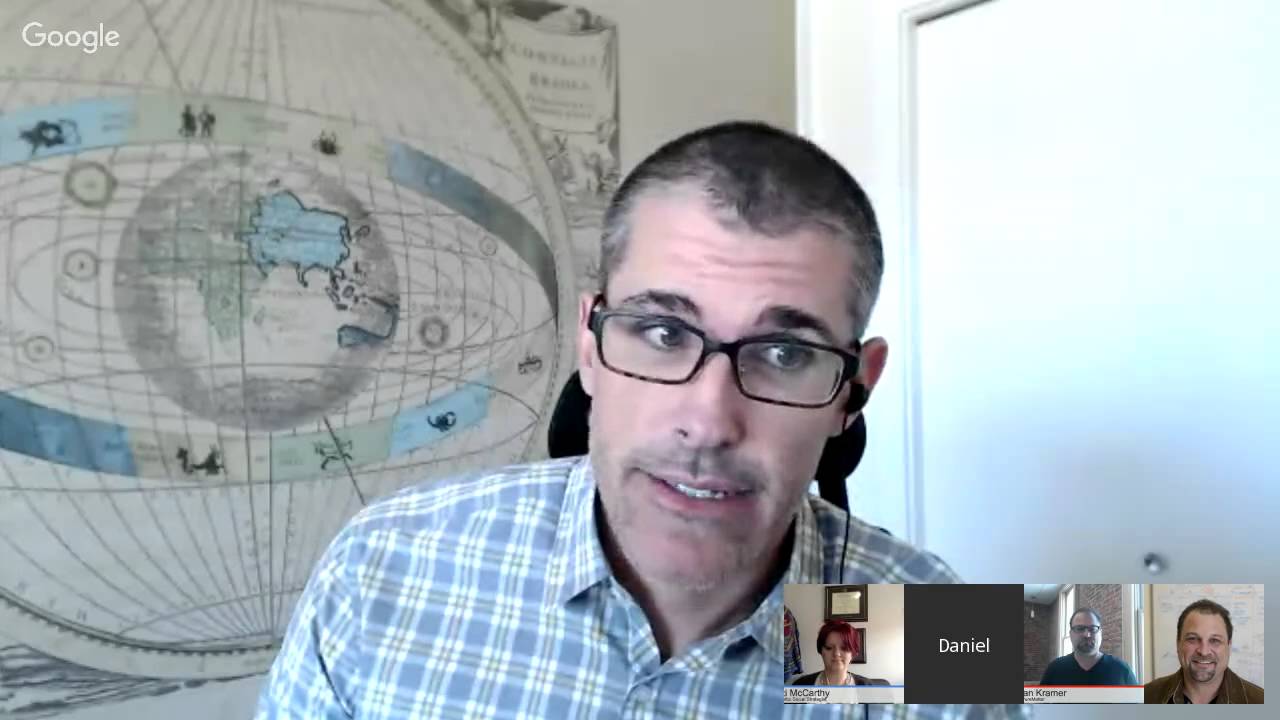
In this hour‑long H2HChat live Hangout, host Bryan Kramer (joined by co‑host Suzy) interviews reputation strategist and author Daniel Lemin about the world of online ratings and reviews. Daniel explains how his book Manipulated was born from a hair‑salon owner’s struggle with Yelp, and outlines a practical formula for small‑business owners to manage reviews efficiently. The conversation covers the full review lifecycle – from soliciting feedback with stickers, decals, check‑in offers and personalized requests, to responding publicly (treating each exchange as a marketing story) versus taking complex issues offline. They discuss platform‑specific rules (Yelp, TripAdvisor, Angie's List, Zocdoc), affordable tools (ReviewTrackers, Yext), and the shady side of the industry, including fake‑review farms, blackmail schemes, and paid‑for‑review tactics. Daniel shares tactics for detecting inauthentic reviews, leveraging influencers, and using sentiment analysis to spot trends. He also addresses the emotional side of handling reviews, offering a “stop‑drop‑roll” mindfulness method, and recommends a realistic 20‑minute daily workflow for owners. Throughout, the hosts field live Twitter questions about ethics, best practices, and future trends, concluding with recommendations for new businesses to jump‑start their review profile and a call to action to read Daniel’s handbook.
Chapters
Hey everybody, it's Bryan Kramer back on HTA Chat. We are so excited to be here because we get to talk about ratings and reviews today. That means that we get to talk about those people out there that are reviewing you despite how you feel. I'm kidding, we care how you feel, but they may not. So we're going to talk about that, and we're going to talk about all kinds of great things that goes into this. Before we get into it, before I actually introduce— Our guest, I'd like to say a quick hello to Suzy. How are you doing this afternoon at 3 o'clock your time, New York-ish area?
I'm doing well. I'm doing good. Ready to join.
You had a birthday this weekend. Happy birthday.
Oh, thank you very much. Thank you. I took Friday off, so today I am paying the piper for the email inbox. Yeah, it was nice. Gorgeous. So yeah, I'm super excited that we're going to have Daniel on. This is going to be awesome.
It is. It is. Let's talk about him like he's not here. No, I'm kidding. This Daniel character, I don't know about him. So let me introduce you to Daniel for those of you who have not met him, although I think maybe he kind of— Doesn't do the live video stuff as much, but the dude can write and he can strategize with the best of them. If you want a strategy guy, this is your guy, and I only know that because I've seen his work and I can say that honestly. He's become a really good friend of mine and ours. Daniel is the author of— I'm going to say it right— Manipulated. Yes. A best-selling book about the online reputation business, as well as a senior strategist with J. Baer, his Convince and Convert consulting group. He's been seen in the New York Times, USA Today, and on Fox News, CBS Radio, and many other news outlets— Daniel, that is. And he was an early Google hire. He worked for Google. Interesting. If you search for his name, will you find it? That is interesting. Can somebody do that and let me know what you find out? And he's been in the digital marketing space for more than 15 years. So that's older than my youngest son. Anyway, I wanted to introduce Daniel, and I wanted to say hello, and how are you doing, Daniel? How's it going?
Hello. Happy Monday. Happy Monday.
Happy Monday.
Happy Monday.
So give us a sense as to this, the idea, the concept behind this book, because it's kind of a little bit different than what you do in your day job, kind of. I mean, it certainly relates. It's all interrelatable. Where did you get your passion for online reviews and how did that take off and launch into a book?
Yeah, it's interesting. I mean, the book is kind of written for small business owners. I'm just going to hold it up here. It's not very big, it's real skinny. The reason I did that is I was trying to digest for business owners the— or really simplify ratings. and reviews, some of the foundational stuff that they needed to know about it. And it kind of came out, that whole thing came out of a conversation with a friend of mine who had a hair salon. Ah, there it is.
Nice.
There it is. And he had a hair salon in Venice on Abbott Kinney, and he kind of just went through everything a business owner, you know, a sole proprietor goes through. Bad reviews, crazy customer who left, you know, Hyperbolic, lace-filled review on his Yelp profile, didn't know about it. Yelp calls and says, hey, look, you should pay us money and we can maybe make this go away for you or help you get other reviews that make this go away. He just didn't know where to turn, did not know what to do. As he was kind of going through it and saying, this has been my experience, I just don't know what to do, a lot of stuff I learned when I was at Google came back to me. stuff about kind of the trolls on the internet who do hateful black hat SEO things. The dots started to connect a little bit, and I thought, this is just a story that hasn't been told. Business owners need to know this because the big brands we work with, you work with at Pure Matter, and that I work with, they kind of know, but business owners that don't have that resource I don't really know. That was kind of the idea behind it.
Tell me what kind of research goes into something like this, because I mean, how do you— where do you even start? Reviews are everywhere, but how do you actually figure out the formula behind reviews? And I want to get to the formula. We'll get there, but how did you do that?
I just talked to a bunch of businesses. What I was trying to get at was not so much how does the industry work, that was part of the story, but for me the more important part was how as a business owner who has like negative time in your week available for anything new, how are you doing this successfully? Because a lot of businesses are doing a really good job of it. And I thought that must be— there must be a formula for that. I can certainly tell people everything I know about the internet and the web. I can do that, but there must be a way, a formula people have followed to kind of make it operationalize it a bit for their business. And I discovered that there is. I mean, there are some business owners who are doing a really, really great job of that. And that to me was an interesting finding. Yeah. It's sort of like, wow, this is— There's a shift in how these people are doing their business. It's actually one Jay wrote, Jay Baer wrote about in his book Hug Your Haters, that sort of shift to being super customer-focused, like 100% customer-focused. Maybe that's starting with small businesses, I don't know. That is kind of where I see it going.
Okay, that's awesome. So tell me now about the process. And by the way, this is a pretty big question because reviews are on every, almost every site out there that has a purchase process oriented with it or embedded. And so I would think a review process would be different everywhere, but maybe you're approaching this more from the marketing side. Tell me a little bit about that.
Yeah, I mean, every business has reviews. Dentists, doctors, plastic surgeons, everyone. And so it's not the same for every business, but the idea is really that it's someone's job to take care of that and feed that beast. Otherwise, it goes— kind of goes native on you. It just turns into all kinds of evil and can work against your business, your brand real quick if you're not paying attention to it.
Yeah.
Whether it's the business owner or someone who's in charge of the reviews on behalf of it, that depends on the size of the company and their industry. Some businesses don't get millions of reviews. If you're a wedding photographer, you might have a potential for 2 a week at the most.
Right.
You can handle that differently than if you're a coffee shop
that's— Sorry to interrupt, but I I had a personal experience this weekend with a review, not of me. I mean, my wife reviews me all the time, but I don't want to talk about that.
Not publicly.
Not publicly.
Well, you know.
Oh yeah, she does kind of, huh? No, she does. Actually, that's my problem. Can we talk about that? No, I'm kidding.
Where's Courtney?
She's not on, or she'd be tweeting A review of me right now. Yes. I used TaskRabbit and I ordered somebody to come out and install a fan, a ceiling fan, and he didn't bring his own ladder. And I put in the comments that he was installing a ceiling fan. So disconnect. Now once I borrowed my neighbor's ladder and got the whole thing situated, We got it done and he installed it, but the whole thing took 2 hours and— okay, so anyway, you're kind of sensing like the typical pain of what somebody goes through, right? I'm just painting— not to paint my picture, but people have like— there's no perfect. Right. And so a review is— when you look at reviews and they give them 5 stars and then— or they give them 4 stars this or 1 star this, I'm looking at this and I gave the guy 5 stars because I want to— the rest of the process was great. Once I got the ladder, I didn't want to jeopardize his review system because I know how much reviews count, so I gave him 5 stars. I wonder how many people do that and what is the methodology, what's the psychology that goes into reviews, like what I went through?
You're too nice. What? You're too nice. I'm too nice? I mean, I actually think most people want to be fair and maybe they don't want to be nice, but they at least want to be fair. The thing is, I don't think most people— if you had like an average experience anywhere, you're not going to say, hey, I'm going to go write a review about that because it was average. You're just not, unless you are so amazed or so ticked off, you're not going to write a review unless you're asked or sort of suggested or requested to. And that's actually a big area I discovered a lot of businesses overlook. They assume that that middle pack of the customer They don't want to hear from them because they're worried it would bring their ratings down. But actually, when you do that, you're counting on someone being really happy or really angry, and that's a tough bet to take. I mean, you're counting on your very best day every day. And I don't know if that's— I wouldn't want to do that myself. I don't have a great day every day. Fortunately, I don't get a lot of reviews, so perhaps there's a lesson there too.
Is it ironic that your last name is Lemon and you're writing about reviews? The Lemon Law, huh?
I could have gone there. I could have gone there on the title.
You could have. And we'll talk about that offline. So that's the consumer side. So let's talk about how a business should manage their reviews. What did you come up with?
Well, the ones that do it well, regardless of the fact they get 2 a week or 200 a week or more, they kind of treat them as little marketing opportunities. So even the bad ones, they really kind of look at this and say, first of all, I'm not necessarily responding to the person, I'm responding to everyone else who's going to read this exchange. It's like a little story. Right. And I want every customer who comes to my Yelp or my TripAdvisor or whatever, Angie's List, to see that I am super engaged on this stuff. So I can't be mean, I can't be sarcastic because that sometimes doesn't read right. I just have to, you know, if I did something wrong, I have to admit it and be concise because it's a story that will stick with you forever. I mean, internet doesn't go away.
Wow.
That's kind of the mentality. If they get a great review, they kind of show it off, maybe put it in an email newsletter or they tweet it thanking the customer. If they get a bad review, they go kind of full confront the issue, like attack the issue, not the customer. A lot of businesses, just that knee-jerk reaction is you're like, Screw them. I'm not going to answer that. It's not even my customer. They were mean to me. I'm not saying anything to them. It's just a knee-jerk reaction. Everybody kind of wants to be heard, so that's really the thing. You're not really answering them so much as you are answering everyone else who's going to read that exchange, and they don't know what went down between you.
How do you get How do you get consistently awesome 5-star reviews? And I know the easy answer is great service, but I mean, like, how do you take a bad situation and turn it into a great one? Did you look at any of that? You know, how do you— I mean, I bought my garage— the guy that installed my garage, I saw on Yelp, which I almost never go to Yelp, but I went to Yelp because I needed something to look at and I didn't know anyone who did that. And this one company had 512 5-star reviews. I'm like, I'm going to go with these guys, and I had him out there. He was just as professional as his star reviews. Now, he does great service, but somehow he also got them to go give him all those reviews, and it's probably crushing his business in a good way. How do you do that?
Well—
Real quick, real quick, sorry. Before I say that, everyone out there on HGA Chat, Keep your questions coming on #H2Hchat, because the second half of this is going to be Q&A for Daniel and Suzy. Suzy's going to ask your questions to Daniel. So on #H2Hchat, ask your questions away as we go. She's going to collect them, she's going to ask him. Okay, go ahead, Daniel. Sorry to interrupt.
Yeah, well, so the interesting thing was it's not so much about being amazing. Because not that many businesses are legitimately actually amazing places. It's more about just setting expectations. You know, I had gutters installed somewhat recently in advance of the El Niño that actually didn't ever seem to arrive. We didn't seem to have an El Niño, but he had a really good year thanks to El Niño, the gutter guy. He's so busy, and he kind of said that. I found him on Angie's List. Okay. He came out to me. I've never met anyone so passionate about something like gutters in my life. He just loves gutters. He's totally into everything gutter-related, and I was impressed by that. He went down the— we're 6 weeks out on the schedule, and that's just the way it's going to be. He set that expectation, and then a few days after that, after I said, sure, sounds fine to me. I can wait 6 weeks. He called and said, hey, I've got the stuff and I had a cancellation this morning. Can you come right out? I was amazed because 6 weeks and suddenly he's going to get this done today. He came out and it was done in a few hours. The service was awesome. He was here managing it, but that itself wasn't my expectation. He had just blown my expectations out of the water. It's not because he was amazing. He was good at setting those expectations. Right. I think that's part of it actually. It's part of the magic of the service. Kind of saying like parking around our restaurant is pretty tough, so make sure you give yourself an extra 20 minutes.
Yeah.
And we'll see you when you get here. It's kind of setting, predetermining what are the things that might irritate people, and you can't fix them all, but you can at least make people aware of it.
Right.
I think that's part of the magic of good service, and that leads to— he got an amazing 5-star review on Yummy, and I think it leads to People feeling like this business owner is dialed in, they get it. I think that's what I was seeing a lot of case studies in when I was doing research, are guys like the gutter guy. They love their business but they're also just dialed in. They know how to make the system work.
Yeah. I now think maybe I have more time with reviews than I ever thought before, now that I'm on this with you, because my son was taking fencing lessons and the guy completely mischarged us, and when we responded back, he argued with us and argued and argued and argued. And we went on and we were looking at the reviews on his website, and we weren't the only ones. Like, he— his— the theme on every single review was the guy argues. He argues, he argues, he argues.
Mm-hmm.
I never went back because, again, I'm too nice of a guy. I never actually left a review. Because A, I don't like leaving anonymous reviews. I think that's— okay, I'm going to say it, that's the pussy way out. And if you do a— sorry, I don't swear a lot, but I really think that that's like a really bad thing to actually leave an anonymous review, but yet people do. And all of them were anonymous. So what about— what do you think? Did you come up with anything about the anonymous factor and how you deal with that?
Yeah, I think that's shady. I mean, it sort of depends on the platform. Some platforms, anonymous reviews are super common, or semi-anonymous stuff. But if it's on somewhere like Angie's List, an anonymous review on Angie's List is kind of uncommon. I mean, you can submit one anonymously, but it's rather difficult to do. So to some degree, it depends on the platform. But you kind of have to look at these and say, this looks— this smells shady. Fishy, something's not right with this. Yeah. You sort of know when you read that stuff. Sometimes I'll even, if it's a big purchase decision I'm looking at, I'll even look into the profiles of some of those reviews and like, this is just not right with these people. They have 1 review or 2 reviews or 3 reviews. I had that experience actually in Puerto Rico, or Puerto Vallarta, sorry, a few years ago at a restaurant. It was like number 1 on TripAdvisor, crazy good reviews, and I didn't look carefully enough. It's just dinner, whatever. It's not a big purchase decision, so I didn't give it that much research. But I went back later because it was just awful. Everything was awful.
Oh,
man. I went back later and looked at the reviews. They totally bought all of these reviews, just about guaranteed, because they were so fishy. People from Poland and The Czech Republic, they may be going to Puerto Vallarta, but I don't know that they are TripAdvisor reviewers who happen to be going to Puerto Vallarta.
Yeah, and it's interesting, Mitch Jackson said, also never argue with somebody who uses a sword for a living. I think he's right.
I
mean, you know, like if you're going to review a black belt karate studio, I'm not sure I would like give them a bad review. Anyway, that's a great point. You can't trust the reviews. If you have all these great reviews and then you go there and it's not that great, did they buy their reviews? Now what?
I left them a bad review and just kind of called them out and said it totally mismatched my experience at this place. I'm not the hardest person to please, but it was pretty much a mismatch for me. That restaurant disappeared eventually. I was back there last year and it was gone. That place was completely gone, so I think they ended up going out of business. I can't say it was because of that, but— Some of it's kind of on the customer too. If you see stuff— I didn't go after them on a campaign or anything, but it just was like I was disappointed. It didn't quite meet what I thought were the expectations. Anyway, I got fed.
Is this something that we should be doing? Is this something that's— oh, Susie just texted me that we are now trending on Twitter. Congratulations, Daniel, for making that happen. Your reviews are going to be great now because we now trended on Twitter. Congrats to everybody out there who is Sharing all their tweets. Again, make sure you bring your questions in to Suzy because she's going to be starting here real soon in about 10 minutes, and we're going to get that going. So my question, next question, Daniel, is about reputation management companies and whether that's a good thing to do for businesses, or can businesses manage that on their own? I know you covered that in your book. What do you think about that?
Yeah, the reputation Management industry, and I have to be careful when I use that term because I kind of work in that business, and you do too. I mean, we're somewhat sort of in that business, but not directly. There's some different elements of it that are actually kind of shady. I actually detailed a whole blackmail scheme that some companies use to troll for customers, which as a small business owner is terrifying. I mean, you're like, The mafia on steroids there. But I think for the most part, a lot of the things reputation management companies can do for a business, you can do at much lower cost with some elbow grease. It's that kind of gamble of, do I have more time than money here? And what do I value more in this case, my money or my time? If you don't have a lot of time but you have a lot of money, You could pay someone to do that for you. If it's the reverse, you're cash poor but you have a little extra time, you could just about do everything they do for you. So I think that's part of it. And then there's lots of real either free or really cheap tools that you can use to track reviews and stuff for your business like ReviewTrackers or Yext or some of these sites.
So is that ReviewTracker?
ReviewTrackers. The other one is Yext. Yeah, it's Y-E-X-T. OK. So those, you know, it kind of gives you a little bit of assist. They're not super expensive. So that's kind of what I usually say. The reputation management companies themselves, it's a dicey business. I have a questionnaire in there that if you're looking at hiring, if someone's looking to hire one of those companies, you really should go through it because the way they answer questions about their own business tells you a lot about what they do for your business. You know, are they going to do black hat SEO and how do they handle bad reviews? They ever had one, that kind of stuff. You want to get some psychology of how they manage their business because you're putting a lot of eggs in their basket.
Yeah, you definitely are. It's kind of hard to find, figure out whether a review reputation company is good at their job if they have all great reviews. How did they do that? Or, you know, and the process that went into that, and so on and so forth. So tell me the one thing in your book that really surprised you, that you didn't— and maybe there's more, but just give me one that really, you just didn't see it coming, or you thought, wow, that's a whole different concept than what I thought this was going to be about.
Well, I was really surprised. I had a theory When I started researching this book, I had a theory that that whole blackmail scheme I was referring to might exist, but it was kind of like a foil hat kind of theory. You know, I was like, ah, I have to imagine that this is happening. And then when I discovered actual case studies— there was a group of photographers, wedding photographers, it happened to— they detailed it in a lot of detail. I was appalled. Like, this is awful. I am shocked that this is that blatant and there's no regulatory action. There's no attorneys general looking into this, no law. It's just an awful, awful situation. It really was surprising. I think if I were a café owner or something like that, I would be a little bit terrified by that because your entire reputation is on the line there. That's your income.
Yeah, that's pretty interesting. I think it's one of those things where you don't ever really know what you're going to get into when you write a book on something that's really straightforward, you think, and then you start digging into it and you find these little facets. Because really what you're talking about here is a very personal experience. There's lots of mini personal experiences.
Yeah.
happening, and it's very— you're talking about something that's so close to the heart each and every time. It's either a really good experience, it's an okay experience, it's a really bad experience. I mean, really, that's what we're talking about, right? So how do you deal with the emotional side of all this? Did you do any research or have any thoughts around emotions and what kinds of emotions you How do you address those emotions?
Yeah, well, I think the best way— there's one of the examples I have in my book. This guy runs a moving company in Austin, Texas called Square Cow Movers, and he is sole proprietor.
What does the business do? It's a squared cow moving company?
Square Cow Movers, they're a moving company, so they're moving you across town or something.
I'm like, these are not round cows.
They're square cows.
Square cows.
Square Cow. And he—
What part of the country is this?
These weird transgenic square cows. Like those square watermelons you see in Japan, they grow Square cows, they are easier to store
that
way.
Right, hence this specialized moving company.
Yes, they are in the business of moving square cows. But he developed this mentality because he was finding that he got really emotional with some of his customer responses and that didn't work in his favor. So he felt this thing, He calls it stop, drop, and roll, where he just like, stop what I'm doing here. I'm getting too hotheaded. I'm just going to take a minute, drop the attitude, maybe ask a friend of mine to take a look at this, or a colleague, or my mom, or somebody else, somebody else. And then I'm going to go ahead and post that response. And it's really helpful because particularly for a small business, you're super, super emotional about those things. Maybe you had a bad day and deliveries were late and just everything was wrong and now you have to answer customers. It's easy to be a little bit emotional and so he follows that mentality and I think it's really, really good. That's the one, you're not going to be free of the emotion but you can deal with it. It's kind of a little bit of mindfulness actually.
That's a good one. So take a breath. Think before you—
Right, right. You want to be empathetic to the customer and listen to them, but it's not easy to do that. It is kind of mindfulness, which I think is actually a topic for one of your upcoming H2H chats. Am I wrong?
It is. Janet Fouts.
Yep. We had an awesome chat on mindfulness with Janet. I wasn't on there, that's why I—
Yes.
Rachel and I hosted it. It was great. It's one of our most replayed H2H chats actually as of last week. Congrats, Shannon.
Oh wow, go Shannon. She's actually tweeting right now. She just tweeted, square cow mover fit in a truck. Then she had a GIF. She's throwing out funny stuff right now.
Yep, yep.
How many square cows can you fit in a truck?
Yeah, I think you've kind of gotten everyone's emotion going now. Your buddy should pay for some free advertisement right now.
Right, right. So, okay, so we're going to close this out here with a final question. Before I do, I want to make sure that everyone, again, we're getting lots of questions, so I don't think we're going to be not having anything to answer here. But one of the things that I do want to talk about before I pass this over to Susie is the process for now getting more reviews. Because if you're starting out or you're even a business that has been around a long time and you just haven't been a part of the whole review system, you talk about some functional things like Stickers and decals, but is there a, you know, kind of a general process, you know, that you— a formula that you like that you put in place that you talk about in the book that you want to talk about?
Yeah, I mean, there are some of the obvious things. The stickers, you can put it on your receipt or business card or anything you give out that you don't necessarily want to say, hey, go review me. Just say I'm on TripAdvisor or I'm on Yelp. And I would love your feedback. What's really great, I just actually heard this at Social Media Marketing World last week. There was an attorney and he told the story of how he gets reviews. It's kind of weird as an attorney to ask someone like, will you review me? That's odd, right? But there are certain clients he likes and would prefer to have more clients like that. And what he'll say is, you know, I really enjoyed working with you. You were awesome. You were super responsive. Best, you know, best example of a client I could get. I would love more clients like you. If you have any referral or if you'd be willing to review me on Yelp, I'd really appreciate it. Because that tells the client, number one, that like you really took time to ask me and I feel good that I'm one of your favorites. But that also gives them something to say on Yelp now. This guy was awesome at X, X, and X. So that's kind of his way of getting Yelp reviews. And he's got reviews on Avvo, which is a lawyer review site, legal review site. So that's how he does it. Every business kind of— you have to find the right little way to do that. Some cases you can just outright say, hey, I'm on Yelp, I'd love a review from
you.
But you're not always going to— like a doctor, you're not going to want to do that.
Right, yeah. I had an itch and I've never had anybody solve my itch more than anyone else. That's kind of a weird review. So, okay, so anything else that I didn't ask you that I should have before I passed the baton? Is there one thing that you're like, god darn it, why didn't he ask me that?
Well, one is how One question I always get is, how much time should I have to devote to this thing? It's not my job. This is not my job. And I sort of laid out in the book a 20-minute thing.
Good, okay.
Which is— it's a place to start. Not every business can do it in 20 minutes.
Yeah.
Not everybody needs 20 minutes, but it's a good place to start.
Okay.
It gives you like a piece of time to work with.
Great.
20 minutes a day is kind of the thing.
Everyone, this is only 140 pages. It's not a long book. You guys can get through this in a very, very quick couple hours, if that. Definitely do that. Suzy, I'm going to pass the baton over to you and take it from here with some questions. Ready?
All right. We are getting a huge amount of questions. Thank you so much, everyone. Please keep tweeting them in. Even if we're not able to get to all of them, I know we'll definitely— I hope Daniel will be able to take the time to check through the stream afterwards. Keep that conversation going. Lots of great stuff. One thing I was going to say in terms of doctors, I actually use Zocdoc. Yeah. As a source of reviews. So I've actually found that and then a few others where it's niche spaces and you're actually able to get that. I would never go to Yelp though for a doctor review. That would just be too bizarre.
A lot of people do. A lot of people do.
I couldn't deal with that. That would— I don't know. But I personally love— so actually, what do you think about these niche sites, say Zocdoc or Even LinkedIn, I would say, for some kind of very professional concept.
Yeah, I mean, it works really well, particularly when they're structured around the parameters in that particular industry. Like Zocdoc allows you to search by how long you have to wait in the waiting room on average, that kind of stuff. It's great because it makes it easy for the consumer to flush that stuff out. So I'm a fan of them, and, you know, it's easier to manage that as a doctor than Yeah, absolutely.
For me, I always feel like there's a sense of expertise as well, because if you're using it, you're like thinking about that, maybe not griping. So we have— I'm grouping questions into— it looks like we have 3 general trends. We're going to definitely try to do lightning round here so that we can get through as many as we can. So we have some discussions kind of about the future of reviews, where we're going in terms of reviews. We also have taking reviews from the consumer aspect and then best practices for business, people running business. That's, I think, where I want to go ahead and start. We'll end up with kind of the future reviews, I think. Let's get rolling. First off, a great question here from Adam who has told us that he is viewing the Hangout on one phone and tweeting on another phone. This is the second week in a row he's done this. Good on you, Adam. I do want photos of this. So he says, let's talk about companies. What do you think about companies who are requiring patrons or offering saying if you give a 5-star Yelp review, you'll get a discounted service such as say a fitness—
Oh, that is a definite no-no on the Yelp front. That is a no-go situation for Yelp. They can do all kinds of bad things, even put a little thing on your Yelp profile that says this person is compensating people for reviews. Oh
wow.
What you can do, at least on Yelp, is they call it a check-in offer where you allow people who check in on Yelp to then claim like percent off or something, which is sort of the reverse way of doing that. But they will definitely— that is not a good situation to get in if Especially on Yelp.
Hmm. So Adam, now you know this is not good. So Monica, Monica is joining us today. Shout out to Monica. So glad to see you in the business stream. The business stream, sorry, the Twitter stream. She's asking about business, being a business owner. She says, as a business owner, as a business owner, how can you analyze the trends in your reviews to understand issues that need to be fixed versus the sour grapes reviews? What are some good tips there?
Yeah, this is an important point because the underlying context there is if you do that, you can prevent future bad reviews from happening. So if everybody complains about the air conditioning or something and you can identify that, then you can kind of prevent that from happening in the future. If you have tons and tons of reviews, if you're a heavy, like a cafe or restaurant or something, you probably need some software ReviewTrackers is one you can use to do that. They do some semantic analysis, kind of show you trends and keywords and stuff, like word cloud kind of thing. You could certainly manually just go through and count it yourself if you don't have dozens and dozens of reviews, but that starts to add up on the time front. I will say though, if you're doing it every day, you might just be able to start noticing trends that come up. If you're really taking time to listen to it every day. So there are different ways of doing it. If I— my preference is always the easier way, which is pay a little money for some software to make my life a little easier. But—
Right, right, right, right. So a great question here from our friend Julie. Hey Julie, so glad that you could join us today. She says, what's a healthy cadence to request feedback? She says she tends to get them after most— after immediately after an experience. With a brand, is one way more effective than another?
There is a little bit of nuance on that one for the type of business that it is. You can, if you're a hotel or a bed and breakfast or something, certainly follow up by email a few days later because people are traveling, maybe they don't have the chance right away to write a review, but the sooner you do it, the better. The sooner to point of service, the better, particularly if it was an awesome experience and you know it was an awesome experience. You delivered that thing, so you know they were thrilled. Right then and there say, I want more customers like you. I love you. Will you leave feedback? That's the place to do it. Immediately.
Yeah, so it's still in your mind. So question here from Tina. Tina, thanks so much for joining us. Always great to see you smiling. profile picture. She says, as a business owner, do you address negative reviews, or I guess does one, you or just one, address negative reviews publicly or offline?
Differing points of view on that answer.
I would imagine, so maybe you can kind of sum up and then
give us your opinion. This is how I usually tell People to approach it. If it's a situation where it's going to take you some time to get this thing done, take it offline. I mean, if it's going to be back and forth, what day were you here, what was your server's name, you know, if it's like that kind of a situation, take it offline and maybe call them or email them, some other way to get it done faster. Always come back again and say, great chatting with you, glad we could address your problem, hope to see you next time. If you can't get to that answer in 2 steps or less on Twitter or Facebook or wherever it's happening, then you should take it offline, but always come back to that customer so other people know that you— The public space.
Exactly.
And that's an important kind of circle back. Other people see that, oh, they actually came back and finished the thought, which is important.
Right, right, right.
So it's kind of a 2-step. If I can do this thing in 2 or less, I'm going to do it online. online. Yelp, you can only reply once, so that's, you know, that's not going to happen there. But if it's on Twitter or Facebook or somewhere else, try for 2 or less.
Great, great. So question here from JS Gilbert. Hey JS, so glad to see you today. He says, what do you think about businesses agreeing to the— what he's calling the blackmailing tactics of many review sites to pay fees to have negative reviews removed?
I mean, that's one of the most repugnant, morally repugnant parts of the reputation industry because it preys on business owners. It really does. And I encourage you, if you come across those businesses, report them to an attorney general or to Yelp. Yelp actually took a bunch of those companies out of business fairly recently. Wow. So they're actively looking for those folks. Report them because that— if you know how the internet works, you're not able to just hit a delete button, but they certainly prey on people's concerns and their interests. So that's a very good question. It's a very good question.
So I have a question here from Brooke. Brooke, I'm so glad to see you today. I know that you've been trying to join us for many weeks and Monday is not a good time for you. So yay, Brooke! She says, how do you know a review is real and not a competitor trying to sabotage your business? This is something that I'm seeing coming up a few times in the Twitter stream. There's just this real concern. Similar, kind of attached to this, we've had a few that are talking about a competitor maybe buying negative reviews and all of this. How do you figure out what's authentic?
You can always look, or almost always look, at who wrote the reviews. So look at the profile on Yelp or TripAdvisor and see, do they review other businesses or not? I had a case I wrote about on my blog, and they were on my podcast a few weeks ago. A jeweler in Boston had on Facebook, their competitor wrote about 150 1-star reviews almost overnight. Oh. They had hired through Fiverr. You know that website Fiverr?
Yep, JS Gilbert was mentioning Fiverr on the screen as one of the examples.
She actually went through— she couldn't get Facebook to answer anything about anything for that problem. She went through her peers at inbound.org, which is an online marketers forum. It's a great place. She found people there to help her, and they kind of put a little defense together, and then they went to Facebook and said, We really need your help here. And they got most of those reviews removed.
Wow.
Yeah.
Wow. That's like one of those sending chills down your spine, right? It's awful.
Yeah, and that happened right before the holiday sales, beginning of December, which is like the worst possible timing ever.
Oh my God. That is painful. It shows the power of community though, right? Being able to go to
a
forum and kind of helps maybe restore your faith in humanity a little bit.
We all compete but we ultimately want to play fair.
Oh yeah, absolutely. So there's a really great question from my buddy Mike Haberman. He says, because things on the internet never go away, is it unfair to rate people Or I guess businesses, so he's talking about people, but businesses say early in their careers. I also have a similar question here talking about basically duration of reviews. How much should we be thinking about the fact that something can change, people can change, businesses change? How does that factor in?
I think it does. You can always go back and update an old review or Or remove it as the consumer who wrote it. If you feel that, you know, it's just not fair, they've come a long way, or write a new review at some point and say, I took a couple years off of this place and went back and everything I didn't like has been changed and fixed and they're awesome now. So that would make them very happy. It gives you some karma points, so why not do that? Yeah. As long as you're fair in a review, what's wrong with that? Honesty is the best policy for everyone, right? If we could all be a little bit more honest, the world would be a better place. And so that's usually what I say. And as a business, you don't necessarily want to discourage that. You want to encourage it because it will ultimately make you better.
So let's talk about starting a new business. Obviously, when you have a small amount of reviews, I have a few questions here coming in from people. Brooke, once again, thanks Brooke, is asking us, is there a general process for a new business to get reviews? And kind of I want to tie this into a great question from Janet who says, is there a— should you actually go as far as to encourage people not to review you on Yelp unless it's going to be a stellar review if you just have a few reviews? How do you balance that?
Yeah, well, there's actually a mechanism. I referenced it a little while ago. On Yelp, specific to Yelp, they offer this check-in offer. Yeah.
So
if you're a new business, it's free. The last time I checked, the last time I heard and knew and researched this, it's a free thing you can offer, and it's a discount or a free thing you give to people who check in and claim it. What's lovely about that is that sort of encourages Yelp's most active people to then come in, and they're more likely to write you a review, and if they do, it's also more likely they stick there and stay there. So you kind of have to make sure you're going to be giving the right level of service at that particular offer stage, but it's a great way to get 5, 8, 10 good reviews right away, which is important. It sets you off on the right path, and then you can sort of do the whole coming back, asking people to review you or give you feedback.
That's a good tactic. So question here from Alan who is joining us from the air. He's in a JetBlue plane right now, so shout out to JetBlue for stable internet today apparently. He says, as a consumer, what are some tricks to filter through reviews to find the real and accurate ones?
Certainly my— Method, and it's not exactly easy to do. It takes a little bit of elbow grease, but I'd like to look at the person who wrote the review. As a business owner, you can sometimes maybe figure out who that person was, and as a consumer, it just helps you determine if it feels illegitimate and you don't want to consider it. Most consumers look at anywhere between 2 and 10 reviews when they're reviewing— when they're looking at businesses, so they're doing the same thing. Yeah. You know, the vast majority of us are kind of taking that pulse anyway. I do it. I don't know if you do it, Susie. I always look, if it's something I find suspicious, I always look at the reviewer because I want to make sure I'm making the right decision.
Yep, absolutely, absolutely. I look and see, you know, if I'm— and also if I'm seeing only 5 stars and 1 star, it makes me nervous.
Yeah, very few people write only 5-star reviews. I do a mix of like 4 and some 5s, maybe a rare 3. So that's, you can kind of flush it out pretty quickly.
Yeah, yeah, it's always hard though, and once again it comes back to those new businesses. It's really hard when they just have 1 review or 2 reviews to navigate that. So I want to go into these, I have a bucket of questions that are really talking about reviews in general and trends and things like this. So great question from This is from our buddy Roshni. Thanks so much for joining us, Roshni. He says, so bottom line, what's the point if reviews and followers can be bought?
What's the point? What's the point?
I love this question. Yeah, I'm not even going to try to add to that. What's the point?
It's a game of arbitrage at that point. I can buy more than you can.
Exactly.
Well, I mean, ultimately, You're in this for the lifelong or the journey of your life of your business, but it's not lifelong, at least the life of your business. It's a long-term play. So if your whole point is to get in and make a bunch of money and get out quickly, you know, you can make that happen, but you want to cultivate the best long-term reputation for your business that you can because it's going to stick with you forever.
Right.
So that's how I suggest people look at it. You can kind of parse the nuance of, you know, I can buy a bunch of reviews and make a big splash. Sure, you know, knock yourself out, but that's going to probably come back to bite you at some point, maybe in the very near future or maybe in the middle distant future. Just think about the length of how long you want to be in business and Make sure that that fits your game plan because the more honest you are about your own business, the more it's going to reflect in reviews.
So I have our friends at PayCompliment who tune in each Monday when it's very, very late for them or very early in Australia. I think it's very early. They said it was 5 AM, I think, last time. So they're saying kind of related to this, With so much manipulation of reviews, are you finding in your research, are you seeing any sort of worrying trend where consumers are losing trust in the review system given all this additional research, all of this? Do you think we've maybe hit a bubble? You know, we're in a bubble and we're going to peak and it's going to shift away from this, or are you not seeing that?
Yeah, I wish that were true because it would make the whole thesis, you know, like less and less important. Reviews will eventually not matter, but that's just not the case. I mean, the latest research I saw was people trust online reviews more than their aunts and their friends, aunts and uncles or their friends and family. Wow. And I don't know if that means that we don't think our aunt is that trustworthy or that we just have some weird trust we place in other people's opinions we don't know. Or we assume because there's so much of it that it kind of reflects society, but the truth is everybody trusts reviews. I often joke in the travel industry, I think it's probably close to 125% of people are reading reviews before they book a hotel. There's no lack of information there. So I wish that were true. Yeah. If this were a declining trend, we could We could be having a different conversation about it. Yeah. Which is the whole problem.
Right, right. Yeah, absolutely. So a follow-up here to this from JS Gilbert. You can always trust him to give me great questions. So he says, once again, he's rather skeptical of the online review. He's seen the stuff about Fiverr and all this stuff. So what he's saying is, he says, Given the fact that there still is this ambiguity, we're seeing things bought, and so he's concerned about consumer trust in reviews. He says, do you think that we're going to— what's the role then in influencer marketing, online video, maybe looking at limited trusted sources as opposed to having a plethora of all sorts of different sites? Do you think there's space for that? So—
I actually absolutely do. I mean, if you look at the complaints of Yelp's algorithm, people say, you know, I have all these amazing 5-star reviews, but they're hidden, and there's these like 4 or 5 reviews on my business profile. Those are Yelp's influencers, right? That's who Yelp says, these people are influential to us on our platform, and that same dynamic exists on TripAdvisor. That same dynamic exists on every other site just about. The role of influencers I actually think is more important now than probably ever has been for that reason. You know, if you work with Yelp's influencers or you work with TripAdvisor's top reviewers, you're basically playing that game of arbitrage a little bit. You know, I'm making sure that people who can tell my story to the biggest audience possible are getting that experience. And so I think the role of influencers is huge, huge for any business, whether it's a car dealer or a café, it matters.
How do we navigate, how do we keep the influencer industry from becoming more of one, okay, I was paid to say this, so I'm just going to say this, right? How do we keep that from You know, becoming inauthentic.
Yeah. To some degree, I think that's on them. That's on the influencer. I mean, the FTC has tons and tons of restrictions about what they can say, what they can claim. So I'm not suggesting that we ask them to— it's not like pay-to-play. But if I have to prioritize a group of people, I'm definitely going to find out who those influencers are and prioritize them. For sure.
As a business owner.
For sure, yeah, yeah.
How do you find those? Are they publicized? I know I'm about— I'm sure I'm about to get that question tweeted.
Yeah, how do I find instances?
How do you find those? Is this something you just go back through and you see who's been flagged, or does Yelp publish this?
Yeah, I mean, you can just look through on Yelp and look at in cities, you can see like Well, the best place to start is your— maybe not your competitors, but your sort of peers in an area. Say you're a café, look at some of the reviews for other cafés and see who are the influencers. There are people who have written reviews that have high counts on them. They're like lots of friends, lots of reviews. Those folks may be influencers. Certainly if you pay Yelp, if you join as a business, they're going to help you do that. There are some ways you can back into that too, and not just on Yelp, on just about every site you can do that with some elbow grease. So I think that's one way to do it. Very good question though, how do I find those influencers? I mean, you could pay a PR agency or an influencer marketing agency to do it for you, SocialToaster, you know, there's a bunch of different ways to slice that, but you're not necessarily looking for thousands of them, maybe just 15 or 20 to get you started.
Yep, yep, yep. So 2 last questions, and these are kind of big broad ones. Really interesting one here from Mitch Jackson. He says, if you could only pick one, what do you think is more important and valuable, a great online review or a great offline in real life review?
So I think that's a really good question. Is that me as a consumer or me as a business?
Let us go as a business.
As a business, I take the online review every day, all day. As a consumer, I mean, just for myself, I would take the offline review because I tend to take those with a little bit more trust, but that's just me. But that transaction happened, no one else knows that.
Right, right. That's really interesting though, right? And maybe that right there points out kind of a balance that we're trying to deal with is how do we bridge the offline and the online.
He just tweeted as a business. As
a business, all right.
As a business, I would take the online review all day, every day.
Because it's publicized, because of that. So last question I have here from Monica. I think this is really important. She says passengers can rate Uber drivers and now drivers can also rate passengers. What are your thoughts about this? Will that be a trend so that going individual rating your customers, what are your thoughts?
Yeah, it's cathartic for sure. That was a 1-star customer, I don't care to see them again.
Yep.
I mean, there's a certain danger in doing that. There was this people rating app called PeopleTV. I was going to ask you about that.
Which came out— their Facebook page is like a case study in how not to deal with customers. They're just— it makes me want to tear my hair out the way that they treat people on Facebook. Anyway, please continue.
The way People treats people This is P-E-E-P-L-E, PeopleApp. It allows you to rate and review other individuals with remarkable amounts of detail about them. I mean, I don't know if we'll go that far, but I would kind of want to know as a business who my peers think are their worst customers. That's data I would like, actually. So maybe we're headed there.
Do you think a review setting, though, where we're talking about giving stars, is the best way to actually do this?
Probably in Uber's case, because it's such a mobile platform, so it's such a small footprint on the screen. Maybe in that case. Yeah, maybe in that case. It may be more efficient to do it in a binary Net Promoter Rate, would you do business with this customer again, yes or no? You know, I don't know how we capture that, but that's— I've seen different discussions about that come up among doctors, among the insurance business. I've heard some discussion about this, so people are thinking about it.
Doctors would be fascinating and kind of scary. That person's a crazy hypochondriac, but I could see someone who's abusing medical, you know, medicine and all that. That's fascinating. Well, thank you so much. I think this has given us tons of food for thought. I seriously have gotten through about 50% of the questions with this, so lots and lots of conversation. Definitely check out the #H2HChat hashtag. Lots of food for thought there, and thank you so much for joining us. This has been a pleasure.
Indeed.
DJ, over to you.
All right, and while I'm wrapping this up, Suzy, if you wouldn't mind looking up next week's guest. Gast Oat, and if we need to announce that in the next day or so, we can, which it looks like we will. So we'll announce that tomorrow. It's a surprise. One thing that I wanted to just quickly talk about is this book. It should be your handbook, and I don't think that there's anybody that isn't on this H2H chat that does not have a business that doesn't receive testimonials or reviews of some kind, and that means that this book is for you. So I definitely highly recommend this book, not only because Daniel's a good friend of mine, but also because he really is the kind of person who puts a lot of hard work into really putting a process together, and that's what this book is. It's a process, and it really kind of walks you through as a manual as to how to do it. It's not just this high-level stuff, because there's only so much we can talk about in an hour on H2H Chat. So I definitely highly recommend this. I know that the link is out on Twitter and has been shared magically by Daniel himself while he's on the chat. That's funny. My hands. But there's— again, highly recommend it. Please, please, please go do that. And then We will be back in touch in the next day with the next guest for Monday, but I do want to thank you again, everyone out there, for being on another HHH Chat with us. I was really looking forward to this, and then it completely supersized the expectations that I had of this show, and I think your tweets are representative of that. Daniel, if you wouldn't mind jumping on afterwards, it doesn't have to be right afterwards, but maybe at some point over the next maybe 24 hours and just answering a few of them because we barely even got to the questions, so that would be great.
Yeah, will do, will do.
Awesome.
Awesome, man, thank you so much, and congrats again everybody for trending on Twitter another week. Daniel, congrats to you on your book, fantastic job, and we will see you guys all again next week, same time, same place. Cheers.
Bye, guys.
More from Bryan


AI Didn't Make Leadership Harder. It Made Fake Leadership Impossible | CODA Keynote | H2H 2.0
Why AI Makes Connection More Valuable | BOLD Awards Keynote Trailer | Human-to-Human H2H 2.0