#H2HChat The Truth About Creating Customer Experiences with Brian Solis
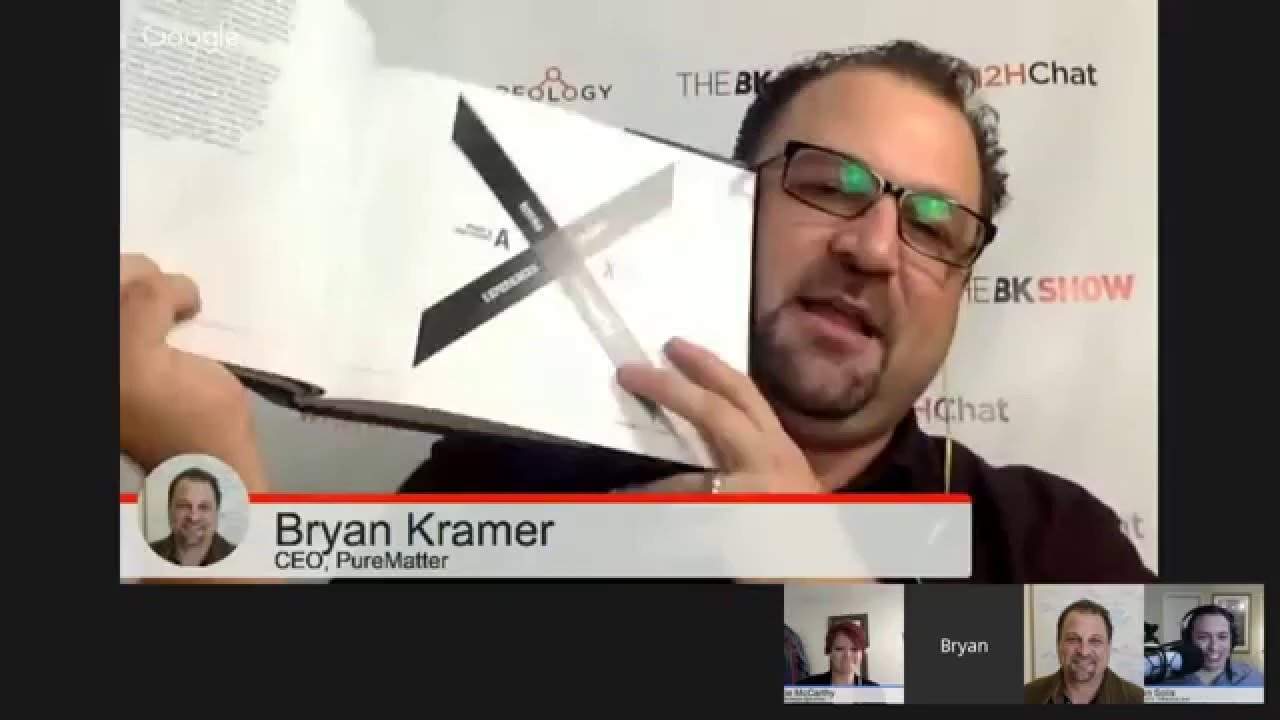
In this live H2H Chat episode, host Bryan Kramer and co‑host Suzy interview Brian Solis, principal analyst at Altimeter Group and author of X: The Experience When Business Meets Design. Solis explains why “experience” matters, how it differs from UX, CX, or brand experience, and why it should be treated as an emotion‑driven, human‑centered discipline. He argues that every person who touches a customer owns the experience, but the real ownership belongs to those who deliberately shape it. The conversation covers experience architecture, journey‑mapping, intent vs. complaints, micro‑moments, the influence loop, the evolving role of Chief Customer/Experience Officers, ROI of experience design, personalization at scale, brand loyalty, and real‑world examples from Apple, Tesla, Uber, Airbnb, Sephora, and Starbucks. Solis also shares the back‑story of his book’s design (interactive, swipe‑friendly format) and his personal “shapeshifter” journey. The interview ends with audience‑driven questions about ownership, ROI, startup advice, future tech trends, and obstacles to changing customer experience, highlighting the need for empathy, cultural shift, and a new experience‑style guide.
Chapters
We are live. I'm so excited to be back for another H2H chat. What that means is that it's Monday. It's Monday at noon on Pacific Standard Time. That would be 3 PM Eastern Time. Is that right, Suzy? Is that right?
You got it. How long did it take? It only— what, this is like our 42nd episode?
Yes. See, I can do math after 42.
I'm very proud of you.
So what I'm excited about today is life, but what I wanted to ask you about, Suzy, is how are you? How is my lovely co-host?
Well, Bryan, I am doing very well. We got a little bit of snow this morning, so I am a happy camper. Just, you know, a little sprinkling, a little dusting, but I'm good, and I am so excited for this chat. I can't even properly communicate just how excited I
am. That's unlike you. I know.
I'm normally very subdued.
So really, really excited to have with us here the man, Bryan with Solace. How are you doing, man? Good to see you.
It's great to see you, and it's always fun, except I think this might be the first time we're actually Talking outside of an event or outside of a bar.
Right, yeah, and are you in the Bay Area?
I am in the Bay Area, I am for today only.
And I'd have to say that this is the first time then that we're talking to each other from within the Bay Area.
Yeah, look at that.
I'm used to seeing you everywhere else. So this is really cool because Bryan, we've been friends for quite a while. You've gone through quite the transformation over, well, just years of time. I've known you for a shorter period of time than the time that you've been at it and creating not just thought leadership, but your life as an analyst. Your most recent book that you brought out is I Know, and I know this only because I think I know you, probably one of your most intense books, and I mean that by both design and writing, and the amount of effort you put into it. I've followed your statuses. I tried not to stalk you too hard, but I did pay attention. What I'm really excited about is talking about that experience. with you today, ironically experienced. So I wanted to start off by just asking you, your latest book, it's for those of you who don't know that are watching right now on H2H Chat, and I really hope you join in with some questions later, the second half of this. As you guys know, if you're new to this, you can ask questions. Yeah. Suzy's going to re-ask those questions to Bryan about just about anything as long as it's in line with the theme here. It's called X: The Experience When Business Meets Design. This is his brand new book. The book itself is— the only thing you can't do is swipe, but everything else you want to swipe. You want it to— and I can't wait for the app to come out, because then I'll get to do what I feel like I should be able to do, because it's that well designed. Everything in the book is just so, like, done so well because I can visually skip and scan and figure out what it is that appeals to me as a reader. Okay, so enough said. I would love to introduce Bryan. Bryan is a principal analyst at the Altimeter Group, now a profit company, profit meaning That's the name of the company. They're also, I'm sure, profitable, but we'll leave that for a separate time. He's also an award-winning author, prominent blogger, and a keynote speaker. And I've seen him speak. He can really speak, so that's good. A digital analyst, anthropologist, and futurist, he's studied and influenced the effects of emerging technologies on business, marketing, and culture. His research and his previous books help executives in all also everyday people like me better understand the relationship between the evolution of technology and its impact on business and society. And that's really the important part if I had to pull anything out. Now I could keep going on his resume, trust me, it is long and wondrous, wonderful. But I'm going to stop there and just say hello, Bryan, and tell me How— why this book, and what is this book about, in your own words?
I hope they're my own words. I'm going to put away this cue card of someone else's words though, just so that we don't get confused. The— all right.
No, he didn't.
Alright, that was definitely off-putting and I've completely lost my train of thought. Can you ask that question again, Bryan? I'm kidding.
Yeah, I can, absolutely.
Alright, but for reals this time, so most people don't know the backstory, so let me just kind of answer the quick question and then I'll give you a little insight as to the real answer. So I believe that the idea of X and experiences is something that's a little bit more important than we really understand at the moment, because we're really caught up. We're excited about all the new technology, we're excited about all the new tools. I think a lot of us are very excited about the ability to have these new platforms that give us such a strong voice, not just at the brand level, but at our personal levels, right, and it amplifies sort of our thoughts, our moments, our events. But because it's so exciting, I think what we're honestly missing is this need to better understand what those moments mean and what those moments are comprised of. When I have your attention, what do I do with it in a way that makes you feel probably better than before I had your attention, and then together we do something meaningful now and in future moments. And so I thought that really at the end of the day, what those moments are are essentially experiences. And when I did a ton of research around experience, it's certainly a buzzword, I really couldn't find any consistency around the discussion. You know, there's customer experience, there's user experience, there's brand experience, and everybody has sort of their own personal agenda around how they want to define it. But what I could find that's consistent is first the inconsistency of it, and then second sort of what to do about it, why it's so important. If you ask 10 people about experience to define it and why it's important, you're going to get, you know, 20 different answers. So that's what the book was about, was to kind of take a couple steps back and try to create a common footing for all of us to do something about experiences. And that was the short answer, believe it
or not. I'm sure it was. So who, in your opinion, not anyone else's opinion, but who owns Who owns the experience? How do you place ownership? You know, and now that I think that everyone claims user experience, whether they do it well or not is another story, but how do you claim ownership over this thing, this You know, the experience, it's almost like what we used to call the cloud, right, like who owns the cloud. How do you own experience?
Well, you know, I thought that, okay, here's the reality is that everybody thinks that their work owns the experience. So if you work in brand experience, that's the marketing team or the advertising agency, whomever it is, or the CMO. If you work in customer experience, you know, that could be anybody from IT to customer support service teams, what have you. It's distributed, right, there is no answer. But the real answer is this, and this is why it's so important, is that as a human being, I used the word, there we go.
Didn't expect you to say it so soon, sorry.
That I own the experience, and this is what is so hard for strategists to understand. I own the experience, I'm going to have an experience whether you you care or not, whether you designed it or not, whether you thought about it or not, and that experience I'm going to carry forward in some way, whether it's good, bad, or indifferent. So knowing that, then businesses, strategists, whomever you are, you have to think about what is the experience that someone should have, what should it feel like, how would it sort of activate the senses, and then what happens next. And that is something we don't think about too much today, and that's a problem.
So let's talk about the marketers, since we get blamed for everything. How does marketing affect and how are they affected by the creation of this experience of a company's many touchpoints that
Well, that's the challenge, right. One of the biggest trends today is marketers are jumping onto customer journey mapping, which by the way they should. It's a really insightful process, and so are folks in IT and in CX groups. So everybody is really trying to look at people a little bit closer, which is funny that we sort of lost sight of people even though they keep us in business. And I think the challenge is that when marketers come to work, they forget that they're the very people that they're trying to reach, or that they need to become the very people that they're trying to reach. So we talk like marketers, we act like marketers, when we write and design we're creating it for the people who are going to approve it, which I totally get, right, but there can be no innovation in marketing if all we're doing is getting caught up in iteration, and this is a moment for innovation. And the way— The way that that starts is to look at the journey and how it's different, right. Each one of those moments of truth now are not in any way, shape, or form in alignment to the funnel, yet our infrastructure inside the company for marketing, for sales, for service, it's all designed around the funnel, right. Everything is distributed, it's isolated, each one of those groups has their different standards, budgets, and metrics for success. And so this, we just are sort of part of the problem without realizing that, without even wanting to be part of the problem, we just are because of the machine, right. So I joke and I say, hey, I tried to be innovative once, but I got stuck in meetings all day. And the reality is that we have this process that we have to go through without actually taking time to say what's different, right. If it's not a funnel, then what is it? what's happening in those moments, how do people sort of get through those moments, whether it's the device that they're using or the context or the intentions that they have, and then more importantly, what are their expectations, their behaviors, their values, and those things I think could be a little bit more incorporated into our work, because then you can get empathy, and once you have empathy, you can start to unlock the whole idea of HCD or human-centered design. And basically how to be more relevant in terms of not just experience architecture, but your messages, your marketing, your vision, your purpose, all of the things that people relate to.
You know, I can— it's such a big undertaking. What brand did you come across that was the most complicated maybe experience in designing a journey and fulfilling the journey. Not just, you know, they were successful at it. They really got it, and they were able to actually catch those moments of truth that you're talking about, like actually make it better, enhance it, and see the rewards, whether it's in the ROI of dollars or resources or whatever. Did you come across a brand like that?
Well, yes and no. This is such different thinking, and yes, it is difficult, right, but we're not going to bring about any sort of meaningful change if we don't try to break the mold and/or start from scratch. And I think that anybody who's willing to take on the extra work is going to find themselves not only successful in the future, but probably leading an entire community just around them of people who follow them to learn. So stating that, you have brands that are doing very interesting things very well, but again, the infrastructure of the company works against what we're talking about. So even though you might have some very brilliant marketing, unlike what we saw at the Super Bowl, you will still— or great product design, or even great customer service, you're still just going to have facets of that. So if you look at then, if you ask me, well, what would you define as a great experience so we know what we're working toward? That's where this story should begin. Experience is not just one thing, it's everything, right? And if I'm going to have an experience in every moment of truth, then all of those moments of truth add up to the experience that I have. So the question is, what should that experience be, and did you design every one of those moments to contribute towards that, or are you just sort of investing in these facets hoping that each facet is the collective experience, and we all know that that's not the case. The experience you have, say, with your Tesla, Bryan, is the minute you started thinking about electric cars, the information that Tesla provided to convince you that you needed it, the infrastructure that Tesla built so that you can actually charge it while you're out and about, the car itself, and then anytime you have problems that you have to work with them in service. All of those things have to basically bring to life Elon Musk's vision. So that company is building against this vision. that has disrupted the entire business model for how you buy cars, or what a car even is. So that's a complex model, and because you had one guy who was essentially saying, build this, but you also had the same with Apple and Steve Jobs. I don't know that you have that now these days so much, but in chapter 8.2, there is an entire journey that I reverse engineered, because no one, believe it or not, has actually done this, as to why Apple creates incredible experiences, but more so how they're integrated, how they connect from marketing to package design to the Genius. We'll talk more specifically about that, but this is what I'm talking about, is this idea of experience architecture that brings everything together so that the idea of marketing Actually becomes more important than ever before. You're now in charge of the experience as a whole.
And I always feel like I should smoke out when I talk to you because you're like so theoretical and yet, you know, there are these little bits and pieces and I'm— so I love this one area of your book. It says, capture their intents, not just their complaints. And when you think about customer experience, it's so true. I actually think about customer complaints because that's where you gather the what's wrong, what's not working, and how do we correct it. But how do you capture intent?
There are a few words that I think are underrated in the marketing dictionary, and that is intent, context, Aspiration, and then empathy. They're all very— get ready with your button— they're all very human. Oh man, I don't think I'll ever be able to say that word the same way again after this. Just waiting for something to come out of— oh boy.
You're going
to
be in Geneva tomorrow and somebody's going to jump out from behind a bush.
I guarantee you're going to get a text from me that basically says, hey, I just used this word, I was kind of wondering if you could send me an audio clip. Oh yeah, so I forgot the question, Bryan. I'm kidding. So how do you capture intent? So this is where journey mapping becomes very interesting. A lot of companies are looking at the journey map today to see what it is. And to find out where they can remove friction or to optimize touchpoints or where they can literally bolt on new stuff. Hey, where's our responsive website, let's get that in there. But intent is a little bit more aligned with some work that I've been doing with Google recently around what we call micro-moments, and if you want to Google Google micro-moments playbook, you can download a real interesting playbook for free that It serves as a nice complement to the book. What they specifically do is they look at intent, and they've broken down intent by behavior. This is why I became a digital anthropologist along the way, was technology doesn't matter as much as behavior, intentions, context, etc., values, aspirations, and that you can only get by observing. And you have to observe in the native, in their native environment, not your impression of what the environment is, and that's where marketers suffer from tremendous cognitive bias. They don't see the world as it is, they see the world as they are, and therefore they talk at people rather than really engaging with them. And so intent comes down, if you look at Google, they say there are probably a handful of moments that are intent-driven that say, I want to go, right, so they'll pull out their phone in any moment. I want to go, I want to know, I want to do. I want to buy, etc., and then that plays out very specifically. So what happens next on that phone is basically an opportunity for marketers to reimagine the experience ecosystem, because it's definitely not going to be a website, it's definitely not going to be a viral video, it's definitely not going to be an infographic, but it is going to be something that helps guide people along their journey in a way that's meaningful to them. And this is why that playbook I think is very helpful, because it answers A very complex question, specifically what to do and how to do it.
So let's change directions a little bit and talk just a little bit about— I want to kind of back up a little bit and talk a little bit about you and your own brand, your own branding, where you've been. I mean, the books before this are so much I think they're so much different in direction from this book. And you've gone through kind of this path of technology, and then you transformed a little bit into more— I mean, this is my opinion— more social media, like you said, anthropology, people connecting together, and now into user experience. Hopefully it's fair. But you've transformed. I think from now on I'm gonna call you Madonna because you just keep transforming into this, you know, new person every couple of— you know, new altered person. How do you do that? Why this book now? And how did you see that coming? And what is it that you do to transform yourself?
Well, I feel like I should just do this. Does this work if I talk like this? Does this work?
I'm getting it. It's uncanny. It's totally uncanny.
I'm also a shapeshifter. You guys didn't know that.
Your new name is Solace from now on. There's no Bryan.
Oh boy. Here's a little backstory. I started writing X 3 and a half years ago. Gosh, at this point it's 4 years ago. And somewhere along the way I was having a really, really, real difficult time trying to figure out experience, trying to bring it down to a very human level. Oh my goodness, I'm going to take this. It's just snow. About 14 minutes of this hour interview is going to be that, I think. Add it up, like when you add up how much time the football game actually plays versus how many commercials. I think an entire game can be played in 11 minutes.
Right.
So I started writing X 4 years ago, and I just had a real difficult time It was such a challenge that I had to simplify a topic that is very complex. I thought I could lean on a lot of work out there, but the work that exists is very academic and not very actionable. So somewhere along the way, I recognized that experience, if you just describe it or define it simply for what it is, it's an emotion, right? It's an emotional reaction to a moment, to an event, to something, right, and those reactions add up to the experience. And most companies today, they tend to react to people's reactions. So whatever innovation that happens or iteration that happens inside of the company is based on how people react. But what if you could get in front of that, and that was a big driver for me, was to see how I wouldn't just react how I could create an experience that would be groundbreaking. And so I thought the only way to do that was for me to become an experience architect, and I felt it was incredibly ironic to tell you about experiences in a book that was going to look like every other book and not necessarily be an experience in and of itself, where just the words and the COVID were things that sort of brought the idea to life. Why not make everything about it come to life where the book itself is sort of the metaphor for the topic. So even in that answer was complex, right, so this is why I had a mental breakdown in the process. So my publisher Wiley had an idea which was, you know, I think if you go from end of business as usual to X, I think you're going to lose your audience. You know, we were going from the future of marketing and brand in the digital world to how the infrastructure of businesses need to reinvent themselves to be more modern for today to experience architecture. It was just a big leap. So I took a break from writing X and focused on What's the Future of Business, aka WTF, where I got to experiment lightly the idea of experience design in the format of a book. For those who haven't seen it, it was starting to bring to life some of the things I had been learning studying UX and behavior and attention spans. And what I thought was real cool about that was it allowed me to make almost like a part 1, part 2 of the conversation. So in WTF, I broke down what those moments of truth were so that you could see people and how they made decisions, so that you knew as a marketer or as a strategist how to get in front of that decision-making. And then, you know, parlayed that into X where we got really into experience architecture, boiling down to those emotions and then how you could engage or steer or shape those emotions in mutually beneficial ways. Now the shapeshifter stuff, right, I mean we can get into that in terms of my career, but in this book I'll tell you one of the things that nobody knows is that I partnered with a good— well, some good friends of mine at an agency called Mekanism, and that's Mekanism with a K. And we really looked at behavior, how do we interact with this, right? We look at our phone 1,500 times a week, on average that adds up to about 177 minutes a day, and what's happening as we do that is we're reprogramming our brains, right? What we find interesting, how we find it, how we interact with the device, all of these things are changing, and to go back to a traditional book format for me when we're talking about experience architecture just wasn't going to fly. So looking at engaging attention spans in a much more natural intuitive way, like you said when you held up the book, that you know there was pinching and swiping and zooming that you want to do on paper. The magic of that was intentional, it was very much inspired by Disney and all of their forced perspective as they call it inside of their their parks. So there's a lot of science that went into every single page, even the fact that I ditched the table of contents for a much more easy-to-use navigation system. But even to get into that was mind-blowing. How do you create from scratch an interface, much like how Uber invented an interface to support a transportation company? Yeah. That was the experience. It was debilitating, right? It wasn't easy to make it easy, which I guess is the point of this. But that is, I felt like I can't ask you to do all of this change if I wasn't willing to do all of this change, and that's why this whole process took 4 years. And by the way, we had to create an entirely new supply chain to be able to print this book at a cost that's comparable to a regular business book. So there you go. There's a lot more Easter eggs and geek geeky stories I could tell you about all of the shape-shifting just to get this book out there.
I think we're going to have to do another segment on shape-shifting, that is for sure. Thank you for that, that was helpful. I'm curious, one of the areas that your book really talks about, you go through the influence loop, and I think influence right now is has hit such an interesting level. It's changed how we are influenced, how we influence, and this is an interesting approach that you have in creating an actual loop. I was wondering if you could talk through that and just give us some idea on how you're seeing influence as part of the experience.
Yeah, yeah, yeah, okay, so one thing about influence is that if we just go back to defining what it means, because I noticed that when you have a room full of marketers and we use the word influence, it tends to lead to conversations like influencer, which then goes to people who have a lot of Twitter followers. That's not what I mean by influence. Influence just at the core is the ability to cause effect, right, or change behavior. And when you think about that, then what effect do you want to cause, and then what do you need to do in order to make that effect? So you start with the end in mind. Or what behavior do you want to change, and start with the end in mind that way, and how would you change it? So then you have to do things deliberately that lead to one or both of those. In influence, right, so go back to Google's micro-moments. I want to know, I want to learn, I want to go, I want to do. They are going to start this experience and they're going to find things their way based on the experiences of other people. They're not looking for websites and this is fascinating. In fact, Google found that 90% of people who go into the micro-moments, journey, right at the beginning, 90% of people are brand agnostic. They are simply looking for information to help them take the next step, and it's all contextually based, it's all intentional based, and it's also based in immediacy, right. So companies don't think that way, right. Companies think that all they have to do is be one of the 3 brands that a customer takes into decision-making. So they brand the heck out of everything to try to always be top of mind, but in this case that is almost working against themselves, right. So now this is why peer-to-peer engagement or people-to-people becomes sort of this new foundation. They'll find YouTube videos, they'll find reviews, they'll find all of the things that a company doesn't necessarily control because they're spending all of their time trying to design these incredible creative campaigns or infographics or what have you, or viral videos, but that doesn't help people move. And this is becoming more prominent in day-to-day life because we don't have enough time, we're too distracted by everything happening around us, we're the center of our own universe now. I call it the ego system where we're sort of becoming accidental narcissists as customers, and we want things now, we want things our way, and every Uber that comes out there, every Tinder that comes out there teaches us that we can have whatever we want in the moment, just as long as we can swipe right, swipe left. So now we start to expect every business to do business this way. So this is an entire infrastructure that influence now means that in order to be able to influence decisions or change behavior, you actually have to then understand how it's already changed from your mindset, and then more importantly what to do about it. And it sounds complex, but trust me, the minute you just start looking at people and how it's different than what you're doing today, everything starts to come into clarity and also purpose. And that's what the book talks about, is how to figure this out, but then also how to design a meaningful series of experiences that people can feel and in turn share, because it's that— it's called the ultimate moment of truth. People will find what other people are sharing in order to help them make decisions.
And I'm going to ask you one final question just to Branch off of what you're talking about before I pass the baton over to Susie here. She's got a ton of questions lined up from everyone out there. Can't thank you all enough for tweeting. The tweet, it looks like a stock ticker. I can't, I can't keep up. So thank you everybody for continuing to do that. Keep your questions coming. And congrats to Bryan and to all of you because we just started— actually, we didn't just start, we have been trending for the last 15 minutes. So my question is, can you be loyal to— I think you're kind of talking about loyalty, maybe loyalty can take on a little bit of a different definition, but can you be loyal to a brand or are you loyal to a person or people or humans?
I took this entire chapter out of the book that answers this question and I'll try to answer it super fast.
Well, that was great.
Yeah, this manuscript clocked in at 150,000 words, and I had to boil it down to 40-ish plus design, which was crazy. So I am going to release all these extra chapters at xthebook.com over time, just because they can't go to waste. But the answer is this, you don't— to answer that question, you have to look at the music industry. And if you think about You know, I'm a bit older than I look, but when I was young, I used to have posters of my favorite artists, and you sort of aspired to be like them as a kid. And that was when the music industry was sort of at its height. Now today, you have people who have to compete for the moment, right? The music industry is in complete collapse because most people aren't buying albums, and they're definitely using— they're definitely consuming music differently than they did. Today, the customer does not think about the artist as that sort of beacon of aspiration. Now, every artist is a satellite in the ecosystem, so that depending on who it is, they sort of come in and they go, that reflects sort of who they are. So that's why you see all of these crazy things like Drake having to drop surprise albums, or people releasing EPs instead of albums, or just singles now because they're just always trying to be popular and relevant and in the moment so that they can be that satellite in the consumer's life. So the same thing is true for brand. People don't aspire to be like that brand. I mean, maybe in some cases they do, but it's very much like artistry. These brands define sort of who they are in the moment, but that's always changing and evolving simply because we have so much access to information, because these networks are always changing us or shifting directions for us, or we're trying to be part of whatever is next, right. I mean, Peach was out a few weeks ago and everybody was jumping all over that. So again, hopefully that answers your question. It's complex, but the idea is that brand is no longer the thing you aspire to be part of. It's now just a beacon or satellite in your ecosystem, and that you have to continually try to earn relevance to stay there.
Wow, that's awesome. Bryan, we could keep going for a long time, but I got to give it over to the community here and to Suzy. who— you're in good hands. And she's already got some questions lined up, probably to take the next 2 days of your life. You don't have that, I know, but we'll at least fill the next 30 minutes. So I'll pass the baton over to Suzy. Suzy, he's all yours, and good luck.
All right, great. Thanks. So many awesome tidbits. People are commenting that it's just so quotable, I can't really keep up on Twitter. Awesome questions everyone, please keep them going, keep them coming. It's just awesome stuff right now. Let's get rolling. I'm going to begin with a question from Alan Berkson and then Monica Smith-Mullen. Both awesome H2H chatters had the same question. They want to know who should own experience
It is TBD. There is no one group that should own it. It's the group that wants to own it and therefore does the things that deserve to own it. And I also write about digital transformation, which is part of my research at Altimeter Group, and digital transformation is sort of this evolution of the infrastructure of an organization to better compete in a digital economy. And this is one of the things that just sort of nets out is that over time time, someone is that visionary. It could be you, right. You don't have to wait for it to come from leadership or management because then you're on the wrong side of innovation at that point because it's not going to happen. It's going to be driven because of someone like you who sees things differently, believes in things differently, and then brings the right people together who then ultimately should own experience. So there's a vision for what experience should be, and that could be anyone from the CMO to the Chief Digital Officer to you or the collection of everyone, and then there's the group that carries it out, right, that sort of operates as this experience standard. Today if you think about it, we have a brand style guide, so everybody is now responsible for talking and creating using this font and these color sets and this style of imagery, but imagine if you had an experience style guide, right, that has to be collectively not just designed, but implemented and managed. So over time, I think that anyone who touches the customer, anybody responsible for their experience is now going to have to form a group or a new business unit or just a working model that everybody is working together to sort of bring that standard experience to life. And we see this with Sephora, right, like for example, they— They built an entirely new team of everybody that operates on digital, mobile, kiosk, in-person, because it's all the customer experience, to work together as a new group, which led them to opening up an innovation center in Dogpatch there in San Francisco to stay in front of those trends and feed that group. Starbucks has done the same thing where they took IT, they took digital, they took mobile and marketing and put it in one group. As well. In fact, if you ask Starbucks who their competitors are, they're not going to say other coffee companies, they're going to say mobile startups, payments companies, credit cards, anybody thinking in the consumer electronics space, that's how they think. So the answer then, now with all of that out there, is it's defined by the people who believe in this Who bring the right people together that can carry out an experience throughout the customer journey.
Wow, wow. So I want to transition then into a great question from Dan Gingiss, who I'm so excited could join us today on the Twitter stream. So then he says, if customer experience is everyone's job, then what's the role division between a Chief Customer Officer
Well, first, what's up Dan? Dan's a good friend of mine and he's actually been part of my digital transformation research, so thank you for that Dan, really good stuff and good work that you're doing. So let's just take titles aside, Chief Experience Officer, Chief Customer Officer, you know, I'll tell you from experience. Pun totally intended, that the Chief Customer Officer—
You've adopted a new sound for your first period. Human. So that's what we'll use moving forward.
You're like conditioning him, Bryan. He's going to like start twitching every time. We're going to like look at the next presentation, he's going to say human and go, you know.
Well, watch conditioning him to take me with him around the world. So that I can be his sound advisor.
I would absolutely love it. I know for sure that bartenders would love it if we traveled the world together. So I'm not sure about housekeeping though, I don't think they'll like us traveling the world together. But with that said, Dan, so a Chief Customer Officer often just looks at the customer ecosystem, which I think is highly limited to customer support call centers using legacy perspectives of how we deal with customers, usually when there's a problem, definitely when there's a question. And that element of customer experience is not— it should not be divided, it should be proactive and not just reactive, it should be sort of dealt with very, very thoughtfully from the beginning to the design of which I know you're doing, but everybody else needs to do, to the design of new products that are relevant to a new mindset. And then, you know, if you think about— let's look at what Uber has done to the transportation industry, right. The reason why it's a great example is because it's not an example of a company disrupting a taxi company, it's a company disrupting or technology company disrupting a taxi company. It's an experience company, right. It's the entire aspect of it has redefined imagined what any service can do. That's why you see so many people saying when they talk about their new company, we're the Uber of XYZ, right. It is absolutely an experience company that is changing now forever what customers will want and how they want it, so making the old things obsolete, which is why that stuff is disruptive. So in order to do that, you can't You can't base new decisions regardless of title on legacy perspectives of who the customers are and who your business models are. I mean, just look at the whole reason we have call centers today are because we literally built a technology infrastructure inside of our company to get further away from customers, right. You know, here's a quote, I love calling customer service, or I love automated customer systems, said no one ever, and yet That's 40, 50 years of evolution that kept pushing us away from customers. So you show me a Chief Customer Officer that's willing to abandon metrics and entire aspects of the infrastructure for who people are and how we should deal with them, and then start over and basically be the Uber of customer service, then now we can start talking about titles. Whoever that person wants to be and however they want to be called, now we're onto something, right. And so the Chief Experience Officer is essentially an act. Not a title. It is someone who envisions an entirely new world of how people want to be treated, the experiences that they want to have, how they should be designed, brought to life, and supported. That's the new infrastructure of business. Whatever title you want, it's all based on what's new and what's possible, not legacy infrastructures, legacy roadmaps, legacy metrics, legacy budgeting, legacy roles, right. I mean, if you think about all of this stuff and how it's changing, The taxi industry in Uber's case, or the music industry, or look at Borders versus Amazon, or Netflix versus Blockbuster, all of these things were dramatic shifts in how people behave. And it takes someone to understand that in order to build a new infrastructure that does things in the way that people want to, because if you don't, the next thing that comes along is going to be the thing that they go towards simply because of how they want to do business. And if you're in insurance, if you're in the business of insurance, if you're in the business of finance, if you're in the business of selling cars, all of these things are radically changing simply because people want that Uber-like experience or that Tinder-like experience in how they do business, which is opening the doors for disruption, which is also making it difficult for existing businesses who want to iterate versus innovate. However, none of this is happening overnight. These are all things that are years and years and years in the making. This is why the people like Dan who are change agents become the people who actually change the company from the inside out.
So I have another question, a follow-up from Jack Kosikowski. I'm so sorry Jack, I always have issues with your last name. Thanks so much for joining us Jack. So he says, how do you show ROI from a strategy built around experience?
That's the famous ROI question.
Exactly. I wanted to make sure to throw that at you. How do you build that?
Well, there are 2 ways. You definitely have to look at the return on investment, but you also have to— I jokingly change the I to stand for the return on ignorance, which is—
I'm so using that.
Which is, you know, what does it cost us or what do we lose by not doing these things too. And numbers can be presented in both lights, and often the latter, the return on ignorance, is greater in the short term, which creates a sense of urgency. And that is often what's missing in any company's sort of desire to change. And the idea is this, is that I call it shared experience value. There's this aspect of first looking at where experiences are broken. And an easy way to do that is looking at your brand promise and then comparing that to say the experiences that people are having and sharing for the most part. And that's, if you visualize any, well not any, most airline companies or airline brands, there's the brand promise that they have, right, and then you just look at Twitter and you can compare word clouds between the two and I'm sure you'll see a massive experience gap. Solving for the customer journey where there's friction today starts to deliver money back immediately, especially if you can improve conversions. The website is usually a horrible place to do any kind of business these days because it's still rooted in principles that were set forth in 1995 in an entirely different sort of society and behavior set. But more so, right, it's just looking for opportunities to pilot new programs. I think Walmart, in one of my research reports, they opened up an innovation center south of San Francisco, and one of their hypotheses was to look at how mobile customers were buying differently than their traditional online or even traditional physical customers, and they were able to make a case for a pilot of which then, you know, you start small and you go bigger over time, but they netted out in 12 weeks something like, I can't remember the exact percentage, something like a 30% net increase in e-commerce simply from that one pilot. And if you want to find stories like that and what people did around that, just look up my name and digital transformation. All those reports are free to download. But they start small and go bigger from there, but I can tell you and I promise you that the ROI around experience design by looking at all of the problems that exist today, start to deliver immediate tangible ROI, like total return.
So I want to ask another question from our friends at PayComplement who join us each week from Australia. So they want to know, what advice do you have for startups to do journey mapping and begin on the customer experience trajectory? When they are just starting out, they mention personas can only take you so far.
Oh man, you know, personas are very important, so don't take this out of context, but what happens with personas is that we tend to make them up on our vision of who the customer is, not who they are. Again, this is a victim of cognitive bias, and whether you are a startup or whether you are a big company or whether you are an agency, it doesn't really matter. You have to actually understand the intentions, the context, and the expectations and aspirations of people, and then try to group them into persona that brings them to life. In the book, I tell the story of how Airbnb at year 5 out of 7 decided to go through a complete renaissance simply by better examining who the customers really are, and they went through a process called storyboarding. which is really important, and it's something that I think we all have heard of, but I think we don't really understand the whole— what it is and what it can deliver, and more so how you do it. And so in the chapter I tell you how they did it and then what it led to in terms of changes and what that led to in terms of ROI. So I guess the easy answer is buy the book because the answer is in there and what to do with it is in there. But more so, you could just Google Airbnb and Pixar and storyboarding, and you should be able to find a Fast Company article, I think it is, that will tell you exactly what they did if you don't want to buy the book.
Okay, great. I am going to ask a question from one of our H2H Chat first-timers. Shout out to Alexander Wilson, thank you so much for joining our community today. So he says, what technologies do you think we will see brands utilizing in 2016
Oh boy, well there's a ton of personalization software there. I don't know, I honestly don't know because there's— the reason why I don't know is because it's one of those paradoxical questions that the logical answer is, well, they'll use this and this and this, but the It's usually the question that they're asking that makes it much more complex in that they actually are not trying to be personal, they're trying to be personal at scale, which is part of the challenge in answering your question. Personalization at scale is very different than personalizing experiences, and that means that you first have to have innovation in perspective, which has nothing to do with technology, in how you see people. And how you see what you're doing today. That innovation in perspective changes then the questions that you ask about personalization, because you'll already know if you go through the storyboarding process and the journey mapping process, the idea of what it means to be personal, what it means to be empathetic, and then the infrastructure of what you would do to deliver personalization would be grand. In scope, right, because I can guarantee you that the entire journey right now, even if we're not looking at individual levels and we're looking at psychographic levels, right, people bound by common interests or behaviors, you're probably not even personal at that level because we're still talking about demographics and older processes. So I think the answer is that to scale personalization, you have to First, change how you see people, then second, build an infrastructure that actually feels much more natural and native. And then from there, you can look at individuals in terms of context and intentions, etc., based on micro-moments of which you can build personalization infrastructures to deliver in those moments of truth. So it's like a multi-step process, and let me tell you what personalization isn't.
That is going to be a quote right there. I have another—
I just retargeted you. Sorry about that.
I have another what's the future question because we have to. We have you here. We've got to ask you. Sarah Walters, thanks for joining us, Sarah. Great question. asks, what's the future of digital marketing? What trend do you see hitting its stride in the next couple of years? Small question, not too big.
Oh, alright, hold on a second. Well, great question. So hear me out for a second. What if we didn't care what that answer is? No. What if we changed the question to be, how am I going to be more relevant as all of these trends come and go in the short term and in the long term, and what is relevance It's philosophical because we don't— we actually are hoping that answers to trends and technologies and use cases and best practices are going to sort of show us the way of which we can shortcut this. And so that's why in the future you're going to have leaders and you're going to have followers. And I actually think as we become hypercompetitive, because attentions are going to mandate it, technology is going to change behavior so much that only the leaders are going to survive in the future. And I don't know how long that is, but I absolutely believe that. So with that said, I think the future of marketing is nothing like marketing at all. I think marketing, the way that we define it, the way that we measure it, the way that we approach it from, you know, on/off standpoints, you know, the market doesn't work that way, people don't work that way. And as a result, I think the future of marketing starts by stepping back and trying to answer philosophically, what is it that you're trying to— what are you trying to do that's meaningful to me? And I call this the embrace. It's a concept I introduce early on in the book. I have your attention, you have mine, and what are we going to do about it? And that's where the quote-unquote future of marketing begins, because it's these ideas of micro-moments that lead to macro-experiences that lead to emotions that lead to relationships that are enabled by all of this new technology that will change and evolve over time, but that right infrastructure from the inside of you is where the future of marketing begins.
So we are going to wrap up with one last question from Monica Smith-Mullen. Thanks Monica. So she is asking, what are the most common obstacles that you see people facing, brands facing in changing the customer experience?
The greatest challenge and obstacle is, it's very, well it's based on people. Right, it's all psychological, it's all political, it's all emotional. Nobody really embraces change, you know, not just in work but just in life. It's hard and it's easier to go through life the way you know it and try to make incremental change as a way of feeling better about yourself than it is to just completely disrupt your own world in order to make things better for everybody around you. So that's the biggest challenge right there, and then the second is sort of creating a sense of urgency of why we need to do this. So I often say that, you know, the best change agents are lawyers, politicians, cheerleaders, because they have to be able to bring the right people together, make, you know, with evidence that shows the case as to why we need to do this, and then be able to sort of stay strong and inspirational to bring all of these people together to move forward. Aside from that is to not suffer from what I call mediumism, which is this idea of placing inordinate value on technology, networks, apps as sort of the solution to mask all of these problems. You have to see people for who they are, you have to see people for how they're changing, you have to see people in terms of how they make decisions, which is different than how you make decisions, and all of those things lead literally lead to your roadmap to success, and it's ongoing. It's not a destination, but I promise you the change is darkest before the dawn, right, and it always feels difficult and uncomfortable, but the minute that you hit dawn, it just becomes a way of life. It becomes a way of business, and that has to start with you. We need people to challenge convention. We need people to be the Steve Jobs of their work, the Elon Musks of their work. You don't have to be a brilliant tech You just have to care and then do something about it.
Well, thank you so much. This has been full of amazing tidbits, and I asked probably about 25% of the questions on the stream. So thanks so much to our community, and BK, I'm turning it over to you.
So Bryan, for the next hour, what I thought we'd address is And that's partially a joke, and the other part of it is that Suzy's not kidding. There are a lot of questions. And so we will have to defer to the Twitter Space for that to happen, for any answers maybe over the next few days, as Bryan, I think, is leaving for Geneva, so he may or may not be able to jump on after. But But what I do want to say, Bryan, is thank you so much for being here and for talking about this. You've obviously inspired a great conversation today, and so I wanted to just make sure everyone knows exactly where to get this book. Can you give everybody the URL and any other pertinent information that will help them get this book?
Yes, I can do that. So maybe what we could do in the near future is if maybe someone on the team can grab all the questions and we can have a special Wednesday edition of H2H Chat where we answer the rest of the questions.
Oh, absolutely, that'd be great.
I'm on it. Alright, Suzy, you're on it. And then in terms of the book, it's on Amazon and I'd really love it if you just picked up a print copy of the book. I took all those insights and I could have taken the easy route and created a digital version of the book, that would have been amazing, or you could take those insights and radically rethink what print could be, because that's what I'm asking you to do, is rethink the box of which you're put in to design something new. So you can go on Amazon, you can go to xthebook.com, there's a whole bunch of links there, you go to your local bookstore and keep them in business, and if you've already read the book, if you don't mind leaving a review on Amazon, I'd really appreciate it, because That is influential to future buyers, and I would really love it. Thank you for your support. Bryan, Suzy, thank you for your time and for having me on. I hope to be back here soon to answer the rest of the questions.
Oh,
you will be. We've got plenty of material to cover. Hopefully— how many books have you written? That's how many times we've got to at least have you back. Suzy, who do we have on next week?
We have Robbie Kellman Baxter on, who is the author of The Membership Economy: From Influence and Transactions to Ongoing Revenue.
Fantastic, so that's gonna be a good one, especially I know you're a big proponent of community and membership, so this is gonna be really fun. Again, Bryan, thank you so much, really appreciate it. Everyone out there, we couldn't have done this, we couldn't have trended Without you, some great questions, and we're looking forward to seeing you again back here, same time, same place, next week on Monday. We'll see you guys soon. Have a great week. Cheers.
More from Bryan


AI Didn't Make Leadership Harder. It Made Fake Leadership Impossible | CODA Keynote | H2H 2.0
Why AI Makes Connection More Valuable | BOLD Awards Keynote Trailer | Human-to-Human H2H 2.0