#H2HChat Unleashing the Power of Sharing with Joel Comm
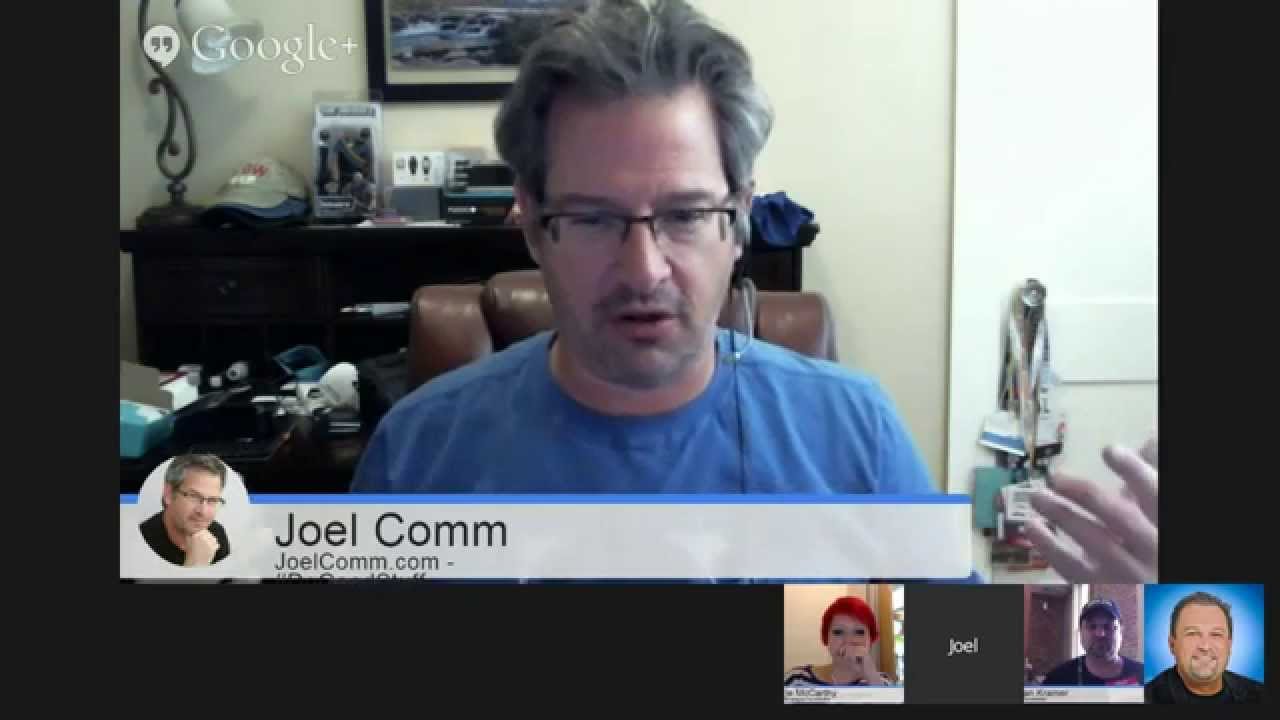
In this live‑streamed H2H (Human‑to‑Human) chat, host Bryan Kramer, co‑host Susie McCarthy, and guest Joel Comm discuss the launch of Joel’s newest book, Twitter Power 3.0, and dive deep into practical social‑media strategy. Joel explains why the third edition was needed, shares the nine‑month writing process, and highlights contributions from Tony Robbins, Guy Kawasaki and co‑author Dave Taylor. The conversation then shifts to core principles for effective Twitter use: authenticity over gimmicks, the dangers of hashtag‑jacking, how brands can listen and engage genuinely, and the distinction between followers and friends. They explore operational questions such as managing multiple accounts, the limits of the 140‑character tweet, new tagging features (photo tags, group DMs), and the relevance of metrics like Klout scores. Throughout, the panel offers real‑world examples (Southwest Airlines, Comcast Cares, Kenneth Cole’s hashtag misuse) and advice for personal‑brand owners on balancing personal vs. professional handles, content‑sharing ratios, and handling audience gratitude. The session ends with sponsor acknowledgments, a teaser for Kramer’s upcoming book Shareology, and a light‑hearted sign‑off.
Chapters
All right, welcome everyone. I am so excited to be here. We have with us today my new co-host, Susie McCarthy.
Hey guys.
And we also have Joel Com.
What up? The eye of the tiger, baby.
Welcome, welcome, welcome. How's everybody doing?
The eye of the meerkat.
The eye of the cat.
Which was given to me by none other than your lovely better half, so I take good care of the meerkat.
I was wondering if that was Courtney's meerkat.
It is no longer Courtney's meerkat, it is my meerkat.
I belong to Joel and Joel alone.
You know, we're going to have to have her send you a Periscope.
Yes, because I sent her a
cat
paw. Yes. Is she terrorizing everybody in your house with that cat paw?
Uh, I didn't realize it was a cat paw. Is that not— did I say that out loud? Joel, how is Colorado today?
Oh my gosh, it's beautiful. I just went out to the store to run a few errands. It's like 72 degrees, gorgeous. The trees are in blossom. There are tulips growing along the front of my house. The sun is shining. The mountains have snow on them still.
Wow, that's awesome. And we've got Susie down south, and when I say south, I mean Southern California. Yes. You know, I just wish that I could actually say a proper hello to Susie.
I'm sure all your viewers are seeing the intense value that we're gonna bring here today.
I
think I'm missing out. I need a cat pod, Joel.
You know, we will— next time you're in the office, Suzy, we'll get you one.
Thank you. You'll love it.
So let's do a quick intro. We've got Joel Comm here. For those of you who don't know Joel, you need to. So just do that. Just get to know him because he has written Joel, 12 books?
See, a dozen books and over 40 ebooks.
So that's why you need to get to know him. That's pretty straightforward. Joel is a New York Times bestselling author of The AdSense Code and 11 other books. His newest one out, Twitter Power 3.0, it's awesome, you need to get it. I still need to get mine. I have a signed copy. And Joel has been leading new media marketing strategy and has been a keynote speaker, is a keynote speaker. I'm sure he'd love to keynote if you have anything for him to keynote at or host. Joel's been a consultant, if you will, partnered with trained companies including Microsoft, IBM, Starz Entertainment, HubSpot, and many others. He's a serial entrepreneur on the web since 1995. That's a long time. Joel has sold a site to Yahoo. Really? True. I didn't know that.
You didn't know that?
Did I know that?
I thought we were friends.
We need to talk about that. I don't mean the friends part. Created a number 1 best-selling iPhone application. Yes, he has. and produced the world's first competitive internet reality show. You can learn more about Joel— well, you'll learn more about Joel. Let's talk about Joel. Joel, tell us about your book. Tell me, why Twitter Power 3? You went 1, you did 2, and now you're on the 3rd iteration. Why 3 iterations?
If we would have called it Twitter Power 4, it would have been like, wait, what happened to 3? So that's why—
You skipped a number.
Yeah, so it's actually been 5 years since the last Twitter Power. The initial Twitter Power came out in 2009, and Twitter Power 2.0 came out in 2010, and the publisher decided, you know what, it's time. 5 years have passed, Twitter now has 284 million active users, and some things have changed. Let's bring people up to date. And we updated the COVID completely. Matt Clark at TweetPages, shout out to him, did it. It's the most beautiful edition ever, and I added my friend Dave Taylor as my co-author. And he's a prolific author in his own right and did a great job helping me bring it up to date. And we just launched this week and blew up the internets. Pictures all over the place of people holding Twitter power.
It did blow up. It was on— when I logged in, it was on every single feed, and it was going off all day and evening. Tell me about the process. What did you do to get it up and running?
You mean to write the book or to do the launch?
Well, let's talk about to write the book first.
Okay, because we're going to reveal during the launch in a blog series that I'm doing right now, so we're not going to give away all the secret sauce yet, just a little ketchup and mustard. But the book itself, you know, it was a 9-month process, and the previous editions, the foreword was written by Tony Robbins, and I decided it was time for somebody new to update as long as we were updating the book, and Guy Kawasaki agreed to contribute the foreword for this book. And yeah, Dave and I are really happy with it. It's really good work. The Twitter Power series has sold more copies than any other book on the subject of Twitter. And I think this is my last one though. I think we've said everything that needs to be said about Twitter, and so this is kind of the definitive work.
Very cool. What's one thing that you really want everyone to take away from all this
I want them to buy a copy. Well, hey, you asked one thing. From the book itself, I really want people to gain a broad view of social media, not just the specific strategies and tactics, but understanding that approaching social media is about people. It's— in fact, you might say it's human to human. In fact, you do say that. Boom! Hashtag hat all up in your business. That if they walk away with anything, it's that people buy from those that they like, know, and trust. And it's all about engaging with people, being authentic, keeping it real, and not being a poser. It's like people can smell a fake a mile away.
Mm-hmm.
So all the things that, you know, the different ways that you go about doing that are ancillary. You have to have that foundation first, so understanding why you're doing this, and it's not about selling more of your stuff. It's about connecting with people, engaging with them, finding out what their needs are, and providing solutions where you have a viable solution.
So what— I'm sure you give a lot of different examples in your book, and I'm curious, what have you seen that has worked?
What I've seen that's worked is authenticity. We just got back from Social Media Marketing World and I gave a talk on Twitter there and I opted to base my whole talk upon Twitter fails for a couple of reasons. One, they are entertaining as heck. It's funny and sometimes shocking when you see what some brands have done. But secondly, they are the most instructive. I find that we learn best from the negative examples, from what not to do, rather than just saying do this. Because in the realm of do this, it's a wide open field. There's so many ways that you can engage in a healthy manner. But when you— there's some things that you just don't do. It's very clear that you don't do this. You don't steal a hashtag just because it's trending without understanding why it's trending. And apply it to your own campaign. That can come back and bite you. You don't put your social media accounts, if you're a large brand or if you're any brand, in the hands of somebody who might go rogue on you and tweet out something like somebody for Red Cross did. They're talking about putting back some beers and getting shizzled. There's just some things you don't do, and if you understand some of the things you don't do, it frees you to have that wide-open field of things that you can do. How you can bring value. You can ask questions and solicit engagement. You can answer questions and show that you bring value. You can retweet others that have great content. You could share valuable articles that are either yours or somebody else's. You can post pictures. You can be creative. And even if you're the biggest brand out there, you can be funny and fun. And people love it when the big brands connect with people on a level that says, hey, we're just like you. We're just real people, we're just trying to do good stuff, and we just want you to know that. Be our friend.
You know, it's funny, you've got a lot of tweets going off right now, and David Pepper, he quoted you saying, don't steal a hashtag just because it's trending. That's interesting, I hadn't heard that before, that's a new concept. When you say steal a hashtag, what do you think that means?
Well, I know what it means. It means people look at what's trending and just because it's popular and trending, they try to leech off that and get some traffic for that hashtag. Well, that's all well and good except when you're Kenneth Cole and you use the hashtag Cairo when there's an uprising happened there and you use it in order to sell more of your clothing. That is a fail. It's not appropriate. It's inappropriate when your DiGiorno pizza and your tweet is #WhyIStayed and the tweet says, because I had pizza, not realizing that the hashtag #WhyIStayed was focused on domestic abuse and reasons that women stay in abusive relationships. So they saw why #WhyIStayed was popular because you had pizza. Oh my gosh, that totally blew up in their faces. But they did the right thing then. They followed through, they apologized, they owned that, you know what, we didn't see what this was about before we used the hashtag. And then they replied to everybody that said they were offended, and their Twitter stream was loaded up with, we're so sorry, we're so sorry, we're so sorry. So I think that's the important thing. If you're going to screw up, then own it, you know, apologize for it.
What brands do you think in general are you— or people in general, do you think are specifically doing a good job when it comes to this type of listening, authenticity?
You know, I think Southwest is fantastic with it. You know, they've got a— what's the word I'm looking for— a plucky character to begin with, right? They're just fun and that carries over to their tweets, but they also deal with the serious issues that their customers deal with. I think, you know, when Frank Eliason was in charge of the Comcast Cares account, he kind of set the bar for us way back, you know, way back, what, 6, 7 years ago? Set the Wayback Machine for not even a decade and Frank demonstrated that you can take a brand that does not have a favorable view in the eyes of many of their customers and really make people begin to think that, hey, they do care because there's a person here. And look, the profile on the account is his face rather than a logo. I so appreciate that.
It's funny, people are still glomming on to this concept of hashtag stealing. Janet Fouts called it hashtag jacking, and she said hashtag jacking is such a cheap shot and can backfire. Alan Berkson said, could you call it hashtag bombing? Yeah, I like that.
Yeah. I think maybe even just tag jacking, I kind of, you know, we can just kind of shorten that. Are you a tag jacker?
So what does that mean in terms of real-time marketing? So we have event hashtags, but then there are also trending hashtags. What advice would you give to brands?
Well, for example, right now I'm looking at US trends on hashtags, and #MusicMonday is up there. Okay, it doesn't take a genius to realize that this is all focusing on new music and what we're listening to today. And if you're a brand, it's a great opportunity to say, hey, You know, at Nike we're listening to whatever it is and #MusicMonday. Now we know something about the person there that's representing the Nike social account and it's tied into a hashtag without any issues. We've got another one trending right now that's #AskTylerAnything. Who's Tyler? I don't know. Tyler Oakley. Anybody know who he is? No. He looks like a kid. He's a YouTuber, he's a podcast host and a shameless self-promoter with almost 4 million followers. I guess I should follow him, I don't know who he is, but he's doing #AskMeAQuestion right now. Well, find out who this kid is and engage, right? That's how you use a hashtag properly.
I love it.
Yeah, I really like that.
So speaking of tagging, you can now, just since you wrote your last book and now the whole idea of tagging has become a thing, You can tag photos and you can tag people into photos, and it's expanded into Twitter private messages where you can have 10 people on a private message. There's a right way and a wrong way. What do you think about using those new tagging and multiple people chats?
So that's an awesome question, and I'm actually taking a picture of me and the meerkat right now for your wife, because I know you had a really good question there, but I needed to show that to her, and you interrupted me with your question. And I lost my lower third again. It's gone.
You have lower third issues.
I do have lower third issues, and I have issues with— apparently there's some sort of I'm turning my camera off again. Am I back? Uh-oh, I broke the internet.
Oh, you're back.
I'm trying to flip my lower third on one more time. Nope, it's gone, so nobody knows who I am. I'm sorry, could you please restate the question?
No problem. So the question is, you can tag now. We were talking about hashtag bombing or tagging, but you can also tag in photos, so you can tag up to I think it's 9 people, is that right, Suzy? I believe that's it. What's that?
I believe that's correct.
Yeah, so you can tag up to 9 people, you can also tweet, chat, private message, I mean, I think it's like 9 or 10 people. And there's lots of right ways and wrong ways to do that, what do you think?
Yeah, so actually I didn't even know about this. It's really interesting to hear. I didn't even— Mr. Twitter Power here didn't even know that you could tag the photos. So wow.
I tagged you in the photo promoting this chat.
See, I'm learning all the time. This is what I— I'm so busy talking about the book and doing all these interviews that I'm missing out on what's even happening. I think it's great. What we're seeing is Twitter is is paying attention to what's working on Facebook. The only thing that Twitter hasn't done really that is comparable to the major features on Facebook is increase the length of the tweets, which honestly I could make the case for why they should let you tweet longer. I find it to be restrictive and I understand their reasons for it, but initially it had more to do with this device with what you can get via mobile. From a practical perspective, it is something that makes Twitter distinct, but I don't know that it's a selling point anymore. Do you agree? I'm curious, what do you guys think?
I don't know, I feel like it causes you to engage in a conversation as opposed to just Broadcasting your thoughts. So a lot of times Facebook posts can end up as, you know, this is my thought on this entire article, as opposed to this is kind of one thought and then someone can respond. I think it lends itself to conversation, but I do see your point.
Well, I don't disagree, but how many times do you find yourself tweeting and go, Man, I'm sure glad that I didn't have more than 140 characters worth of stuff to say, versus how many times do you have more to say and you're frustrated that you can't say it?
Yeah, that's where I use the continued thing, or I find that people tend to understand it, so use the dot dot dot or one of one or one of two. I'm open to that.
I think we should fight about it.
Sounds like it.
I want to fight about it, so let's just do it.
Joel, before we fight about that, I do want to see a fight, I do, but before we see that happen, I do have a question here from Carol on Twitter. She said, I have a challenge with finding the balance with what I post to not have multiple Twitter handles for personal versus professional. What do you think about that? That's a personal brand question.
You actually broke up on me for just a second. I heard something about personal brand.
No, I broke up with you. No, I'm kidding. Hold on. Carol said, I have a challenge with finding the balance with what I post to not have multiple Twitter handles for personal versus professional. It's a personal brand question versus professional. What do you think about that, carrying several Twitter handles versus one?
What a pain that is to carry multiple handles, right? I am me no matter what. Now I have the advantage of being my own brand, so there is certainly a benefit to having one account. But honestly, the more accounts that you have to keep up with, the more oppressive social media feels to you. And I'm a big fan of integrating as much as you can. I really am. Otherwise, what happens is you become a servant to social media because I've got to get this on my checklist and this Twitter account and this one and I've got to keep up with my responding to the person on this one or the person on this one and I've got to do Facebook and LinkedIn and I need groups and I need to be on Pinterest, I need to be on Instagram, I need to be on LinkedIn and for holy sake, I've got to be on Meerkat and Periscope and it's too much. It's overkill, it's overwhelming and so I like to sprinkle a little social media pixie dust over people and tell them, don't let anybody should on you. You should be doing this and you should be doing that. We're grown adults and I think we manage the rest of our lives without people telling us what we should do. Why is it then when it comes to social media all of a sudden we have this oppressive feeling of this to-do list that crushes us and we feel like we're never getting it all done because we You can't, so instead of letting people should on you and using social media in the way everybody tells you you should, why not make social media an extension of your own lifestyle, of your own brand? That means you pick the sites, you pick how you want to engage with people, you pick the frequency, you pick what you want to say, you pick where you're neglecting, but it's part of a lifestyle. And so I don't let social media overwhelm me. It doesn't bother me that I hardly ever Instagram, that I rarely look at Pinterest, that I occasionally do Google+. I don't care because I'm not going to live my life as the slave to social media.
Our friend Amber Armstrong commented back on this and she said, what if everyone doesn't love my food photos? As you know, she's got a professional And she also wants to be a chef. How do you recommend the two?
Here's the thing, people connect with Amber because of who she is, and she's delightful and wonderful. And I didn't know that she wanted to be a chef, so now she's got to cook me up a little dessert or something. This is who she is, and people aren't going to like everybody. I mean, I look at it this way, the President of the United States cannot get half of the country to approve of him, so why should I expect to do any better. Not everybody's gonna like me and I'm okay with that and I'm not gonna like everybody and they need to be okay with that. We got 7 billion people on the face of the earth, there's 300 million Americans, we're not always all gonna see eye to eye and that's fine. Just engage with the people that you find engaging. And Amber, if you want to share your foodie photos, I say Go for it. I give you permission to do whatever you want.
See, I would push back on that because, for example, I'm a huge fan of the Washington Nationals. I'm like a super fan. It's a baseball team. And I recently, about a year ago, I created a specific account to get into the Nationals. I am LA_Natitude, if anyone wants to follow me, any fellow fans. Fun thing with this is there's an entire community online that are they all have some form of you know nationals pride you know blah blah blah blah and you end up I actually find that that specific Twitter handle gets me into that niche community and you see the same with other Twitter handles that are super niche and focused so I would say that if that's your goal so like Amber for example on Instagram. If you do something like Austin Foodie Guru, Austin Chef Guru, or something like that, right? That can actually get you attention based on that name. That can get you followers, all sorts of things. So like my national stuff, I will post occasionally, but I'm not going to live tweet, you know, play by play by play because I kind of like having that separate.
You proved my point, Suzy. You proved the point. You're right, you're absolutely right. You're doing it the way you want to do it.
Yes, I agree with that.
That's what's essential. Like I say, we're 300 million Americans, 7 billion people on Earth, 1.4 billion on Facebook. There's not a one-size-fits-all for this. Social media becomes an extension of your life, and if you want to have another account, do it. What I heard Amber saying, maybe I read this wrong, is that there's an overwhelm in doing them both. If that's not the case, if she enjoys separating them and doing them as you suggested, because your recommendations are great, then I say go for it and don't let anybody tell you not to.
Yeah, I would absolutely agree. When I'm talking to people and they are saying, okay, I need to be on this account, that account, the other account, there are certain platforms that don't make sense for your brand. Right, and so more and more there are some people who are shutting— brands that are shutting down Facebook pages, and I say more power to you. You know, the more we can— you know, different things are shifting, and it doesn't make sense for you to necessarily be on Facebook. You know, and that's just where it is, and so I absolutely completely agree.
You guys, do you mind if I just ask a real quick question? Because I want to make sure we get into the aspects of What a Twitter follower versus a friend is.
Okay.
So Joel, why don't you kick that off? What is a follower versus a— or even, you know, we're talking— you've been talking about this a little bit on Facebook too, but what is a follower, a social follower versus a friend?
Well, I think a follower is somebody who says, I want to see what this person has to say. That's it, right? It's that simple. I'm watching you. That's it. A friend is somebody that— there's varying levels of friends, right? There's the acquaintance and then there's the outer circle of friends and then there's your inner circle and then there's like the friends for life, BFFs. So social has kind of defined what friend means, but I think most of the people That follow us, well, I'll speak for me and you at least, we don't know most of the people who follow us. They follow us because they want to hear what we have to say. I follow people that don't know who I am, some celebrities and some other writers, they don't know me at all, but I follow them. Then there's those that we engage with, and that could be acquaintance level, and then we have those that we're personal with. And now we've got real friends, and I think that it's important to have that distinction in social. Just because Facebook has this term saying, hey, we're Facebook friends, doesn't mean we're actually friends. In fact, I don't know if you wanted to go here or not, but I had an incident happen just yesterday.
Yeah, let's talk about that.
We can. I posted this on Facebook. A guy who apparently I met somewhere not too long ago sent me a message saying, hey, we met at this conference, can we be friends? And if people write me, I keep my Facebook friend connections low intentionally. I think I'm at 2,000 right now because I reserve it for people that I actually meet. And those who send me a friend request that I don't know and there's no message, they can follow my feed, but I decline the friend request. Well, this person said, I know I haven't talked to you much since we barely met on Hangwith. Oh, wasn't even in person, we met on the Hangwith app. But I was wondering what you think about my piece on the top of my wall. He says, congratulations on Twitter Power, some compliments, and he says, no worries if you don't wish to input. Happy Easter. I get requests for my time all the time, and I've learned to draw some really clear boundaries on what I will do and what I won't do. If you had written me and said, hey, would you look at this post, I'd drop everything And go take a look at it and give you my input. But from a stranger who I don't have a relationship with, I said, hey, happy Easter, it's just a time thing, I'm sorry. He wrote back and he said, dude, that's a BS answer. At least you could say you don't agree, but if you can't find the time to read 2 sentences, pretty much means we're not really friends, and that's cool. No worries, mate. Well, I could have let it go at that point, and I could have not answered at all, but I was being I said, I'm sorry you feel that way. It's actually incredibly disrespectful to assume that anyone owes you anything. In fact, I should be sharing this here. Now you guys can see it. To assume anyone owes you anything, especially their time. And so I wrote on Facebook about this yesterday, almost a day ago, and it's blowing up. I mean, there has just been this whole string of people identifying and commenting on what took place with this individual because apparently people can really relate to it. And so, yeah, you know, that's the difference.
You know, it's funny, Martin Jones, a good friend of all of ours, he just said there's a post in there somewhere, the 5 levels of social friendship. And I agree, there is a post in there somewhere, but But even more so, I'm curious, what does it take to become a friend from a social acquaintance to an actual friendship? How does that cross over? And I think this applies to the brands too, because it's really hard for thousands, if not millions, if not a billion people on all of social to cross over from being an acquaintance or a follower to a friend. What does that transition look like?
You know, I think that it's very organic and it's very much like the way it is in the real world, because guess what? Social media is the real world. These are still real people we're dealing with. You can't force friendship. Thank you. You can't force friendship. There's people that you meet that you have a kinship with them and you bond with them and you like them, you really like them and you want to Be with them and you want to get to know them and hang out with them and share a drink with them and go to dinner and have conversations both on the phone and in person and social. And then there's people that they just— there's not that fit. It's like, you know, how do you explain meeting a significant other, right? You could meet somebody that's got all the right qualities, but if there's not that chemistry, then you can be friendly with that person. but odds are you're not gonna marry them. And so I feel like you can't orchestrate this. I have people, you know, you do too, we all do, we have people that want to get close for whatever reason. You know, they think that by knowing somebody who's an author or speaker better, that somehow there's gonna be something imparted to them that they don't have, when the truth of the matter is they already have everything they need because everybody's awesome in their own way. I think needing to get close to somebody and then realizing how human those people are that we see as our heroes is really—
Did you say human?
He did!
What did I win? What did I win? What you're doing is you're setting yourself up for disappointment. In fact, one of the blog entries I'm working on right now is around that, and the title— I'll give the title of it right now. But it's going to be called I'm Disappointed with You. Great link bait. But it's really about the people that I've looked up to that when I met them really disappointed me. And then taking a look at myself and how I've disappointed others who look to me. And I'm no different and I'm no better. And realizing that we need to not put other people on pedestals. We need to be no respecter of any man or woman. We can respect what they do, we can respect the office that they might hold, but as far as elevating them because they might have accomplished more than we have, I've discovered that many people who are greatly accomplished actually can be some of the most difficult people to connect with because they actually think that they're better.
Hey Joel, I have some good news for you. Kevin Thomas Tully, thank you so much for letting us know that HTH Chat is now trending on Twitter. And the title of this hour is HTH Chat, what are we focusing on? Twitter power. We have Twitter power right now.
Woohoo!
Woo! Congrats everybody. So sorry to take away from your answer because I was I was listening, and I could not agree more. I think that it is a friendship versus acquaintance, and managing that is definitely organic. And how we see that is part of the 360 experience. I think that's what you're trying to say right now, Dole, is that it is a 360 experience. See what I did there?
Love it.
And Suzy, I think you've got a question for Joel.
Yeah, yeah. So in general, I got a question that came in through the feed, and I'm sorry whoever answered this, I did not take a note of your Twitter handle. But someone wanted to know, what's the ratio between sharing your content to sharing other people's content?
I don't see it as a ratio. Share what I want to share when I've got something to share. I reshare what other people have when I think they've got something interesting to say. I don't overthink this. That would like make me go nuts. It's all in the moment. And you know, like this last week with Twitter Power launching, I actually felt a little uncomfortable about how much about me it was because so many people were sharing pictures of my book And the hashtag, and I felt like, should I be sharing some other people's stuff? And as soon as I felt that pressure, I thought, no, this is where it is right now. You're in the moment, this is what's happening, people are giving you love, just accept it and go with it. It's not always going to be like this, and so we'll move on and I'll be sharing other people's stuff again, and it's okay.
I like that answer.
And you know who else agrees? The Meerkat.
The Meerkat. I have another question from David Pepper that I really like. Can a brand have a true relationship with followers? I know as a social strategist I get this question a lot. Curious about your take.
So I'm going to reframe it and say,
They're coming to get us.
Yeah, they're coming to take me away, haha. I think that—
Yes, officer. Oh, I have to go, the police are here.
We'll come bail you out because they have pictures. You know, yes, a brand can have a relationship. It does, because people feel an emotional connection with brands. But ultimately, I think it's the people behind the brand that really drive the relationship. You know, if you, if you like Coke versus Pepsi. I don't drink sodas anymore, but if I did, I would drink Coke. I have a personal emotional connection with Coca-Cola. Don't know why, but I do. So there is a connection with the brand, but I would much rather hear from somebody behind the brand and know that I'm connecting with a person and not just the brand. You can't have a real relationship with the brand Because all the brand gives you is, well, you drink the soda. Soda makes me— quenches my thirst and makes me feel good, and that makes me feel bad.
Right. I feel like there is something to be said for some brands though, in that you do get kind of a warm fuzzy feeling if a brand directly interacts with you, depending on the brand. But if you're like a huge fan of— I'm drawing a blank, right? But if you're a huge fan of some brand, a super superfan and they give you a shout-out or something like that, that can be useful, but that's not necessarily a relationship.
Let me ask, let me just jump in with a little side question and we'll get back to the questions at hand. The Twittersphere is just going off here, we love it. And yes, you can hack our hashtag, I don't care. Hey,
where's the Twitter follow hashtag? Twitter power love.
I've been doing it a bit.
It's all about Twitter power. #HTHchat.
#InstaJoel.
Ow, ow, ow.
So what I wanted to ask you, Joel, because I know you have some thoughts around this, and I thought maybe— I know Suzy does too— let's talk about 140 characters. You have some very clear thoughts on that. Your April Fool's joke was awesome.
Oh yeah.
Wait, that wasn't a joke?
Tell us a little bit about that and then also what your real feeling is on the 140 characters.
What joke are you talking about? This legitimate article that was written so happened to be on April 1st. Look how this blew up too, isn't this funny? So basically wrote about how Twitter was finally increasing their character limit and they were adding 1 to it because let's face it, you get to the end of that tweet and that exclamation point won't fit. And Twitter has made us all English fails because we have to save a character, so we have to change the word T-O to the number 2. Right, all our English teachers are like cringing at what we're having to do in order to make stuff fit. But honestly, I don't see why— I don't think it would ruin Twitter to increase the character limit to 200 or so characters. I just don't feel like it would hurt. I feel like it would give people a little more space to say what they want to say, a little more space to engage. And honestly, even though I wrote the book on Twitter, Here's the irony and the truth of the matter, I use Facebook more for that exact reason.
Interesting. I think though in Twitter, it is a space for conversations. We have Twitter chats, we don't have Facebook chats. It's real time, it's supposed to be fast, and if you have additional characters, the speed is going to slow down. Maybe you see that As a positive, I like the pace.
Yeah, well look, I don't disagree, there's going to be people that like it because this is the way we've always done it. I don't think the pace would be slowed, and nobody is saying, hey, now that you have a 200-character limit, you have to write 200-character tweets. You can still write fewer. I mean, how many tweets do we have that we use all 140 characters? We don't. Sometimes they're as short as 50. You can still do that. I'm just saying if people have enough to say that they've got to edit it down where they can't fit the picture, the URL, the hashtag, and they've got to start misspelling words to make it fit, what's the point? Let's give people the room to say what they need to say.
Now you mentioned the URL and the photo, and that's where I'm with you. I think that Twitter should not count links as characters and shouldn't count pictures as characters. I feel like that would make a really big difference.
I don't disagree. I appreciate that they have URL shorteners in there. Sometimes they work, sometimes they don't, depending on how you share it. I tried to share a blog entry and it wouldn't shorten it. It was eating up half of the tweet. Then you've got pictures, and now we can embed videos, which take up a piece as well. Just let me say what I want to say without having to— make the experience such that it's fluid and effortless for me. Let's start a petition, dang it.
I will join the petition if it focuses on not penalizing links and photos. I think we can do middle ground in that area. I believe that if we have 200 characters, People are then going to be complaining that they don't have 250.
Here's the deal, I've never complained about my tweets being too short, but I felt frustration many times about having to edit them, and frankly, I've got better things to do. I just want to share my thoughts.
Yeah,
and
that's Twitter.
Facebook allows me to do that.
So the next book is definitely going to be on Facebook, that's awesome. How do you balance the people that follow you and those that you follow? Do you keep your followers low? That's from Ross Kincaid.
Yeah, well, actually, I'll go ahead and do a screen share for you right now so you can see my profile. Here you go, let's just go to my page. I am following 1,626 people, I have 82,400 followers. So I don't keep it in balance. Once upon a time I did, and I followed back everybody who followed me, and then my Twitter stream became utterly unmanageable. It was just an ongoing stream of people that I didn't know who were following me. And so once your stream becomes unusable and you're seeing tweets from people that are following you but you don't really know, you follow back anyway. What do you do? Well, back in 2009, I want to say, I unfollowed everybody and I wrote about it and made a little bit of a stink. I lost a few followers because of it, but then I decided I'm going to follow people just that I know. So now when I look at my Twitter stream, I know who these people are and I know who I'm engaging with, and these are my friends, these are my associates, or these are just people that I'm interested in engaging with. Same thing on Facebook. I hit the 5,000 friend limit 5 years ago. I finally got to a place where I met somebody new and I'm like, well, who's got to go, right? Who do I bump? So I finally unfriended everybody and then resent friend requests to people I actually knew. And to date, I've got 2,000 people that I'm directly connected to on Facebook I set up a fan page which has got like, I don't know, 39,000 or 40,000 fans, and I'm followed by over 9,000 people on Facebook, people who sent me a friend request but I don't know them, so they're welcome to follow my feed and engage with me.
Nice. And you're able to manage it all?
Well, I manage my life and I'm still here, so I guess so. You know, when you say manage it all, Does that mean I answer every post, that I like and favorite or share everything that comes my way? No, I don't, and I'm okay with that. And I'm not going to feel the pressure of the social world to impose upon me how I structure my life. I am going to be the person who decides how I do that, and in doing so, you let go of a lot, realizing that if you don't, you're subjugating yourself to the tyranny of social media, and it's almost like It's kind of like saying, I'm going to watch 24-hour news cycle and I'm never going to miss anything. Oh, but wait, there's multiple networks. How do you watch it all? You can't. What are you going to do, DVR it and watch yesterday's news tomorrow when there's new news? You can't. It's insanity. So why try?
Just as a caveat, I do want to say though that The one elephant in the room is if you are building your personal brand and you're using Twitter, they do look at follower to friends ratio. As much as we don't want to be part of the tyranny, and I absolutely agree with you and I love that, I think this is something that a lot of us really face, especially if we're working in the social media world. You have to somehow figure out that balance while remaining authentic. I'm not saying let's figure out an answer, whatever, but unfortunately that's the metric that's out there.
I don't disagree.
Yeah.
Here, Jack, and I think you're answering him directly on Twitter, but I'm going to ask it out loud. Jack says, as people are sharing and being an advocate for your book, do you engage and thank those people individually?
Yeah, and so, you know, my response to him was that as time allows, I do, but I appreciate it no matter what. And believe me, I feel a little of the pressure because I want to thank everybody who's sending tweets. But if I did, if I was like, if I had to thank everybody who was sending tweets about my book, Most of my day would be eaten up just like— they just keep popping up. And how does— so my options are to, you know, appreciate it and not answer each one or hire somebody to answer for me. And I really— I don't want to do that because it's not real. It's like somebody else writing a letter on your behalf and sending it. It's kind of deceitful to me. A little. I don't know. I'm still working through it myself. I'm trying to figure it out. So I would like to— so thank you. Thank you. Thank you. Can you just record this and we'll just do a video? Sure. Thank you to everybody, all my peers, my friends, those who I don't know who share any of my content, whether it's about my book or a blog entry or whether you say a kind word. If I don't get back to you, personally thank you, please forgive me, but know I am deeply appreciative because without people like you who are my friends, who show me love, who enjoy my content, who share it, I would be talking to a wall. And sometimes I do that anyhow, but seriously, from the bottom of my heart, thank you.
So wait, what were you saying?
And thank you, Bryan.
We've got just a couple minutes left here, so let me move into the next question because I think it's a really fun one. We're going to have a lot of fun with this one because it's from Ksenia.
Because clearly we're not having any fun yet.
We are ramping up to the most epic fun ever. Those of you who just came on, you didn't miss anything because it's about to get fun. Ksenia is the lead consultant customer experience manager at Tieto. She's in Finland. And she is taking total— she's really tweeting here in the tweet stream, so I just want to give her a shout out. But she had a good question. Guys, what about Klout ratings? Does that look at the balance? Someone has unfollowed me with a note on keeping balance. I think let's just focus in on the question of Klout. I know you have some very clear thoughts on that, and Suzy, I'd love to hear yours as well. What do you guys think about that?
I'll let ladies go first. Suzy, go
for it. Well, I think this is actually good because we're in 2 different situations, right? I'm working on building my social media influence. Bryan and Joel, both of you have established it. You're speakers, you're out there, right? So for me, thank you, Joel, you're at 85. I am at 69 on a good day, 68 on a meh day. The issue is there is— you talked about tyranny. There is tyranny in terms of influencer ranking. Not everyone cares. Some people do care, and they look at it as an initial marker. Even if we're not using clout, and I'm with Brian Fanzo on the anti-clout bandwagon, but there are influencer scores. As a social strategist, I have to look at them. I try to create my own algorithm as much as possible. But there is kind of a game we all play. So it's in the back of my mind. I wish it wasn't because I think it messes with the authenticity of the relationship. But it's the world in which we live and work. For me, pushing my way up, I can't yet say screw you to those metrics. I'm excited to be able to. One day.
So clout doesn't matter, except for when it does.
It does in our era.
Perception is reality, and I think that it's a poor measurement at best, but it's also the best measurement we have. And so there is this weird balance that it really doesn't matter what our clout score is. Trust me, if my clout plummeted to 60 or 50, I would be like, what? And then I'd be like, okay, I'm over it. Right. Because it really doesn't matter. It's not going to change how I run my life. When it does matter is when somebody looks at it and gives it credence. For example, last year the Denver Business Journal, which is the business paper of record in the state of Colorado, did a cover story on Social Influence, and inside they listed I think the top 20 people in the state by their clout score, saying that these are the most influential people in the state. So John Elway was number 1 with a clout score of I think 87, and at the time I had a clout score of 83 and I tied with David Serrato who is a local broadcaster, so I tied for number and was the number 1 marketing social influencer in the state of Colorado. Okay, look, that's simply not true. It's just, it can't be. I cannot be the most influential marketer in the state of Colorado, but the Denver Business Journal said that I was. That gets me speaking gigs here in the state. Does it matter? Yes, if somebody says it matters, perception is reality and it matters. So for people who laugh at it and say it doesn't matter, what they're really saying is I'm not going to leverage something that's been given to me to reach more people. And I think that's kind of foolish. Why not leverage it? It's like having a New York Times bestseller status. It's right here on the book, right under my name, New York Times bestseller. It was for a book I wrote in 2006. But once you're a New York Times bestseller, you're always a New York Times bestseller. Why would you not leverage something that gives you an edge in the marketplace? And that's all I have to say about that.
I agree, and I do check back into my Klout, but I don't do it that often. I think I probably check maybe once a month, and I don't look at the details of Klout. I just look at the one big trend line and did it stay the same, go up or go down, and at that point if it went really far down, I want to know why, like what did I do that tripped up all of my social. But I'll tell you what happens most of the time, it's because Klout disconnects my social media automatically, I got to go back in and reconnect it. It's always Klout that did the— that's the problem. But you know, the other side of that too is that there is no other benchmark. Like, there really isn't another type of clout out there. I mean, you've got cred, but, you know, there's very few competitors that give you a benchmark. So I tend to agree that clout is worth something. I just don't think it's worth everything. And like Suzy was saying, at one point— or actually both of you— you just got to drop it and get over it and actually do the engagement part, because hopefully if clout is doing their job, it's just going to go up because you're actually engaging and you're You're doing all the right things, right? If Klout's doing a good job, that's what's going to happen.
Exactly. That's what I find, is it's definitely— there are a few things, right? Like the follower— there are a few algorithm things that are there. But yeah, if you're authentic, if you're engaging, if your followers are engaging with you, and they will. If you're engaging with them, then the rest will follow, absolutely.
I think when people take it personally and they feel like clout envy, it's like like envy. There's another blog entry that I've got, I've got so much I want to write and so little time, but like envy and clout envy is like we look at somebody else's post and they're like, oh, they got 100 likes on their post, I only got 5 on mine, and we start comparing ourselves to other people. And it's just, it puts us on this cycle of insanity that the best thing I think we can do in life to keep our own sanity intact is accept where we are, that we are where we are for a reason and there's purpose and we're going to work with what we have and focus on just bringing value wherever you are today. That's it. That's all I've got. I don't know if this is No, if this is as big as I'm ever going to get, okay, great, I'm fine with that. I'm going to be trying to do other things, they might fall flat on their face, I could be completely irrelevant tomorrow and you know what, I'm still going to live my life and do what I think is best. And so like stop comparing yourself, there's always somebody who's got more.
Except I have an 82, my Klout score is at 82. I will surpass you here real soon, but we don't need to go into that right now.
Let me just— one last statement for you on that. We don't have to keep up with the digital Joneses.
I agree. I know we're running short on time, but just to add to that, when I do my social strategist analytics, my biggest thing I preach when it comes to influencers is you have to look in the niche community. I've done some work, for example, in the biotech industry, and there are people on there who have like 400 followers. Maybe they're following 800 people or whatever. Their voice is incredibly influential within that niche community. There are certain sectors where we have to get out and not do that type of comparison and look and actually find out who's listening. As long as the right people are listening within that community, that's
Score point, Suzy McCarthy, ding ding ding ding.
Yep, that is a great way to close. So let's real quick, let's say a quick thank you to our sponsors. If it weren't for them, we wouldn't be here with support. Really appreciate IBM, just a quick round of applause for IBM. Thank you to Influitive. They are also helping to support my next book coming out, Shareology. You can sign up at shareologybook.com if you want to get noticed on when that book— and we've got some big surprises coming in the next few weeks. So definitely sign up on the site and we will let you know when that's coming. So thank you, Influitive. Thank you to Mutual Mind, and thank you to another top sponsor, Newstar. and to Freshdesk. Those are our current sponsors. We're always taking more sponsors. We've got 3 months of fun coming leading up to the launch of Shareology. So thank you everybody who is participating and supporting. To you all out there, this tweet chat trended, so that's obviously something, and we did a good job there. To my new co-host Suzy, thank you so much. This has been a great Absolutely. What's going to become a weekly. So everyone out there, this will— Joel, you are setting off the H2H Chat weekly chat, and so thank you for doing that. And also congrats on your new book, Twitter Power 3.0. You can go Google it and it will be everywhere. I promise you it's accessible and easy to find. I leave you with this one Final comment, and that is my name. My name is Inigo Montoya. You killed my father, prepare to die. You can reach me at bryankramer.com. I'm the H2H guy. I really enjoyed this. Thank you so much. Take care.
See ya.
Bye, guys. Thanks, Joel.
More from Bryan


AI Didn't Make Leadership Harder. It Made Fake Leadership Impossible | CODA Keynote | H2H 2.0
Why AI Makes Connection More Valuable | BOLD Awards Keynote Trailer | Human-to-Human H2H 2.0