#H2HChat Unlock the Power of Social Live Video with Brian Fanzo
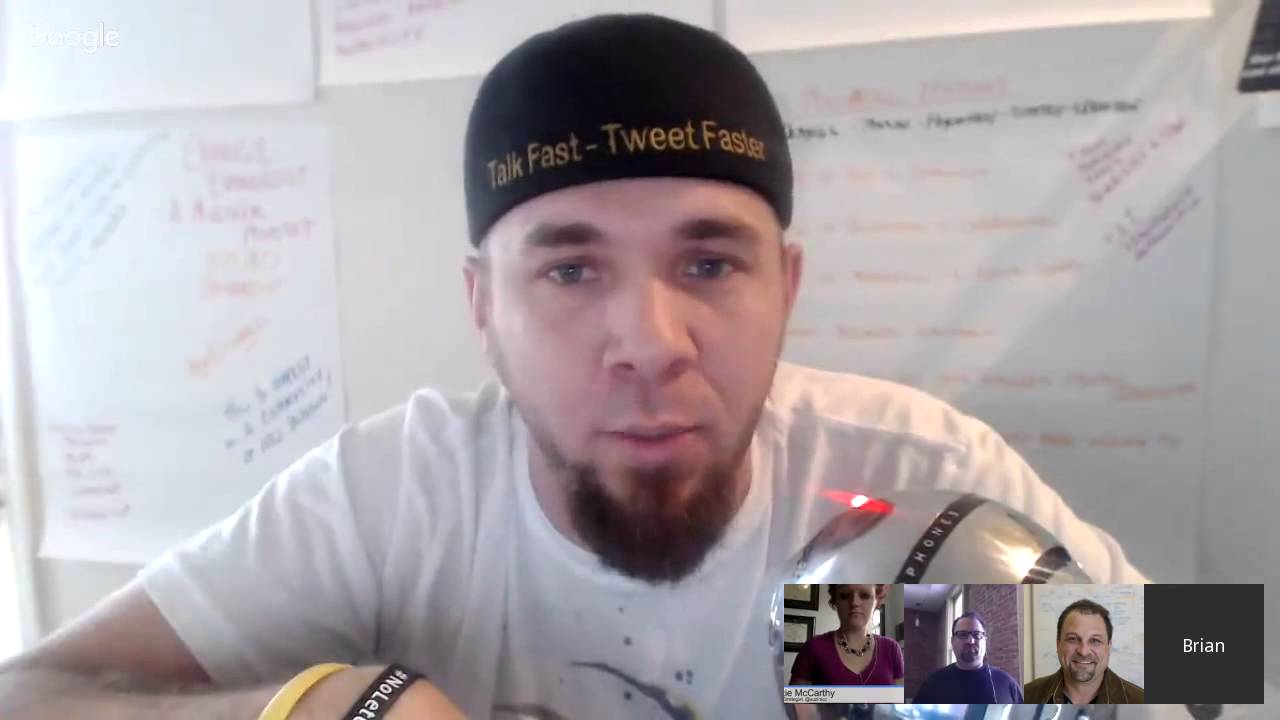
In this special edition H2H Chat, host Bryan Kramer (Speaker A) welcomes live‑video expert Brian Fanzo, with co‑host Suzy McCarthy facilitating audience interaction. The conversation walks through the rapid evolution of social live video over the past year—from early apps like Meerkat to the rise of Periscope, Facebook Live, Snapchat, and the imminent YouTube live offering. Fanzo frames live video as a timing‑driven, access‑focused medium that shifts brands from one‑way broadcasting to participatory, community‑driven content. He stresses the importance of platform‑specific strategies, noting that each network (Periscope, Facebook Live, Snapchat, YouTube) demands its own definition of success, call‑to‑action, and risk‑vs‑reward calculus. Fanzo introduces a four‑step framework—Socialize, Educate, Amplify, Execute—used for influencer takeovers and brand‑owned streams. Authenticity is highlighted as a competitive edge; admitting “I don’t know” builds credibility, while striving for perfection can stifle live interaction. Measurement challenges are discussed, with Fanzo describing limited native analytics on Periscope and the need for creative workarounds (paid‑social retargeting, tracking shares, time‑on‑video). The dialogue also covers storytelling tactics (focus on key takeaways, audience‑driven narratives), the future of platform convergence (Snapchat’s in‑app browser, integrated live buttons, B2B‑focused apps), and practical advice for newcomers (press the button, tell a personal story, leverage community). The session ends with take‑aways about FOMO marketing, celebrating positive content, and the belief that live video will amplify good and drown out trolls.
Chapters
Hey everybody, how are you doing? This is Bryan Kramer here with Suzy McCarthy for another H2H special chat today. Before I jump in, I will let you know why you're seeing a— why Joel Comm's face may look like it got younger. Beauty is in the eye of the beholder. I don't know if that's the right saying for this, but I'm really, really, really grateful for Bryan. I know Suzy is too, for Bryan jumping in. Thank you. Um, uh, not only that, but I feel like we got, um, you know, somebody who also knows, uh, just as much as, as, as we were going to get. So, um, we've got a, we've got a really good, um, program for you. Um, unfortunately, uh, you know, there was an emergency and, and Joel, he's, he's fine, everything's fine, no, no, no issues, but, but Joel couldn't be here today. So, so, um, so Bryan is, is great. We are so grateful to have you and for jumping in because you are also the man when it comes to live video. We're going to see him at Social Media World, and he's been around this topic at the Periscope Summit, which is now, I believe, Live Video Summit. He gets hired from— see, I don't even need your bio, I know so much about you. He's been hired by all kinds of companies, SAP, he was just at the at the Super Bowl helping to build out the live video infrastructure in coordination with SAP for that. And the list goes on and on and on. And not only that, but he's become a good friend both to me, to Suzy, and to Pure Matter, almost to the point where I think he kind of works here, but it's unofficial, so we don't really talk about it. But anyway, I'm really grateful for you to be here, Bryan. You are also on the East Coast where Suzy is, so there's a 2 against 1 Thank God her name isn't Bryan or we'd have a whole Bryan
debate. Oh my God, don't even get me started. We're not doing an I versus Y debate here. You've done it many times, many times. We could generate traction via poll.
Yeah, I wouldn't put it past somebody to do a poll on I versus Y. Suzy, first off, how are you doing today?
I'm doing very well, Bryan. Thank you. Great. Yes, it's nice to know. So you know how normally you start off Mondays by saying it's H2H chat, therefore it's Monday. I'm very concerned that the space-time continuum is going to freak out here. We'll have to monitor this. Very concerned about it. But I'm super, super excited for this. This is, I think, our first special edition one. I think we might have another one coming up in May. Good. So yeah, that's—
Good, so here we are. And Bryan, welcome to H2H Chat, really glad to have you here. Give me, give us, give everyone just kind of a sense as to— I mean, I'm looking at everybody, I think everybody knows who you are, but just give everyone a sense as to who you are and what you're all about.
Sure, no, I'm excited to be here. And for me, I've watched the show since it began, I'm usually on the Twitter side of it, being able to drop my questions in and Suzy so graciously pulls my questions almost on a regular, so I'm excited to be able to answer and ask my own here in the chat. But, you know, I like to think of myself as a change evangelist, and for me, I'm kind of focusing it on what I call FOMO marketing, or the fear of missing out marketing, where I focus really on how do we change our mindset and help brands embrace strategy around anything that's new. I think we've been for too long trying to bucket old technology or old marketing ways into new technologies before we even know what their value is. And so that's kind of where I come at. I've been lucky enough to work with Applebee's, BMW, SAP like you said, and I recently actually became the partner in a company called Backlamp, and we're actually the ones that own the property that was Periscope Summit that is now Summit Live. So Summit Live is part of our family, we're doing, really we're focusing on live streaming, Snapchat, and virtual reality, and really bringing all those people together at a live event. So for me, live video is great, so the fact that I jumped in last minute live is actually probably how I'd prefer it. So well done on that front.
That is true. Way to bring it together.
Just going to say a quick shout out to Paul Bradley Smith, Liz K, Patricia S, Lorena Hathaway, Dawn Carter, Christina Cardos.
Chris Barrows is joining us. It's been a while. Hi, Chris.
Sarah Walters and Mitch Jackson. I see Brian Fanzo is here. We've got Mia Voss, Rachel Miller, Antonio Santos. Hootsuite threw a shout out. Yeah, so we— Shavall, John. Thanks guys, everybody for joining us, really appreciate it. Um, this is all about live video. Um, we are, um, going to be talking about past, present, and future of live video. The first question I want to throw out there, uh, to Bryan is, um, you know, live video hasn't been around that long, and, um, you know, it's, it's, it's like brand spanking new. And so I think we may have— in fact, I think the 3 of us on here may have been in the same room when we all used Meerkat together for the first time, which is kind of in Barcelona, Spain. We did. And probably had an epiphany, all 3 of us together at the same time, that something big was about to happen based on that. And so Bryan, why don't you talk about not just that, but just live video in general and what Where did this thing come from that just sprung out of nowhere?
So, you know, I like to think of it as like the perfect timing more so, and, you know, this kind of plays into my philosophy on live streaming and live video as a whole. Like, you know, anybody can do anything in real time, you know, in real time, you know, doing it real time, doing it live, anyone can do that, but doing it at the right time is where it's a game changer. And I think what happened with, you know, 13 months ago, if you would have said the apps that are out there that are live streaming, you had the Ustream, the livestream.com, YouNow, Hangwith, a lot of these other tools, but they came out really before the technology, and I think our culture was ready to embrace this real failure, live, click a button from your phone. And so I don't think our cell phone networks were ready, I don't think our devices were ready, I don't even think us as a social culture was ready, but the perfect recipe ended up being, you know, Meerkat at South by Southwest is where people found out. But like you said, my first stream was at Barcelona at Mobile World Congress, and we did the behind the scenes with the mobile chat that we did together. And for me, even then, I thought, wow, this is really cool, but I thought of it as kind of like a, just kind of like a, I would say a plug-in to, well, do I post a picture, do I post a tweet, or do I post a live video? And that's kind of how I thought of it originally, because I didn't think of it as, wow, it's going to transform so many different things. I mean, it's transformed my business, my career, my world. And I, you know, to set the stage, I was not a video blogger. I had a podcast that was, that is fairly decent, but not anything that was driving me massive income, my YouTube channel was struggling, but what I believed in is really, you know, I pivoted my career and I focused really hard on telling my story and giving people, and the word I'm going to use throughout this hour is going to be the one word that I believe is the most powerful, it's called access. And I wanted to give people access to me, access to the experiences that I was a part of, and really access into what my world was. And, you know, I'm very lucky enough to go to a lot of the IBM influencer events with of course the Pure Matter team, and for me people were blown away when I would live tweet or I would share a Twitter video from, you know, from those events, because they were like, I wish I could be there, I want to be there, I want to be a part of that, I want access to that awesome experience. And all of a sudden live streaming brought them there, but for me the big aspect was it's participatory content, because it's not just the fact that it's live, it's not just the fact that it's video, and it's not just the fact that it shares to your Twitter or your social channels, but it's that people can actually participate and help shape the content. So 13 months ago, there was such a thing as live streaming, it was more about broadcasting, and I like to call it social video now. I really do think it's— think about it as social video, because it's people live commenting, asking questions. So, you know, out came Meerkat at South by Southwest. This past Friday was Periscope's 1-year anniversary. Periscope actually came out while we were all at Social Media Marketing World a year ago, so we'll be there again in a couple of weeks. You know, and then Periscope came out, and then Facebook announced that they were coming out over the summertime. We had Summit Live or Periscope Summit. You saw some other apps come out like FireTalk and, and, you know, MyEye and some of these other ones coming here and there. You know, and then wrap a bow around it, I think what started to happen was the whole idea of content is great or content is king started to ruin that platform, not really ruin but overrun live video. And it just started to become a lot of people just streaming and and, and doing video just because, not because they had a strategy or they wanted to provide value to their audience, but just because it was a trendy thing to do. And I think where we've come at a year, you know, for me bringing us to where we're at now, is Meerkat has left the scene. Meerkat pivoted, and they're going into a completely different model, so their standalone live streaming is gone. But really it's the 2 big players right now as far as Periscope and Facebook Live. We're going to see YouTube release next month their own version, but I think it's a lot less about the platforms and more about The underlying principle now is we want access, and we want to be able to know that we can actually participate in brands, in people, and in people's lives via live video. So it's been a crazy year. I would have never guessed a year ago at this time that my world would be where it's kind of came to since then, but it's been a heck of a ride.
Well, you and I had a conversation, I think, in San Jose at one point on a generalist versus a Uh, being, being specific, and, and it was kind of interesting because I think it was both planned and unplanned, which is probably, probably the best thing that, um, you know, you became a little more of a specialist in this area. Um, and, and not only that, um, you know, this— it's still growing. It's not really a— it's a specialized generalized area, if that even makes sense, because, um, because live video is so wide open. And what I mean by that is, um, and, and there's a question in here for you. Snapchat is now live video. You can now snap from person to person, and you can do live video now on Facebook, and it's only a matter of time before you can do live video on Google. So how have you— how are you seeing the differences between the platforms in what value they can each bring and what difference How you're going to use each platform, or are you going to pick one and stay with it?
No, that's a great question. I think, you know, for me, you know, I say you have to— you know, people want to look in your digital eyeballs, and really the digital eyeball aspect, Snapchat is just as powerful, even Twitter video. You know, the news that Instagram is going to roll out, that they're going to have 60-second live video now on their stream, not just the 18 or under 20 seconds they have now. Really what our culture has turned into, we have a mindset now where Let's face it, if something is polished, produced, and broadcasted out there, we immediately aren't, I would say, fully trusting it, right? We aren't fully embracing it, we're looking at it going, you know, what are they trying to deliver, what's their value? And I look at live streaming and really social video as it amplifies great things and it complements great things. It doesn't replace, it doesn't compete with your YouTube channel, I'm not saying not to do produced polished content anymore. I actually, on almost all of our contracts that we bid, we actually align with a YouTuber and a YouTube strategy because I believe there's still a massive amount of value in a production quality piece. But the element here where I think we're getting into this new mindset where, you know, the reason Facebook is jumping into it, the reason that, you know, we're going to see YouTube jumping into it, the reason Twitter's, you know, promoted the founder of Periscope now onto their executive board, Kayvon is now part of their executive board at Twitter, is We need to figure out a way, we've been preaching authenticity, personalization, and the fact that we actually want you to trust us. But yet we've pushed people towards canned messages and we, you know, even in the employee advocacy space, you know, which we all kind of love and play in, the messages are programmatic and they're all, you know, and people just are no longer looking for that. And I think the element of social that we really love is we want to know that people are real, The products are real, the experience is real, and that we have an opportunity to be a part of that real experience. And so I think Facebook Live is a really interesting play. I couldn't wait until they got in there. I actually think of them differently than Periscope, and especially with some of their most recent changes, you're going to see some definitely different trends. So when I'm building out a strategy now, I actually would build out a different strategy because I like to define what success looks like and then work backwards, and I would actually have a different strategy for Facebook Live, for Periscope, and for Snapchat, and even for YouTube. Ultimately all kind of around the same content and experience where you could kind of create it in all one big vacuum, but ultimately the strategy and what would success look like is going to be different on each one of those platforms. And I can tell you, Snapchat is not one to sleep on. Their updates and what they're doing right now, I mean, I've been diving all in there, and there's an aspect of Snapchat That is so raw and so real, I think it's flipping even the live video on its head compared to what we expected.
I'm addicted to Snapchat, I can't stop. It's like right up until the moment I go to sleep, it's just, it's really hard to stop. It's amazing. Can you guys, by the way, can everybody smile? I'm going to do a snap of everybody. Bam!
Bam!
Okay, so So let's talk about live video in different instances when we're in the now. We talked about the past, I want to talk about the present, we'll get to the future. Right now I want to talk about the present. So we have a time, there's a time and a place for video, and what I mean by that is, you know, Yeah. And I think we can all agree to this, there's a difference between providing value and providing selfies, or providing value versus providing, um, uh, video of yourself just talking for talking's sake. And what, um, what I see on live video, just like we do on Instagram, just like we do on Facebook, just like we do everywhere, is a lot of people are using it in different ways. What is your, uh, what is your, um, concept? What's your, um, How are you consulting companies and people to use it in the right way at the right time?
Well, you know, I think part of it, you know, the difference between broadcasting and the real idea of social video is you have to be willing to listen, but that doesn't mean, just because it's live does not mean you don't need a strategy, and I would actually argue you actually even need a strategy more so than you ever have before, but part of that strategy has to be the ability to throw the strategy out the window. When the people that are actually consuming it all of a sudden drive the content or drive your strategy down a different path, because, I mean, last time I checked, we are creating content because we want to solve people's problems and we want to reach an audience that is watching and consuming that content. And so when someone's doing live video, you know, my rule of thumb is, you know, if the phone's further away than your arm, you're not doing social video, you're just live streaming. And that's because I believe reading the comments and understanding what's going on is important. But that's not to say that I don't think you can have fun on here and you can use live video for fun. So I think my mantra has been, you know, how do you manage expectations? And then my philosophy is pretty simple, think like a fan. And, you know, for me, every brand, every person is going to be like, wait a second, think like a fan, what does that mean? You're like, I don't have fans, I'm in a mortuary business, which is someone that actually challenged me when I said I could build a strategy for any single industry or business in the world, and someone said mortuary. Yeah. And I sent them back 11 things that I thought they could do in the mortuary space to embrace live video, but for me what it means is, how do I provide access into places, people, products, and things that you can't get anywhere else, right? Like a great example is the Pope landed on the runway and the White House actually had all of the reporters 600 yards from the airplane, yet someone in the White House fired up their Facebook Live and walked 8 feet from the stairs coming down as the Pope is coming, you know, had landed here in the United States. They provide us access that we cannot get anywhere else. It was live, it was real, it was raw, it was really interesting. You know, and then once it came into like the live video interview where the Pope was coming in there and shaking hands, they turned off the broadcast because now it wasn't that unique concept. So for me, part of what is really powerful in live video is not doing it just because, but having a strategy listening to your audience, and then realizing that sometimes your strategy is going to be just access, sometimes it's going to be word of mouth, sometimes it can be a call to action. Oftentimes for me, when I'm building it out with a brand, the call to action is actually driving awareness around either a hashtag or a certain event or product release, where I don't have to drive someone to something else to download. But I can tell you, I'm using paid social right now on top of my live streaming to target some— anyone who consumes live video that I'm doing, and someone that spent the time to watch a live video, and then I give them another piece of content that even adds more value, my click-through rate there is insane because you already know that they're interested.
That's a good little tactic. So it is a pay-to-play platform when you, when you talk about it that way, using social ads to drive views, but then providing value on the other end that's unexpected. And so as a personal brand, that works really well. How do you see that working for brands?
So for me, for brands, I think it works even better than even a personal brand, because, you know, if you have a product release, let's say you have a— let's say, well, let's take Snapchat for example, right? Snapchat should have been on Periscope. So because Snapchat is releasing Chat 2.0 yesterday, and it was a massive release. Well, an hour before they went live with the Snapchat release to the world, how awesome would it have been to have access into their war room? room, and seeing their product managers running around and making sure that all these things— and what that would have done is not only would it have created buzz, but it would have actually made you feel a part of that release. And then you're almost creating advocates as a byproduct of giving them that access. And really, what would you have exposed? What's the risk versus reward? Because I'm a big fan of risk versus reward. I don't think live works in every instance, in every case, if the risk is too high, if you're exposing intellectual property, if you have paid viewers and you don't want to alienate your paid crowd. But for me, what it ends up coming down to is, well, how do I give them access into this, hey, this is what we're doing behind the scenes. I'm going to give you on my Periscope, you know, 15 minutes to ask our product manager about this new release, even before you get your hands on it. That kind of exclusivity is really what building communities is all about. Because the difference between building a network and building a community is you're bringing people together around a shared purpose or a shared passion, and nothing is more powerful to do that than video. Because we can all say that we care, we can all say that, you know, we're tweeting out of our own handle, but let's face it, nobody believes that the CEO of Coca-Cola is tweeting from the Coca-Cola Twitter handle. But the thing about live video and social video, and this is something that if people get to take away, this is one of the things that I really believe you should take away. The most powerful phrase on social live video is, I don't know. And the reason that is, is when you say, I don't know, on live video, when you deliver what you do know and you answer questions, it adds instant credibility and validity to what you're actually saying. And we already don't believe that you're perfect, and we already don't believe that you know everything. So when a brand, when a CEO, when an executive, when anyone in a company is willing and able to say, I don't know, to things that they don't know, or let me go look into that, the conversation then is so real and raw when they're delivering the value compared to someone just posting up something that makes it sound like they do know everything.
Right, so you're saying, if I'm hearing you right, that it's Good to be human.
I would say human is actually the driving force behind the success of live video.
You heard it here folks. Okay, so when you are looking at a live experience and you're looking at an event, you're talking about— actually just before I dive into that question, let me just make sure that everyone understands the format, because We are on a Thursday, on a different day than our typical Mondays, so anyone that's new or has just been enjoying the content, please continue to do so, but also drive questions at Bryan because in 10 minutes, Suzy is going to take those questions and ask them on your behalf with your name to Bryan, and we're going to get those questions going out loud. So for the next half of this, we'd really love and appreciate your questions. Make sure that you hashtag H2H chat so that we can make sure that your questions are caught and, um, and used here on, uh, on the live video. We are doing a live video talking about live video with Bryan Fanzo. Thanks for jumping in again, Bryan, I really appreciate it. Um, I owe you a big, big bear hug when I see you next, on top of, you know, a big smoochy kiss. So thank you so much for doing this.
Bring it on.
That needs to be, um, Snapchatted.
See, that's an instance where it's Snapchat-worthy. I don't know if it's livestream-worthy.
So my question was around— last question before we go into the future. When you're in an experience, when you're at an event, is the event live experience split between personal brand? What is the split between personal brand and brand sharing the live video? Is it better coming from a Bryan Fanzo, is it better coming from a— I think it's a little bit of both. Nike? Is it better coming from a Red Bull, or is it better coming from a Tony Hawk? Where is the split between personal brand and brand sharing when it comes to live video streaming?
I think that's a great question. I think, you know, something we're going to see a lot more of in 2016 that we haven't seen before as much is the idea of a takeover. And really Snapchat is kind of mastering this, but you know, when you're working with influencers and they're doing it on their own channel, you really want access to their audience, you want access to their community, but there's also this element of you want to drive them to your own channel so that you have future content and you get kind of a greater presence around it. So when I'm working with a brand, I first want to define what success looks like. Do we want to just drive awareness? Do we just only care about this one-off event? But ultimately what I'm trying really hard to understand is, how do we provide the most value that ultimately allows for the continued conversation. Because here's the thing, and this is going to be a little bit harsh, but there's lots of live streamers that are out there today that have worked with lots of brands, and, you know, some brands that are even bigger than the brands that I've worked with. But here's the difference: if you can't get your brand to call you back, all of these people can get a one-night stand with a brand doing live streaming because it's the shiny object, it's the fear of missing out. But one-night stands are easy when it comes to this influencer side. It's how do I provide ultimate value? How do I help build them an audience How do I define what success is? So I'm looking at things like, you know, for me, I love doing a broadcast and educating my audience, and I have a simple philosophy here. It's called socialize, educate, amplify, execute. Socialize, educate, amplify, execute. And so I socialize that I'm going to be taking over the handle at Social Media Marketing World, and I'm going to be the official live streamer and official Periscoper. And then I educate people on why that matters to my audience and why Social Media Marketing World would actually want to be there for me. And then I amplify the content that actually Social Media Marketing World is putting out around me doing that live stream and taking over and being that official Periscoper. And then when I get there to the event, I live stream behind the scenes how excited I am and saying, hey guys, make sure you're going over there and following that. Therefore, when I do the takeover of the account and I'm the one behind there answering the questions and kind of driving what that content is like, not only did I bridge my own audience, but now they've all understood why I'm there. You're not getting questions on like, Why is this person doing this, or why is this person doing that? But the problem is, and Bryan, you guys, and Suzy at Pure Matter, you guys know this really well, the problem with that is too many brands pick the wrong influencers. So when they try to do that takeover, it doesn't make sense because the person isn't the right fit for the community, or the product, or the brand, or the actual delivering of that kind of message. So I think when you start with the right influencer, that understands your community and can define and can ultimately get you to success. I think takeovers are going to be massively important because I think this is the way that we kind of link, and you know, and as an influencer, why would you not want to be running the Coca-Cola Snapchat handle for a day? Why would you not want to be off of the other handles? But the problem ends up, you can't just jump on there and press the button and immediately think your influencer followers are going to be there, and it does require trust. If you the brand don't trust that influencer, You're going to have a lot of problems.
Socialize, amplify, educate, execute?
Socialize, educate, amplify, execute. So S-E-A-E. I wish I could have a better acronym for that.
Great, I'm just building you a meme here, that's good stuff.
See ya.
Alright, so real quick, what was that, Suzy?
I was just trying to sound it out, yeah, you can't, it's not phonetic. We'll have to work on that.
So, um, okay, final question before we dig into some questions is the future of where live video or streaming video is going. I know there's a battle there between whether it's live video or video streaming. I'm between the two 50/50. I just use whatever comes to my mind. But anyway, what is your thought on this? What do you think is going to happen? I mean, so much has happened in 1 year. What's going to happen in 2 years, and then where are we going to be in 3 years? Start with 2 though.
So I think actually Snapchat is going to— the update for Snapchat yesterday, I believe, underwritten so many things that we didn't even talk about. So everybody's talking about the live video, and there's chat bubbles, and there's stickers. But what Snapchat did that many aren't really realizing is they're creating their own ecosystem of conversation, collaboration, video engagement and you don't have to leave. When you open a link inside of Snapchat now, it actually opens in a Snapchat browser inside of the Snapchat app. It doesn't send you to Chrome. When you go live on the video and you have a video call in Snapchat, it keeps you within the Snapchat app. Where we're at right now with Facebook Live and Periscope is they— Facebook Live now moved their live video to where if you want to broadcast from a page, you have to either do it from the Facebook Pages app Or you have to do it from, if you're one of the people that has a verified account, you can do it from the Facebook verified app that you get access to. On Twitter, for Periscope, you have to do it from a Periscope app. So what I think we're going to move towards in the very near future is we're going to have synergy here. We're going to bring these, this video, this conversation, this live engagement, everything that is existing and everything that we're doing when it comes to real live social video, if it's about building a community inside of a social network or on a social network, That app is going to have to live within that first place. So I wouldn't be surprised if we don't see in the next, you know, 6 to 8 months Periscope being a button across the bottom like you see Moments there down below. I also wouldn't be surprised if we don't see a couple new apps come out that are more B2B focused, that give you some more additional call to actions. And let's face it, Meerkat still has some great features that have yet to be implemented on any of the features, like let's say Cameo or the call to action at the end or a homepage that actually is followable. So I think we are, not only are we in the infancy, but this is my call to action for everybody. If you've never live streamed, if you live stream today, you are still an early adopter, and you are still helping shape what live video, social video is. Because just because it's been around for a year, some people are like, well, it's been around, it's, you know, it's been the shiny object. We still don't know where it's going. I have no clue, but I will guarantee 2 things. Storytelling and authenticity are going to increase in importance the more we get digital, the more we have Internet of Things, the more we do cognitive computing. And as storytelling and authenticity increase, the ability for us to do video collaboration and let people know we care is also going to increase, and that's why I'm all in on live video.
Fantastic, man. That was— I don't think everybody could take notes as fast as you were talking. I don't think anybody can anytime in I'm talking. I'm going to pass the baton over to Suzy now, and I'll jump back in from here to there. Thanks again. I told you I'd thank you every 10 minutes here. Thank you again for being here, and great stuff. We'll pass this over to the community. Keep your questions coming. Just throw in your question, #HTHchat, and Suzy will Make sure that either it's posed to Bryan or we'll hit it up after, after the chat. Um, we've got some great tweets going on here, so.
Can you tweet out the, the YouTube link as well? I have Periscope live and running now, and the people that are watching, our friend Angus Nelson is watching as well, and they're asking how they can actually watch the, uh, the Hangout version of it. So if you could tweet that out.
Yep, yep, I just, I just, I just sent it to them. I'm sure Suzy probably did too.
I did as well. Yep, we have the live, the live landing page. Um, Where actually there's an embedded Twitter feed so you can get all-in-one access there. So thank you so much everyone who is joining us and sending in your questions and thank you so much Bryan for being here, tuning in. This is just, this is great and our Twitter stream is absolutely flying. So I want to go ahead and we have a lot going here so we're going to go ahead and do a lightning round style. Um, to get through as many of these questions as we can, if that works for you.
Bring it on, let's do it.
Alright, let's go. Okay, so a great question from, I know, our mutual friend Julie Zisman. Sorry, Julie, so glad you could join us today. So she's asking, are video platforms places for community or just a channel to drive their growth?
So I believe live video amplifies what you're doing. So if you, you know, my tagline is if you suck offline, you're going to suck on livestream, and if you're great offline, you're going to be great on livestream. So I believe community is about people and about a shared purpose or passion, and if you're able to amplify that, give people access to that, yes, it's a great vehicle for letting people understand what your community is about, but it will not drive, it will not build a community from scratch. And, you know, part of the reason that live video is so powerful is you can't automate it. You can't fake it, you can't do a lot of the things that we've done before, but also it requires a lot of effort, give and take, and the reason that I don't know sounds like an easy answer, you know, when I said it's the most popular phrase, it's still scary to say I don't know today in today's crowd. And so when you're saying that, not only are you building authenticity, but people want to rally behind you, and that builds a community. So don't underestimate the power of explaining what you don't know or even just amplifying someone else, a customer, a prospect, or a product.
So what would you say to a brand who expresses concern about technical glitches or that type of real-time issue for their brand voice, for example? So they want something produced well, they want it to look good. Where is that balance? What do you say to them? I love that.
That's my favorite question because on my first slide of my pitch deck, I have 2 words that are giant words and it just says perfection and control. And I simply say, if these are 2 words that you require, thank you for our time, my meeting is now complete. And what I mean by that is, if a brand believes that their audience wants perfection, which I don't think they do, and they believe they require perfection and they must control the message, control the story, control the engagement, live video is not for you. But I would actually argue you're going to be in trouble really soon in the business space So for me, what I actually think about is, let's talk about risk versus reward, and let's set up some parameters. I ran the IBM handle the very first Periscope they ever had, and what we did is we created a list of possible questions and things that we might deal with, and we built out answers to what I might say to those, those type of questions, and I started mitigating that risk. I then did a private livestream, a private Periscope with a lot of the executives over there at IBM that were worried about that, and the legal team, and therefore all of a sudden they started realizing, oh wow, and you know what, the best comment I got running that Periscope, Bryan, this is just as easy as, wait for it, as being a human. And I was like, yeah, it's that easy.
I like that, I like that. BK handles the applause button, so when there's a delay, I don't need to do it. There you go. Alright, that's a great answer. So I have a great question here from David Kampman. David, thank you so much for joining us today. Um, he says, how much live streaming, um, is too much? Do you think too many people are doing it, um, and, uh, not, not enough with quality? So this is basically quantity versus quality. Talk to us about that.
Yes, massive problem of that. We have a massive problem now with content. How many people are creating blogs on their blog, on their website, because they told people they would do 5 days a week, not because they have valuable content, Not because they have something to say, not because they're going to add value to someone's lives. But for me, I actually think Snapchat actually helps with that a little bit too, because, you know, the word storytelling to me, I study storytelling more so than anything else I do in my entire life. I study Martin Luther King's speeches, Steve Jobs' understanding. I always say that if you want to understand storytelling, let me go watch you order fast food, because I will understand how good of a storyteller you are on how well you are at relating your message to the person behind the counter. If they mess up your food every time you order food, it's not the person behind the counter or the restaurant's fault, it's your lack of ability to understand how to storytell, because storytelling requires listening, engagement, and actually conversation rather than just broadcasting, which is what most people do in that case. So for me, what I actually would say, like, as we're moving towards this idea is nobody will ever say you're helping too much, or you're providing too much value. But this is the caveat: value is determined by your audience, not by you, the streamer. Too many people say, I just created a valuable live stream and nobody watched it. Well, apparently it didn't add value, because value is actually determined by those that are consuming it. So I think, you know, when it comes down to it, let's, let's have a strategy, let's have a focus, and let's understand that we respect everybody's timeline We respect everybody's time. If something is not— you know, like for me, I will probably think about clicking the button 6 times for a brand, and I will do it twice, because I will try to define what does success look like, and where can I provide the most value. And that most value oftentimes means having a strategy that's going to get lots of people asking questions, and then letting me kind of shape my content based on their questions.
So great connection here to a question from our buddy David Pepper. David, so glad that you can join us today. He wants to know some examples of the ROI of livestream access. I know both you and I have had conversations about the difficulty with using the dreaded term ROI, but let's be honest, our clients ask about us in terms of ROI, right? So how do you answer that question?
So for me, unfortunately, I think we're stuck in thinking ROI is only a marketing ROI, and I will argue that, you know, if— show me a website that doesn't say that we value our culture and we trust our people. Show me a website for a company that doesn't say that. I almost guarantee every single brand, every single company says that. But do people really believe that? And I argue most people don't believe that. You know, why is the number one lead recommendation for someone getting a new hire is an employee recommendation? Why are employee recommendations so valuable? It's because we trust our friend, that employee, to actually recommend us to a company That is what they preach. And I will say ROI in live streaming actually comes in multiple different forms. You can show access to your culture, to the people. You can show that you trust your employees. Well, why don't you do every month we're going to do a different department takeover, and 4 people in each one of our departments each month are going to take over our own handle. They're going to share their story, give you access into the products they're working about. And then when someone asks you, well, I see your website says that you trust your employees and you value them and their story is important. the greatest— the reason great companies are great is because we have great employees. You are able to actually direct them to something that you let them do because you trust them and because they are great. So for me, when we're talking about ROI, it doesn't have to be a direct marketing ROI. Right. But I will also say this, there are people that are doing it really well. I think Chris Ducker has done an amazing job of driving, you know, people sign up to his solopreneur.com, where he spent like 2 months never talking about his own Academy and things that he does in his space, but he was building rapport and thought leadership. Eventually people kept saying, well, how do I work with you? How do I be involved with you? Hmm. The ROI of all of those jabs is when he did drop the link, the amount of people that jumped at the opportunity to work with him was enormous. You know, the opportunity for me, I even call up other apps. I called up Anchor and said, hey guys, just letting you know, I'm going to promote your— I'm going to do a review of your app on my Periscope. I want to make sure you guys are able to handle an onslaught of people. And they were like, yeah, we had Gary Vee write a blog about it, we're ready to go. And I said, no, my audience jumps. When I say jump, not because I'm that person that, you know, has built an audience that is able to take a right hook so easily, but they trust me, they know when, if I'm going to deliver something like that, that it's worthy of their attention and their time. And so I actually would say ROI ultimately comes down to, when it comes to live video, If you amplify great things or great products or great experiences that people want to purchase, you don't even need to give a call to action. By just amplifying that, they're going to ask you where they can be involved.
So when we're looking at, let's say, ROI, right, or these concepts, how does this boil down to metrics? What are you looking at?
Well, I would tell you right now, unfortunately, we are very handicapped in the metric department on Periscope. On Facebook Live, even on Snapchat for that aspect, even on Blab for some cases. And I didn't mention Blab earlier, but Blab has been my gateway drug for many a big brands where they don't want— they don't like— I don't want an influencer talking into their phone. I don't want to— I don't know about this holding a monologue conversation and being all preachy. But then you say, well, let me interview you on Blab. Let me bring you into Blab. Let me be the one that shapes the conversation. All of a sudden they're like, oh, I like that. And then I started building them out a Periscope strategy, and they're like, ooh, I like that too. So for me, when I think when we're kind of walking down this new path and how people understand live streaming and the KPIs and the value proposition, I think ultimately the more we kind of trust that sometimes it's not going to be perfect and our audience is okay with that, I think the more value we'll be able to provide. But the metrics, you know, Suzy, we're both data geeks. I do a lot, you know, I have a spreadsheet right now that is tracking my number of Snapchat followers. So every time I get a new follower, I add it to a spreadsheet manually. That's circa 1999, right? Like, this is ridiculous. On Periscope, there's a couple tools that I'm able to use and have access to, but I believe, this is a quote that I've been saying a lot, limitations inspire creativity. Limitations inspire creativity. So if, for me, if I can't get the data from Periscope, I'm going to drive a campaign or an awareness project that says everyone who shares this broadcast to Twitter with the title, I'm going to give away something. So guess what happens? Everybody shares it to Twitter, now I have access to every single user that shared this to Twitter because now I have their Twitter handles. And I put them in a private Twitter list, and then I upload them into a paid social campaign, and then I target them with a white paper where they go and download a white paper to give them additional value. Now I got their email address. So just because I can't get that data directly from Periscope doesn't mean I don't get it. It just makes me be a little bit more creative, which I would argue is actually probably a good thing, because there is no easy button, and marketers do have to think kind of outside of the traditional box, or maybe even use the box to your advantage.
So the key in some ways, what you're saying, is making sure that you're connecting it to the rest of that funnel. Right, so you're bringing in, you're getting the data by connecting it Through Twitter where we know we can then— Twitter has enough tools where we can track that data, where we can track all of that information. Follow-up to that, the one thing I would say is what metrics within the app itself matter? Are you looking at views? I know one of the issues with Periscope is people click around, so it says you've had this many viewers, but maybe they were on for 2 seconds.
Yeah, I like time on video. I like time on video. I love time on video. I want to know, you know, you don't even have to engage, because unfortunately Periscope, you know, I do a lot of stats, and I would say 65% of my audience on my Periscopes watch via the web, because I broadcast a lot during 9 to 5 hours. Well, unfortunately on the web you cannot comment, which is a ridiculous limitation. Periscope should be listening to this and know that I will say from the— scream from the rooftops The fact that we're not allowing engagement from the browser is ridiculous. But on top of that, so I know that I used to really be like, I want comments, I want questions, I want conversation. But I also believe this is something every— when I'm working with a brand and I pick out an influencer, one of the things I got early on that really worked really well for my behavior and didn't work for other people that had bigger followings is they would say, Bryan, the reason we're picking you is we know that Twitter is where people engage with you. When you're not on livestream. And for your brand and for you as an influencer, you have to have a home for your engagement when you're not live, because there's replays, there's community conversations, and people want to know that you can have those conversations when you're not livestreaming. Because let's face it, nobody should be livestreaming 24/7 or doing, you know, a lot of the extra access. So for me, Twitter becomes that, but the interesting thing has been actually Snapchat is actually my new home for giving my community a voice. So I'm actually giving a call to action at the end of Periscope saying, guys, thanks so much for all the comments. I know some of you I couldn't get to your questions. Do me a favor, snap me a video, answer, or, you know, ask me a question via video on Snapchat, and I promise to reply to every single one. And your answer, you might be like, wait a second, they can't see that, that's not public. That's the point, because people will not comment and not engage you on Snapchat on that one-to-one element unless it's a valuable insight or they actually want to hear what you have to say, compared to if I say, hey, just tweet me, they're going to tweet me hoping that I retweet. But the ability for me to say, community, I will listen to every single one of your one-to-one questions, that gives my community the understanding to have access. And remember I said access was my favorite word? They now not only have access to comment and help shape my content, They also have access to me via Snapchat as kind of a video conversation, maybe until Cameo pops up in Periscope.
Okay, seriously just wrote that down because that is something going into my book of social strategy. That is absolutely brilliant. I love that concept because people do respond differently. I think that there are, I mean, definitely benefits in the public conversation too, right? Because people are going to respond in a different way, perhaps to begin conversation with the community. But I love the concept of the private. So we have a good friend from our very mutual good friend Rachel Miller, says so many brands are using live streaming as a one-way channel. How do you coach them to leverage the two-way benefits? This is such an important question.
Well, you know, I think that's why I always say that, you know, there has to be, you know, within arm's length distance away, but you also have to manage expectations. You know, I live stream my own keynotes, I live stream when Bryan Kramer was interviewing Robert Scoble at South by Southwest. And what I put on there is I said, interview, you know, it said iSocialFans takeover, but the idea is I'm facing the back of the camera towards the interviewee, so people automatically know that I'm not able to answer questions or engage. And I think a lot of people get intimidated because, let's face it, most people can't talk as fast as me, and that's probably a good thing, because most people have to say, wait a second, Bryan, slow down. But I think you can actually manage expectations in your Periscopes and in your live streams. So if you're like, Bryan, I'm so afraid that I'm going to get off topic, and I'm so afraid that they're going to disrupt me, this is what you do. You get on there, and I have a 5-step program. Every scope, you jump on, you introduce who you are, you welcome people to the room, and then you deliver your content. And before you deliver your content, say, guys, I just want to get through what I really planned on telling you, and then I'm going to open it up for questions at the end, kind of like what you guys do on the show. And then the people in your community will actually tell people that are asking questions while you're delivering your content, hey, he said he's going to answer that at the end, hey, he's going to answer that at the end. Well then you go, okay, well now that I'm done delivering my content, now let's talk about your questions. And that allows you to not be worried about seeing and answering every question, but still using that added social value of it, right? And then the last thing I always say, the 5th step is, so your first step is you welcome people in the room. Second step is you introduce yourself, because you always have to, no matter if it's your first time or you only have one viewer, you want to introduce yourself. Third thing is you add value, the fourth is you engage, and the fifth is you recap and you get off the stream. And the reason I say recap is recap also kind of pulls the conversation together, and if someone jumps in at the end, it gives them a reason to go back and watch the replay or reach out to you on Twitter. Right. So I think part of the thing that's scary for people that want to only treat it like a broadcast, is the thing I said before. If you're not willing to say I don't know, it is scary, but I will argue day in and day out, saying I don't know will never hurt you, never. Unless you're saying I don't know about your own product that you're the product manager of, okay, that might, I guess I can't say never, but I will say for the most part, even if you're saying I don't know about something else that's happening in your business and I will follow up with you, most times people just want to know that their voice is heard and that you're authentic with what you're preaching. So if you say 10 things that you know and none that you don't know, why would they believe those 10? But if you say 1 that you don't know and 10 that you do know, it just adds instant credibility to those other 10 things as well.
Interesting, so it almost sounds like in some of these issues, if someone isn't, for example, willing to say I don't know, then perhaps they have a bigger problem going on. At their company, and that's probably where you're saying, well, I can't quite fix that, come to me once you're at a different point.
You know, unfortunately, Periscope live streaming will not fix stupid, and it also will not solve a people problem, right? If you don't trust your employees to begin with, you don't trust the people behind there, that problem is a trust problem, not a live streaming problem. And, you know, ultimately, if you give them swim lanes, like, I don't believe in telling someone like, Hey, go livestream from Amazon's Periscope account. But if you give them, you know, I always say if you give someone a whiteboard, they stare at it. If you give them a square in the whiteboard, they'll actually fill in that square because it's actually giving them some kind of limits but not limiting them to only one line. And it's the same way with livestreaming. I want to know what I can't say, what I can say, but I also want the ability and the flexibility that you trust me. And it does take a little bit of a while. You know, for me, I'm usually the guinea pig. I'm usually the proof of concept for most brands. So they hire me, I run their scope, but my goal with my strategy and our company at Backlamp is I build your strategy, I do the proof of concept, I help you identify the right influencers to work, and then I educate your employees on using this technology, and then you never see me again. Because I still believe the greatest asset and the reason a company is great is because they have great employees. Unfortunately, we don't trust them, we don't train them, and we don't supply them with the right amount of tools to actually amplify that. And I think live streaming can actually streamline that entire process if you're willing to say that you don't know and to admit that you don't trust or don't train your employees well enough to use this kind of technology.
To what— so I have a question from Jeremy here, and then I want to kind of add to this. Jeremy Murphy, thank you so much for tweeting this in. He says, how can we be more focused with our storytelling on live streaming? And I'd like to kind of add a second question to this. Which is, how much should a livestream be scripted?
So I'm not a scripted person, I don't even script my keynotes, I do 8 key takeaways of every keynote, I have no idea what each—
You're not Bryan Panso.
Yes, I know.
I'm talking about say an exec, right, or someone, you know, think about it in terms of a brand.
So I'm a big believer in understanding key takeaways, right, every single call I get on I say, what does success look like? And if you start with defining success, you don't have to define, you don't have to start writing down all of these different things that you have to say. Wait, how can I define success? What are the key takeaways that I need someone to consume when, to hit that success metric? And let's be real, if you got, you know, everything I do has a strategy, every tweet, every like. So me jumping on here, you guys asking me to join, I define what success looks like for me. So if you've noticed, I've reiterated a couple key terms, a couple key phrases, a couple things. That I want. That's because I knew, I didn't know what your questions were, I didn't have a single idea what your questions were, but I knew, hey, success would look like by this, I need to actually make sure that these are the key takeaways that the audience that's watching this takes away. So storytelling also is interesting, is there's something that's really easy to do that we don't do enough. Ask your audience what they want to see. You know, I did 20 hours of live streaming for SAP, at the Super Bowl, and we got tons of amazing content, amazing conversation, but their entire content calendar for the next 12 months can now be shaped based on the questions they got during that 20 hours of livestream, because let's face it, if you have a lot of people asking the same question on live video, my guess is that's a small subset of a greater problem of lots of people asking that question. Why not create a video, create a stream, why don't you even go create a YouTube video or Snapchat campaign that answers a question that you got asked on live video. So for me, don't be afraid at the end of the thing saying, I would love for you guys to tweet me a suggestion or a question that you would like me to cover on my broadcast. I can promise, it's that millennial mindset. Millennials are— and anyone that's a millennial mindset, which it's not the year you were born, but it's your ability to embrace change. But it's, if you have that mindset, you're not afraid to speak up. Suzy, you and I know that, you know, very easily. And I think when you empower people to speak up and have have the opportunity to help shape the content you're creating, the story you're telling is then that much more well received.
So it's so interesting, because what I'm hearing here though, you know, live video, the technical change, absolutely, that's a very now concept. But a lot of what you're talking about in terms of community, involving people, all these different things, these are things that we know, right? And generation after generation, when you have a goal, when you want to build a community, you're inviting them in, that's when it becomes strong. So in some ways we're having age-old tenets that you're applying to the present.
Well, and I would actually argue, and this goes into Mr. Human over there, I remember reading H2H, his book, and I remember thinking, you know, for me, I was never a marketer to begin with. I was a tech guy, a community guy, social business employee advocacy space is where I played. But I think what happened in the last 5 years is our digital, our marketing, and our sales was still living in this notion that we knew more than our audience, and our audience needed to be told what they want and told what we think, and we wanted to talk at them. And I think what we've kind of realized in the last year and a half or 2 years is that that isn't the case as much, and people not only have enough data and access to things they want in their everyday life, But people want to feel part of something. We want to actually feel like we are, we are, we are, we not only are we heard, but our voice matters. And I think we're actually coming full circle now, and as the more technology advances, the more innovative we have, the more devices we get, the more importance is going to be placed on authenticity, listening, community. And so I think you hit it on the head, Suzy. To me, the reason I've been able to build out great strategies for live streaming is I go back to the basics, I keep it simple, and ultimately I listen way more than I stream.
So when we talk about strategy, and I'm mindful of time, but I have a great question coming in, I believe also from David Pepper. David, you are just giving me the best stuff today, thank you so much. Talk about the difference between, and I'd like to maybe apply this to strategy, the difference between One-way Periscope and interactive Blab. So you said Blab can be the gateway to live video, to something, and I can understand that's controlled in some ways, but let's pull back and think about it in terms of value, in terms of strategy. Where's the power there?
You know, I believe, you know, the chapter in my book is, you know, the future of innovation is collaboration, and the future of business is community. And so the idea of collaboration is we are greater than me. The more voices, the more people that you're able to share conversations with, the more powerful that becomes. And I think Blab is what I like to call collaborative livestream. It's not just, you know, a monologue. And unfortunately, it's more of a, I would say more of an uneducated stigma, and really unfortunately livestreamers have played into this stigma as well, is if you're talking to Periscope and you're the only one on video, it's preachy, it's just you You know, yelling at the screen, it's you telling everyone else that they're wrong, and I would actually argue that's the people that are doing it wrong, right? If you're teaching, if you're educating, I say if you talk about the how and the why every single time you're on Periscope, people are going to find it valuable. Don't just talk about the what, what you're doing, but the how and the why. But ultimately, how do we get people over that stigma of, you know, hey, you know, monologues, you know, video in your phone is just someone that's ranting, is Blab does give you the ability to have multiple conversations, facilitate a conversation, bring people into the room. So Blab to me, I love, I absolutely think Blab is amazing, and I think the reason marketers have jumped on it so easily at the beginning is, you know, we aren't, we know the power of quoting somebody else in a blog post. We know the importance of, you know, getting 20 people to give us one quote in a blog post, because that's more people coming together and sharing it, but it's also we're bridging each other's audiences and communities. So I talked about the takeover being the brand being able to take over my audience and have connection with my audience. Think about it from a Blab perspective. Every person that comes on video, every person that adds to the collaborative live video conversation that happens on Blab is now part of shaping that content. So it's more people, more insights, more value, maybe even more controversy, but ultimately I think the ultimate value is Bringing all of these voices together, and that, you know, plays into my keynote that I gave, which is we are greater than me.
I like that. Um, so final, final question as, as we wrap up here. So for someone who's, say, listening to this and going, oh man, I would love to do live streaming, I don't know what to talk about, I don't even know how I would begin with this, right? Like, that's just not me. What would you suggest their first live stream? should be? What type of content do you think is compelling?
Great question. And Suzy, you rock. These are awesome. You know, for me, I believe we all have a story to tell. And if you don't know your story, it's really hard to stand out on social to begin with. So I actually start with understanding your own personal story. And my advice to that is, if you don't know your story, ask your best friend and your worst enemy what they know about you and what they think you represent. They're going to give you a wide range of information. And then you kind of break it down the middle, and then let people know, like I tell people to write down your 10 favorite things that you do, and that's the what. Now explain to me why and how you do each, and start that as your Periscope. Mm-hmm. So if you love to garden, don't just go Periscope the garden and say, here's my garden. Go into a story and say, hey, this is how I created and found gardening, this is why I love gardening, this is the people I garden with, this is, and Ultimately what that ends up bringing is it brings people along, educates them, it's not you just kind of talking at them. So my advice for you, first thing is press the damn button. It's the most forgiving audience you'll ever, ever deal with. Right. The audience that lives on Periscope, yes there's trolls, yes there's haters, yes you're going to have some of that drama, but the audience is used to your first Periscope being of your feet because you didn't know the back camera was on first. You have your headphones plugged in, but they're not plugged into your microphone jack, they're just plugged into your ears. And people are so forgiving that you can almost tell them, you know, when someone says, this is my first broadcast, you should see how awesome those comments are, how forgiving they are. And to me, it really does make me happy about society again, and it brings me kind of back to being, you know, having faith in humanity, because there is this idea where we want to know everybody's story. I believe every livestream that I watch and every livestream that I actually deliver is an opportunity for me to learn. If you take that mindset to it, you'll never go wrong on your Periscope. So I say press the damn button and tell your story, the how and the why.
Awesome, awesome ending. Thank you so much once again for joining us. I'm seeing from our Twitter stream people are loving this content. Once again, I got through about 50% of the questions as usual, so I know you are a Twitter native. I don't even have to ask you to go and check through them. Stay tuned everyone to the hashtag. Fans is going to jump over there in a sec. Over to you, BK.
Awesome, awesome. This is great stuff. The irony of talking to Bryan is he talks fast and tweets faster, but an hour goes by so fast that you can keep talking and turn it into 2 hours. There's plenty of great advice that he provided, but I would definitely also encourage you to tweet at him. Trust me, you will not keep up with him if you try to tweet at him, so just ask Some very simple, slow questions if you want to— no, I'm kidding. Great stuff, Bryan. Again, cannot thank you so much for jumping in at the last minute. We're going to definitely have this recording back up very shortly, probably either by this afternoon or tomorrow morning. We'll let everybody know when it's up so that everybody can replay it. Maybe you can slow down the tempo and hear everything that Bryan said. And so if there's anything else, Bryan, a last thought that you want to give, just a real quick, less than a minute thought.
Yeah, yeah, I'd say thanks so much for having me on. I'd say my takeaway is, you know, I talked about FOMO marketing, or the fear of missing out. I just ask people, when you're looking at change and you're looking at new technology and new platforms, don't hate what you don't know and don't understand. And don't believe because you have to change your mindset or your philosophy that what you've done up to that point has actually been wrong. It's actually what's allowed you to get to the decision to take on this new opportunity. And so for me, it goes with every technology, every piece. I was not sold on Snapchat. I'm all in on Snapchat right now. I believe live video allows us to amplify the good. And so here's my, my last takeaway is focus on celebrating those that you support and the good that's happening in the world and not giving any attention to the bad on livestream or the trolls. And what we'll end up doing is we'll be able to amplify the good and drown out the bad, and I think the world will be a better place because of it.
Fantastic. Well, that's a great note to end on. Suzy, just one final thought or note. Who's queued up for Monday?
Alright, so Monday we are back at the same time, same place. Join us at 12 Pacific, 3 Eastern, for an awesome chat with Emric Ernoldt on how to approach Facebook advertising. I am psyched. I will be taking notes. He is awesome.
I will say I was in Ireland with him, and I can tell you the stream, it was him and Jenny Brennan, and the keynote that I took the most notes on was Emric's keynote when he was talking about Facebook and Facebook pages and Facebook ads. It's going to be on my calendar and I'll be on the other side of the stream taking notes. That's a great one.
Alright, so come on over. We're going to have a fast Twitter stream. It's going to be great. I just tweeted out the reg link and all of you will also be receiving your invitations soon.
Cool. Awesome. Thanks so much, Suzy. Really appreciate it. Again, great job on this special edition. Bryan, thank you once again. Everybody out there, we'll see you on Monday. Have a great rest of your week and weekend. Cheers.
Bye, guys.
More from Bryan


AI Didn't Make Leadership Harder. It Made Fake Leadership Impossible | CODA Keynote | H2H 2.0
Why AI Makes Connection More Valuable | BOLD Awards Keynote Trailer | Human-to-Human H2H 2.0