#H2HChat with Park Howell
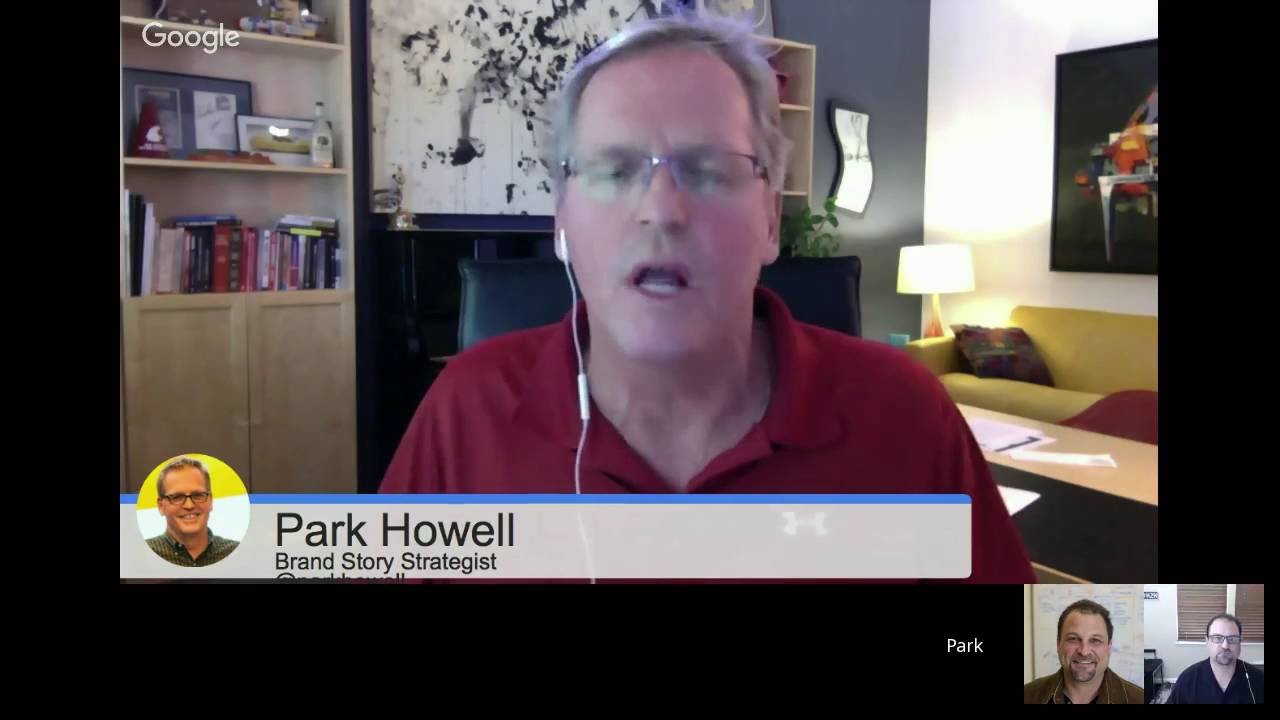
In this live H2H (Human‑to‑Human) interview, host Bryan Kramer welcomes advertising veteran Park Howell to discuss why storytelling has become a strategic business advantage over the past decade. Park explains how he distilled classic narrative structures (Hero’s Journey, Save the Cat, etc.) into a practical 10‑step "Story Cycle" designed for B2B brands and personal brands alike. He walks through each step – from backstory and audience identification to stakes, call to adventure, obstacles, mentor role, road of trials, victory, moral purpose, and the repeatable brand ritual – and shows how the process can be completed in a few days to a few weeks. Real‑world case studies (Goodwill of Central Arizona, Coca‑Cola’s eco‑driving program, and the transformation of Clinica Adelante into Atalanta Sustainable Healthcare) illustrate measurable ROI (e.g., 300% growth, 40% sales lift). Throughout the conversation, Park emphasizes the brain’s 35‑second need for meaning, the ABT (And‑But‑Therefore) formula, and the importance of placing the audience—not the CEO—at the story’s center. Listeners are invited to submit questions via #H2HChat, and the latter half of the show features live Q&A covering brand purpose vs vision, the relevance of the Hero’s Journey in multichannel environments, employee buy‑in, and how to avoid ego‑centric hero positioning. The interview ends with a special offer for Park’s interactive Story Cycle workbook.
Chapters
There we are. We are live. How are you all doing? Welcome to another H2H chat. If you are on today, that means that we have another Monday here, and we we also have a great guest today. Really, really excited about this guest because we're going to talk be talking about a story which is not. something that's uncommon these days, but the way that you do it is very unique and needs to be. And we're gonna be talking about that and the way that story has become more advantageous over the last even just 10 years has changed the way that we do business. And that's really, really cool. I highly, highly— I've been highly anticipating this because Park has become such a good online friend. We're gonna have to meet in person one of these days, but Park has become such a great online friend. And, and we've talked obviously over the phone quite a bit, and he has been— and I've also been on his podcast. And so now I'm really excited to have him on the show and be able to talk a little bit more about him. So we'll talk about him like he really isn't here. I'm just kidding. But, but We will ask him some questions here in a second, but let me introduce Park Howell. He has 30 years in advertising. He's found that deep down, people know the purpose— excuse me— purpose of their organization. The problem is it's buried beneath the day-to-day business, and busy executives don't take the time to bring their core brand story to the surface and sharing it with their employees and customers and delighting in the dynamic business growth that follows just from the business of story. He's experienced the transformational power of business storytelling when he took a tiny water conservation campaign in Mesa, Arizona, and created the largest outreach effort of its kind in North America, with more than 400 private and public entities adopting the program. With brand storytelling, he helped and his team helped Goodwill of Central Arizona grow from 24 stores in generating $17 million in annual revenue in 2003 to more than 60 stores earning more than $125 million in revenue by 2015. That's some pretty big growth right there. And his business storytelling launched Coca-Cola's eco-driving initiative amongst its 60,000 fleet drivers and support staff. Coke enjoyed double the savings on fuel and maintenance than projected due— than projected due to the embrace of the program by its employees. I could keep going because there's tons of stories about stories and it's really, really cool. So let me, let me bring on Park here and let's get a good conversation going around the business of storytelling. Park, how are you doing? You might be on mute. Oh, there he is. Hey, how are you doing?
I'm doing well, thanks. It's really great to be here and kicking off my week with you here on H2H. It's awesome.
Thanks for being here. We have the lovely Lisa Leffler. Thanks to her for bringing us together in the first place. And I would love to just chat with you just right off the bat with a little introduction about yourself that maybe we can't see typically on a bio and how you see storytelling.
Yeah, absolutely. Well, thanks, Bryan. You know, real quick about me, you know, as you mentioned, I've been in this business of advertising and marketing for 30 years. and had run my own agency for 20 years, and in about 2006 our middle son started going to film school over at Chapman University, and story was just starting to surface as kind of that buzzword that we all know all too well now, you know, in 2005, 2006. So I thought, well, let's study it and see what Hollywood knows and see if there's really something to this storytelling that we could actually get our arms around, use, and not just use it as a euphemism in the advertising marketing creative world, but Could we get to the point that we could actually teach our clients on how to become better at connecting with stories? And I guess the bottom line is the reason what really drove me to do this, Bryan, is so much of the advertising we see in this day and age, especially in the B2B world, is just inane. It just bounces off us and it adds to our frustration, I think, of being in this industry and just being viewers and consumers of entertainment news and whatever that I thought, gosh, is there a better way that we could actually connect these communicators and businesses in a very human level so it wasn't so banal but it was exciting and fun and interesting. And that's what I did is I studied storytelling, what Hollywood knew, as our son was going to film school and came across a lot of great sources including Joseph Campbell and the Hero's Journey, which a lot of people are talking about these days, but more importantly, I saw how a number of different screenwriters were applying it in their own ways, like Blake Snyder and Save the Cat, Christopher Vogler and some of the work he was doing, Robert McKee, the legendary screenwriting coach. And that's when I thought, well, if it works in these different forms for Hollywood, how could it work in our advertising marketing world, especially B2B? And we created the Story Cycle process out of that. It's a total hybrid of it, but it was really designed for the business mind to be able to get their heads around and then start humanizing that message through this basic universal structure of story. So that's, you know, that's a little bit about me. I mean, I started in the traditional advertising marketing world, and then we all evolved into the din of the digital world and everybody online 24/7. And ironically enough, I found it's the ancient power of storytelling that allows us to cut through the nonsense that we've created due to our technical prowess of creating this always-on, you know, international microphone. So that's a little bit about me.
Oh, that's fantastic. And by the way, I didn't want to interrupt you because I might have scared you, but moving forward now you know that if you say the word human, this happens.
Scary to me.
You did say it twice, and so I got to get you one more time.
Nice.
And now you know that that's going to happen the next time you say it, so you've been properly warned. Okay, so we've kind of been talking high level about storytelling. I would like to bring it down to, if you wouldn't mind, to a level that we can really kind of wrap our arms around it, because storytelling is like this big— to some people it's a big monster, it's a big thing that they have to take on and they don't understand exactly where to start. Yeah. And then you think down in the weeds about storytelling in an elevator pitch, and you only have so many seconds in the elevator kind of thing that we've all been talking about for years. But I have this feeling, and I know just because I follow you and have read your stuff, that storytelling lives also in between all that. It does. And so I'd love for you to just kind of describe that. Like, how does storytelling really work?
All right. How storytelling really works is, if you think about it this way, and I got this from Lisa Cron, who's a— Cron, C-R-O-N, who wrote Wired for Story. It's a marvelous book that she teaches authors how to write and how to really connect on a very visceral human level. You know, in, in one of her chapters, she says, you know, we can go weeks without eating, days without drinking, but only about 35 seconds without creating meaning About something going on around us. And why that is, Bryan, is our brain right here, man, in the little reptilian part back here, we are freaking hardwired for survival. People say story, and that is true, but we are hardwired for survival. So it has this constant tape running of setup, problem, resolution. What's going on? How's it affect me adversely, first and foremost? Or then how could I take advantage of it? And therefore, I need to take this action. This is going on, I mean, 35 seconds spinning through our minds. And if you think about it, that is the exact same structure of a great story, a 3-act structure: setup, problem, resolution. So if you want to just think on the most basic level, my friend Randy Olson wrote a terrific book called Houston, We Have a Narrative: Why Science Needs Story. And he comes back and he points to understanding this ABT concept of And, but, and therefore. When you are trying to create the foundation for your story, if you just walk through this and, but, and therefore— this happened and this happened, but this occurred, therefore we had to do this. That is the rudiment, or as I told Randy, and it made it in his book, the ABT is the DNA of story. So story is very high, you can get very deep into the weeds as you said. And to humanize your marketing— where's it? I'm waiting for it. There it is. We simply can go back to preying, if you will, on our mind's need to create meaning out of the madness around us by setup, problem, solution. Why that's important in business is so often business really does not focus on the problem. It's just all features and benefits, features and benefits. So if you're out there and your listeners or viewers are out there right now Think about your brand proposition or your position in the marketplace and see if you can't spell that out as an and, but, and therefore. You know, I'm in the communications business for 30 years and we've had a lot of success with clients and some mediocre missteps and the occasional spectacular fail. But technology has completely changed how we communicate. Brands that used to own the influence of mass media no longer don't because the masses are the media. Therefore, we have found the ancient power of storytelling is the one thing that works, is the anecdote to the antidote I should say to this attention economy. There's an and button therefore and it leads to my overall story is the Story Cycle I believe is one of the best places you can go to really refine your brand story, get clear about it and be able to connect on very Human terms, and God knows we need that in the B2B world.
Or the H2H world, as I call it. So when you're looking at a— actually, let me start with this first and foremost before I get into the questions about the actual process of going into this. We will get to that, but actually, and also real quickly, I wanted everybody who's listening right now to make sure that you're posing your questions throughout this first half an hour. Actually, it's only 20 more minutes until we start asking the questions. I'm gonna take your questions, I'm gonna pose them back to Park. So all you have to do is use the hashtag #H2HChat, hashtag #H2HChat, that's number 2, and use it on Twitter and we will be able to take your questions and I'll be asking those of Park in the second half. So if you're new, that's what you do and definitely make sure you comment on Twitter. There's a huge amount of great people over there that are having already a great conversation. So we're here with Park Howell on the business of storytelling. It is really fun talking about this topic because it's something that I think is woven into the very fabric of humanity is just storytelling. And so we're talking about it around how to create this. And that's rolling into my next question about the differences between storytelling for a person and a brand. And how you see that. The same, different, how would you approach that?
Yeah, you know, storytelling between a person and a brand essentially have all the exact same bones. It's the same thing because story is simply a reflection to our life. So Bryan, I can tell you when I first got into this, I was really focused on how could we use storytelling for brands specifically and only brands, and it wasn't until I got into creating doing a lot of brand story strategy using the Story Cycle process, that I start getting leaders within that group come up to me afterwards and some guy's giving me bro hugs and saying, thanks, man. And I would say, yeah, I think we've really clarified the story. And they go, no, you don't get it. You touched something in me. I've got something now that I understand my own personal story of why I do what I do as it relates to my brand a lot different than before we even started this process. So that was my aha moment that what we're doing when we're wielding story and We're working with people and coaching them through it, that you have to be very cognizant of how it is touching them emotionally. I always say, you know, your personal passions drive your professional pursuits, and if they don't, then there's this void in your life, and we all feel it. We've all been there. We've been in those lifeless jobs. And so I have now kind of flip-flopped this, Bryan. Quite often when people are downloading my workbook and working through it, or I'm doing one-on-ones with them, The conversation always starts around them personally. What are they trying to achieve as an individual or as an individual within this big organization? And so I focus on that working with them first through the same 10-step process of the story cycle. Once they're more clear with that, it's much easier for them to then apply it over to their brand and understand how their work, whether they're working for that brand or own that brand, How it is connecting with their own personal story. So what's interesting to me about it, it's the exact same process and there's really nothing different between your personal brand and your professional brand with the exception of this. I always say, I'll tell you a quick story. When I was growing up, I was a laborer's carpenter assistant for my dad's heavy construction company when they built dams and bridges and tunnels. And one summer I was building forms, wooden forms for big concrete pours, and I was working with this old Old-timer, and I'm hammering away, hammering away. It's towards the end of the day. I was tired, and I was thinking of other things, getting out of there. Man, if I didn't slam my finger. I just bashed the thing, and I'm cussing, and swearing, and jumping around. You put it under your arm. Why we do that, I don't know, but I'm just making a fool of myself. This old-timer is just laughing at me, and I finally collect myself. He looks at me, and he says, Park, never let an inanimate object get the best of you. And in this case, it was that hammer that got the best of me. And I kind of think about that with the brand. So my transition over here is I think brands, especially business-to-business brands, are literally inanimate objects until we humanize them through the stories we tell. And that's one of the things about this process that allows them— There it is. There it is. To have them dig deep and really understand what in the world is their purpose. Why are they doing this? And they find if they're in it just for the money, They get through like the first 3 steps of this process and then they got to start doing some rethinking like, oh, wait a minute, you're going to dig a lot deeper and we need a much deeper brand, not this surfacey revenue generating only features and benefits type approach. So long-winded way of saying it's the same thing. You are trying to bring something to life. In a human brand, you're already there. So you've got that humanity connecting. Is it— are you living into your true authentic story or are you living into somebody else's story? I often say the best story you'll ever tell is the story you tell yourself, so make it a good one. But man, once it gets over that brand side, that business side, you got to turn that inanimate object into an animate, humanized brand that connects on that level.
Okay, you said it a couple times.
I love that. I got to get me a sound effect.
So can you walk us through the steps or a few of them, the important ones or as many as you can you can share with us today. What should we be looking at?
Alright, yeah, the 10-step Story Cycle process, and by the way, people can see this after the show, they go to businessofstory.com, and I'll also say we have a special offer for the H2H Show for all of you listening out there that is only going to be good through the end of, well, today. That will close at the end of, well, midnight tonight, but we won't announce it until the end of the show, so hang around. But what I will do is take you through these 10 steps because then you're going to want to take advantage of this offer. So what we did, take the 17 steps of the hero's journey, boiled it down to these 10. You start with the backstory. Very quickly, Bryan, what you try to do with the backstory is get to the point of what is your number one position in the marketplace. What do you do better than anybody else? And we simply ask the question, where have you been, where are you now, where are you going? By the way, over the weekend I was watching a football game and an insurance company came up or an investment company came up and by God, if they didn't start their spot saying, here at such and such Liberty Mutual, it was Liberty Mutual I think, we want to know where have you been, where are you now, where are you going? I'm thinking, oh my God, have they worked through my workbook? But you've got to really identify what your number one position in the marketplace because that's your first step out of the primordial muck of being a commodity. And we're all commodities in this day and age because there's so many of us and there's an abundance of products and services that our customers can choose from any number of people. So we need to level up and we use story to do that. Number 2, who cares? Who cares what our number 1 position is? That's your audience. Who's your hero? So we ask people to go through the workbook and identify their top 3 audiences in order of importance and then focus on that number 1 audience as they go through the rest of the process. Placing them at the center of the story, not the brand. The brand is a mentor. We'll talk about that in a minute. We go into step number three: What's at stake? So what do they want? What do they want as it relates to your brand? And what happens if they don't get it? You know, what do they stand to lose if they don't get it? But you really got to know is what is that driving force. You get into step number four, which is the call to adventure, that inciting incident. What has changed in their life or changed in the marketplace that you and your product offering or service is responding to, making you more more urgent and more relevant than your competition. And number 4, we ask people to identify, write your unique value proposition. So in chapter 1 you said, here's our number 1 position in the marketplace. Number 2, how do you articulate that? Another great place for that ABT form. Think through what does your audience want, how are you going to help them get there through this unique value proposition, but there's got to be change, this inciting incident in the brand story. In the market, otherwise you're just selling in the status quo and nobody wants to do that save Walmart because they're a low-price leader. Alright, we move into chapter 5, Obstacles and Antagonists. So this is a basic SWOT analysis you look at and try to understand and really be honest with yourself. What story are you telling and where are the gaps? You know, how are you delivering or how are you not delivering on that? I call this villains, fog, and crevasses or crevices depending on where you are and what part of the world and how you pronounce that. Villains are the competition that is out to thwart you, both internal and external. The fog are the blind spots of what don't you know that you don't know that you have to overcome through how you tell and live your stories, and what are the blind spots within your audiences? What do they not know about you and what you have to offer, because that's going to inform the story you're telling. And then the crevasses, like I said, it's the gaps between what you tell and what you deliver, and you have to be able to close that because You're making lots of promises in your stories, they're resonating because you're using stories, so you better deliver on it. Step number 6 is the mentor. So who's your hero, who's your customer? You, the brand, are the mentor. You are there guiding them, their Obi-Wan Kenobi to their Luke Skywalker. What is the emotional promise that they get from working with you? What is the gift they receive by buying into your product or service? How are you essentially leveling them up? And then we look at what personality do you bring to this market This is where you're turning that inanimate object of a brand into humanization, you're humanizing it. Wait for it folks, wait for it, there it is, there it is. This is where you set the context up, now you're humanizing that brand. Step 7, the road of trials. This is where you actually get to talk about your features and benefits, but you're going to do it in a human way. You are going to connect your stories with the journeys of your audiences. There it is. Because you've taken so much time to understand understand the journey that they're on. Now you're knowing where to connect them in 3 primary phases. You've got brand awareness, brand adoption, brand appreciation. I don't go into huge customer journey mapping, and I know that can get 6, 8, 10 phases. I want to know what these 3 primary phases are because you can always dig deeper down the road. Chapter 8, Victory is at Hand. So where is the success? What does that success look like to your audiences in each of those phases— awareness, adoption, appreciation? And how are you there as a brand to help celebrate those successes? One of the really key things, Bryan, in all the storytelling is you have to demonstrate progress to your audiences. Otherwise you'll lose them. The brand will go, this is going nowhere, I'm out of here. When you are specifically mapping the successes of your storytelling and how you are going to reward your audiences for participating in them, again awareness, adoption, appreciation, then you are helping them propel that story forward. Last 2 chapters. Chapter 9 is the moral of your story. What is your brand's purpose? Can you answer this question? What do you do besides making money that elevates the people in your lives? And when I say elevates the people, it's your employees, your staff, your investors, your shareholders, your vendors, your customers, your NGOs, whoever it is your brand is touching. How are you elevating and empowering them beyond just making money for yourself? And then finally, Chapter 10 is the wash, rinse, and repeat brand ritual, or as Hollywood would say, to be continued. How are you going to now create this next revolution, virtuous revolution of the story cycle to get your audience bought in and move them from awareness into appreciation into evangelism in this 10-step process, and then by the way, it starts all over again. Because now you've got a new hero that's empowered, that's got more ability than they had before meeting you. How do you keep leveling them up so that you keep them around as a long-term prospect or a long-term buyer?
Wow. So how long does this take?
As far as actually doing it yourself?
Yeah, as far as actually moving through all 10 steps.
Yeah, well, if we sit down, I know some folks that have taken workbooks, literally downloaded the workbook, did it in 2 days and then called me up and we went through it and I was blown away by how clear they were on their message. Some folks like to kind of pick through it in a week or 2 because it asks a lot of hard questions and it makes you really come to grips with what your actual story is. Like I say, Bryan, man, you have to own your story before you're going to get anybody else to buy into it. Now we also do workshops with brands and the way workshops go is pretty cool. And this has been, believe me, an iterative process from learning what worked and what didn't work. But we will get a team in place, you know, we get hired by a lot of mid-market companies, companies that have a proven business model, but they realize, man, I don't have my brand story straight, I don't have everyone pulling in the same direction, we're about ready to expand, competition is starting to show up because they're seeing the success we have, so we have to have some better brand story, really owning our story. So what we will do to them Send them an online form, literally say, man, you got to do this in 30 minutes or less, you get in, get out, because we're more interested in knowing what your gut thinks than your head thinks at this point. They fill out a Story Cycle as it relates to their personal leadership position in the brand and how they think it plays into the brand. I get that back, bring them in for a half day, we go through the Story Cycle process with this knowledge now of where the team falls and what their understanding of the brand story is, and then we bring them all together. Sometimes it's a half-day, sometimes it's a full-day session. We get all this download. From that, we then take about 2 weeks, noodle through it, look at research, put together then what we believe their story is. We become like the chief author— well, they're the authors, we become the chief editor of it and bring it together. And within 3 weeks on a big project like that, we have a pretty clear idea of what their brand story is. And the last thing I'll say on this, Bryan, is where a lot of other processes kind of help you get clear with a message, you know, with a— particularly online, which is really important— a message. The Story Cycle takes you deep. It takes you into really understanding what are the guts of that story, the sinew, the marrow. I mean, where is this brand story coming from and how can you truly own it? Then it helps you clarify all these other messages that you're going to share in these different channels, but man, you own that story first when you're done through this process.
So everything that you just said makes absolute sense. It sounds like there really is a process, a great process to go through this. I am curious, and let's talk about this at the— because I just think it'll be a little bit closer to the heart for everybody on here. So let's talk about it in terms of more of a personal brand right now.
Okay.
And what is the most difficult part that's holding people back from figuring out their story?
They're too close to it. Me too. I've learned this and I go back to my dentist, you know, I was in there and I was, I was really frustrated because I wasn't even doing a good job of articulating my business of story story. And Stacy, the head of the National Speakers Association, he was sitting down, we were having lunch one day, And he asked me to articulate it and I was going blah, blah, blah, blah, blah, blah. So that was then, that was my realization. And then I went to the dentist the next morning and I sat there and I realized this dentist doesn't drill on his own teeth. So why do we drill on our own stories? We're so darn close to it. We have a lot of the elements of it, but we are so tied into it, we have a hard time clarifying it. So that's the first step. And what I've even done with the Story Cycle process is I boiled it down to 10 really fast questions you can ask yourself to give you kind of a barometer on where you are, how clear you are with your story. Do you want to try it on you, Bryan? I can do it with you in 2 minutes. Uh-oh, I can't hear you.
Let's do it.
Alright, here we go.
The mute— the, the button here is having a hard time. Sorry about that. Yeah, let's do it.
So this is gonna be real quick. And you know what, I did this, uh, with Vincenzo. I'm gonna be on his show tomorrow, and he's a guy that really is dialed in on his brand, and he had some challenges. And I said, man, it's okay, we all do because we're so close to it. So let's do this. All right, number 1, Bryan, what are you better at? And you being either you or your brand. What are you better at than anybody else? Food.
Is that what you're asking? No, I'm kidding.
I'm asking, yeah, what is your brand, personal/professional brand, better at than anybody else?
I am great at helping others to see value in themselves and building great personal brands.
Unearthing value in others to build great personal brands.
Yes.
Awesome. Who cares? Number 2.
My mom. I'm not kidding. She really does care. You know, who cares is anyone that's fascinated or interested in helping themselves to raise their own ability to be approachable and to be attractive for the things in life that they otherwise haven't been able to achieve.
Okay, and I would ask you, not now but down the road, to clarify that. Are we talking about brand? Are we talking about business people, nonprofits? I mean, specifically, who is that number one audience I'm going to be thinking about it. Then the next question is, what do they want?
Food. See how it's all interlinked?
We have a theme here.
Are you seeing that? Oh yeah. How are they— restate the question again.
What do they want?
What do they want? Well, they want what all humans want. So everyone wants to connect with other people. There isn't— it's very rare for humans not want to connect with other people. So I believe that humans are looking to connect and to build connections through their professional and personal brands.
Okay, perfect. So then that's number 4. Why do they want it? To build their personal professional brands?
Yeah. No, to grow. I believe that every person wants to grow. It's an innate personal trait of every— I'm not going to ding myself for this, but for every person, every human wants to grow. So that's the innate reason.
Okay, then what's keeping them from having it?
You know, time is the number one killer.
Okay.
I would absolutely say time.
Time? All right. They can't have it. They want to connect. Because they want growth, but they can't because of time. So how are you equipped to help them?
How am I equipped to help them? I have put in the time and energy to do all that hard work to build a personal brand that I can now hopefully turn around and help others with this, achieving the same, if not even way more success. in life, in their personal brand and building their personal brands.
All right, how do you do it?
Well, I have e-courses that helps people to achieve that, so they can go through a course and, and walk through the exact steps it takes, just like your 10 steps of personal storytelling. I have steps that takes them through— 5 steps, not that we're on the Right. But I have 5 steps that helps process them through and how to achieve that.
Okay. And what does success look like to them?
Oh, to them? You know, it could be a lot of different things, 1,000 different things, literally. Outcomes could be as much as getting asked to speak more, getting paid to speak, getting to be an author, Um, it could be business coming at you more without having to go out and hunt and, um, and find the business. It could be basically you becoming an expert that's desirable.
Yeah. All right. It's funny, by the way, um, that pause when I asked you that question. When I first asked you that question, what does success look like, did you think it meant for you?
I couldn't tell. It was 50/50 on who you were talking about.
Yeah, but it was great, your reaction was awesome because that's the same reaction that I get from everybody. We all automatically think what's our success, and the thing about story is you're always, always thinking about what's the success for your audience. You help them get what they want, they'll go out of their way to get what you want. So next up, you talked about what success looks like, what does success feel like to them?
You know, we should be asking everybody that's on the Twitter chat right now, so I'd love to hear what you guys all think. to start tweeting your answers as we're going through this and tell us what your answer is to each of these questions. You can start with the latest questions so we don't have to start over. But what is my— say that one more time just so everyone can get
it. What does their success feel like? So we know what it looks like. What does it feel like?
It feels amazing. It's like getting to the top of the mountain. And, and, and, and yelling and seeing the views and saying, I did this, I did it, I'm here. And now I can really enjoy exactly what I love doing and, um, and not work as hard, but work within the areas that really drive so much joy and passion for me, for you.
Yeah. And in the process, that's where we get to what's that brand purpose and what's the moral of the story, because we create morals out of every story Every joke, every punchline we hear, our brain is trying to knit together morals, and it's always, you know, about what we believe and feel, the values. So it's really important to really understand and appreciate, you know, what does success feel like, not just what does it look like. And then finally, number 10, that wash, rinse, and repeat brand ritual. How do you get them to keep coming back for more or referring you or recommending you?
I think, um, honestly, just do it. Do the best job you can do. And, you know, at the end of the day, the value that you've given to them needs to supersede the expectation that they first had when they came in.
Yeah, yeah, without a doubt. And that's the quickest way through the Story Cycle process. Now, when people start sitting down and penciling out the answers to this, they're gonna find they got voids in there. We all do. It's like, ah, I'm not really quite sure what that is. So that's what the workbook does that you can get at Business Story, is you download it and it takes you through each one of those steps and it asks you, and you get to fill out forms in each one of them so you're not just lost in the woods.
I do have a question though, and Rachel said this too, I agree with her, success is a very personal thing. How can someone know what success feels like for someone else?
Oh man, when I get people to come up to me, I was in Amsterdam doing a story workshop And I had a lady come up to me and gave me a hug and she said, you've given me a gift today. And I go, oh, a gift? You know, how's that? She goes, again, not only did I use this for— she happened to be the economic director for Haarlemmeren, a town outside of Amsterdam. But she goes, I realize now how I can actually work better with my own kids to live into this story as a mom. But she said, you gave me a gift. I mean, that's a real— to me, Paying very close attention to what people tell you about the process. I hear, I'm enchanted by it. I hear, you opened my eyes. I mean, this feeling of freedom that comes out of it. So what it requires you to do is use the story mind like an author, continual survey and watch and listen to your people, and they will tell you how you make them feel. One of the biggest things we ever the biggest challenges we have as business communicators is we don't stop to think, how am I making them feel? When I teach this, I teach a course at Arizona State University, an executive master's course on— I call myself the professor of storytelling. A lot of these folks are getting up in front of the rooms and they're using story to connect their PowerPoints, but I always ask them, I said, man, before you do anything, what do you want these people to feel and what do you want them to do when you are all said and done with whatever it is you're trying to present to them? Because If you can't get them to feel and you don't know what that feeling should be or what you're trying to get them to, having seen that success in others, then you're going to have a challenge no matter how good of a storyteller you are. It comes down to empathy and you've got to have empathy with that audience at the very beginning. And so whatever your product or service is, you've got to make sure that it pays off on that empathy. Where do they hurt? What's not working for them? And when you give them that gift of the product or service that you offer, how does that free them up? Where does that fear disappear to? And they will come back to you, they will give you one word, and that word is what they feel like. And that's so critical to know what that is.
Give me, give me one example of a brand or a person that went through either your course or that you worked with on some level or Or you just admire that, that did a really great job at what you're talking about? And what does that look like? What is the— what is the— I hate to use the word ROI in what we're talking about, but what is— what is the— give us an example of something that came out glistening with, with exactly what you're talking about.
There was this brilliant CEO in healthcare. Her name is Avene Tafoya. She came to Arizona in 2008 from, I believe, Children's Hospital in Los Angeles. She took over a struggling community health center, literally a free clinic called Clinica Adelante. Clinica Adelante had been out in the West Valley here in Phoenix, Arizona, primarily working with field workers, migrants, illegal immigrants, people that did not have healthcare nor did they have means for healthcare, and yet they were in these very, you know, sometimes dangerous field jobs, so they needed to be attended to, both the workers and their families. Clinica Adelante at that time had been around for 30 years, and we had had a lot of things happen here in Arizona through a political SB 1070. You probably heard about it where they were shipping all the illegals out of town. The recession hit. At the same token, developers were blading over farmlands, and so Clinica Adelante's customer base was at one place falling apart because they were going away, and they made their business model off of these free clinics because they were paid through the state and the federal government to supply this. And number 2, they were in the throes of the recession and so she came in and she knew we had— she had to reinvent this brand and this brand story, otherwise I mean they literally risked going out of business. Their own survival was at stake. So we sat down with her and her team, we took her through the process and in 2010 we launched a complete new brand around Clinica Adelante. We got rid of the Clinica, and I'll tell you why in a minute, and it's now Atalante Sustainable Healthcare. What we did is— what she saw as a business person they had to do is they had to appeal to folks like you and I that actually have insurance and could go in, and we have a choice of practitioners. Well, she wanted to be so audacious, so heretical that she's going to say, I'm going to be so good at what I do at a free clinic that you are going to be willing to Drop your old family practice and come here and get your care, and we're gonna build our model off of the insurance forms that, you know, that we earn through you so that we can do what we were always meant to do, and that is help provide healthcare for whether you can afford it or not. So we said, you know, this is all about sustainability, and we gave them these 3 pillars of sustaining the availability of healthcare for all, a nod to their 30-year legacy. Sustaining individual healthcare through their holistic services, meaning that they're going to work with you on preventative care as well as this holistic family care, and you can come to this free practice for all of your healthcare needs and be greeted by some of the best practitioners in the state. Then finally, they decided they're going to green and create sustainable healthcare operations for all of Adelante Healthcare. So they did that. They now have just opened their 10th clinic. We started with 3. They've opened their 10th clinic. They've grown by 300% in the last 5 years. Avene Tafoya is one of the top national speakers now on sustainable healthcare, how to adopt it into their— into a brand and move forward with it. And what she said to me, and there's— you can go on a case study on our website and you call her up, she'll corroborate this. She said it was magical. I mean, once they saw where the whole story came together, where we took their backstory of where they had been for 30 years, where they were now with the struggles they had, and having to create a new story to live into through this brand storytelling, she got it immediately. She got her board on immediately with only a few stragglers, but then they saw the big picture. And then we had to create a story that her staff could live into and prosper from, and it all came around Atalanta Healthcare, sustainable healthcare, sustaining the availability of healthcare, sustaining your individual healthcare, and sustaining the community through greening their operations. 300% growth, and you know what she told me the other day, she goes, we're not advertising, we're not doing any public relations because we're having a hard enough time just keeping up with our own growth living into this new brand story. It's one of the ones, Bryan, I'm most proud of because it does so much to help so many people. And I was really fortunate to be connected with a CEO that got it. And she led with her heart, leads with her heart. She's an artist in her own right, and she is a brilliant doctor, MBA practitioner that's really doing amazing things because she's living into a story that everyone can prosper from.
Oh, that's awesome. That is amazing. When you get to work with CEO of an organization, it certainly helps a lot to have that kind of buy-in. And, and, and the outcome was fantastic. Now, I could keep asking you questions, but we are way over on the actual Q&A part of this. So I'm going to start in on the questions that some people have for you.
All right.
And then we may slip in a question or here, here or there from me. But let's get the— let's get going on that. So let's start with Alan Berkson, good friend of ours, mine and H.H. Shatt. He works at Freshdesk, and his question was, what do you, in parentheses, your brand, do besides making money that elevates those around you? How do you approach that?
What do we do besides— I guess I'm not quite sure on the question, Alan. But using story to help elevate the individual before the brand and before making money around them.
How do you elevate the brand besides the story of making money? Because every company has to make— every company has to make money. Otherwise, we would, you know, be on Seinfeld.
Yeah, yeah, yeah. No, I gotcha.
How do you elevate your brand besides just I mean, you're just there to make money, right?
The best book, the best resource, Alan, I've read on this is Jim Stengel's Grow. What Jim did, he was a former international brand marketer for Procter& Gamble, and he did a study of businesses, 50 businesses that were outperforming the S&P 500 during the recession. And they were not just kind of outperforming it, they were outperforming it like by 400%. And the reason why is they had a brand ideal. And this has kind of really inspired my chapter 9 of The Moral of Your Story, asking you is, what is your brand ideal or what is your brand purpose? And we all have reasons for being. Now, you know, Bryan mentioned it earlier about what he does, and he helps people unearth their authentic treasure about them so that they can connect and grow. And of course he needs to be making money in that process, but that's something people can get behind. Another example is you look for what you make happen, not what you make. I'm working with a guy by the name of Andre Martin. They have a really cool company up in Quebec. Now they sell cars, used cars to people that have credit problems. So inherently they have a nice business model because there's nice margin in it, but Andre is doing something completely Completely different than the sharks out there that usually just prey on people. Before you can buy a car from Andre, you have to go in and they take you through a 3-hour financial planning training, totally free. They get you to come clean on where you are in your budget and what you're doing, you know, about being able to afford this car, and then they will only sell you a car which fits your budget. Even if you want something way up the line, they said, no, man, you can't do that. Because we want you to be able to make the payments. We're not predatory in that we're going to sign you up, turn you loose for 3 or 4 months, and then take your car back. We want to make sure you can make these payments for a minimum of 2 years because in Canada, that's where you get to correct and fix your credit. And our goal with you is to have you come back and we will help you get into a brand new car that you'll be proud of and that you can afford. Well, his model isn't about selling cars, just selling used cars. His model is financial freedom for the people that come into his organization. So we have put together a story and now it seems really obvious after I told you the backstory, is Andre's company is all about, they are your vehicle to financial freedom. They are helping you correct your and fix your credit by virtue of selling you the right car. Now that is a mission that he can get all of his people to buy into and when he interviews for jobs for employees coming in, he doesn't look for used car salesmen. He doesn't hire people that are from the traditional realm. He looks for people with a heart that are actually out wanting to help people fix their credit, and then he teaches them about the car sales buy because that's just simply the vehicle to help these people and empower and grow his people. So that's the most immediate, immediate thing that I've seen is that it's not what you make, In his case, he makes car sales. It's what you make happen. It's how he helps empower people up. He just simply uses cars as quote-unquote the vehicle to help them for their financial freedom, and that's the story that they can all live into and prosper from.
Great, awesome. David asked, what is the ROI of storytelling? Now mind you, we only have 12 minutes left and we still have other questions to address. So just letting you know, because the ROI question can be a big one.
Yeah, you can look at everything at ROI from your engagement online when you tell good stories. Go in, do your listicles, and then come back and do a features and benefits post, and then do a third one where you actually dive in and tell a story about yourself, preferably something where you fell flat on your face and what you learned from it and came out of the other end. And then, you know, do your ABC testing on it and see what kind of engagement you get and where. There was also a fabulous study on eBay where some folks went in and they bought a whole bunch of little trinkets, and I'm talking about, you know, I mean like this thing of paperclips. And they had 100 different ones and they made up stories and they applied it to it, and their ROI was like 2,000% just because people now started attaching some humanity to this inanimate object because— There it is. Because of the human nature your story. And then you can go on and look at work like, at the top of the show we talked about Goodwill of Central Arizona. They grew by over 400% because we told stories in their TV commercials back in the day that sort of made fun of an audience that would come in and shop there and then go home and be secretive about it because they would have these amazing finds but they were embarrassed to tell anybody they were in a Goodwill shop. Finding them there, so we told that story. And our clients said, "We're afraid we're going to alienate our shoppers if we do this." And we said, "No, we don't think so. We you you are going to be able to connect with them like you never have before." And they said, "This better work or you're fired." And we said, "All right, we're on." Their stores in the first month experienced a 40% increase in sales because that and people were coming in and talking about that. spot because it told a story. So you can look at an ROI from analytics to literally how it hits your bank account at the end of the day if you're doing it right.
Man, okay, so I believe that it's there, absolutely, that was a great response. Okay, so let's go into a question from Katarina Anderson, she said, what is the brand purpose, how do you formulate The brand purpose, and actually I'm curious too, just to add on to that, not just brand purpose but brand vision. Are those 2 things separate, the same, and how do you define them?
Yeah, you know, I think you could define them, I'd probably boil them down to the same thing. So it goes back to what I was talking about a little bit earlier with Jim Stengel's book Grow, that brand ideal. What do you do that actually levels up people around you? That's the purpose of a brand. The bottom line is it doesn't matter what you're selling, that's the vehicle to help your customer get what it is they want and it typically goes well beyond what it physically does for them. It's what it emotionally does for them. So a brand has to really own the emotion. Now I can tell you the purpose for Business Is Story is to reignite within you the one true superpower we all possess and that's the power of storytelling. Yes, I got to make money on that and able to keep doing it. But when I can get people to come up to me and hug me and tell me, man, this is enlightening, this moves me forward, I know that I've got a purpose that I literally, as Bryan knows, I wound down a 20-year agency, the old-fashioned agency model, so I could do this full-time, so I could teach, coach, and consult. And my purpose is to help ignite within you, within everybody I touch what I've learned. And I didn't make this up. I just learned it through the many years of doing it, many years of trials and tribulations, and then studying what Hollywood knew about it. And those 2 worlds came together. So yeah, my purpose isn't about making money. I got to make money in order to keep doing what I'm doing. But my purpose is the more people I can enlighten and move to action, you know what, the more money I'm going to make. It's just, I just don't focus on the money side of it. I focus on really helping you grow in this area. That's the purpose. Read Jim's book, it's fabulous. In there he has a lot of examples of brands, he calls them brand ideals, I call them brand purpose, same dang thing and they work really, really powerful.
Fantastic. Okay, so we're just a few minutes away here from— can you hear me now? Yep. Okay, we're just a few minutes away here from closing out, so I'm just gonna take a few more questions here. Alan has another question. I think the first one might have been more of a quote but turned into an excellent question. The second one he has here is, his question is, is the hero's journey, for example, Joseph Campbell, still relevant in a multichannel digital community world?
More relevant than ever. And the reason why I say that is you have to have your universal brand story so well defined, because you know what, your story, the moral of your story and your purpose doesn't change depending on what channel you're on. You're just using that channel and its strengths to communicate that story maybe in a different way. You know, Instagram might be a very visual way of telling that story, but you still have to be true to your brand story. I always start with that hero's journey-esque, what, you know, we call the story cycle that simplifies it to get you to first understand yourself. And then using the exact same process to understand your brand, and you'll start seeing these worlds come together. And oh, by the way, when you study this, you will start seeing this process all around you in the lives of your friends and families, in the life of your business and associates. I mean, it's amazing. So it is so universal that it plays out that now. When you get on different channels, of course you can't do the whole 10-step process, but I can show you, and you go to Business as Story, you can see 30-second TV spots that have every step of the hero's journey or the story cycle in it. There's one that was done by, called the Prom Spot for Audi, done by Venable Bells and Partners out of San Francisco, did it in 2013 for the Super Bowl. It is Absolutely brilliant. It happens to be a 60-second spot. You see the whole process right there. When I asked him about it, did he use the hero's journey for it, he kind of said, huh? I don't think he knew what it was, but it was just universally there. It was organically within the storytelling. So I start with that, start with really understanding what your story is, and then you're going to carve it down to bite-sized chunks depending if it's a 140-character tweet where the and button therefore works really well in that case. Whether it's an image where you just have a headline, a visual, and your logo to pay it off, or it's a long-form blog post, you can see this element, or overall campaign structures, you can see it there too. So it's extraordinarily universal.
Fantastic. Last question from Rachel Miller, wonderful, love Rachel. How do you advise businesses to get employees to buy into their new brand?
They got to own it first. Your leadership has to own that brand story. I cannot tell you how many times I've had people come to me and say, you know, we're doing pretty well, and I go, but what are you frustrated at? No one's— we don't have our story straight. The people aren't buying into it, they aren't pulling in the same direction, and that's usually because— it's always because, not usually, it's always because leadership doesn't have it straight in their own minds. So when you go through a process as particular as the Story Cycle process, it makes leadership get on board and it brings a cohesion to the leadership. And I hear this all the time too, it's kind of an added value that I wasn't expecting, but I will get CEOs, CFOs, CMOs saying, finally, we are all buying into the same story, we're all pulling in the right direction. So you will never get your customers, your audiences, your employees or staff buying into that story until you and your leadership own it first. And that's just going through a very methodical process to author your brand story strategy. And then once you've got that in, it feels right, you just know it. I mean, like, yeah, dang, that's it. That's a story that's going to stand the test of time. It's who we are, it's what we're about, and it then leads you into other areas to get other people to join in with it.
Okay, we're going to end with one last question here, and it's It's going to be a question I've had that I wanted to ask in the first half. I wanted to narrow down in on the hero, because the hero is the pivotal point to this whole thing really coming together. But when the hero is a person, it might be— it could come across as ego. How do you get past that? How do you get through— Yeah. The hero as the CEO who might be the person, or the hero as a person, or, or do you not? Am I— are we looking at
this one? The CEO should never be the hero. The brand should never be the hero. Your audience, your audience, no matter who your audience is, whether you're trying to get your 4-year-old to eat his peas, you're trying to get staff to buy into a new initiative, you're trying to get customers to embrace a new product offering. They are at the center of your story. You have to understand them. You have to have empathy for where they are in their story so that you know how to connect your story and your offering to what they want. So, so often, yeah, the CEOs place them as the heroes, but you know what, all the really great CEOs don't do that. They talk about the teams around them. They talk what they've all been through. They are authentic about their vulnerabilities and where they've blown it. But they always place their audience at the center of the story, and I'll say audience is anybody that you are talking to. Now here today, I'm hoping I'm coming across as a mentor or guide. Every one of you that's on this program and is on Twitter, you are the hero in this journey because I know I hear a lot of the same challenges people have. How do I connect? How do I rise above this noise? How do I even know I'm doing the right thing? thing. And all I want to do as your guide or mentor is show you a process that I've learned. It was a hypothesis. I wasn't even sure it was going to work. And it turns out it works really, really well. It's been around since the beginning of time. So we all have a tendency of putting ourselves at the center of the story. And oh my God, a selfie stick is the worst wand around because it's, you know, it's the narcissistic movement that we are about. But we have to switch that from a brand standpoint, from a leadership standpoint. It's not about us, it's about you as the audience.
I can't think of a better place to end the show. I mean, that was just absolutely awesome. Thank you so much. I really, really appreciate you taking your time to be with us here today. I know you've got lots of things going on, but we really appreciated your time. I appreciate everyone out there once again for being on H2H. Chat in the community and tweeting such great questions and being part of it. As always, really appreciate you. And next week we are going to have Dion Hinchcliffe. We're going to be talking about, amongst other things, we're going to be talking about all kinds of marketing analytics and ROI. So we're going to the— we're going into the trenches. He's a technical marketer and he is really, really smart on the tech. technical side of metrics. So that will be a lot of fun. Okay, Park, where can everybody find you, and you also have lots of tweets still and some questions we didn't even get to, so hopefully you have a few moments just to go back and revisit.
I'll follow up with those. Please come to businessofstory.com, and for Bryan's show for being so kind to have me on, we've got the workbook there for you, and yes, as I mentioned, I am about helping you grow as a storyteller, and we'll make a little money in the process. But we've got a special deal going on, we've knocked $20 off of it for this show, this day only. You can get it for $24.95, download it, it's an interactive PDF at BusinessOfStory.com. Plus I got a host of free tools, lots of content there, and our weekly podcast is broadcast through there as well. And thank you again, Bryan, for being on there a couple weeks ago. It's been one of our top-rated shows, by the way, so if you haven't heard Bryan on Business of Story, Head on over and plug him in.
Thanks, Guy. Thanks, my friend. I really appreciate it, and I will be one of those people buying your workbook. I'm fascinated by this. So thanks once again. Thank you, everybody out there. We'll see you same time, same day next week. Cheers, everybody.
Thanks for humanizing everything. There it is.
More from Bryan


AI Didn't Make Leadership Harder. It Made Fake Leadership Impossible | CODA Keynote | H2H 2.0
Why AI Makes Connection More Valuable | BOLD Awards Keynote Trailer | Human-to-Human H2H 2.0