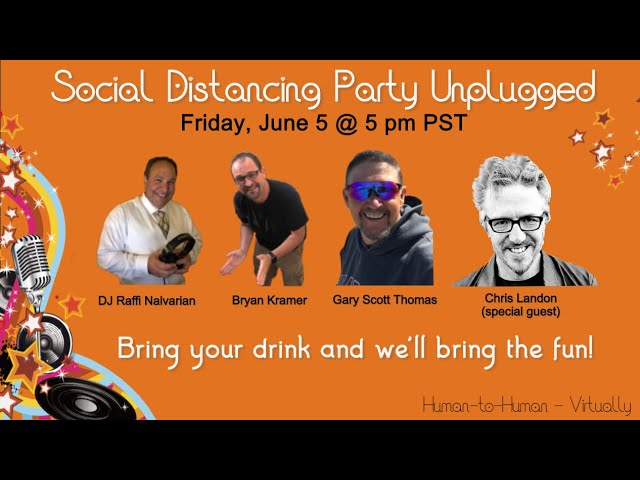
On Air with the B's, 3 topics in 30 min w/@brianmoran & @bryankramer

In this 30‑minute, three‑segment conversation between host Brian Moran and guest Bryan Kramer, the duo tackles practical challenges for entrepreneurs in 2016. The first segment focuses on cash‑flow management, urging business owners to review past cash‑flow patterns, create emergency reserves, and consider lines of credit to cushion delayed payments. They then shift to time‑management, offering two core tips: learn to say “no” to non‑aligned opportunities and protect prime work hours from “time robbers” such as phone games or unscheduled chats. The second segment dives into personal branding, where Brian explains the importance of consistent online presence, likening social media activity to peeling an onion that reveals a deeper, authentic self. He stresses two actionable habits: write regularly (even if it feels uncomfortable) and actively connect with people in a human‑to‑human (H2H) way, turning one‑way broadcasting into two‑way conversation. The final segment surveys 2016 trends, highlighting the rise of video and mobile communication, the continued relevance of big data and predictive analytics, the growth of e‑learning subscriptions, and the evolving roles of platforms like Twitter, Snapchat, and Facebook. Throughout, the tone remains conversational, upbeat, and geared toward small‑business owners seeking concrete, immediately applicable advice.
Chapters
Hey everybody, how are you doing today? Bryan, how are you?
I am fantastic. Talking to you from the great state of New Jersey where it was a little cool this morning, but the temperature seems to be rising, yet we still have no snow on the ground, so I'll take it.
How are you doing? Compared to last year, that's, that's a huge improvement. I'm doing great. I got woken up by the garbage people people who showed up this morning at roughly 4:45 maybe AM.
Wow.
I did not take my trash out, so the garbage person got to see me in my underwear.
And, uh, there you go.
And I took the trash out, and I wasn't the only one. For some reason this morning there were 5 other neighbors that were doing the exact same thing,
all in
there. We all got to talking around in this little circle. We got actually caught up on our neighborhood conversations. So I highly recommend not taking your trash out every once in a while. It's a great way to meet your neighbors.
So we're gonna move the Blab to 4:45 Pacific Standard Time on Fridays.
Every Friday.
There you go.
Underwear only.
All right. Quite an in-person following then.
What's that?
I said you probably have quite an in-person following on your street.
We, uh, I'm building it. It's truly aged. So, um, so we're gonna split this up between 10 minutes. We've already, uh, we've, we've gone 5, so the first segment may be a little, little shorter because we're gonna keep this to 30 minutes.
Yes.
First 10 minutes, we're talking about, um, we're talking about, um, uh, issues faced, uh, for entrepreneurs in 2016, time management and cash flow. So, Bryan, I'm gonna ask you a couple questions to kick this off. Okay. The first one is, how do you think that people, entrepreneurs, business owners, can manage their business better in terms of, you know, the eventual outcome or the cash flow? What are the effects a business has
Well, that's a great point. And, you know, there are a lot of people who are watching us today who are business owners. So this is something that I know is gonna be near and dear to their heart. And probably the biggest thing that keeps us up at night is definitely cash flow. And I don't care if you run a great business, a debt-free business, you know, you get a bump in the road where somebody turns a net 30 into a net 60 in terms of paying you. Or you're expecting money and there was a misunderstanding and the payment's late and suddenly you're taking a cash-positive month and you're trying to figure out where you're going to come up with the money to pay your bills. It happens to all of us and it happens in some cases, it happens more than a few times a year. And so the best way to prevent something like that from happening is one, Take a look back on 2015 and see where you had some cash flow bumps. Like, is it a certain time of the year? Is it with variable expenses where they can kick up? Like you've got a lot of traveling to do and you didn't budget accordingly for that. But then try and figure out where you might get some bumps in the road in 2016. And if it were to happen, you play the what-if game. What if this happens? How am I going to respond to it? You could— and that's where you start looking for resources, right? Whether it's a line of credit from a bank, you create your own line of credit. You know, when you get extra money in, put some aside to say this is for emergency purposes so that when, you know, that $10,000, $15,000, $20,000, $50,000 check that I was expecting doesn't come in, You know, I can soften the blow by tapping into these funds.
So let's transition, if you wouldn't mind. We'll take a quick— because we've got just a couple minutes left on the segment. Let's talk about time management, especially at the beginning of the year. It's a great topic. How— what— give me your top 2 tips on time management.
Easy. One, learn to say no. If you're successful in business, people are going to come to you with opportunities. You have to— if you have a plan in place at the beginning of the year, say, this is where I want to be on December 31st, 2016, then you have to ask yourself, is this opportunity going to get me closer to my goals? And if the answer is no, then your decision is no. But you really, you know, time is money. And you know, you heard that expression, it's the only currency that matters. The difference, the biggest difference between time and money though, is that you can't save time. You can't bank it like you can with a credit line for your business. So if you make a bad decision and mismanage your time, it's less, it kind of puts you back in terms of being able to achieve your goals and objectives for the year. So, my first tip is learn to say no more. My second tip is watch the time robbers in a given day. And whether it's you're playing games on your phone or you are catching up with a buddy or a family member, whatever it is in the middle of the day, you have to put those things to after business hours or before business hours. But, you know, those prime hours, that 9 to 5, 9 to 6 during the day, you really need to be able to guard those from time robbers and say to people, hey, love to talk to you, got some stuff I got to get done, let me call you back at the end of the day.
Awesome, man. No, I love that, um, especially the, the time, time robbers. Um,
watch them, identify them, and get rid of them.
Yeah, uh, I like to call, call them time robbers. Um, but, uh, yeah, I, I understand, uh, that I only said that because Robert's on the, on the blab. But, um, no, I, I, I agree. Um, you know, it's, it's, uh, it's something that, that happens all the time. And the thing is that, you know, they come in many disguises. Right. Um, and, and so you don't really know who, uh, you know, who, who they are and what they're, what they're asking for. And it sounds so fun. It sounds like it's gonna be a good good reason to do something, and yet, you know, it really turns into something that ends up robbing your time or Roberting your time. I'm kidding, Robert. Um, yeah.
So, so, Bryan, I, I clicked on you to give you applause or whatever, the high fives, like twice.
Yeah.
And now it's just, it's going in perpetuity. Do you see this?
Uh, yeah, I just thought you liked what I was saying,
but,
uh,
I liked it. I didn't love it. I didn't want to marry it, but apparently my thing is stuck. So at the end of 30 minutes, you might wind up with about 10,000 high fives from me.
Oh, that's interesting. Uh, here, let me, let me get you up there too so that— There you go. I,
I
don't want to feel like I'm, you know, uh, robbing your, uh, your—
No, it's all good. So we, we covered time management, just tips. That's what we want to give away on this show, quick tips that can help people run better businesses, manage their time better, Increase productivity, right? That's our goal. That's right. One of our goals for this.
Yeah.
So let me flip it now and take control and talk to you about our second topic, which is personal branding. You know, I hear this a lot from the companies that I work with, the business owners and entrepreneurs that I work with who don't really understand personal branding and why it's important for them and their business. So you write extensively about it, you talk about it, Tell me this, what is personal branding and why is it important?
Yeah, that's, you know, it's actually, I think it's more important now than it ever has been. There's a way to brand yourself and there's a way not to brand yourself. You know, if you wouldn't do it offline, I wouldn't do it online. And a lot of people really, you know, as fundamental as that sounds, they don't I don't really get that. Um, you know, there's a lot of, a lot of ways that you feel like, um, it's kind of like when somebody's in the car and they're picking their nose and they feel like, um, nobody can see them, you know. But, but then again, there's windows around you.
Yeah, yeah.
And, uh, people can really see you picking your nose. Right. Uh, you know, it's the same thing online. People think, oh well, it's a, it's a tweet, is it really going to be heard? It's, it's a Facebook post, who really cares? You know, it all really adds up and it really starts to become, you know, kind of going back to if you were in a communications degree in college, it's, you know, the whole concept of peeling the onion. Mm-hmm. You know, the communication theory on peeling the onion into relationships holds true to where, you know, over time you really peel the outer layer of the onion until you get to the rich, juicy stuff on the inside that makes you really cry once you're cutting the onion up. And, um, and, and the same thing goes for, uh, social media and, and, and personal branding. As soon as you're peeling that onion over time, people are starting to learn who you are. So does that one single tweet, uh, matter? Um, yeah, to the person who saw it and then adds up to the next tweet or the next Facebook post, the next Instagram post, it becomes who you are.
Right, right.
And, and all of these different things add up to your own personal brand. And that used to not be the case because there used to be this place where, you know, there was no— well, I mean, as of 10 years ago, there really wasn't any social media. Right. So, you know, this is brand new. It's something that you and I did not grow up with. Most of the people on here did not grow up with.
Right.
And quickly over time, it's going to become second nature, just like the pinch and zoom is to our kids on an iPhone. So is,
you
You know, a tweet being heard, you know, by a lot of people and adding up to their personal brand. So, you know, I feel like what I'm saying is resonating because I now have almost 1,500— I'm
clicking all over my screen to see how the hell I can stop that, but that's my bad. Anyway, what you're saying is gold, so you deserve every high five I'm giving you.
Everybody do me a favor and clap.
Right, right.
Some props, because I feel like—
But, all right, so for everybody who is listening now, watching now, or will be watching sometime later today, talk about how we can build our personal brands in 2016. Give us some takeaways that we can incorporate into what we do today and moving forward in terms of building our personal brands and being consistent With our personal brands?
Yeah, well, uh, there's— okay, so there's 2 things. I'll give you 2, 2 things back. Uh, one is, um, uh, if— write. Um, if you can't write, write. If you have a hard time writing, you still have to write. You, you gotta write. Um, it is, uh, not only cathartic, but it's also, um, it's going to teach you. You're going to learn a lot from writing. You're going to see how people respond to certain things. Um, Bryan, if you want to refresh your screen, it'll probably stop.
All right.
Just, just hit refresh. You'll go away. I'll keep talking. Um, you know, so keep writing and, um, and blogging and, and placing your content in different, uh, different sites. Um, it's, it's going to be, um, it's going to, to have an effect on the way that you, um, The way that you learn about how people respond to what you think. And, and that's what got me started. So write, please. Okay. Do anything. Do that. And actually, there's this great podcast that just came out. You can look it up. It's, it's with what's his name who did Star Wars?
George Lucas.
George Lucas. Thank you. And George Lucas was being interviewed on this podcast and he actually said, I hate writing.
Right.
Um, I hate it with a passion. And he ended up, um, he ended up, uh, pushing through it. And, and that's what happened, and that's what became of Star Wars, was him pushing through that process and doing that. Because when you can write, you can own everything. Um, and that's that. And he owns everything.
Yeah, he pretty much does. He does.
The second quick one, I'll make this much shorter. is that you have to, and I know this sounds like so randomly easy, but connect with people. And I mean in an H2H way. I know I sound redundant for having said this for years now, but once you write, that doesn't mean people are gonna just come read it. You have to invite people to the party. You gotta reach out to them and say, hey, I wrote this thing. Would you wanna read it and tell me what you think? Right. Or go read their stuff and comment on theirs. But the point is, is connect. When you connect and you're writing, you're now building a 2-way conversation, going back to personal branding, that actually helps. So just do those 2 things and you will do basically exactly what I did to build my own brand. If you think that that worked, then that's what I would suggest. Well,
the jury's still out on you, but— But now what's interesting is you look at what we just covered in the first 2 segments and it's like peanut butter and jelly. You know, time management, watching the time robbers will free you up. You talk to most people, Bryan, who are listening right now, we all say the same thing. I'd love to do it. I don't have the time. I'd love to write. I'd love to connect, but I don't have the time. And the fact is we all have the same amount of time in a given day. It's how we use it that makes us successful or not successful. Or it makes us, you know, it helps us promote and build that personal brand, or it doesn't. So you absolutely 100% should write, I agree, and you should connect, but you need to mine the, you know, the contact list of the people you have in order to understand. You can't connect with 1,000 people in a given day. So who are the people that you should connect with where you can help them and they can help you? It can't be a one-way street, right? You can't, you can't be a taker. You can't say what's, you know, what's in it for me the whole time.
Well,
ultimately it is, you are achieving your goals, but you're doing it by helping other people achieve their goals.
Yeah. I think we might have our first B, uh, on air with the Bs disagreement. Um, because—
I'm surprised we didn't have it in the first one.
No, I'm kidding. I actually just would slightly alter that to, you know, that there are ways to connect with, you know, a lot of people, and that's speaking. You know, when you speak— but I don't think that— you're probably talking about a one-to-one connection.
Right.
But I am a fan of speaking for that reason, because there's no greater impact in my life than having gotten up on a stage talking to 6,000 people and connecting with, you know, maybe half of whoever's listening to
you.
And then at the end of the day, you basically kind of— they met you. Now, did you meet the other half? No, that's where the hard work begins. But speaking would be right up there on number 3 for me as building your personal brand.
Yeah, I agree. So there's a ratio, right, of one-to-one versus one-to-many. But that's all, that's all part of a plan. So it doesn't happen randomly. You don't build your personal brand randomly. You have to have a plan, right?
Absolutely.
And you need to execute on it. But part of it is that, that rule of reciprocity, that if you, you will get known as a taker pretty quickly in our world if that's all you do. Hey, how can I use you to help me achieve my goals?
Totally.
That, that you'll be outed and, and, you know, you have to move on to a different industry, change your name, go into witness protection because, um, the rule of reciprocity really does apply, especially in social.
Yeah.
It's, it's, it's, it's kind of like give, give, give. I think Gary Vaynerchuk said it right. You give, give, give, give, give, and then you ask.
Right.
And, and the fact is, if you do it right, you don't even have to ask. Somebody's going to say, how can I help you? Right?
Yeah.
Beautiful.
Absolutely. So, so, Bryan, I did, by the way, I apologize, I used you to start this blab. So I just wanted
to— Hey, I wanted to—
I felt like I just, I didn't give, give, give. I just asked you to—
No, no, no, this is, this is my giving. I'll be asking in February of something.
All right, so let's, let's finish this out. With the— in the final— what do we have here? 8 minutes. I'm gonna— I'd like to, you know, let's talk about the last third of this in terms of what's hot in 2016. Right. You know, is it big data? Is it wearables? Is it Internet of Things? Video? What's going on? You saw my— actually, not only did you see it, you were one of the predictions in the 69 predictions that I put up. to go through them, but there were some pretty interesting trends that happened. But what are your thoughts? What's gonna be hot in 2016?
You know, depending on what type of work you do and the industry you're in, obviously there'll be different trends. But I think something that will be, you know, kind of unanimous is the way we communicate with each other. You see it moving towards video. And mobile, right, which is one of the reasons that I agreed to your invitation to do this Blab. Normally I hate video, but I realized to me this is like a necessary evil. This is the way that people choose to communicate. It's easier, it can be on demand, and so I made a commitment in putting my plan together for 2016 that video would be a big part of it. And of course mobile, you know, people wanting to view this on their smartphone while they're on a plane going somewhere, or, you know, maybe on a train going home from their office. So those are trends that I see from a communication standpoint. You know, certainly big data, we hear that a lot. In fact, I just got off a call right before this, and it was all about how to capture the information and, and use it in predictive analytics. We're getting so much more information now than we've ever had access to before, but here's my one warning to people who use it in business, is that you're never truly going to get the complete picture. So find out what information you need in order to achieve your goals. Remember, information technology, all of this stuff that we do, it's a means to an end. So if analyzing big data and incorporating it into a customer experience is going to help you generate more revenue for your company, increase sales, increase workforce productivity, then by all means invest your time and resources into it. But those are gonna be 3 important trends, I think, for any business in 2016. How about you?
I completely agree with you, so I could just say ditto, but I'll add— maybe I'll get a little bit more into the weeds since you talked about some really great themes that I totally agree with. One was just diving down, the number one thing that I am totally committed to and totally focused on this year is actually a couple different things. One is I think people want to learn on their own time and they're gonna need more content that they subscribe to, meaning it's intent. There's intent to subscription of e-learning. And I think e-learning is about to go up. Yeah. It's been up, it's gonna go higher. Right. E-learning is gonna be big. I also think that applications that have been around that have not done as well over the last few years because they haven't had adoption are going to finally break through, and we're going to see what happens finally with Twitter this year.
Yeah.
Will it last or will it not? That will, that will come true, like, to a point where we're going to figure out what that happens. I hope— I, I actually think that their changes that they're making with, uh, some of these radical changes have to happen because they need to go big or go home. And, uh, so that's, that's that. And then the third thing is, honestly, I'm really committed to things like, um, you know, like, uh, Snapchat. I think Snapchat is probably one of the most breakthrough technology social media platforms, um, that is going to disrupt what we like about Facebook and wanted out of, but still want out of Facebook, what we like about Twitter but still want out of Twitter. It takes away the trolling and it gives us active moments with people that, that, you know, makes it interesting to connect with people. It's totally human-to-human, this, this platform. I absolutely love it. So those would be my 3.
Let me ask you a question though about that, about things like Snapchat, Facebook, Twitter. And I could be completely wrong, but if Twitter said to me, we want to keep Twitter around, we want to increase the user experience, and we're going to do what LinkedIn does, we're going to offer a free version and then a premium version. I mean, would you pay $1 a month, $5 a month for Twitter? A month for Twitter? If they had some kind of premium service that they added on for you. You know, you see all of these third-party apps that are able to provide like you know, deep dive analytics into Twitter. And, and, yeah, and that's it. Twitter is sitting on a, like, the Grand Canyon of big data. I don't know why they don't offer premium services on their own that they charge people, because I would pay. I would hate to see Twitter go away because it's such a valuable tool for me in what I do every day. Snapchat, I'm just starting to get into. I don't know that I would pay for Snapchat, but I would pay for Twitter And I imagine there are hundreds of thousands of people, if not a couple million, right?
Here, here, I see what you're saying, but here's the thing, like, why is Facebook so successful? They don't charge us for their analytics, they don't charge us for, you know, any of their insights, they give us new things all the time, they're disrupting how we interact and how we use social networking. They really have invented quite a few new things that we did not like over the last few years and came to eventually like.
Yeah, yeah.
And I think Twitter is gonna do the same thing. We'll not like it and then we'll eventually like it. Or not. It'll become really clear.
Yeah.
I think, you know, that's the thing is Zuckerberg is really good at doing the beg for forgiveness. Then The second thing is that we, we don't pay for any of the data, but what we like is that it's just— it's not disruptive advertising. So the ads, the, the brilliance of the network is that they understand what you like, or at least they're supposed to. And, and, and, um, and they're going to understand even more so when you order a car service like Uber or you order, um, you order your Safeway groceries to be delivered. They're going to know that about you and they're going to serve you up things along the way that make sense to what you need at that moment. So it's not a disruptive ad. That is where Twitter could really kill it because they actually have more data on that level in terms of understanding you as a user and helping us to advertise in the moment for what you need, not for advertising's sake.
If you think about Twitter, we use Twitter for breaking news, right? If something happens, you know, like I remember this This was like a historic one when we found Osama bin Laden. Remember that? And they said that Obama was going to come on Sunday night at like 11 o'clock for a speech, and at 10:35 the story had broken on Twitter that we had actually captured and killed Osama bin Laden. And what was even more interesting is that his neighbor tweeted something earlier that night about all the noise coming from next door. And, and, uh, you know, there are so many historic moments. So when, when Sullenberger landed the plane in the Hudson River and the guy took the picture on the wing and tweeted it, there, there is, there is value in what Twitter does, and there's a reason people go to it. They just haven't monetized that portion of what they do. Right. I, I think they need to start thinking a lot more like a business and saying, how do we monetize this? And don't be afraid of losing users You know, you got to have that free version and the premium version. It's like any business. They're not a nonprofit. They got to start figuring out how to make money and be disruptive.
Well, that's a good place to end the blab. We're at our top of the show here.
There you go.
And so thank you, Bryan, for doing this with me. I think we're on— we're going to be doing this every Friday. Every Friday, Pacific Standard Time, 12 PM Eastern Time. This is the start of a new thing here, On Air with the Bees, until we come up with a new title. And I'll definitely end since my dog is now having a field day with the person at the front door.
Anybody who's been listening too, you know what, if you have suggestions for topics that you'd like to see us cover, we're open to that. We're gonna do 3 topics Each Friday, 10 minutes a topic.
Great. Yep, that'll be good. So thanks, man, really appreciate it.
Great to see you.
Great to see you as well, and we'll, we'll see you all soon.
Talk to you next Friday.
Make it a great weekend. Happy Friday.
Take care, everyone.
More from Bryan


AI Didn't Make Leadership Harder. It Made Fake Leadership Impossible | CODA Keynote | H2H 2.0
Why AI Makes Connection More Valuable | BOLD Awards Keynote Trailer | Human-to-Human H2H 2.0