Substance Mark Babbitt
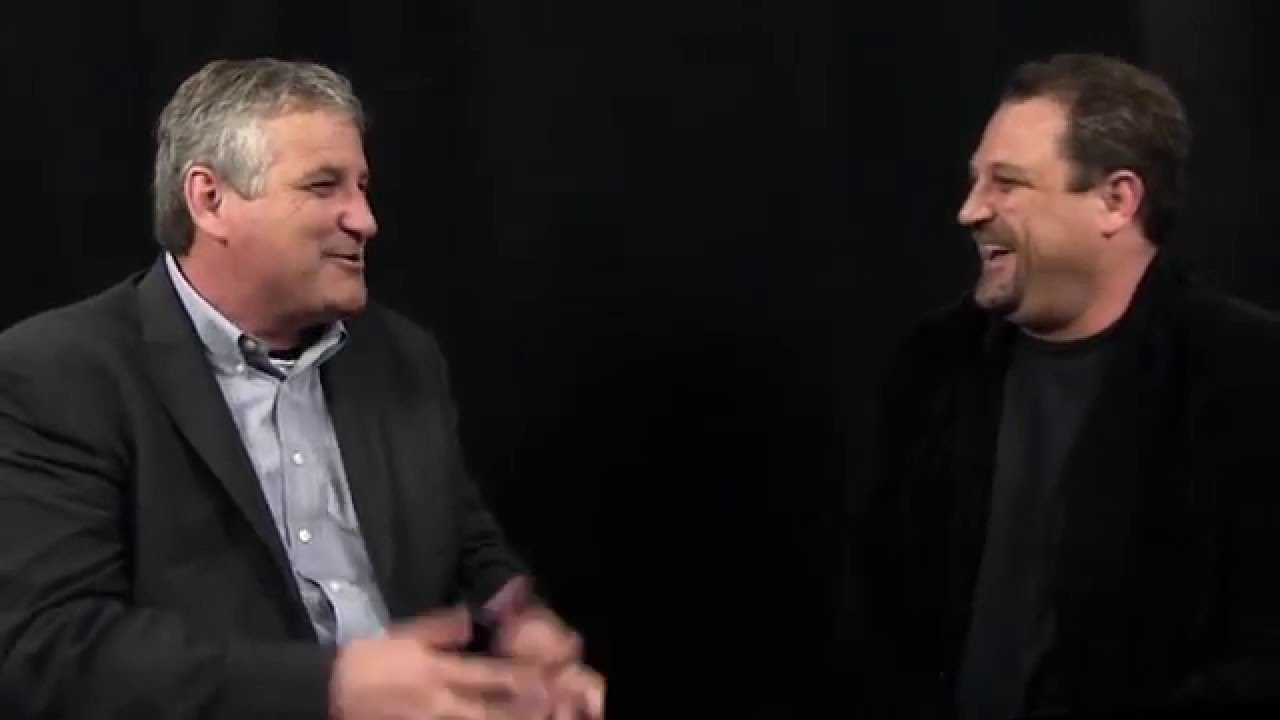
In this Pure Matter interview, Mark Babbitt discusses his book A World Gone Social, explaining how social media continuously reshapes business models and why many established brands still struggle to use it effectively. He describes the U‑Turn talent community, a mentorship‑driven platform that helps college students discover their strengths, define personal branding, and navigate the modern job market. Babbitt shares his philosophy that careers are a lifelong competition rather than a predetermined path, urging young professionals to treat each career milestone as a new starting line and to focus on relationships and value creation. He also reflects on the evolution of social media from a chaotic “wild west” to a more mature, collaborative ecosystem, and offers unconventional career advice for future generations, emphasizing exploration over conformity.
Chapters
Mark, it is really good to have you here. Thanks for coming in and joining me here.
I'm thrilled to be here. It's great to talk to you. I
appreciate it. I don't get a chance enough to actually interview my good friends. And so I am honored that you came into Pure Matter and that you're— we're getting that chance. And I want to talk to you about all kinds of stuff.
Okay, let's do it.
So first of all, how are you doing?
I'm doing great, actually. We're, you know, like you, we're all keeping busy. And but it's— this is an exciting time for a lot of us. There's, you know, books are out and are coming out and And new sites are launching and we're playing with Shareology, which is fun. So this is a good time.
Well, speaking of books, your book has been awesome. I mean, you're speaking— you were just telling me you're speaking around the world. And, you know, tell everybody a little bit about the book. A World Gone Social.
A World Gone Social.
How much bigger can you get than a world that goes social?
The title comes with certain expectations, doesn't it? I wrote A World Gone Social: How Businesses Must Adapt to Survive with Ted Corneille, and it was an interesting project. We tried to encapsulate everything that social has done to change our business models and the impact that it's had on the economy as a whole. Well, the trouble with doing that is as we're writing, social keeps changing. Every month something new came out. every day a company would do something amazing on social and we'd say, oh, that has to be in the book. Or they do something really friggin' stupid and we'd say, that has to be in the book. Yeah. Right? So it was a long project, but it's fun and the response has been amazing. And now we're talking to companies all over the world about about how to get involved with social and not just, you know, have the account on Twitter and not just have a LinkedIn group, but actually engage and contribute and provide value and cut through all the noise that we're all frankly really tired of. So it's been fun.
Do people still not— I mean, you know, social's been around now long enough that we can say it's been around. Do people— are they still learning? Do you think that they're still trying to get it?
Not only are people still learning, but especially some of our old-school companies, you know, brands we all know, they still have no clue. They're still broadcasting at people. They're still tweeting discount codes. It's sad in a lot of cases, but we are seeing little pockets of excellence, as my business partner Sean Murphy says. Even inside those big dinosaur companies, we're seeing little groups that just kind of take over, and we see the work that they're doing, and it's quite encouraging.
Oh, that's great. So what is— actually, let's just take a quick direction change here. You have 5 children. You have a grandchild on the way?
A 6-year-old grandchild and another one on the way, yes.
And you live in Seattle. You used to live in Tahoe. You have one of the most awesome eclectic backgrounds, and you're juggling so much. How are you doing all that?
Well, my wife would say I don't sleep enough. That's the main thing. But I love what I do. I, you know, nobody has to tell me to get up and get out of bed in the morning. I'm ready to go. So, you know, throw a little workaholic tendencies in there and, you know, we're not making widgets that we sell on the, you know, in Walmart. We're helping people. We're helping young careers. We're helping emerging leaders. We're helping companies develop a better way to talk to their customers and create new products. And That's, you know, that's not a bad way to make a living.
And you get to do that also with young people.
Oh yeah, through U-Turn. U-Turn was our first community, a talent community. And at U-Turn, we help young careerists, recent graduates, college students figure out what their role in life is and what their value is. And it's, you know, I guess we could call it personal branding, whatever. We go much deeper than that. We ask, we ask people 2 questions. We say, what are you really, really good at, and who will pay you to do that? And it's funny, even as, you know, 55-year-olds, if we can figure out those 2 things, we're in pretty good shape. So we start, you know, 18, 19, 22, 23 years old. We help our community think about that stuff now, you know, before they start down a path that they don't enjoy, or before they end up doing what their parents wanted them to do but they have no passion in doing at all.
How do you figure out what you're really passionate about at 18? You
don't, that's the problem, right? I didn't do it in my 20s. No, I know. No, but we— so that's the problem though, right? We do kind of what we think we're supposed to do, or we pick a career or major based on what's practical or based on what's hot. We really have no idea what we're doing. So that's why at U-Turn we talk a lot about the importance of mentors and internships. And, you know, get your butt out there, have some fun. Don't just stick your nose in a textbook. Go do something amazing.
So what do you, what do you do with them? This is a community that you have. How do you cultivate this kind of community that helps each other, or how does it work?
We have a huge informal mentor network, and, you know, there isn't a person in the world that doesn't want a good job and doesn't need a good job, right? So the baseline's there, right? 4 million new college students enter higher education every year, and they all need help. I'm
looking for college for my daughter right now, so I'm going to be listening right now.
You know! You know! Then we need to talk to her. Because we go to college and let's face it, we think college is still— it's a rite of passage into adulthood. It's a first chance to be alone, independent. Maybe the first chance to explore our adulthood a little bit, right? But we don't We don't— college can't just be that place you just go have fun. You get to go party once in a while. You get to, you know, you get to go be yourself for the first time maybe forever. It needs to be— there needs to be a little impetus behind it to say, look, this is what I want to do for a living. If I work hard right now, I can get where I want to go. And that's what U-Turn helps people do.
Great. So where are college students now? What kind of world are they growing up in? As, I mean, and I can, I know that social's now, it's a, that's a new thing, but what are you, how are you coaching them through this, this new, these new things?
This is, this is a crazy time. I mean, we, you know, for decades we lived what we now call the big lie, right? Air quotes always with the big lie. Go to high school, get good grades, maybe play some sports, be a good leader, right? Be a good citizen, earn your way to college, get that degree, And the American way is there'll be a job waiting for you when you get out, right? That's what we were all raised for decades, generations, right? And now, not the case. We have people with PhDs working at Starbucks and Target and McDonald's, right? So—
And yet they can't get my coffee right. So what's wrong with that?
Maybe that wasn't the PhD. So we help them focus on this new reality that you gotta work your butt off. And, you know, you're competing against— you went into school with 4 million other new students and you're going to graduate with 4 million others. And how are you going to stack up? And what's that look like? And who did you work with? And who do you know? And I have a good friend, AJ Thomas, and we were talking today and she said, to me, Mark, it's not what you know like it used to be, or even who you know, but who knows what you know. Right. And this is like what you guys do here at Pure Matter, right? You help people Market what they're good at, right? What their value is. And that's— we do the same thing except for college students.
It's such a— I can only imagine it's such a hard time for them to actually feel like their resume is everywhere. The resume is their statuses, so everything they've posted is going to come back to haunt them. You know, trying to tell them that is really hard to do after the fact.
Well, social is a dual-edged sword, right? Just like for companies and brands, it can be good and it can be bad. The same is true for young careers. And we've unfortunately, we've learned that the hard way over the past 6, 7, 8 years, but now people have finally got it. Oh, there is no privacy on social? Now I get it. So I won't put that picture on Facebook with underwear on my head or, you know, all those red Solo cup pics. I'll keep those private. I'll put those somewhere else, right? So we're getting smarter and we're getting Frankly, we're getting more mature. Social media is, for personal brands and corporate brands, it's maturing. We're learning as a society what works and what doesn't. It was kind of the Wild West for a while, but we're getting there.
Good. Well, I was just recently speaking at a college here in San Jose, at San Jose State, and I got asked a great question by the students, which, by the way, I just had such an incredible time talking to the students because they were just so energetic. Isn't that fun?
The best audience ever. Really?
I've talked to a lot of audiences, but this was one of my favorites for exactly that reason. So, but the question that got me was, what's the one piece of advice that you would give to a college student to change how they are entering into the work world? What is one thing that you would tell them, do this and it will make a huge difference in how you enter into your career?
Well, I get that question a lot because we speak on college campuses all the time. And I'm with you. My favorite— it's my favorite audience in the world because they get it, right? They're living this right now. There's, there's a clear sense of urgency and, and the passion that, that we can exhibit at that age is much different than at my age, right? So love, love the conversations. But when, when I get asked that question, I say the same thing almost every time, and that is you, you have to realize that, that your career isn't a destiny. Your career isn't preordained. Your career is not based on the major that you chose before you had any experience or any knowledge of what you really wanted to do, but it's a competition. And you go from one starting line to one finish line, and as soon as you hit that finish line, you get to celebrate a little bit, celebrate every little win. But then you ask anybody, that's the new starting line.
Mm-hmm.
And now we're on another race. And if we realize that our career, our lives, our professional The professional side of our lives is a lifelong competition, and we get a little fired up. And we know we are, you know, what kind of athlete ever showed up to a major event not prepared? Right. Well, if you realize that's the same kind of energy you have to put into your career, then you go to networking events with a different attitude. You go to on-campus events with a different approach. You maybe volunteer or run for office, you know, where you wouldn't have before. It's once you know, once you completely understand that your professional life is a competition, it changes everything.
I love that. I love that. Well, it applies to all of us, right? I wish I would have talked to you 30 years ago.
I wish I would have talked to me 30 years ago.
So let's, I want to talk to you about that. How has your career been? How is it? Where do you see it going?
Well, I love what I'm doing right now. I can't imagine doing it different right now, but I'll, you know, I started out in the military and then was an engineer right here in Silicon Valley for a long time.
A couple blocks from here.
A couple blocks from here. And I loved that for a while, but I found out, you know, I chose engineering because it was practical and it paid well. And let's face it, I was a kid from rainy Oregon living in Sunnyvale, California, working in San Jose. Palm trees and You know, everything you'd want, right? And I hated it. It just sucked. It just wasn't me.
Wow.
And it took a while to figure that out because you have to work through, you know, the guilt of making all this money and I don't like it. But I just threw my hands up one day and said, God, this just sucks. This is not what I'm supposed to be doing with my life. And I've been working for myself ever since in one form or another. And I just wouldn't want it any other way.
So where do you see yourself going? What's happening with you?
Well, I love speaking. I love, especially to the students. And now with a world gone social, to sit down across from a CEO and have her go, wow, I get it. I freaking get it. I see the value in this. And see those lights go on, that appeals to me. Tremendously. But here, as you know, the problem with that is it's not repeatable and scalable. And I'm a startup guy, right? So everything has to be repeatable and scalable. Mm-hmm. So we, we are doing— we're following the lead of a lot of our friends, Ted Rubin, Tamara McCleary, and we're developing— Shawn and I are developing some online courses that will be repeatable and scalable and will make a difference without us having to get on an airplane. We're really excited about that.
Cool. Very cool. Well, I'm excited to take part to see how that goes. What is one thing right— where do you think that we are going to be in the next few years? How do you think social is going to evolve?
I think here's the key. Well, and we've said this all along. I mean, when I first started my very first business in 1990, the thing I would tell everybody that we worked with is it's all about the relationships. building strong relationships, and then eventually when the time is right and it's mutually beneficial, leveraging those relationships. How can we work together better to be better, to do better, to do good? And so we've been preaching this a long time. Now social comes along and makes that much easier, right? So social's worked out really well for us. So I'm excited to see what's coming next. I'm excited that, as we talked about earlier, that it's stabilizing a little bit and we're figuring out What works and what doesn't. I'm real excited that people are starting to cut through the noise and, or actually maybe better put, start— stop throwing out noise and focusing on value. And I think that's, you know, there's so many of us that are doing good work and we're sharing our knowledge and we're investing in each other, but we're still working independently. And I think the next stage is we're going to start sharing and collaborating and working And we're gonna build a model collectively, informally, however it works, where we actually start doing good together. And that's what I'm most excited about.
Oh man, me too. Me too. And you just got me jazzed up just listening to you talk about it. We'll just leave off with this one question. What will you tell your grandkids on what they can now do with their careers?
Oh boy, nobody's ever asked me that before. I am not a big, you know, that whole follow your passion thing. That is the worst freaking career advice we've ever given anybody. We've been saying it for a decade now. We know, we know it sucks, and some people are still saying it. But I do think we have to love what we do, and I think the sooner we learn that, the better off we are. So I might tell my grandkids, don't go the traditional route. Don't take a gap year. Go be a jazz musician for a year or go off to Europe. You know, go visit Spain. Do something amazing and figure out what you want to do with your life. And then, after you've had a little fun, then say, okay, I'm ready. I don't have to— I might segue back into the more traditional route now and, you know, get the pedigree I need to do well. But I, you know, engineer, police officer, High school coach, teacher. I've had to work in a lot of businesses where it's very, you know, conformity-driven. I just can't— I wouldn't recommend that to anybody.
Well, here's to no conformity, and thank you for being on the podcast today. I really appreciate it, and I'm sure everybody's gonna love what you just said. I know I always do. I just love sitting down and talking with you. All right, well, cheers! Thank you so much. I really appreciate it.
More from Bryan


AI Didn't Make Leadership Harder. It Made Fake Leadership Impossible | CODA Keynote | H2H 2.0
Why AI Makes Connection More Valuable | BOLD Awards Keynote Trailer | Human-to-Human H2H 2.0