MBA or Traditional Route
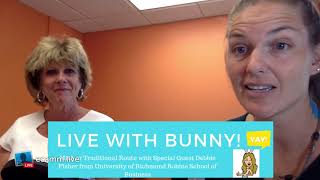
Debbie Fisher from the University of Richmond's business school describes their MBA structure: an opening residency with team case work, an international consulting project in places like Croatia and Italy, and a six to eight month capstone. The program mixes engineering, business, and liberal arts students and is shifting to smaller cohorts of 20 to 25 people.
Questions this video answers
Richard S. Reynolds Graduate School of Business Administration.
Opening residency (team case over two weekends), international residency (team consulting project abroad), capstone (individual 6–8 month strategic consulting project).
Croatia and Verona, Italy.
Six to eight months.
20 to 25 students per year (opening residency had 21 students).
Chapters
Sent them to me. Okay.
You'll be fine.
Are you ready? I'm not good off the cuff. I'm just not.
Well, you're on the cuff now.
Okay. All right.
So with Difference Makers for our community and Debbie, this is a community that we do the Facebook live. I know you've seen at least one of them where it's basically business owners and entrepreneurs and individuals who, through their professional paths, want to make a difference. And one of the questions that I've had is, you know, I have a degree and I spent a lot of time getting my degrees. And now as an entrepreneur, I've. I've heard or I've caught myself saying I don't use them, which I know isn't the truth, and we're going to get into that, but that's why I'm really grateful that we have Debbie Fisher here from University of Richmond's Robin School of Business, which I'm a huge fan of. It's the building. If you're an RVA local, it's the Harry Potter Building, as I commonly refer to it as. It looks like Hogwarts. It does. It looks like Hogwarts. So you get to go to work at Hogwarts every single day?
I get to go to work at a wonderful, amazing place every single day.
I'm so lucky. So, but I wanted to ask you and some of the questions that I've asked myself as far as. Because I do want to go back and get my doctoral degree, but it's kind of the why. Like, do I want it just to have another piece of paper hanging on the wall? And then what is my perception as far as having piece of paper on the wall? And so you guys know in the community, I have a sheet here of questions and Debbie has taken the time to do her homework and she has incredible answers. And so if you see either of us looking down, it's because I'm trying to make sure I'm asking the questions that you wanted the answers to and I wanted the answers to. And Debbie's trying to make sure that she gives you all of the answers that she has stored up. And as always, feel free to type in the comments and if you have any questions for Debbie, and I will get to those. So first, tell me a little bit about the MBA program at U of R, because I know there's a ton of different MBA programs across the nation. So tell me about U of R. Sure.
So, U of R. Our program is the Richard S. Reynolds Graduate School of Business Administration. Focus right now is on MBAs, we're looking, on MBA program, we're looking at other options. You know, the world of MBA is changing a bit. Our students are working professionals. So along with school, they have. They're balancing work full time, they're balancing families, they're balancing life, they're balancing their volunteer opportunities. So they are a very dedicated group of students. And I'm just admiring. I just, I think they're just amazing. So a third of our students come from the engineering background.
Okay.
A third of them come from business, and a third of them come from liberal arts and the humanities. So it's a wide range. We have scientists, we have physicians, we have CEOs, we have business owners and aspiring entrepreneurs associated with our program. And they all come in for different reasons. Our program at Richmond is focused on three pillars. So we have opening residency, which is when all the students come in and some of them don't have a business background, but they come into the program. We have written a business case just for opening residency. It goes over two weekends. The first weekend is at the Jefferson Hotel. The second weekend is on campus. This year our case was with Hamilton Beach. It was an awesome case and the executives there were amazing. But opening residency, it's a group of students who may not have a business background, coming together in teams and working on a case and having to come back and present to the executives of the company their recommendations for whatever the strategic challenge was. So that's a consulting project they're doing as a team. Okay. The second pillar is international residency. So for international residency, again, they're doing a strategic consulting project, but it's for a company in another country. Okay. And so we have two residencies that happen in the spring and summer. I think last year we went to Croatia and one was in Verona, Italy, I think were the two places last year. And then the final pillar is the capstone. So for opening residency, they're doing a team based consulting project for international residency, a team based consulting project for another country. And capstone is when they're doing a strategic consulting project on their own because they're taking their day to day knowledge in their work and their newfound MBA knowledge and applying it in a strategic fashion. And we get really good comments back from the companies that we work for.
And for those of you that aren't familiar what a capstone is, I'm going to do my best to explain it. I'm sure Debbie can do better. But I actually did a capstone project for my master's degree. And so when you get Your master's degree, you do a thesis traditionally, or like my program allowed you to do a capstone project. So this was basically a project where I saved the world. And then I, in addition to everything saving the world, wrote a paper about how I saved the world and what I learned from it. So for your capstone, that's similar.
So I ask small, large companies, entrepreneurial companies, startups, I'd like to have some revenue generation. But I go out to them and say, what are the strategic challenges you're working on? And then how can I match them with a student that has a passion for that issue? And so we want the projects to be a true strategic challenge. The students spend six to eight months focused on researching externally, and then there's internal research. And then they have to come back at the end of that eight months and present their recommendations to the client.
Oh, that's great.
And generally we get good feedback from the clients because I ask them at the end, are you going to implement some or none or all of the recommendations? And we get really good responses to that and we got some great cheerleaders. So it's a good thing.
Well, I'm fascinated by that and could probably ask you a million questions about that. But if we're going to go back to the questions that I had had here, a lot of. So when I went to college, there was no study on entrepreneurship. Like, my parents were entrepreneurs, my grandfather was an entrepreneur, but it was kind of like entrepreneurs didn't go to college. And maybe that's an incorrect bias, but that was kind of this belief or the kind of school of thought. And then I went to college, but there was nothing to study entrepreneurship. You could go into the school of business and study basically what looked and felt like a corporate career, preparing for a corporate career. Or you could study a specific field and kind of go and get a job. But for somebody who was going to open their own company, there wasn't a clear path. And I do know now that universities have like a degree in entrepreneurship, which some, I guess, like, tried and true entrepreneurs are like, well, that's kind of the opposite of entrepreneurship, because entrepreneurship should be the school of hard knocks. And so then there's the MBA program too. So kind of talk to me a little bit about in 2019, from the collegiate standpoint, entrepreneurship degrees in entrepreneurship and an mba. Because if I broke down the study of business, the study of business would be entrepreneurship, right?
Well, for some.
Okay.
Because, you know, some have. I have no aspirations in that area. So it just depends. You Know how risk averse are you? You know, how important is security? Because sometimes with entrepreneurship, you're. You're kind of losing some of those things.
Does U of R have an entrepreneurship program focus?
Like, the university itself is working on developing, you know, a creativity, innovation, entrepreneurship organization. So that's something that's in the works now. They're working on it. In the MBA program, you can kind of customize your program by looking at the electives. So what are the electives being offered in entrepreneurship? I mean, we've got courses in entrepreneurship, but, you know, what are some of the electives that you can add on there so that you can kind of focus your, you know, focus your concentration? And that works. Okay, But. But it is important. I mean, an MBA is important because as we were talking earlier, you know, you know, as you're, you know, if you go straight into entrepreneurship and you're working, you're. You're working so hard in your business, it is. It is a survival that it's like, all right, I can't do it all. And so I now need to. Can't just work in the business. I need to work on the business. And you need a great management team. I don't. I don't know. Maybe you have. Maybe you have a great management team. But the MBA program, you know, can help you understand who you need on your team, how to select them, how to manage and evaluate them. It's interesting that, you know, for your board, for your management team, some of the things, Some of the capstone projects that we get are from organizations saying, we need help working better. How can we work better with our boards? Because there's, you know, all kinds of different kinds of boards and the connections that you make in the classroom, the people that you meet in the classroom also come into play as far as entrepreneurial ventures as well. We have a couple students right now. I was talking to one last night who's like, oh, yeah, you know, this person just graduated and he's ready, but he wants me as his partner. And it's just like, come on. Because they have an idea. It's a good one, and they. And it's just like, they're so ready to get started. But so we're waiting for the second one to graduate, and then they're gonna. Well, they probably won't wait that long. They're probably gonna go ahead and get that started.
It's kind of like getting married, right? Like.
And so, like, if. And two, in the MBA program, if. If you have can in two years While working full time on building your business and get the same kind of experience across a wide range of areas. That's great. However, it can be difficult to design that kind of multifaceted experience only in the job because things come up. Yeah. And you can't get the knowledge in as condensed and well thought out of a fashion as you can going through the right MBA program for you. And it's the right, right MBA program. You know, it might be an online program, works better for you just because of your time or whatever. So, you know, do your research and what is the best. But so experience is great, but the theory that you learn in a good MBA program can help you understand why something worked in your business and maybe why it didn't work. So, you know, there's, there's really good things that you're learning in the classroom that will help you with your, with your ventures. And we've, you know, we've got some entrepreneurs that, you know, they're hiring younger people coming in, younger people with their MBAs. And it's like, I want to know what they know. I want to know what they know. And so, you know, let's go in and talk and see will the MBA program work for me as well. And so we've got people, you know, we do have business owners coming in. We do have CEOs for the same reason coming in. It's like, you know, we've got, we've made all these hires and, you know, they've got all I want, I want what they have and so come back in, into the program. So it's, it's, it's pretty good. So.
Well, that, I mean, that was a lot of the answers that I think I had as far as MBA versus an entrepreneurship program versus just entrepreneurship. There's one thing that has been absolutely fundamental and instrumental for a better place. Consulting. That came out of my degree. That has nothing to do with my degree. And that was the pure aspect of my classmates, my instructors, my faculty, my advisors. It has nothing to do with what I learned in the classroom. And I attended a limited residency program. So Debbie's been fantastic as far as making sure that she's emphasizing the right program for you. She's not saying that U of R is the best fit for everybody. I attended a limited residency program, so every quarter I went out there and spent a long week there and then went back and studied because I didn't live close there. So. But, you know, when I got there, we already had plans to hang out, we had plans to Connect. And because everybody was from all over the country, when I graduated for my master's degree, we kept in touch. And then for my undergraduate at University of Arizona, our alumni program were some of the very first clients that I worked with when we started doing work. Life alignment for teams, you know, and so I had like these built in clients just from the fact that we went to the same school. Some of them I didn't even go to school with, they just went to University of Arizona. Some of them 25 years before I went. So let's talk for a second, just share with me some of the intangible assets. I don't know if that makes total sense because I think that your knowledge is intangible. But some of the unexpected benefits and assets held within attending and getting an mba.
Okay. And we do have a lot of the amenities that a full time two year program has because when I came in, I was able to build out professional development programming. And so I think this year we've got like 20 plus extracurricular programming that we're offering outside of the classroom. But from day one, we focus our programs and you know, let our students know that their first, very first homework assignment that we, that we give to them is that we want them to collect remarkable people throughout the program. So what's not publicized is that the exposure that our students get to interesting people, whether it's companies, industries, guest lecturers, you know, when they take a new course and they're inspired by a faculty member or guest speaker or student colleagues, they realize, oh my gosh, what that person does is so interesting. I never even thought about doing that, but that would be. I could see myself, you know, transitioning into that kind of career. So the exposure that they're getting to really interesting people, you know, outside business people, our professors who are amazing, it's like, wow, you know, I'm a this person, this is my job. But I never thought about a career in finance. And this is really exciting to me and I'm going to learn as much as I can. So there are just the exposure that you get and if you're doing your homework and collecting remarkable people throughout. Which is a quote that I got from one of our greatest capstone. He's a great mentor for us. He's done a lot of capstones with us. But he did our commencement speech one year and he just said his success, he laid it all out to the fact that he was able to throughout his career collect remarkable people. And that is what made his success company a success too. You know, from growing it to selling it. But it was all focused on the people he surrounded himself with. Knowing I'm not the expert at everything, let me talk to the people who are so.
Well, I think you might have led into my final question. So, and I asked this last week we had Amy from vcu, their office of Continuing and Professional Education. And so I asked her the same question. What is your best business lesson?
My best business lesson thought we were going to talk about executive and the mini MBA and CEO essentials. But so for my best business lesson, you know, I've got a lot and you know, a big one for me is, you know, being interested in people. Being interested in people and not focusing, you know, not focusing on yourself. So if you're going into situations where you're meeting new people, be interested in them, ask them about their lives, because people like to talk about their lives. And then how can you help them? Don't ask them for help right off the bat. How can you help them? But there's wisdom and experience. And I've been working in this industry for 30 plus years and intuition is informed by experience and training. And the more you have of it, the more you can rely on it. And so I would say, say in my daily interactions at work or visiting a company or in attending an educational event, I rely on my intuition every day. And that comes from just, you know, your experience and the wisdom that you're getting in the experience. So I would say that was my best.
That depends on your.
Listen to your gut.
That is awesome. And I do want to give you a chance as far as for everybody watching this video, you know, the Robin School of Business and U of R, it's so much more than just the MBA program. You had mentioned the CEO Essentials, which I know from the Council on CEOs, I have some knowledge about that program. So that's an opportunity. If you're not an entrepreneur and if you're currently a CEO and running a company or a C suite executive, you know, you could reach out to Debbie and get some more information about how to get some of these lessons that we've talked about today or how to get some more information, because I know that this is just a very short video on many of the things that our community here in rva and even if you're not in RVA and you're watching this from halfway around the world, you can email Debbie because that's one of the things that she had mentioned, is that there's connections all over the world, all over the country because of the relationships and the remarkable people that you have.
Collected.
I like that.
I like that, too.
So I'm gonna throw the logo up here while you tell everybody how they can contact you and how they can reach out to you and the school.
So for Executive education, our Director of Business Development for Executive is right next door to me. She's Joanne Even.
Yes.
I think we met together.
Yes.
And she's awesome. And they have. We've got CEOs go through our program, but they also go through. What if they don't have the time? We've got a mini mba. I think it runs over seven weeks, and it's like four hours on a Monday night. We also have CEO essentials. So a lot of the Virginia Council have CEO members to participate in the CEO essentials. Joanne Even. So you can reach out to me and I can get you in touch with Joanne Even or Deborah Lup, who's the program manager for the. For Exec Ed. But I think Joanne is Jevenichmond Edu. And if I've got that wrong, I'll fix it. If you send it to me.
We can put it in the comments. And then Debbie is D. Fisher. F I s H E R2. The number two at Richmond Edu. Richmond Edu.
And another cool thing that. And I can't remember if I said this at the very beginning, but we are changing in the next year, changing our program a bit to where we're taking. You're going to be bringing in a smaller number of students. We did that the first for our opening residency this year. I think we brought in 21 students. And our goal going forward is to. We're going to move into a cohort system. So we're going to only bring in 20 to 25 students a year. So we want the best of the best that our program is the best program for. It worked really well with this opening residency because we were able to give more individualized attention. The camaraderie and the community building. In a cohort system, it's just easier to bring, you know, to build communities. So we. We are really excited about this. We have a new dean. He just came from smu. He goes by Mickey. And he is innovative and he is an idea person. So he's my kind of person.
I saw him at the lunch last Thursday.
He's my kind of person. And he's. He's pretty awesome. And we're. And we're really excited about having him on board.
And I'm gonna do one more encouragement for you guys, you know, is if. Whether or not you're considering going back to school, whether or not you're considering taking a course, I do recommend reaching out to Debbie. I do recommend building a relationship with either the University of Richmond or your local university, because regardless of if you have a degree or not, I know you need a doctoral degree in order to be a professor. You have knowledge and experience that you can share and that individuals need. And specifically in the school of business, specifically, if there's an entrepreneurial program. So shoot Debbie an email and just, you know, maybe offer to come and speak to a class, offer to come and. And host some kind of workshop at night for the students, because you guys are making a difference and you're saving the world. And if you can share a little bit of that with the next generation of business owners, we are going to be in really good shape.
Yes. Yes.
So thank you for saving the world.
I try. But we're always looking for mentors. We're always looking for capstone projects. So if you are a business owner out there with a strategic challenge, let me know, because I'm looking for projects. Right now. I've got about 15 students I'm matching with projects that will start this, this fall. So send me your ideas. I'm open for a lot. I'm open for anything.
And she's well connected, too, so she's definitely one of the remarkable people you want to collect. And thank you guys for making the world a better place. I will talk to you soon.
Thank you, Bonnie.
Bye.
Thanks, everybody.
Yes, thank you for being here.
More from Bunny
5 BEST Tips for How to Overcome Overwhelm used by Mel Robbins Tony Robbins and Tim Ferriss!


Need therapy or coaching? Life coaching vs Therapy explained by a therapist What you need to know!