Slaying Self Care with two Badass Mothers!!! Katherine Wintsch and Bunny Young
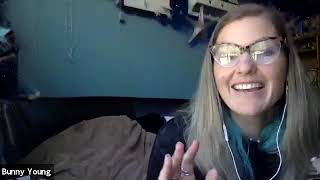
This is a conversational YouTube interview between Bunny Young and Katherine Wintsch about self-care, authenticity, and personal growth. They share anecdotes—skincare and pets (puppy named Buddha, service animal Guinness), and extensive discussion of horses and equine-assisted therapy as a "biofeedback" tool for presence, leadership and trauma work—then connect these practices to boundary-setting, self-acceptance, and Katherine's book Slay Like a Mother.
Chapters
Yeah, well, let's start there. I just want to start with the cussing. I just so. Right. For everybody watching this, like, right before I pressed record, I was like. And we can cuss on difference makers discussion. And also for. Well, you're gonna see on the title, but this is my friend Catherine. Catherine, you don't have to. What is. What is a title that you, like, want to own? Like badass mother. Hey. Oh, my gosh.
That's my husband. You can say hi. I know they can't hear you because the headphones. That's my husband, Richard. Oh, I know Richard.
So he probably doesn't recognize me until. Tell him Guinness is behind me and then he recognize me.
That's right. He's off to the golf course.
Oh, wow. You know, it's a rough life. Tell them not to suck.
Yeah, right. All right. A title for me. I'm just gonna go with good Human.
I was like, human. You didn't, like, miss my expectations, But I was, like, expecting badass mother layer of all things.
No, I don't always feel like a badass, that's for sure.
Yeah. Yeah. So can we talk about this right now? For.
What you got there?
Do you see this, like, nice little. Okay.
Yeah.
So you know what I've chosen to just own is the fact that I still am part teenager. Like, I'm that young.
Yeah.
That I have the face of a teenager. Yeah.
Yeah. That's a good way to. You know, we get to. We get to think whatever we want to about ourselves. So that's a good example. I had something. It was called perioral dermatitis, I think. I don't know, like, all these breakouts on my face. And my dermatologist was like, it's adult acne. And I was like, oh, great. Thought I was through that.
Like, is that exactly how the dermatologist said it? Like you're supposed to be excited about it.
Yeah. I was like. Or maybe it just sounded. Made it sound familiar to me, but it really just sounded horrifying. I was like, oh, my gosh. Okay. It's another thing I have to think about.
I mean, like, let's just think about that for a second. Like, how we deliver, like, news. Like, oh, yeah, so you have kidney stones. Right?
Right. Yeah. Get excited, get excited.
I don't know.
Yeah. But what's interesting is that I really do take better care of my skin now. And that was start shift as soon as I slayed all of my self doubt. So when I was working 80 hours a week and I was trying to prove myself. Like, I never even washed my face at night. It was like, work, work, work, work, work. Boom. Like just face plant in the bed, you know, get up, do it all over again. And it's so interesting now that I care about myself and that how that has resulted in taking better care of my skin. So even when I do get blemishes and stuff like you're talking about, I'm like, well, I'm trying my best. I didn't try it all before. It's beyond my power.
Yeah. I have reduced, I'll tell you my skincare routine. I put this stuff called Renew 28, which is like this cell signaling formula or whatever. So, like washcloth, just regular washcloth, right. This renew 28 gel that it's not made necessarily for your face. Like, you can use it anywhere on your body. And then I put on what's called CBD face food that I get from my naturopath. And so, like, it feels a little, you know, firm, like oily, I think is probably it, like where residue is kind of like the word that comes out for me. But I think just being from Southern California, I get excited that I can put some. Some form of like the marijuana plant on my face.
Amen. Put it all over my body.
Yeah, it's. Yeah. My mom doesn't understand the difference between THC and cbd, and so she like, totally, completely. Oh, yeah, she freaks out. She's just like, you can't do that. It's not legal here. I'm like, oh, my gosh.
You're like, ah, that part is. That part is. There's my little puppy.
What's the puppy's name?
Buddha.
Okay, I want to know the story behind naming the puppy and how old is the puppy?
The puppy's two. And I really love Buddhism and have found a lot of inner peace and meditation and, you know, have just studied it and really, really identify with so many of the principles of Buddhism. And so it's kind of in and around my home. And we actually let our 12 year old daughter name the dog. And she knew she wanted a girl and she narrowed the names down to either Buddha or Lucky. And my mother's maiden name was Luck, and so she thought that was kind of cool to be Lucky. And then I think Stella was a contender for a while, but she ended up picking Buddha. And I thought that was really cool. Cool. And, you know, as mothers, a lot of time we worry about what our children are watching and picking up on in terms of bad habits. Like Oh, I yell all the time or I work too much. But they also pick up the good things and they pick up the things that you pay attention to and put energy towards. So I thought that was pretty cool to see that that's the name that she wanted.
How long ago did you get the puppy? Like, how recently?
Like a year and a half ago, probably.
Well, now I have, you know, Guinness. So we've got a beer and a deity.
Yes, yes. Right, right, right. I love it. Yes.
It doesn't get any better on my side because Goose was my previous service animal, Grey Goose. So.
I see a trend.
I have, I have often thought about my horses, like, because that's my, that's my space. I think I'm gonna ask you where your space is in a second. Just because I think people are struggling to find space right now. But my. I think people struggle to find their own space in general, at least to like, acknowledge and claim that that's the space. So horseback riding for me and being with the horses is my space. But I have joked about one of my mentors that used to work in California in the equine therapy. Her horses were Paxil, Xanax, Lithium. Like, that's genuinely what she named the horses.
So funny.
And I, I loved it. I just loved it. Like, she was talking about, like she was talking about Paxil and I'm like, what are we talking about? And she's like, we had this inner, we had this interaction with Paxil and, you know, the person just really opened up. And I was like, I don't see Paxil as if you're listening. Paxil is like a combination anti anxiety, antidepressant drug. And so I was like, I don't really see that as kind of like an opening up type of drug. And I finally figured out she was talking about a horse. Made a lot more sense then.
I love that. I think we have to live our lives out loud, you know, And I always talk about, like, we, you know, wear this mask and we act like everything's perfect. And I just love seeing humans that do things like that and just, you know, put it on their sleeve and it's okay to talk about it. And it's really, really a beautiful thing, you know. How often are you with horses?
Several times a week. Yeah. And then, you know, I folded it into the business. So I do the professional development retreats because they're, they're 1500 pound bullshit detectors. I mean, there's no. Since they're prey animals, you know, you know, you know a lot about the brain, and you've done a ton of research to know that we, after going through a trauma or we can basically convince ourselves to where our brain switches from predator, where, like, we're the ones in control to prey, where we're just in constant reaction mode. And, like, everything is, like, a trigger. And so this. This relationship of, like, climbing on a. Having a predator, like, climb on your back. It'd be like a zebra being, like, come on, lion. Like, let's go. I'll gladly, like, take you for a ride. Yeah. It just doesn't. It's not natural, and.
I don't know.
If natural is the right word, but it doesn't make kind of sense. And so if you're not centered and grounded and peaceful, the horse tends to move away from that because the horse is like, oh, wait, why is the predator, like, scared? If the predator's scared of something, like. Or anxious or feeling, it's also.
We.
So when I was a therapist, we did trauma, substance abuse and addiction recovery, eating disorder recovery. And so it was interesting because if somebody came high to the ranch and it was like, you know, they had a tolerance to where humans. We couldn't really. They're. They're functioning, functioning, functioning addict. The horse would immediately be like, no, we're not safe. Oh, yeah. Oh, yeah.
And would the horse, like, standoffish? Like, I don't want to.
Like, you're not a safe space to be because you're not, like, consistent and congruent. But so many humans are not congruent. What we put on the outside is not what we feel on the inside. And so. And a horse needs to be able to have that peace. I mean, this is so funny, because we didn't plan on talking about horses, but, like, our love affair started, or. Yeah, I guess started at disrupt HR where I was talking about horses.
Yes. Amen.
Yes. There we go. It just. It all comes.
Well, that's so fascinating, too, because I often talk about just living out of alignment. And, like, for so long, my insides didn't match my outsides. My insides were hollow and empty and isolated, you know? And on the outside, it was like, happy, happy, joy, joy. Everything's fine. And it's like, the great that gap became, then the more pain that just infiltrated my soul because it's a double life, you know? And I think that's so fascinating that a horse could pick up on that. That's crazy.
So one of the things about horseback riding for me, and in general, is that so Anxiety and stress only lives in the future and in the past. It's impossible to have anxiety and stress in the present, because if you're present, you're just experiencing that moment. And so that's kind of this fascinating philosophical thing that I realized while I was doing the therapy work. And when you're with a horse, whether you're doing riding or whether you're doing groundwork, you have to be present, because if you're not and you get distracted, you could fall off, or you'll steer a different way, or the horse will understand that you're the ones with the reins, but you're no longer paying attention, and then that breaks that trust relationship.
I'm literally taking notes.
Well, so when you do groundwork, I don't know if, you know, if you've seen somebody lunge a horse. So, like, they are in a round pen, and the horse is running in circles. So you have to direct your energy at the horse in a continuous way. And so. And keep that focus. And I tell people, business professionals, I say you're. If your feet are moving more than the horses, you're losing because you're having to basically chase the horse in order to get the horse to run in the circle. And what you want is really focused, directed, specific, peaceful energy that is moving the horse. And as humans, what we tend to do is if something's not going our way, we get frustrated, and then we're directing frustrated energy at the horse, and then the horse will turn away from us and be like, no, I'm done. I'm not dealing with you anymore. And so when we're doing these leadership retreats and we're dealing, you know, with these professionals, it's like they finally get it because they can see what impact immediately their energy has on this horse. It's a. It's a giant biofeedback machine. So I'm definitely bullshit detector, as he said. Oh, yeah, Giant bullshit detector. Giant bullshit detector. Like, I went out to the ranch, a friend's ranch, and because him and I have a joke, he says he has more saddles than he has asses. And so I'm one of his asses that he can use for his saddles to exercise. And so, like, I went out, open the pasture gate, totally distracted, totally frustrated. Both horses just, like, turned and, like, walked away. All right, so, like, I walked back to my car, like, grounded myself a little bit, and I turn around, and guess who's standing at the gate, like, okay, human. Okay, now let's do this.
Yeah. You took A beat.
Yeah. But it was just like. But that happens in an office too.
Yes.
Like, we don't have permission. Yeah, no permission. Just be like, get the fuck out of my space. Like, yep, just take this and go do something with it, because I don't want to deal with that right now.
Right, right, right, right. Oh, man. Yes.
Like, I'm for sure. I'm gonna call my aunt out real quick because she left me a message yesterday. Hopefully her boss never watches this. And she said that her boss sometimes, like, well, she's headed out the door, kind of loop her back in real quick. And sometimes it's necessary, sometimes it's unnecessary, but it's just. It's this energy exchange that, like, she's in the mindset of I'm gonna go home. And, like, boss is in the mindset of, like, engagement. And so she said yesterday, like, she saw it coming and was like, whoops. And I just, in my head, thought about the horses of, like, they saw me coming. And we're like, nope, no, thank you. Not today. And not in an offensive way. Like, not. And it was just like, you don't have permission to be in my space because you're not in the correct space.
Get yourself straight first, and then you can come back.
Oh, my gosh. I have to get my shit straight all the time. So. Yeah.
All right. I want to tell you about my latest theory that I was just thinking about yesterday. I was doing a Fireside chat about the book, and it dawned on me that, like, as women and mothers, like, we're so desperate for control, and we want to control the way the kids sandwiches are made and what our partner does and the way the house looks. And at the end of the day, isn't the desire for control in order to try and warp and mold other people's impressions of ourselves. So the cleaner my house is, my kids are on time. These things that we want to control it so that other people will think positively of us, and then we, therefore, will feel better about ourselves. But what if we just felt better about ourselves? This runaround of trying to control everything around us so that other people like us so we can feel better about ourselves, we can just take a shortcut, and we could just feel better about ourselves, because so many of those paths, to me, and at least in my life, were out to prove something or be seen as better than I was before. So that I had acceptance and approval from other people so that I would accept and approve of myself. But now I just accept and approve myself, and it's just this little shortcut that is kind of neat.
Do you find that all of the rest of the stuff comes easier when like you were talking to me about like the face self care? Like, do you find when you just take that shortcut that the house is cleaner and that you have more energy to go to the gym and cook and stuff?
Yeah. I have found in my life that like, happy leads to healthy and not the other way around. That because I'm happy with myself and I've learned to love myself. And even like myself, I take time to work out. I take time to do meditation. You know, I take time to do the things that replenish me where there was just no foreseeable, like time to do that in the past because I was giving all my time away instead of keeping it for myself. And so it's. And it's been without a lot of effort. It's like I'm just going to wash my face and just going to meditate for 10 minutes. It's not some big laborious thing like it used to be. Like I got to fit myself into my schedule.
Yeah.
Yeah. So it's definitely easier. And I still have chaos around me. You know, I mean, nobody's life is perfect. Nobody's life is easy, especially in these times. But dealing with the chaos around me has become easier because I'm not also fighting the chaos inside of me.
Yeah.
So then it's just one battle to fight instead of two.
It's like a lower frequency inside so that it's not, you know, I totally, I totally get that because it's like when somebody yells at you and you yell back like you're 15 minutes into this argument and you can't remember why you started. Yeah. Yeah. So I have, yeah, I have found myself putting more into myself right now, like in the bank, because I don't know what's coming next. And so I know that there's chaos around me right now, but also not knowing what's coming next. The only thing I can really control is like that bank. Like, I can't control what you think of my house. I can't control any of that. And I have this physical representation or whatever with, with my husband where I'll hold my hand out like this and I'm like, what do you see? And he's like, nothing. There's, there's nothing there. I was like, that's how many fucks I have to give right now. I need to go meditate.
Yes.
I need to go take a bath. And when I Can put some back in there. You may have one, but right now there's none.
Yep. I love that. I love that the phrase we use, my husband, I use is I've reached my break even point. And we say that a lot. It's like, at the end of the day or whatever point, it's just like, too much is coming at you, you know, and because it's common language now, we can say it very calmly, you know, and it's just like, I've reached my break even point, and we even say it in front of the children. And so then it's like, everybody's like, leave that person alone. You know, like, that person needs a beat. Like, you go in, you know, seeing the horses, then you're like, hold on, let me go over here and stand. Take a couple deep breaths. I love that we have to have that language to say. I don't have anything else to give right now, you know?
Well, because at the end of the day, if. If you went down as a herd member, that impacts the entire health of the herd. And so, you know, like, the taking care of the self ends up in. In the professional world, in the corporate world, self management, self awareness and self care just leads to the better bottom line naturally. We try so hard to start with, like, team development and. Yeah. You know, and skill development. Yeah. We're starting at, like, step 10, and it's like, hey, like.
Yeah.
Do you. You know, how many adults can answer the question of, like, what do you want to be when you grow up? Or what's your purpose? Like, when did we stop asking that question?
Yep.
Because obviously you're gonna feel unfulfilled if you don't know, like, what your goal was during the day. Like, yeah. You know, like, I have a journal that I use, and, like, it has your goals for the day, and it's just like, two or three. And so I'll write them down. But, like, on the days that it's so funny, on the days I forget to write my goals down, I'll go back that night and I'm like, well, now what do I put? Like, what did I actually accomplish?
Like, there's no reference point that I.
Can feel, like, fulfilled, so. Well, I hope that horses somehow make their way into the next sleigh book.
I know. Well, I. This is really. I'm telling you, I remember some of the stories that I write about in the book. I write about this whale watcher and, like, all the metaphors, you know, from the world of whales that I could apply to Slaying dragons. And then now with this, I think it's so. I think it, I think it will. And I'll remember this conversation when I write it.
And for everybody listening, watching, joining this conversation with us, joining this discussion, it's Slay Like a Mother is the book right now go ahead and show it. And then we'll have gotta bring it real close so everybody knows. And then we'll have Kathryn's link at the bottom that you can go back to. I think it'll link to the mom complex.
Yes, you can actually link to slaylikeamother.com there's some great videos people can watch. All about self doubt and the ladies. Self doubt and the ladies.
And for any of you that are having that like moment, I just want to point out again, it's a little eruption of energy just to remind me that I'm still young and I still have so much life left to live since I'm still, you know, transitioning into being an adult.
And this is another great moment too. Like you have to love yourself through imperfection, you know, and it's like when you see imperfection or mistakes or mishaps, like, can we learn to love ourselves and respect ourselves and, and talking about it releases all of that pain. You're like, hey, what's up? Look at my face. You know, and, and then your friend tells you that, you know, I had adult acne. Like it's, it's all, it just helps. I just want everybody listening to make sure you say that shit out loud.
Out loud, like to yourself, to others. Because there's just so much going on and you know, we're in this like all together, one big herd. So if you have any of those things that you want to say to either Catherine or me, please put them in the comments. Please reach out through the links. You're amazing. Thank you for, you know, this discussion. We're gonna have our fake goodbye and you know, that's what I love on zoom. Like let's just talk. Let's just be open about that for a second. And all of these like podcast recordings where it's like the. Alright, so bye now. Actually I'm gonna sit here and wait for like the real goodbye. Yeah, for the record, this, this goodbye is just gonna be like the awesome one. This. Yeah, we'll just, we'll let you know. It's gonna be an awesome fake goodbye. I'm gonna give you like the ET finger energy so that you don't have to hug. Yeah, I'm not, I'm not a you. Can you give me the hug back? I receive, but I'm gonna give that.
I like that. I'll take that.
And, you know, no one has any excuses why they can't be reading your book right now. Because we should all have the time. And if we're telling ourselves we don't have the time, then go back to the beginning of this recording and listen again, because that's time.
Yeah.
There we go.
Cool.
All right. Thank you for being here.
You're welcome.
More from Bunny
5 BEST Tips for How to Overcome Overwhelm used by Mel Robbins Tony Robbins and Tim Ferriss!

Need therapy or coaching? Life coaching vs Therapy explained by a therapist What you need to know!