45 minute Keynote: Anxiety - why it is a good thing
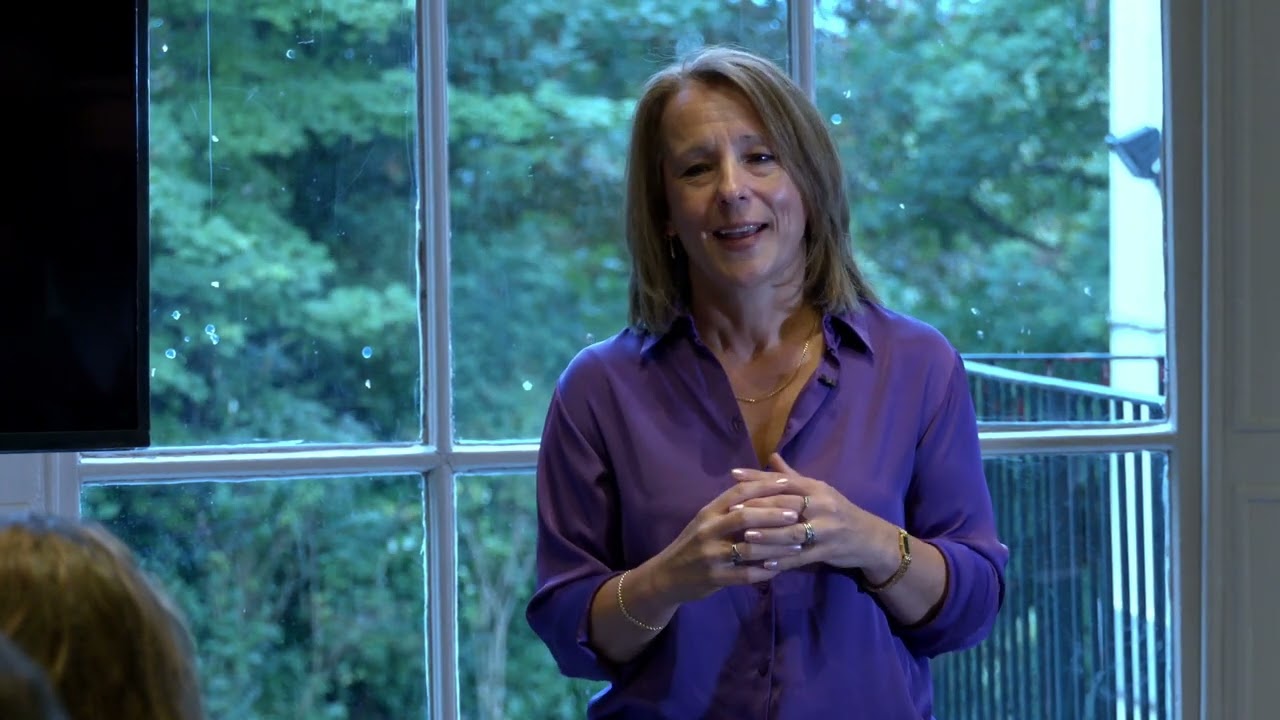
Caroline Cavanagh shares three techniques to lead your fear instead of letting it lead you: distinguish real risk from imagined by labeling worries R or I, expand your comfort zone through incremental practice, and flip negative what-ifs into positive possibilities. She walks through interactive exercises and client stories showing how fear, when managed, builds resilience.
Chapters
Please welcome Caroline Cavanagh. Whoa, whoa! The floor was cold beneath my forehead. I wasn't hurt, but I couldn't move, because if I looked up, I might see the anger in my teammates' eyes. If I looked up, I might see the disappointment in my coach's eyes. If I looked up, I might see the audience looking at me as the failure I was. Fear paralyzed me. But then I felt 2 hands lifting me up. And as my head lifted, it wasn't disappointment I saw in my coach's eyes. It was compassion. You okay, Caroline? Let's get you back to the team bench. And as I walked back to the team bench, it wasn't anger I saw in my teammates' eyes. It was concern. You alright? You hurt. And when I was finally brave enough to look around at that audience, They weren't even looking at me. Their moment had moved on. That crumpled heap was a 10-year-old gymnast, quite a good one. And her floor routine was the strongest in the squad, so they put me on last. And if I had performed as I could do, the team gold medal was within our reach. And I'd mucked up. Now, I'm guessing that I might be the only gymnast in the room.
Ooh!
Ooh, there's another one! Yes! We can cartwheel together later. Yeah? I'm also making the assumption that we've all mucked up at some point. Maybe not to the point of being paralyzed by your fear, but maybe feeling incredibly nauseous, perhaps even being sick. We've all mucked up, yes? Come on, I'm feeling a little bit lonely up here. Oh, yes.
Okay.
But the story doesn't end there. I had a second chance. My coach had gone over to the competition organizer and said, can she have another go? You know, we're not talking Olympics here. And he'd gone, yeah. So there I was, back on the mat, to go again. Would I muck up again? Would I let my team down again? Would anxiety stop me performing at my best? If I could go back in time, I would go back to that little heap of Caroline on the floor and take 3 things with me. I'm actually quite pleased we can't go back in time because the idea of putting a leotard on again does not appeal. No good luck. So as I can't go back, what I can do is use these skills now. But what I also love is teaching them to other people because, as we've just identified, we all muck up. And hopefully, we often have the opportunity a second chance. And as you probably know, when we do something the second time after mucking up, it's harder, isn't it?
Yeah.
Because then the risk of failure has already happened. It makes that risk even higher. So these are the 3 things that we're going to be going through today. I love them because they're simple. Because when you're in a high-stress situation, we need simple. They build a really strong foundation from which mental health, mental resilience, confidence can then grow. And underpinning all of these 3 is my one core principle: fear is not a bad thing. It just needs leadership. Leadership in the face of risk. For 10-year-old Leotard Lump, the risk felt really high. We wanted that gold medal. But even though I'd mistimed the tumble and landed on my head, the world was still spinning. But what if the risk was life-threatening? What if that risk meant that you may no longer be on this world? And that's what happened to Georgia. Georgia was a client of mine. She was on holiday with her mum, and it was hot. She was really struggling to sleep. So she remembers the exact Time. 3:23, a time that is now imprinted on her mind because the hotel room door started opening. And there, his body filling the doorway, was a huge man. A tiny bit of light came into the room and it glinted off something metal. He had a gun. Georgia's mum froze. But Georgia got up, walked across to the safe, opened it, and stepped back. The gunman reached in, took the cash, acknowledged Georgia— cheeky git— turned, and walked out. Whilst I can't guarantee it, I propose that her reaction to that risk that night saved their lives. And when I first heard that story, going on in my mind was, what would I have done in that situation? Could I have kept that level of control? And I put that question to you. What do you think you would have done faced with a gunman in front of you? Georgia was able to keep control because she had learned Leadership of her fear. And with these 3 things that we're going to go through tonight, my aim is to start to give you leadership of your fear so that in the next half an hour or so, you're in a position to give leadership to your fear, to your mind, and just maybe start to appreciate that fear is a good thing.
Thank you.
So let me take you back to Georgia's story. Georgia was faced with that real fear, but let's really start to get down to what fear actually is. Why is it a good thing? Fear is there for survival. In each of those scenarios, The role of fear was to protect you. It's part of our most primitive survival instinct: the fight, flight, or freeze. Georgia's mum was the freeze option. Her mind had already gone into the scenarios of being raped, murdered. But Georgia had gone to the fight option. She faced the fear. But what about Mini Munchkin there on the floor? She also froze. But she wasn't facing real fear. What was going on in her mind was nothing more than thoughts. And herein lies the problem. That fear response can't tell the difference between reality or imagination. Whether the risk is real, that gunman in front of you, or whether it's a thought, That response will be triggered. When the risk is real, it tends to come to a conclusion very quickly. But a thought, well, that can bounce around in there for hours, days, longer. And it's now a major contribution to situations such as insomnia, IBS, and even more critical illnesses. That's why anxiety is given such a hard time. I hear quite a lot, I have anxiety. My response is always, brilliant! It does not really get a good response. What I never hear is, I have fear. But let's stop dancing around this issue. Anxiety, worry, panic, they're all shades of the same thing. But this thing is a 4-lettered F-word, and we don't tend to like those very much. But I'm going to say a 4-lettered F-word a lot today. Fear is not a bad thing when you learn How to use it. And maybe I haven't surprised you too much by using a 4-lettered F-word, but this may shock you. Georgia was only 16 when she met that gunman. 2 years before that, she had spent all of her school days hiding in a smelly, windowless art cupboard due to debilitating anxiety. In her art cupboard, she felt safe. Everything outside of the art cupboard terrified her. But through the work we did together, Georgia went from art cupboard to become an international traveller, something that she never thought she would be able to do. So let's talk through How she got there. First technique was to help Georgia get a different awareness of reality. Most of her anxieties were being caused by nothing more than imagination. She worried about not being able to answer a teacher's question, but there weren't any teachers in the art cupboard. She worried about having a panic attack, But she'd never actually had a panic attack. They were all scenarios kicking around in her head. So the technique that we started working on with Georgia is to start understanding when you feel those feelings of fears rising up— and we all know them, it's the sweaty palms, the racing heart, the cement mixer going on in your tummy— when you start to notice that happening, Take a step back and ask yourself, is this risk real or is it imagined? Now, we've already learned that the mind can't tell the difference between reality and imagination. The fear response is run by the part of the brain we call the subconscious. It lives at the back of the head here. Typical age of a 4-year-old. Which explains quite a lot. By taking that pause and stepping back, it allows the intelligent part of the brain to come back on cue, the part of the brain that's rational, logical, deductive, mature. And that allows you to make, like Georgia did, a more conscious decision as to what is right in that moment. So the more Georgia practiced I'm feeling anxious. Is it real? Is it imagined? She noticed that the imagined risks were vastly disproportionate to the real ones. And that started to change her basis of what was real. What is reality? Now, something I didn't mention— if I got my teeth in— mention when I started, mainly because I was on my hands, was that I don't just like talking about this stuff. I genuinely want people to learn and use. So we're going to get active now. Please get a piece of paper in front of you, or if you haven't got a bit of paper, open up the Notes app on your phone. And what I would like you to do is is just to take a couple of minutes and brain dump. Literally, don't think about this, just start writing. What are the things that you worry about? What stops you falling asleep at night? What causes you to wake up in the small hours and then struggle to get back to sleep? What do you worry about when you've zoned out on the M25 and you're driving? It may be work, it may be— Relationships, children, doesn't matter. Just start writing them down. That's perfect. I can now see eyes starting to come up. So if you haven't finished your list, you can always obviously go back to it. The next thing I'd like you to do is now look back at that list How many things on your list are thoughts? They're things that haven't happened, potentially may never happen, but even if you know they're on the horizon, they're not happening now. You're just thinking about the future. And if those are the cases, you write an I beside that item. If the risk is real in the now, in that you can take action right now, Then write an R beside it. So go through your list, I's, R's, all the way down. Now I'm not going to put anyone on the spot today, but I'm guessing that most of you have a lot of I's on that list. Yeah, some nods going on. Yeah, that thought It's consuming your energy. It's triggering all of those feelings that longer term can lead to things like the insomnia. And the simple approach to that is now you know it's nothing more than a thought, step back from it. Because when the risk is real, Like the gunman, you will respond. Whilst you entertain that imagined thought, it's going to kick around potentially for quite a while. And there are a number of ways that can help you make that transition. Easiest one, the one that I use, is just a few deep breaths. People often say when someone's in a panic attack, breathe! I don't know why they're saying it, but it works! Breathe!
Yeah?
Yeah. I won't go in, I'm not a doctor, but the physiology, a few deep breaths switches you out of the fight-or-flight response back into the parasympathetic nervous system, rest and relax. It doesn't take many breaths. And something, even a physical step back, you're dissociating yourself from that fear. You're bringing your conscious mind back online. And that brings in the ability to go, I can't react to this now. It's not real. So the more Georgia practiced this, the more she changed her perception of reality to get to the point that she was ready to step outside of her art cupboard. She was ready for step number 2. Step number 2 is about the comfort zone. Now, are we all familiar with the concept of comfort zone?
Yep.
So comfort zone literally means it's easy. You know how it works within it. Therefore, by definition, anything that's outside of the comfort zone is uncomfortable. So when we step out of our comfort zone, we're going to be in a state of discomfort. Now I'd like you to play a little game with me. Get a piece of paper and put it in landscape format. And then on the right-hand side of your bit of paper, Just write your name. So if you've got a short name, Amy, Sam, you have to write your whole name.
That's important.
Sorry, landscape mode. It's going to be in landscape. Yeah, full page in landscape. Okay? Comfort zone, yeah? Easy, didn't really have to think about it. Okay. Swap over hands. And now write your name with your left hand, or your other hand if you're right-handed. Or your foot. Yeah, bit more tricky?
Yeah.
Uncomfortable?
Yeah.
Okay, now keeping with that non-normal writing hand, write it 10 times.
Oh, come on.
Yeah, come on! 10 times. Because I need a drink.
10 times.
It's lovely, it's like being in a class of youngsters again learning to write. How do I do C? Teaching us joined-up writing. Okay, so it took most of you a couple of seconds to write your name. It's taken you minutes to do it 10 times. Yeah, what are you noticing? It's getting smaller, neater.
Yeah.
So it's getting smaller, it's getting easier, it's getting neater. Anything else you're noticing?
I'm figuring that doctors write with their wrong hand.
Quite possibly. I wish I'd written it in capitals.
Yeah.
So here's one I made earlier. Yeah, yeah, Blue Peter. So the first one, pretty rubbish, but as I got down, it felt easier, it felt smoother, it got better. That's just 10 times. If I was to do it 20 times, 30 times, my comfort zone would grow to be able to write with both my right and my left hand. And the lovely Tony has just— share what you've just said to me.
Well, I could do it when I was a kid. I was ambidextrous, and I kind of lost it when I was in a job where I was pretty bored, so I actually trained my brain. I did all my notes in meetings in left hand, and it just got easier and easier to point at the same as my right hand. I'm a little bit rusty, but they're all consistently the same.
Yeah. So Tony taught himself the skill, and he now has the skill to write with both hands. When we're outside of our comfort zone, we don't have the skills, but we can get them. And the more you practice, the more those skills develop, and the comfort zone grows. Let's just do a little bit of basic maths. Let's just say your comfort zone is A meter by meter. Yep, meter squared, it's pretty small. You decide to grow your comfort zone to go to 2 meters. That's quite a big step from 1 to 2, 100%. But the comfort zone is now 4 meter squares. It's grown exponentially. You then decide, okay, this comfort zone is now good, I want to make it bigger. You go from 2 meters to 3 meters. To go from 2 to 3, that's only 50%. But it's the same growth relatively to the first one, so it becomes easier. Your comfort zone is now 9 square meters. We go to 4. That's only a 33% growth. Same amount. You see what's happening? Each time we go outside of the comfort zone, it gets easier, and the comfort zone gets bigger, relatively. I've used a 4-lettered F word. I'm going to now use a C word. I know exactly what one you were thinking of.
COVID.
COVID shrunk all of our comfort zones, and it has been difficult for some people to push those boundaries back out. But the more you do it, the easier it becomes. And I would also propose to all of you that there are parts of your lives, parts of your business that you are operating in a comfort zone because it's easy, and what's outside of your comfort zone scares you. So my next question for you, picking up your pens again, and you can do it in whichever hand you want, Tony.
Yeah.
Just think and write down what area of your business or your life would benefit from you growing your comfort zone. So we've got an awareness of real and imagined risk. That's given a new level of leadership to your mind. We've learned that by stepping out of the comfort zone, you grow. You grow skills. The comfort zone grows. People often say to me, God, are you never scared about anything? Yeah, of course I am. But I love going out of my comfort zone. My comfort zone's probably about 26 meters now. So let's go from 26 to 27. It's relatively easy. So I can jump out of aeroplanes and do canyoning and do all of that stuff because the step relatively is small. And more importantly for me, I'm fascinated. Just how big can I get this comfort zone? I don't expect everyone to want to do that, but my question to you is, is your comfort zone Somewhere where you feel comfortable to you, or like many of us felt in COVID, is it starting to feel more like a straitjacket? So with our awareness of risk, with the ability to now step out of our comfort zone, we're ready for skill number 3. This is probably my favourite. It's called Flip It.
Flip It.
Flip It. Seems to be a penchant for 4-letter F words today, just noticed that. Flip It is what it says on the tin. When you step out of that comfort zone, again, part of your very primitive survival instinct will go, whoa, what are you doing? And it starts to catastrophize. What if the technology doesn't work? What if your audience hates you? What if you get all your mucking words fuddled? And believe me, I have practiced that one so much. One day I'm so going to get caught out on that. But have you noticed what's the common factor between all the what-if questions?
Thoughts. What-ifs.
What-ifs, and they're all negative. Yeah? What if it goes wrong? This part of the brain, the 4-year-old, loves questions. Doesn't care what you feed it though. So if you ask it a negative question, if you ask it, what if the technology doesn't work? Well, then you're going to look like a real prat, aren't you? And if you look like a real prat, you're never going to get booked again. If you never get booked again, you won't be able to pay the mortgage, then you'll be homeless, your husband's going to divorce you, and you might as well die. Yeah? Have we all been down that sort of path? It's a Monday. It's a Monday.
Yeah?
So, making a bit of a joke of it, but that's what happened, isn't it? That negative goes to another negative, goes to another negative, until You're normally somewhere terminal. But like I said, that 4-year-old part of the brain really doesn't care what question you asked it. So flip it. You ask it a positive question. What if the technology doesn't work? What if it does? What if the audience hates me? What if it doesn't? I'm not going to try again. I'm going to tell myself, Yeah. What if it all goes wrong? What if it doesn't? Because your mind will then pick up on that question and will run with that just as easily. So from a simple flipping of the question from, what if the technology doesn't work, leading me to actually commit suicide, to, what if the technology does work? Then I'm going to be a superstar. Everyone's going to love me. I'm going to be the top of the PSA. Hey, I might as well enjoy the thought. But the reality is that's where your mind is going to take you. And along with the thought comes a feeling. Little munchkin, yeah, the thought of having let her teammate down left her paralyzed, a physical response to a thought. So take care of your thoughts. I might as well be up here having a lovely time thinking I'm going to be running the PSA in the next 2 months, because I'm having that experience, no one else. You can create your physical reality in that moment. Now there's a game I play when I go into schools. So get your kids' head on and let's have fun. I'm going to count to 5, and as I count to 5, I want you to look around the room and see how many blue things you see. 1, 2, 3, 4, 5. How many?
16. 3.
16.
4.
3.
1.
Okay, we've gone from 3 to 16. Are we all in the same flipping room? Keep up, Amy.
Okay.
You can have whatever you want, darling. And I counted this little bit on the end of the cable. Okay, next question. How many green things did you notice? One. Yeah. She is up front. And this is where when I'm at the school. The kids normally go, oh, Miss, you told us to look for playthings! And then they kind of— you almost hear the penny drop. When you look for something, you'll see it, because invariably it's there. If you look for negative things—
You'll find them.
Boy, you'll find them, because they're all around. But in looking for the negative things, you don't see the positive things. The positive things. Our minds are very similar to our physical muscles. The more you flex a muscle, the stronger it gets. The less you use a muscle, the more it atrophies. So if you flex that negative muscle, boy, it's going to get strong, and you will see more and more negative. The positive atrophies. Flip It is like going into a mental gym. You exercise the positive muscle, and the stronger that gets, the more the negative muscle will then start to atrophy. You can create a positive mindset. And guess what happens when you have a positive mindset?
Positive things.
You feel less anxious.
Yeah.
So let's bring this back to Georgia. Georgia went from her art cupboard. She started to understand real, imagined. She changed the relationship. She started stepping out of her art cupboard, but small steps. She started spending playtimes Break times with her mates. 15 minutes. Then she could spend a whole hour over lunchtime. Then she would creep in to one lesson on one day. 2 lessons. 3 lessons. The growth became easier each time. And Georgia is now running a business. She's 23 years old. She has a huge team working for her. And the F-word is a very commonly and widely accepted word in her organization. She did it because she now has a much stronger foundation of reality. She now chooses to step out of her comfort zone. And when that what-if monkey starts chirping, She just flips him. So what I would now love is for you to start using these things. We are— what shall we say? We find it very easy to let ourselves down. Yeah? If mini munchkin down there had landed on her head in a training session, Wouldn't have mattered, but the risk to her was that much higher because she didn't want to let those other girls down. So when we hold ourselves accountable to others, we tend to up our performance. I am now going to ask you to make yourself accountable. If you can take one of these, pass them back. Actually, let me just grab one. I love this quote from Albert Einstein. Yeah, if you do what you've always done, you get what you've always got. If you want to feel differently, you need to do something differently. So the first thing I would love you to do is in that top part beside The word answer is give yourself a number between 1 and 10. So if you are paralyzed, like Little Miss Gymnast, you're down at the low numbers. If you feel you're like 23-year-old Georgia and you can face any risk from a controlled place, you can give yourself a high number, maybe even 10.
10.
And trust your instinct. The first number that came into your head is the right one. Is anyone willing to share the number they've put on their form? Thank you.
8.
8. Okay. And now, just interestingly, One person out of however many, 22 of us here, was the only one that spoke up. So I would suggest that all of you that stayed quiet, there was a little bit of anxiety there, a little bit of fear. What if I have a number that's lower than everyone else's? Just notice it. And I'm not surprised you put your hand up because 8 is a fairly high number. You feel in control, you're happy with what you've got. So let's move on to the next section. What are you now prepared to commit to, to move that score up just 1 point? So if you're down at the lower numbers, it may be that you need to start thinking about Real or imagined.
Yeah?
To change your perception of vulnerability, to take back more control. Or you may feel that, I just need to step out of my comfort zone a little bit more. So go back to that item you wrote down earlier. What area of your comfort zone do you want to grow? What action can you take to now make that happen? Or perhaps you're aware that you now ask yourself a lot of what-if questions. So from the above, commit to something that you are going to do in the next 4 weeks that is going to increase your leadership of your fear.
Thank you.
Helping people increase their mental resilience is the reason I get up most mornings. I love seeing people change. So I'm going to make an offer to everyone in this room. If you wish, I will give you 30 minutes complimentary of my time so we can discuss, have you, in a month's time, taken that action? I will hold you accountable, and we can also discuss what can you now do to go to the next number and the next number. So if you would like to take me up on that offer, simply take a photo of that form so you have a record of it, and then somewhere on that sheet of paper write your name and your number and give it back to me by the end of the night. You can do it. I will then make a commitment to you that I will contact you over the next couple of weeks. We'll book in a date in about a month's time, and we will spend half an hour together over Zoom to help you continue to keep growing your comfort zone, your confidence, your mental resilience. Fear is not a bad thing. Fear keeps us safe. It's the thing that stops us putting our hand on something hot. It's the thing that stops us driving through red traffic lights. For those of us that are parents, it's the thing that makes us have that vice-like grip on our toddler when we're walking down a road. People Need fear to live a life. When it becomes an issue is because fear is leading you. But these 3 techniques change that balance. You can learn what is real risk and stop wasting your time and energy on thoughts of things that haven't happened, probably. Possibly may never happen. It allows you to develop new skills because as you step out of your comfort zone, you become more skilled. The more skilled you are, the more control you have to face more situations. It can lead to a much more positive mindset. And so now the choice The choice is yours. Fear is a good thing. Are you going to choose to give it leadership? Thank you.
Thank you.
More from Caroline


Diary of a Hypnotherapist, Episode 41 | @caroline-cavanagh | The Anxiety Alchemist

The Psychology of Comfort Food & Control | @caroline-cavanagh | The Anxiety Alchemist


Unlock Your Mind for Subconscious Healing | @caroline-cavanagh | The Anxiety Alchemist




Overcome Insecurity with Hypnosis | @caroline-cavanagh | The Anxiety Alchemist


Diary of a Hypnotherapist, Episode 40 | @caroline-cavanagh | The Anxiety Alchemist