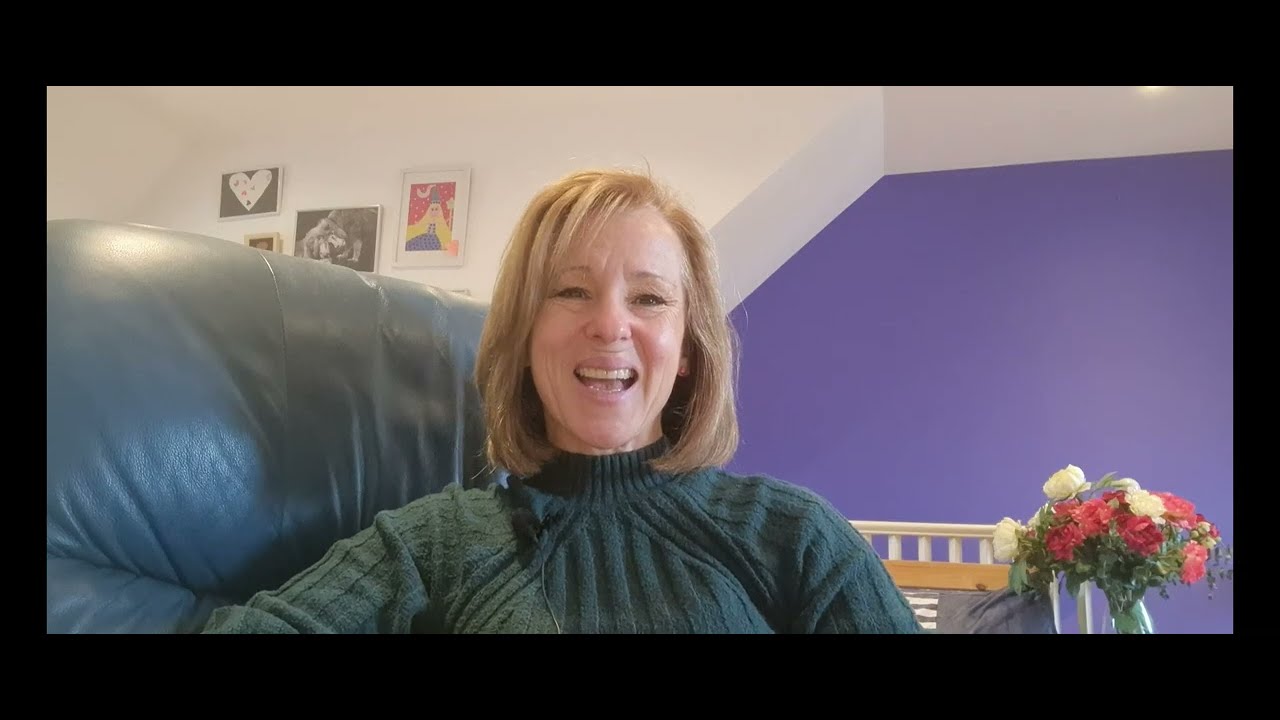
In the final video of the Autumn Blues course, the presenter expresses gratitude for the audience’s commitment and reflects on the bittersweet feeling of concluding the series. She shares a personal anecdote about being instructed by a personal trainer to eat red meat for breakfast—a practice she disliked but persisted with for a week, noticing improvements in energy, blood‑sugar stability, and mental clarity. This story serves as a metaphor for embracing uncomfortable actions that yield benefits. The core of the lesson is a detailed recommendation to adopt a daily journaling habit for at least seven days, spending 10‑15 minutes each evening. She explains multiple benefits: externalising thoughts, acting as a self‑therapist, creating a record of progress, reinforcing the belief that “this too shall pass,” and enabling autonomic (sub‑conscious) writing. She provides three starter prompts—what would I have done differently today, what am I proud of today, and what am I grateful for today—linking the last to a previous gratitude lesson. The presenter urges listeners to overcome resistance, emphasizing that a short daily commitment can yield an hour’s worth of mental energy. Finally, she invites continued engagement by mentioning her book Anxiety Alchemy, one‑to‑one coaching, additional YouTube videos, and free resources on her website, framing the end of the course as the start of an ongoing relationship.
Chapters
Hi there and welcome to Day 10. There is a little part of me that's quite sad that we've come to the end of this series, but I am really grateful to you for having come this far, and hopefully you now have a toolbox full of tools that you can use from this point forward whenever you feel that your mood has dropped and you need to do something to elevate it, whether it's just crashed and you need to start picking yourself up, or whether you're working on moving that internal residual energy level up to become one of those buzzy people that see the positive all the time. And I have saved the best till last, and this really comes from, again, personal experience. A while back, I was working with a personal trainer to achieve a physical target that I'd set myself, and he asked me to— well, he actually didn't ask me, he told me that I needed to eat red meat for breakfast. Now, that is my idea of hell. I'm not particularly a big red meat fan anyway, but for breakfast? Really? But I was paying him money, and why work with someone if you're not going to take their advice? So, Sucking my teeth for a week, I said I'll do it for seven days. So a week, every morning I'd be sitting there muttering and moaning and calling him all sorts of non-repeatable names as I tucked into my venison steak. But you know, at the end of that week, I really noticed a difference. And I'm not still doing it, but I do. Eat red meat for breakfast more often because I notice the impact it has on my energy levels, on stabilising my blood sugar, and also on my mental clarity as well. So even though I don't particularly enjoy the experience or the taste, I do enjoy the benefit that it gives. And this is the principle that I bring you this last tip of our 10 on the course that we've been doing together. And this is another one where often when I suggest it to clients, they go, ugh, really don't wanna do that. Same thing, I really didn't want to eat venison, but I sucked it, or sucked it up rather, and followed the advice and it worked. And the tip is journaling. Now journaling is just a grown-up word for writing a diary. A lot of us did it as kids because there are some real benefits in it. And so what I would ask you to do, firstly, go and get yourself a really lovely journal, something that when you look at, whether it's tangible, whether it's got a picture on that you really like, something that you like picking up, that's important. And then for a week minimum, If you don't do it for a week, there's no point in even starting. And if you don't try starting, how will you ever know if it's going to help you? So for a week, spend at least 10 minutes just writing. I've got clients now that do it regularly for 30 minutes or more because they see the benefit. I do it every evening and probably, yeah, 10 to 15 minutes every evening. Because it's now something, a bit like the toothbrush exercise, I wouldn't not do because it works. And the aim of journaling is, uh, severalfold. The first benefit is that it gets stuff out of here onto here. It's a bit like being your own internal therapist. A lot of talking therapies, like counseling, are just about talking because when you say things out loud, you're processing them. Your mind is joining the dots and you can come to solutions much more easily. So by putting things out of your head onto paper, you can see that in a different way— black and white, join dots— and it takes on a different connotation. The second thing is it then starts to give you a record of how far you've come. By talking about a problem that you may be facing, you look back on it in 2 months' time and go, oh, that problem's resolved. And it helps you to mentally become aware of nothing lasts forever. It's my own personal mantra when I'm facing a gargantuan challenge is, this too shall pass. Nothing lasts forever, and journaling proves how problems that you felt on one day, often quite a short period of time later, the problem's resolved, the problem's gone away, or you have found a way to circumvent it. And people like journaling in different ways. For some people, it is just brain dump, and when you do it for a period of time, you can slip into something called autonomic writing. Which is almost like your hand is going along without even connecting to here. You just find yourself writing that you read back later and you go, I don't even remember writing that. That's brilliant if you can get into, because that becomes subconscious writing. It's a bit like the equivalent of dreaming, you're just putting it down on paper. It's your mind just processing things outside of your conscious awareness. Or if it helps, You can follow 3 questions and answer these. Question number 1, if I reflect back on today, what would I have done differently? If I reflect back on today, what would I have done differently? And start answering that. I'd have got up a bit earlier. I wouldn't have taken the dogs out for so long, that made me late. Whatever it might be, because again, you're then automatically finding solutions to the problems that you created that day. Question number 2 is, what am I proud of today? So you can start off by saying, I am proud of... Question number 3 is, what are you grateful for? So this will bring you back to video number 3, the attitude of gratitude. Sorry, it's number 4, wasn't it? Number 4 was the attitude of gratitude. I am grateful for... and just keep writing. There has been days where in my journal, I am grateful for this day coming to an end and I didn't kill anyone. That was it. But there's other days where the list of things I'm grateful for go on for quite a length. So they can be 3 really useful questions to get you going, and you may find that other ones come up or there are themes that you want to work on through your journal. So please, even if there is a huge resistance in you at the moment going, I haven't got time to do that, everyone can find 10 minutes if it gave them the benefit of an hour's worth of energy. And this is what this does. It gets things out of your head, it improves that inner energy, it improves your mental resilience to come to solutions, to join the dots in a way that benefits your mood overall. 7 days, and I think like me and my venison and my own journaling, because I used to be resistant to this too, You'll carry on doing it. So here we are, we've reached the end of the course, but hopefully we haven't reached the end of our relationship together. I would love to continue supporting you if there are things that you know mentally you could now improve on as well. There is a book that I released quite a long time ago now called Anxiety Alchemy. It's got a lot more tips and takes you through a process of how to address things that may be challenging in your life and causing you to worry. We can obviously work one-to-one, and there are lots more videos on YouTube, free resources on my website that I would love you to take a look through and access anything that you think can help you. So I would love to think this is not the end, but perhaps just the start of a relationship That will continue to grow because the more we all learn to use the power of this wonderful part of our mind, the more we're all going to live happy, fulfilling lives. So on that note, thank you so much for watching all of these videos, and I very much look forward to staying in touch. But for now, bye-bye. Bye-bye.