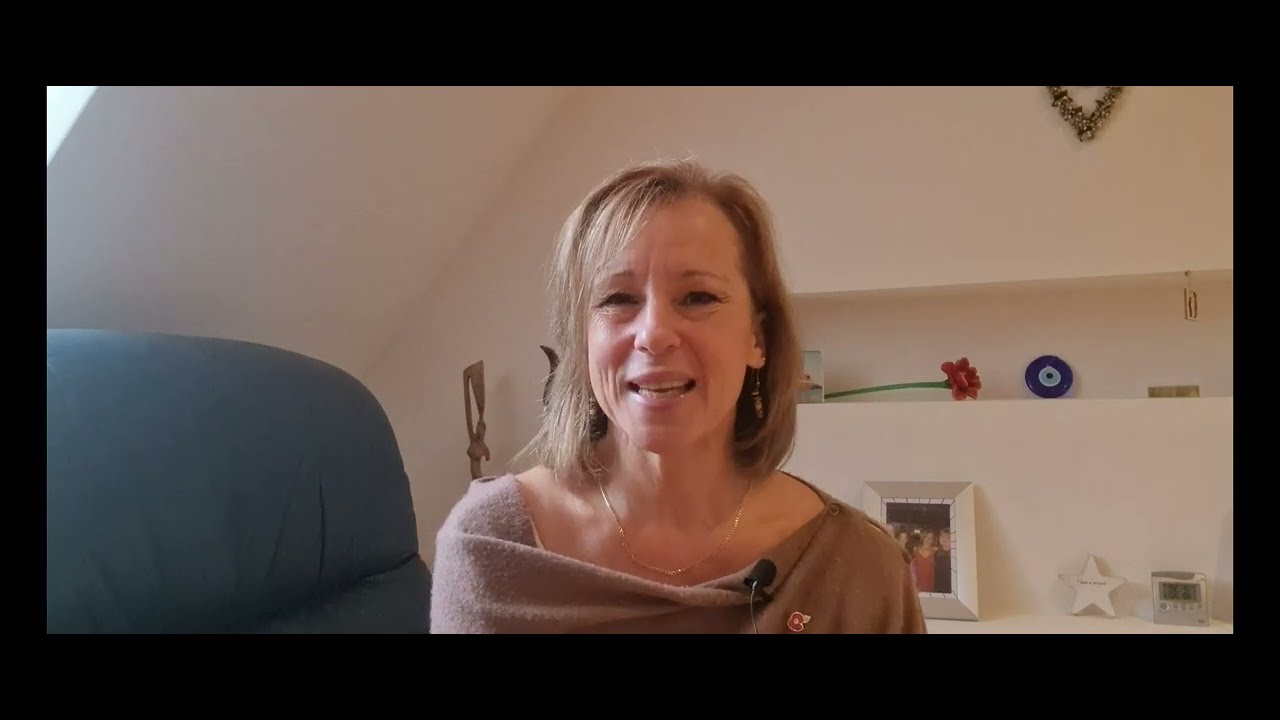
In this self‑help video Caroline Cavanagh guides listeners through day 4 of an "autumn blues" resilience series. She begins by encouraging the audience for persisting beyond the typical three‑day drop‑off and introduces a music‑playlist as a mental first‑aid plaster. Using the metaphor of a plaster cast, she explains that gratitude practices act as protective layers that strengthen over time. She then presents a tiered gratitude system modeled on UK school qualifications: - CSE level – immediate, moment‑to‑moment gratitude; - GCSE level – a daily habit of listing ten things you’re grateful for and the "toothbrush exercise" where, while brushing teeth, you reflect on Proud, Gratitude, Confident, Excited (PGCE); - A‑level – actively expressing thanks to others; - Degree level – sharing your gratitude practice publicly on social media for accountability. Throughout she weaves in energy metaphors (energy vampires vs. buzz‑people), the cup‑half‑full/empty analogy, and a brief discussion of the brain’s negativity bias versus the "positive muscle" that gratitude can train. She ends by challenging listeners to progress to the highest level and teases the next tip for tomorrow.
Chapters
Hi there and welcome to day 4. And as I mentioned yesterday, most people give up after 3 days, so the fact that you're here listening to this— brilliant, because it means you're already part of the A-team. And I wonder, how did you get on with getting some music together on a playlist yesterday? I was listening to a book on Audible this morning, and it's got lots of practical exercises in it too. And the author said, okay, now we all know that you're just going to carry on doing whatever you're doing, listening to this in the background and not doing the exercise. And that's a bit like expecting to know how to ride a bike by reading a book. And it's so true. We only ever get the benefit of learning a new skill when you do it. And this is very much the same for this. So if you've thought about the songs that make you buzz, Brilliant, good start. Get it into that playlist so that when you do have that crisis moment, when you do have that mental crash, you've got that sticky plaster, that piece of first aid that you can call on to just start easing the pain. And today we're going to go from that sticking plaster to actually having a plaster cast. So if you think about a plaster cast, what it does is it forms protection Whilst healing goes on on the inside. And that's a really good metaphor for what today's tip is. It's one of those things that it's not an instant success, it's not a magic wand, it's something that takes time to build. But when it does get very strong, it is like that plaster cast. It's like a form of protection that protects you against all the negativity that's out there in the outside world. It takes a little bit of practice, and I'm going to get all quantum physics on you, which is ironic because I hated physics at school, but love it now. We're all energy. Everything, in fact, is energy. This chair is energy. It's just vibrating at such a low level it's outside of our perception, but it's easier to sense energy in people. I'm sure you've come across individuals that just seem to buzz. They're always kind of excited and lively and full of energy and it's actually really nice to spend time around them. It's almost as if we can draw on some of that excess energy. And the opposite is also true. I suspect you've spent time with people I call energy vampires. Their energy levels are so low that they suck the energy out of you too and spending time with them leaves you feeling drained. So we all have a baseline of energy. It may up— go up a bit, it may go down a bit, but typically it is roughly around the same time. But it's not hardwired. You can lift that residual energy up so you can become one of those really buzzy people. Another metaphor that you may be familiar with is cup half empty, cup half full, and it's applied in the same way that cup half full people tend to be really positive. Their glass is so overflowing that other people can drink of their water as well and they're still full. Similarly, cup half empty negative people where they become so drained that ultimately no one can drink from their cup either. And what this exercise is doing is about putting water into your cup so you can be a cup not only half full but a cup full person. And I'm going to show— share this with you at a number of levels. We're going to get a little bit academic here. So let's start off with the GCSE level. GCSE Attitude of Gratitude Level 1 is I want you to think of 10 things right now that you can be grateful for. So it might be, I have, uh, I'm in a really loving relationship, I've got a really lovely house, I really enjoy my job, um, lots of things. Come up with 10. And then just look at those 10 and really engage with them. Yeah, I really do have a loving relationship. I really do enjoy my job. And just notice how spending a little bit of time focusing on the things that you're grateful for, that energy just nudges up a bit. And just imagine if you were to do this regularly, how you can start to nudge that baseline Up a bit too. Which leads us nicely on to the next level, the GCSE level. This takes a little bit more time, and it's about building a habit, doing it regularly. And I call this the toothbrush exercise. When you're brushing your teeth in the morning, for those 2 minutes or so, there isn't very much else that you can do except you can practice your attitude of gratitude. And whilst we're on an academic theme, let's use the acronym PGCE, which is the teaching qualification. P stands for proud, G stands for gratitude, C for confident, E for excited. So in the morning when you're brushing your teeth, you can start thinking about what am I proud of that I did yesterday? What am I grateful for that I have right now? What am I confident about that's going to happen today? And what am I excited about that's going to happen today? And focusing on those 4 emotions again starts to fill the system with positive chemicals. We're going to talk a little bit about more chemicals tomorrow. And then you can do the same in the evening. What am I proud that I've done today? What am I confident about that's going to happen tomorrow? What am I grateful for that happened today? Or if you want to keep it simple, which to be honest is kind of what I do, I just focus on gratitude. I reflect on the day and all of the little things that happened that day, and this is where it changes a little bit from the CSE level. CSE is about right now. When we get to GCSE, think about what happened that day. So for example, this morning when I took my dogs out for a walk, I've got a puppy and she did something really funny that made me laugh, so I'm really grateful for that moment where she just caused me to be standing in this field roaring with laughter. It's a lovely moment, and even as I'm talking about that, I can feel that laughter bubbling up inside of me again. It may be I'm grateful for the person that left me out in the traffic jam. I'm grateful for the workmate that went and made me a cup of tea today. Think about all the little things because that in itself again keeps flexing that positive muscle to make it stronger and stronger. And then you just keep doing it. And again, the toothbrush exercise is a great name for it because I wouldn't leave the house in the morning without brushing my teeth. It's just part of what I do, and I would love practicing the attitude of gratitude to be exactly the same. It's something you just do every morning. Every evening, because then what you're doing is bookending your day, and what bookends do is give you structure. Books can be taken in and out of the middle, but they don't all fall over because you've got that structure. So by topping and tailing your day with this attitude of gratitude, giving yourself those positive feelings, you start to have a much stronger, more positive day too. So that's the GCSE level. We then go up to A-level, and the A-level is now about expressing gratitude to others. I don't know if you agree with me, but I seem to find that thank you is something I hear far less often these days. So practice expressing gratitude for things. Say thank you to the person that held the door open to you, or thank you to the person that did something kind. Or make positive comments to others. If I'm standing in the queue at Tesco's, I will often look at the person beside me and go, do you know, I really love your jumper. Or, do you know, I love that lipstick. Where did you get that from? And it's amazing how just expressing something nice, people then light up and you have a lovely conversation. And it's much better than standing there staring at what's on the conveyor belt and wishing didn't I buy that instead of that? That's the A-level, expressing gratitude to others. And then we're going to go to the top level, we're going to go degree level. If you want to go to the absolute highest level, I would love you— you wait for it— to put something on social media to say, I am practicing the attitude of gratitude. I would like you to hold me accountable for being more positive, for saying thank you more often, for practicing gratitude for the things that have happened in my day. I've done this before, and it's something— as a therapist, I never ask my clients to do things that I haven't already done, and I was genuinely amazed at the responses that people got. So many people were like, wow, that's amazing! Tell us more about it! Can I join in too? That little bit, which was, I get it, a huge stretch for me, as I'm sure you're sitting there going, oh, I don't think so, Caroline. Have a go, because I genuinely think you will be really surprised at how positive it is. We are not born as negative people, but our psychology is programmed to look at the negative before the positive, because that is what helps us survive. Back to our inner Neanderthal. If he was looking and going, oh look, there's a lovely pussycat crawling around in that bush, isn't that lovely? As opposed to the negative mind going, it's a flipping tiger, run! The negative part of us keeps us safe. However, we live in a very negative world. Just think about the news. What are the items that the news reports on all of the time and bombards us with? And that starts to keep flexing the negative muscle, making it stronger and stronger. So we start looking for negative rather than just noticing the negatives that are there. We seek them out. But what the attitude of gratitude does is then start to flex the positive muscle. And the more you do that, the more it becomes balanced. And when you have muscles working in balance, that's a real, real strength. So give this one a go. Start with the CSE level if that's all you can do now. I challenge you to go to the degree level. And tomorrow I'll be back with tip number 5, and I'm not even going to tell you what that's going to be. You'll have to wait and see for tomorrow. But for now, I will wish you a wonderful day, and I will look forward to speaking to you again tomorrow. Take care. Bye.