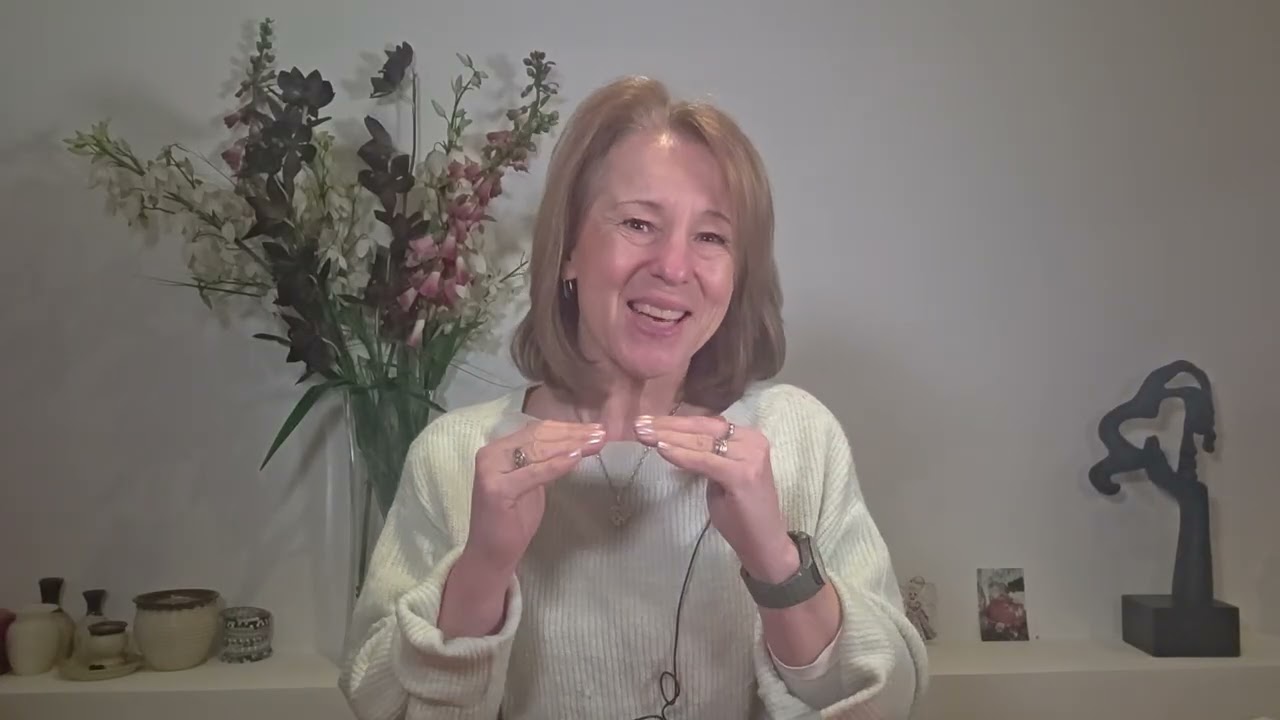
In this solo diary entry, hypnotherapist Caroline Cavanagh reflects on the past week’s client work and outlines her integrative approach to hypnotherapy. She explains that effective change requires addressing the mind within its biological, chemical, and physical context, rather than focusing solely on conscious cognition. Using the example of weight‑loss clients, she traces how early experiences with sweet taste and control over food shape lifelong eating habits, linking these to the concept of "comfort food". She argues that when the rational mind understands these mechanisms, the subconscious is more receptive, allowing hypnosis to embed new patterns directly without the extensive repetition typical of traditional counseling. She contrasts counseling (conscious‑mind, repetitive learning) with hypnosis (conscious introduction followed by immediate subconscious re‑programming), noting typical session counts (4‑8 for weight management). She also mentions acute phobia and smoking cessation cases, emphasizing the need to seed conscious agreement before addressing deep‑rooted subconscious fear. Finally, she invites viewers to a brief chat, directs them to short‑form YouTube content for tips, and encourages subscription for ongoing learning.
Chapters
Hi there, my name is Caroline Cavanagh and welcome to the next edition of Diary of a Hypnotherapist, my way of practicing what I preach and reflecting on what's gone on in the past as a way of informing the future so that we can repeat the things that went really well and also change the things that didn't work out as we wish to. And as I reflect back on my last week, and we're still in In January, there's quite a few new clients that started working with me, through from people that wanted to lose weight— often the traditional ways don't work quite so well, so they're looking for a different approach— through to someone that had a very acute form of anxiety— we'd also call that a phobia— smoking cessation, a whole range of different things. And I heard one of the things that is quite regularly reflected back to me, and that is, oh, I never thought of it that way, but it makes so much sense. And when I start off with clients, we spend a lot of time talking about the science behind hypnotherapy because there is a real biology, a chemistry, and a physics that I bring into the approach. Because if we just work with what's going on in the mind, yes, it will have an impact, but if it's working in a chemical environment, which our body is, that's not conducive, then those files, I call them, those memories, will get tainted by the chemistry. And if the energy is there, the physics isn't there to run the mind well, then that's going to dilute the solution as well. So by bringing all 3 elements in, That's where the really powerful results can occur. So we start off by really setting the ground, talking about how the mind works, how memories are laid down, how behaviours develop. And this is where I often hear that, Oh yeah, that makes sense! For example, with weight loss, I talk about how our eating behaviours start to be formed. The first experience we all have as newborns is the taste of something sweet in the mouth, whether that's breast milk or formula. It is actually very sweet, but at the time we're being cosseted, being cuddled. So there is a deep neurological link between something sweet in the mouth and feeling nurtured. And the expression comfort food really does stem from that. And often when I explain this, that's the first time that someone went, oh yeah, never thought of it that way. The second thing that then happens with food is people, or babies rather, start to recognize that they can control what they put in their mouth. And I have a lovely memory of a— probably my daughter was about 10 months old— recognizing that she didn't quite like this broccoli thing that I kept putting in front of her. So If she held her hand over the side of the high chair and dropped it, there was a dog sitting underneath that was quite happy to eat it. So she had some level of control, which also caused a reaction with me. So the next psychological layer that builds up is a recognition that you can use food as a source of control. There's then 2 other really significant layers that build on that, and it's all part of helping you understand consciously so that when we work with it subconsciously, there's already a part of the brain that's bought into it by going, yeah, that makes sense. Because when the rational, logical mind makes sense, the irrational, illogical part of the mind has already got another resource to draw on from that knowledge, and that's where the work becomes really powerful. So counselling is a therapy that is effective, can take— tend to take a lot longer because you're only working with the conscious mind, and it's that repetition of things, going over things over and over again until the conscious mind learns, and then it throws it into the back of the mind to then be run automatically. And that's true of pretty much anything we learn— riding a bike, our times tables, driving a car. It's difficult to start off with, but it's practice, repetition, That means we then do it without thinking. Where hypnosis differs is we introduce it consciously, but then we go straight to the subconscious mind to put the pattern in directly at that level so that we don't have to go through all of the repetition. So someone that works with me to do weight management treatment typically has between 4 and 8 sessions Whereas think about how long it takes to diet with someone like Swimming World. With the acute phobia, again, logically people can know that a spider crawling across the floor in a kitchen in the UK isn't going to help them, but subconsciously there is a deep-down fear, and any amount of talking to that conscious mind is still going to cause a resistance. So we sow the seed there, And get the conscious mind on board going, yes, I know that, and then we work directly with that subconscious part of the mind to really deal with what's at the root. And I love doing this work with people in whichever shape or form their problem is coming from, introducing something consciously, and when that click happens, it can never be unclicked. That connection has been made, and thereafter we use the hypnosis, which is just a form of relaxation, to work with the part of the mind that invariably is the part that's driving that behaviour because it's already been practised many, many times. And when we change that pattern, a new behaviour can be created really very quickly. So if you're even just a little bit intrigued as to what hypnosis is involved, let's have a quick chat. And otherwise, if you're interested in some of the other tips and techniques that I use as a hypnotherapist, There's lots of them in short form on YouTube, so just click on the Shorts, take a look, and like any ones that you enjoy, and keep coming back through subscribing. It would love— be lovely to have you on board. That's me for now. A new week ahead next week, and as we roll further into the year, can't believe Christmas is so far behind us already. It felt like it was only yesterday. I will look forward to sharing more learnings with you at this time next week. Take care.