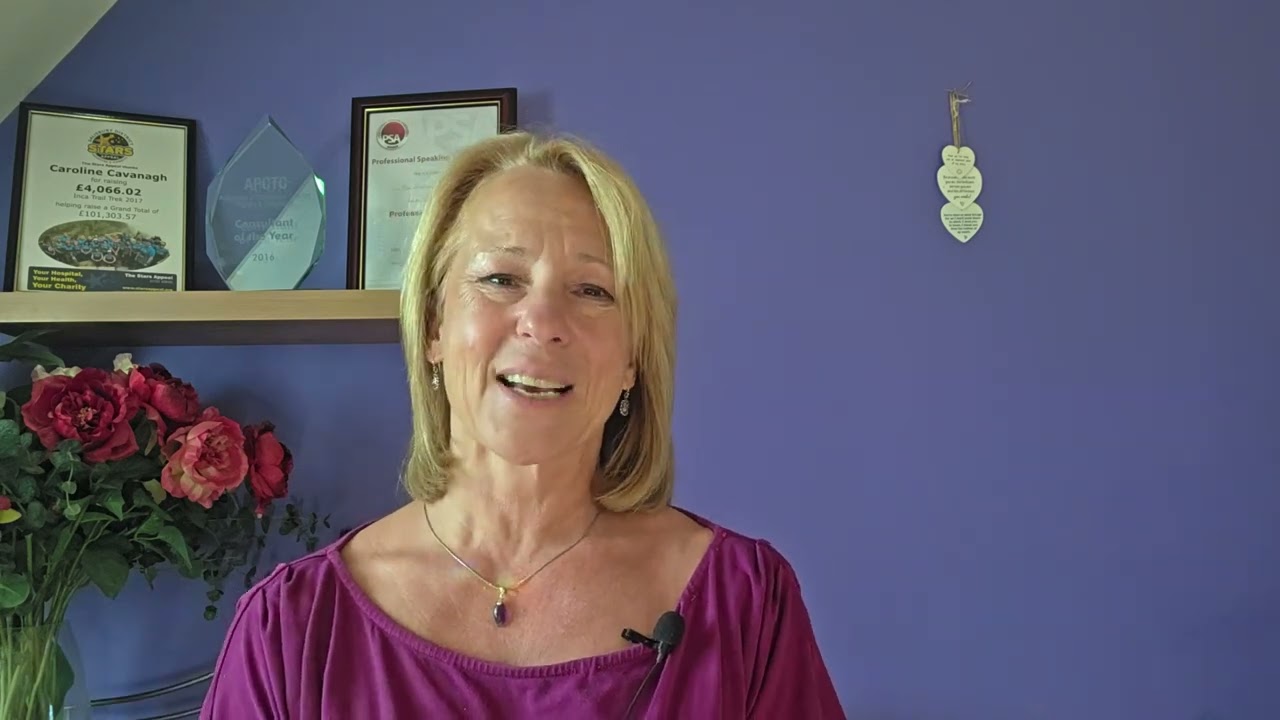
In this diary‑style monologue, hypnotherapist Caroline Dush Cavanagh reflects on a varied clinical week, illustrating how she tailors hypnotherapy to clients of different ages and mental maturities. She discusses working with a 7‑year‑old who displays adult‑like emotional maturity, a 10‑to‑11‑year‑old from a broken home, a young woman in her early 20s struggling with past misdemeanors and seeking forgiveness and mental closure, and an older gentleman battling depression that stems from chronic anxiety. Caroline explains the neurochemical pathways of anxiety (adrenaline) and chronic stress (cortisol), their impact on gut health and dopamine, and how prolonged cortisol can lead to a loss of hope—a personal definition of depression. She describes therapeutic goals of fostering forgiveness, restoring hope, and expanding a “glimmer of hope” into daily joy. The episode promotes her YouTube “Hope” playlist, invites listeners to contact her for a free informal chat, and frames anxiety as a potential catalyst for growth when given direction. The tone is educational, empathetic, and promotional, aiming to demystify hypnotherapy and encourage viewers to seek help.
Chapters
Hi there, and welcome to the next edition of Diary of a Hypnotherapist, my way of recording some of the things that I do in my working week, because there are so many frankly weird and wonderful ideas about what hypnosis is actually about. And so by sharing this, it will help give people a better idea of what can hypnotherapy do for you. So in my week just gone by, I've had a varied week, as they always are. A very common question that people say to me is, how old does someone need to be to work with you? I love working with youngsters, and the answer to that question is physical age is irrelevant. To be able to do the therapeutic work that we do under hypnosis, you need a certain level of mental maturity. The youngest I've worked with was a 7-year-old, but she probably had the emotional maturity of a 12, 13-year-old. I've tried working with a 15-year-old, and we couldn't actually do the work effectively, and that relationship stopped very soon because she was emotionally quite immature. The young lady that I'm working with at the moment, she started working with me when she was 10. She's now 11. But she comes from a broken home, and she spends a lot of time one-to-one with each of her parents. So, her ability to take on some quite mature concepts is very much there because of the lived experience that she has. I've also started working with a young lady, early 20s, who had made some mistakes in years gone by. But hasn't been able to come to that point of closure. And I hate that American word, but I haven't found a better one yet. And those misdemeanors still keep haunting her. So, she fears that someone is gonna find out about them and she's gonna get a knock on the door, or it's going to destroy her future. So, our work together is accepting that, A, to forgive the misdemeanors she did in the past, but also to bring that mental closure so that she can go on and fulfill what can be, or what I'm sure will be, a very exciting future for her. I'm also working at the moment with an older gentleman who is struggling with depression. And people often ask, what's the difference between anxiety and depression? Anxiety is typically a fear of something in the future, whereas depression typically is related to the past. But depression often occurs when someone has been anxious for a period of time, and this was certainly true of that gentleman. He said to me, yeah, I've worried most of my life. Anxiety is the term that we give to chemicals that are released in the body. Adrenaline is the chemical that turns your tummy into a washing machine, makes your heart race, your palms all sweaty. And if whatever we're fearing comes to a closure very quickly, that chemistry calms down. But if we're constantly worrying about something that isn't real or hasn't come to a closure, then the body switches to a chemical called cortisol. Cortisol, if it keeps getting secreted, starts to have a negative effect on other chemicals in the body. Very much chemicals in the gut, and there's a very strong link between anxiety and a condition called IBS, where your tummy doesn't work as well anymore. But cortisol also suppresses the release of dopamine. Dopamine is the happy drug. It's the chemical that makes us go, ah, yes! When we look at our phone and we've had 46,000 likes on a particular post. So if we're not able to have those real upbeat moments where we feel good, The chemistry starts to get into a negative pattern. We worry, we're less happy, and when we're less happy, we're more worried, and down that chemistry spirals to a condition we then label depression. My personal definition of depression is a loss of hope, and this is certainly something that this gentleman said is, what's the point? What is the point of doing anything? But we found a point, we found a little glimmer of hope, and our work together is now making that glimmer of hope expand so each day there's a little more joy. His internal chemistry starts to change, and whilst the steps can be very hard, each step he takes makes the next step easier, makes the next step— and very quickly he is moving from where he was to where again he has a future that can be. Very bright. And if you can relate to being in that dark place, perhaps feeling a loss of hope, there is a playlist on my YouTube channel, which is simply Caroline Dush Cavanagh, called Hope. There is a number of videos there of people I've worked with who were in very, very dark places, but who are now living happy, fulfilling lives. And if they can do it, it's very possible that you can too. So if you can relate to anything in this video, whether it's a child that you may be worried about, or something that's happening in the past that you're trapped in, or you are struggling with being buoyant, optimistic, even thinking about what is the point of going on, give me a call. We can have a very informal chat where I can tell you in a lot more depth about the work that I do, find out a little bit more about you, And see if there is a good fit there. And if there is, we can take the next steps from there. So, I will leave that with you for now. Take a look at the YouTube site because there's lots of other videos on there with hints and tips about how you can manage anxiety and actually start to become really strongly mentally resilient. Anxiety is not a bad thing when you can give it leadership. and you can turn it into a phenomenal catalyst for growth. Let's all live an exciting life, and I'd love to be a partner with you in doing that. But for now, that's the end of my week, and I look forward to sharing what happens next week, next week. Bye for now.