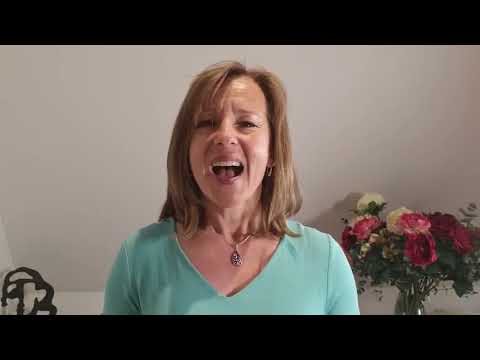
In this video Caroline Cavanagh explains how needle phobias develop and how they can be effectively treated. She outlines two primary pathways for phobia formation – a traumatic event (most common for needle fear) and learned habitual behavior – and describes how intense emotions become attached to specific memories, causing automatic fear responses when the memory is triggered. Cavanagh then presents three therapeutic techniques she uses in combination: the Rewind/Fast Phobia Method, which repeatedly plays the traumatic memory forward and backward to wear down the emotional charge; the Swish Pattern, a playful visual re‑programming that replaces the fear cue with a preferred image; and Timeline Therapy, which revisits early memories with adult insight to rewrite the logical interpretation of the event. She illustrates the approach with a recent remote client who, after two sessions using these methods and a personalized relaxation recording, reported a dramatic reduction in anxiety about an upcoming vaccination. The video concludes with an invitation for viewers to contact her for a no‑pressure discussion about treating needle or other phobias, emphasizing that phobias are logical brain connections that can be reshaped rather than sources of embarrassment.
Chapters
Fear of needles. Now, a phobia is something that is an acute fear of something specifically, and many adults can live with a fear of needles relatively easily, unlike things like a phobia of spiders or dogs, birds. They're things that are much more easily triggered in everyday-to-day life, meaning that people live with those phobias being triggered and making their lives really uncomfortable. Until recently, when so many of us are now facing needing a vaccination. And the reason I've come to do this video today is because I've worked with a person whose life has been increasingly stressful, agitated, feeling nauseous, anxious, because their vaccination appointment is next week. This person has had 2 sessions with me. We haven't even met because all of our work has been done remotely, but already they are feeling completely different to their appointment, which is next Tuesday. So if you have a phobia, whether it's of needles or something else, my aim is to take you through the way I treat phobias, to show you how relatively easy it is But most importantly, to recognise that phobias aren't silly. So many people don't get treatment for their phobias because they feel they're going to be humiliated or it's just horribly embarrassing. If there's a real psychological logic behind that, so if you do have a phobia, please stay with me for a couple of minutes and I'll explain to you at the end if you're interested how we can take that forward together. So starting off with how is a phobia created? Typically there's 2 routes in. The first route in is a traumatic event. The second route in is a habitual learned behaviour. Now the learned behaviour route is much more common with things like a fear of spiders. A little child will see normally its mum running away from a spider, ah, screaming, so the child goes, ah, That's what you do when you see a spider! And they say it again and again and again until instinctively that child will react in exactly the same way. However, for the fear of needles, the much more common route in is the traumatic event. So most of us will experience injections from quite a young age, but most of the traumas that I've worked with come from the secondary school type of age where all the kids are lined up in a queue and so Someone may faint or fall over, and that sets a ripple effect of, oh my God, that might be me, that would be really embarrassing. So actually, it's not the injection itself. Typically, a fear of needles is about a fear of fainting. And what happens to cause a fear, a phobia, is that the intense emotion is attached to a memory, and that just gets stored away in the database of the mind. And anytime that memory is triggered, typically by a thought, the emotion that's been attached to the memory is also triggered. Hence, you think of having an injection, the brain goes, what do I know about injections? Oh, I remember that one! And the feeling comes up. And the more it's triggered, the easier it becomes to be triggered. So that's where we start. Fundamentally with the memory and the intensity of the emotion, and there's 3 particular techniques that I use that, in combination, are incredibly powerful. The first one is called the Rewind, or sometimes known as the Fast Phobia Method. It's a way of looking back on that memory from a number of different perspectives, and you rewind the memory backwards and forwards, faster and slower, And it's almost like it has an effect of almost wearing out. It triggers that emotion so much that it's kind of like it's all gone. The second one that we bring in is one called the swish pattern. Now, I love the swish pattern because it's really, really playful, but I admit when I first learned to do this, I thought, no one's ever going to do this because it's really childish. But you know, it really works, and it works in the way that it trains the brain that whenever you think of this, it goes, nope, I want to think of that instead. And it literally, it pushes that old memory out the way and replaces it with something new. And we do it so many times that as soon as you even think about the needle, the brain goes, nope, think about ice creams, or whatever it may be, because the brain is very responsive to leadership. And when you tell your brain what you want it to do, it goes, okay, I can do that. And it works very powerfully. The 3rd technique is one called Timeline Therapy. And this is just a way of going back into that archive of the memories. And if we think back again to what I've just said, that most traumatic experiences happen when you're young, fundamentally most of them before even the age of 7, you look back on that memory but with the maturity, knowledge, and intelligence that you have as the adult. So consequently, you see things that you couldn't have known when you were that young child. And so, in very simplistic explanation, the brain as a child has gone two and two equals five. Needles means pain. Ah, five. And it keeps running that program because no one's ever told it anything different. But when you bring that adult intelligence and you go no no no no no two and two equals four, the brain goes okay, I can do four. It's four now. But four is a completely different response to five. And therefore the emotion that's attached to that consequently also changes. So there are 3 different ways of changing that emotion that's attached to the memory. You can't ever get rid of a memory, it's in there, but you can change the intensity of the emotion, and when you change that, it's not triggered in the same way. So with the client that I've worked with this week, we have had 2 sessions. After the first session where we did the timeline technique, he— when we spoke today, they said to me, do you know, I was talking to a friend of mine about this kind of hypnosis work that I'm doing and about injections, and this guy was talking to me about he had to have an injection in his eye. And even I at that point went, oh, he didn't flinch. And he said, I realized that I was listening to this story and having no impact whatsoever. Whereas a story like that in the past would have got me immediately feeling nauseous, hand shaking, heart rate through the roof. I didn't react. We did the other 2 techniques today and we revisited the timeline again, and at the end of that second session, they just said to me, Do you know, I'm thinking about my appointment next week. I just couldn't care less. I'm really carefree about it. The other thing that I do for all of my clients once we've done these techniques is they also get a personalized recording. It's something that they can just listen to that gets them in a beautiful state of relaxation and reinforces all of the techniques. The mind's going, yeah, I can do that, I can do that, oh yeah, I know how to do that. And it's like, it's like revision for an exam. It makes that knowledge really easy to access. It's a very powerful thing to do, so I am confident that this client on Tuesday when their appointment time comes up— do you know, the reality is very few people are going to go skipping into their appointment and go, yes, stick a needle in my arm! But what we're aiming for is just to be able to walk in feeling calm, feeling relaxed, knowing, yeah, it's gonna hurt a little bit, but we've had pain thresholds much more extreme than that, and it's okay, we've survived. The point is, if you want the vaccination but you're scared, you don't have to be. So if you're in that situation, please get in contact with me. All of my contact details will be underneath this post. We can have a very quick, informal, no-pressure discussion where I can answer any questions that you have, go into as much detail as you need, To decide if you want to go down this route to rid yourself of your needle phobia or of any other phobia. And trust me, there is no embarrassment around phobias. It's purely your brain has made a connection that was logical at the time. It just may not feel logical for you now. But with these 3 techniques, you can create a logic that will change How you, how you are triggered, how you feel. And in many ways, if we can't completely eradicate that phobia, make it something that you can easily live with because it's triggered much, much less. Thank you ever so much for listening. Please do get in contact if you have any questions. There are some case studies of other phobias of clients that I've worked with in the past on my website, which is www.carolinecavanagh.co.uk. Very easy to remember, so please go and take a look. And otherwise, again, thank you very much for listening. I hope you've enjoyed the video. Bye-bye for now.