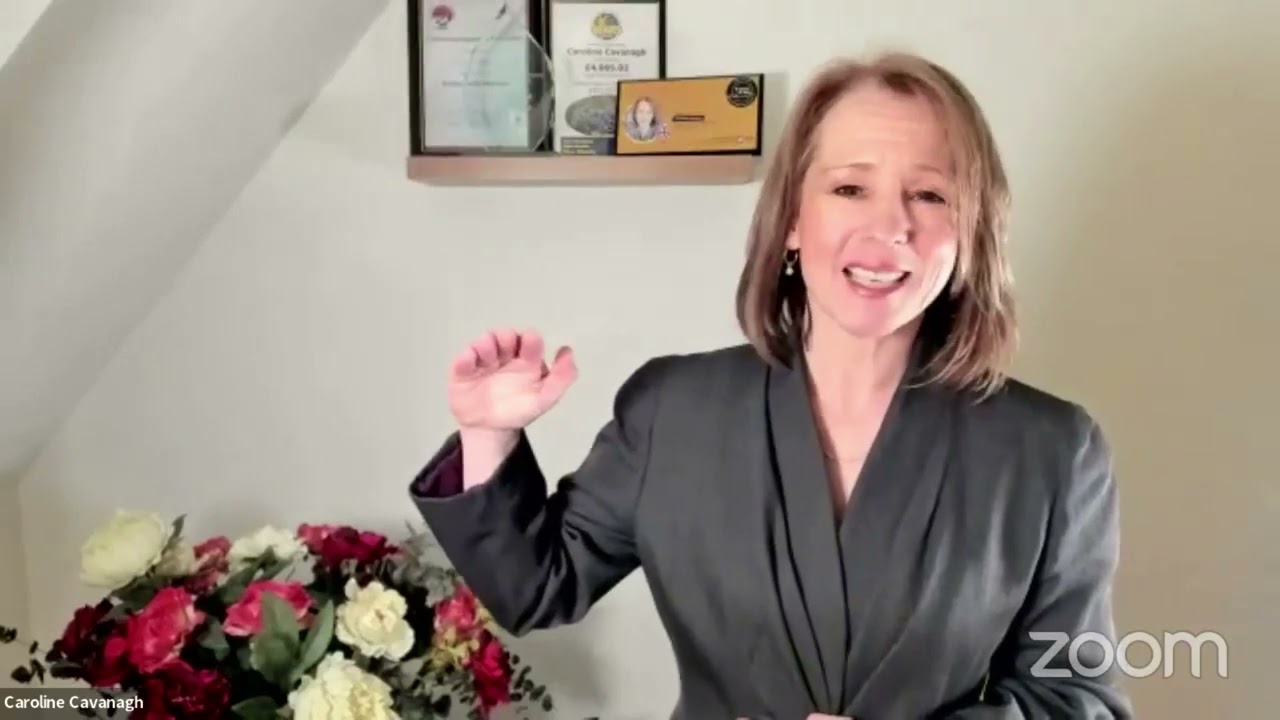
In this presentation, anxiety specialist Caroline Cavanagh explains her mission to reshape how people relate to anxiety, arguing that fear is a neutral survival response that can be harnessed for growth when given mental leadership. She opens with a vivid personal story from her youth as a gymnast who "mucked up" on a routine, describing how fear of judgment froze her, but compassionate support allowed her to try again. From this anecdote she derives a core principle: fear itself is not bad; it merely signals risk and cannot distinguish imagined from real threats, which is why anxiety often feels overwhelming. Cavanagh introduces her "Flip It" technique, a simple reframing method that transforms negative "what‑if" questions into positive ones (e.g., "What if I mucked up?" becomes "What if I perform brilliantly?"). She likens the mind to a muscle that strengthens with repeated positive flexing, weakening the negative habit. The technique is presented as a way to give the mind leadership, thereby leading the fear response and enabling better performance. She ties the method to the event theme of "Embrace Equity," noting that fear is impartial and valuable for all, and that by applying Flip It, individuals can embrace the equity of fear to thrive. The talk concludes with an invitation to adopt this perspective and technique to turn anxiety into a source of confidence and success.
Chapters
Caroline's mission is to change people's relationships with anxiety, because it is so badly perceived. But when people learn to take control of their negative thoughts, step out of their comfort zone and give their mind leadership, those feelings can lead to growth, confidence and success. Caroline loves talking to all types of audience— audiences about easy practical techniques to help people change anxiety from something that holds them back to a power that can direct them and give them energy to thrive. Caroline's talk is called Anxiety: Time to Appreciate the Value in It.
Have you ever mucked up? My first memory of mucking up was as a young gymnast. I was standing on the floor Waiting for the music to start, and if I performed as I could, the team gold medal was within reach. But on the first tumble, I mucked up and landed on my head. There was no pain, but I couldn't move because if I lifted my head, I feared seeing the disappointment in my coach's face. I feared the anger from my teammates. I feared the judgment from the audience. Fear was paralyzing me. But then I felt 2 hands lifting me up. But it wasn't disappointment I saw in his face, it was compassion. Come on, Caroline, it's okay. And as I looked to the team bench, it wasn't anger I saw, it was concern. Are you okay, Caroline? Are you hurt? My thoughts were creating the fear. But my coach went across to the competition organizer and asked if I could go again. We were only 10. It was hardly the Olympics. So I found myself once more on those cold gym mats. What if I mucked up again? What if I let everyone down? Would anxiety stop me from performing my best? If I could go and be that little gymnast again, I'd take with me the things I've learned that have changed my relationship with anxiety. I'm kind of pleased you don't have time travel because the idea of putting a leotard on again doesn't appeal. I can use these techniques, and they do help me when I'm facing risk, when I muck up, and I love sharing them with others. So tonight I'm going to share with you the one tip that time after time after time people tell me has the biggest influence when fear is holding them back, causing them to freeze. But before we dive into that, there's one principle that underpins all of the work that I do. Fear is not a bad thing. Fear is not a bad thing. It just needs leadership, leadership in the face of risk. Fear's role is survival. Fear keeps us alive as part of that fight, flight, or freeze response. Little me was frozen because her fear was protecting her from those negative judgments. But here's the problem. The fear response can't tell the difference between reality and imagination. Her thoughts weren't the reality, but triggered her fear all the same. And this is one of the main reasons that so many people struggle with anxiety. Fear can create— sorry, thoughts can create fears. And this is where Flip It comes in. Can you remember those questions being asked on that corner of the floor? What if I mucked up? What if I let people down? Well, the mind loves answering what-if questions. Flip it is all about focusing on the positive, because what-if questions are typically negative. And it works a bit like this: what if I muck up? What if you perform brilliantly? What if I let people down? What if you help win that team gold? It doesn't matter what question you ask your mind, it will answer it. So Flip It focuses your mind, gives it leadership to be positive. The mind is much like a muscle. When you flex a muscle, it gets strong. So if you flex that positive muscle, it gets stronger and the negative muscle weakens. And when you practice Flip It, you can create a really positive mindset. And with that lens on, the perception of risk changes too. Leadership of your mind gives you leadership of your fear. Tonight's theme, Embrace Equity. Equity has 2 meanings: the quality of fairness and impartiality, and value. Is fear impartial? Absolutely. We all feel it. Does fear have value? Absolutely. If we didn't have fear, we wouldn't survive. But when you use Flip It, you give leadership to your fear that can help you perform to your best, to thrive. I'm Caroline Cavanagh, an anxiety specialist, and I believe fear is a good thing. And I hope you can now start embracing the equity in your fear. Thank you.