How to overcome limiting beliefs and live life to the full
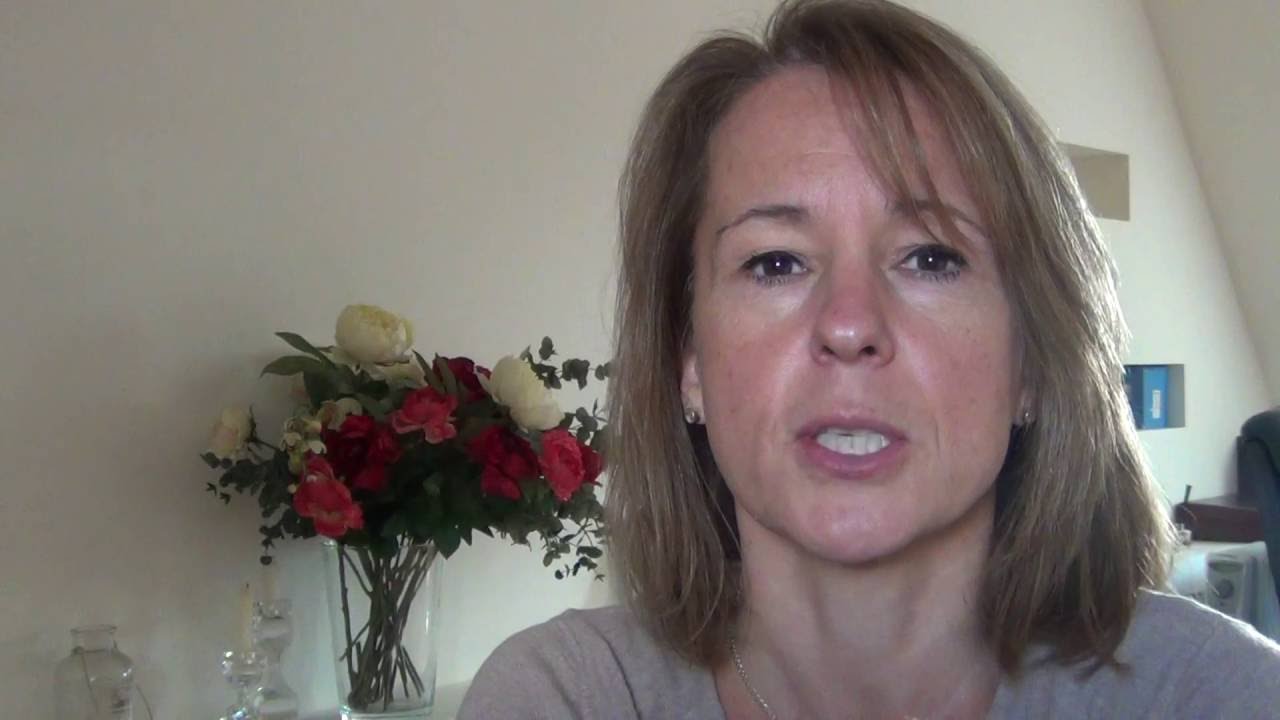
Hypnotherapist Caroline Cavanagh explains how limiting beliefs form through fear and repeated programming, then walks through three steps to break them: identify the underlying fear, change your self-talk, and find evidence that disproves the belief. She uses her son refusing to play football and her own struggles with overeating to show how this works.
Chapters
Hi, my name's Caroline Cavanagh, and I'd like to share with you a little story about limiting beliefs. Now, if at the end of this story you can relate to some of this and you realise that you've got some limiting beliefs that are stopping you from living your life to the full, then carry on listening, and I'm going to go through some hints and tips, some techniques that I know work to help remove limiting beliefs. If at the end of the story, however, you can put your hand on your heart and say, yay, I am living life to the full, then go with my blessing and have a fantastic day. So let me tell you my little story. It's a couple of weeks ago now, and I'd got 2 children at home that had more energy than the house could cope with, so we set off to the local village rec with a ball. My daughter, who's age 12 going on 25, wanted to practice netball. She'd got a forthcoming trial for her school team. My son, however, who's 11, is a football fanatic, and anything that's not either tied to the floor or doesn't run away quick enough gets kicked. So we start off with the netball, passing the ball between Nadia and myself, but anytime Eden gets in the way, the ball gets dropped to his feet as he starts dribbling around us. So, uh, you can probably guess it didn't take very long before absolute anarchy has set out. One's trying to throw the ball, the other one's trying to kick it. They both really want to get in each other's ways. Really, really not working. Stressed mum. Look across the rec and I could see 3 other people, 3 other boys who had also got a football at their feet, who were all sitting on the ground looking a bit fed up. So I said to Eden, my son, look, why don't you go over there and play football with them for a minute so that Nadia and I can play some netball? And then I'll play football with you later. I said, there's only 3 of them, so actually if you go over, that's, you know, 2 teams of 2. Fantastic. And he looked across and went, I can't. Hmm, why? You like football. You actually know 2 of those 3 kids. You used to go to school with one of them. Nope, I can't. And no matter what I said, how I appealed, what logic I threw at him, And how much I knew deep down he really wanted to go and play football, he wouldn't. He had a limiting belief, and that limiting belief was stopping him doing something that deep down he really wanted to do. So, end of the story. I won't tell you how it ended because it didn't end well. His limiting belief stopped him, our game was ruined, and we ended up with 3 fairly fed-up people back in the house. Not good for anyone. Can you relate to that? Is there anything that you've ever really wanted to do but you stopped yourself because of a limiting belief? So if yes is the answer, carry on listening in. So what are beliefs? What are they all about? A belief is very much there as a reference to guiding our behaviour. We have, if you imagine a little hierarchy of beliefs, on the bottom tier we have what we call societal beliefs. These are things that pretty much throughout any society are acceptable beliefs. So an example, in most societies an acceptable belief would be it's wrong to kill, it's wrong to commit murder. Next layer up we have ethical beliefs. These are things that are around particular cultures or religions. Going up another level, we have group beliefs. So these would be things perhaps around a particular charity or something like the Guides. They have particular beliefs that are relevant to that organisation. And then sitting right up at the top are our individual beliefs. Now, beliefs are created in one of two ways. Largely, they're created by programming. So if you can cast your mind back all that way to when you were younger, there were certain things that you had reinforced time and time again. If you perhaps pinched something, you stole something, you were told that's wrong. You went to school, you may have taken something that was someone else's, you're told that's wrong. So a lot of our beliefs come from constant programming of telling either that's the right thing to do Or that's the wrong thing to do. And anything that's repeated often enough becomes established as a belief. And those are the sort of things that create our societal beliefs, our ethical beliefs, and in many ways the group beliefs as well, because it creates a code of conduct that works for everybody. The other way that beliefs are created are through experiences. Now you may have a particular good experience or a particularly bad experience, but any experience that has a really high emotion attached to it creates what I call a big experience. It creates a file in the database that's in your mind that has, right, important stamped all over it. And whenever you're checking internally to see if this behaviour is a good behaviour or not, If it finds one of these important files, then it will take a lot of notice on it. So any experience, being it particularly good or particularly bad, will contribute significantly to a belief. Now, I'm not going to mix words anymore. We have this term phrase limiting belief, but what it really is, is a belief, is a fear. It's that sugarcoating for the four-letter word that a lot of people don't like to repeat. And a funny old thing, it starts with an F as well. Fear. So let's go back to Eden and his limiting belief. What was his fear? When it came down to it, his fear was that of rejection. It was the fear that if he went over to those groups of boys and said, oh, can I join in your game? And they said no, he'd feel rejected, he'd feel embarrassed, and he'd have to come back. And now our automatic response of the body to fear is to set up a series of chemical reactions That prepare the body to either run away or fight. In his case, there wasn't anything to run away from or fight. It was just an idea. There's nothing you can do to an idea. So what his body reaction was to do was to make it really difficult for him to run that risk of being exposed to the fear, to be exposed to the risk. Now let me give you a little analogy that may help put this in more context. If you have central heating in your house, you'll probably have a thermostat somewhere. That thermostat is constantly monitoring the temperature of the room. If it gets too cold, the thermostat recognizes that and it shoots off a message to the boiler to say, turn the radiators on, heat the room up. And so that's what happens. Carries on monitoring. At some point, there's enough heat in the room It's made to its normal temperature, the thermostat picks that up and goes, okay boiler, we're okay now, off you go. How does that relate to us? If you were to imagine the thermostat is like your mind, it's monitoring all the time. And one of the things it's monitoring an awful lot are your thoughts. So in Eden's case with his football, his mind picked up this thought, If they say no, I'll feel like a complete wally, and that will be really uncomfortable. And so that thought creates a response. He doesn't have a boiler to turn on, but what he does is he has a body, and the body reaction to fear is to set up a series of chemical reactions. It gives you the things that you might recognize, like butterflies in the tummy, sweaty palms, a real sense of uneasiness. And those chemical reactions are there for a very good reason, if you have something to run away or fight that's causing you danger. He didn't have that, but his body was put in a sense of such unease that it was too difficult for him to actually say Nah, I can go and do this because the risk is too small. So his body had put in place all of the things that needed to be done to protect him, to protect him from the risk of being made to feel stupid, being, being rejected. And you know what? It was phenomenally successful because he didn't go over there, he didn't ask the boys, he wasn't rejected. So straight away, if you think back to what I was saying a few minutes ago about programming, what's happened is his thought of, I'm going to be— I might be rejected, it would be embarrassing, has come up with a solution. Well, don't do it then. Perfect. Not embarrassed. Sorted. And as soon as we went home And there was no more risk of rejection, he was absolutely fine again. All those symptoms went away. However, there was then that other part of him that was really fed up because he hadn't had a game of football. And actually, he was pretty miserable for the rest of the evening, making most of us miserable as well, I might add to it as well. So, but the problem at that point Is the thermostat will say, well, I created the right temperature. I prevented you from being rejected. What's the problem? Program created. So if we now think about, or you were to now think about, how does this relate to you? You may not be worrying about kicking a football, but you may now be thinking, yeah, there's lots of things that I want to do That I've not done because I said I can't, I won't, I won't be able to. All of those thoughts that you're hearing in your own mind is causing a reaction in your body. That reaction in your body is setting up a program. That program is then leading to a behavior, and that behavior is designed to prevent you from putting yourself at risk. So the first thing to really start to think about is what are you scared of? And that is the real crux of starting to understand and changing your limiting beliefs. What is the fear that's underpinning your limiting belief? The reason that you're saying I can't, the reason that you're saying I won't. Is it a fear of rejection? Is it a fear of failure, which is a very common one? And you know, that's okay because we need to have fears. It's a very good thing, otherwise we'd put ourselves at risk too often. Once you understand the basis of your fear, it then allows you to actually look at it from a different angle. Had Eden had, had the maturity and this knowledge to then say, Okay, what's, what's worse, the risk of getting rejection or the positive side of actually being able to have a really good game of football? And when I look at that risk of rejection, I know 2 of those guys, they'd probably quite like me to play football because they know I'm a good football player, would constantly reduce the risk until ultimately you get to the point where you went, let's just go and play football. Let's just do it. But you have to start by understanding what is the fear about. And so to understand and start now, once you've got the root, what is your fear about, you can start putting in place some of the remedial actions. And there's 3 things that you can really look at. Firstly, start to understand what programming have you been exposed to, have you been doing to yourself? To create this limiting belief? Have you been constantly told by someone else, you can't do that, you shouldn't do that? Let me give you an example of my own life. I, as a child, constantly heard, you must eat everything on your plate. Waste wasn't allowed in our family. Everything that was on your plate, you had to eat. And so I carried that belief with me that it was wrong to waste food, to the point that actually I was starting to put on weight because I was overeating, because every time I got something on my plate, I had to finish it whether I was full or not. And it took me until my early 40s and learning what I did through the hypnotherapy training that I have to understand that I'd been programmed. So that's something, a place for you to start looking at. What may you have heard that has programmed you leading to your limiting belief that you have now. You may have had an overbearing parent, a demeaning teacher that told you over and over again, you can't, you're stupid, you won't be able to do that. Once you have that knowledge, that's a massive, massive step forward. Also, under this title of programming, be aware of the programming that you may be doing to yourself. Are you constantly saying to yourself, "I'm no good at that. I'm rubbish at presenting. I'm no good. I always get. I always have a dry mouth every time I present. I always get my words muddled." And so you're aware now that your body is very good at responding to those thoughts. It can say, "Yeah, I can. I can do muddled words. I can do dry mouth. Let's do that." And it creates the program. And then as soon as you start thinking, "I'm rubbish at presenting," it goes, "Oh yeah, I know that program. We do the muddled words and we do the dry." mouth. Fantastic, it works, it gets me out presenting. So be aware of what programming you may be doing to yourself. Listen to your own language. Ask friends, family, colleagues to pick you up if you're saying things like, I can't, I'm not good at, I won't be able to. And change that language. Change from I can't to I could, I might be able to, I And ultimately, I can. Which leads me on to reprogramming. One of the greatest ways to very quickly overcome limiting beliefs is to reprogram yourself, and that is to start repeating over and over again the new belief that you want to have. So let's go back to that example of presentation skills, which, if you're in business, may be something that you relate to quite keenly. So if you keep saying to yourself, I am amazing at presentations. I speak clearly and I have the audience living in my hands. Try repeating that over and over again. Now initially it's going to feel like you're a real fraud. There's going to be that little part of you going, you're lying, it's not true. But persevere. Because anything that you repeat over and over again creates a program, and you will notice a change. You will start to think, actually, maybe I could be good at presentations. Maybe I can speak really clearly. And you know, I can imagine that audience hanging on every word I have. That will change how you feel in it will change your limiting belief to ultimately having a belief that you can do presentation skills really well. And then the third area, the third area is all about looking for new knowledge. And one of the best ways to do that is look to see, have other people done what you're saying that you can't do, what you're being limited on? Because if other people can do it, it makes it possible. Now again, let me give you a very personal example. I had a limiting belief about doing a parachute jump. I really, since a teenager, wanted to do a parachute jump. But my limiting belief was all around a fear of freefall. I'd had an experience of freefall on fairground rides and just hate that feeling when your tummy comes up into your mouth. Do you know what I mean? I really hated that feeling. I just thought, well, it's a parachute jump, you're going to have that feeling. I hate it. I won't be able to tolerate that feeling for the 30 seconds, a minute it takes before the parachute opens. And that limiting belief was enough to stop me taking up several opportunities that I had to do a parachute jump. However, then something happened that I just said, right, enough. I need to do a parachute jump now and get over this ridiculous limiting belief that is no longer serving me. So I went out to find some information out about parachute jumping, and speaking to someone who'd done numerous jumps, he said something that changed like that. When you have that sicky feeling of your tummy coming up in your mouth, it's because your body's like that. When you're doing freefall, your body's like that, and so your tummy doesn't come up into your mouth because it's just following at the same rate as the rest of your body. You don't get that horrible sicky feeling. And as soon as I learnt that, my fear of doing a parachute jump fell dramatically. Yeah, I was still a bit nervous on the day. I was about to hurl myself up 15,000 feet in the air to plummet to the ground. A few nerves, but I did no longer have a limiting belief because I changed my knowledge on the thing that I was scared about. And the easiest way to do that is go out and find Someone who's already done it. It's not that long ago, relatively, that people thought if you sailed off the edge of the ocean— sorry, the horizon, that's what it's called, isn't it? If you sailed off the end of the horizon, you'd fall off the edge of the world. But Christopher Columbus had done a bit of research and he'd found some documents that suggested that the world may actually be round. And so he set off in a boat with the intention of sailing to India. When he came back and proved that the world was indeed a great big ball, it started to change common belief. And very quickly, the limiting belief that a lot of people had held changed. Now, you may not be wanting to change the world with your limiting belief, but you want to change your world. And as soon as you change that limiting belief by finding new information, by changing your programming, by uprooting old programs that no longer serve you, you will be able to do things that you used to believe were no longer— were possible— sorry, weren't possible. When you change those limiting beliefs, you grow. I now, given the opportunity, would do a parachute jump tomorrow because I now know that it was an amazing experience It wasn't awful, and I've broken through that fear. I don't have that limiting belief, and I can now do a parachute jump anytime I choose to. How would it be for you if you could break through the limiting belief that's holding you back from doing you want, so you can do it anytime that you choose? And I'm here to tell you you can. So three things I'd really three messages I'd really like to. For you to take away from this. If you want to get rid of your limiting belief and live your life to the full, first thing to do is identify the fear that is lying underneath your limiting belief. Second thing to do is monitor your language. Change what you're saying to yourself. And the third thing is go and get new knowledge. Really look into, investigate People that can do that thing that you want to do. Learn new information because that information will start to change the programming, will start to change the experience that you have. Now if all of those things still don't work for you, it may be that your programming goes back very deeply, in which case I'd strongly recommend looking into hypnotherapy, which is a fantastic technique in getting down to those deep-seated roots and desensitising the emotions that have become attached to them. However, there is also something that I can offer you as well. As a hypnotherapist, I also run some courses that I'd be delighted to help people to overcome their fears. Because let's move away from anxiety— sorry, move away from limiting belief. What we're really talking about is removing fears. I have an online program that you can self-study And there will be a choice either to self-study completely on its own or to have input with me as well. And to find out more about that, please go to my website, which is anxietyalchemy.co.uk. There is also a book which is called Anxiety Alchemy, which you can access from my website or is also available on Amazon. And by following the Anxiety Alchemy process, It will allow you to take yourself from the position of fear to a position of confidence, and in that position of confidence, there is no room for limiting beliefs. So thank you very much for listening. I hope you have learned something. I would love to have some feedback, hear your ideas, hear your thoughts, and hear your successes. And if you're interested in partaking in any of my programs, then please just drop me a line. And we can schedule a chat so I can tell you more about how it all works. And I look forward to speaking to you again soon. Bye-bye. Bye.
More from Caroline


Diary of a Hypnotherapist, Episode 41 | @caroline-cavanagh | The Anxiety Alchemist

The Psychology of Comfort Food & Control | @caroline-cavanagh | The Anxiety Alchemist


Unlock Your Mind for Subconscious Healing | @caroline-cavanagh | The Anxiety Alchemist




Overcome Insecurity with Hypnosis | @caroline-cavanagh | The Anxiety Alchemist


Diary of a Hypnotherapist, Episode 40 | @caroline-cavanagh | The Anxiety Alchemist