AI Live - Land Shark Mastermind
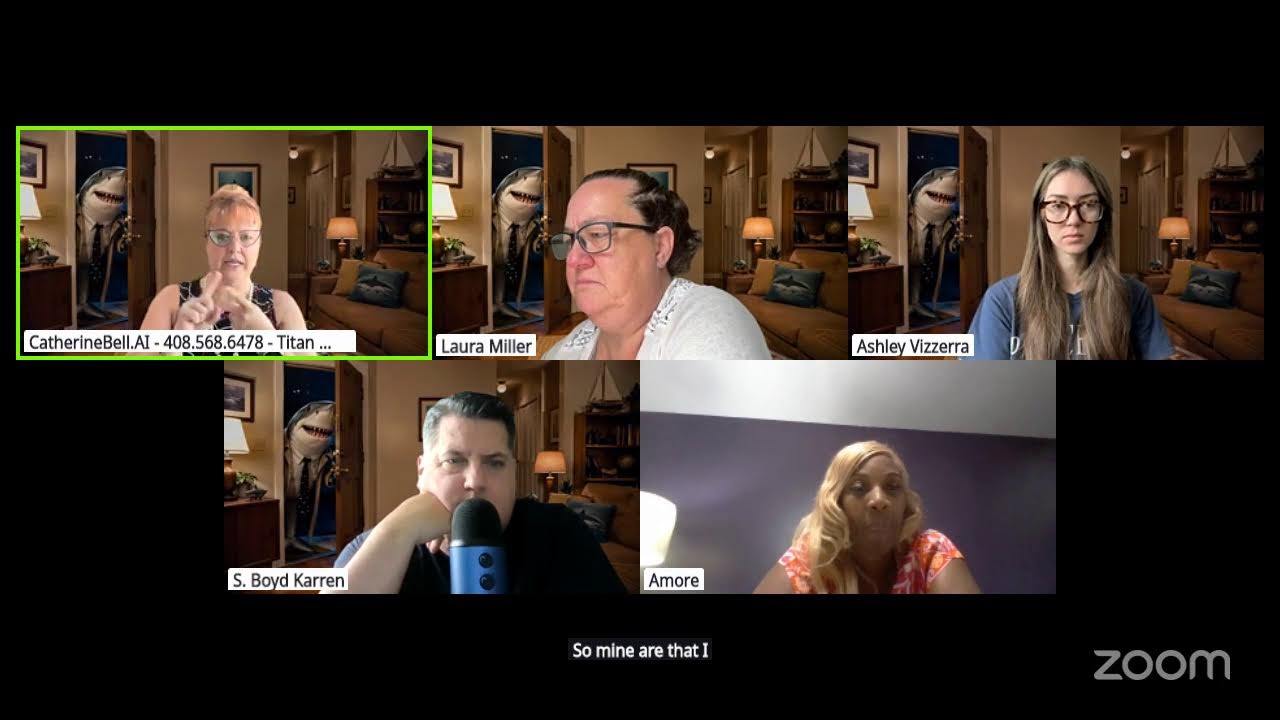
Catherine Bell hosts a real estate investing mastermind with Boyd, Laura, Mike, and others. They discuss a scam involving Morgan Brookshire LLC, how to spot fraudulent lender paperwork using AI tools like ChatGPT, and red flags around upfront fees. The group also covers capital-raising, SEC rules, and personal practices like morning rituals and building multiple income streams.
Chapters
share with everybody. So on Friday night, we went to, um, uh, Eddie Marin's networking event, which is a really great event. I like how— I like the vibe. I like, um, uh, just how, how he's done the whole thing. It's a very open format, lots of networking, which I really appreciate. No selling, just connecting. And again, and it's not all only about wholesale or only about, you know, land or only about, you know, whatever. It's like there's multiple things are involved. So I just, I really appreciate and love that format. And then I don't have to coordinate it. I just get to show up. So that part I really, really love. Anyway, and so on Friday he was, he actually was, went over a deal that literally just became one of the world's biggest nightmares and the biggest lessons. And here's what I love about sharing about stuff like that is that any of us who have been around long enough, it's always the things that go sideways that we have our biggest lessons. It's not our wins that bring us the biggest lessons. So here's a lesson that we're going through right now is we have gone through a lending broker to go out and find the debt, right, uh, to be able to do these deals. Actually, Boyd will appreciate this. So, um, we've been working with this broker since, I want to say, October last year on several of our deals. And you would think, as a broker, anybody that they bring to the table that's providing like an actual offer you know, so that we can get this, the loan or whatever on the property, that they've done some sort of vetting, right? So we got multiple offers, been going through all the things, la la la. So this one comes and says, listen, we can fund you in 2 weeks, we're gonna get this done. We just need $3,500 to, you know, finish doing the paperwork, all that, blah blah blah blah. So trusting the broker has done his job, 'cause that's what he's paid for, long story short, we paid the $3,500. And then the company ghosted everybody, and we're like, what the hell? Like, you said you were gonna fund it, you know, where are we at? Long story short, didn't get funded. I was like, give me my money back. Like, clearly you guys are incompetent, you know. I didn't say that, I just, you know, these are the thoughts in my head. Just give us the money back. So literally it's been 3 months, 3 months to get this money back, and they keep saying our back office is working on it, sue us if you need to, but you know, just be patient with with us. It's been 3 months today. They responded and said that they're working on getting a cashier's check. I'm sorry, it takes 15 minutes to get a cashier's check. It does not take 3 months. So I started looking up and I started, you know, here's the beautiful thing about AI. Had our broker done his job, um, then I shouldn't be going through this. So the broker's tied into all of it. Like, let me tell you, I've gotten everybody involved. I'm like, you're the one that introduced us, You're the one that's responsible for this. Like, you get this mess cleaned up. Anyway, so dealing with that, but the point being is that doing a simple, um, I did— ran it through ChatGPT and Claude, and it was interesting. Like, even the, the paperwork, the offer that they sent over, ChatGPT and Claude popped up with like all this stuff that have it look like it's an actual scam. So apparently There's companies out there who pose as lenders. Boyd, I'm sure you can speak to this. They actually pose as lenders and then they get you to pay like an application fee or whatever, never ever fund any deals and disappear. Like, this is an actual scam that goes on.
It's very common, unfortunately, Catherine.
Okay, so Boyd, you guys are brokers, right?
Yep.
So just explain to all of us, like, is it not your job as a broker to essentially vet these people?
It absolutely is, because everything runs on trust, and you're trusting us to find the right match for your situation, right? We have a stable of trusted, vetted lenders, um, but about, uh, About 4 weeks ago, we had one sneak in, and I'm not sure where he came from or how he got in, but we realized what— we realized in time that this guy was not, was not real, was not legit. And we sounded the alarm bells and, and, and stopped all conversations with him. But even he almost got by us. So we're like, no, no more new people, no more new people. We're only going to work with who we already know and already trust.
Um, okay, so can I tell you who these people are so that, like, I want to create a blacklist?
Well, and can I add, if they're asking for any kind of upfront money, that is a major red flag.
Bingo.
Yeah, exactly. Thanks, Mike. If they, if they're asking for— now, if they're raising equity for you, if they're doing an actual capital raise there are things they have to do and effort expended to prepare your deck and things like that. And so that's reasonable. That's, that's the service. But brokers should be working on a success fee.
Right.
Every once in a while, there'll be a bank or a lender who wants you to put something into escrow that's refundable if, if they can't do the deal. But even then, it's like, hmm, you got to look at that really carefully and vet that lender very carefully. But We work on success fees. It's contingent upon getting you your funding, and it should only be paid to us at that point. So run away from anybody asking for money to start the, the process.
So, okay, so as a broker, like, I'm holding his feet to the fire because he's the one that brought these people and said, yes, they're trustworthy. Like, I want to say, okay, then you pay us the $3,500 and you go after them for it.
No, they, they shouldn't have asked for any money up front, right?
So I'm gonna say this publicly because again, I feel like everybody needs to be warned about who these people are. So it's Morgan Brookshire LLC. Apparently they're out of New York.
Apparently.
Well, again, again, when we do their search There's some sketchy stuff out there. So they have this 4.8 ratings and stuff. I went and rated them as like a 1 star and gave them all the things. Like, I'm going everywhere and I'm reporting them to the FTC, to the, uh, FBI. Like, I'm reporting these people everywhere.
And, and one of the, one of the common things they do is they, these scammers know generally which buildings in New York and which floors in those buildings have financial services companies, air quotes, and they'll list that as the address. And it's almost impossible to verify if they actually are on the lease there. So dive into your AI, ask for evidence of UCC filings, ask for everything that, that whatever AI system you're using can find to verify that this person is legit, this firm is legit.
I mean, it's, it's exhausting that me as a customer am counting on a more— a loan broker to actually do this, and it turns out now I have to do their job too.
Yeah, and pay them for the privilege of doing their work for them.
Where did you find this broker?
I don't even remember. It, it's been so freaking long.
And you're doing so many deals and talking to so many people. Yeah, it's easy for them to, to slip in somewhere and you don't even know where they came from.
Yeah, yeah. So this is my red flag warning of the day of, um, you know, you have to vet everybody. Yeah, like, it's exhausting, but it's so important.
Well, and you got to look them in the eye. If you, if you have any chance to meet them in person, spend a little time with them in person, or, or take a reference from someone you know and trust already.
Well, normally it's 3 references, but I've never had to give ref— have get references from lenders, you know what I mean? Like, that's a whole new level of like, like, I remember. So here's another one, and I'll just share. This is, um, years and years and years ago, we were going through a whole process and we were going to take my company public and going through all that and lots of attorneys involved and all the things. And were like, an obscene amount of money was involved in this whole thing. Anyway, um, we had paid out a ton of money, you know, all of that, all the team. And this team, they were responsible for taking Ring public. They were responsible for taking multiple like really big companies public. So this was— we had vetted them, all of that. And long story short, the whole thing fell apart and the money disappeared. Guess who took the money?
The broker?
The freaking attorney!
Attorney?
Okay, the attorney! Oh my gosh, we had to vet the freaking attorney! What the heck? Like, are you kidding me? We vetted everybody else on the team, not the attorney.
But how could you— how could you even vet an attorney? This— I mean, I know you can do it, right?
But I mean, it turns out that this attorney actually in some other state had criminal charges filed against them. Like, what is wrong with the world? These people who are like in these positions that are supposed to be trusted positions and literally freaking criminals.
Yeah, did he have a license in the state you're at? The attorney, was he barred in that?
He had a license in the state that the, the whole company that they were in, but in another state he had all these, um, yeah. Anyway, so I just, I'm left like, I want to believe the best in people and just freaking do business and do it well. But I'm left like perplexed that these people are so like— if they're that smart, then go make a difference in the world. Go do something good. Like, if you're that smart, go make a difference. Don't be an asshat and like make problems in the world, right? Like, even, you know, I'm selling some stuff on Facebook Marketplace and, you know, just like clearing out some stuff. Literally, there's this whole scam that people are like, hey, I'm coming over 'Can I send you a Zelle?' I'm like, 'Sure, don't think much about it.' Long story short, literally went through this whole like thing. Turns out it's a whole damn scam. Yeah, yeah, that people are doing with Zelle where they're telling you that, 'Oh, your account needs to be upgraded, but your thing is $500. Send me $900 and then it'll be upgraded and then we'll send you your—' And I was like, 'This seems dumb.' And so then I literally went on to ChatGPT and within minutes it was like, 'Oh, there's a scam.' And, you know, like, I went back to them and I'm like, you're a complete jackass. Like, don't do this, you know? And he tries calling me and I, like, blocked him and stuff. But I was just like, you know, if you're that smart, go do something good in the world. Yeah, like, why do you have to do criminal activities, right? Like, you know, but a friend of ours, he was a police officer and um, did private security for the Vice President of the United States and stuff. And what he talked about is that these people who are this, like, you know, these criminal minds, that they think like this, it's like, for them, it's much easier to go and steal from other people than it is for them to legitimately earn it themselves.
Yeah, like, they can't hold a job or something.
And that just blows my mind. Like, the— it's, it's a— it's— I think it's a combination of laziness being really lazy, being super smart, and then thinking that that's the better thing to do is to steal from other people. Like, I just— I'm sorry, you guys got me on this whole rampage.
I want to put that on a t-shirt: don't be an asshat.
Don't be an asshat. Like, gosh, I just— I'm sorry, I shouldn't be cussing. I just— I, I like— I, you know, and even like, um, Again, dealing with people, like, just companies. I, I seriously want to create a black book and put like, do not ever invest with these people, don't give money to these people, here's why. Like, you know, it's— ah, God.
Even on the equity side too, you have to be careful. I've come across, um, groups that are per— people that are capital raisers And, um, and there, there's, there's one, if they're asking for money up front to do it, that's a big red flag as well. But two, there's another whole SEC rule about that, about how they're compensated and percentages and inurements and things like that. So, uh, I just, I, and I've come across in my, my travels with these capital raisers, who are asking for, you know, money up front to do their work. No, it doesn't work that way, right?
Yeah, I mean, you have to be like— I, because I raise capital, right? But there's like, you know, marketing needs to be paid for, uh, the— and there's like tiers of way to legitimately be paid for all the things through profits and things like that, which again are all legit. And it has to be in compliance with the SEC, which is really important. And but interestingly, like, we had a conversation yesterday with somebody who's like beginning the capital raise journey, and it's like he's brand new, and he's like, I don't know where to go. And that's where I'm thinking that these scammers, they target people like that. Yep, yep, like exactly. Again, I just— it makes me so mad. Yeah, like go and do something good in the world.
I had a group, uh, they were going to charge, uh, and I've talked to these guys, they're out of California, I think they're legit, but the way their business model is, they will charge— they were like $26,000 or something like that with no guarantee. Like, are you effing crazy? Like, absolutely not. Right. I mean, I just was like, what? No. Yeah. Oh, people do that all the time. Like, nah, I don't know. I don't. So it's just, I don't know. I think it was a scam too.
I don't know.
Major red flag. Right. So it's, yeah, it's just, it's fascinating. And you know, and it's even like like these marketing companies, and Tommy and I were talking about it. It's like now with AI, you know, and we went through a whole like, you know, barrage of these over the last several months of like all these, you know, people coming in being, oh, AI, I can start my own marketing agency. I can tell AI to do this thing and create this website and create this app, but they have zero actual experience and zero track record. Like, don't do that. Don't do that to them. Like, don't do that to yourself, you know what I mean? It's like, trust is everything, you know? And anyway, yeah, I could go on for hours about this. Okay, so here's the thing. It's coming into October. October is gonna be Halloween Horror Stories. Laura and I discovered this decades ago, and I think it was one of the most brilliant things they ever did. My very first, and I think it was yours too, it was a networking group that we went to in San Jose, California, because we both lived there. Didn't live in San Jose, we lived in California, and we would go to this networking event. It was like once a month. It was put on by, um, the real estate guys. They used to have a radio show. They still do.
They still have a radio show.
Russ and— what was it? Russell and— no, Russ— Robert.
Robert Helms and Russell Gray.
There you go. Really great guys. And anyway, we went on several of their real estate cruises and all the fun things. But every October, their event was all about Halloween horror stories. I've actually talked to Eddie about doing that because again, there's something really profound. Like, those are the stories that stick with us and go, "Wait." Like, when something that niggly comes up, you can go, "Wait a sec, I've heard something like this." And it has us take pause and just do a little more due diligence. Right. And so anyway, it's—
well, and it's sorry. And it's the thing, you know, like, I'm sure you know this, Mike, Catherine and I know this, probably you too, Boyd, right? If you've been around for a while, the properties that you have or the deals that you have that are, you know, cranking that monthly thing, you love those. You want a lot of those, but you don't learn shit from them. You learn from the like Wow, okay, that one didn't go quite the way we thought it would go, you know. And, and, you know, maybe I shouldn't have bought that one sight unseen. Or so I think that the thing that I always loved about the Halloween horror stories was it was like, oh, okay, yeah, like it isn't always going to be perfect and you can survive some of them, or you can have fun with some of them, or you can, you know, bring a little reality into the world of it.
So yeah, but Catherine, remind me to tell everyone the story come Halloween about the house that was stolen from me that I had to get back.
Yeah, that's super important. Like, that's the— again, how that happened. Again, somebody really, really smart, right? But again, if you're gonna be that smart, go do something good in the world.
Like, most those people don't care about anyone but themselves, right? And they have— they're like, feel entitled.
They like Yeah, and I can't get into the psychology of it. It just literally, like, I want a black book that we can go and we can literally, like, is this person on the blacklist, right? Which I don't know if you've all seen that, that, that show, TV show, but I don't know, I think it should be a thing.
Blacklist. Oh my God, Raymond Reddington, the chemist. Yes, nobody knows.
Where is Raymond Reddington? We need him to take care of Or the other one is the— is it the Beekeeper? That was the other one that was like very— yeah, it, it revved up. Anyway, we need people like that, but that's a whole other— I'm not promoting vigilante.
We're not promoting nobody no crime.
Um, and like, ah, anyway, morning amor. We're talking about—
Good morning, everyone. I was like, I don't know, it's a weird place to come in on a—
So we're talking about the things, the deals that go sideways are the ones that we learn the biggest lessons from, right? And it's not all sunshine and bunnies and rainbows, right? Like, there are, you know, there's a lot of things we got to deal with behind the scenes that we just don't talk about, right? And I think that people coming in new to any of this— Luke, Ashley— like, you know, you need to understand, like, there's some serious battle wounds and scars that we've all had. And because of that, there's been times like, honestly, I just want to give up. I'm like, is this all worth it? Like, this is a giant-ass headache right now. You know? And it's like, you know— but at the end of the day I love what we do, I love making a difference, all of that, but there are some days where I just want to throw in the towel and be like screw it! I'm gonna go get a lame-ass job clock-in clock-out and whatever say eff it to the world right now. No no don't hate on that, that would last about 2 or 3 nanoseconds and then I'd be like what am I doing?
Remember we're unemployable remember?
That's right.
So one of the things that I've been doing is reflecting on— first of all, does anybody have any deals they want to run? If you do, let me know because that's what we're here for, is to run these deals. And given that Tommy's not here, we're going to work on the ontological stuff. That's my lane. And the ontological stuff is one of the things— here's the beautiful thing about AI and all the things is Every morning I go for a walk. I walk 3 miles every morning with my giant husky, and I have a conversation with an AI that I built. And so for me, I start the day off with scripture and prayer and all of that to get myself grounded, and then start digging into what I call my incantations. And I created this years ago. I went to Tony Robbins' Date with Destiny course, and ended up coming up with a 17-page incantation about literally what I'm creating for my life and what that looks like. So if we get to have a created life, what does that actually look like? And so inside of the next chapter of my life, you know, my husband has passed, my kids are grown and gone. I've been living here in our, you know, in our family home, 5 bedrooms, like a big beautiful home for the last 10 years. But like, really, is that the highest and best use? And so I have this equity sitting in this house that I'm trying to tap into. And so I'm looking at, you know, you know, either getting a HELOC or refi, like all that. And the money is just stupid expensive, which is dumb to me. So do the numbers. Numbers tell you what to do. So I'm looking at what if I just sell the house, take the equity it's in there, put it into investments, and have that— those investments actually generate the income necessary that would allow me to temporarily go rent somewhere. So I'm looking at what if I rent and have a, like, live in a resort-style community, have somebody else take all the care of all the headaches, not me, because there's nobody here to do chores anymore. It's all on me, and it's a lot of work taking care of all this by myself. Um, and then the other piece was, was what if, because I love horses, what if I go and go and rent a horse property and get a horse and see if I actually like that lifestyle. But then I was like, already I'm like, ah, it's even more work. Yeah, what if I do resort-style living and then go like rent somebody's horse, right? And only go visit it a couple times a week and they can take care of it. So then it's like, how do I get the best of all the things? Like take that what I've built over decades, have, have my money working harder for me than I've worked for it through multiple streams of income because I I can invest in all these things. So creating those multiple streams of income, have those multiple streams of income literally now pay for my lifestyle, like the resort-style living, the horse, the traveling, but still continue to make a difference and help people create multiple streams of passive income. Just have my life look different. And here's the thing, this is, this is like the thing I'd like to challenge all of you in. It's like why I'm struggling so hard because I've never had anybody in my family live like this. Like, this is a whole made-up, created thing that comes from doing my walks and having this conversation every day with my custom AI that I built. Because what she's doing is she's connecting all these dots that I otherwise wouldn't have connected. So for all of you, um, the question that my, um, my coach has been asking me is two questions. And to document it. Where am I shoulding on myself? So I'm literally documenting every day where I hear myself shoulding on myself. Well, you should, you should, you should. And then where is it that I'm like intentionally listening to my intuition and like acting on it? And then what are the results from it? And then documenting all of it. And it's been really, really interesting to see what's actually happening. And all this, this whole made-up created life has come out of all of it. But again, I have no frame of reference for this because there's nobody in my family or in my life that has done anything about what I'm creating. So it literally is this brand new invention of like, you know, how am I going to live my life? Because if we think about our frame of reference, what is our frame of reference? It comes from our family, how we grew up, our friends, our community, the culture, you know, all the shoulds inside of our culture. Well, how we should be living, what we should be doing, all of that, versus a hold on, like, what would actually make my heart sing? And having a created life. Like, I know Amor— Amor flies around all the places does all the things. But again, that wasn't the path that you were on a few years ago when you were being a principal of a school, right? Because what are we trying— culture, like, we should get a good education, we should get a good job, we should, you know, like, do all these things and, you know, live this, you know, little inside-the-box life. Where all of you, you're all here because none of you are living inside of the box of called should. You all have created lives that you're like, wait a second, that box sucks, it's probably kind of smelly and too small, so let's open the lid. Oh look, fresh air! And create like what the lives that, that we love. So I would love to hear— again, I know this is like off of what we normally talk about and discuss But dealing with the ontological piece of us is really important for really creating those multiple streams of passive income in unconventional, legal, legitimate ways. So I'd love to hear, is this conversation valuable, or is this just Catherine being annoying?
I mean, it's a great reminder. We're all trying to do deals and meet new people. And I have trust issues, and I'm trying to trust and like get out there. And everyone's a lender in sub-2, so it's like, and everyone's a buyer. And I already know that you, you know, you can't— in my head I'm like, um, I don't know. I'm super careful about everything like that. But then sometimes I feel like I'm being held back by myself because I'm so careful, you know. So I think it's good everyone needs to remember that and be extra careful with who they're working with.
Yeah, I think it's helpful, Catherine Bell. I think my experience is, um, I grew more, uh, when I took time to focus on other things myself first. If that makes sense. And it wasn't always yourself, you know what I mean? Yeah, say more about that. Yeah, it's, um, I, you know, going through years of doing this, you know, it's always about the deal, always, you know, pushing, pushing, you know, trying to— it's always about the business. It actually is. My wife was like, you know, you just— you lose other things. Um, and then, but I found more— I found more growth in myself when I put myself first in terms of just making sure that I get centered, closer to God, making sure my family's okay. No, I put— I reprioritize, I guess, is a better way to say it, right? And, uh, it's, it's made the journey much more, um, enjoyable, uh, and it's actually brought me, I think, better connections, you know, and true, true connections. Not like how you and I met, you know, you and I met down at the Orlando thing. Um, it's a perfect example. Um, And I just feel that that's God's way of kind of making us all work together, you know, helping us all work together, right, to help each other and not just help ourselves. I guess that's probably a way to say it. So yeah, but I've— it's been much, uh, I'm glad that it worked out that way for me. It just is much more, um, uh, centered and better. I just— a lack of a better word. So, right. Yeah, but putting that for— but to your point is that I do the same thing in the morning, you know, kind of prioritize first and then everything else will take care of itself. You know, I've found that, and that's true, that's what happens. So, but no, I think it's great.
Yeah, super important. So yeah, those morning rituals that set us up to really focus and have a life that, that we love. And, um, the whole, um, getting ourselves into the flow state with gratitude and with, you know, all the blessings, because Lord knows there's enough challenges out there we could focus on. Like, one of the things I love that Tony Robbins says, he says, what's wrong is always available, but so is what's right. Yeah. And what do we get to focus on? You know, so it's the— like, this morning, my— I feel like two gifts from God were— or multiple gifts from God. I feel like, first of all, I live in the most beautiful neighborhoods ever. Like, I feel like I'm like walking through the Garden of Eden. It's so gorgeous. There's like a bazillion birds singing and flying. Like, I love that. And then this morning, um, I got to have the gift of a roadrunner. I know it sounds dumb, but they're one of the coolest birds to actually watch. And he stopped and he just watched me like we were watching each other, which was really, really cool. And then it took me on a whole different path, and I actually got to go and pet a bunch of horses, like, in my neighborhood. Like, how freaking cool is this, right? Like, again, just all these gifts first thing in the morning that I get to be blessed with and grateful with. And then the rest of the day is like, yeah, a bunch of crap's gonna happen. But at least I got— had some cool stuff that we started out with, right?
Yeah, yeah, yeah.
Good for you. That's awesome. So yeah, so, um, inside of like— here's the thing I'd like to know, because you all have for experience, for— because this is being livestreamed, people are watching this live— is y'all have gone through some stuff and you have some battle wounds and some scars. Like What are the practices that you use to essentially right yourself and right the ship, so to speak, to stay on track rather than literally have it take you out of the game? Like, what are your practices? I think that this is a super important thing for people to get and to understand, um, as human beings. And again, this isn't something that AI can do. This isn't something like This is the human being part of us that when, when crap hits the fan, so to speak, like, what is it that you do to keep yourself like, um, centered and still staying on the right path rather than throwing in the towel? And when were you close to throwing in the towel? And what did you do to bring yourself back to like, hold on, like, this is what I'm meant to do? I'd like to know from each of you, like, I can't be the only one who's gone through crap. I would say— fact, I'm not.
I would say prayer, like, my connection to spirit. I've always been really spiritual, like, I feel like I've had that strong connection since I was young, so it always comes back to that. And then just like determination, like, I believe in myself and I I am very intentional. I would never screw anyone over, or like, I am at peace with myself because I know that I did my best, or like, I put my best foot forward. So I just remember that if something falls apart, it's because Jesus is protecting me from whatever that was going to become. So I have— I just have that like distilled in me, the faith.
I call that get the no with the happy heart because God's got a bigger yes. Yeah, well said, Ashley. Thank you. That's really good.
I'll echo what she said. For me, there's two primary things when, you know, when I'm in those kind of situations. I pour myself a Coke Zero and squeeze fresh lime into it, and then I pray.
I love that. That's really powerful because you're bringing in all the senses. Into it. Like, having those rituals actually matters.
Yeah, right? Yeah, yeah, it really does. I have my favorite glass, and I always keep fresh limes handy because I know there's always going to be something.
So that's awesome.
But the prayer is the more important part, as Ashley said, you know, morning, noon, and night, and whenever you need it. And, and I've seen, and I've seen recent studies too from reputable places that show that people who pray have, have greater brain activity and greater calmness and, uh, and such throughout their lives. So, you know, I'm not Warren Buffett or anything like that, but I can— I, I find the correlation in my own life, certainly.
Yeah, yeah, it's a powerful practice. I love that. Thank you.
Yeah, for me, again, just what you would say, the same thing for me, Catherine, is that morning ritual. Uh, once I changed that, um, from opening emails, trying to get to the next thing, you know, uh, lists, you know, checkoffs, things like that, it's really just not doing that and doing the opposite, being more centered and just, um, uh, being closer with, uh, with God and just kind of making sure this is my day ahead of me. I got another blessing. Don't let me screw it up. So it made— it's made the world of difference.
Yeah. Yeah. Yeah. I agree with what everyone said.
I think for me it's my morning and my evening, I think, routine because I like you guys, like that morning is so important, like just to focus myself. But then it's like I have this little book in the evening where I can kind of write down like what drained me today. And like, what are the wins? And enthusiasm found me how? And I just list. And then what did I learn from, like, the negative things that I might feel like happened to me? And what opportunities do I see in them? Because it's trying to be like— and I think somebody else said that, like, it's usually a reason why this happened, and it's an opportunity either for something else or for me to move in a different direction. So Just writing that down every evening kind of helps me also just let it go and like refocus.
That's huge.
Yeah, usually I have like one little brain cell left at the end of every day trying to reflect. That many? You're lucky. Well, I feel like— have you ever watched Ice Age? And at the very beginning, there's that squirrel who's chasing the nut and his like eye is twitching. I feel like that squirrel. So I love that more, like the whole— yeah, reflection. I'm just clear at the end of the day. My brain's like, uh, like I feel like it almost flatlines. Like, I don't know, I'm so tired. So that's awesome. I love that. And you're one heck of a prayer warrior too. You've— I've had the privilege of praying with you, being prayed over by you. Oh yeah, prayer is definitely—
yes, definitely at the foundation of it all.
Yeah, do not get in Moore's way.
I will just pray for people, so I don't know.
I love that. So good.
It's awesome. Laura, what's yours?
Luke, I want to hear. Yeah, it's, uh, It's interesting in having— hearing everybody share, you know, there's, uh, I know the power of a morning ritual and I'm not consistent. I should over myself of the inconsistency. It's one of my shoulds, you know, like I know I should do that more and I just, I get into it for 2 or 3 days and then, you know, whatever, I get out of the routine of it. But, you know, I think to, to Answer your question, to right myself, it is to do things like this, to get around like-minded individuals. We were joking earlier, Catherine, for everybody else, Catherine and I have been friends for 100 years or something now. And we joke about being unemployable and some of that is the structure of that. I will fire myself, you know, at like noon on some random day. I'm like, okay, enough's enough. I'm firing myself. I'll rehire myself tomorrow, but today I'm firing myself. So I think it's, you know, and I've created that life. Like, it took a while to create that life, but that's the life I've created. And, you know, I'm in California right now visiting my parents. I'm headed down to Arizona. Tonight for a couple of weeks. And I was having a conversation with my dad the other day who is 94, will be 95 in November, still kicking around. And we were driving around and he's like, wait, so can you work anywhere? Like, could you work in Moscow? And I was like, well, I've worked in St. Petersburg. I've never actually been to Moscow, but yeah, I could. And that's the it's having done the work and all the work and all the education and all the, you know, getting into like, getting into environments of like-minded people that, that has it, you know, that, that has the two sides of what you were sharing, Catherine, that has it be normal, like, oh, this is normal for other people. And, you know, has it, has it also be a place to push, well, what's the next level? What's the next level? What's the next level? So I think for me is this, that piece of bringing, bringing some reality and bringing some now in the moment and really just being— and I'm not always perfect at it and I struggle with it and whatever else, but, um, yeah, just to there's responsibility in being your own, your own boss, so to speak, but there's also a lot of freedom in it. And so that piece of being, yeah, just floating that river between the banks, bank, bank, bank, right down, down the river, you know, to, to moment by moment.
So I love that. And creating that life again that we can work from anywhere. Yeah. You know, we've talked about like going to Jamaica and selling rum to tourists.
To tourists. Like, and I'd probably still be doing— we'd still be doing what we're doing, but we'd just be selling rum in between transactions.
And we've done that, right? And we've done it. We've worked from, you know, multiple places in the world because we can and because that's the life we choose. You know, I saw there was, um, uh, somebody on TikTok and she had these TikTok videos and she's, um, I forget what she called it, but basically it's like working remotely, like, and she would find these beautiful, really inspiring places to go and have her laptop and that's where she worked for the day. And I was like, maybe I want to do that. Like, here in the valley there's over 4— no, over 500 resorts here in the valley. And Laura and I decided that it was our, it was our responsibility, our public service, that we need to go verify how many stars these resorts have.
If they were actually 5-star, legitimately 5-star resorts.
You know, we'd have to rate— we need to go. That's right.
We have to rate things on, you know, like ease of cabana to bar and, you know, all that. How close are they to the amenities? They have Sleep Number beds and, you know, that kind of stuff.
Anyway, so yes, inside— why do we have the light? Why do we, why do we create headaches for ourselves?
Oh, oh right, you know that it creates—
got it.
Why do we not want to go? Can I have 3 weeks off? No, right? Yeah, let me check with my manager when I want to, like, you know, go to Europe for 2 weeks with my parents. Yes, my manager said I could go. I just checked with her.
I love that. Well, good. This is, um, um, yeah, I hope this was helpful inside of, like, reminding everybody, like, why are we doing all of this? And that stuff happens, right? Like, that's the other piece that I feel like— I don't know about all of you, but when stuff goes sideways, like, I feel really alone inside of, like, you know, who do I talk to, how do I deal with this, like, just feeling alone, right? And that's the piece that I want to bring it back to, is like, who do you know like who's who, um, who, not how, right? Like, who is the who that already knows how to deal with whatever struggle you're going through? Because I can't be the only one who's been dealing with, you know, a broker who clearly didn't do his damn job, and these people who are claiming to be lenders that are ripping people off, right? Like, I can't be the only person dealing with that, or You know, again, we're dealing with a really, really, really great project but super, super crappy operators. Like, you know, I can't be the only— and like, how do you deal with that, right? And navigate through that and, you know, get our money back and, you know, deal with all of that. So it's, again, it's having these conversations so that one, we know we're not alone, but two, it's like, okay, What are some creative ways that we can navigate our way through this? Like, one of the other things I'm dealing with is that we were in the middle of a deal, we put the EMD down, all of that. The sellers didn't come to the table and close the deal. They were the reasons the deal didn't close, and they're still keeping the EMD. I'm like, What? Like, to what end? Like, it isn't yours. You're the reason the deal fell apart. And they're, they're saying that the only way that they, that they will release the money is if I sign something saying it was my fault the deal didn't close.
Yeah, right. That's terrible. That's going to be their out to actually keeping the money because you could probably pursue them. Well, and that's exactly it.
They don't want me to pursue and go after them because they lied about the whole deal, which is how the whole thing fell apart. But again, I'm like, I'm not gonna sign something that's not true, and you need to give the money back. Like, you're the reason the deal didn't go through. But again, all these people, it's like, it's like—
is Title and Escrow involved?
Yes. And they Again, they, they need to sign off from all parties saying that we get our EMD back. So, and they won't sign that. They won't sign it. Like, they want me to sign something saying it's my fault.
But if it's a breach, if they breach the contract, there's a document you can sign that they have like 3 days, and if they don't sign it, it's like null and void. Yeah, I can try to figure out— I can try to figure out what it's pleading me, what the document is, but I'll let you know.
Okay. Yeah, that'd be helpful. Okay.
Is there something your contract was for seller default? Usually that's pretty well defined in terms of, say, I think to Ashley's point, then it's— then it's a no-brainer. Like, the title company has to—
yeah, yes, it's in there, and they defaulted, but they're saying we defaulted.
Yeah, if it's in contract, then it's, it's like, sure, taking to court, it's an easy one, you know, it's a slam dunk. Yeah, but no, yeah, don't, don't— I know, and you know this, no, don't, uh, tell them that.
Yeah, they're afraid that we're gonna go after them because long story short is we could go after them and sue them for a $2 million loss and all that. I have no interest, and I've told them that, but I'm certainly not gonna sign something, say it was my fault.
Exactly right.
Like, no. That's wrong. Yeah. So anyway, and my intuition, just like you said, Ashley, it feels like they're trying to trap me into doing that so that they can turn around and sue me. And I'm like, nope, not doing that. Yeah, you're too smart for that.
So yep, steer clear of that, right?
So anyway, all these fascinating lessons. And again, that's a whole other thing of like Could I be super angry about this? Yes, I could. Or could I be really fascinated, right? Entertained. Entertained, fascinated. What are the lessons, you know? So anyway, all these fun things. Um, one last time, does anybody have any deals they want to run? No deals today. I really do want to get people running deals.
I have a deal. I was looking for assumable mortgages. This one, uh, was on the market but fell out, and I talked to the agent. The guy had, um, moved out of state for a new job, and he came back because he couldn't sell the house. And I think it could make a good rental. And then it's by ASU, and it has a detached 2-car garage that I could convert easily into a casita, but I don't know if the numbers are like too tight, or the rental market— there's so many rentals right now, so I'm just like a little hesitant. Do you guys want to see it?
Yeah, yeah, yeah, yeah, go ahead and share it with us. Okay.
So share. Okay, it's— this is the property in Tempe. It says interesting only if you exploit the financing or buy materially below ask, which is what I'm trying to do. I was thinking like a wrap of some kind, or if he I would prefer that over an assumption because the debt-to-income ratio portion, like, I already have my other two properties and, you know, so I would be happy with the wrap and then keeping his interest rate. Um, nearby 3-bedroom rentals ask around $2,000 $300,000 to $2,100,000. But that's not, you know, circumstantial. Who knows if that's what you'll actually get, right? Using the $445,000 purchase price at a 6% interest rate for 30 years, So is that a negative NOI?
I'm sorry, it's really small on my screen. Yeah, I think so. Yeah. So why would you do a negative NOI? I wouldn't.
But see this one at $445,000 with 6.7% interest rate. That's if I went and got typical financing. He has— he had it listed at $445,000. I'd probably offer him $400,000 because he wouldn't have to be dealing with like the on-market closing costs. And then his interest rate is like a 3.5%. Okay. So I would want to like wrap it, right? And then it has— it's a 3-bedroom, 1-bath plus a 2-car detached garage that I could get more rental income from.
So did you, did you tell Deal Hunter all of like the details that you just said to me? No, what he's current mortgages like. So say that because I want to see what it has to say about that.
Okay. This property owner has an interest rate of 3.5% and a detached 2-car garage that I would convert to make more rental income. If I was able to do a wrap mortgage and keep the lower interest rate, would this be a good deal? Yes, the wrap plus garage conversion is the version of this deal that could work. The 2 variables that decide it are the seller's remaining loan balance payment and the all-in cost plus legal rent of the garage ADU.
So, um, you could— so from here, yeah, let's finish the numbers. Structured. 5. Keep going down, down, down, down, down, down, down. Okay, there you go. Now it's in the positive rather than the negative. Um, so is he open to that?
Do you know? I know I haven't, like, I was gonna write like an LOI to present to him, but I feel like he might be willing because he had that other job that he had already moved to. I talked to his agent and he said he just moved back because he couldn't sell it. Got it.
Um, okay, and obviously, I mean, you're a realtor, you know how to write an LOI, but this will also help you with that.
Mm-hmm. And then I converted an ADU before, like I have one in my backyard.
Yeah.
And I, the contractors were horrible. That's another reason I'm a little worried is like just relying on that extra income of the ADU, how much that would end up truly costing me, how long it would take and everything, you know. Right.
So again, when it comes to— okay, let's go through the interview process. We'll start— we'll wrap up with this. So the interview process. So I'd like to know everybody to share your top 3 conditions of satisfaction for working with, say, contractors. Let's just go with that. So mine are that I want to, uh, I need to see all their, their license, insurance, bond, all of that. I need I need to see all of those. Don't just tell me you got it, show me. Then I need to speak to at least 3 people that you've spoke to, or 3 people that you've worked with in the last 6 to 12 months. I actually need to talk to them. Those are really important, and then I go do my own background Google search, all of that on them. Those are the things that I do when I work with contractors. Oh, let me add my other thing. Is when I write contract— when I write a contract with a contractor, here's how we did it, especially during the Flipping Females days, is for every day that they were— so I have them determine, um, the budget and the, uh, the date that we're going to be complete. They determine it, they sign it, and then we agree any day that— every day that they go over that they now have to pay me $150 a day that they're over, every day.
That's what I should have done, because all that—
so then, uh, for every day that they're under and they're under budget, they get bonus on those days. So now they become my partner in the deal, right? So those are— I just want everybody— those are my conditions of satisfaction. So Ashley, I'd write these down so that you form yours. So everybody else, when you're working with contractors, what would you say your top conditions of satisfaction are? Let's take this as a lesson so that when we have these as basically the rules to the game, now we're set up to actually win. Does anybody have worked with contractors and have conditions of satisfaction? I can't be the only one. None of y'all?
I like— another thing was I put like a 50% down, um, for them to get started, like labor and materials or whatever. And then they tried to ask me for another draw, and I was like, nothing is done. I was like, I'm not giving you any more money until this is completed. And then if I were to fire them and go to someone else, I would have been out a bunch of money. So I just ended up having to wait for them to take forever.
And another one I would say, like, they have to take pictures of the work, like, of what done means at that stage, have pictures of it, and then they get the payment.
Catherine, I've got to run.
Excuse me. Thanks. No worries.
Oh, I have to too. Michael, I know you work with contractors. What are some of the things that you put in place to protect you from the project? Boyd, thank you for coming. Yeah, go ahead. Yeah, no, yeah, you—
I do the same thing with my contractors when I was doing flips. It was a— they would get extra money or bonus. They got done quicker because time will kill any flip deal that, you know. But if they go over that, then they're losing money. So that usually is a good, a good way to kind of get them moving. Uh, Ashley, are these places local to you? This— yeah, yeah. Do you kind of get there and kind of keep an eye on them? I mean, I just had to keep an eye on these guys. That's what I did. I was constantly kind of up their ass, pretty much.
Yeah, but they always had an excuse, right?
Or something. Red flag. Yeah. So good for you. Yeah, don't give them any money, or, uh, I can't— you want to get it back. Had they done any work at all?
Yeah, they ended up finishing it now. Okay, finally finished, but it cost me an extra $10,000 just on the mortgage of it because I took out a secondary mortgage to build it. So, and I was going to spend that money on something else. Like I wanted to get another flip that would have been my down, part of my down payment. And so it just didn't go as planned.
Yeah, I know. Yeah, they never do. But, and I would just avoid time and materials. Agreed with your contracts. I just never do them. Yeah. Yeah.
So, so good conditions of satisfaction. So with that, I just want to thank all of you for coming. And again, I know we didn't do a bunch of deals, but I hope that this conversation made a difference in that, you know, again, crap happens and yeah, we get to do with it. So creating conditions of satisfaction has it— those speed bumps turn into nuggets of gold. So I hope you all have an amazing day, and, um, we will see you mañana. Love it. Yay. Bye, guys. Bye.
See y'all.










