AI Live - Land Shark Mastermind
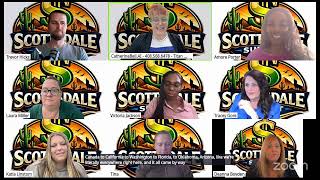
Trevor, a healthcare pro turned real-estate investor, breaks down his fix-and-flip formula: a $120k purchase plus $45k rehab and $15k costs on a $230k ARV yields $50k profit. He shows how one deal can generate seven income streams, from flipping to lending to property management, but only if you control the deal first.
Chapters
and he made changes. And guess what? He is giving us gems. If you thought you got gems yesterday, wait till today. And so we are bringing Stuart to the stage. Stuart, welcome.
Well, I'm glad to be here. Thanks for having me. And I got to tell you, one of the things that impressed me the most is— I don't know if you know this or not, but I met Catherine and Tommy on the pickleball courts. So you where you're going to meet somebody. And to tell you a cute story, so at the pickleball courts we have, um, we, we do this thing called the ladder. And so everybody just shows up and you play with a different partner and you play a game. And if you win, you go to this side, and if you lose, you go to that side. But the trick is you got to split up with your partner, so you have different people all the time. So safe it to say that Catherine and I were always on this side always being partners because we're just starting, we're just learning. But Catherine, I think we can say that we've had fun. I think that's the most important.
We're the fun ones.
What side was Tommy on?
What side was Tommy on?
He's one of the fun ones.
So I actually have a shirt that says, that says that I am your kryptonite because if I play on your team, you're definitely going to learn how to lose.
With dignity.
Okay, well, you've got—
you—
everyone's gotten a lot better, I'm safe to say. And just like he said, um, that's the F word, right? The F word stands for fun. So without further ado, thank you for the introduction, and, and most importantly, thank you for having me. I'm really— when they asked me to present, the first words out of my mouth— am I right, Catherine— was, I'd be honored to be here. And I'm honored.
And here— yeah, and here's the thing, like, Amor, thank you for doing the intro. And here's the thing I want you all to get, like, Stuart's being very humble in who he is. He is a who that knows how. And again, just a man with an extraordinarily huge heart, with a huge amount of experience and knowledge and wisdom. So you want to be making sure that you're taking notes with everything he's saying and making sure you connect. So we're going to drop the link in here so that everybody can sign up and get connected to everybody here. But seriously, pay attention. This man is like you, you want to be here for everything he has to say. So Stuart, like, I don't take it lightly that you took time out of your very busy schedule to be here and to share with everybody and teach everybody, but I'm super excited for all the things that we're doing now and going to be doing in the future. So I will stop talking and just thank you.
You're good, and you're welcome. Glad to be here. So yes, I am a pharmacist, and I just want to tell you a little bit of story on how I got here. And just so those— I'm assuming you can see my screen. I'm assuming.
Yeah, we see this Discover card.
Okay.
Are you giving out Discover cards today?
No, I need you to see my screen. I shared. Can you see my screen?
Yes, I'm seeing it. It says From Trapped to Free.
Great.
And then there's a QR code with your picture.
Thank you. Okay.
Yes, I'm seeing you.
Thank you. Okay. So the RPH stands for Registered Pharmacist. I really am. And I just wanna explain or tell my story on how I got to where I'm at today, 'cause I'm hopeful that a lot of you can relate. And it started with, and as a pharmacist, I worked for Walgreens, I had my own pharmacies, but I had my two little girls. They were, they're adults now, but this is taken when they were about 8 and 6 years old. And I went to this thing in Arizona, we call it the Renaissance Festival. Don't know if you have the Renaissance Festival where you live, but it's like the old days. They bring back the old days, and my kids love going because they get to get the henna tattoos. So we go to there, and, and we're driving back, and we had a fun day of excitement and such, and I noticed that the light up for my gas tank comes on, and I say, I got to stop and get some gas. And it was, it was just flashing, and I'm driving along, I'm thinking I can make it home, and then the flashing light turns solid. And I know what that means. And so I have to pull off, and, um, I, I go to the first gas station I can see. And I know, I know after going through my divorce and having custody of the kids that my Discover card is maxed out. It's maxed out. And so I stop, I put the Discover card in, and I'm thinking to myself, it's probably going to get declined. Do I have any cash in the car? And I remember to have $5 in my gym bag. And I'm looking at my girls, they're asleep in their car seats in the back seat, and the pump says, go ahead and fill up. So I grabbed the pump as fast as I could before Discover Card changed his mind, and I filled it up. And so to this day, as you see, I still have my Discover Card, and I have been very appreciative and very loyal to them. But here's what happened to me that day. How can I be a pharmacist making decent money and still feel trapped? Here I am at a gas station, my daughter's in the back seat, I have my cards at my limit, and I'm a healthcare professional. And that for me, honestly, was the moment that started it all. So these are the things that I kind of pondered And then I stumbled across what, what my story of how I got started in real estate. I used to think that if you had high income, that would bring you financial freedom. And I gotta tell you, in my life as a pharmacist, I met many physicians, surgeons, veterinarians, dentists, and just ordinary day-to-day people who suffered from money problems, whether they're living paycheck to paycheck. It didn't matter how much money you earned. The challenge was always there for people. Second I learned was when W-2 income stops, when you stop working, the cash flow that you bring in stops showing up as well. And so what's the third thing? And most people secretly feel this, and that is most people, especially in our generation, in our neighborhoods, they quietly live with this financial stress. And I said to myself, I'm on this journey. What does it look like? So I started with the guys I saw on television, and that was buying single-family residence homes, buying a house here, buying a house there. And that was the logical point for me to start, just buying one property at a time, scrounging up money, learning different ways to finance creatively, not having great credit, by the way. And what I learned was, I've had scattered 4 or 5 or 6 houses, I had scattered problems. And I learned that as I started to buy a duplex and a triplex, that I had more units shared the infrastructure, and I was able to professionally manage them myself. And for me, that scaling changed everything. And for me also, I learned that the shift from trading time for money to building income that works— and the joke is, while you sleep— Maybe you've heard it called mailbox money. Whatever it looks like, I've learned that it's easier than you think. In fact, let me tell you, it's easier than dealing with the State Board of Pharmacy, Big Pharma, FDA, drug companies, or how about people who have insurance and their prescription is not covered on their insurance? You want to see somebody pissed off? There you go. So I want to share with you some golden nuggets about investing, especially when it comes to what we call multifamily. And multifamily is a little different than single-family houses. It's usually if you have 4 or 5 or more, uh, doors— we call them doors— because people get upset and concerned that they're not going to be able to get financing, whether they have bad credit. Or here's one I hear all the time when I teach the classes and when I work with my clients: I ain't got no money. How can I do this if I don't have any money? Well, let me tell you, when when you go to buy a house, it's residential. And I don't know if you've ever done this before, but there's things called underwriters, and they're the ones that want to see your bank statements, your tax returns, your W-2s. They want to make sure you have seasoned funds. I like to joke, they want a blood sample, a urine sample, and a stool sample, and they crawl up your butt and they still want more information. And once you fit into their box, Okay, once you make it to there, then they go order the appraisal. Then they take a look at the property. So we look at you— underwriters look at you first, but it's different when it comes to commercial lending or multifamily lending. And that is the underwriters look at the property first. They want to see how many tenants do you have, when do their leases expire, what are their current rents. After that is done, then they'll get an appraisal, and then they look at you. So this perception that it's even harder to get financing for like a multifamily, a 5-plex, a 6-plex, whatever that looks like, it's actually false. It's easier to get because all banks want to know, and we talked about this a little bit ago, they want to know two, two things. How are you going to pay me back? And the second thing is, what happens if you don't? So going back to the residential lending side, if you lose your job, That's why they want to make sure you have enough in savings to cover till the next job opportunity that you have. But it's not like that in commercial, in resi, in, in multifamily, in fourplexes, fiveplexes, whatever that looks like to you. It's all about the property, because if something happens to you, they still have the income from the rents to pay, to pay the loan. That's gold nugget number one: financing is easier. Gold nugget number 2. I had to learn this the hard way. I had a water heater break in one of my houses, and I had to go fix it. And then about 2 or 3 months later, I had another water heater break at another one of my houses. So in a single-family portfolio, when you're just buying onesies and twosies, if the water heater fails, it's an emergency call. If you have a roof problem on more than 1 or 2 or 3 houses, you you've got 2 or 3 different roofs. If I have a vacancy in a house, I've lost 100% of my income. If I had 5 houses, I got to take care of lawn care 5 different times, and I have to have 5 different insurance policies. Unlike a multifamily, I would have one roof, one insurance policy, one management team, and that's me. I do this full-time. And, and whether you want to be on site or not, I call myself on site even though I have an office or sometimes work from home. If something happens and I need I need to be there, or if I need to show the property to a prospective tenant, I'm there. I have my own team. They could do the ceiling fan breaks, a leaky faucet, whatever that looks like. I, I'm not sporadic trying to find someone in a pinch. I have shared maintenance and shared landscaping, and with the economies of scale, it saves me time and money. So now I know if I had a fourplex or a sixplex If the water heater goes out on one, I'm probably gonna need another water heater pretty soon. Maybe I should replace all of them. And if I buy 5 water heaters instead of 1 water heater 5 times, I'm gonna get a better price from Home Depot, Lowe's, wherever that is, when I buy 5. And so not only does that save me time, saves me money. So that's gold nugget number 2. Let me share with you what I think is gold nugget number 3. You could be an active or passive investor. There's no wrong answer. An active investor was someone like myself. I was working as a pharmacist and I bought a house and I started renting that house and I bought a second one and I didn't mind doing those tasks. Sometimes they're inconvenient, yes, but that's part of the deal. And when you take a look at the monthly cash flow that I was bringing in, I was very happy with being able to manage them myself. I had more control. I knew how to allocate my time. And if you're looking to start on your own and you want to start small and start scaling, there's absolutely nothing wrong with being an active investor. You can also be a passive investor. You invest alongside experienced— they're called operators. You don't have any landlord duties. You just get your returns. And it's ideal for busy professionals, people who work full-time, work 2 jobs, 3 jobs, where they're going to invest in a project and your money works so you don't have to. So there's an expression that I learned in real estate many, many years ago, and that was there's 2 best times to invest in real estate. The first is 20 years ago. The second is today. And so what we're always looking for is we're looking for great deals. You could have a good deal, and I got to tell you, there's plenty of good deals out there, but what we're looking for are great deals. So with that said, what investing in real estate gave me, it gave me some options. I can choose how to spend my time and how to spend my life. You know, I joked that Catherine and I met on the pickleball court. I play pickleball usually Monday, Wednesdays, and Fridays from 8 to 10 here in Scottsdale. But wait, don't most people work Monday, Wednesdays, and Fridays at 8, 9, or 10 o'clock? Uh-huh, I do. I work on my forehand, I work on my backhand, and I work on my dinks. That's what I work on, and my business runs smoothly. Also, I have a lot less stress. So, you know, most folks that I come on board as clients for me, what I've learned is that a lot of folks live paycheck to paycheck. And heaven forbid, should something happen, uh, uh, uh, uh, not, not their fault, a car accident, that they got the flu and they don't work for a few days, and that paycheck is either absent or a lot shorter than you think. Now they're very stressed. Um, I'm not going to say that having access to, uh, excessive cash flow doesn't have aggravation. Everything has aggravation. But I don't have to worry about making the credit card bill, making the payments. And that's been a game changer for me. And to be very honest, it could be a game changer for you as well. It's not that hard. I explain when I work with my clients, I give the example of riding a bike. I'm not sure the last time you rode a two-wheeler bike. I don't know when, but if you learned how to ride when you were a kid, I'll bet you this. I'll bet you if you came to my office and we went out into my parking lot and I put you on a two-wheeler bike, how long is it going to take you? 5 minutes, 10 minutes before you're zipping up and down the parking lot because you have that skill. And once you learn how to do this investing, it's a skill. No one can take it away from you. There are some changes that happen. Give you an example, um, the, the color of the appliances, that may change. What type of flooring do we use? What color paint do we use? That may change. But the principles, just like the bike— maybe you rode a Schwinn or you got a different bike— that may change, but the concepts, the values, don't change. And what it really provided for me was freedom, building the life that I wanted for me and my family. I'm very fortunate. My son has blessed me with 2 grandkids, and so now I'm setting up some 529 college funds for them. And so can leave behind a legacy, can live, lead a very comfortable lifestyle, and be able to help others. And for me, helping others, I don't know if you know me or not, but I'm a big dog fan. So for me to be able to help with animal shelters and help with dogs, that's where I want to put my time and effort, and that's what I do. So here's what I want to say to you. If you ever want to explore whether multifamily investing makes sense, I'd be happy to have a conversation. And that's what it is. It's a conversation as to where you're at and what does that look like for you going forward. So with that said, again, I'm so thankful for Tommy and Catherine for inviting me. My name is Stuart Gethner. I still am a pharmacist. I'm retired and I volunteer when there's a— for the county, when there's a shortage, I'm happy to volunteer my time. But if you wanna have a conversation with me, please scan. I do something called a 30-minute momentum session where we just sit down, whether it's on Zoom or if you're here in my office, and we have a confidential conversation, a crucial confidential conversation as to where you're at now, what does that look like? And I can honestly say with someone whose Discover card was butt up against their limit, not knowing if it was even gonna allow me to buy a few hours of gas to get home, I can honestly say when we have a conversation, you are in a no judgment zone because trust me, I've been there. So with that said, I will open it up for some questions and answers if you'd like. They told me to spend a little time with that. I'll stop sharing my screen. I'll give you a chance to grab my website, give you a chance to grab my number and my email address. And if you scan the QR code, my, my awesome assistant Angela has it so that you can just enter your data and we can spend some time together. Okay.
So hey, I know we have some questions in this room because the gems you just dropped have me just rethinking lots of things. So, and really, I want to look and see who has questions for Stuart. Thank you first for like everything you shared and being willing to meet with people too. Like, that's such a gift. It's such a gift. Such a gift. So questions in the room, where do we at?
So, so I'll tell you a funny story. You know, I teach, I teach at the real estate school and I teach real estate investing, and I say— and this is, this is, is true, Victoria— I say, I'm, I'm going to open up for questions, and I, I am very comfortable with that awkward silence, but nobody asks anything. And so I'm just going to have the awkward silence till somebody asks a question. So somebody asks a question, someone's gonna ask a question. So if you're comfortable with that I'm just going to sit here and we'll let someone just blurt out, hey Stuart, what do you think of this?
I think one of—
oh, go ahead, go ahead, go ahead.
I'll ask. Um, I am very interested. You said it, you stated that you started with single families and then you ramped up to multi-units. Um, what was that time frame, that gap? Because obviously, you know, single families are, um, not worth as much as multi-family units. So I'm just wondering what that timeline was from you to come from single families to multifamily units?
So for me, that's a great question. It took years because I was working full-time as a pharmacist. And so I just started with, like I said, the houses. But if I was someone like you, if you're just getting started, I would start something that's very affordable for you. Maybe that's a townhome or a condo. And what I have a lot of folks do is wherever they're living now, if they're owning, where they're— then they'll move out of what they're owning and use that as a rental. But I'd say it took me about 6, 7, 8, 9 years because I was too busy filling prescriptions, dealing with, dealing with your insurance company. That's what I was doing. Yes.
But if you had the time, if you weren't doing that, you would have shrunk that, that timeline for about maybe 2 or 3 years.
I would have liked to have done that. Yes, I would have liked to have shrunk that timeline. But you know what? I have a, I have a business coach. And, and she would say to me, because I'd be impatient, I don't know if you can tell her, like, I want it now, like I wanted it yesterday. Um, she would say to me, Stuart, everything's perfect just the way that it is. You're here now, you're at this place, you're doing this webinar with Kathy and Tom, Tommy, wh— whatever that is, this is where you're supposed to be. So embrace where you're supposed to be. Let's put together a plan of where you want to be, and then in bite-sized pieces— and how, how do you eat an elephant? Bite-sized pieces. Then let's work toward that plan. So, you're right, I worked full-time. And by the way, I stood on my feet. And here's what we did at Walgreens. If you wanted a weekend off, you had to come in at noon on Friday, noon on Friday, work a 12 or 13-hour shift on Saturday, work a 10-hour shift on Sunday, and then work until noon on Monday. And so, talk about standing on your feet and being exhausted on the weekend. That's how you had to work in order to get the next weekend off because your partner was off that weekend. And you were filling in for him. So yes, I had countless hours standing on my feet, uh, dealing with prior offs, uh, your prescription's not covered, uh, counseling patients. I'm a certified fitter, whether it was fitting you with a knee brace, a neck brace, a back brace, an ankle brace. That's a great question. It took time. So I always say this when I teach a class or work with clients as well: get— investing in real estate, it, it is not get rich quick. So if you're looking for get rich quick, this is not the place for you. But here's what it is. It is get rich slow. If you'll put the time in and put the effort in and show up, I'll guarantee that you'll be able to create passive cash flow to replace your current income.
So, Stuart, this is Catherine. I want— there's a question I'd love to ask you is, um, and I always like to look back at this because again, hindsight's 20/20. If you had to do the whole thing over again, like, what would you do differently? If you could go back and talk to your younger self, like, what coaching would you have given him?
I was very stubborn about sticking with single families. I didn't want to do multifamily. I didn't want to be that apartment guy. I didn't want 100 units. I didn't want to go out and try to raise capital with people I didn't know, put together a fund, deal with the SEC. I was, I was very stubborn. But what I didn't know, Catherine, was that there's a place in the middle. You don't have to go out there and do the fund, which is what you do and such. You know, I'm buying 16 townhomes right now. I'm just raising some capital with family and friends. And so I was very stubborn and I would, and I would tell myself, think outside the box, think big and think outside the box.
Yeah.
So Stuart is just to give everybody an example of what we were talking about yesterday inside of having a fund. When we talked yesterday about finding really good sponsors, the who's that know how, and then our investors come into our fund, and then our fund collectively turns around and works with these sponsors and invests in those deals. Stewart is, is the sponsor. So I want like, he's the who that knows how, so that he can stay hyper-focused on doing what he's really good at. And then we've done all the vetting to make sure that, you know, investing with sponsors like Stuart, like, this is where the gold happens, and it becomes a win-win-win, and we get to leave every person, property, and community better than we found them. So I'm just— I'm— Stuart, I'm connecting the dots from, um, day one when we talked about all of this. So this is so perfect.
I appreciate that. And, and I gotta tell you, not everybody, Catherine, does what you and Tommy did— provide, you know. And I know you all know this, but all the speakers today and yesterday, not one of us are getting paid We're not selling anything. There's no pitching. This is— and this is what I love— 100% education. I hope you learn something from me. I'm sure you learned some things yesterday. I know that my assistant put the Calendly link in the chat box, so if you want to have a conversation. But who puts together stuff like this without a sales pitch? Catherine and Tommy. And that's why I was— I'm honored to be here today.
Well, and here's the thing, because you have the same heart we have inside of, like I talk about the 5 Ds, death, divorce, diagnosis, downsized from the economy, or being dumped from their jobs. Like you're of the generation where it was, you know, get a good education, get a good job, and you'll be taken care of forever. And it's a complete myth. Right. And so you going through all of that and everything that you've shared in your story, I mean, again, multiple Ds. And when you figured out, like, wait, when I have multiple streams of passive income, like all of a sudden now you have true family, true freedom for your family and more importantly, for playing pickleball with me.
Well, first of all, I enjoy you as my pickleball partner. But Catherine, I got to say, you are like spot on when you say that in previous generations, education was your path to, to, to, to financial freedom. You know, if we can have if we can have the differentiation between wealth and finances. Wealth— I have a great family, I get along with my kids, I got grandkids, I'm healthy, I have wealth. But financial freedom— Catherine, you're spot on. Going to college back in the day, got to get a college education, got to get an MBA, got to get this, and then you're set financially. Like I said when we started, when I owned pharmacies, I met many, many doctors, and those folks make made very good money, and they still had financial hardships. So yes, education the traditional way— who teaches this stuff, Catherine? You do. You don't learn how to make a budget in school. You don't learn the difference in any school, college included, between saving and investing. There's a difference. Nobody teaches that. And if you were a kid growing up, and we used to say you learn about finances at your dinner table, well, if your parents were divorced or if you were home alone because your folks were working the late shift. What was your dinner table? The television? That's, that's not a good educational way to learn. So you're spot on as far as traditional education doesn't create financial freedom. Spot on.
I want to add one more layer into this because this is the thing that school doesn't teach us, right? Your earned income, right? Your earned income is meant to buy assets that provide passive income, and then your passive income pays for your lifestyle. What we're taught is your earned income pays for your lifestyle. And then you're taught in the rat race trap, like you're stuck on the hamster wheel. And you're like, how the heck do I get out of this? Well, this is it. Like, you figured it out. I figured it out. So many people here figured it out. Again, everybody write this down. I want you to get this. This is the most important thing. Your earned income is meant to buy assets that provide passive income. Meaning whether you get out of bed or not, it's coming in. And then that passive income pays for your lifestyle. And school didn't teach us this. And there's a whole history, and I can get on my soapbox about that. But again, like this, your story is another perfect example of exactly that. Like, you went to school, got a good education. Not once did they teach you this principle, and you were stuck on the hamster wheel and in the trap. And then you figured it out and you became not stubborn and grew exponentially. And now you have this amazing legacy that you have for your family. And now I'm deeply grateful for your generosity, for coming on and sharing with everybody. And we're going to be doing more things with Stuart. So I want you all to be stayed tuned. We have a live event that's happening December. 1st, 2nd, 3rd, and 4th here in Scottsdale. So Stuart's going to be there. You guys want to come. This is like the ability to come and be surrounded with the who's that know how and get in rooms with people who are actually doing it and have, you know, who are committed to leaving every person, property, and community better than we found them so that you can have that in your life and the freedom and legacy for your family as well. Again, It's, um, I don't know, Stuart, I absolutely adore you.
Oh, you're awesome.
So many reasons, and, uh, I'm deeply grateful for you. So thank you.
Just thank you, Stuart, for being here. Thank you so much for being here and offering your time. And I think so many of us, I mean, we can take so much from that and what you shared, and that you're even offering us more time. So like, please, it anyone in the room, on Facebook, all these things, like, please reach out and sign up for time. Because I don't know about you, but like, when I began in real estate, I had Catherine Bell and I had people who could help me. But there's so many people who you're like, how do I meet the people? How do I get in the rooms with the people? Well, one, you're in this room, so you're in the room with lots of people. And then people are offering their time. And so you want to make sure that, hey, take that next step, take that next opportunity. So thank you. Let's just give it up for Stuart for being here. Thank you, everybody.
Put fire flames in the chat. Say thank you to Stuart for all the things. This is amazing. I love it. Thank you.
Thanks for having me.
Thanks so much. So, oh my goodness, that was fire. I feel like we already had— I hope your notebook is full because those golden gems that were shared can really change your legacy and change your life. And we are going to continue on with Kim Russ, who I'm like, I, I think at the end of the day, man, I'm just gonna have to have another meeting with my husband. So anyway, but Kim Russ is here. She is the co-founder of Curated Co-Living, which is a nationally recognized co-living operator that is across 3 states. And like, when I say she's doing co-living, I don't mean just a couple of properties. You know, she and her team have been recognized, um, given the 2025 fastest Expansion Award by PadSplit, which PadSplit is, is like the king of doing co-living and all of that. So for her to have that means so much. So, Kim, we just want to welcome you. Thank you for your time that you're giving today. And so, like, let's just give it up for Kim as she gets started and drops some more gems.
And here's the thing, I want to say one thing. Kim, thank you for being here, and everybody put some fire and love in the chat for her. Because here's the thing, having accomplished what she's accomplished and be recognized in this way is no small feat. This is a really big deal, you guys. So give her some love in the chat. And again, like yesterday, I want to remind everybody, even if this is something that you're like, I'm not interested, you never know how maybe in 10 years from now or 5 years or 2 years you go, wait a second, I learned this thing from this amazing woman. And I can actually apply it here, here, and here. So I want you to really lean in, take notes, and super excited about what we're going to learn from Kim. So Kim, thank you. Thank you. Thank you for being here with us.
Thank you, Catherine. I appreciate that.
Yeah.
So I'm going to go through a little bit of my journey of kind of how I've got to where I'm at right now. And I'm going to share more about the co-living model. I'm assuming we probably have some people on the call that know a little bit about it. Some that know a little bit more. So trying to put some content in here so that everybody can take away some value and just be a little bit more educated on what the co-living space is. But in terms of a larger sense and thinking about the journey into real estate investing, for me, I've been investing for about 3 years now and I always say it's, it's equal parts business acumen. You need to know what strategy you're deploying and have to obviously be educated around that. But mindset is just as important. Because obviously we always want to be on the nice, you know, sunny day, perfect road on the way and the journey to where we want to get to. But with real estate investing, as with anything, there's going to be times when you get diverted or challenges come up and the road starts to look a lot scarier, right? So that's why it's really important to also make sure you're focusing on the mindset component, because that's the part that will get you back on the more exciting, happier road as quickly as possible. And that's what will ultimately, obviously, keep you there so you don't quit because things can get challenging. But as long as you persevere, it's obviously a really great place to be. So ultimately, in terms of my background, I have a very interesting background. So my dream as a little girl was to be a dolphin trainer. So that's ultimately what I focused on, and I was lucky enough to be able to do that. So I did that right out of college for a number of years, then realized over time that that was not something I wanted to do for 20 years. I loved the animals. It was a great experience. The picture of me in the upper left was me as a paid, like, coming in to do a dolphin interaction. And then the picture just to the right is that same dolphin. Her name is Jenny, but I'm a trainer of hers at that point. So it was definitely a realization of a dream. But ultimately, again, realized, okay, that's not the right path. And ultimately now I'm in a corporate role. So I work for AbbVie, Allergan Aesthetics specifically, but I work in corporate sales. And have had a lot of success there, but definitely very different background. But even within the role I'm in now, you know, and Stuart kind of talked about some of this, but just realized it was not, you know, fulfilling everything that I wanted to. I mean, there was— there's a cap on what I can do within that W-2 role. It's also not passive income, right? I'm having to work. I'm trading my time for money. And so that's ultimately kind of what, what, you know, continued my journey from there. We can go to the next slide. Thank you. So I really started to question like, is this it? You know, I, I've again did the childhood dream that I have, had a lot of success in my corporate role, but it wasn't like truly fulfilling and I didn't have that passive component. So I would say that the search began from there. And on the next slide we'll talk or I'll show you kind of, you know, what that means. So for me it started with with reading a massive amount of books. I still love and read all the time. If I'm in the car driving anywhere, there's always something on Audible on, um, and it's business books as well as mindset and kind of everything in between. But through the course of really many years of kind of going through these different types of things, um, I realized number one, I wanted to build my own business. I wanted to create two, financial freedom, and I wanted to be able to build a legacy for my family. Like that's ultimately what I knew was available. And this is one of my favorite quotes that really speaks to that. It's that if you don't build your dreams, someone else is going to hire you to build theirs. And that's so empowering and motivating to me because I want to be the one, you know, that's building it, not building it for somebody else. So we'll talk a little bit about co-living and specifically now, you know, because I mentioned getting into real estate, I actually started in fix and flips. I still do that to a degree. But even within fix and flips, as great as those are, you're going to get a capital in Fusion when you sell that property, if you do it right, of course. Um, but then ultimately you've got to constantly look for another property, so that can be exhausting as well, right? So most flippers don't want to stay in the flipping world. I wanted to get to something that was passive, um, as quickly as possible. And ultimately we'll get into the details of that. But again, for those of you who maybe aren't familiar with this model, what is co-living and pad split? It's basically adding bedrooms to a property. So we're typically buying something 3 or 4 bedrooms, 2 or 3 baths. We're adding rooms and then we're renting by the room. The people that live in that property, in that home, share the common spaces. So they share the kitchen, they share the laundry, the backyard, that kind of thing. But they are— they do have their own individual room, right? So the benefits for the tenant, it's much more affordable. So this helps to solve the affordable housing crisis. Utilities are included, so they do not have to pay utilities. They're not paying for internet. That's all part of what we pay. There's no deposit required, so they can move in quickly. The rooms are furnished. And the nice thing about PadSplit is they do report the tenant's payments to the credit bureau. So if they have not, you know, amazing credit, it will actually help to repair their credit over, over time. So a lot of benefits for the tenants. For an investor, it maximizes your rental income. In a future slide here shortly, I'll show you kind of what that breaks down to. And actually, let me go back. Sorry, real quick. Perfect. But ultimately, that's a huge part of it, right? Is, is it's you're going to drive more revenue, you're going to have better cash flow than you would if you're renting it as a long-term rental. You also have ongoing access to the property. So it's much more difficult for massive sort of damage to happen to your property. I think we've all heard of horror stories where somebody's in a long-term rental, maybe they've been renting it for 2 years the owner is hardly ever, if ever, gets eyes on what's going on inside. That tenant moves out and they've like destroyed rooms and you've got massive repairs to, to take care of, right? Ultimately, because we maintain that property, we're having our— we have a housekeeper that cleans common areas every 2 to 3 weeks. We have eyes continually on the property, so it would be very difficult to do any, anything massive repair-wise. So we also have just Again, that goes with that consistent property upkeep. So instead of these big surprises, because we always have eyes on the property, when things are needed to be done, we take care of them, right? So we don't expect these massive, you know, bills, so to speak, to come that are unexpected. And then one of the things I love the most is it reduces your exposure to rent revenue decline, meaning that if I have a property that's 8 bedrooms now and we're renting by the room, if 1 or even 2 people move out, before, you know, that's always going to take a little bit of time to fill those. But we've still got 6 or 7 other people that are paying rent. So ultimately we're still cash flowing. We're not cash flowing as much, but it does have a really nice buffer as opposed to zero coming in. So on this next slide, we'll talk about, okay, what does that actually equate to? So on the top picture would be an example floor plan of a 4-bedroom house, right? So it starts as a 4-bedroom. We're going to typically take the dining room. Sometimes we take the living room or a portion of it. We typically convert the garage. Our properties are typically 8 bedrooms, not all of them, but typically. So on the bottom there, you're kind of seeing, um, in that picture, an example of, of adding those rooms, right? So long-term rental, again, 3 to 4 bedroom, 2 to 3 bath. If it was going to rent as a long-term rental, for most of our properties, they're in the $2,000 range. So for this example, say $2,200, that means often your cash flow is only $100 to $300 a month, if that. Honestly, there's, there's many where you can run the numbers on rentals and you're still losing every month, right? It's really hard to make the numbers work, partially right now with interest rates and, you know, other factors. But ultimately you're not cash flowing a ton. Now, the benefit you still have is appreciation over time, but just not a lot of cash flow. Whereas in the co-living model, when we rent by the room, this now rents for $6,500 per month. Now expenses go up also because we have utilities to pay for, internet, you know, landscaping, all that. But the majority of our properties, you know, are in the $2,000 per month range in terms of cash flow overall. So on this next slide, we'll talk about, okay, what does that equate to in a 5-year timeframe? So again, we look at that long-term rental. If average annual cash flow is $3,000 as an example, you're looking at $15,000 worth of cash flow in 5 years, whereas with co-living at $24,000 annually, you're looking at $120,000 over that 5-year timeframe. So that's a $105,000 difference on the same property. So it really just highlights how the strategy can really change what it produces, and ultimately what the outcome is. And we can go to the next slide. Perfect. So a little bit of my, my journey. I know Stuart was talking about multifamily. Multifamily is amazing. It's something that we were in a mentorship or a group as well. And that is a great strategy, no doubt, because of the ability to scale. And really that's what we looked at first coming off of fix and flips. We really focused on multifamily and the group that we're a part of. You know, will really have us focus on we're trying to produce a 10% cash-on-cash return on average for a property. And what we found, at least in recent years, is just difficult to make those numbers work depending on the market you're looking at. Stuart may have secrets as to how to find them, but ultimately can be difficult to find that type of return. And we started to see people within the co-living space having a ton of success. And so that's really what had us pivot to that. And ultimately, in a way, now we're not rezoning the property, but it's almost like you're taking a little a single-family property and you're turning it into a little multifamily, right? Because each room has— you're again renting by the room. They have their own passcode into their room. So we do refer to it as doors and we are ultimately producing multiple streams of income within a single-family setting. So this picture on the far right is one of our first Atlanta properties. This is an 8-bedroom. It was an investment of about $135,000 in terms of, you know, obviously we have a DSCR loan for the majority of the property, but for that final 20% that also went into repairs to renovate and add bedrooms and to update the bathrooms, to furnish the property, basically everything that we needed to do to get it pad split ready. But at this point, revenue-wise, it produces about $77,000 a year. Now again, you got to take debt service, utilities, all those things off, but still producing a cash flow of over $38,000 a year, which is a cash-on-cash return 28.5%. So this is why we love this model and why we've really focused on it and have scaled from there. And additionally, beyond that, I would say what's better than a win-win is a win-win-win. I mean, anytime you can get more people winning, it's obviously the better. And why we love this model is it's, it's great for equity partners. So we often, we bring on equity partners, not for all of our properties, but the majority of ours at this point. That person brings in that, that $125,000 to $135,000 typically. And the nice thing is that way in a passive role, that equity partner can produce or have monthly return in cash flow, right? As well as be part of the appreciation game over time and take tax depreciation. So it's a win for them in that way. It's a win for our tenants because they're getting something affordable that's also clean, safe, and typically much better than maybe other settings that they've been in. They get to live in a quiet, comfortable neighborhood. Often many of our tenants have been in apartments all their lives and just not the greatest settings. And so people, again, really appreciate being able to be in a neighborhood. And we really do set our properties up almost to look like a short-term rental. It's on a budget price. We've got to, you know, keep that budget friendly in terms of how we furnish it in order for the numbers to work. But still, they, they really have a great experience. And we love getting messages from people about how much they love the property. This is one of ours early on who just, you know, Emmanuel, who was talking about how much he loved the home. He'd actually been to multiple pad splits. We try to make ours a more elevated version so ours fill more quickly. But again, those are the responses that just fill your heart on a different level beyond just the financial part of it, right? And then it's a win for us in our business because by bringing, you know, equity partners and bringing tenants in and everything, ultimately we're able to scale our business as well. So it's it truly is a win for everybody involved, which is amazing. So, and this is another really great quote by Zig Ziglar that I love. He says, you can have everything you want in life if you will just help enough other people get what they want. At the end of the day, you, if you bring yourself back to this, um, and, you know, guide what you're doing business-wise, no matter what avenue or path within real estate you choose, or any other path for that matter, that will always steer you right at the end of the day. So in terms of our specific experience, so I live in California, my husband and I do. Our business partners live in Honolulu, but all of our properties, we have technically 18 now. We did have 17 but recently converted another one. And so we have properties in San Antonio, Texas, Atlanta, Georgia, and Phoenix, Arizona. These are all great, you know, markets. And while you can do co-living in California, Obviously there's drawbacks to doing in California because it's a very tenant-friendly state in front of a landlord-friendly state. You also have cost of acquisition and all that. So that's ultimately why we went to these other areas. But the other reason I wanted to highlight this is just you don't need to invest where you live. You can do things remotely. You just have to have a proper team set up in those local markets so that they can handle the things that you need to in those areas. So That was a mindset shift for us that actually the multifamily group that we're a part of really opened our eyes to, because before that I thought, well, we have to live wherever we're going to do a certain strategy. So if you happen to be in a market, whether it's for co-living or any other strategy that maybe doesn't work as well, just know the whole country technically is available to you. So just, just keep that in mind. And I think on the next slide, this shows our very— our first year. So this is like First property, we technically had a property online in December, but this is from the PadSplit dashboard. So when you're a host, when you log in, it will kind of show you your, um, how you're doing. So this is the first 3 quarters of last year. It, this, um, updates automatically. And so at the end of the year, I didn't think to take a screenshot before they changed to 2026. So I don't have that, but I'll show you the, the first part of, uh, this year. Um, but ultimately this just shows the amount of scalability that there is and what you can truly drive revenue-wise. So on the next slide, we'll show just more recent. So this is like year to date. So if you look at January, February up until May, obviously we're partially through May and I think I took this screenshot a week or so ago, week and a half. But March was our highest income or revenue month yet at $86,000 for the month. So we crossed over half a million in our first year and we are on track and expect to cross a million dollars in revenue by the end of 2026, which is, um, yeah, we're super happy about and very appreciative of the, the journey that we're on. And so again, this is not meant to like tout anything. The, the reason I'm sharing this is to show you what's possible and what's available, and also know that it depends on what your focus is. I mean, 17 and 18 properties is not maybe what everybody wants, and that's fine. You can do amazing things at 2, 3, and 4, right? So Everybody's different depending on what your goals are and what you're, you're looking to produce. So, um, all right, so let's talk a little bit about— and I want to be cognizant of time here— but what does this actually look like? This is one of our properties. I think this is our maybe 5th property or so. This was in, in Texas. This is the actual floor plan. So this was a, a 4-bedroom, uh, 2-bath initially. And you'll see ultimately— I don't know if you can see, you probably can't see my cursor, but Um, ultimately we added 3 bedrooms, so 2 into the garage on the right and then 1 there at the bottom. That was the dining room. And then in the middle there, you're going to see in red bathroom, that is a, a third bathroom that we added. You want to have— make sure that there's no more than 4 people sharing 1 shared bathroom. The primary bedroom here has their own private bath, so that one rents for a little bit more than for those that are sharing the property. But ultimately this was a about 1,500 square foot property. Ultimately, we convert the garage. So it was just under 2,000. And this is now a 7-bedroom, 3-bathroom. So that's ultimately kind of a view of the floor plan and what we did in terms of renovations. And also know the bathroom there, if you look strategically, right on the other side of that bathroom is an existing bathroom. So that's part of what we look, look at with floor plans. We're looking for properties that have a very intentional floor plan that, number one, it's going to make it very easy to convert bedrooms. And number 2, it's going to be easy if we need to add a bathroom. It's going to be in a way that's the least expensive possible. And again, when you've got plumbing and everything right there on the other side of the wall, that helps a ton. So as we continue here, this is that same property. So this is before picture. So we typically buy off MLS. We do— we have done wholesale properties as well, but you typically have a lot more renovation. What we like about buying off MLS the less is we're buying stuff for the, for the most part is turnkey. We mainly just have to do small cosmetic updates, and then we need to add bedrooms. So on the, the picture on the left there, if you look where that dining table is, that is going to become a bedroom. And then if you look behind the couch, you'll see kind of like a black— I don't know if it's like a bookcase or something there. Um, we put the bathroom right there. So where you saw that on the floor plan, that's where we add the bathroom. So let's go to the next picture and I'll show you what it looks like now. So this is the same property. So on the left there, that bedroom right there, that used to be the dining room, right? And then to the left, you'll see that's now enclosed. That's because that's a shared bathroom that we added. And you can see that we still make sure there's a nice flow to the property, that there— we don't want them to be choppy and broken up. We still want it to have, again, a nice flow and aesthetic. We painted the house white, updated the kitchen just to lighten it and brighten it up. And then we'll go to the next one. So we have this and one more few just before and afters because it's fun to see what the renovation actually looks like. There's another property in Texas. This is actually our second one. Um, these are again the before pictures. We obviously updated the kitchen, changed the paint colors. Um, if we go back to that before picture real quick, sorry, I just want to show you. So if you look at the picture on the right, you'll see the front door, the front room there, and the room that's closest in the picture. Um, that's ultimately the living room and kind of dining room. In this next picture, we converted both of those into rooms. So now there's a hallway there, but it still flows nice from the front door. And we've added 2 bedrooms there. We also— in this property, you can't see it in the photo, but we converted the garage as well. And so this is an 8-bedroom property now. And then on this next one, this is another example of a property where, you know, the kitchen's in decent condition. It obviously doesn't look amazing, but it's, it's decently updated. And so this is what we look for because now we can do small tweaks that don't cost a lot but make it look a lot better. Like I said before, we're trying to almost create a short-term rental look on a budget price. So in this next picture, before you go there— oh, there you go, it's fine. Ultimately, all we did, the only difference between this before picture and the after is we added backsplash all the way up to the ceiling to give it color. And we changed out that window. The window is really old. It was a single pane, so we changed it to a double pane. So go ahead and go back to that after picture. but you can see that's a very inexpensive way to give this kitchen a completely different look with us doing very, very little. And when we're renting on PadSplit, people similar to if you're booking an Airbnb, people are choosing on photos. So how your pic, your property comes across in photos is incredibly important. So that just gives you an idea of kind of some of the potential. And then we can kind of go to the next one from here. So obviously what I've showed you so far is what the common spaces look like, the kitchen and living room areas. This is an example of room. Some of these rooms are in Texas, some of these rooms are in Atlanta, uh, but ultimately we're just trying to create an inviting room that somebody is going to obviously see the picture and say, yes, I want to live there. That's clean, inviting, um, all of those types of things. Um, but we're able to do that on a budget price. We know the types of furniture to purchase at this point so we can keep it in the budget we want, but still make it look elevated. And just sharing some sort of, um, best practices around co-living. If this is a model that you're interested in when it comes to underwriting and analyzing the deal and the numbers to determine, does this work? I always recommend underwriting separately with either a partner. If you've got a partner who's doing the project with you, or maybe somebody else in the real estate space and you're kind of doing that for each other. But my point is, ultimately, humans make mistakes. You can have a calculator, you can have your own numbers you're running, but if you accidentally type in the wrong number, it can completely change it, right? So the point is just make sure that you do that because our business partners, the ones that I mentioned that are in Hawaii, um, because we work so closely together, when we're analyzing a property, uh, we analyze the property, they analyze the property, then we come together and look, are they off or do they match up? It's a great checks and balance. Or the other way, if maybe you don't have a partner, is just making sure you're doing that with yourself. So you're underwriting the property once, then you're literally starting fresh, whether it's with spreadsheet or calculator or whatever you're using, do it again. Because ultimately my point is you just want to flush out any human mistakes and errors because I have seen that happen and you certainly want to avoid that. In terms of deal flow, this is one of the things that, that bottlenecks people the most when they're trying to grow and scale. And I mentioned most of our properties are off MLS. So my recommendation is never rely solely on your real estate agent to bring you more properties. As motivated as they can seem, what I have seen is they just don't bring you that many. They bring you a couple. So ultimately you want to make sure you're really proactively going after those properties. I am able to search and do a lot of analysis just from MLS pictures online. I then will send my agent, hey, here's 5 or 6 that I think I can turn this into a 7 or 8. Can you go by, view the property, send me videos, send me pictures, analyze the floor plan? There's sort of the second phase. If when they go in, they see that, yes, you know, it looks like we can do what we want to do, then we kind of continue on from there. But that allows us to have consistent deal flow. And then in terms of construction and constructing those inner walls, especially for rooms that are near the kitchen, that's the area that has the most noise in the property. So we will make our walls even more reinforced. So instead of doing, you know, 2x4s, we're doing 2x6s, we're doing added insulation. Ultimately, there's still going to be noise to that room, and that's the room that typically turns over the most. But it's a great way to help insulate it at least as much as you possibly can. So just some things to keep in mind if this is something that you're interested in pursuing. And I always say that, you know, tough climates are a gift. We are in a tough climate with real estate right now for a whole host of reasons, right? People are really pressed in terms of the returns and just a lot of variables. But I always say that again, it, it truly is a gift because if you really hone your skills and sharpen your ability to analyze whether it's co-living or multifamily or whatever route you decide to go, ultimately we know that market is cyclical, right? So we're going to go from a tough market ultimately to an amazing market. Like I think back to, I was not in real estate in 2008. I wish that I was because I would have taken advantage, right, of the opportunity. And same thing with COVID there was huge opportunities. And so I wasn't really in the game at that point, but that, that cycle will return. And ultimately, when it does, for those who've really sharpened their skills, you are going to absolutely be able to capitalize on that. So just keep that in mind, um, that this is the training ground to really, really be able to capitalize and maximize on that in the future. So, um, and then as we wrap up, just, you know, any, any questions or anything that anyone has for me, I'm happy to, to answer.
Yeah, and I know Kim has to leave, um, but want to definitely drop a couple of questions. And we already have questions about, like, finishing— like, how do you find local people you need to help you do this work when you're investing, you know, in different states that you don't live in? Yep.
Yeah, so I mean, the two most critical components of your team is number one, your general contractor, and number two, your real estate agent. So those are really the two anchors that you need. So you do need to spend some front-end work and time making sure you are finding the right people. But once you have that, everything else is relatively easy to find. It's not difficult to find somebody for maintenance teams, right? It's not difficult to find a housekeeper, landscaper. So the GC and the real estate agent are your, your anchor. So, you know, it's a matter of what you find through networking and referrals. Obviously, I think in the real estate investing world, we're typically all very connected. So we can reach out to people right across the country and find the right fit. Um, because ultimately you need that real estate agent that's helping you screen properties on the front end, and then you need a contractor that's able to get in there so at the moment you close, you're able to start renovations immediately. And then of course, on your very first one, especially on all the properties, but the first one is where you're really going to see, okay, what is that renovation going to cost? Um, and so you can find the right investor-friendly contractor who's able to do the, the, uh, renovations on the right budget. But very doable. Again, we've done it in 3 markets, so it's, it's absolutely available and accessible.
And Katya was just asking too, like, are there any obstacles when you're adding bedrooms and all of that? Like, what are the obstacles? Are there like permitting things, stuff like that, when something is a specific size house? Like, how do you handle that?
Yeah, no, it's a great question. Yeah, so there's a lot that we do on the front end in terms of how we identify the property. So first, in terms of the area we're looking, we're typically looking for neighborhoods that are considered like a B-, B-, C+, right? So Type A neighborhoods or Class A, number one, they're going to be priced out. They'd be too high to acquire. But even if you got some incredible deal on a whole, you know, wholesale or something, you still would not be in a neighborhood where they would probably be very friendly to this, right? So we are going intentionally to neighborhoods where this is not going to be a problem, right? So if we go through ours, we have homes that, you know, you drive through the neighborhood and some of the homes look great, people have pride of homeownership, but you also see a, a neighborhood that has, you know, incredibly tall grass and somebody's got a car on blocks occasionally, right? So it's a, it's again a B-, C+ neighborhood, so we're not raising any red flags. Um, the other thing is on the front end, no HOAs ever. So we're never doing it in HOA. There's plenty that aren't, so you don't need to. We're also looking for pro— for proper parking. So we need at least spots for 2 in the driveway and additional on the street. Know that on average for PadSplit, which is national and is in a lot of different states at this point, but in an 8-person home, typically 4.8 individuals have cars. Many times they are taking public transportation, so that's another factor. But just know there's not as many cars as you would And again, we're looking for neighborhoods where there's a lot of other cars parking on the street anyways. And so most of the time, I mean, very few, I think maybe one of our properties, the neighbors are aware that it's a pad split. Every other one, they just blend in there, you know? And so we're not rezoning, it's still a single-family home. We do pull permits sometimes if we're doing, you know, adding a bathroom, something major. But if we're just putting up walls, we're not doing permits. But that's a risk mitigation. Everybody has a different comfort level. So depending on the co-living operator, operator you talk to, you're going to hear different things.
All right, well, thank you, Kim. I know you said you had to run, and we want to make sure, like, just to value your time. And yes, we need fire emojis in the chat, like, thank you, thank you, thank you. We learned so much. And for some people, it might have been like, I never even thought about co-living, what is that? And so you broke that down in such a clear way. Thank you, thank you, thank you, thank you. Thank you. Is there a way to contact you or anything like that? What's your—
the—
yeah, you can—
yeah, my Instagram handle is @colivingkim, um, and then I'm also— my personal one is @kim.russ, um, and then our website is curatedcoliving.com, so we have more information there. We do coaching around this because we didn't set out intending to coach, quite honestly. It was just to build real estate, but people started coming to us more and more. So for those who want like the A to A to Z component, that's something that we teach also. So happy to answer questions. You can DM me or email me anything like that.
I love that. Thank you. Thank you for coming and doing this. And everybody, make sure that you get registered and you sign up in the networking group because then that connects all of us and helps everybody stay connected. So we want to make sure, Kim, you have all your— everybody's contact information is completely filled out in each profile. So we can fully get connected to all your social medias and all of that. So thank you. This is awesome. Thank you. Thank you. Thank you for having me. Absolutely. And I just want to add in a couple more things because of what she's doing is so powerful. Yesterday we talked about AI and all the brilliant things that we can use with AI to collapse timelines and add more commas to bank accounts. And we have the Deal Hunter GPT that we created and the free estimates ChatGPT, the free estimates is brilliant inside of being able to put in an address and literally take pictures of like the befores of what's needed. And it literally will, in that zip code, tell you exactly how much it's going to cost to be able to renovate each one of the rooms. So again, another thing that helps collapse timelines. And if you're getting multiple bids from different contractors, It helps keep them honest. So we always do the numbers, the numbers tell us what to do, which is super, super important. So again, absolutely love what you're doing, Kim. And as for Deal Hunter, the Deal Hunter will actually help you find properties that are, that qualify for this PadSplit model. So that's a whole other thing. So if you want to learn more about that, please join us 9:00 AM every morning. At landsharkmastermind.com/webinar. And you can come there and see how we use AI to be able to literally collapse these timelines and be able to do all these magnificent things with creating passive streams of income. So very, very exciting. Okay, so where are we at? We are—
You are going to tell us about streams that make impact. Because I think we talked about this, this whole time, like, none of us are in this just like, oh, you know, I just want to make all this wealth and keep it to myself. Like, all of us have a heart for how are we going to make impact. So you're going to help us think through investing for impact. I'm so excited to hear this part.
Absolutely. So this is a conversation that I'm really passionate about. So for those of you who don't know, haven't heard my story, where this comes from is, um, in, um, 2018, um, after being together for 20 years, my husband died very tragically, leaving me a widow and a single mom with 14-year-old twins. And, um, at that time, I mean, we were literally emotionally devastated, but I had created 13 streams of passive income for my family. And it let me take a year off and grieve. And it was during that time of reflecting and processing through all of that intense grief that I got clear that chasing money wasn't the answer, making a difference was. And so from that point forward, I was crystal clear. Anything, any project that we had anything to do with, that we were going to leave every person, property, and community better than we found them and make an impact. So I truly believe that we can do good and do well at the same time? And if we can, we must. Does it take a little more effort? Does it take a little more thought? Absolutely it does. But is it worth it? Yes. So, one of the things that we get clear on, we hear this all the time, is, you know, begin with the end of them in, in mind and know what your why is, right? So, when you understand what your why is, if you don't know what your why is, here's another book, write this down, Yes, I'm giving you all homework. So, not like you don't have enough books to read, but you will by the end of this. Starting with Why by Simon Sinek. When I read that book and got, I literally remember where I was sitting, like all that entire moment when I got crystal clear what my why was, and all of a sudden everything became clear. And another piece of understanding what your why is It's understanding that usually it's that like, I call it the niggly. Yes, it's a word. It's a Catherine word. The niggly in the back of your mind that you're asking like, why isn't somebody doing something about that? Right? The that is because it's you. So for me, it was all about the children with foster care. So Victoria, you do have slides for me?
Yeah, she's pulling them up. Okay.
So we're gonna— we're— I'm gonna zoom through this quicker just because I want to keep us on track with our schedule. And then, you know, we can circle back around, but it'll be here in just a minute. So deeply grateful for our entire team for making this happen. So legacy. Okay. Yep, this is the one. Start. Perfect. Um, do you want to just go back 2 slides? Victoria, able to go back? I don't think it's letting her. I can pull it up and do it on mine. Oh, present. Here we go.
If you like to speak it, Catherine, you can.
Yeah, no worries. I'm pulling it up right now. Sorry, guys. This is the fun of doing live events. Tommy say that that was brilliant.
No, maybe.
What, this one?
Yeah.
And is it— no, no, it's not that one. It's the— this one, a rocket ship. This one. Okay, here we go.
I got it.
Hit the play button.
Hit the play button. Yes, but I have to share my screen first because I can't share.
Sorry guys, I was frozen.
Um, it's all good.
It's back up if you need it.
Okay. Okay, y'all see my screen?
Yep, you got it.
So, um, Chosen Forever happens to be one of my nonprofits, and again, it's all about building wealth that actually outlives me and my family. And everything that we're doing. So we are building systems and funds and income that are, again, beyond, like, the right now and what we're doing now, but we're building them out strategically so that they actually last and make that impact that they're here to make. So again, it takes more thought about putting all this together, but the long-term impact absolutely makes a huge difference. So that's the thing I'm like super excited to take, you know, for to teach everybody and understanding that, you know, there's being rich and then there's being wealthy, right? And wealth is more than money. It literally requires you to think through your whole legacy of how you're not only how you're earning it and how you're spending, but how you're protecting it and then how you're continuing to grow it and have it make a difference into the future. And so, um, understanding that again, your— what I shared earlier when we were talking with Stuart is that your earned income is meant to buy assets that provide passive income. Your passive income pays for your lifestyle. So we create those 7 streams of passive income that gives you the security, the freedom for your family. But now when you go on to create passive income streams, number 8, 9, 10, 12, 40, however many, those now can be allocated, say, to, um, go build an orphanage overseas or a school overseas or fund a missionary or fund a nonprofit or start a nonprofit, whatever that is for you, being able to allocate that to go make a difference. I know there's several people in here who already have done that and are working on that. So in the chat, I'd love to hear from you, like, what are the things that have you make your heart sing and the difference that you feel that you're called here to make. I want this to be interactive. You keep hitting me. Yeah, I'm trying to— So rooted in real-world transformation. So again, there's your building phase, which I went through and then life happened. I lost my husband back in 2009. We literally lost our entire portfolio because we weren't diversified into different asset classes. But again, rebuilding it back, only rebuilding it in a way that was way smarter and stronger so that we could actually make that difference that we were here to make. And using those painful events and experiences to be able to build forward and go, wait a second, like, maybe again, I always say, get the no with a happy heart because God's got a bigger yes. And so the bigger yes, I really feel like, is building this out way smarter so that we really are making the difference that, you know, God called us here to make. So it's not about accumulation. It really is about transformation.
Catherine, I would actually—
and I was wondering if they would share what they would do with the impact if they resources for that. Does that work? Um, let's get to the end. Yeah, let's get through. Let's— so if we had more time— so I'm trying to skip through this so we will make time at the end. Yes, because I want to hear that too. So Chosen Forever is, um, both a mindset and tangible commitment to long-term impact. So again, it comes down to like the mindset. You have to understand and shift your mindset into understanding that your wealth is— has responsibility that comes with it, right? But, and you need to understand that we are simply the stewards of the resources that are being gifted to us through all the things that we're building. And when you understand that, that like you really are the steward to this, now what is your responsibility to actually take this and make an impact and grow it, right? And then the meaning behind it, I mean, that is really what gets me up every single day. And I promise you, when you're building something way bigger than you, all of a sudden it's like, okay, on those tough, hard days, that pulls me out. Like, 120,000 adoptable children in the US foster care system are counting on me to get my butt out of bed and to realize that life isn't about me. It really is about making a difference. Like, that's what pulls me forward every day when I don't feel like it and I'd rather just go back to bed. So, um, the understanding that accumulation is short-term, right? But the reality is, is that contribution, that is where true joy comes from. Where are you being a contribution in your life, your family, your community? Like, I really want you to look at that. And where can you come together as a family and contribute together? Because there's something very powerful in that. And Tommy has taught us that again, men bond through vasopressin bonding. And what that means is that when we come together and we solve problems together with them, like as husbands, as fathers, like all of that, there's this really powerful bond. And I know like Laura and I, a bunch of us have all volunteered together and we create that volunteer and contribute contribution together. The bond inside of our family and communities and friendships goes beyond anything you could even put words to. It's so extraordinary. So I want you to look at where are you being that contribution and being the one to make that and create that for you, your family, your community, everybody moving forward. So this is bigger than you. This is the call to action that's way bigger than you. So the critical distinction of success versus legacy, right? Like, yes, we know what success is. We see it on TV, we hear it on movies, books, all of that. But legacy— here's the true piece that I want you all to like start leaning into and think more about that. Rather than, you know, being successful, what if you're actually building a legacy that benefits generations for decades to come? And understanding that you, you're the one who's responsible. The fact that you're here on this webinar with us today tells me something magnificent about you. It's you. You're the one who's being called. Nobody else is coming to solve the problem. It's you. So first of all, thank you on behalf of your families and future generations in your communities for being that one and choosing to be the driver that is responsible for making that impact. Now we just need to put it into action and add more commas. So the true engine is really getting clear. You know, what is it that— there's something that tugs at your heart, you know, and inside of you that you're probably not talking about. And this is a safe space for you to start opening up and start talking about it, right? And understanding that love and responsibility like for what it is that you're creating beyond yourself. This is where true fulfillment comes from. And what is it? Maslow's hierarchy of needs. He talks about, like, at the top, at the end of the day, it comes down to contribution. Like, that is where our greatest, greatest need actually gets fulfilled, is being a contributor. So in pulling it all together, we're redefining wealth as an active, actual active tool, right? So the purpose vehicle— this is why we're showing you how to build everything that you're building. Yes, I want you to be— have your, your portfolio be diversified in all the different asset classes so that you can be, you know, creating all these passive income streams and adding multiple commas to your bank account. And it all leads to this. It's all about all the effort and capital that you have coming into the machine, the vehicle, And now we're targeting it for the impact that you want to make, the durable sustainability, and then of course, generational momentum. So now taking this and now teaching our kids and future generations. That's why I'm deeply grateful for like Katya and Blake. Again, you know, I hate to call you king, these young adults who are like 21, literally getting this now. Think if we all got this at 21. This would be huge. So building with absolute intention, like it's all about intentionality. And that's what we're here to help you with. So this is one of the reasons why we have the investor survey, why we have the accountability calls every single morning at 9 AM. Literally, it's about taking that strategy, aligning it, being proactive, and having unwavering consistency. Again and again and again. That's the only way that I know that I've been able to build what I built. Everybody who has built anything, everybody here, they all have extraordinary stories. But it's again that grit, determination, perseverance. That's what gets the job done. So I want you to like hopefully be encouraged inside of, yeah, things get hard and hard This is where it grows strong people. So you have an extraordinary opportunity here. So the generational ripple, this is the thing that gets me excited, you know, and especially with AI. Like one of the things is I have my clone, CatherineBell.AI, and everybody can go talk to her. But literally that has been put inside of my family trust and my future, like great-great-great-great-great-grandchildren will be able to have conversations with her a version of me and be able to glean all the wisdom and knowledge and experience moving forward. So not only like having that, but also building out the legacy and then being able to hear my own words, why we built all of this out and the call to action that I'm calling them for. Because I know that there will be future generations that, that will absolutely like resonate with them and they're going to carry it forward. So me continuing to to teach that is super, super important. So the purpose layer of our Titan-In ecosystem— again, we're building the band, um, because it takes a whole lot of whos that know how and all the things. And to be clear, I know I'm not the person who— like, I'm not the who that knows all the hows. I'm the who's that, that knows a few of the hows. But on our team, we have all the whos that knows how. And so we've got You know, Titan 23, we talked about yesterday for you to understand when you're investing in a fund, the purpose of the fund is be able literally to find the sponsors, vet the deals, do all of that so that your money is protected and continues to grow. Then that's the who that knows how to do that, right? Then there's the Land Shark Mastermind. The Land Shark Mastermind is all about, okay, I want to learn how to find the deals, underwrite the deals, analyze the deals, again, the whos that know how, but again, teaching you and holding your hand through the entire process. Then there's, you know, Wealth Wise Women. It's Wealth Wise Families—husbands, wives, kids, everybody. Again, the whos that know how to build the 7 streams of passive income so that you literally are protecting your family and then go on and build income streams beyond that to go make a difference in the world. And then of course, now there's the last part, which is the Opportunity Zone, the OZ Wizard. And this is all about when you have those capital gains events, because you will with your real estate, to now put it into projects that you are— your— it's being your assets, your capital gains are being protected, they're not being taxed. You literally get to continue to grow passive income streams with them. And continuing to build more legacy. So again, we have like all the different ways for you to simply plug in and literally work with the whos that know how to build out your family's legacy and understand that your, you know, what the purpose of whatever your why is for you. So the foundation of everything is literally like You have to build it one brick at a time, right? And again, it's one baby step at a time. And it's the— to me, it's the story of the, the Tortoise and the Hare. So in The Tortoise and the Hare, it's like it wasn't the hare that won the race, it was the tortoise. Because the tortoise wanted to go fast, right? And he went fast, he got tired and he fell asleep. And but the tortoise, just one teeny tiny little baby step at a time, and he won the race. And that's what this is about. Like, I want you to get crystal clear. Everything that I have built, that everybody here has built, did not happen overnight, guaranteed. Like, this is 20 years, 20 years of taking a bazillion baby steps and putting one step in front of the other, one brick in front of the, you know, on top of the other, and continuing to build stronger and stronger and stronger. And you can too. But you need to start today. So, um, understanding that, you know, purpose is literally— it's all about creating. Yes, you need to create wealth, but create— think about long-term legacy. That's the thing I invite you to consider looking at, and that you need to be intentional about how you're structuring it, which again has the whos that know how to make sure all of it's structured properly and you know, connected. So how much time do I have? I got 2 minutes. Okay. So I wanted to share more about my nonprofit, but we'll come back to that. Moving forward, we're going to be talking about the OZ Wizard Tax Strategies and Wealth Building tomorrow. So you want to be here for that with Roman. He's one of only 72 people in the country that is Opportunity Zone certified as an expert. So you want to be here for that. He happens to be one of my business partners, so super proud about that. And then of course, IRA and traditional capital gains. So to understand the difference between how the tax structure was before and how they have flipped it into Opportunity Zones to have way more benefits for you as investors, because we know that over the next several years they're projecting that 9 $17 trillion, with a T, trillion dollars is going to be transferred into the next generation. And your family, you have no idea, you know, wherever your family is at, you want to be making sure that you are protecting that, especially in, you know, uncertain economic times. And all economies are cyclical. So make sure that you're protecting that. So, um, if you are interested in a blueprint, uh, we are going to be giving you that tomorrow. So you want to make sure that you stay for that. Make sure that you're saving the dates for the live Scottsdale Summit. It's December 1st, 2nd, 3rd, and 4th, and we're going to be sending details out about that here soon, which I'm very excited about. And again, this is about surrounding yourself with the whos that know how. If there's anything that I've learned surrounding myself with, again, good people doing good things and adding commas and building legacy, this is how I have learned to be able to do this because I promise you, this was not the world that I came from. You can hear my story. You go to meetcatherinebell.com, there's a video there. You can watch that. The point being is that I was not born with a silver spoon in my mouth. I have literally built everything one baby step at a time, one brick by brick at a time, and I know that if I can do it, you can too. So very excited to have you all here. I saw we had some comments, and I know that we have our next speaker, or is this a break? Nope, we've got our next.
So we have another speaker, but let's just take a couple of minutes to just answer the question. No, you did. And so let's just take a few minutes to do that, and/or like a takeaway from the morning, because we talked about so many different things, and I think each person talked about impact in some way, which was amazing. And so let's just give ourselves a moment. Like, what's one takeaway you have, or a question that you have right now that's coming up for you, as we have heard.
We're watching.
Yeah, yes, yes, Joy, Joy is watching. So I'm sure Joy could put a little something in the chat. Let's see, she might also be driving while she's listening, but if you can, Joy, love to hear a takeaway. And anyone else that's, uh, here as well please, please, please share. Uh, any thoughts? So what's the takeaway? Cathy, I did hear you jumping off, so go ahead.
I have a takeaway, but I don't know if my computer— or can you guys hear me from there?
No, if you turn— you were fine when you turned yours off, we could hear you better.
Okay, can you guys hear me now? Yeah, perfect. Okay, so what my biggest takeaway so far is that in order to do good for other people and impact, you have to do good for yourself. Because if you're not secure financially, emotionally, mentally, then you, you don't have the capacity to give to others. So a lot of times I hear like, oh, it's very selfish, uh, very self-centered to take care of yourself, but actually it's very beneficial to yourself and to so many other people. Because you cannot impact without being a stable person yourself. So that's very important in my opinion. Yeah, well, it is the responsible thing to do. Like, that's the piece to understand. Like, you have to put your oxygen mask on first before you can help anybody else. So yeah, Deanna was like moving her hands. Yes. Now she takes a lot of flights, which leads into this. Again, super happy for all of you who may or may not know, I am Canadian, very proud, and American. I have dual citizenship. And I'm super excited for this next woman. I know, Amor, you're going to introduce her, but she's a fellow Canadian doing amazing things. We love her. All these Canadians. Woo-hoo! Oh, Amor, go ahead. And I know I'm like taking over, but— No, hey!
You don't have to apologize whatsoever. Um, Deanna, I mean, even on the slide, like, she just really encompasses like beauty and grace and luxury, which she'll be talking to us about. Um, she is a lifestyle, uh, investor, and she wanted to make sure that like everything was perfect and together to really pour into us. And learn how we can also have the opportunity to invest, um, in luxury buildings and all of that. And she's been doing this for a long time. Like, this has been her and her husband's, um, experience, and it has allowed them to travel and enjoy life and some of the things that Stuart was kind of sharing with us earlier. So we're so excited, and I love that she has how to get contact with her already on the screen. So please, please, please make sure you contact and reach out, um, to her. And she talks to us about the F words, and I don't know what those— oh my goodness, what F words is she gonna share with us? But we can trust, we can trust, she's— it's gonna be all great. Deanna, tell us a little bit.
Oh, I am so happy to be here, so grateful to be here. Um, you know, I I had the amazing blessing of meeting Catherine years ago, and she has spoken to my community. I'm thrilled to be here. I'm actually doing some work in Scottsdale, and that one of the most exciting things is, is getting to see Catherine. Um, so my husband and I have been, been investing for close to 30 years, and we've been investing across 3 countries. Through multiple market cycles. And so I think it's really important. I see someone like Katya here learning and absorbing, and she's really picking up the nuggets. As you go along your journey, you will pick up nuggets from people. And so, you know, I think that Kim said it, you know, we don't share numbers and things to brag. We share them because, like Catherine, I grew up in a small town, not from a wealthy family, but I've been able to create a lifestyle of my own design and go live it. And as a young girl, I didn't see many role models. I mean, I lived in a tiny town. There weren't really business women. There were some strong ranching women that I saw. That was sort of my role models. And then I saw on television the beauty of Southern California. And I said to myself, oh, I would love to live there amongst the palm trees and drive a little convertible. And so I started making decisions. But here's what happens when your why is that strong, when you know every single detail, when you are crystal freaking clear on what it is you want, what that North Star is. They're not decisions. It is simply Will this get me there? Yes, I'm going to do it. Does it not get me there? Well, I'm gonna think twice about it. So that is why when you hear someone like Catherine mentioning know your why, when you get beat over the head with it with a little champagne bottle by me, know your why. Write it down. Make sure that you understand exactly why you are getting up in the morning. Know exactly what you want your days to look like. And ladies, your life will change. The lives of others around you will change. The ripples will grow, and you'll get up— you'll be able to get up on stages around the world with a pink background and some pink sequins on, and people will listen. And that is what I want for you. Yes, I want you to go make money to take care of yourselves. But I want you to use your choices and voices to create the lifestyle of your own design with the portfolio to support it. So if we can just go back one slide quickly, I wanted to show you up in the corner. You may think that's my vision board, and a few years ago it may have been. That is now my lifestyle board. So homework time. Catherine has started a great tradition here. If you don't have a vision board, I don't care how you create it—magazines, whatever it is. But this is my life right now. So, you know, hanging out under the palm trees with my incredible husband. That's us in the Canadian Rockies. Love the little people and supporting them however I can. We travel as much as we can. The champagne glasses, um, for those of you who are experienced investors, that is a champagne toast to walking away from a multifamily portfolio that we wrote a check for tens of thousands of dollars to walk away from. And that was a boss move. So cheersing not just the wins, but the wins that come in different packages. Helping women, teaching and educating This is my husband and I. You're gonna laugh at this. We are in Florida, and don't I look like I'm on a ski hill? We're watching baseball. It was 50 degrees for spring training in Florida this year. Okay? But this was a huge dream. This was one of the last promises I made my mom. My mom died at 47. Her mom died at 47. Her sister was diagnosed with cancer. With breast cancer at 47. Her sister's daughter, my beloved cousin, died months before her 40th birthday. You don't have time to waste, ladies. I lived with an expiry date, and it allowed me to say, I've got to go do it. And so I did it. And then at the bottom is the, uh, luxury homes that we're building that I'm so excited to tell you about in the Scottsdale, Paradise Valley, Gilbert areas. Okay, now we can go to the next slide because I want to tell you, if you haven't already figured out, where's my Mel Robbins fans? Put something in the chat there. Any Mel Robbins? Yes. 1, 2, 3, 4, 5, 5, 4, 3, 2, 1. Yes. Love it. Where's my Beth Dutton girls at? Who doesn't love a little Beth Dutton? And I, you know, I have a pair of socks that say One says, I love Jesus, and the other says, but I cuss a little. There I am. I like to think I live right in the middle between these two ladies. I'm gonna tell you like it is with a little bit of love and hopefully a lesson. Okay, let's keep going. So values— we have heard from some incredible, incredible people. You know, Stuart this morning, I'm, I'm so aligned with Stuart. That was amazing. And then we heard from Kim and then Catherine Yesterday we heard from the other speakers. What are your values? So there's a QR code. You can go and download this for free. There's 3 documents there, um, including the F words, which is coming up. But a values exercise, you're going to sit down with this list of words and a glass of bubbles or a cup of tea, whatever your pleasure is, and circle as you look at this list, the 15 words that sort of pop out at you. And maybe have a nice little stretch, little sip of the bubbles. Go back to those words you circled and pick half of them that truly resonate with you. Then you're gonna go back the third time. Now you should have a list of about 8 words. 3 of them, I promise you, are gonna be waving at you and saying, pick me, pick me. It's amazing to me. I'm sure, you know, I know Catherine probably does this type of work annually as well. These words can change. First time I ever did this values exercise and family didn't pop up as one of my top 3 words, I was horrified and I thought, please don't let my children know that. Wasn't the family didn't matter, it was that everything was sort of going okay at the time for family. So the, the value was still there, but I wasn't as focused on it. I'll tell you, last year my words were simplify, Peace and security. Interesting, right? Not growth, not evangelism, not teamwork, but they were really centered around the experience that I had been through in the previous 12 months. That's why I say do this annually after every big event in your life, whatever it may be. So go ahead, you can QR code and, and download this clarity package. Alright, let's go to the F words, and if you hit it again, I think I have an animation on that slide. Oh, there we go. That's good. Yeah. So the F words taught to me by the great Rav Tour, who had 5 of them. I've added a few more. This document is in that download as well. What I want you to do is think about these beautiful F words that lead to fulfillment. Faith. Now, a point on that one— that can be in a higher power, that can be in yourself. A lot of us need to work on that one for ourselves. Finance, fitness, both physical and mental, family, friends, finding and learning. Here we are, these 3 days, finding and learning together. Isn't that amazing? And then talking about the last one, for others. Fun is in the middle, and I will tell you, for entrepreneurs and investors, often we lose track of that one. So take this form and think about outcomes. Now, outcomes are just past goals. Your goal may be on the, on the finance. Let's say you want to create $100,000 in passive income. This year. That's a great goal. It's a SMART goal, right? Specific, measurable, attainable, relevant, time-based. But what is the outcome? You want to earn that $100,000 maybe so you can leave your job, maybe so you can be picking your children up at school every day, or in my case, spending time with my mother-in-law who's in memory care. 3-minute walk away from my home. What an incredible outcome that is to know, as just happened 15 minutes ago, she can call and my husband went out the door and he's there in 3 minutes. Do you know what that sense of security does for us? That's the outcome of the thing. So go in, take this form, and this one is a living form as well. And I will tell you, do it once, give it 24 hours and go back to it. Fill out these F words and start to figure out what truly matters to you. If you can put 2 or 3 outcomes under each of the F words, this becomes a really great scorecard for you, a way to measure what you're doing. And then you get to take a look at your calendar afterwards and see if your calendar reflects your F words. Okay, love it. So there's that QR code. Let's keep going because we want to talk about luxury homes. So ladies, fire it up. You've got to have the right mindset. You've got to have the right goals and outcomes. You've got to have the right people, got to have the right education. Oh my goodness, these are all the things that are in rooms like Catherine has created for us here today. You got to create the right team. Remember Kim was talking about her realtor and her contractor? You know, I invest across 3 countries. How can I do that other than having great teams? We've been running a boutique hotel in the Caribbean, and I can tell you some lessons that we learned on the right team and maybe the wrong team. And so you want to keep the right rooms, the right strategies, the right markets, and the right actions in mind as you move forward. It was a great way to build your portfolio, your business. Your 7 streams of income. Next slide. You seen the headlines? Do we all know things are really bad out there? If you read these things, you think, wow, I literally see the word foreclosure, and I think, win-win, we need to go help some people. So don't forget. Headlines are created to sell, you know, I don't— do we say sell newspapers anymore? Sell digital copy, sell subscriptions. But you need to find a way to dig in past the headlines, find your way to get the right education, to get the right data, to figure out what's going on that I can find opportunity to go meet my F words, to, to become the woman who achieves those goals and feels those outcomes. Can I get a hell's yes in the comments from those of you who are ready to jump in there, go deeper, find out? Yes, I love it. Thank you, Laura. Like, this is just too important. Remember, We don't all have all the years ahead of us. Today, you can talk about one day, you can talk about day one. And who gets to decide that? It's you. It's you sitting there in the pink sparkles. Okay, so never mind the headlines. What do we do? It's my signal for next slide. You do you. Boo! Again, that's probably a really dated reference, but don't you love it when you're creating a presentation and you just get a little bit— I was a little sassy. I was probably doing this at 10 o'clock at night, and I thought I was hilarious. So thank you to those of you who are clapping and smiling because I thought it was really hilarious.
We like sass here. We like that.
Again, here's my LifeBoard. Now, this isn't everyone's life board. Not everybody wants to be on airplanes. Some people want to be in their garden. I don't know why. I have, I have a guy who comes and he works in my garden, and he does amazing things in my garden, and I like to go sit out there with my girlfriends and have a glass of Prosecco. That's gardening Deanna style. What is your version of that? What is your life board? So create your vision board knowing, you know, you can keep updating that. You don't even know today what you'll put on your vision board 2 years from now. But create that freaking life board, ladies. Create this life. Time is too short not to start living it today. Forget one day. Today. Day one in the chat. Come on, everyone. I want some day ones. Who's going to, to do this? Let's get started. Life is way too short. Love it. All right, a few of my F words. I'm working on these luxury developments, so here's the F words they're hitting for me: friends, finance, fun, for others, finding, and learning. That's a lot of F words in one big beautiful house, isn't it? Now I have done real estate. Oh my gosh, flipping, renovating, passive investing. I've had to have bins moved up to houses before I can even start working on them. We did, for all the flippers and renovators, we did a 400-square-foot house once that took 3 and a half bins of stuff. Like, there was like 3 times as much stuff in that house as there was space in that house. So I've worked on some crazy stuff. This is really fun. So what we are doing is we are going into highly desirable areas to ultra-high net worth individuals. We are finding not just the streets they want to live on, but the actual lots. And I'll tell you, we're picking the best lots because there was just an open house of 4 houses on the same street, and ours went first, and the guy came back and said, I can't believe you got that lot. It is perfect. We are having Habitat and, and others come in and take as much as they can from the existing structure that is on the street. You also get a tax benefit for that, which is amazing. Catherine's nodding her head. She knows this one better than I do. We're taking down that end-of-life structure, and we are building the beauty that you see before us. We have investors who want to be able to invest in projects like this, who want development, land development type returns without doing any of the work. I'm their girl. They need me. Okay, next slide. Then we are selling these things before they're even built. So here's a great example. End-of-life house. Now, some people may go flip this house, and there's nothing wrong with that, or make it a co-living. Now, in these neighborhoods, probably co-living wouldn't work because they're, you know, as Kim talked about, these are— I would do AAA locations. But this house is end of life. You could maybe go in and renovate it and create a $3, $3.5 million sale on the other end. We're knocking it down and we're creating a $7 million sale on the other end. You know, the one at the bottom there, you can see it's at framing stage. That's actually just sold at framing stage. The next slide, let's talk about how we're doing that. So imagine, do I have hands up for anyone who's worked in development? I don't. Yeah. So with development, it's like owning a boat. So if anyone wants you to invest passively and they tell you, I can pay you monthly, you gotta wonder why. Because development is just a big hole that you throw money in for a lot of months. Catherine's nodding her head. She's owned a few boats in her day. Living in the middle of the desert, right? So development, you buy the lot and you just have to build, baby, build. And that costs money. You've got to pay a lot of people. I've been in development projects that are 5 years. I'm actually in a development project on Biscayne down in Miami, the tallest skyscraper south of Manhattan. That thing's going to take 13 years to build. I'm not seeing my money for 13 years. These houses we're building in, in 15 months. And the best part about this, the buyers, the end-use buyers, these ultra-high net worth people who are buying their third or fourth home, or there's their professional athletes, they're coming in and they're building the home— or sorry, buying the home before we've ever built it. They're buying it at land or at framing. So framing is when you've got your 2x4 standing up in the air. You maybe don't even have drywall. Well, how— why? How, how are they doing that? Well, these people are looking for a place to put their money. They're paying cash for these things. We are all going to get there one day, ladies. We all want to be the rich people that we're— that we have to help with these projects. Did you know there are people with so much money that we've got to help them. They don't know what else to do with their money. They're looking to put these into projects that are very low risk. They're, they're more worried with their capital preservation than returns. So they're quite happy to put money into these projects and have a house that they maybe go use 3 months out of the year, or they might be a professional baseball player, comes to spring training in Scottsdale for 2 months. And they just want to know that they have a great place for their wife and young kids, maybe their mom and dad to come watch them, and then the house will just sit there. So great question, Katya. How do, how do we find this? How find these people? I'm working with a network of people who belong to this group, and these people exist out there. They're the ones flying those PJs in and out of Scottsdale. They're the reason that Scottsdale Airport has to increase their capacity. And Katya, you're going to be one of them. I know that because you're starting far enough in advance.
So yes. Would this be a partnership? Like they would be working with you, or would they be hiring you to build the home?
It depends. Some of them are partnering, investing on the actual development. Others are just buying the end product. So they're coming in and saying, I just want the house when you're done. So this is transactional. This is really fancy flipping, if you will. These are like massive flips. Okay, next slide. Isn't that bathtub incredible, by the way? Like anybody who has ever mucked out a hoarder house, you know how happy I am to be dealing with that bathtub and a designer. So I thought in the spirit of 7 streams of income, I was going to tell a little secret on myself. You need to think about your streams of income. Here are mine. I do passive and active real estate investing, so I invest in developments. I'm actually active on these Scottsdale Luxury Builds. Why? Because I want to, because it's fun, because I can't stop myself from doing something. But you want that passive income going behind you, just like Catherine has. Catherine doesn't have to do this event. She's doing this because it's her for others, the finding and learning. It's family and friends for her. It's not financial. Trust me, nobody makes money on events. And Catherine's giving away some of this incredible content for free. So passive and active real estate investing are the tools. I'm as active as I choose to be. I do coaching and education. Why? Because I love it. I do events. I'm doing a collaboration with, um, a women's group for entrepreneurs. We do these little events. Women come in who are just starting their businesses, and they rent a little table in our events for $300, and it's magical, and there's always women crying by the end of the day, and I love it. I also do business and project consulting as I choose to. Again, that's very active and transactional though, right? Catherine and the group are helping us to, to start doing more passive income. The other one that I choose to do is to become an advisory board member. I'm only helping where I can, where I have impact. So I sit on my city's city council advisory committee for housing. I get to sit in a circle with the people who are doing incredible things every day. They're doing affordable housing, they're doing Sober living. They're doing office conversions to affordable housing. They're doing, um, Indigenous. They're doing shelters. All of this. I get to sit there as a developer. We all sit in a circle and we try and come up with solutions that everyone can live with. It's amazing. I have one of those meetings today. I'm so excited about it. And it's my way of for others. But I'm also finding and learning. I'm learning a lot. So What does your fulfilled life look like? Write that one down. Take a picture of this slide. Are you living your F words? What business and portfolio, what 7 streams of income will you build to support your life so you can jump on an airplane, so you can, you know, create an online summit, So you can create an event. Next slide, please. Get connected with the ladies in this room, with the people in this room. They've created this app which looks incredible. I am going to be connecting with people after this event. Please reach out to me if there's anything that I can do. Let's all follow each other. I wanna see, like, Do you guys not want to know where Kim's next project is? Right? Do you not want to know what Stewart's next words of advice are? So get connected, stay connected, be in the right rooms, be with the right people, meet incredible people, let them know how you can help each other. Let's go help each other, even the rich people who need the houses in Scottsdale. If there's any way I can help you, please feel free to reach out via Instagram. I'm also on Facebook, and I truly am honored to be here today. Miss Catherine, thank you so, so very much. I just love you to bits and pieces. I love everything you do, every single effing thing. Thing. Fun, fulfillment, finances— she does it all. She is like the godmother of, of the— of this, and she lives her truth. So I encourage all of you to do that, and don't wait for one day. Let's make this day one. Thank you.
Oh my gosh, is anybody loving her as much as I do? Y'all get why I love this Oh my God. Okay, Deanna, seriously, you're here in Scottsdale? Oh, we— yeah, girl, we've got to like hang out. You got to come to Club Scottsdale. Yeah, more, more, more of this. And I want more of our whole community to get more of you and all the things. Like, ladies, was this not extraordinary? Like amazing. Give her some love in the— yes, all this love, send hearts, hugs, all the amazing things, fire. So Deanna, I hope you can stay the whole time because again, I know people are going to have more questions and all the things inside of like what you've built and who you are. And again, it's all about the connecting and coming together to do all these amazing things, right? And I do want to talk to you more about, um, working with you to get your projects funded and all of that because yes, yes, yes, I know exactly what you're talking about. And this is a space, funny enough, we've been talking talking about getting into. So amazing.
And I just bought some dirt last night in Scottsdale.
So yeah, I love this. Okay, I am so excited. Oh my God. Um, I know that we're headed into a quick break. Really quick, I wanted to make sure, did anybody have any burning questions for Deanna? Amor, I know I'm stepping on the time.
No, no, no, but this is so important. Like, you, uh, Deanna, you almost had me in tears, so I was like, don't cry, keep it together, your face is on the screen. But please, if anyone, yes, has questions— and people have already been like, let's do a virtual, um, like vision board party and all of that. So that is okay, definitely a thing we're gonna do.
Deanna, I would love to do that for sure. We need to start planning it out because that. Again, I've been doing vision boards for 30 years, and I literally, like, I can tell so many stories, including my twins, like, all the things, uh, literally coming to fruition from that. So that would be something to do with you.
And more, the women's events that I run, tears are simply sparkles on your face, girlfriend. Sparkles.
I love it. Yes, I love it. I'm gonna use that. I love that. Sparkles on your face. And I love sparkles.
I'm full of sparkles.
Well, we're all a bunch of sparklers, so this is perfect.
Yes. Okay, great, great, great, great. So we're gonna take a 10-minute break because I don't know about you, I am so full of everything. I've learned so much from the beginning of the day to this point. And so we want to make sure though that you take time to take care of yourself, uh, quickly, because if you thought this morning was fire, wait till this afternoon. Oh, we also— if you want to find out more information, um, you can check out my7streams.org and the link is up there. Please make sure you do connect with Deanna because I know, I'm sure, I can only imagine all the things you're sharing all the time. And we all just need great people in our lives that get us, right? And I feel like that's what you brought today is like, "Hey, I get you. I'm here with you." And I love the F-word thing, so hey, I am living, aligning to my F-word. F word. So then I have to go back and meet my husband again and say, okay, what's the— let's align this to our F words tonight.
Well, and I want to add one more thing inside of like Deanna, what you said, like, yes, follow each other, right? Keep following each other because again, we are like the, you know, 5 people we spend the most time with. That includes the books we listen to, the people we watch and follow on social media. Like, these are the people, thanks to technology, that we get to literally surround ourselves with. So you want to make sure you're surrounding yourselves with all of these extraordinary people here, like truly. And this is how, you know, we collectively get to all ships rise together. And, um, really quick, one more thing, piece of wisdom. I know we're on a break, but I'm gonna take this opportunity. So we were talking, so Katya came to the Bell Hotel and she's here for the Bell Boot Camp. So Anybody interested to come to the Belle Hotel and experience the Belle Bootcamp? It's a whole immersive experience inside of literally getting, like, having some really powerful conversations. And again, getting trained inside of who you choose to surround yourself with. Like, this is a really, really important piece for people to understand who you choose to surround yourself with. And your, if you actually look at your, um, uh, they say you take the collective combined net worth of the 5 people you spend the most time with and then, um, you like add it up, divide it by 5. That's typically going to be yours. So if you want to increase your net worth, right, then you want to be with other people who are literally leveling up into all the places. And again, talking about wealth, you know, talking about all of this, it's like looking at this again, all for the purpose of making an impact, right? So there's monetary net worth, but then there's legacy and impact net worth, right? So who are you surrounding yourself with that are literally creating that legacy and more importantly, creating that impact, right? So those are the things I hope that you're thinking about and you're, um, creating for yourself and your legacy and your family. So with that, everybody go take a bathroom break and we'll be back here in just a few minutes.
How long do we have, Amor?
We're gonna just go ahead and take the, the 10 minutes, um, just to give everyone a chance to grab something to drink and whatever you need to do, and then we will be back. So it's 2:06. We'll say 2:05. Uh, well, it's 5 after the hour. Sorry, it's 2:05 for me, so we'll come back at 15 after the hour depending on what time zone you're on. Alrighty, welcome back, welcome back. Oh my goodness, uh, I don't know about you guys, but I am so excited and so full, and I don't know, I'm like emotional, so I'm trying not to be emotional as we, uh, am I minded about the little sparkles on my face. But I just think this is such a great opportunity for so many women and people that I know. And this is why I'm so excited for the December event, because it is so important that we ensure that more people in the room are in the room so that we all can build different legacies for our families and for the ultimately. And so I'm excited to be back for the afternoon, and we are going to get started. I just want to ask someone in the room, can we just start off with just someone's voice in the room? What's one of your takeaways from this morning? We had Katya share hers. Let's hear someone else. What is a takeaway you had from the morning as we get ready for the afternoon.
What is a takeaway?
Oh, one thing that I took away was I probably need to redo my presentations because, um, I love all of the, um, the vision and the, the mental space that we get to share with the presenters when they actually give us more of themselves. So like with Deanna and with Catherine Bell, you know, they're talking about all of the things that make them unique and make them them and what makes them tick. And I didn't add any of that stuff in my presentation, so I'm going to wing it. But I love it that you have the picture of, you know, your family and all the things. And so I think this will make me a better presenter in the future besides all of the other wonderful nuggets of wisdom that we've gleaned. But that was one thing that I I really noticed.
That's all great. That's beautiful. Is that— that's what you glean in having you be in a way more extraordinary leader and presenter? I love that. So awesome.
Yeah, we're just learning all kinds of things here. I love it, I love it. Okay, so I get to share just a little bit about investment clubs, which is so important in my life and has really helped me begin to build legacy for my family. So I first just want to share with you the question that changed my thinking. So I had a mentor ask me one time, if you stop working for 30 days, would income still come in because you own something? And when I was asked that question, I own nothing. I mean, I own my personal house, okay, so I did own that, and cars. But if I stopped working, no paycheck, no salary, I, I was like, I don't know what I would do. And when I was asked that question, I was a school leader and I was making great money for the first time in my life, like way more than my parents had ever made. But I couldn't answer that question of if I stopped working for 30 days, would income still come in? And so when I heard that and I thought about it, I really had to begin to think about what needed to change in my life. As a school leader, as a district leader, I was pouring out my life into kids, into families, which was so important, right? But I was ignoring my own finances to do all of that. And I was making— like, I think Stuart talked about that this morning, about how, like, putting gas in a gas tank, like, you know, you just think, like, you're making great money, so you should be able to do these things. And so for me, I was like, something has to change. I need to find the right who. And I'm so excited to say I have found some amazing whos in Catherine and Tracy and Tommy and Laura and, and so many people in this mastermind, and that has made a difference in my life. And one of the things that Catherine talks about all the time is about your assets, and that your job pays your bills, but your assets build your freedom. Your job pays the bills, but your assets build your freedom. And so I have been on a journey to build the assets through my income. And this is one thing I just want to encourage anyone who's listening right now, like, sometimes you think, oh my goodness, like, I can't just leave my job, like, how am I gonna survive? Many people are still working their 9 to 5, and that's a great place to start. And then eventually, you know, maybe you don't have to have that 9 to 5, but how are you using that money in your 9 to 5? And so I'm gonna share a little bit about, as Catherine's been talking about, just those assets, thinking through that, and how in the beginning you might not be able to just do it on your own, and that's okay. So I want to tell you a story about one of my favorite people in history, and that is Madam C.J. Walker. I love her. I love her story. I love the fact that she was working working hard, like scrubbing, washing, all of that. So much so that her hair was falling out, her hands were raw. And instead of thinking, oh no, let me get another job, she said, let me build ownership. She created a business that not only helped herself but she was able to help other women build businesses all across the country. And one of the things it really made me think about, for each one of us, your income can change your month, but ownership changes your bloodline. And I don't know about you, but put a fire in chat if you are ready to change your bloodline. It gets me so pumped up, like, okay, my bloodline is going to be different. And so when we talk about ownership, changing your bloodline, it starts with where you are. It starts first seeing like, okay, here's where I am. I know where I am and I have assessed where I am and learning What do you need? And I feel like our Mastermind helps us do that all the time because it's like, oh, I don't even know where to start. I have so many friends talk about, I don't know where to start. Guess what? The first step, join the Mastermind, and then you will learn what you need. And as you're in a Mastermind, it will help you to build your vision, which creates ownerships. But we don't do ownership just ourselves. We do it as we bring others with us, and then we can turn our income into legacy. One of the amazing things that's happening right now, and you hear it on the news and people talking about it, is we are in the great wealth transfer. And so there is trillions of dollars that is being transferred, and the question is not is it happening? The question is, will we participate? Will we be a part of that transfer? As Catherine was talking about earlier, and this is something that I just keep playing over in my head, is I was a person at first who I used my income to pay for my lifestyle, and then I maybe saved in an asset and invest it. But wealth builders think differently. They use their income, they invest in the assets, and as she talked about earlier, the assets pay for the lifestyle, for the fun that Deanna talked about— traveling. I'm on that one. That, that's the journey I want. And when we think about that, I always thought, oh my goodness, like, how am I gonna do it? What if I don't have enough money to do that? But wealth builders think differently. They actually build wealth through relationships, in private rooms, through shared knowledge, partnerships. We heard lots of people talk about partnerships with other people, sharing it, passing the language down. To their kids and all of that. And then they also may invest in real estate groups, and we're going to hear Tracy talk about that later, funds. And we talked about the Titan 23 Fund yesterday, private lending networks, and investment clubs, which, if you don't know, investment clubs is for all of us. They don't just work harder, they learn they partner, and they own. So it's time for us to change our mindset from a worker to an owner, because we learn faster when we learn together. And hopefully over this last day and a half, you've really seen that we've been able to learn together. But it first starts with me, and Deanna talked about that so much. Like, we have to take time first to look at, like she talked about the S and us aligning our lives to it, is like, I need to start with a new identity. And so here's one way in which I really work on my identity is affirmations and really thinking about how do I need to think differently. And so I created a little affirmation out of my name. Amor, because it's easier for me to remember that. So for me, Amor, I am aligned. I am aligned with wisdom, with purpose, and people who help me grow. I am multiplying. I am multiplying what God has placed into my hands. I am an owner of my future, not just a worker for my present. I am a researcher, and I have had helps with ChatGPT and all the GPTs we get to use. I get— I ask wise questions before I make investment decisions. And E, I execute. I take faithful action towards wealth, freedom, and legacy. And so I have a little gift for you today. I want you to start thinking about what is the new identity you need to you have. And so this is just a little worksheet for you to use to kind of— and if you're like me, I like my name, so I align mine to my name, but you don't have to align to your name. Um, but to really think through what are the affirmations you need to speak, because you can want to be different, but you have to see yourself as different, see yourself as an owner. So let's talk a little bit more about investment clubs and my journey to, uh, creating an investment club. So I knew I wanted to be different, but I knew at that time that I really didn't have people around me. I didn't have the right whos. So I determined I was going to search for the right whos. But as I was searching for the the right whos, I was not gonna let that stop me from taking the next steps. So I asked some of my friends, hey, do you want to learn with me how to do different investments? And they were like, you're crazy, amor, but we love you, so we'll join you. Okay, so we created an investment club with my friends, and we began to learn about investing investing. We learned the language of wealth. We asked better questions. It helped us to build confidence and to really be able to invest in bigger things. And then as I did that, I began to meet the right whos, who I actually brought those whos to meet my friends so they could also know the right whos. And we were able to do that last in October in Clearwater, where Tracy came and Catherine came. We had a beautiful retreat and so many others who poured into my investment club so that we could take bigger steps. Then as my family saw things that were happening, my family said, wait a minute, what are you doing? What are you doing over there? What are you investing in? And why did you leave us out? So I created an investment club with my family because I didn't want them to feel left out. And it's been amazing, amazing way for us to just reconnect because we live all across the country. And then in that, I said, okay, now I think I'm ready, Catherine, Tracy. And I see all the things that's happening. I'm like, I need to do something bigger. And so I began to invest with others to be able to create a sober living home in South Carolina. We're right now building a 10-bedroom, 10-bath co-living home in Houston from the ground up. We're doing private money lending, and I'm able to learn and do things that I never thought was possible because I had never heard did before. And so I want to encourage you, this isn't just about Amor doing this. This is about— we are creating opportunities for all of us to do this, and I'm so excited about that. And we're going to talk a little bit more about that later, but this is not just for me, it's for all of us. And so why do investment clubs help us? Because It really helps us to ask better questions because if there's other people investing with us who also are learning, you're more apt to say, hey, I don't know what that means. What does that word mean? We're able to study and learn from other people who have done investments and can teach us the ropes while investing our actual money. So instead of, hey, I just pay for this and I sit and learn. It's like, no, I'm gonna put my money to work. I'm gonna learn from the whos that already know how, and my money is making money, and I'm building the assets to fund my lifestyle. So I don't know if you are excited about that. Let me see some pink hearts in the chat. Like, let's see our money work for us while we're learning. Yes, let's go! Thank you, Tracy. Let's go, let's go. And so here's some different things in, um, investment clubs that, like, there are different ones that you could be learning about. Co-living, how to build passive income, how to build luxury homes. I, I was like, I want to invest in that. How to build your retirement, how to use your retirement money that that may be in, um, a retirement account. How could you use that to invest? And so in the chat, what is something that you feel like, hey, I don't really know this, but I would love to be a part of a club and invest in so that I can learn and build my assets? Let's see some answers in the chat. What do we have in the chat? What do you want to learn about? Let me see. I see a couple of— what do you want to learn about in the chat? Okay, luxury real estate. Yes, super interesting to me too. Development. Yes, I love that. What's my favorite thing so far? I think it's private money lending. That's my favorite thing, only because you get to invest in lots of different things. So you get to learn about different things as you go. And I think it also helps, you know, like, hey, I'm the bank, I'm helping others as well. And I'm also learning, like, what do I really want to go deeper in? So I definitely think private money lending is the thing I love to, uh, do, which we're working on an opportunity opportunity for everyone else to be a part of that as well. Okay, so as I come to our close, I want to kind of talk about what are some of the questions that wealth builders ask. When you join an investment club, or before you join it, join it, you need to ask great questions because you are aligning yourself with other people. You're not only putting your money in, but you're also aligning yourself with other people. So you want to know who is leading the deals, who's helping to look at the deals before they bring them to the investment club, what is their track record, um, how is your money being invested, what are the risks— because there are risks— and how are those risks maybe being secured, like how are those risks being thought about. How long will your money be tied up? Like, is this 1 year? Is this 3? Is it 5? Like, how long is that? What are the fees, or are there any fees that are involved in this? And like, when will I get updates? I need to know how's my money going, and does it align to my goals is what I have. But now I'm gonna say, does it line to the F words. No hype, not jumping in, just wisdom. So as I come to a close, I want you to just begin thinking about, like, is this opportunity for you? And realizing that it's bigger than money. This is It helps us to build our confidence. It helps us to build community with other whos that have the same goals and mindset. It helps us build our ownership mindset. We have legacy conversations about what we want to build. There is action, faithful action. Like, maybe you're like, I've been wanting to invest, I've been wanting to invest, but you haven't done it. So this is such an amazing, exciting opportunity. And at the end of the day, we're going to be able to tell you more about learning about an investment club that we are creating for all of those who just want to begin learning and want to begin seeing your money work. And so as I end, I I want you to just think about on this next slide, what is our opportunity? Many of us were taught to work hard. Now we can also learn to build wealth because your job pays your bills, but your assets build your freedom. We are not just workers, we are wealth builders, and we are owner— of our future. So thank you so very much. Um, if you want to get in touch with me or you want to just talk about like investment base— basics, how to start your own investment club, or how to talk to your family about it, you can use this link and schedule about 30 minutes with me so we can talk about it, because we learn faster when we learn together. Thank you so much. For spending time with me. So excited.
You're amazing. Can we like put some fire and some hearts and loves for this woman? Literally, her name means love. And by the way, I was so inspired by the whole acronym of your name, I went and had my, um, Yoda create one. It created 3 different ones for me. So that was really, really cool. So I invite you all to like go an acronym created of your name. We used AI to be able to do that. So Amor, again, you are love. You're just love, honey. I love it so much. Thank you. For you and the vision. And again, you're definitely all about leaving every person, property, and community better than we found them. You live that and embody that. And again, just continuing to persevere and be wildly curious and make those connections and relationships to be able to come together and do this bigger and better. Because all of us coming together to do this is how we get it done. So deeply grateful. I hope you're seeing all this. Thank you. Thank you. Thank you.
Thank you. You are amazing, Amor. We appreciate you so much. Great.
And so now we get to jump a little bit back with Catherine and kind of figuring out, like, how do these streams work together? So, Catherine, you had like 13 streams, and I'm like, whoa, how does that— how does it come together so we can build enduring wealth? Um, so tell us about it, drop some gems on us.
Absolutely. And so again, when, uh, going back, like, I— did I do this intentionally thinking my husband would pass? No, that was never the intention. It literally came out of, you know, working 80 hours a week, um, and just through a whole series of events of my husband getting sick in years, years previous when we had lost everything. And, um, you know, taking care of— like, just burning the candle at both ends. I knew it wasn't sustainable. And so I— that's when I learned that the average millionaire had 7 streams of passive income. So is anybody interested in 7 streams of passive income? If you are, put it in the chat. Like I want to hear. If you're not, that's okay too. You can just say, "I'm happy with my one active stream of income." That's good too. We'll support you in whatever goals you have. So if you want 7 streams, put 7 streams. Like let's put it out there. Like Deanna said, be crystal clear what your goals are. When you put it out there and we can all hold it with you and for you, then all of a sudden everybody comes and goes, "Wait a second." like, this person, they want this, like sitting here, I've literally gotten multiple messages about people like, hey, I'm connecting you to this person because they're doing impact investing, like, all of this, like, that's how literally the universe comes together to help support and create exactly what we're doing. So let's talk about the machine. There we go. So day one, we talked about understanding engineering the investment engine. So I, I feel like we did a really great job breaking down in layman's terms exactly all the different ways that you can build your own engine and understanding the terminology to get— it really isn't complicated, you guys. Like, this is, um, you learning this terminology. Again, it's just a vocabulary lesson, but understanding the simplicity of it and that there are pieces that go together, but they all go together, and you can do this. You don't need somebody like taking your money and like investing it for you. It literally— you need to be an active participant in growing this. And now we're— today is all about constructing the actual income machine. Um, okay, so it's gonna look beautiful. So, um, active capital creation, um, again, that is the— what we talked about. So um, uh, doing, uh, the, the fix and flips, uh, that they just talked about. Whatever your active income is, that could be your job, uh, whatever it is that you're doing to earn that income, trading time for dollars, or however that is. Now you take that and now you put it into passive income streams. So Stuart talked about it, Tracy, um, she's going to be talking about it a more Talking about it with the investment clubs. Kim talked about it. We've talked about it. And then of course the impact investing, which leads into like your earned income is meant to buy assets that provide passive income, but now that passive income can go make a difference in the world. And so that's your why, right? And I hope you're seeing how all of this is literally coming together and how building it together now has it be like, How did Catherine create 13 streams of passive income? It wasn't that I went and got 13 different jobs or I started 13 different businesses. No, what I did is I formed 13 different partnerships, and those partnerships, I brought different skills or different things to those relationships, and that's what creates the passive streams of income. So it's about us coming together to do this together. Go ahead, Victoria. Okay, so, um, here's what's super cool about this is that most people are like, well, I'm not an accredited investor, or maybe you are and you didn't know you were. So you can go back and understand what the definition of that is. And maybe you're not, but here's the thing, we're creating this, um, investment club, which you're going to get to know about, for people who are accredited and non-accredited investors to learn how to come together and do this, right? And so when you start doing it again, one deal at a time, which rolls into another one, which rolls into another one, and it gets bigger and bigger and bigger. All of a sudden, you know, again, like all these little teeny tiny baby steps moving forward, all of a sudden you're an accredited investor and you win the game, just like the tortoise one, right? Deanna talked about it, like we didn't come from— and nobody here Nobody here was born with a silver spoon in their mouth. All of us came from literally nothing. And we've all built these amazing things one tiny baby step at a time. Right? And so I want you to understand that. So back in the days when I ran the Flipping Females program, partnering with women, you know, one woman at a time, one house at a time, we flipped 500 houses. Right? And it's like, when I started, if I had thought that, that would have been way too overwhelming or too daunting. But it literally was one house at a time. And next thing we know, 500 houses later, right? So, but we did it as a team. It wasn't just me. We had all the who's and know-how. It was a big team that was a part of the whole process. And we all did it together. And so that's what we're building with the Seven Streams Investment Club. Go ahead, Victoria. So today's focus is about, again, building teams that build wealth, that build legacy. Again, one brick at a time. So you get to just like look at when you step back and you look at your entire plan, you write— Deanna talked about the plan, Amor talked about the plan. You have to write your plan down. Don't just keep it in your head. Write it down so that you can start seeing, wait, here's the missing pieces. Who are the whos that I'm looking to connect? And here's the next step, to reach out to us and say, hey, here's the who that I'm missing. Who do you know that knows how, right? We are all super connectors here and we are super happy to connect you to all the things, but you have to speak up and you have to let us know. So you want to understand like who the who's that you're looking for and the missing pieces that you need. So that we can help get that connected for you. Like, that is a huge part of why we've built this community. Um, go ahead, Victoria. So, uh, again, um, it's not just about accumulation, it's about contribution. Because I'm clear, if you're here, you're wanting to be a part of that. So yes, it's the short-term wins, and we want to celebrate all of those, but it comes down to the actual lasting impact that's going to outlive your time here, but leave that legacy for your family. So, um, the effort that you're going to put into this and the capital you're going to put into this, these are the 7 streams of passive income which lead into, again, building out your next streams of passive income. Income stream number 8, 9, 10, 12, 40, I don't care what it is, but understanding like once you get this machine going, like, you now know what to do. So here's the thing. If you've all played the game Cashflow, that from the book Rich Dad Poor Dad, or if you haven't, I invite you to consider going and playing that game. Because here's what he teaches, it's brilliant. The beginning of the game, it's all about you're stuck in the rat race. We're all stuck in the rat race of life. But once you figure out how to have your passive income exceed your total expenses, now you're out of the rat race and you're in the big game. It's the exact same, you— everybody, it's the exact same. When you figure out how to do that in real life, then you literally all of a sudden it becomes like a flywheel and you're able to do it bigger and bigger and bigger and with more people to make an even bigger impact. So this is the exact same. So once you have 7, I promise you, first of all, this is a warning, you'll all become addicted. Who, who here is addicted to passive streams of income, right? We're all addicted because it's super, super fun. And again, it comes back to, um, leg of success, but then there's legacy, right? This is the bigger part I want everybody to start thinking about. Yes, there's success, we want We want abundance. You know, we want to grow all of this. But what if you actually start thinking more about your legacy? What is the legacy that you want to pass on to future generations? Whether it be your own children, nieces, nephews, whatever that is, or other adopted kids. Like Katya's my adopted, Blake's my adopted, hoy, Katie. Like, I'm just going to keep adopting all these 21-year-olds. And so there's a whole story behind that. But anyway, like whoever it is, we're gonna keep passing on that legacy. And that's the most important thing for me. So again, defining whatever your chosen forever is, that's the most important thing. My chosen forever, I'm gonna take a moment to just share this. My chosen forever is that there are over 120,000 adoptable children in the US foster care system that people are not aware of. Yes, they're adoptable. The parental rights have been severed, and these children will live in the foster care system forever if they're not adopted. And on their 18th birthday, if that hasn't happened, they experience their final black trash bag day that they've been living in this entire time. And they get their final black trash bag, they're told to put all their belongings in it, and statistically these kids end up homeless. 70% of our homeless population came out of foster care, which leads to drugs, prostitution, and being trafficked. 60% of the kids being trafficked came out of foster care. Two-thirds of our incarcerated population came out of foster care. So here's the solution. There's 2.1 million families looking to adopt. So how do we connect and, um, raise the awareness for these adopt these families that want to adopt to these 120,000 kids? Well, we've created AI and we're bringing together all the adoption agencies and the resources for them. This isn't about getting these kids somewhere to live or a job. That's not it. It literally is about family because you have to understand they have the rest of their lives. And when you have a family that you can come back to for holidays, for birthdays, for the hard times, for the good times, and literally create that lasting relationship It literally changes our neuron pathways. And this is what leads to success. When those pathways have been changed, it allows them to go on and create healthy bonds with other adults as they become adults, which allows them to go on to become productive, contributing members to society. So because of that, that's where the cycle ends. And they, you know, the cycle that they were born into, they don't repeat it, they actually go on. And make a difference that way. And why does this matter? I adopted my twins out of the foster care system. I got them when they were 4 months old, and now they're now 21. My son went on to become a U.S. Marine. My daughter's building her own empire. And I was adopted when I was 16, and it saved my life. So I'm crystal clear the power of having a family forever. This is why my organization is called Chosen Forever. What is your version of Chosen Forever? Like, that's what I want to know, right? So making sure that the strategy that you have— oh, the one more, the other direction. So yes. So again, it's the mindset, understanding the responsibility that you have, and then the meaning that you have. Again, what is the meaning you have behind all of this? Because again, adding commas to your bank account is fun for so long. Toys are fun for so long. But making a true difference in the world, that's where it truly matters. So what is your chosen forever commitment? You can— so again, strategic alignment, being proactive in like your plan moving forward. Like Deanna said, you got to write down, you got to write down, you got to have a plan, you got to have a team, and then, you know, being persistent and consistent through the whole thing. That is like Brit determination. Like, I can promise you, I promise you, I promise you, I promise you, my crystal ball— this is the only thing my crystal ball is 100% dead right on— you are gonna have obstacles. You are going to have challenges. It is going to get hard, right? This is why we do it with team. This is why we do— we come together and we do this together, right? So these are the things, again, why I want everybody to be a part of whatever it is, whether it's the Land Shark Mastermind or the Investment Club, or I don't care. Surround yourselves and start spending time with any of these people, anybody that really is successful and making an impact, and like let that rub off on you. So the 7 Streams Club, I talked about this earlier. Again, Titan 23, we just went over like how the whole purpose of a fund is the who's that know how to find the amazing operators, do all the vetting process, do all the legwork so that you literally can put your hard-earned dollars and be able to invest in multiple deals to add these multiple streams of income. The who's that know how. Land Shark Mastermind, again, If you want to be more hands-on and be able to find these deals, analyze these deals, underwrite these deals, manage, operate, like all the things, that's what we're here for. Literally every single day at 9 AM, we get on, we kick everybody's butts, hold everybody accountable and push them harder and harder to expand more than they ever thought they could be. And really have amazing results. Again, we got 21-year-olds bringing more multimillion dollar deals to the table who have never done anything before and literally learning how to add commas to bank accounts by building teams and putting them together. And then of course Wealth Wise Women— it's more Wealth Wise families. The whole family needs to be involved. My whole goal is to have every single person have 7 streams of passive income. We do that, this country and legacy has changed forever. And then of course, OZ Wizard. It's all about how to protect what you've built. Our goal is to keep a billion dollars of taxpayers' money out of the government's hands because we believe that you can do far greater good with it than the government ever will. Yes, I do stand on that. Okay. So what is your ultimate purpose for, uh, capital that you're currently building? Like, I really, really want to know. And then who are your primary beneficiaries of your legacy? Like, yes, there's your family, but you can also pass it on to, you know, making an impact into nonprofits and things like that. And then how does your current income strategy align with your long-term intent? Again, writing this down, getting with us, helping, you know, us be able to ask the tough questions and then help you come up with Like, here's your options, and it may not be things that you've ever thought about before. That's what we're here for. If I didn't have people who sat down with me and did this with me years and decades ago— oh wow, yes, I was born in the 1900s. I had somebody, I had somebody say that to me, wow, you're born in the 1900s. Yes, I was born in the 1900s. So This is, this is like, you know, again, paying it forward for all the people who help mentor me so that we are here to help guide, mentor, work with, partner, uh, you know, with all of you. That is like really where my heart is. I hope that you're getting that, and everybody that's here. Um, is that the end, Victoria? So protecting your machine, this is super important. Again, we have a blueprint that we've created. And it is a— oh my goodness, I'm so excited. Okay, so really quick, we created an investor profile questionnaire. And what it is, is it's, it's 125 questions, we have you go through it. And it literally matches you and has you understand who you are as an investor. And here's why. It took me 20 years 20 years of doing buy and hold, fix and flip, wholesaling, vacation rental, residential ground up, commercial ground up, triple net lease commercial medical office space, mobile home parks, RV parks, like, I kind of done pretty much all of it. And I discovered at the end of it, I like two things. I like to be the bank and I like to rent dirt. So had I had this at the beginning, I wouldn't have had to go through all that. I'm grateful I did. And it would have like sped up my, obviously my building my portfolio. So for all of you, like, you know, Katya has done it, we have several of other, other members have done it. And because we're crystal clear what type of investor they are, we literally have them on that track and their hearts are singing, because they're so happy that they know exactly what makes their heart sing, and they don't have to go through the pain of it. So that's the whole point of it. And it gives you a 90-day blueprint, 12-month blueprint, and literally walks you through the whole path based on your personality. So it isn't a one-size-fits-all because you are unique, just like your fingerprints. So, um, tomorrow is all about deploying the wealth, uh, and we're really digging into Opportunity Zones. You guys absolutely want to be a part of this. This, you guys, I, I can't even begin to tell you. Like, you have to understand what has happened in the government. The Big Beautiful Bill Act came along And it links in with the Jobs Care Act. And so because of that, literally the tax code has been changed forever. Like, I want you guys to get this. And this is huge, huge, huge advantage and benefit. One of the reasons I freaking love this country. Okay, as a Canadian coming from a socialist country, right, Deanna, we don't have this opportunity up in Canada, which is why we're here, right? So because of this, you guys want to come and absolutely understand we're bringing you tools. We wrote a 600-page book on it. You don't have to read the whole book, but you can. It's on Audible. I have it on Audible. And we've got, um, the AI clone. We've got the AI GPT. It's like we've got all the things to help you fully understand, integrate this. But you have got to come because you want this to be a part of your investing strategy moving forward. This is literally impacting literally our country for the next 10 years, you guys. And you're literally at the very front with— and two of our partners, my business partners, are only two of 72 people in the entire country who are actual certified Opportunity Zone advisors. So you get to learn from two out of 72. I mean, that's crazy. So they're right here. So they're going to be teaching you all about this. So make sure you come and be a part of that. And I think that's everybody. That's everything, right? So we don't scan that. That's the wrong QR code. But Laura's gonna put in there, if you guys want to upgrade, you can get the videos. We're gonna have them be recorded. Everything's being recorded. So you'll be able to have access to this. And why do I say that? Because when you're learning this, here's what I know. The first time you go through it, you're going to hear certain pieces. The next time you go through it, you're going to actually hear things you didn't hear the first time. And if you're like me and I listen to it 3, 4, 5 times, each time I hear things that I didn't hear before, which is why I always get the recordings. Again, it's all going to our nonprofit to help bring more literacy and financial education so that we can bring more awareness. Because my whole goal is I want every single person in this country and in all the other countries to be able to have 7 streams of passive income. Right now I only know how to teach you from the US, so we're gonna do it that way. So, um, that is the end of my time. Um, I know we've got one more minute. Does anybody have any questions before we jump into the next fun piece that I absolutely love?
Yeah, let's ask some questions. I like Questions do you have about putting it all together? I love this.
Diana said sometimes we don't hear things until we are ready, so it's always good to hear it multiple times. Yes, yes, yes. That is so true. Yes. So who here is ready? Anybody ready? Woo-hoo! Yes, sorry, maybe everybody fell asleep. Was this helpful?
No, Laura said ready. Laura's ready. Let me see. Tina's ready. Susan's so ready. Let's go. So ready.
I love it.
Ready, ready. Joy, so helpful. Thank Thank you, Joy.
So I hope this is helping expand who you are and what you're actually called here to do. So I'm sure everybody was like, okay, I'm going to go to an investing summit. But at the end of the day, it really is about legacy and impact. So without further ado, Amor, you and I absolutely love this woman more than anything. And yes, super excited that I get to call her my personal partner in, again, partnering in all the things, doing all the things, because that's what we do. Partner in legacy, partner in adding commas to bank accounts, investments. Again, just another freaking brilliant woman. She's an international bestselling author and does extraordinary things. Making an impact, speaking everywhere. I know you have a whole introduction. You can do that too, but I have to brag on her too because I love her so much.
Anyway, I will shut up. Definitely love Tracy. Just has such a pure heart and a caring heart. And I think one of the things, and I would just say this for everyone who spoke and all of that, TV kind of, in movies, make you think people who are pursuing wealth or have wealth are thieves, are out to just get everything for themselves, selfish, only care about themselves. But oh my goodness, like every single person who has spoke— but I'll speak about Tracy— like she just gives, gives, gives, gives, gives, and cares and will take time with you and take time for like whatever you need outside, like even outside of all of this, right? And so I just think like we're so honored to have you here today, and I'm honored to have you as a friend. But let me just tell you, she knows her stuff about fund syndication class. She knows all the questions the ass. And so this is someone to have in your corner and to learn from because she has such, um, so much experience. And but also she has such a story. And sometimes we think people just get this and know it and, and like, and we feel like, oh my goodness, how am I going to learn this? How am I going to know this? And I've been through this in my past, so She has such a story. Hopefully she'll tell little parts of it as she gets us into investing through funds and syndications.
Welcome, Tracy! Thank you, thank you, thank you. I'm so honored to be here, to be a part of this. It's amazing and I love it. And I thought I would be able to get through like the day without crying, and that is not the case. So I've been sparkling off and on here and I'll probably do it some more. But a little bit about me to give you my why, like she said, like Amor said, um, I didn't, I didn't just know how to do these things. I, I had to learn these things, um, out of actually desperation. In 2016, I escaped from an abusive relationship, and in doing so, I took my kids and ran. And basically, I did not have a bank account, I did not have a home. We had to move into my mother's house, and I had to reevaluate my entire life. And it was that moment in my life where I was like, okay, Nobody's coming to save me, right? I'm going to have to be the hero of my own story. And how am I going to do that? I don't have a formal education. I don't have a, a, a job really right now. Like, I didn't have— like, if you just looked at, at my circumstances, you'd be like, oh, there's just no hope. But God, right? So there was hope, and I had to start, um, investing in myself, you know. I could have curled up in a ball and, and just thought, you know what, I just want to die, because that's what I wanted to do. But then I looked at my beautiful children and I was like, oh, I don't have that option. Like, they— there is nobody coming to, to help them. It's me. It's on me, and I can do it, right? So I, I really dove into the word of God and started figuring out, uh, if I'm made in his image, who is he? What is his character? And then, you know, what does he say about me? And the more I understood, uh, that I was chosen and I am favored and I am loved and I'm an heir to the throne, then I knew that I was destined for more. And so I gave myself permission to rise. And the first few years after that, uh, event in life was survival mode. And after I got comfortable in survival mode and understood God was going to provide all of my needs, I gave myself permission to rise. And in doing so, I started investing in myself. And by doing that, I mean, I was so hungry and I still am for knowledge. I have sought out people that are doing the things I want to do and I learn from them. I have paid for mentorships. I have read so many books. I have gone to masterminds. I get in the rooms that I need to be in so that I can meet the people that are doing the things that I want to do because I want— like Catherine said, I want the people around me to lift me up and I want to be the equivalent of the average of those people. And in order to raise myself up, I have to raise who I'm around. And not everybody is going to understand your vision. And they might even, you know, Jesus couldn't perform miracles in his hometown. So like, not everybody gets you. And that's okay because to be an investor like this, we're really pretty much entrepreneurs and it's not like a one size fits all. And not everybody's going to understand that, and that's okay. So really, we've heard from people today on like a lot of active stuff that we can do and different, different things. But I want to kind of, you know, remove the curtain on investing through funds and syndications to kind of just break it down for you, for people that maybe don't understand exactly what that means and the ins and outs of it. But I wanted you to understand my why first, because that's what spurred me into this, because I didn't start out with money, with the education, with all of the contacts. I had to actively go seek those people out. And in doing so, I met Catherine. Catherine and I actually walked on fire together at Tony Robbins' Unleash the Power Within, and I have never been the same since. Amor and I met through our— we're both members of the board of the Empowerment Center, a nonprofit in Chicago. And, you know, so just getting around the right people has really, really um, helped me rise, and it will help you too, because iron sharpens iron, right? So my invi— my vision today is that you guys will understand how to invest with purpose and power, and you can invest and honor your values at the same time. You can generate meaningful returns while you're creating your legacy, while you're causing impact. All those things are not mutually exclusive. It can all happen together. And We're all better together, you know, building wealth through collaboration. We can discover wisdom and faith and strategic partnerships that those things will help us generate wealth for, you know, our children and our children's children that we're supposed to leave an inheritance to. Next slide. So why does this matter? So I, I speak a lot to women. I know this matters to everyone, but the reason I, I have this in here, I didn't redo this. Presentation, I speak to a lot of women because that's my heart. You know, we are best qualified to help the person that we used to be. And so, you know, a lot of people have helped me and I want to reach back and help the next person. And so it matters for women. It matters for me to teach women and to invest in women because I was that woman that needed the help and needed the hand, the handout. And so I want to provide that for other people. So Women investors, I want you to understand that you can, you can access passive streams of income. I think at my last count, and I'm not being braggadocious, and not all of these streams are, are super deep rivers, but I, I counted 19 streams of income that I have, and that's intentional, like built just over like the last 5 years. So the more streams of income you can, you can have, the better it's gonna be because, you know, maybe one stream kind of dries up a little and doesn't pay out, but the next stream is flowing. It's like, okay, So it's just kind of a balancing act. That's why I like to invest in, uh, oil and gas, and I like to invest in real estate, because when one's up, the one other one might be down, and vice versa. So funds and syndications give you access to things that you normally would not have access to, and you don't really have to be super educated to understand. You just need to vet the sponsor, and you need to know what it is that you want to invest in. Why do you want to invest it? Do you understand the strategy. Okay, when you invest in a fund, um, you're— it's basically a pool of money that the sponsor or the manager is going to go ahead and invest in, um, multiple assets. Okay, and I don't want to get— I don't want to throw you off, but syndications are basically like a one-off, um, maybe a single deal or maybe two deals, like a multi-family is usually a syndication. And a fund is a pool of, of money that can get like multiple assets. So on the last oil and gas deal that we did, um, I think there was 40 oil and gas wells that were purchased inside the fund, that if that makes you, uh, understand better. And there was also, uh, Catherine and I both have, uh, customizable funds where I have a fund that's set up where I can do different deals, where I can do, um, real estate, I can do oil and gas, I can do, um, Private money lending, whatever it is that I want to do inside of that, that fund, that one's a customizable one. So then you've got an investment club, an investment club. We already heard, um, Amor talk about this because she is actually, you know, pretty involved in them. And we have decided to, to come together and provide the investment club for you guys because we think it'll be a wonderful learn and earn experience. And inside the club, you will pull your capital together and you kind of decide collectively. So you learn and you earn together. You, you go together, you vote on things, you all get to see the due diligence, you get to actually, uh, have some hands-on, you know, it's active, you're hands-on on whatever it is, you know, the asset that you guys are going to do. There's investment clubs for, I mean, cryptocurrency, there's investment clubs for real estate, there's investment clubs for private money lending. It doesn't matter what asset it is. You just need to understand that you're going to go and you're going to actually kind of participate. Like, you don't have to go, um, be boots on the ground somewhere, but you're going to show up to meetings, you're going to collaborate, you're going to, uh, do due diligence together, understand what you're investing in, you're going to vote to, to move forward or not. That's the beauty of the Investment Club. It's learn and earn. So the way they differ— a syndication is passive investment into a single deal, like I said, or maybe two assets. And then the fund is the passive investment into the manager-led portfolio. I hope that makes sense. And then the investment club is the collaborative decision-making, um, plus education all wrapped up in one. So there's something kind of for everybody. The syndication model, so it has 1 to 2 assets per offering, and each syndication will focus on, uh, like an apartment building or maybe a medical office or institutional facility. It's a partnership form to acquire and operate these specific assets. So it's completely different than, than the fund. It's the most transparent investment because you know exactly what you're investing into before you even commit your capital. There's a GP/LP structure, which simply means there's general partners and they're the ones that are actively managing the deal and making decisions. And then the limited partners, they provide the capital and they receive the passive return. So you would be the LP in a syndication. And there's always a clear business plan with a syndication model because you already know the exact asset that's going to be purchased. You get to do all the due diligence on there that they will provide for you. And a lot of times, uh, when you know the sponsor, you vetted them, and you understand the model that they're using, um, it's so much easier to invest with confidence because you trust them, because you see their track record, and you see that they know what they're doing. So it's beautiful that you get to, um, utilize somebody else's experience if you don't have the experience yourself. But you don't have to. You just have to make sure you have a good sponsor. So then there's your fund model. Okay, so funds, they differ because instead of picking the individual deals, you invest in that manager's or that sponsor's strategy. So you trust them to deploy your capital across multiple opportunities that are discussed in the documentation. Like, you know what the strategy is, you know what assets they're going to be investing in, but you don't know the exact one. You're trusting that manager or that sponsor to deploy capital according to what is written in the strategy and in, in the documentation. This diversifies across multiple deals, which reduces risk. And, you know, a lot of times it's just a blind pool, like I said, or it's semi-blind. You might know some of it. And there's— the fund manager will execute everything on your behalf. So once you've signed the documents and you put in your money, you don't really have to do anything else but just wait for the correspondence and for the money to start flowing in. Okay, so the difference between the GP and LP roles, the general partner is the operator and the manager, and the limited partner is the LP, and that is the passive investor. So in, in my fund, I'm the GP and you would be the LP, right? And the different ways that you share profit will be there's a, there's a pref, which is the preferred return that you will get from the income of the investment. You will get your return of capital. And then at the end, there's a, what's called a waterfall or a promote. And that just simply shows who's going to get what, like say it's 70/30. The manager would get 30% and the investor would get 70% of the profits after you've had your pref and your return of capital. So a lot of times we won't get paid until it has been, um, secured that you have gotten what we have promised, you know. And so it really— I think it motivates the, uh, GPs to actually better perform when they have, you know, they have to wait until your capital is paid back, and then they're basically going to get paid on the end. So they have a lot of, um, motivation to make sure everything goes smoothly, and I like that. It helps, it protects the investor. So there are different legal pathways to raise capital. You can't just, you can't just like put an ad on Facebook and be like, I want to go get this multifamily thing and it's $2 million, who wants to join me? Like Um, you might get in some trouble. So there's legal ways that sponsors, uh, can raise capital. And, you know, the SEC Commission actually monitors this, and it's good that they do. And they provide specific exemptions that they allow private offerings, and that's usually what we do. So there's Regulation D, which is a 506, or Regulation D 506. And the difference is with the b, it's It's private. You're not going to advertise. It's relationship-based. So if you and I are friends, if we have been friends for a while and you wanted to come into my 506 fund, you could. But if we met yesterday and then you said, hey, I want to get in that fund, it's not happening because we have to already have a re— an established relationship. This is another important reason why you want to go ahead and get in the rooms with the people, network with them, understand that if you maintain those relationships and nurture those, now you're going to be able to get invited into these things that you would not have had access to. And then the 506 is, um, well, and the 506 is for non-accredited investors. I mean, you can be accredited too, but non-accredited. And so that gives more people access, but that's also why they don't want you to, to, um, be publicly advertising, because they're trying to protect the investor, right? Now the 506, uh, you can have public advertising and It's usually for just accredited investors, and, um, that's it. But you— if you're not accredited, you're not getting in. And that's— it's just because it's the, the way the SEC works. But you know, that's why also you can get into the investor clubs, because, um, you can either be accredited or non-accredited in the investor clubs. So there's something for everybody. I don't want anybody to be discouraged if they're not accredited investor. I remember the day that I figured out I was an accredited investor, I was like, oh wow, cool. And then I got kind of addicted to like seeing, you know, how many assets I can buy, how much my net worth was going. I was like, oh, this is great. Um, but anyway, it, it's pretty exciting once you get over that mark and you're like, wow, now I've got, I've got more options, I've got more opportunity, right? So, uh, I'm, I'm pretty sure— who was it that explained it? Maybe it was Tommy— your net worth over $1 million, not including your primary residence, And then there's an income threshold at $200,000 if you're single or $300,000 if you're married, joint income, um, or the professional licenses that Tommy had mentioned. So, and also being a fund manager, fund managers qualify as well. Um, so SPV is basically just stands for special purpose vehicle, and it's a legal entity that is created to pool investor capital for a single deal. So like right now, I am the executive producer of A Daughter's Voice, which is a, a film. It's a book that's coming to, to life through film, and it's going to be— it's Christian-based, it's amazing. And that, uh, they formed an SPV, a special purpose vehicle, in order to raise funds for that movie. Um, the syndication is a partnership formed to invest directly into that one object like we talked about. And then the fund is the diversified investment portfolio managed by the experienced GPs who then deploy your capital across multiple deals over time. Understanding those returns that I talked about. So the pref, or, or the preferred return, is the minimum annual return that the LPs or the investors are going to receive before the GPs, the general partner participates in the profits like I talked about. So they can be anywhere from 6 to 10%, or, you know, sometimes— I think, I think the, um, A Daughter's Voice is actually 20%. Um, and then the, the profit split after the prep is called the promote or the waterfall, and it, it's usually— it could be 70/30 like I have in this example. Now on the A Daughter's Voice, it's 50/50. Um, but you know, it doesn't even kick in until you're Capital has been returned and you've gotten the 20%. So the different sources of returns in your fund will be cash flow monthly or quarterly or however it's deployed. Sometimes you can get an asset refinanced and then you'll get an influx of cash that way. And assets will appreciate. And then also on exit and you sell and then there's proceeds from that. From the exit. The fee structures— so there needs to be transparency around all fees, okay? And so you need to understand what your sponsors charge, and it might help you to evaluate whether you even want to do the deal or not. And if you understand the deal economics and if they make sense to you, um, and, and that you're properly aligned, there can be an acquisition fee. It's typically between 1 and 3% of the purchase price. Uh, there's an asset management fee, which is an ongoing annual fee sometimes, and can be 1 to 2% of invested, uh, capital or asset value. But it doesn't have to be 1 to 2, it can be 10. I mean, it's, it's whatever it is, but you just need to understand that there could be an acquisition fee, asset management fee, and then there's a disposition fee. It's charged upon the sale of the asset, and it's typically, you know, 0.5% to, to 2% of the sale. But all of those fees are going to be different depending on which fund you're in or which syndication you're in and how their structure is set up. So you need to understand, to read the PPM, the private placement memorandum, read the documentation, understand how it works. And if you don't understand something, don't invest in it. Um, you know, if you have questions, you reach out and then you get your, your questions answered before you ever make a decision. Don't ever make a decision emotionally or because you're excited about something. Make sure you understand it. Uh, there's a refinance fee as well, and it's okay, you're fine. And the fund management fee. So there's all these different fees that you might see. They may not all be there, or they may all be there, or a few of them are there. Like I said, every single structure is going to be different. There's core documents to review, and I kind of briefly mentioned this. So the private placement vendor and memorandum is called the PPM. This is the master document. It discloses everything that's going on in that fund. And then you have your operating or, uh, your LP agreement. So it's going to define the legal structure and the governance of that entity. And then you have your subscription agreement, and this is your formal commitment to invest and breaks down your percentage that you're going to get back based on the percentage that you invest. You need to understand risks and suitability because all investments are going to carry risk. But depending on how, um, averse you are to these risks will determine whether you want to invest in it or not. If something makes you nervous, don't do it. If you don't have peace about it, don't do it. Um, you have illiquidity risks. Your capital can be locked up for years, typically 5 to 10 years, just depends on the strategy. And, um, you know, if you're going to need access to that money, don't do it. There's always market and execution risk. So assets are affected by market cycles, interest rates, commodity processes, economic conditions, and we cannot control those things, right? So even with the best operators, things are going to happen. External factors have happened, and they can impact the performance and the returns. So you have to understand the different risks. There's another risk of the sponsor. So your return depends solely on the integrity, experience, and the execution of the sponsor or the GP. Poor management or lack of transparency or ethical issues can result in underperformance or even loss. So it's super important to know your sponsor, vet them, and do due diligence on them. That is paramount. Only invest what you can afford to lose and, you know, make sure that you're investing with the people that you trust. I think, you know, Amor kind of went over some of this stuff, but with your sponsor, you need to ask them questions like, what happens if, you know, things don't go as planned? What are you going to do? How often are you going to give us updates? When is the cash flow going to start? How often is cash flow going to be? What is your backup plan? What is the exit plan? What are— what is your reporting cadence? How much skin in the game do you have? What is your track record? Like, can you explain to me all of these fees and when I'm going to be charged them? Um, you know, who are the other key members and how are you going to use leverage? What's the capital stack? There's a lot of components that you need to understand before you make a decision so that you're educated and you understand the risk and you're comfortable with it. And, uh, the last one on there says, how do you communicate bad news? And earlier when Kim was talking, I was get— I had my hand raised for a minute, but we ran outta time. What I was gonna say is I'm privileged enough to be one of her equity partners in one of the pad splits, and I wanted her to discuss what do you do, uh, when you have challenges and you need to communicate to your investors? How do you communicate bad news? And why is it important to, to just knock those things out right from the beginning? And I ran outta time, but she's an amazing partner and we have had some struggles. But the one thing that was always great about her is she communicates the good, the bad, and the ugly. And that's— I can accept that, right? But when we're not communicated with, then we just don't understand what's going on. So it's, it's good to communicate. So deal and fund diligence. Do I like the strategy? Is it a fit? And why this asset and why now? So if the strategy is good, Do we like the asset? Do we like the asset for right now? Sensitivity test and conservative underwriting. So when somebody's underwriting a deal, I want to know what is the breakeven point? You know, how is market going to affect this? How did you underwrite it? I know when we're doing oil and gas, we underwrite those at a pretty much lower than average price per barrel. And that's because we want to, you know, overdeliver. Under-promise and over-deliver. And it's important to understand what the, you know, underwriting is composed of. How, how did they underwrite that model? What kind of figures did they use? Did they just pull something out of the air that doesn't even make sense? Or did they use a time-sensitive average? Like, you know, you need to pay attention to who's underwriting it and how are they doing it. Is it conservative? And is the timeline realistic? So there's always going to be an exit plan, right? Whatever that exit plan is, is it realistic? Is the time— if somebody says, you know what, we're gonna, we're gonna buy this $10 million multifamily, we're gonna totally renovate everything, get it all back up to par, and we're going to sell it in 18 months— no, you're not. That, that's not realistic at all. I mean, you know, most of the time it's going to take 5 years, 3, 5, 7 years, you, you know. So you just have to make sure the timelines are realistic. Now, I'm not saying somebody can't pull that off, Somebody probably can, but it's got to be a very experienced operator. You need to make sure that whatever you're doing and the people that you are involved with align with your goal. So you have to evaluate the sponsor for sure, but you need to access the investment opportunity, all of the, the, the documents, and you need to do your own due diligence on just that. And, you know, strong sponsors with poor deal selection still produce disappointing returns. So just because you love the sponsor doesn't mean the deal they selected is great. You have to make sure that both things are true at the same time and, you know, do your own analysis of the strategies and the underlying assumptions. And, you know, understanding that your sponsor has a strategy and that's in your documentation, it's in your paperwork. And when you trust your sponsor and they have a good deal, um, you know, deal record, and they're actually putting some skin in the game, then you can be a little bit more comfortable about exactly what's going on, and you can be— you can trust them to go ahead and invest with them. There's tax considerations. So just at a high level, um, you will get a K-1 for every one of your investments. Now, there's more tax benefits if you are active in anything. I don't care if it's real estate, oil and gas, whatever it is. So an active real estate professional can get more tax deductions than just a passive real estate investor. So you kind of need to know how all of the structure is set up and where are you in this tax bracket. So in oil and gas, the first year, all of our stuff is going to be general partners because we actually want to realize— pass down the realization of the tax benefits that only come in oil and gas on the first year that the money has been spent to drill the wells and whatnot. But the only way the tax code— the tax code is written for our benefit, and if we will read it and we will invest accordingly, we will be able to keep money out of the government's hands. And one of the things is the government says, okay, here, look, you can take all of this depreciation the first year, but you gotta, you gotta be at risk, okay? So you got to be an active partner for the first year, and you got to be able to to, um, assume that risk in order for them to grant you that tax deduction. So we actually have, um, general partners, and then it, it transfers over to limited partnership after the— you've realized your, um, your big tax deduction. I think in 2025, our oil and gas investors realized a little bit over 95%, um, deduction. And what that means is right off your W-2 income If you invested $100,000, $95,000 you're writing off. Pretty amazing, right? Uh, then there's depreciation benefits and bonus depreciation. So depreciation shelters your cash flow from taxation. And also in oil and gas, the first 15% of income is not taxable. So that's why I like oil and gas as well. And you also have to think about potential recapture at sale. So upon exit, um, if you sell the asset for more than you paid for it, there's going to be a recapture on your— the tax depreciation that you already took. And it doesn't just have to be that you, you got more for it. It's— you have to understand what those implications are going to be and make sure that you're good with it. Now, I know in the oil and gas, whenever we sell it, you're probably 7. We're going to make sure that, that, um, recapture is going to be so low that it doesn't matter. So that— I mean, that's the tax plan there. So you need to choose your own path. There's not a single right way. There's not a single right structure that's best. Everything depends on your risk tolerance, your goals, your time commitment, the— your desired involvement. A lot of things to think about. Do you prefer picking specific deals? Then you might want to do a syndication because you can actually see the exact asset that you're going to be investing in. Do you want built-in diversification and really, you know, spread out the risk? Well, you probably want to go with a fund. Do you want a focused asset, just an individual asset? Well, then you can just do the special purpose vehicle. There's a lot of sophisticated investors that use a combination approach, and you know, if you participate in each one of these, they all have their own, uh, risks and rewards. And I think that might be it. So, um, if you can see on there, I'm co-GP on Pumps and Pumps, which is the oil and gas fund. Uh, co-GP on Infinite Wealth Fund, co-GP on Radius Apartment Syndication, and film producer of A Daughter's Voice, the special purpose vehicle. And now we're going to be, um, opening up the Investment Club. So, you know, I've— I come through this and with an understanding of how I've gone through it myself and just trying to give you all of the lessons that I've learned and the things that I think are important, not just for myself when I'm investing, but for you to be educated and, um, understand your risks so that you can weigh out which, uh, passive investing would be best for you. Does anybody have any questions? I think that's— is that the last slide? Yes. Yeah, go, go one more. I already talked about the oil fund. Okay, so, um, faith, wisdom, and wealth stewardship. I love this because when God gives someone wealth and possessions and the ability to enjoy them and to accept their lot and be happy in their toil. This is a gift of God. It is God that gives us the power to get wealth. It says it in the big book. So I claim that for all of you. We, we are getting the power to get wealth from God, and we need to steward it well.
So can we all give, uh, Tracy some serious love and fire? So again, here's the thing that I'm deeply grateful it's like, again, Tracy bringing this so that everybody can learn about this in like, you know, basic plain English, right? Like nothing fancy. And get like, you can learn this too. And you can literally use this as part of your portfolio. This type of structure, a fund or syndication, but understanding this, that, again, you don't have to be a rocket scientist to understand this. And so Tracy, I'm just deeply grateful for you and your heart and all the amazing things. You're, you're just, you know, I just freaking love you.
I love you too.
I'm grateful for you as well. I love it. Do we, we, we have one more presentation, which I'm really excited for. Did we have any? Well, we'll have questions. Listen, if you have questions, make sure that you please fill out your information in the networking app. Fill out your whole portfolio, say that you can share your information, and then everybody can connect with everybody there. So we're going to keep doing this and creating, you know, bigger and bigger communities, but you need to show up and, you know, be in all the places. So excited for us to continue and further this conversation.
So hey, I wanted to tell everybody, go to tracygore.ai and you can see all the things Tracy Gore and Buy my books if you want to buy my books, and you can chat with my clone that I learned how to do through— from Catherine.
I love it. Wow, this one— like, these are all the things that no one sits down and teaches you, and people just use language around you, and you're like, what is a fun? What is a Syndication, like all of that was so clear. Thank you so much, Tracy, for breaking that down for us. And then like even helping us think about like which one might be right for you. You know, it's not that there is like, no, you have to do this one, you have to do that. But like what's right for you? Deanna kind of talked about that too, like just aligning it and figuring out and you don't have to to feel bad if you're like, this one's just not for me. But it means like it's nothing wrong with the 7 streams, right?
Again, it's not like an either or, it's an and conversation. Like, and that's the purpose of bringing all these pieces is again, you want to be diversified in all the different asset classes because economies are cyclical and when one is down, the other will be up. So Again, when we talk about the multiple streams, like, some of them are trickles, some of them are rushing rivers, some of them are geysers. Like, you want to be diversified. So it's just one of the tools inside of the machine you're building.
Yeah, so good, so good. Okay, so the interesting thing is we started the day with a health professional. We're actually ending the day with a health professional who who turned entrepreneur. So we're like sandwiching the day a little bit. And I also was like, oh, we started today with, uh, a man and we're ending the day with a man. And, you know, so great. Uh, any good day has ended that way. So we're so excited to have Trevor Hicks here. Uh, he right now works part-time as a physical therapist. He invests in real estate, fix and flips, buy and hold, um, as well as he has his own business. So when we talk about streams, right, that Tracy and Cat, like, everyone has talked about all day, like, he definitely has multiple streams. And I'm just so excited, uh, to hear from him and learn some things about fix and Clubs. He also goes to my church, Elevation. So, um, just excited to see you, Trevor.
And here I need to jump in here, you guys. I'm really excited for, um, you hearing from Trevor, and I want you all to lean in, take lots and lots of notes. Again, another extraordinary human being with a huge heart doing amazing things, and again, juggling with all the things. Like, yes, he's got his active income and he's married, he's got kids. He's doing all these flips, like literally figuring it out and doing it as a family and running events. Like that's how we originally met, was we were invited to speak to his, his event in Florida. Again, just an extraordinary human being who really is, who lives leaving every person, property, and community better than we found them. So really lean in and work, really like soak up what he has to share it. This is so awesome. So Trevor, from the bottom of my heart, thank you for being here and sharing all of this.
Wow, thank you. I don't know how to— I think we can just end there because I can't say it better than the two ladies before me because I think I know what Tracy was talking about at the beginning, like trying to hold back the tears. That was awesome. So thank you. I really appreciate both of those intros. So yes, as Catherine Bell said, I'm going to be talking— will you go back up one just real quick? I'm going to be talking about fix and flips, which when I first got into fix and flip, I thought, okay, you buy a house, you fix it up, you renovate it, you sell it, you make money at the end. My eyes have been opened over the last 2+ years of renovating houses, of lending, and I'm going to share with you a little bit of the story how I got into it first and how I've ultimately turn fix and flipping into multiple streams. When I first met Catherine, thanks to Amor, um, Catherine and Tommy, I heard a lot about the 7 streams of passive income, and little did I know that's what I had been kind of searching for. Um, as you mentioned, I still work part-time as a healthcare professional, as a physical therapist. Uh, not too long ago that was full-time, and I was just looking for other ways to invest other than just the stock market. I am a lifelong learner, so I'm always trying to learn new strategies And one of those was really real estate that I started to delve into. I got into lending, did some private money lending, and ultimately that got me with an opportunity dropped in my hands of, "We don't need your money, but we do need you to buy my mother-in-law's house." That's ultimately how I found my fix and flip partner, locked up that deal, negotiated it, did the underwriting, completely did not know what I was doing, but still just blindly took action and relied on the community that was around me. And that was almost 2 years ago. So have successfully renovated 10+ houses at this point over the last 2 years. But ultimately, over the last year, I've really looked at other ways to create other streams of income from that one flip, meaning that you have multiple exit strategies. You don't just buy it, flip it, sell it, or buy it, flip it, refinance it and hold it, but really looking at every opportunity or every house that came to me as an opportunity, not just to flip it, but to use the rest of my community and network to get to that. So you want to go to the next slide, we'll start into what those 7 streams really are and I'll, I'll kind of lay them out for you here at the beginning and then we'll go through them. I will go through how I underwrite a bit like a traditional fix and flip deal. and kind of share some feedback on that. However, I really want to get into this as to, um, how we can create multiple streams from just one fix and flip. We have multiple options to exit. So, um, as you can see listed there, everything from fix and flip profits— that is my main, I would say, big chunk of our active income, um, for my family and I— is, is we actively buy homes for people, we renovate them. I successfully just got funded actually on our most recent one here within the last hour and a half, which is kind of coincidental, the, the same day we're doing this. So it was exciting. Um, so those come in, in relatively large chunks if you do it correctly, you underwrite it correctly, you rehab it properly, um, you exit on time. The market is creating a little bit of difficulty, I won't lie, and I'll be very transparent in our wins and our losses. Um, because the market is so volatile and because homes are sitting on the market longer, our holding costs are higher. So I factor that into our underwriting, and I'll get to that here soon. Um, but the big thing with that is it comes in large chunks. It can come anywhere from a quick flip— my quickest was like 2.5 months— up till this one was just over 7 months. So you may go very long stretches if that's your only stream of income, um, where you don't have any income coming in, and that's stressful, uh, coming from somebody who got paid every 2 weeks like clockwork. I knew exactly how much money was going to be in my bank account, and I thought that was safety. I thought that was security, but it left me stressed. Those 2 weeks in between of like, how much money are we spending on groceries? How much money are we spending on this, on that? Kids are only going to get older, more expensive. They're going to eat more, all of those things. So when I got thrown into this and these big long gaps of not having any income coming in, I started looking again actively for other ways to creating. So as I got more and more leads, I saw those opportunities not only to flip them, but to wholesale them. If I could negotiate a good enough deal, get it under contract, and then I could go out and market it to other people, maybe I don't make $40,000, $50,000, $60,000 at the end of a flip, but it also doesn't take me 6 or 7 months. I go out, I find that deal, I get it under contract for a great price, and I go to market it within my community. Of people, of other flippers or things like that, and say, okay, I've got this under contract for $250,000, I'm going to sell it to you for $260,000. You make that spread in between with relatively minimal headache, um, and a lot quicker of a turnaround, usually anywhere from, depending on how long it takes you to close, 2 weeks to 6 weeks. As soon as that property is bought by them and you collect your income, um, and you move on to the next one. Obviously smaller chunk, but quicker turnaround. Lending. Lending is how I started. Tracy just talked magnificently about a lot of different ways to lend. One of those other ways is private money lending. I would go to people in my network, and this is how I got started in fix and flip and I got started learning. This is how I teach a lot of people that want to learn how to fix and flip. They will come to us, or I went to a mentor prior to this, would say, "Hey, I have some IRA money." sitting aside. Can I invest that into your deal and can I get a bird's eye view of actually what happens throughout the process? I would like to do this one day. And this was 2.5 years ago. I invested into my first fix and flip using my self-directed IRA. She walked me through how she underwrote it, how she was going to flip it, what rehab she was going to do, how she looked at comps, how she knew how about where it was going to sell in the market and how long it would take. And I learned, and then I was like, okay, I think I could do this myself. So then again, I learned, I earned passively on that one, but I also got education from it. So that's another big way that we, my partner and I do that as well is you lend with us, we teach you the process, and then you make a return in the meantime as well at the end. Rentals. So you can hold the property at the end. You can refinance them into a more traditional loan, a DSCR loan, Or if somebody's, you know, you're gonna rehab it and flip it and move into it, which is something that I'm currently looking for as well. We're looking for our next homestead. But now that we know what we know about fix and flip, my wife and I are both like, we want to find the cheapest home we can and renovate it and do all the fixings that we want to do. And if you can negotiate it for a good enough deal, I can actually show you how you can get into that home for little to no money out of your own pocket, you know, in a, in a different way, and have all those upgrades that you really I want. Not a brand new home, but that's not all— not what I want either. So those are other strategies as well. You can flip the home, you can refinance it, you can move into it, keep it as a rental. Um, and then the bottom 3 are really some of the things that I've looked into this last year and what I've kind of gravitated. Most of them are more deferred payments, and some of them I'm investing into myself, or I'm investing into others and into partnerships, joint ventures. Something I'm currently in with a handful of people that are in this room. Catherine Bell, Amor, um, I've joint ventured with them on some of their deals, meaning, hey, I'm going to come on board. I'm either going to bring capital, I'm going to bring my experience, I'm going to bring my track record to get us better terms, maybe with a hard money lender, which is another way that we partner with people. Because if you've got a hand— like, if you go do a fix and flip your very first time and you go to a hard money lender and you have no track record, no liquidity, meaning you have no capital to put towards it, they're going to say, okay, well, either A, I can't lend to you, or your terms are going to be significantly more than what they would be for somebody like me who's done fix and flips. So that's another way that we partner with people is we let them use our experience. We help them, we educate them, but you're going to get better terms. You bring on our private money lenders, those kinds of things too. That's another way to partner with people. Use your network, raise more capital, And again, just, just more power overall. So media and brand is another way, and that's something that's near and dear to my heart because my wife and I own a media company. We do photography, videography for events, for weddings, but we also do a lot of social media, our own social media, social media for others. But putting that out on social media, chances are you probably heard about this through social media, right? You heard about Scottsdale Summit through social media. The power of social media is real, whether we want to ignore it or not. Um, you know, it's out there. If we want to market ourselves, it's cheap, sometimes it's free. Um, again, just with organic content. But really what I've done over the past 2 years is built myself credibility, because now when people hear about my deals or hear, hey, is this guy legit? Well, let's go find him on, on Instagram, which you'll see mine here in a few minutes. You go follow me, you see all the videos I've done of the different properties, the different lenders I've talked to, of how we you've successfully exited them out of it, it builds your credibility and also it builds a lead generation engine. The majority of my deals I don't pay for. I don't pay for marketing. Most of them are all inbound, which is the best thing. I wake up and I've got people messaging me about a reel I put out or a story. I put out a story the other day that said, hey, I'm still fix and flipping. I'm looking for my next project. I had 3 messages in my inbox with within the next couple of hours. Some of them may be deals, some of them may be not. Some of them may be my next partners, my capital partners, or it could be a real estate agent that wants to bring us future deals. You just, you never know until you put that out there. And really it took a while for it to get going, but now that it's up and running again, it's just that constant thing of bringing more deals to you. And you'll see how in a minute, control of the deal is the biggest power. I've heard Catherine say control control of the deal so many times, and that rings true. If you control the deal, you can now pick which exit strategy you want, whichever is going to be the best. Maybe it's got a big flip profit, so I go ahead and flip it, and I'm going to defer that gains. Maybe it's a, it's a great deal, and I can still make a really decent wholesale deal. Maybe it's something that's a great deal that I want to lend on, or I want to keep as a rental, or I want to partner with somebody else and build that strategic, you know, strategy for future, that strategic relationship for future. And then last but not least, I'll talk about business ownership. And this is something I currently have my sights set on to work on this year, and that's business acquisition, launching vertically integrated businesses or acquiring vertically integrated businesses, meaning I do fix and flips. So who do I employ? Plumbers, electricians, HVAC, roofers, handymen, pest control, all of the things, concrete, drywall, paint. I'm currently actively marketing on my social media also that I buy those companies. The reason for that is I want to be an owner of those companies because it's directly related to my business of fix and flip. If I now can hire my own company to do it, I can keep things in-house. I can decrease my rehab costs, which means I increase my profits. Or some of those deals that may have just missed the mark, because I couldn't shave off $10,000 in rehab. Well, maybe now if I can control the rehab side of it and the labor side of it, that non-deal for somebody else becomes a deal for me. But I'm also earning income as being the business owner and being somebody who worked in W-2 for a long time and was a manager, was a director, all those things. That's the next level that I want to get to is owning my own businesses. So that's another way of creating income from this as well. Let's go to the next slide, and I will, I will pick up the pace. I promise to have you guys out of here on time. So, um, how a fix and flip actually works. So this is my core formula that I look at. You want to look at the ARV, or the after repair value, of a home. So when somebody sends me a deal, I immediately pull up the address and I will go look at sold comps within that general half-mile radius. If I have to go further out, I have to go further out, but generally you want to keep that radius tight as you possibly can. You want to find similar square footage, similar year built, similar lot sizes. And if I'm looking at a one-story house, I generally want to look at another one-story ranch-style house or things like that. I don't want to compare two-story to one-story, or mine's a one-story, so I'm comparing it to a two-story with a pool and no garage. You want to make most of the features as close as possible. If you can keep that as, as similar as possible, your comps are going to be better. Obviously it's not foolproof, but that's— this is the way I do it as well. So you're going to take that ARV, you're going to subtract out your rehab. So if it's a $500,000 house at the end and it's going to cost me $100,000 to get there of rehab, I subtract that out, we're down to $400,000. I'm going to subtract out my holding costs, which a lot of times are my utilities, my monthly interest payments to either my PML or my money lender. Um, and then you got to remember at the end you're also going to have selling costs. So if I'm going to sell that on the open market on the MLS, I'm going to incur cost for a realtor, title fees, all of those things I have to factor in. And not a lot of people honestly do. Um, and that's where they market these, you know, these deals with these great profits, these great spreads. But I see a lot of times holding costs, selling costs are not taken into account, and that will eat up the profit in a deal. After all of that is paid back, all, all my lenders, my private money lenders, then I have profit. If I don't have any profit there, obviously I'm not going to do the deal. This is a good example down here. Purchase price of the house was about $120,000. Whoops, go back. $120,000. The rehab was $45,000. Remember, you're going to take all of those, these things out here in a minute. You're holding and selling costs about $15,000. My ARV is $230,000. Let's start with $230,000 minus the $120,000 minus the $45,000 minus the $15,000 leaves me with a profit of $50,000 at the end. Again, this is just a— this is just an example to kind of show you some of them. Um, ideally you want to buy a distressed property, generally off-market. It's where I found most of my deals that are better spreads, but that's coming from a realtor before it hits the open market, or going straight to direct-to-seller. You're going to renovate it smart. Obviously focus on big things: kitchen, bathrooms, and curb appeal. Somebody drives by the house, it doesn't look good, chances are they're probably just going to keep driving. But if it has good curb appeal and you can get them inside, then you can, you can focus around those things. We're going to spend most of their time— kitchens where they're cooking family and meals together, watching the kids do homework at the countertop— those kinds of things. Those are going to be your big ROI areas. And then ultimately, obviously, want to sell for a profit at the end. So Streams 1 and 2, I talked about this a lot earlier, so we'll breeze through these some more. But Streams 1 and 2 is flip profits and wholesale. If I control the deal, meaning I get it under contract, I legally have a legally binding contract in with title, I now have control of the deal. I can either close on it and flip it, or I can go to somebody else who I know flips houses if I've got a good enough spread, and I can mark that up $5,000, $10,000, $15,000, $20,000, and I make the spread in between. So really, the big thing here is control of the deal. Deal flow is everything. As somebody who's faced this before and who's focused on 2 or 3 flips at a time, and not focus on any of the deal flow, if you're not constantly sourcing deals and finding new deals and having people send them to you or sending out direct mail, driving around your local areas, knowing where you want to flip, making agent relationships, your business is going to come to a screeching halt as soon as you finish that rehab and list it to sell. You always, always, always want to be looking for deals. You definitely also want to protect your margin. You make the money when you buy the house, not when you sell the house. Because if you sell the house 6 months after you bought it and the market takes a drastic turn— for the good, great, that, that's great. For the bad, if you didn't buy it at the right price with enough margin in there, now you're sunk, you're underwater, you're having to come out of pocket to pay back your lenders. And as somebody who likes to use private lenders I do not use a whole lot of my own private capital. I say no to far more deals than I say yes. Probably one out of every, I'd say 15 to 20, we actively say yes and start negotiating. Other ones I just say, we're way too far away. My offer would be around here. If you ever get close to that, come back. If not, keep moving. So you've got to protect the margin. And then again, the assignment of contracts, you can assign them for anywhere from 5 to 30 or more. I've seen I see a lot of people doing a lot more. I'm not saying I vouch for that, but you can do that without ever even having to lift a hammer, have somebody else do it. So definitely scaling deal flow, you scale every other income down the line because they all rely on you controlling the deal. Stream 3 and 4, lending and rentals. We talked about this a little bit before, but private money lending, again, these are very basic. Returns. I'd say 8 to 12%. I used to, I used to think, wow, that's too good to be true. I've heard of, and I actually pay better returns than this myself for homes that we lend on. Um, but a lot of that, you know, those high risk, high reward, it sounds too good to be true. A lot of the times it usually is. Um, these are where your normal returns you should be seeing for this, 8 to 12%. Um, you know, earning interest off of income secured by real property, you want to to make sure you secure yourself properly. I won't get all into that, but definitely making sure you go through a title company, have a deed and promissory note, and are backed by all of that and secured. You take a much more passive role. So you're funding the deal, you're collecting payments over time, you don't do any of the renovation. However, you want to be careful with obviously who you partner with, making sure you do your due diligence like Tracy talked about before with the operator. If you get into a bad deal and you didn't do your due diligence, sometimes the only person to blame is yourself. But that's why we're in community here when we have other people to lean on. The rental strategy, we talked about this a little bit earlier. You can buy it, you'll have control of the deal, right? So if I choose to do this at the end and I've got a big enough spread at the end and hey, I don't need that $50,000, $60,000, $70,000 chunk, but I could refinance, get all of my money, get all of my lenders back out of there and refinance and into a rental that cash flows, and that now over time, over the next, you know, 5, 10, 20, 30 years, I can keep that home and I can rent it out and I can make monthly cash flow, maybe a lot less, but over time that $200,000 home may go up and appreciate to $400,000 in 10 years. And now my tenants have paid that down, I make that spread in between, and I'm able to take tax benefits, lots of other things there too. So that's definitely another strategy. We talked about these a little bit earlier as well. This is the partnerships and the personal brand. Your network really is the multiplier. I'm always honestly talking about what I do with fix and flips, with buying businesses, even within my healthcare job, telling people what you do so that they know what skills, what experience, and what deals they can bring you, and also what you have to bring to the to the table. I'm constantly vetting people to hear what experiences they have, what strengths they have that maybe match my weaknesses so that we can go together and we can partner and we can do some bigger things together. And again, like I mentioned, the personal brand. Personal brand is key. You want to always be putting out content and showing your real self. I'm not saying you put out, you know, a fake version of you. If you go look at mine, you're going to see a couple of things. You're going to see photos. That my wife and I take. You're going to see real estate projects that we work on, and you're going to see a whole lot about God and my kids, because that's who I am. That is my life right now, is I am solely focused on being a better father, better husband, better man of faith, but also building my businesses so that I can support them long term and teaching them along the way. Um, my kids come with me to Lowe's, to Home Depot. They come to walk houses. They come to church. All of the things that are important to me, I'm sharing with them. So that's what you'll see when I talk about personal brand. I'm not talking about the fake social media one. It's put your real self out there because you will attract the right people by doing that. And it's also a huge way I raise capital too. I don't really have to try to raise capital now. I just keep putting out projects that we're doing. I'm not a big one that likes to post how much money we made on a flip or how much money how much money I made doing this or how much money I paid somebody back. I just get testimonials from people that have worked with me and then more people come, hey, how do I get involved? How do I learn? How do I do this? We've got capital lined up for the next couple of deals already just because of that. Again, that social media personal brand presence. Last but not least, again, the vertical brand or the vertical integration and business ownership. We talked about this for. Anything from constructions and trade businesses, like owning a GC company, able to cut costs there. Equipment rentals, dumpsters. Dumpsters is a huge one. I would love to own a rollaway dumpster company because I spend on average anywhere from $1,000 to $2,000 on every flip just to throw trash in it, for it to be parked in my driveway for me to throw trash in it. They come back, they pick it up, and they dump it at the dump. And I guarantee you, whoever owns that company has people working for him or her that just pick the dumpsters up and they coordinate a lot of it. Another one I'd love to own. And again, it's, it's a way that recurring revenue from other jobs. Property management, if you're somebody who likes to do buy and hold, it's undoubtedly, you know, something you're gonna have to do. You're not gonna, you know, scale to a 20, 30, 40, 50-door portfolio and not have somebody else helping you to manage those rentals, because then you can focus on operations. And then this is a big one for me, for RV parks and hospitality. We didn't touch along a lot about this, but hospitality is big and near and dear to my heart. That's how my wife and I met each other. That's what we still work in with wedding photography and things. And definitely another way we want to scale to own some of those as well. There are always hard truths. What can go wrong? And if you're ever vetting an operator to lend on a deal, make sure you are asking them what happens if things can go wrong. Because if they can't answer the question, it's a huge red flag and you should be running the other way. Okay? This business can be rewarding, but it can also be punishing if you're underprepared. As someone who's been underprepared and has been punished, I will be totally open and honest with those. When I talk to private lenders, I talk to them not only about our wins, but our losses too, what can wrong. Even on all those losses, we paid our private lenders back first. So some of those things that can go wrong: costs of everything, gas, you know, everything across the nation is going up. That includes your materials and your labor. So if you're not adding in a contingency buffer, you're going to get burnt, you're going to go over budget, and then you're going to eat into your profit. Okay, bad contractors. From somebody who's hired a bad contractor on their own personal home and been stuck in a construction zone for 6 months. Make sure you vet them, see and talk to people they've done projects for, make sure they can vouch for their work, make sure they're licensed. If they need, you know, licensed and insured is a big thing. If something goes wrong, uh, on your job site, are they licensed and insured? Okay. Also, another big one is scaling too fast. Don't go from trying to do 1 flip at a time to 6. Your cash flow management there can go awry. So just be cautious, be careful of that, with that. And also having no cash reserves. Obviously, if one deal goes bad, you lose $20,000, but you've got 3 more still going and you don't have any cash to operate with, that's a big one that can go wrong. So just be cautious of all of those things. So this will be my last slide, and it's a beginner action plan. Definitely learn how to underwrite. First and foremost, you need to know how to comp a property, know what it's going to be worth at the end of your rehab. If you don't know that, you can't work backwards. Always start at the end and work backwards. So analyzing— and I used to do this, just have people send me deals or just go on Zillow and pull up recent sold comps in an area and then go comp that property with the other sold comps around it. Um, and that's something that we do Obviously help with people as well. So if you ever need help with that, please reach out. I have an underwriting calculator I'm more than willing to share and send you. A big one is building relationships. Meet investors, whether that be on forums such as this. Go to your local REAs, go to local groups in the area, meet contractors, call agents for properties that are on the market and just talk to them. Say, "Hey, I'm interested in buying this. This is what I do. Do you ever have other properties?" that might meet these requirements. Go find other investors in the area. I'd go to my local REAs and I would find fix and flippers and I'd ask, can I come walk your project? I just want to see what you do. You need to be able to understand and see what looks right, what looks wrong. Learn how to write up a renovation scope, and you're only going to be able to do that by being around people and learning who've already done it. Partner before you scale. I did my first deal and still do. I've never done a deal only by myself. I partner all the time. I love other people too much to do things on my own. And then also document your journey from the very beginning, even if you feel weird and awkward, document it. Remember that personal brand, other people are watching even when you don't realize it. Post it, put it on your story so only the people that actually follow you can see it, or post a reel. Just post it no matter how dumb you look. Post it. People love it when you look silly. So, and that brings me to my last slide. So you can go on my Instagram and see me looking dumb and see me looking silly on there. Oh, wow.
Thank you, Trevor. This is great, great, great, great, great, great. Everybody give him some love.
Like, seriously, this— I hope that you get how powerful this is. Um, give them some love in the little chat there. Trevor, again, thank you again, and for being very transparent inside of, um, having your kids and your wife and just weaving it into all the things, right? Because that's what this is all about, right? Like, and again, with kids, it's what's caught, not what's taught, right? So all the things that your kids are catching I think is genius. And again, having— like, you're teaching them what you're— who you're being is like literally showing them legacy and all the extraordinary things. So love, love, love having you be a part of the whole community and all the things. And yeah, we are absolutely here. So we are at the end of the day, Amor. I know I wanted to leave room for for people to actually say. I'd love to know what everybody's choosing to take away from today. Every single— yes, please, for you to share. Share the wins, because again, this is where it all comes from. At the end of the day, I don't care what you know, I only care what you do. What are you choosing to take away and do because of today, yesterday? Like, what are your takeaways? Your action items that you're going to pass on? That's what I want to know. You can say it, you can type it. Everybody, all our attendees, we'd love to hear from you. Like, is this how— what are you taking away? I know this is valuable. I don't mind starting. Oh, wait, is that me talking?
Sorry, the echo. I'm like, who am I interrupting?
Throughout this day, I realized that it's possible. Like at first going into investing in real estate and all this, I'm like, oh my gosh, I, this is a lot. I don't know if I can do this, but hearing all your stories and seeing how you guys are able to break it down into like seriously simple steps, it's so empowering and that's, you can do it. Anybody can do it. Like, as long as you have that team and that support, like, honestly, you can do it. And that's such a powerful realization. So thank you guys for getting me there.
I love that. You know, it took me until I was in my 40s to get that aha moment. I'm so excited for, for you and for the other young people that are getting the aha moments. It like makes my heart sing, like Catherine says. I love it.
Right, love it. I feel like a—
I feel like a kid in a candy store that has all of this, like, you know, oh my God, I don't— oh, I want this, I want that. I just feel like a kid because there was so much information, um, and it was a lot of affirming of like things that I had been— that I've been thinking about, um, curious about, direction. And I will say this it was so educational, right? Like, I don't, I don't know where I could have went to get this in one space, right? It was so educational. It was like everyone who spoke dropped gems. It was like, I didn't know that. Oh my God. Oh my goodness. I didn't realize that. And so there are a lot of takeaways from me. I think for me, I need to go back and reevaluate direction. Um, because there's a lot of things that you guys talked about that were like maybe dip the toe in a little bit here, a little bit there. It's like, you know what, let's really hone in on what that looks like for my future. Um, and something Amor always says is like, you gotta get your kids on board. You need to have my— my children are adults, but most definitely thinking about like how— what that avenue looks like, um, with my adult children to have these conversations a lot deeper. Um, so So, you know, just knowing that the legacy, you know, can still be— I can still create that is very— it's just very— I'm very excited. So thank you guys. Thank everyone for speaking. Thank everyone for educating me.
That was awesome. I love it. So who else? Who else has a takeaway? Look forward to you joining. Susan, so awesome. Networking, yes, absolutely. That's— I hope that that's one of the biggest things that all of you are taking away is the power of networking. Again, it's why I created the app for all of you to be able to fill out your contact information and then make sure inside of there you're clicking the button that says yes, share my contact information so that you can network again. It all comes through relationships. I wouldn't be where I'm at today if it wasn't for relationships. Like, everybody, it literally is. I'm connected to every single one of you because of some, some form of networking and an introduction that was made at some point. Like, every single one of you, we're literally clear across the continent from Canada to California Washington, to Florida, to Oklahoma, Arizona. Like, we're literally everywhere right here, and it all came by way of networking and connections. So make sure—
Sarah, I love what you said, Sarah, that you felt the faith throughout it. Like, that's so important because it is such a foundation for each one of us. That's amazing.
Yes, that is beautiful.
So, uh, oh, Joy, wait, can I share my daughter's? Yes. My daughters. Joyce said in the chat, uh, I really like the quote, education beats YouTube videos. So moving forward will be a lot of research for me, figuring out what avenue of real estate I'm most aligned with and then learning about it. Um, so that's good. Yep. Thank you, Joy.
That's beautiful. I love that.
Um, any other takeaways Ah, my way is I will be here tomorrow ready to learn some tax strategies to protect— it's about protecting it, right?
Like everything that you're building, you need to protect it. This is super important, you guys, so make sure you're there. And everybody, I want you to like give some serious love. Putting this together is no small feat. I know it may look super simple It's not. So I want to thank Amor for being our amazing MC, Victoria for being our slide deck engineer today. Thank God for you making this go smoothly. Laura for managing all the backend stuff that clearly not our genius. Katya for taking copious amounts of pictures and videos and posting and sharing and all the fun social media stuff, you know, and all of our speakers, you know, Stuart and Trevor, Kim, Amor, Tracy, like, again, all of your knowledge and wisdom and everything that you're sharing. Thank you for pouring your hearts out. Thank you for taking time away from your lives and your businesses and all you're doing to literally pour here. We have these people here, but then there's all these people who are watching livestream as well. You have no idea the lives that you're impacting. I'm getting emails from people who are seeing us live on LinkedIn, and all these connections are being made through all the social media platforms because what we're doing makes a difference in the world. So from the bottom of my heart and from the bottom of the hearts of all the people that you have no idea who you're touching and all those expanded communities, like, thank you.
Just thank you for being— Thank you, Catherine. Thank you. Thank you. Thank you. Thank you for building this. This is amazing.
Tomorrow morning, 9 AM Pacific, we're going to be here with the Opportunity Zone experts. Please, please, please, please, please be here. I promise you, learning about Opportunity Zones will change your investing life forever. So please be here for that, for the sake of you and your family and your legacies. So I love that. So, um, thank you everyone. You're amazing. May God be with you, protect you, inspire you, and, um, have you all be here with bright, happy, shiny brains tomorrow, ready to learn.
Yes, thank you.
Bye everyone.










