AI Live - Land Shark Mastermind
Catherine Bell and Deanna Boyden walk accredited investors through their process for evaluating and developing luxury real estate in Scottsdale. They use a seven-question filter to assess deals, show how it applies to 8560 Cortez Street in the Cactus Corridor, and explain their capital structure and risk management approach.
Chapters
Now, okay, I'm gonna share my screen so y'all can see what I'm seeing. That's where I feel like we need a tech support team. Okay, is this— hold on, I apologize. Stop. Okay, present, present.
Screen mode.
Okay, there, I think I got it. Got it. Got it. Got it. Got it. Got it.
Got it. Got it.
Okay, do you see my screen?
See your screen now. Great. Oh, what a beautiful picture. I know that house.
Right? Okay, really excited to have everybody here tonight. And this is my partner, Deanna, for those of you who haven't met her. Her and I have known each other for several years now. And really excited to finally actually be doing projects. And for those of you who don't know, yeah, she's a fellow Canadian. We got the Canadians in the house.
Woo-hoo-hoo! Woo-hoo!
So we love this country. We love the opportunities that are here and that are available to all of us. And excited to be showing you yet another asset class that we are really excited about. And really focused on and going to be leaning more into. So coming tonight to be able to educate you on this, this is a really big deal for us. So we're really excited. And, you know, again, just really grateful that, you know, you all chose to be here. So I just want to thank you for taking the time to join us today. And I know that everybody here has plenty of demands on their schedule. So we really genuinely appreciate you spending the next 30 minutes with us. So before we begin, I want to set the expectation for what tonight is and what it isn't. So this isn't a sales webinar. My goal isn't to convince you to invest in anything over the next 30 minutes. Instead, our goal is to take you behind the scenes of how experienced developers and sophisticated investors evaluate private luxury real estate opportunities before capital is ever committed. So whether you decide this opportunity is right for you or not, I want I want you to leave tonight understanding the question— understanding the questions that professional investors ask, the risks they evaluate, the process that they follow, and why certain projects move forward while many others never should move forward. So if you've ever wondered how private opportunities like this are identified before they become widely known, then you're in exactly the right place. So, and towards the end of the presentation, we will show you a real-world case study, a luxury development in Scottsdale that illustrates the principles that we'll be discussing here tonight. So before we jump in, there's one important item that we do need to cover. Um, so, Deanna, do you want to do this one?
Ah, the small print is always important, right?
Right.
I think that, you know, this, it's a great reminder, not just when you're evaluating deals, but when you're evaluating people and things that are going on, you know, pay attention to these disclosures, learn what you can from presentations. And, you know, I have been investing for a very long time. And I have seen people get caught up on believing anything they get presented is without risk, without remembering that not only are the projects at different risk levels, but you're at a different risk profile within your own investor portfolio at any given time. And that can adjust because if you're invested in a— whether it be a stock, or project, the risk for that asset evolves. It may move higher. You know, if you're invested in oil and gas, price of oil goes up, your risk profile on that may change a bit. So keep that in mind. Same thing with real estate. As you evaluate, evaluate not just the assets or the class of asset that you're being presented, also remember to think about your own. So I always think that's a good reminder. Anytime you see a disclosure or confidentiality agreement like we've got on here, that, you know, you're assessing not just what you're seeing, but also what you hold in your back pocket.
Yep, absolutely. And make sure that you include the who's that know how inside of evaluating any deals. That means your professional team, legal, accounting, all the things to make sure that it's a fit for you and what it is you're looking for. And understand that no matter what you're investing in, that they do come with risks.. So that you do want to make sure that, um, you are aligned with all of those and understand, uh, how, what they are moving forward. So now that we've got all that fun stuff outta the way, so, um, here's our roadmap for tonight. So first we're going to discuss why sophisticated investors continue allocating capital into private real estate. So then we're going to explore why Scottsdale has become one of the most compelling luxury luxury housing markets in North America. After that, we'll introduce you to the team responsible for identifying, developing, and selling projects like this. And then, uh, we're going to walk you through the Cortez project as a real-world case study so that you can see how these concepts are applied in practice. So finally, we'll discuss the investment structure, answer your questions, and explain how you can review and complete documentation. If you'd like to continue the conversation with this or any other, uh, projects that we have coming up. So my commitment to you is simple: by the end of this session, you'll understand far more about how experienced investors evaluate luxury, uh, private luxury developments, um, than when you joined. So let's start, uh, with a question that really matters. So, um, so what we'd like you to think about is the question, uh, for the moment. So why do some investors seem to consistently participate in opportunities that never make it on the news, never appear on Zillow, and certainly aren't being discussed on CNBC? It's not because they have secret stock tips. It's not because they're luckier, and it's not because they have better timing. It's because they're operating in a completely different marketplace. Most investors spend nearly all of their time inside of public markets—stocks, EFTs, mutual funds. Everything is visible, everything is instantly priced, everything is competing against millions of other buyers and sellers every single day. Sophisticated investors certainly use public markets, but they don't stop there. They also spend time looking at private opportunities, businesses, private equity, private credit, private real estate. So these opportunities don't show up in your brokerage account. They're relationship-driven, they're experience-driven. They often, uh, are available long before the broader market even knows that they exist. So now let us be very clear. So private doesn't automatically mean better. It simply means different, different opportunities, different risks, different due diligence, different expectations. And tonight we're going to show you exactly how we evaluate one of those opportunities. So let's compare those two worlds side by side. Um, So this slide captures what we believe is one of the biggest mindset shifts an investor can actually make. So on the left are public markets, high liquidity, highly efficient. Every headline, every interest rate announced, every earnings report, every geopolitical event gets reflected in pricing almost immediately. That's not necessarily good or bad. It's simply the nature of public markets. Now look at the one on the right. So the private markets operate differently. Instead of asking, what did the market do today? The question becomes, can we create value? This is really important. So instead of buying something already fully priced, we're helping create value through execution. So selecting the right property, designing the right product, Managing construction, managing relationships, executing a business plan. In other words, that's what we're doing. Um, you're not simply hoping something appreciates, you're actively participating in creating that appreciation. So again, neither approach is inherently superior. Most sophisticated investors own both. So the important distinction, distinction in underwriting, what role each asset class plays within an overall investment strategy. So tonight our focus is on understanding how private luxury real estate fits into that picture. So one thing I just want to say, um, that me as an investor, that I tell everybody to actually read if you haven't done it yet, um, Tony Robbins wrote a brilliant book and it's called The Holy Grail of Investing, and he actually talks about this, about private equity. This is how the billionaires actually invest. Sent a Millionaire. So I strongly recommend, um, strongly invite, encourage you to read this book because this opened my eyes and changed the course of everything forever. So, um, that naturally brings us to the next question: why Scottsdale, right? So every great investment begins with one question: why here? Why not somewhere else? So markets matter, location matters, timing matters, and perhaps most importantly, people matter. People create demand. When we started looking closely at Arizona, we weren't simply looking at beautiful homes. We were looking at where people with resources were choosing to move, and the trends were difficult to ignore. So right now, if you don't know, California has long been one of the largest sources of new Arizona residents. So for those of you who aren't living here, like, it's a really big deal. So people relocate for many different reasons, and some are looking for lower overall tax burden, others are seeking different regulatory environment. Many, um, simply want more space, sunshine, outdoor living, and an exceptional quality of life. So Arizona actually offers many of those advantages, and Scottsdale in particular has become one of the premier luxury destinations in the Southwest. Now I want to be careful about one thing: migration alone does not create a great investment. Lots of places are growing. What creates opportunity is when long-term demand intersects with limited supply, and that's where things are becoming very interesting. So because luxury buyers aren't looking for just any house, they're looking for very specific neighborhoods, very specific designs, very specific lifestyles. And that's where strategy becomes incredibly important. So demand creates activity. So if you're not clear, again, there's 173 Californians a day moving to Arizona a day. So Deanna, one of your— you live in Canada, but you also live in Palm Springs. So you had come here over the last couple of weeks. So share what you actually saw on the highway, 'cause that speaks volumes. U-Hauls. I saw U-Hauls after U-Hauls.
You know, it's a 4-hour drive. And I am telling you, I couldn't believe it. And this happens for, for many reasons, right? Californians, um, it's similar in climate. I mean, we have, you know, more heat in the desert, uh, but Californians are looking for solid market. The people who, who are coming in this 173 a day are at all ends of the spectrum as well, which is really important when you're evaluating a market. Who's coming there and why? What are the primary drivers? And often it might be one— an employer is breaking ground on a massive project. That's wonderful. What we're seeing in Scottsdale is multiple employers coming in. There are multiple reasons, drivers of the economy anyways, things like finance, fintech, those people are moving there. Professional sports is bringing a ton of people in. You know, the fact that we've got how many baseball teams are there for 2 or 3 months a year for spring training, and we magically are looking to build houses that are being snapped up by professional athletes. That is fantastic, and that is sustainable. That happens every year. This is not a one-option kind of market. There is a lot going on in terms of industries, in terms of growth, in terms of the money flowing that will keep this growth sustained over years. I think we're looking at, you know, there— we don't see anything that can stop this. We see a really nice path over the 8 to 10 years coming up. Yep.
So now let's look at why this matters specifically in the luxury market. So when most people think about Scottsdale, they think about great weather, golf, beautiful homes, and don't get me wrong, that's all here. It's pretty fabulous, which is why Deanna's coming. And while all of that's true, it's only part of the story. So what we're witnessing right now is that over the last decade, is, as Scottsdale is evolving into something much bigger, it's becoming a global luxury destination. So today the city attracts entrepreneurs who can work from anywhere, executives relocating their businesses, just like Deanna was saying, retirees seeking an exceptional quality of life, professional athletes again who train here throughout the year, and international buyers looking for a pure lifestyle-oriented market, which is what Scottsdale is. So, um, those buyers aren't simply comparing Scottsdale to other neighborhoods in Arizona, they're comparing it to other luxury markets around the world. So one of the things that makes Scottsdale unique is a complete ecosystem that has developed around luxury living. So we have world-class golf courses, award-winning restaurants, private aviation through the Scottsdale Airport, luxury shopping, elite healthcare, and signature events like spring training, the Waste Management Phoenix Open, and of course Barrett-Jackson. All super important. We love those cars and the equestrian events.
I think those are really—
I forgot about that. Yeah, yeah, yeah, yeah, yeah.
A huge reason why Scottsdale got put in the spotlight anyways. And I find it really interesting, and Catherine and I have talked about this, but a lot A lot of these properties that we're looking at are former equestrian properties. And in fact, one, a new lot that we're looking at, the, the family had bought two lots. They built a big family home on one and had the corrals on the other. Now that lot is actually for sale, whether, you know, they had a daughter who was horse riding, whatever was going on. But a lot of these properties are in this equestrian area as well, and where there are horses, there's generally money.
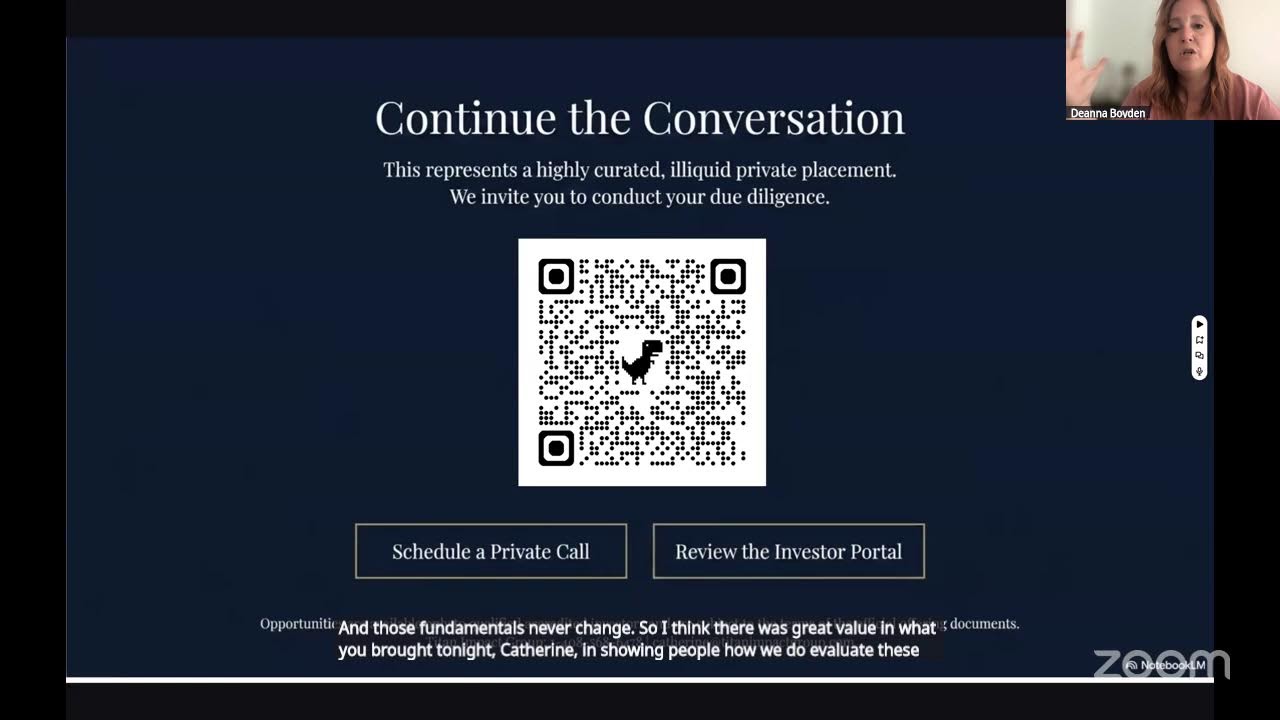
Yep. And so these isolated— so these aren't isolated attractions. I want you to understand they're part of what makes people want to spend meaningful time here. So many buyers initially purchase a second home, but over time they spend more time here in Scottsdale, eventually making this their primary residence. Others purchase specifically because they know that they'll have family visiting throughout the year. Especially again, a lot of these professional athletes. And at the same time, supply remains limited in these neighborhoods where these buyers actually want to live. So areas like Paradise Valley, the Cactus Corridor, North Scottsdale simply can't be replicated. So you can't manufacture more premium locations. That's why we believe Scottsdale isn't just growing, it's maturing into one of the premier luxury residential markets in North America. And I want you to understand that these houses that we're buying are 40 to 50 years old, right? So it doesn't make sense for us to go in and just flip them. It's actually more cost effective— it's gonna sound crazy— it's more cost effective to go in and buy up a 2,500-square-foot house that's like, uh, 40 to 50 years old, literally wipe the slate clean. Yep, knock the whole thing down and then build a brand new 6,000-square-foot house. It's way more cost effective to do that than it is to try and flip a 40 to 50-year-old home. And that's what they want. They want these bigger homes so their families can actually come and stay in. So this is a really important thing to understand. And when you always say do the numbers, numbers tell you what to do, this is what the numbers are telling us what to do. So if wealth continues moving into this market and premier inventory remains limited, What does that do for the long-term values? Well, this slide represents the way that we think about value. So notice that we're not relying on one single factor. Instead, we believe resilient luxury markets are created when several independent forces reinforce each other. So the first is durable wealth migration. So when affluent individuals continue choosing a market, year over year, it creates a deeper pool of potential buyers. The second is volume growth. A healthy luxury market isn't just about price going up, it's about transitions continuing to occur. Consistent activity tells us that buyers and sellers are finding common ground even as the markets evolve. So the third component is price resilience. When Premier neighborhoods continue attracting buyers despite broader market cycles. It suggests that demand is being driven by long-term desirability rather than short-term speculation. So none of these factors by themselves guarantee future performance. Markets can and do change, but when several of these indicators align, they give us greater confidence in the underlying fundamentals of the location. That's the distinction we are trying to make tonight. We're not investing because we're hoping prices will go up. We're investing because we believe the underlying drivers of demand are durable. And because our strategy focuses on creating value through thoughtful execution, it's that combination, that market fundamentals plus disciplined execution That forms the basis of our investment approach. So now let's connect these market fundamentals to the type of project we're actually building. So this is one of my favorite slides because it challenges a common assumption. So many people assume that the fastest approach in real estate is to own as many units as possible— more tenants, more doors, more income.. And for many investors, that's an excellent strategy, but that's not the strategy we're pursuing. So Eddie often says something that perfectly captures our philosophy: we need to find one cash buyer over the course of the build instead of managing 20 tenants and hoping for refinance 5 years from now. So Eddie is our other partner inside of this, and he's actually building and developing. And for any of you who haven't seen I have several videos inside of the portal, um, that you can actually go and meet Eddie and, um, uh, Allie, Deanna, myself. We're all there, so you'll actually see all of us. Um, so this Simply State, uh, statement highlights two very different business models. So traditional multifamily investing is built around occupancy, tenant turnover, ongoing maintenance, and financing. Success depends on keeping many of the moving pieces operating efficiently over a long period of time. Luxury development is different. We focus on identifying an exceptional location, designing a home that fits today's buyer, executing construction to a high standard, and delivering a finished product that stands out in the marketplace. So rather than managing dozens of tenants' relationships, we're focused on serving a very specific buyer profile. Typically they are high net worth individuals who value quality, location, and lifestyle. So most of the buyers are actual professional athletes and their families. So that doesn't mean that there's no risk. Every real estate strategy actually carries risk. So construction costs can change, the market conditions can shift, and buyer preference can evolve. Our responsibility is to understand those risks, plan for them, and make disciplined decisions throughout the development process. That's why we spend so much time on the location, the design, the budget, and the execution before the construction even begins. So in our experience, success isn't determined by the size of the project. It's determined by the quality of decisions made before the first shovel ever goes into the ground. So if execution is what truly separates successful developments from unsuccessful ones, the next question becomes, who is responsible for delivering that execution? And that's where the team actually comes in. So one of the biggest misconceptions of real estate investing is that the experienced investor relies on instinct. Sorry, they don't. Most successful investors I've met are incredibly disciplined. They use a repeatable framework to evaluate every opportunity, whether they're investing $10,000 or $10 million. It is simple. It is a simplified version framework we use before we commit capital to luxury development. The first question is simple: is capital flowing into the region? If people and businesses are leaving the area, it's difficult to build long-term investment thesis. We want to see sustained wealth migration, strong demographics, and an environment that continues attracting successful individuals and family. So the second question is, is supply constrained? Not just generally, but in a specific neighborhood where our target buyers actually want to live. So prime conditions are finite. We can build another house, but we can't create another Cactus Corridor or Paradise Valley. And that's where we are inside of Scottsdale. So the third is, who is the end buyer? So we don't build hoping somebody will eventually fall in love with the new home. We start by understanding exactly who that buyer is, their lifestyle, what they value, how they're going to use the home, and what they're willing to pay. And the fourth is, does the product fit the market? So luxury buyers have high expectations— design, layout, finishes, functionality, and timeless appeal. Um, this is— these are the things that absolutely matter to them. So we aren't chasing trends, we're creating homes that still feel desirable years from now. Um, fifth is executing the project. So a great location can't compensate for poor execution. Experience matters because development is a series of hundreds of decisions. Having people who successfully navigate those decisions before significantly, um, significant improvements happen. The, the, this absolutely changes the execution of how this whole thing comes together. So the 6th is the capital structure appropriate. This is really important. So every project needs a sufficient runway. Budgets need contingencies. Timelines need flexibility. We ask whether the structure supports the project from the start to the finish. Rather than assuming everything will unfold perfectly. I've been investing for over 20 years. No project has ever gone perfectly. It doesn't exist. And finally, the 7th question is, does the potential reward justify the risk? So every investment, like I said, involves uncertainty and risk. Our responsibility is not to eliminate that risk. That isn't possible. Uh, our responsibility is to understand it, Manage it thoughtfully and determine whether the opportunity justifies the risk involved. So these 7 questions don't guarantee success, but they create discipline. They help remove emotion from the decision-making process. And that's exactly how institutional investors think. This is really important. And all of us on the team have an enormous amount of experience, and this is how and why we've come together to do what we're doing. So once a project satisfies those filters, the next question becomes who's responsible for executing it? Because the execution is where great strategies either succeed or fail. I can tell you so many stories. I know, Diana, you can as well. So one of the greatest risks in any development project is concentration. If one person is responsible for everything, raising capital, buying land, managing the construction, selling the home, and communicating with investors, you've created unnecessary risk. That's why we've intentionally separated responsibilities across the specialties. So, uh, on the capital and investor side, that's Deanna Boyden and myself, Catherine Bell, uh, with Titan Impact Group. And then our focus is on capital strategy, investor communication, Governance, ensuring the project is structured responsibly. So we bring decades of experience navigating multiple market cycles, helping investors understand opportunities while maintaining a disciplined approach to stewardship. And that's what this is all about. On the development side, we have Eddie Lack and, and Ali. So Eddie leads the execution. So everything from the site selection and the design to construction oversight and project delivery. So this isn't theoretical for him. It's what he does every day. So managing luxury developments through Scottsdale and Paradise Valley. And what's great about this, because this is in my backyard, is I'm able to go out every single week and actually do videos on the progress of the project. And I don't know about you, but the whole HGTV and seeing the project all the way through is like one of my favorite parts. So Ali, here's the best part, focuses on the market itself. She understands how luxury buyers, brokers, relationships, and how exceptional homes are positioned long before they're completed. So one of the strengths she brings is an established network of buyers, executives, athletes, and referral partners who are actively looking for premier properties. So notice what this structure accomplishes. So instead of relying on one person's expertise, we're leveraging the whos that know how. So each one of us is a who that knows how inside of each of the critical areas and going to work inside of those areas, but all doing it collectively. So capital is managed by professionals focused on investors. Development is managed by professionals focused on execution. Sales are driven by professionals who understand the luxury buyer, and that's how institutional projects are typically organized. And we believe it's one of the reasons that experienced teams consistently outperform individuals trying to do everything themselves. So I want you to understand this, like, again, this is a well-oiled machine and a well-oiled team who have done this again and again and again, and coming together and bringing our expertise together. This is what makes this extraordinary. So most of these projects, these houses are actually sold before they're even completed. In one of the videos that I have in the platform, you can actually go see, we were at the Cortez project, and then we actually went over to another project for you to see. And it was, they were getting the drywall inspections done. And so that house had already been sold and it wasn't even completed. And that's exactly how all these— the, the design of this ecosystem has come together. So when responsibilities are clearly defined, accountability becomes much stronger. So of course, structure alone isn't enough. Ultimately, investors want to know one thing: has this team successfully executed? Successfully before? Well, this slide is where experience becomes measurable. So it's easy to say a team is experienced. It's much more meaningful to look at what they've actually accomplished. So what you're seeing here is the historical track record of completed luxury development projects. So 12 custom luxury estates, more than, um, $84 million in total sales volume. Over $21 million in gross profit generated across completed projects. So those numbers represent years of planning, design, permitting, construction, marketing, and successful execution. So every completed project requires problem solving, a lot of problem solving, adapting to change market conditions, and delivering a home that buyers ultimately choose to purchase. So that's important, uh, when it comes to development. So it's not simply just about building houses, it's something much bigger than that. And it's about consistently making sound decisions throughout the life of the project. Markets change, material costs fluctuate, buyers' preferences evolved, timelines shift. Experienced operators Understand those changes are part of the, part of the business and part of the process, not exceptions to it. So I also want to make an important distinction. We don't present historical results as a promise of future outcomes. Every project is different and every investment carries risk. What a track record does demonstrate is the team's ability to execute a disciplined process repeatedly over time. That's what gives us confidence as we evaluate new opportunities. We're not starting from scratch. We're building a foundation of experience, relationships, and lessons learned from projects that have already been successfully completed. So, um, now that, um, you've seen how we evaluate opportunities, how we've structured the team and the experience behind the execution, I'd like to take a moment, um, to show you behind the scenes of the real project. So let's walk through the Cortez development and show you exactly how these principles are being applied. So everything we've discussed up to this point has been the framework we use to evaluate opportunities. So now I'd like to show you how that framework applies to a very real-world project that's happening right now. So this is 8560 Cortez Street, located in Scottsdale's highly desirable Cactus Corridor. Uh, one of the main reasons we're attracted to this property is that it checks all the boxes that we talked about earlier. So first, it's in a neighborhood where, um, it's a very premier location that are increasingly difficult to find. Um, Second, the surrounding area continues to experience redevelopment with older homes being replaced with these high-end custom residences like I was talking about. And to point out, why is this? Because again, like Deanna said, I don't know if you caught it, that, um, the Cactus Corridor, this actually used to be all horse and cattle property. This was not like an actual, um, a trap, like, like a neighborhood, right? It was all horse property. And so you have these ginormous lots that would have these smaller homes because the back end was all horse property. But now that the horse property has now moved even further out, these are no longer horse property. So you have these ginormous lots that can now hold these big beautiful homes that people are actually wanting. So that tells us, um, uh, we're participating in an area that's evolving rather than declining. So third, this isn't a speculative land purchase. The property has already progressed through much of the entitlement process, and the plans and permits are already in place, allowing us to move efficiently into construction. So shovel ready, here we go. So that significantly reduces one of the earlier risks that often delays developments. The vision for this home is to create a timeless luxury resident that reflects how today's buyer actually wants to live. So it's all about, especially here in Scottsdale, like I have to tell you, open, open living spaces, indoor-outdoor integration, premier finishes, and thoughtful design are all part of delivering a product that appeals to our market. Again, that indoor-outdoor living is really important here for all of us. Again, this is my backyard, I know. I try to live more outside than inside 9 months out of the year. So another important point is that we're not trying to create the most expensive home in Scottsdale. This is super important to understand. We're building a home that fits its neighborhood, meets the market demands, and is positioned to compete effectively with comparable luxury properties. Again, we're planning it around everything that's going on in this area. So everything about this project, from the lot selection to the design philosophy, has been approached with discipline rather than emotion. So that's exactly how institutional investors think. So once we've identified the right asset, the next question becomes equally important. How is capital actually structured? This is really important. So, one of the things that investors appreciate most is transparency. So they want to understand exactly where capital comes from, how it's used, and who is responsible for each part of the project. So this slide illustrates that process. So, at the foundation are our investors. So investor equity provides the capital that allows the project to move forward. The capital is pooled and managed through Titan 23, which serves as the capital allocation and investor entity. So from there, the capital flows into the project company that is responsible for executing the development. So alongside investor equity, the project also utilizes senior financing, so debt. So, when used prudently, this can improve capital efficiency, but it's important that it's appropriately structured and aligned with the project's overall financial plan. And that's a huge part of what Deanna has spent an obscene amount of time making sure that that happens. So, What I want you to notice is that this isn't a, um, isn't a complicated web of entities designed to confuse investors. It clearly does. It clearly defines the structure where each entity has specific responsibilities so investors understand where their capital is allocated. The operator operating company understands its responsibility to execute. Financing is structured to support the project. And everyone has clearly defined roles and accountability. We believe that clarity builds confidence. So sophisticated investors don't simply ask, what's the return? They ask, how is my capital protected? Who is making decisions? How is oversight maintained? Those are exactly the kind of questions that structure is designed to answer. So I want you to understand this again. This is where Your accounting and legal team will fully understand this as well. So now let's take one step deeper and look exactly how capital is expected to be deployed. So this is one of the most important slides in the presentation because it answers a simple but critical question. So here's where Deanna comes in. So where does the money actually go? Like, this is a huge part of what Deanna is managing. Every dollar raised has a defined purpose. I love this. We tell our money where to go. So just like, again, like employees, I always say, you know, send it out there and have it come back with lots of friends. So on the left, we'll see the project's capital sources. Those include investor equity, senior financing, working together to fund the development. So on the right, you see how the funds are allocated across the project. So capital is used to acquire the property, fund the construction, cover the soft costs such as the design, the permitting, maintain contingency reserves, and pay for the professional services required to complete the development for this quality, um, for this to qualify. So one item I always like to point out is the contingency reserve. So experienced developers understand that no construction project unfolds exactly as planned. So having contingency built into the budget reflects the prudent planning rather than optimism. So another important aspect is that this budget has been developed before construction even began, so not while the construction was underway. So you have to understand this was well thought out and planned way in advance, again based on the experience that we all have and doing this again and again and again. So that allows the team to make informed decisions and monitor the progress throughout the life of the project. It's also worth emphasizing that budgets are living documents. Cost can change, market conditions can evolve, and adjustments may be required over time. That's one reason ongoing oversight is so important, which is why we have a team doing this. So for anyone considering participation, the detailed offering documents provide a much deeper breakdown of the project's assumptions, budget, timeline, and risk factors. And you need to be looking— if you're looking at any project, you want to pay attention to all of this and really understand it and keep asking questions until you really fully understand it. Of this, or, you know, again, any project, I hope that you're getting value out of the questions you should be asking, because when you ask better questions, you really get better answers and a better outcome. So our objective tonight isn't to walk you through every line item. It's to demonstrate that the project has been thoughtfully planned, capital has been intentionally allocated, and transparency remains a priority throughout the process. So at this point, we've covered the market, the strategy, the team, and the project itself, and how the capital is structured. So the final piece of the puzzle is understanding how we plan to successfully exit the investment. This is really important. So one of the first questions experienced investors ask is, what's the projected return? So it's, um, how are, how are everybody's interests aligned? So that's the important distinction here. So we believe that the best investment structures are the ones where everybody succeeds together. It needs to be a win-win-win. So this slide illustrates how we approach that philosophy. So at the fund level, investors' capital is pooled through Titan 23, creating a clear governance structure and centralized oversight rather than every participant managing pieces independently. The fund provides a coordinated framework for capital allocation and investor communication. So at the project level, the local operating team is responsible for executing the business plan, acquiring the asset, managing construction, coordinating trades, maintaining the schedule, and ultimately delivering a finished luxury home. So there's two different responsibilities we intentionally separate here. So the people overseeing investor relationships aren't the same people swinging the hammers or coordinating the subcontractors. Again, you want to have the who's that know how doing the different things. So likewise, the development team isn't distracted by fund administration and investor reporting. Everyone stays focused on what they do best. Another important aspect is incentive alignment. We believe operators should succeed when investors succeed. So that's why the economics are structured so that value is created through successful execution, not simply through participation. So when— no participation trophies here. So when everyone's incentives point to the same direction, decisions tend to improve. So better communication, better accountability, better execution. That's exactly what we're trying to accomplish. So of course, even with well-structured projects, experienced investors always ask one more question. What's the question? What happens if things don't go exactly as planned? Which is a brilliant question to ask. So I actually think this is one of the most important slides of the presentation because it reflects how we think. So we don't begin by asking what's the best case scenario. We actually begin by asking what's the downside. And so Deanna and I, I know we've gone around and around and around about all these numbers and trying to put together every worst case scenario of how this project can go sideways. And we're going to talk from there and talk our way up rather than, you know, unicorns and butterflies and have to deal with anything after that. So this is from the worst case scenario. So every development project carries uncertainty. So construction costs can increase, timelines can shift, markets can soften, interest rates can change. Those are realities, not surprises. So rather than ignoring these possibilities, um, Deanna modeled, uh, different scenarios before moving forward. So this matrix shows several possible outcomes across different value assumptions, and holding periods. So the purpose isn't to predict exactly what will happen. No model can actually do that. Um, and if you do have a crystal ball that does it, let us know because we totally would love to use it. Um, the purpose is to understand how the project performs under different conditions. So in other words, we're asking, does the project still make sense if everything isn't perfect? That's how institutional investors evaluate risk. They don't rely on optimism, they rely on preparation. So one of the things I appreciate most about this process is that it forces discipline. So if a project only works under perfect assumptions, probably isn't a project that you want to pursue. So we want projects that demonstrate resilience across a range of reasonable scenarios. Again, That's not a guarantee. It's simply prudent planning. So experienced investors eliminate risk. They seek to understand it before they commit capital. So we are typically in all of my investments, and I know same with Deanna, extremely conservative because again, just like Warren Buffett says, rule number one, You know, never lose money. Rule number 2, remember rule number 1, like it really is that important for us. So planning for different outcomes naturally leads to another important consideration, time, right? So one of the biggest risks in development isn't necessarily cost, it's time. So every additional month affects carrying costs. Financing, coordination, and ultimately the investor experience. That's why we spend so much time planning before the construction and the project begin. So what you're seeing here is a high-level view of anticipated project timelines. So it begins with the property that, um, uh, has already been acquired and entitled. This was a big, big part of it and where a lot of the waiting happens. So from there, the construction process, uh, processes— I'm sorry, progresses through a series of defined phases, from site preparation and structural work to mechanical systems, interior finishes, landscaping, inspections, and ultimately completion. But what I really want you to notice is the concept of structural defense. So we intentionally build flexibility into the schedule. Why? Because construction is a dynamic process. Weather happens, municipal reviews can take longer than expected, materials sometimes arrive late, labor availability changes. Rather than assuming perfection, we plan for reality. That's why the financing structure and overall schedule are designed with breathing room. Not because we expect delays, but because responsible planning acknowledges that they can occur. So one of the reasons institutional investors appreciate this approach is that it demands discipline and demonstrates discipline. So the object isn't to create the shortest timeline on paper. The object is to create a timeline that has realistic probability of being successfully executed. So that's a very different philosophy. It reflects experience, it reflects preparation, and ultimately it reflects, um, respect for our investors' capital. This is the most important thing that matters to us, the entire team. So at this point, we've covered why Scottsdale, why this market, how we evaluate opportunities, how the team is structured, how capital flows through the project, and how we think about managing risk. Now let's bring all of this together and discuss what the opportunity looks like for qualified investors. So this is a really important part. So as we, we begin wrapping up, I want to come back to something we've touched on throughout the presentation, and that's risk. Every investment carries risk. I don't care who you're talking to, what investment you're talking about. If somebody tells you there's no risk, they're lying to you. Like, I want you to pay attention to this. So, um, uh, I'm sorry, so that's true whether you're investing in public markets, private business, or real estate. So anybody who tells you otherwise Again, it's just unrealistic. The question isn't whether risk exists. The question is whether you understand it and whether you've planned for it and whether, uh, you've assembled the right team to manage it. So this slide summarizes how we think about the primary, um, categories of risk. So the first is the market risk. So markets move. I think we can all agree on that, that markets move. Buyer sentiments change. Interest rates fluctuate. Boy, have we ever seen that. Those factors are outside of our control. What we can control is the type of product we choose to build and the market we choose to build it in. Our focus remains on premium neighborhoods and luxury buyers whose purchasing decisions are often driven by long-term lifestyle considerations rather than short-term market headlines. So the second category is execution risk. So construction is complex. There's budgets, schedules, labor availability, material costs all require active management. That's why we emphasize experienced operators, detailed planning, and clearly defined responsibilities throughout the entire project. So the third is liquidity and timing. So real estate is not a liquid investment, and development projects don't operate on a stock market timeline. That's why we've structured the financing and project schedule with realistic assumptions and contingency planning rather than relying on ideal conditions. Ultimately, our philosophy is simple: we don't pretend risks disappear. We acknowledge it, we plan for it, we monitor it, and throughout the life of the project, we stay on top of it, and we communicate transparently with our investors as the project progresses. That's what responsible stewardship looks like. So if anyone decides they'd like to explore this opportunity any further, what happens next, right? So we've intentionally designed the next steps to be very straightforward and transparent. If after today's presentation you feel that this opportunity may align with your investment goals, the first step is simply to review the completed offering materials. So these documents include the Private Placement Memorandum, also known as a PPM, and the operating agreement, subscription documents, detailed risk factors, project information, and all the disclosures that should be considered before making any investment decision. This or any of them, I want you to pay attention. So we encourage every prospective investor to take the time to review those materials carefully. This is also the point where we recommend speaking to your financial advisor, your legal counsel, and your tax professional So, uh, if you have any questions about whether this type of investment is appropriate for your particular situation, if after completing your own due diligence you decide that you'd like to move forward, um, we'll walk you through the subscription process, answer any remaining questions, and make sure you understand that each step, um, before any capital is actually committed. So one thing I want to emphasize is that we aren't looking for quick decisions. We'd much rather work with investors who fully understand the opportunity, appreciate both the potential and the risk, and are comfortable with the investment strategy. So those tend to become the best long-term partners. This brings us to our next slide. So one thing that we've learned over the years is that not every investment is right for every investor. And that's exactly how it should be. We'd rather have the right partners than the largest number of partners. If you see yourself in the first column, we'd welcome the opportunity to continue the conversation. So I'd like to finish where we began. So tonight isn't about selling a single project. It's about giving you a look behind the curtain at how experienced teams evaluate private luxury estate opportunities. So we've explored why Scottsdale continues to attract wealth, why location matters, how disciplined investors evaluate opportunities. I hope you took notes on this and had this be like part of your conditions of satisfaction. Um, why experienced execution is so important and how we've approached this Cortez project using the same framework. So if today's presentation confirmed that this type of investment aligns with your goals, we'd be happy to continue the conversation. So simply scan the QR code on the screen and you'll have two options. The first is to schedule a private conversation with our team where we can answer your specific questions, um, discuss your objectives, and determine whether this opportunity is appropriate fit. The second is to access the investor portal. Portal where you can review the complete project documents. There's pictures, videos, financial information, timelines, the offering materials. Everything is there. It'll keep you busy for hours. There's absolutely no obligation. Our goal is simply to provide you with the information you need to make an informed decision. Again, I hope this was helpful, and I really hope you took notes on the importance of following each one of these steps for you and yourself and your own investments that you're doing for your portfolio. So whether you ultimately participate in this project, a future opportunity, or simply leave tonight with a better understanding of how private luxury real estate works, we hope that this was valuable. So on behalf of Deanna, myself, Eddie, Ali, the entire team, we want to thank you for spending this time with us this evening. So we genuinely appreciate your interest and we look forward to speaking with those of you who would like to continue the conversation. So with that, I just want to say thank you for being here and for spending this time with us. Deanna, would you like to say anything? Well, thank you for having me on.
We are so delighted to have the Titan Impact Group participate in this. And due diligence is near and dear to my heart. And to Catherine's. And one thing that I really respect and value working with Titan Impact Group is that their due diligence was actually a step beyond the lenders, which I think is really interesting. As you get better and better at investing in your own portfolio, you know, you will find tools and systems to help you, but always understand the fundamentals that Catherine laid down tonight that are so important. And, you know, I've been investing for over 25 years in 3 countries, everything from renovations to large-scale farmer's field to 232-unit type developments, and those fundamentals never change. So I think there was great value in what, in what you brought tonight, Catherine, in showing people how we do evaluate these larger projects knowing that you just shrink that down. And then also, you know, one thing that's really important is great deals aren't found, they are created, right? And it takes this entire team to have done this. And for, for people like Catherine and myself and Eddie and Ali, who have been doing this a long time, when we all agree that this is, is great, that we'd like the risk profile, you know, we, we like the potential numbers. I think that's really important as well, to think about who you're working with and how they feel about the project, what they've seen. And being able to confirm the experience of people on the team is really important as well. You know, I think that I saw today someone said, I got the receipts, and I think this team, we bring the receipts. And so hopefully you're able to pick up some of those things that we've learned along the way, but also the things that we wouldn't dare proceed without checking on any project, including the Cactus Corridor projects. Yeah, so thank you so much for having me here, and for those of you who are asking questions, you know, Catherine has a direct line to me and the team. Um, we want to thank all of you at Titan Impact Group. Um, get in there and evaluate this, if nothing else, you know, you're always learning when you evaluate deals, right?
Yes, yes, yes, yes. That's brilliant. So the more deals that you evaluate and ask these questions, the easier it becomes to be able to see, and your, your mind will pick up whether deals are good deals or not very quickly. The better you get at asking these questions and getting like to the answer that you actually need. For that particular deal. Again, all these questions come from like thousands of deals that I've evaluated, that you've evaluated. And again, not all deals are good deals. So yeah, but the team is a critical piece to all of it for sure. So thank you. I'm excited. I know we're going to be doing so many more of these. We're already planning for our completion celebration. We're going to have pink feather boas and all the things.
And we may have gone and blessed the land with a bottle of champagne already.
We have a video of it. Anyways, go check it out. The videos are fun. And yeah, we're gonna be— we're excited about this journey that we're on and hope that you would all consider joining us. And if you need help evaluating projects, reach out to us. We're happy to do that. I actually have a podcast that we do every morning at 9 AM.. And we use AI to actually analyze and evaluate deals. You can find that at landsharkmastermind.com/webinar. So every morning at 9 AM, we jump on with AI and people bring all their deals to the table and we're analyzing and vetting and teaching all the things. So I feel like it's, that's a skill set as an investor we can never ever get too good at, right?
Yes. Sharpen your pencils on those. Cut your teeth on analyzing deals because it's more than anything, you know, it drives everything. That's the thing you can't screw up. You can screw up and have to get another lender. You can buy a bad load of supplies and have to buy a new one. But if you haven't done your due diligence on the first— at first, if you don't understand the risks, if you don't understand how to control that project, you're behind the 8-ball from the very beginning. So I think this has been so informative. Thank you for sharing with everyone, Catherine, and get out there and, and evaluate some deals. Um, and more so, think about ones that are right for you and your investment, your investor portfolio. And this is a great way to diversify. I think, you know, years ago I went into my first commercial investment. It was a car wash, and I thought, I will never again have the opportunity to invest in a car wash. I will never run one myself. I would never think to develop one. So I think that's what's great about this Luxury Build one is that allows you to access a little different asset class that you may not be able to do on your own. And if you can go out and build a $7, $8, $13 million home on your own, God bless you. Otherwise, we're happy to have you join with us and our efforts.
Yep. Absolutely. I love it. Yeah. Well, this has been amazing. Thank you. And yeah, I'm excited to be doing more of these with you. Yes. Good night, everyone.
Thank you so much for listening.










