Building Financial Freedom and Community Through Mobile Home Investments | Titan Impact Group
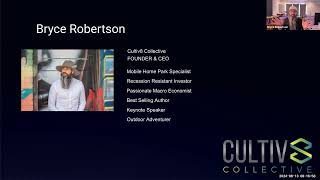
A YouTube interview (hosted by Catherine Bell) with Bryce Robertson about investing in mobile home parks. The conversation explains why mobile home parks are recession-resistant, provide outsized cash flow and tax benefits, and address affordable housing needs; it also covers operational details (utilities, 'renting dirt'), market selection, due diligence, and the speakers' mission-driven approach to community impact.
Chapters
Titan Impact Group. And I'm super, super excited to bring one of my favorite people here that all of you get to meet if you hadn't had the pleasure of meeting him yet. And this is Bryce Robertson and we are going to be talking about one of my absolute favorite all time investment asset classes. And for those of you who have been following me, understand that I love two things at the end of the day. I love to be the bank and I love to rent dirt. And you're going to understand why at the end of this why you probably want to love to rent dirt as the other piece of that I love about mobile home park investing. So I just want to be clear, it's not mobile homes, it's mobile home parks is because no matter what the economy is, no matter who is the president or who's in office, doesn't matter which party it is, we will always need affordable housing. And this is exactly what that is. And this what it helps communities and you know, lower income people are that are in that position be able to actually have homes and build these beautiful communities that really are safe and amazing. We own several of them and you know, one of my favorite things really is going and I go and collect the rent myself and because I get to go talk to the families and see all the kids riding around in their bikes and everybody's out having barbecues and things like that. So these really are extraordinary communities and extraordinary opportunities to, you know, know, have that safe place for their families to actually be and again, have it be affordable. So with that, we're going to jump into the investing side of it so you can understand more about that. So really, really excited to be here sharing this with you. So a little bit about me for those of you who have not had the chance to meet me. I've been investing for well over 25 years. I've done all investments from buy and hold to wholesaling. Ran a program here in Arizona called the Flipping Females. We partnered with women and flipped about 500 properties here at a hedge fund. We were one of the first people in the vacation rental space. Turns out I don't like guests and toilets or tenants and toilets. And which is how I really got clear and honed in on that. I love to be the bank and rent dirt. And so with all of that, what I'm clear about is that, you know, money is like oxygen. The more we have, the easier it is to breathe. Breathe. And the more we have, the easier we can breathe, the bigger the difference in the world we can Make. So every single asset that we are involved in, every single property we are involved in, we always make sure that we really are leaving every person, property and community better than we found them. And then for me, my give back is through my nonprofit, which is Bell Community Empowerment foundation, that's focusing on getting the 350,000 adoptable children out of the 500,000 children in the US foster care system adopted. And so that is my, you know, why I do everything that I do. I was adopted when I was 16 and I adopted my twins out of the foster care system. And you can go watch my video to learn more about all of that. So that's a huge part of why I'm so passionate about what we're doing and moving forward this year, we are very aggressively going after other mobile home parks and continuing to build these communities. So I'm really, really excited about that. So. And who, who we actually do this with absolutely matters. And so I'm really excited to introduce you to Bryce. And his heart is nothing short of extraordinary. And he gets it when it comes to, you know, really making an impact that actually matters in the world and doing it right. And doing it right the first time. So without further ado, this is Mr. Bryce Robertson.
Hey guys. And thank you very much, Katherine. Really appreciate it. I always love working with you and everything that we do to collaborate together. So yeah. I'm Bryce Robertson, founder and CEO of Cultivate Collective where we special in mobile, specialize in mobile home park investing. And I had a 2025 year background in construction and construction management. I was trading time for money and at the end of that construction career, I felt a little bit like a slave and I didn't like the look of my future and so wanted to create passive income. I looked at all the different ways we could do that through the stock market, being an entrepreneur, real estate cryptocurrencies, and, and in 2015, I decided it was time to make a major, major move. And so I looked at all the different asset classes in real estate because I had a 20, 25 year background in construction and construction management. And I knew real estate was the consistent thing that when you look time over time, year over year, all challenges and cycles that have happened, real estate comes out on top, so it's a clear winner. But there's so many different types of real estate. So I dissected all the different types of real estate. Single family homes, long term rentals, short term rentals, multifamily apartments, mobile home park, self storage, commercial office, the whole kit and caboodle. And over and over and over again, mobile home parks kept popping off the page to me. Number one, get to contribute to what I believe is America's largest real estate problem, and that's the need for a affordable housing. As arguably about 20 to 30% of Americans, that need for affordable housing and mobile home parks are the largest contributor to providing a solution to that. Yet there's a diminishing demand of mobile home parks, which puts mobile home park owners and mobile home park investors in a massive supply and demand favorable position. But there's only about 400,000 mobile home parks nationwide. And although we're the largest contributor at solving the affordable housing problem, we can't solve it alone. So right now we're in the position where nobody is even coming close to making an impact in this space like mobile home parks. And maybe in the future there'll be other different ways to solve that problem, but that's probably 10 years from now. So right now, like Catherine said, regardless of the economic cycles and challenges, mobile home parks seem to thrive. In fact, that brings me to point number two is the recession resistant part of mobile home parks. When economic times become more challenging and things get tougher and people are downsizing mobile home parks, they go up because the demand for mobile home park investing goes up. To give a real life example of this, in 2020, when we experienced the lockdowns and the supply chain issues and the eviction moratoriums and all of these things that were happening, the demand for mobile home parks massively increased. We went from a wait list at one of our communities of 15 pre screened tenants ready to go waiting for next home. And that boosted up to about 85 pre screened qualified tenants because the demand massively went up. Because in challenging times, the demand for affordable housing massive, massively increases. And so Catherine and I are aligned in the belief that we can not just survive an economic storm, that we can actually thrive through it, and we can do it with such a sizable market share that we can actually literally change markets and literally combat against big economic economical shifts. Then on top of that, we have massive tax benefits. Mobile home parks are the largest tax benefits of any commercial real estate asset class. So that's really awesome as well, we do cost segregations and accelerated depreciation, which gives us a lot of our return of our money in year one. And then we also have very little competition. So compared to multifamily or single family homes, where there's tons of people putting an offer in on the same property, usually there's one or two groups working with the sellers. So we have a lot. It's, it's like being a larger fish in a, a smaller pond, so to speak. Much less competition. And there's a, there's a myriad of, of other reasons why I joined in the mobile home park space. And so back in 2015, bought my first mobile home park. But at the time I had a negative worth, negative net worth. $2,000 in the bank and unseason credit. So by nature of my circumstances, I went out and raised capital and brought investors in on the deal, split the deal up so that we were both profitable and after three months later got that deal closed. And then I just rinsed and repeated that business model for the next two and a half years until I created financial freedom and on my path to financial freedom, although I was looking to create a win win deal for me and the investors, there was definitely a focus on me taking care of myself and me becoming financially free. And then once I became financially this massive weight lifted off my shoulders and now I was not obligated to do things. Now I had the full freedom of choice to do what I wanted to do. And that drove me further and into wanting to make a bigger impact, to bring as many people as I possibly could with me. I started educating people on the mobile home park space so they can rinse and repeat what I'm doing. Started massively expanding our business, bringing in a lot more investors, a lot more partners, providing a lot more employment for contractors and team members, creating better affordable housing experience for our tenants in our communities. And we've just been exponentially growing. And last year I think we grew 300% year on year and we don't see that momentum stopping. And so while there's a lot of other investors that as of today are sitting on the sidelines or they're a little bit concerned of where we're going economically. We feel like we're in our prime. This is exactly our time to shine and we're here to solve a lot of problems.
I love this. Okay, so super excited. So let's dive into next. Here we are. So you had started talking about this. This is really important. So I love that this is a recession proof investment. And I always talk about success leaves close. And one of my favorite people is Warren Buffett. And if you follow him, him, he loves mobile home parks for all of these reasons. So I'd love for you to share about this as well.
Yeah, so Warren Buffett interestingly became very involved in the mobile home park space in 2013 when he bought Clayton Homes, which is one of the largest mobile home manufacturers. He also brought in an interesting financing option to solve a problem after the 2008 crash because a lot of the lending laws around lending loans on mobile homes changed. And so he's very much revolutionized this. And you, you can actually go and look back at where he's taking his investments out of and what he's putting his investments into. And he's heavily invested in the mobile home park space, which is really awesome. You know, one of the things about mobile home parks that I didn't mention before is. So I did mention that we do have the high demand for affordable housing. The stable revenue streams is something really interesting. So we've been able to provide cash flow distributions to our investors throughout our entire. And if any of you have been watching what's happening in the passive investing world in the last two years, a lot of operators have either stopped sending their distributions to investors because they don't have the money to, or they've lowered the amount of distributions that they're sending to investors lower than what they originally projected them to be. Or even worse, some of these operators are actually going out and doing what's called a capital call, which is where they're going back to the investor and saying, hey, I know you gave me some money and I know that stopped paying you distributions, but I need to ask you for some more money because we're in a bit of trouble here and there's a lot of operators doing that. And we're really proud to say that throughout this whole time we've been in an environment where interest rates have never gone up as fast as they have in modern history. We've had supply chain issues, we've had understaffing issues, we had lockdowns, we had a lot of different scenarios that have happened and things that are still happening now, now. And we're very fortunate to say that we've been able to provide our distributions to our investors. We were doing it on a quarterly basis, but we changed to monthly because most people have monthly bills and expenses and they get paid other things monthly. So we wanted it to be to fit in with people's lifestyles and we've been able to pay distributions out the whole time. And we had some refinances that were projected close to the three year mark after we started the investment where we were projecting to return original capital to investors. And we've been doing that closer to the two year mark and, and getting most of that Capital back to investors in about two years, which is something that is very rare in the marketplace today. And we're able to do that because of the massive demand for mobile home parks and the specific qualities that they have as well. We also have, talking about low maintenance and overhead, when you look at properties like multifamily apartments, self storage, they have higher operating expenses than mobile home parks. A lot of our parks, we have all of the income that comes in, and about only 25% of that income actually goes to the operating expenses, Whereas a lot of other asset classes, that would be up near 40% or 60%, which leads a lot less room for profits. And because of this, we can actually have much higher cash flows, which helps us pay our distributions. And when you actually look at the cash flow and the cash on cash returns, pound for pound, mobile home parks are typically in a much stronger position than a lot of other asset classes. And then when you're coming and talking about loans for mobile home parks, the actual loans for the parks themselves, they are the lowest defaulting loan in commercial real estate, which is another reason why Warren Buffett was very attracted to this. So that means that as far as people not being able to pay mobile home park loans or defaulting or getting foreclosed on, out of all of the different types of commercial real estate, mobile home parks have the least of that. And they have the highest track record of paying the loans on time, which also speaks to that there's much less problems to deal with at the mobile home park level because they have proven to have more wiggle room for error and more wiggle room and potential for profitability.
Again, can you see why I love these so much? This is extraordinary. So the, the potential returns on this are absolutely extraordinary. One of the parks that we, we personally own is, happens to be in Mesa, Arizona, and we continue to see the returns on that. I mean, it's absolutely ridiculous returns. But again, the thing I want you to understand inside of, like, this particular park is when I talk about renting dirt, it literally is because we are responsible for the, the utilities and the infrastructure below the dirt. We don't actually own the actual buildings themselves. And what we love about that in this particular park is that it gives pride of ownership to all the people that are living in this community. And again, we're responsible for the electricity, the water, the sewer. That's what we're responsible for. And so that's how obviously we keep the, the cost down. Just like what Bryce was saying. And then, yeah, I. Whatever you want to add to this, Bryce.
Yeah, so one of the things that I think's really important as a conversation right now is coming into the next few years, do we feel that the investment we're involved in is recession resistant? And the thing about our history and the trends of how we've operated is that we've exceeded our projected investor returns on our projects even through these challenging times of supply chain issues with interest rates going up and, and etc. Etc. Because we build in, because mobile home parks have a very strong recession resistance quality to them, wherein we can build in the ability for interest rates to go up, cap rates to, to go up, which would lower the value of the property at the, at the exit. We could handle rent controls coming in in different states. If you looked at all the blue states, they may have the possibility to bring in rent controls. We could handle that. If rents were just plateaued and didn't go up, or they only went up a maximum of 5%. We've built in that we can actually handle that and still hit our projections. We can handle supply chain disrupt options, we can handle our construction timelines doubling and taking twice as long as what we originally, what we actually think that they would take. We can handle staffing shortages and staffing issues, which affects mobile home parks at the, at the construction level and on the team that we have. But also when you need to work with cities to get permits, et cetera, There's a lot of cities that are actually understaffed right now. There's a lot of other vendors, there's a lot of other resources partners that we work with that are understaffed also facing these challenges as well. So it's not also always just what we have in house. And the specific setup that we have is we have because there's basically two main things that could cause problems in a mobile home park investment. And number one, that's all of the things that are out of our control. And number two, there's all of the things that are in our control and things that are out of our control are things like interest rates going up, supply chain issues, understaffed staffing problems, any of the kind of economic or political things. And so we build in metrics so that we could handle the worst case scenario of those through our investment period. All of the things that we can control.
Sorry, no, I was just saying that's, that's a huge reason why I love this asset class so much, is it gives us that margin so that we can deal with all those unforeseeable Events.
Yeah, yeah. Because I mean, look at what even happens just in 20, 19, 2020, if things like that repeat or if more challenging things happen. We need to be able to think about this. And I think about this stuff all the time because we usually hold our mobile home park investments for about five years. So I need to forecast over the next five years and predict all of the worst case scenarios that could happen and then make sure that I've got measures in place so that we can still thrive through those environments. The other things are the things in house that we can. And we try and control as many of the controllables as we can by having as much as we possibly can in house. So we have our own property management company which is solely dedicated to our own mobile home portfolio. We have our own asset management company, also solely dedicated. We have our own construction that's in house, which is dedicated to our projects. And we now have our own in house mobile home financing. We actually created a better program than what Warren Buffett originally created. It has less limitations and gives us a lot more of an ability to be able to provide affordable housing for tenants in our communities. It really jives with the returns and economics for our mobile home community and it really works for the investors that invest in that investment as well. So we, we have done everything that we can to, to try and control the controllables and control the uncontrollables or at least have something in place so that we can thrive through this time. And it's because of mobile home parks and the way set up that we can do this. We wouldn't be able to do this in. I haven't come across any other asset classes that we have as much wiggle room to be able to do that.
Yeah, I agree. Absolutely. So I'd love you to talk about this so people understand the, the below, the dirt part.
Yeah. So in mobile home parks, like Catherine was saying is we're a glorified parking lot and the tenants pay lot rent to the park owner for being able to have their home parked there and connect to utilities and having a water and sewer, electric and, and all of this. And so when we're actually looking at the risk levels and the types of parks that we want to choose or not choose, we like to have mobile home communities that own as little of the utility systems as possible. And if they do own utility systems, there's certain types that we would prefer over other types. So one thing that we always own, regardless of the setup of the mobile home park, is the water and sewer lines themselves, the park is responsible that. So if we have a water leak or if we have a sewer blockage, the park is responsible to fix that. If we have to replace a 20 foot line of sewer, sewer line, we'll have to dig it up and replace it. That's our responsibility. But a lot of the times the actual supply of the water and sewer will come from the city and we much prefer that because when that happens, the quality of the water, the, anything to do with, with what happens beyond the master meter at the park is all the responsibility of the city. And they do what, they take care of the billing for the tenants and they take care of the whole kit and caboodle. Sometimes we have a little bit of a hybrid of that where the supply is city water and the, the, the city actually removes the sewer waste. But we're responsible to pay the master bill to the city and then divide that, that up amongst the tenants. And so we become a little bit of a utility billing company. We work with third party insured companies that actually do those calculations for us. But that's, that's pretty common and that's totally fine. Sometimes then we would have a septic system or a water well. And although they're not preferred, a lot of mobile home parks can be in some rural areas that still are thriving and have a massive need for affordable housing. So we work with a lot of septic systems and, and very now and then we'll come across a water well that we'd work with. Some, some types of you. We pretty much try to stay away from most of the rest of the types of utilities, Electrical systems, gas systems, lagoons. Yeah, and a whole bunch of other more complex systems. Because when we're looking at just a water well or a septic, it probably cost tens of thousands of dollars to fix. When we get into the other types of utility systems, the menu increases and we're starting to like hundreds of thousands of dollars, if not in some circumstances over a million dollars if you had the worst case scenario play out. So we like to keep our risks down and we like to work with mainly city water and city sewer, couple of septic systems. And that's really our main setup that we have there.
I love that. So understanding all these things is a critical piece to this for sure. So navigating challenges. I know here in Arizona there's a lot of mobile home parks going up for however they are in ghost towns. So we tend to stay away from those because of the economics around that and not going into Dying communities. So I'd love to have you talk about that and where you're choosing the parks.
Yeah. So our main preferred market is the Southeast. Now if you're talking to multifamily apartment investors, they're going to choose a city because there's way more apartments than there is mobile home parks. So we have to choose a geographical area. So the Southeast is our main area area and our second area is the Midwest. And our headquarters is based in Asheville, North Carolina. Most of our portfolio is in, within about a one and a half hour drive from our headquarters. And we really, really love the Southeast. We love the, the, the, the four seasons that we have there. It doesn't get too cold in winter. We don't have to deal with those dramatic, really, really cold winters. We deal with that a little bit in the Midwest, but we find that the bang for the buck we can get in the midw, the challenges that we come up with with frozen water lines, et cetera, et cetera. And then there's one of the things we need to take into consideration is look at what happened in 2020 with the Great American migration. People started working more virtually. People were moving all over America. And we're going through this phase, will continue for the next few years where people are starting to choose to live in areas because they want to be there, because they can take their work with them. And so we have seen a massive influx of people coming southeast, even people moving out of more busy areas up in the northeast over to the Midwest for affordability to be out in nature. And so we like to follow the trends of where the great American migration is actually going. And we typically like to see towns that are about 30,000 people or above in population size for the immediate population for where our mobile home parks are. That means that we can pull enough tenants to be able to fill any vacant homes or vacant lots. And we can pull enough contractors in that market to help complement our in house contractors as well to get any of the work done. And then in our metro areas, we want to see at least 100,000 people or more in those metro areas. And we like to see median house pricing at about $120,000 and above. And then we also like to see apartments that there'd be a pretty decent jump in a C class apartments above mobile home parks. Because if someone's not going to live in a mobile home community and they are going to upsize, they're either going to go up to like a C class apartment or a B class apartment or a single family home. And if they could afford a single family home, if the affordability for a mobile home and a single family home or an apartment is the same, they might choose a different type. They might choose to have a single family home. So we want to make sure that the single family homes are. The average market is over $120,000, which creates a big spread. Red confirms the need for affordable housing in our markets. And then once we look at all of these metrics in the market themselves, then we also do additional ads and test ads to make sure that the demand is there in the market. And we put test ads out for the rent amount that we will have in that market. And then we see how many hits we get, how many positive responses do we get in people wanting to go to the next level of joining our community. And it's usually an epic failure or tons of people. And this is why we've chosen to be in markets where we have wait lists of up to 85 people just ready for that next home come in. So really the challenge that we have in the mobile home park space is not finding tenants to move into our communities. It's actually finding the homes and, and getting the construction completed quick enough to be able to keep up with the massive demand of people coming into mobile home parks. And another thing I'll add is, is if you're looking at multifamily apartments each year, if you look at 100 unit multifamily apartment, the national average says that 40 of those tenants are going to move out that year and the owner and operator is going to have to find 40 replacement tenants. So 40% of that community is going to turn over each year. The national average for mobile home parks is 5 to 7%. So although we might be bringing a lot of people in the beginning because we buy some used mobile home parks that are vacant lots and vacant homes because there's a lot of upside in those investments. We go in and we fill it up to 100%. And once we get full, it's really easy to keep that occupancy up as well.
Yeah. So you can see, I hope you're getting like, how much due diligence actually goes into choosing these parks and then making sure that these parks get filled. I know our park in Mesa, it's been 100% occupied for the last 10 years. We've had zero vacancies. Vacancies, like people just stay because it's become an actual community for them and their families, which I love. So I think we actually Just went through all of this, all the research that you do. Anything else you want to add about that?
Yeah, I mean as soon as we go on a contract, our team goes out, we look inside all of the vacant park owned homes, we measure all of the vacant lots, we start putting our numbers together to buy new and used homes. And so by the time that we're finished with our due diligence phase, before we've even closed on the property, we already have an action plan in place. We've started to build our team for that specific property. So by the time we close on the property, it's almost like people are at the beginning of a marathon and they're just standing there waiting for that start bell to go off and we just let them go get at it and we take massive action. We definitely very proactive in our approach, approach and we like to do things in a very compressed time frame. But we are very selective with the types of communities that we select from the market to can we pull off this specific business plan? Can we pull all the people together here? Is the financing going to work out like the whole kit and caboodle? We have a very selective process and so we say no to probably thousands of deals a year and we say yes to probably, you know, five to 10 major acquisitions each year.
Well, and I love that because it just shows like the intense due diligence that goes into making sure it really is the right particular park to be buying, which so, so critical. So for those of you who may be interested in getting involved in any of our next parks, you're going to want to be at the front of the line and get onto our VIP list so that you are the first ones to know about this. Because what I'm clear about is that the minute that we release these and let them know, know that you are able to invest in these is that it's first come, first serve is what happens. And so you want to make sure that your due diligence and everything's done. So I would love to have a further conversation with you if you're interested. You can scan this code here and it links right to my calendar. You can also go to my website and sign up for the newsletter. And of course I'm all over social media as well. So I look forward to speaking with you. I look forward to learning more of about what your goals are and you know, the potential for you to rent dirt as well and be a part of this journey with us. And you know, the bigger thing is making sure that you understand, you know, it really is about making a true impact and, you know, into people's lives that, you know, for no. No fault of their own. The economics are what they are. However, we can truly make a difference inside of creating these amazing communities for people all the way across, you know, in these communities. So with that, thank you for your time, and I hope you have an extraordinary day, and I look forward to hearing from you all at some point. Bye for now. Okay.
Beautiful. We did it.
We did do it.
Hopefully. That was cool.
Yeah, that was awesome.










