🦈 Deal Hunter Deal Room – Daily Real Estate Call
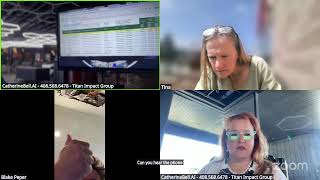
The recording captures a daily Deal Hunter team call led by Catherine Bell, blending a brief leadership segment featuring Simon Sinek’s concepts of an infinite mindset, empathy, and accountability with a deep dive into a Las Vegas property acquisition intended for a flip‑to‑assisted‑living (traumatic‑brain‑injury) facility. The team reviews the deal’s financial model, equity structure, investor returns, staffing, and operational cost assumptions, while also discussing the Deal Hunter AI tools (Marvelism/Marbleism) and workflow automation. The latter part of the call shifts to troubleshooting a broken automation form that mis‑places line items, causing confusion over a $9,000 form. Catherine and Tommy debate the source of the error, conclude it stems from the automation programming, and agree to pause further work until the issue is resolved. The call ends with a wrap‑up and plans to reconvene the next day.
Chapters
see the thing that they want, and some people see the thing that prevents them from getting the thing that they want. There's a great story of two lumberjacks where every morning they start chopping wood at the same time, and every day they stop wood at the same time.
Every day one of the lumberjacks disappears for about—
for the first time in modern history, college student grad disappears for about an hour in the middle of the day, and every day he chops more wood than the other guy. And this goes on for months, and eventually the one who works all day says, I don't understand.
Every day we start at the same time, every day we stop at the same time, every day you disappear for about an hour in the middle of the day, and every day you chop more wood than me. Where do you go for that hour? And the other lumberjack looks up and goes, oh, go home and sharpen my axe.
You know that if you take an infinite mindset, it's not about how much you can get done each day. It's how much you can get done over the course of a career, over the course of a lifetime.
And you got to take vacations, which means you turn off your email and you turn off your phone and you do not connect to the office. You know, go sharpen your axe.
I have 5 little rules that you can follow as you find your spark and bring your spark to life. The first is to go after the things that you want. Let me tell you a story. So a friend of mine and I, we went for a run in Central Park. The Roadrunners organization, on the weekends, they host races. And it's very common at the end of the race, they'll have a sponsor who will give away something, apples or bagels or something. And on this particular day, when we got to the end of the run, there were some free bagels and they had picnic tables set up. And on one side was a group of volunteers, on the table were boxes of bagels, and on the other side was a long line of runners waiting to get their free bagel. So I said to my friend, let's get a bagel. And he looked at me and said, ah, the line's too long. And I said, free bagel. And he said, I don't wanna wait. In line. And I was like, 3 bagel. And he says, nah, let's, it's too long. And that's when I realized that there's 2 ways to see the world. Some people see the thing that they want, and some people see the thing that prevents them from getting the thing that they want. I could only see the bagels. He could only see the line. And so I walked up to the line. I leaned in between two people, put my hand in the box and pulled out two bagels. And no one got mad at me because the rule is you can go after whatever you want. You just cannot deny anyone else to go after whatever they want. So the point is, is you don't have to wait in line. You don't have to do it the way everybody else has done it. You can do it your way. You can break the rules. You just can't get in the way of somebody else getting what they want. Rule number 2, take care of each other. The United States Navy SEALs are perhaps the most elite warriors in the world. And one of the SEALs was asked, who makes it through the selection process? Who is able to become a SEAL? And his answer was, I can't tell you the kind of person that becomes a SEAL. I can't tell you the kind of person that makes it through BUD/S. But I can tell you the kind of people who don't become SEALs. He says the guys that show up with huge bulging muscles covered in tattoos who want to prove to the world how tough they are, none of them make it through. He said the preening leaders who like to delegate all their responsibility and never do anything themselves, none of them make it through. He said the star college athletes who've never really been tested to the core of their being, none of them make it through. He says some of the guys that make it through are skinny and scrawny. He said some of the guys that make it through, you will see them shivering out of fear. He says, however, All the guys that make it through, when they find themselves physically spent, emotionally spent, when they have nothing left to give physically or emotionally, somehow, some way, they are able to find the energy to dig down deep inside themselves to find the energy to help the guy next to them. They become seals. He said, you want to be an elite warrior, it's not about how tough you are. It's not about how smart you are. It's not about how fast you are. If you want to be an elite warrior, you better get really, really good at helping the person to the left of you and helping the person to the right of you. Because that's how people advance in the world. The world is too dangerous and the world is too difficult for you to think that you can do these things alone. If you find your spark, I commend you. Now, who you gonna ask for help and when are you gonna accept help when it's offered? Learn that skill. Learn by practicing helping each other. It'll be the single most valuable thing you ever learned in your entire life. To accept help when it's offered and to ask for it when you know that you can't do it. The amazing thing is when you learn to ask for help, you'll discover that there are people all around you who've always wanted to help you. They just didn't think you needed it because you kept pretending that you had everything under control. And the minute you say, I don't know what I am doing, I'm stuck, I'm scared, I don't think I can do this, you will find that lots of people who love you will rush in and take care of you. But that'll only happen if you learn to take care of them first. Lesson 3. Nelson Mandela is a particularly special case study in the leadership world because he is universally regarded as a great leader. You can take other personalities and depending on the nation you go to, we have different opinions about other personalities. But Nelson Mandela across the world is universally regarded as a great leader. He was actually the son of a tribal chief. And he was asked one day, how did you learn to be a great leader? And he responded that he would go with his father to tribal meetings.
Now you can meet with a TurboTax expert in your community. They can do your taxes for you.
They get you every dollar you deserve. Local. And he remembers two things when his father would meet with other elders. One, they would always sit in a circle. And two, his father was always the last to speak. You will be told your whole life that you need to learn to listen. I would say that you need to learn to be the last to speak. I see it in boardrooms every day of the week. Even people who consider themselves good leaders, who may actually be decent leaders, will walk into a room and say, "Here's the problem. Here's what I think, but I'm interested in your opinion. Let's go around the room." It's too late. The skill to hold your opinions to yourself until everyone has spoken does two things. One, it gives everybody else the feeling that they have been heard. It gives everyone else the ability to feel that they have contributed. And two, you get the benefit of hearing what everybody else has to think before you render your opinion. The skill is really to keep your opinions to yourself. If you agree with somebody, don't nod yes. If you disagree with somebody, don't nod no. Simply sit there, take it all in, and the only thing you're allowed to do is ask questions so that you can understand what they mean and why they have the opinion that they have. You must understand understand from where they are speaking, why they have the opinion they have, not just what they are saying. And at the end, you will get your turn. It sounds easy. It's not. Practice being the last to speak. That's what Nelson Mandela did. Lesson 4: In the 18th century, there was something that spread across Europe and eventually made its way to America called puerperal fever, also known as the Black Death of Childbed. Basically what was happening is women were giving birth and they would die within 48 hours after giving birth. This Black Death of Childbirth was the ravage of Europe, and it got worse and worse and worse over the course of over a century. In some hospitals, it was as high as 70% of women who gave birth who would die as a result of giving birth. But this was the Renaissance. This was the time of empirical data and science. And we had thrown away things like tradition and mysticism. These were men of science. These were doctors. And these doctors and men of science wanted to study and try and find the reason where this Black Death of childbed. And so they got to work studying, and they would study the corpses of the, of the women who had died. And in the morning they would conduct autopsies, and then in the afternoon they would go and deliver babies and finish their rounds. And it wasn't until somewhere in the mid-1800s that Dr. Oliver Wendell Holmes realized that all of these doctors who were conducting autopsies in the morning weren't washing their hands before they delivered babies in the afternoon. And he pointed it out and said, guys, you're the problem. And they ignored him and called him crazy for 30 years until finally somebody realized that if they simply washed their hands, it would go away. And that's exactly what happened. When they started sterilizing their instruments and washing their hands, the Black Death of childbed disappeared. The lesson here is sometimes you're the problem. And my point is, is take accountability for your actions. You can take all the credit in the world for the things that you do right, as long as you also take responsibility for the things you do wrong. It must be a balanced equation. You don't get it one way and not the other. You get to take credit when you also take accountability. True story. There was a former Undersecretary of Defense who was invited to give a speech at a large conference about 1,000 people. And he was standing on the stage with his cup of coffee and a Styrofoam cup. And he took a sip of his coffee and he smiled and he looked down at the coffee And then he went off script and he said, you know, last year I spoke at this exact same conference. Last year I was still the undersecretary. And when I spoke here last year, they flew me here business class. And when I arrived at the airport, there was somebody waiting for me to take me to my hotel. And they took me to my hotel and they had already checked me in and they just took me up to my room. And the next morning I came downstairs and there was someone waiting in the lobby to greet me and they drove me to this here same venue. And handed me a coffee cup of coffee in a beautiful ceramic cup. He says, I'm no longer the undersecretary. I flew here coach. I took a taxi to my hotel and I checked myself in. When I came down the lobby this morning, I took another taxi to this venue. I came in the front door and found my way backstage. And when I asked someone, do you have any coffee? He pointed to the coffee machine in the corner and I poured myself a cup of coffee into this here, Styrofoam cup. He says the lesson is the ceramic cup was never meant for me. It was meant for the position I held.
Imagine being able to build an app with your name on it just by thinking about it. Neat base 40 fool.
I deserve a Styrofoam cup. Remember this as you gain fame, as you gain fortune, As you gain position and seniority, people will treat you better. They will hold doors open for you. They will get you a cup of tea and coffee without you even asking. They will call you sir and ma'am, and they will give you stuff. None of that stuff is meant for you. That stuff is meant for the position you hold. It is meant for the level that you have achieved of leader or success or whatever you want to call it. But you will always deserve a Styrofoam cup. Remember that. Remember that lesson of humility and gratitude. You can accept all the free stuff. You can accept all the perks. Absolutely, you can enjoy them, but just be grateful for them and know that they're not for you.
We're asking our youngest generation to work and succeed and find themselves and build their confidence and overcome their addiction to technology and build strong relationships at work. We're asking them to do this in these environments we've created.
We keep saying to them, you're the future leaders.
We're the leaders now. We're in control.
What are we doing? This is what empathy means. It means if there's an entire generation struggling, maybe it's not them. It's like, you know, the only thing that I—
that, um, the common factor in all my failed relationships Me, same thing. Well, we just can't get the right, you know, the right performance out of our people.
Maybe it's you, right?
It's not a generation, it's not them. They're not difficult or hard to understand.
They're human beings like the rest of us, trying to find their way, trying to work in a place where they feel that someone cares about them as a human being.
By the way, that's what we all want. In other words, it's not even generational. It's all of us. This is the practice of empathy, that if we're struggling to communicate to someone, if we're struggling to help someone be at their natural best— I'm tired of people saying to me, how do I get the best out of my people? Really?
That's what you want?
They're like a towel, you just wring them?
How can I get the most out of them? No.
How do I help my people be at their natural best?
Right?
We're not asking these questions. We are not practicing empathy. We have to start by practicing empathy and relate to what they may be going through, and it will profoundly change the decisions we make.
It will profoundly change the way we see the world.
We're growing up in a Facebook, Instagram world. In other words, we're good at putting filters on things. We're good at showing people that life is amazing even though I'm depressed, right?
And so everybody sounds tough.
And everybody sounds like they got it all figured out. And the reality is there's very little toughness and most people don't have it figured out. And so when the more senior people say, what should we do?
They sound like, this is what you got to do. And they have no clue.
So you have an entire generation growing up with lower self-esteem than previous generations, right? We know that engagement with social media and our cell phones releases a chemical called dopamine. That's why when you get a text, feels good, right? It's why we count the likes. It's why we go back 10 times to see if, I don't know, if it's going— if my Instagram is going slower, I do something wrong, they don't like me anymore, right? The trauma for young kids to be unfriended, right? Dopamine is the exact same chemical that makes us feel good when we smoke, when we drink, and when we gamble. In other words, it's highly, highly addictive. That's basically what happened. We have an entire generation that has access to an addictive numbing to chemical called dopamine through social media and cell phones as they're going through the high stress of adolescence. Why is this important? What's happening is because we're allowing unfettered access to these dopamine-producing devices and media, basically it's becoming hardwired. And what we're seeing is as they grow older, too many kids don't know how to form deep, meaningful relationships. Their words, not mine. They will admit that many of their friendships are superficial. They will admit that their friends, that they don't count on their friends, they don't rely on their friends, they have fun with their friends, but they also know that their friends will cancel on them if something better comes along. Deep meaningful relationships are not there because they never practice the skill set, and worse, they don't have the coping mechanisms to deal with stress. So when significant stress starts to show up in their lives, they're not turning to a person, they're turning to a device, they're turning to social media, they're turning to these things which offer temporary relief. I believe loving your work is a right and not a privilege. I despise the fact, I lament the fact, I curse the fact that so few people get to say, "I love my job," as if they'd won some lottery. You go out with your friends and somebody says, "I love my job," and everyone goes, "Oh my God, you're so lucky," right? That to me is madness. Everybody, the vast majority, should get to wake up and say, "I love my job." It is a right. It is a God-given right that we should love where we work. And we should demand it. We should demand that our leaders provide an environment in which we want to come, where we want to care about each other, where we feel safe to express our vulnerabilities and our fears and our concerns, that we're open to correction and discipline and feedback, that we're not defensive because we know that it's being given to help us improve and grow. And we want to improve and grow. And in turn, we will help others improve and grow. Because when we feel safe, when we feel that our leaders care more about us than a number, they care more about our lives and our confidence and our joy and our skill set more than some short-term gain, that they care more about our priorities than the priorities of some disinterested external constituency, then we will respond in kind and we will offer our blood and our sweat and our tears and we will make sacrifices of all kinds to see that our leader's vision is advanced, that this company continues to thrive. Not for them, for ourselves. It becomes deeply personal, becomes something we love contributing to. I talk about it all the time. Working hard for something we don't care about is called stress. Working hard for something we love is called passion.
How do you articulate thought into words more clearly? All it takes is 15 minutes a day to organize your thoughts. And I'll prove it in the next 35 seconds. I used to blank out mid-conversation, stare into space, unable to organize my thoughts into clear sentences. My mind felt like it was spiraling out of control. I couldn't think of the— Good morning, everyone. So that was my morning inspiration. I love listening to inspirational movies and videos and Is he here? Where's this? So this is from one of our favorite people. His name is Ellis and it's called the Picnic Pit Lunchbox. So he does hands down some of the most extraordinary barbecue on the planet. He is—
Oh, so you ain't never had no barbecue in La Palma?
Oh. Yeah, I was gonna say it doesn't smell like it. Oh, that's funny. So Tommy went upstairs and he got protein shakes and nuts and chips. Can you hear us, Blake? Can you hear us?
I can hear you, it's just a little muffled.
A little muffled.
Okay, how's it now?
Can you hear Tommy?
Yeah, I can hear Tommy now. Yours is, uh, underneath your gut, it's not on top of it, is it? All right, so do it on your sleeve maybe instead of on your neck. You want me to do it? You want me— you got it.
How about that? Can you hear me now? Feel like we're—
yes, we can.
Okay, awesome sauce. Good morning, excited you're all here. Don't know how much of the inspirational talk— Simon Sinek, he's one of my favorite Authors starting with why. So Tracy, part of, um, uh, homework that I give all my— the people we're mentoring is have them read starting with why. Because if we don't have a strong why, we all know times get hard, it gets harder. So Simon Sinek is, uh, yeah, anyway, those are my fun things for this morning. Inspirational. Pick me up.
Something happened on my screen. Is it your screen?
Go, go, Blake! I've got the Facebook Live. You can do the link for everybody. Either Spanish or doing their thing.
Big Facebook Live's got the, the most ads cranking right now, um, and we did a little analysis on the ads, um, and then your, your guy Sonny over there on the, uh, on the Facebook, on the, uh, the, uh, social media manager, he, uh, he ran out of words before 9 o'clock in the morning. You work people too hard. I haven't even like spent I'm just saying your virtual team is saying, sorry, ma'am, we're done at 9:00 AM. Yes. So obviously they'd be working their butts off to the point that you get a full day work before 9:00 AM.
Rachel, this is actually really funny. She is the receptionist and I had Laura call her this morning and test it. Long story short, Laura told her who she was, that she's my BFF and she wanted a girlfriend. And Rachel actually scheduled time with us, like, on a weekend to go hang out when she's here. So she's not just looking at my work calendar, she's also paying attention to my personal life too. That's comical.
Okay, is that the AI agent?
Yeah, that's the Marvelism.
Like, I gotta set that up. That's so awesome.
It was awesome. I'm showing like everybody because again, as of this morning, I've saved over 400 hours of my time. And I've only been doing this less than 2 weeks. I started Saturday like a week and a half ago.
You need to start this up, Tracy. Like, just go get it.
And I think she already has it because of, I think I did it one time, but I don't remember. Finishing it or I don't know. I know we've looked into it before though. I think Drew set some stuff up, but I don't know. Did you have a link, an affiliate link that if I get it again because I can't find a login for it, I don't know.
Let me send it to you because it is for— I'm loving this team.
Next time.
So then I have it logged in. All my devices. So rather than getting like another person's, um, like having to sign up another person, uh, Tommy's just like using like the Titan phone and stuff. But it's brought an enormous amount of relief to me because honestly I never answer the company phone. And, uh, now that I know that it's being answered having real conversations. It's been amazing. Sicily, you would probably love this. This would be huge for your business.
Yeah.
I see.
I looked into it.
Sunny posts like 40 posts a day across all my platforms. Do you have to approve it? You can either set it up to approve it or once you get the cadence, you can just say everything's approved.
Go.
Oh, looks like I have a Marbleism set up for CashBridge Solutions, the hard money lending, right?
Super cool. Um, I think some people sent some deals to us. Is that what I saw in the email? Which Trevor thought I saw.
When I have time, I'll have to dig into that.
Thought I saw else.
Um, I sent over the, um, journey for capital from the subscription to the success, uh, successful exit, and then also a TC operator agreement for, um, for transaction coordinators and their list of duties. Um, let's call it right now.
You guys have any deals you want to run while I'm trying to find this?
I'm sure I have deals sitting in my inbox.
Well, that's interesting that this person didn't show up on the list yet.
How did that one get crossed out? What is that one? Why would that do that?
Oh, it's the last number. It's that 55512.
Oh, yeah. Yeah. Yeah. Yeah. Yeah.
So I'm—
as I'm going through and fixing the dashes. So it's weird. It looks like it's now dumping it up here rather than down below. So something's wrong with their formula.
No. It's not wrong. The, the, the hottest leads have to be called first. They're not— You're— we're behind.
So do you want to call these people now?
Yeah, I mean, I don't know when they came in, but so we're running over there.
It came in within the last 24 hours. All right, Lucian and Danielle came in like yesterday. You want to call from the Titan phone?
We're already on the phone.
Um, do you want me to find a deal?
Yes, please.
All right, here's the actual deal that I'm, I'm actually, um, gonna work for myself. Let me share my screen.
If you guys can also open up Facebook Facebook and promote the live, that would be awesome.
Do you see my screen?
Yes.
All right. Let me give you a little bit of history. This is a flip property in Las Vegas that is— was actually, um, going to be a residential assisted living. I loaned the money on the project and they're about to pay me off, and now they want to raise funds to turn it into a traumatic brain injury, um, specific and bring on partners and keep it and run it as a TBI. So she sent me the info and I threw it in and said, run this deal.
All right. And it says that the straight line on this is that it's not bankable as it's currently structured, meaning like It's saying that paper and economics need to be tightened up before money goes in. Excuse me. The biggest issue is not the projected cash flow. It's a mismatch between the pitch and the legal agreement. Right.
And, and they're going to rely on me to actually structure it. This is kind of a rough—
Right.
Yeah.
So they're trying to— they want to raise a $1.2 million deal. Mhm. And, and so can I just be a Shark Tank on it real, real quick?
Yeah.
At 8%, I'm getting 30, uh, at, at, um, the agreement is that there's 30% to the investor on the $1.2 million, right?
Um, yeah.
So that, that basically makes it, um The value of the, of the, um, property— and this is without us going deep diving on it— but the value of the property is about, um, uh, $4 million then? Is that what they're saying? Is that like the total value of this project?
I haven't reviewed it yet, but let me look.
Well, based on the raise, so if they're, they're giving away 30% equity for $1.2 million, that makes it worth $4 million?
Well, they already own the property. So this is the money that— so it kind of doesn't really have anything to do with how much the property is worth, if that makes sense.
No, not the property, the deal that it makes. So like on Shark Tank, when they say, how many units have you sold? What are you trying to raise from us as the sharks? And then how much equity are we getting? And so they base that value based on the amount of that, you know, amount of money they're trying to raise. So if they're raising $1.2 million, giving away 30% equity, that's $4 million.
And that's probably split between the actual asset and the income from the business.
Well, right, correct. But just from a Shark Tank perspective, like a VC perspective, they're asking for $1.2 million and giving me 30%. I'm assuming they think it's worth $4 million, right? So I'm going to start looking at the numbers from there. And the first number I'm going to look at is the projected net profit of $400,000, you know, $450,000, $500,000. So on a $4 million property making that amount, the numbers start getting tricky in my head. So, but we can keep going, and that's probably why, why Deal Hunter's going, wait a minute, what's going on? So under the current agreement, they're saying that the investors will get $96,000 total a year. Um, that's under 1% of the total investment, right?
Right.
So that'll throw them off right there because they won't touch anything under the 1% rule.
Right.
So there's a, there's a little bit of a—
yep.
So, and that's why it sees the conflict. It says that there's a 2.2x multiple, but what it really only shows gross cash multiple is only 1.04. How is 2.2 even suggested? So then legal docs and pitch deck don't match, 30% equity And it says 20% equity, okay? And it says profits are split 70/30 after pref. So, um, which investor— it's saying that the operating agreement says that their investors receive a pro rata ownership based on capital contributed. So the pro rata ownership is that, that, that's that 70/30. So it's profit— it's saying profits split, which should be structured as waterfall. Okay, keep going down. Return of capital is discretionary. This is, um, sometimes a— uh-oh. So yeah, because it's saying, well, it's not a clean private lending deal. Doesn't appear to be offered as a private lending deal. Deal that appears to be offered more as like a loan, all right? I mean, an equity play. They're— at least that's what I'm seeing, is kind of like an equity play. So no real collateral. Sponsor recapitalization is buried in the use of funds. So, um, if they're— so yeah, if the sponsor's paying themselves back, like, if you— because you said the land or the property is free and clear, they own it free and clear. But if it's in the line items of use of funds to reimburse it for any of it, then that's considered— what is that? It's in the documents we just signed today. That's true.
Well, and they don't own it free and clear. There's actually a mortgage on it.
Yeah.
And I haven't even reviewed these documents yet. So Um, but according to research, I'm wondering if it's going to talk about traumatic brain profit margins in here.
Um, probably not due to the fact that it's lumped into just the category of assisted living. And then you can tag into it, like say this is a niche category that receives more money and then And then it gets kind of tied on as a bonus, not as a baseline operating, because let's just say, for example, the operator goes out of business or whatever, loses the TBI and they switch over to, um, uh, right, alcohol recovery. You're— that's the lowest of the barrel, right? And so that one, that's what they're going to base it on. And then anything above and beyond the lowest of the of the earner goes to, uh, the bonus. So, um, and then, okay, so what I would require before underwriting further is the financial diligence, understanding, um, everything. So again, it says the assumptions behind this are $10,000 per bed for the TBIs, right?
And I think it's more like $30,000 per bed. Yeah, but I need to do more research.
Well, yeah, no, they, those, those facilities get anywhere between $800 and, uh, $800 and $8,000 a day depending on what they got going on inside of them. So, um, they make a lot of, uh, a lot of money off of those places. But the management of it also goes up too when you got to bring on brain specialists and stuff like that, the cost to a— I know brain specialists go for $450,000 to $550,000 a year.
Yeah. So the, let's see, like the expense on the residential assisted living with the same type of beds is around, I don't know, $25,000, $30,000 maybe.
Yeah.
Let me see if I had that written down.
I would, I would want to see their breakdown of their expenses for a TBI, just to make sure that all the bases are covered. Because again, yeah, we'll take care of TBIs, but if you don't have specialists, um, to justify that, it's not going to stay afloat very long. Because when the, uh, audits come down from— like, if they're getting subsidy or anything like that, the audits come down, there's going to be some scrutiny on that. And then if they're private pay only, um, the market will take them out.
Well, they're actually— it's actually going to be doctors and nurses that are doing this, right?
Right. Well, and again, that's what I want to make sure, because I just being in the industry, I know how much nurses make, I know how much doctors make, I know how much all those people make. And some people that only do, you know, only do real estate wouldn't have a clue what a doctor makes. They'd have to go ask a doctor, be like, hey, does this sound right? Does this look right?
And So does the old factor dig into that?
I think I, um, I kind of tripled all the cost in my head when she was telling me about it. Um, and it still was about $100,000 a month profit.
Yeah. Um, how's that work? Well, it's a 10-bed and you're going to assume that it's going to have 8 beds full. Try to, yeah, you'll be at 80, but— hi, Tina! Is that, uh, is that, is that Tina from North Carolina? Anyway, uh, well, looking through it, it does a SWOT analysis and all that stuff. That's good. Get down to the bottom here. We can, we can add to it if you want to, and then we'll jump over and see what's possible. They currently, they currently are operating as an assisted living facility though, from what you said.
I don't think so. I don't think it's operating right now. They bought it to, um, to flip it as one.
Got it. And now they want to operate out of it.
Yep.
Got it. Okay. Yeah, I would, uh, I would, um— did they send over the— did they send over, um, financials showing like what the cost of doctors and stuff were?
No, not yet. I have a meeting with them at 3.
Got it. Well, if you want to, if you want to be pre-warned to the prices of it, let's see if the owner can tell us. If you want to throw a dictate on it, I'll tell it what to say. Or if you want to type it out.
Okay, go ahead.
We want to get an understanding of the cost and expenses to running a TBI group home. We want to know what it would cost for the operations of this by hiring and contracting doctors, nurses, staff, and what would be the above and beyond cost of running a standard group home. It currently is not operating as one, so give us our basis and then tag on to this report what the, what the expenses would be based on, like having the, uh, nurse practitioners or, or, um, medical doctors, uh, contracted and staffed to operate this place. And it just— it's crazy, you know, that, that I have my experience in, in being a nurse that I would know these numbers. But when I started the Stem Spa I was actually hiring the nurse practitioners and, and we were hiring doctors of naturopathy. And so I actually interviewed these doctors and, and hired them to come in and work above me, right? Because I needed them to write the scripts for me to do the medicine, you know, to do the, uh, uh, infusions that we were doing for stem cells and and vitamins and stuff like that.
So do you still do any kind of nursing work?
No, 100% retired.
I'm thinking, Tracy, is that you could use Deal Hunter to help you ask the necessary questions of them when you have that call today.
Okay, we can do that. Like, and say, listen, I can barely hear you.
I think your microphone's off.
I think it is.
I think your microphone is off, Catherine.
Okay, how about now? Can you hear me now?
Sounds better.
Yeah.
Okay, good.
So what I was saying was that, um, you could actually tell it that you're having a meeting with them today at 3:30 and you're going to go over all these things. What are the questions you need to be asking them the hard, tough questions and the information that you need in order to do a thorough analysis of this deal. And it'll literally like give you a script and all the questions to be asking. And as it's giving, as they're giving you answers, you can be like, I hit the little dictate button on there and I just let it listen to the conversation and then continue to forward like let it be a part of the conversation so that it helps guide all the things that I'm hearing, not hearing, to do a better deep dive analysis on it. Does that make sense?
So you said go ahead and run the dictation during the meeting?
Yeah. So what I do is I usually have like two tabs open with one's recording the conversation and then I'll just copy and paste in because it only allows 9 minutes. Of, of, uh, conversation, right?
Okay, so let's, let's, let's keep looking at this a little bit real quick because we can validate stuff right now. So the current P&L shows that there's $478,000 spent on, on annual expenses, with $288,000 of those being made up of payroll. I can tell you right now that's 100% too low because it, it says that your payroll works out to only be about $11.50 4 cents an hour. Um, and, uh, that's, that's, that's when you got that many FTs, it's not even possible. You got to be way up higher. So using— it shows down there that Las Vegas wage benchmarks are closer to $22. Um, and so, and then, um, what it's going to cost you for some of the other things.
Okay, so did it take It was—
I don't, I don't even know if in this it's saying that it pulled it from a P&L. So it says your current P&L shows this amount.
Okay, so that's a projected P&L. Okay, so that is one of the documents I put in there. I was wondering because after— okay, so it'll probably tell us where the discrepancy is.
Okay, so right there it says that the $336,000 to 22 labor hours worked per week needs to be up around the $22 an hour mark. Not, not all right. You're not going to get that. So the lean model is around 501 with base wages just for wages, right? You're at 500. And I think I said that, didn't I? I think I said 500, right? So it's not, it's not too far off. And that's base, that's lean. That's, that's not even, you know, that's not being fancy about it. When you, when you talk about it being a TVI home, you're going to have to increase that again. So, right. So a realistic all-in standard residential home is more like $752,000 a year, which they were at $200,000. They were at how much?
I think you said $288,000.
Or something. I don't know.
Anyway, I think it fit up here somewhere.
Yeah, I think we're up back into the, uh, into the deal a little bit. Right there, it's the first one.
The other thing I'd be asking, Tracy, is who has actually done this before?
Right there it says, it says that it was based on the $478,000. So we're thinking that just labor is $561,000. They're saying with the mortgage, the, the payroll, the electric, the food, the insurance— food at $24,000 a year. What do you see?
That's not— that's not even— do that.
Electric's at $7,200, insurance at $90— like, none of those numbers are even close for that to me, and I live in a— I live in an RV.
Exactly.
So those are all brakes. I hit the brakes hard. So, um, going through it, going back down, you can see that this, this budget they have is completely not realistic, realistic at all. So, because again, your, your numbers on this have to be— so go, let's go see what it actually says, what a TBI is actually going to end up being. Heavy clinical overload overlay, because again, these are people that need direct attention. Like, if you've never been around a TBI person It's, it's kind of, um, a, a very hands-on interactive program all day, every day, all night, every night. Okay. And high-level drugs. Okay. So one of the other things you got to do is you got to pay your nurses good enough to not be drug addicts.
Oh gosh.
Okay. Let's talk about that for a minute because I know about— I know about— I got an ex-wife who's a nurse drug addict. Called me from a parking lot suicidal because she got busted for 762 counts of narcotics. That—
holy schnikes.
Okay, called me from the parking lot, told me I'm going to take my life. I ain't talked to that woman in 7 years. Called me and said, I'm going to end it, please talk me out of it.
That was fun.
Anyway, so yeah, to be a true heavy TBI, they're going to need to factor about a $1.3 million budget, period. So the gap that you can give them is for them to understand they're about $800,000 off on their mark, right? And, and again, you— and here's the best part. Ready, ready for this? This is coming from the guy that pisses off everybody. Pay attention over there on TikTok, Facebook, okay? This has no feelings, no emotions, non-biased or anything. It's just bringing you facts, letting the numbers tell you what to do. Okay, it's not this redneck smartass telling you, oh, I've been there, done that, because you know how many people believe that I'm a nurse and I'm a contractor and I know both worlds so good that I, I could predict what this thing was going to say? You know, just give me a— just give me a little shawmy hat with a, with a, with a clear ball and I'll just— I got better luck at selling that than I do telling people this is the truth, you know. So when we were— when Trevor and I were talking to those people about their their dream RV resort. They want to build Disney for $2 million. I was like, uh-uh, that's not how you do it. Disney, you got to spend— you got— you're going to spend $20 million to build Disney and pray you get your $2 million back every year now. So, and then you get— you get to have it for 10 years to earn your money back, right? Because that's how it actually works. So when these people are talking about doing a group home like this, this is what they have to take into consideration. So if they're wanting to raise $1.2 million That's just to operate. And so if their line item says anything about paying this off or paying that off, not going to happen. Not happening today. Not in Las Vegas. So having that conversation with them gets tricky unless you go, here's what the report shows.
Now, I mean, they're coming to me for the expert advice anyway. So they're like, this is rough. This is what we came up with.
And you could, you could take it from here, Tracy. You could take that, do that copy right there, copy everything that's right there to a Word doc, save the Word doc as a Word doc or a PDF, take it over to NotebookLM and tell it to make you a report in NotebookLM. NotebookLM would then immediately create this, this dynamic report that you could just say, here you go, here's what we found. We did the due diligence on the docs you sent to us and This is what they— what we really see. So, um, right there in Google Docs, put it— put— just copy and paste it right there because it's all connected. Yeah. And if that saves to your— to your whatever, you just go up and He says yes. And then go to your, uh, NotebookLM.
I think I have one open somewhere.
You think? Somewhere, somewhere up there?
Yeah, I got all these freaking things.
You need a new notebook?
I probably have a few of them. Hold on, let me make sure I'm at the right account. What am I doing?
Okay. No, just from the drive down there, go to your drive.
Can I just copy? Can I just paste?
You could.
Yeah.
Oh, you can. Yeah.
So you can title your notebook.
It'll title it for her after it understands it.
See, there you go.
Boom. Okay, and then you go over right there to— nope, not slide back, go to reports right underneath it. Select the arrow, or— there you go. Yep. And so now it's gonna— you're good right there. So go— I can't— I don't know why I can only see a part of her screen.
Hold on, it's because I tried to zoom in for you, so let me—
no, I'm Okay, there we go. I'm like, I can only see half of your screen. So right there it says project feasibility report, underwriting strategy document. Like, you can select all those, go back and make one for every one of them. Boom, boom, boom, boom.
Model budget analysis. Isn't this incredible?
And now all your stuff is there. To hand over to them.
Yeah.
So after this is, you know, after this is done generating all these, review every one of these, and then go, okay, boom, done. Save them over to a drive and send them over to them and say, here's where we're at.
Yep.
You know, and then they get to determine how to move forward. They might want to be like, you know what, um, can we go back to selling this thing?
Right, you never know. They may.
And then if they do, you say, yes, you can. We've got this, you know, we've got a dispo team over here called Land Shark Mastermind, and we can definitely set it up to dispo for— sell it out. Not necessarily that it has to, because here's what we know: investors like to buy stuff off market for some reason. It's just like women, they don't like to buy stuff while it's on the rack. They want to wait until it's on the where? On sale, on the clearance rack. So that's like, that's why every store in the world's like, the whole store's on sale. Because guess what? Now the woman's going to go around and grab everything, right? Whole store's on sale. If you just put a sale sign on every rack in there, every rack is game. If they— I've literally seen women do it where they walk up and they're like, the sale sign will be laying on the floor because the kid clearly knocked it off. And the woman will go, not gonna shop there. And she turns around and goes over there. Because literally the sign is now on the floor. It is no longer on the rack. It is no longer a viable sales rack. It needs to be, we need to be over here now. So with that analogy in mind, all investors want off-market deals. And so we are not opposed to realtors. We are wanting to just facilitate what investors really like and want to do. Right. So, wow, is that impressive or what?
Yep, I like it.
So, well, that's the other one. So with the, you know, the existing— it says that the annual revenue right there was what, like $90— $936,000? Like, that, that alone is what you need to operate.
Yeah, you know, they're not going to have a net profit of $457,000 for sure.
Interesting.
But now it's gonna— now it's gonna lay it out for them so they don't have to be like, oh well, who came up with this idea? Black and white, baby.
Yep. Is that it? Shouldn't do any more.
Well, and you can tell them like, a nurse actually underwrote this with you. Be like, I had a, a literal healthcare professional who, who been in healthcare for over a decade say this is— these are valid numbers unless you got something different.
Really?
Then at that point they can come be like, yeah, we've got these nurses from the Philippines and Guatemala who are gonna come in and— oh my God, no, I'm not joking, they do. Because again, you can get a work visa. Like, every, every nurse on the reservation is from the Philippines. There are not one single naturalized citizen working on the, on the reservation. Yeah, every— yeah, like, really? I was one, and another doctor was one. The everybody else there was working on a visa at the reservation. Wow. So, and, and again, because the need is there, and they're like, okay, well, where— and there's a whole program for recruiting those nurses in there. To that, you know. So, and Trevor could probably speak to that too. Trevor's in healthcare. So Trevor, how much, how much is the average, um, physical therapist salary per year?
Trevor, he's not listening.
Listen, buddy, if you're just coming in here to show your pretty face around, you can go ahead and keep doing that. It's way better than mine, I swear.
Um, Tina, welcome! Super excited you're here. We're here running deals.
Tina, uh, Tina looks like a new face, so I want to give her a chance to say hi. And who are we?
We've met, Tommy.
Where did we meet up at?
Um, I have a Boone property, a big, big vacant brick building in Boone that I'm revitalizing. Yeah, we talked about that a few times.
Yeah.
Okay.
Now I remember. Yeah. So when you said you're back, I'm like, because there's been a couple of Tina's, maybe I thought Tina from North Carolina, not from—
I thought you said something about North Carolina. No, Iowa.
Iowa. Is it Iowa or Idaho?
It's Iowa.
I knew it was an I. Yeah. And it wasn't Indiana, Illinois.
No, it's Iowa.
It was Iowa.
Yeah.
No, that's awesome. How is that project going for you?
Um, it's stalling. Yeah, financing. Just, I'm having a hard time getting my numbers to be— to have a viable, like, profit on it right now with interest rates and everything. Uh, so that's kind of—
sell your tax credits. We know it's a historical property, right?
No, Boone didn't— they didn't move forward with any of that in Boone. They had committee that they were putting together, and then they had a change of mayors, and, uh, and the volunteers that were on that committee just didn't have any experience. So they, they don't have any designated historical, uh, properties in Boone or areas.
That sounds like Italian.
Yeah, yeah, actually I mentioned to them, I said I have an expert in that area. Accept it.
Come in and help us. Yeah, so, um, yeah, as a matter of fact, we were at a, a conference here in Arizona, and it's— we've gotten information about nationwide projects. It's not just Cedar, Arizona. So what we can do is we can share with you the, the info we got at that meeting. Oh, um, and you can kind of comb through that, pull it into your AI, me to share it class folder with all the presentations. Yep, yep. And it talks a little bit about Opportunity Zone. I don't remember if yours was in one or not.
That is another thing Boone has not done. No, they would be a perfect city for Opportunity Zones, and those are coming back up again, right? I mean, are they?
Oh yeah, they're already up, they're already up. So, but yeah, we, um, you need to look— we need to get you the information for the historical tax credits. And it doesn't necessarily require a lot of input from the city or county. You can do a lot of this work through the national level.
Okay.
And we can get you the information to learn how to do that and put you in touch with the right people to do that.
Yeah, that'd be perfect. I wanted to— are you guys— do I have a second?
Just a second, Tina. We have a car that just started up here. It's really hard to hear, but in the meantime, time, I put in the Drive there the link for the conference we just went to with all the PowerPoint presentations. Awesome. And this was a part of what they talked about. So there's— there was one in there about historical. Okay, so Tina was saying something when they shut off the car.
Go ahead. Yeah, so I want to just kind of throw this out here to see what you guys think about this. My son is attending It's a performance tuning school in Texas in an area near Sealy. The school itself has this continuous flow of students that come in for like 9 months out of the year, and it's continuous, but there's nothing near it for housing right now. They have a large amount of land. They've been there there for years. It's a very, very profitable private company. They, they make muscle cars really fast, and so they have millions of dollars of vehicles sitting out on their lot. But Bray has actually been speaking with the owner about the property that's surrounding it. There, there's a big interstate that runs from Hennessy into Katy and Houston. It's about I would say rush hour about an hour away, but it's expensive, you know, living there in Katy and Houston. However, I've been looking at the property values around where the school is, and they're significant. Like, you know, you have a handful, quite a few of them that are around over a million dollars, but they're starting to do across the road, they're starting to build out residential community, and so So I had proposed to Bray, I'm like, let's maybe see who owns that property, if it's Hennessy or, you know, someone affiliated with them, if they would be interested in some type of like student housing, modular housing, so that those, those kids— they're actually— he's the youngest, actually. Most of them are adults, they've been in the business for a long time. Youngest other than Bray, I think, is 27. They're driving. Some of these guys guys, so they're, they're renting properties in Houston, um, or even outside, driving 175 miles a day to get there. Uh, you know, Bray, it takes him from Sealy about 40 minutes. So I was just curious, like, what would be the potential to do something like that, um, if that property is potentially for sale, or if they would be interested in leasing, or how I would go about pursuing that.
Opportunity is always available when, when we have, you know, understanding of what we got. So yeah, if you, if you were able to harvest more details for the area, that'd be great. But okay, um, what, what it looks like from our standpoint here in the mastermind is, um, we, we go after deals, we find opportunities, And before we lock them up, we always try to make sure that we have a sponsor or buyer on the flip side to take it over. Right.
Okay.
Unless it's something like in the case of a rental property that we can show a DSCR loan, we can structure it for, say, for example, Blake's right now trying to work on something that we can get him money on. He's going to need to bring in a partner that's going to take some money. Blake's ideal partner partner is going to be somebody with a credit, a good credit score, maybe some, some liquid capital depending on how much, you know, depending on how much Blake wants to give them, you know, give the partner and how much they want to take off of, off the deal. But if you got good credit, you can, you can be your own capital, capital source, your own capital partner. You can go and take that on and we'll help you through it. Um, but when we have to start adding other these other components into it, the, the share of who we call the sponsor. And in this case, it'd be you, the sponsor. Blake's a sponsor on his deal. I'm sponsoring the data center and the RV park. And so my partners on that are Catherine and her investors on my two deals. We're trying to find people to capitalize Blake's deal. We're trying to find people to capitalize Katya's deal. Because we're locked up on what we got going right now.
Yeah.
So we're working with them more on getting more capital partners in. Tracy's bringing in more capital partners. So the idea is to fill the pipeline with deals and then apply good logical sense to them so they make sense. Because like, we just ran through Tracy's deal and Tracy sees like, we're not going to spend a lot of time chasing capital there. We're going to spend more time fixing the product and making it valuable and making it have a good return on investment. Yeah. So those are, those are the areas we're working within. So if you see that there's a need out there in Texas for this and you can bring us an address to run, or even if you want to do deal discovery and be like, let's find a property around there that would be suitable, maybe we find a broken down RV park around there somewhere. That, because like you said, it's expensive to live there. Let's go find one that's just sitting around, pick that up, convert that into the, the housing model that's necessary for these kids to not have to drive, or, or grown adults, whoever they are. The students going there, they don't have to drive more than 30 minutes to get there, right? Yeah. And Deal Hunter can show us how to do that. So if you're using Deal Hunter to, to, to do that, great. If you want to do it during the show, great, we'll do that as well. We're always looking for contacts.
Yeah, yeah, I actually was just on Deal Hunter now, kind of tossing that in a little bit, the concept around it. I even wondered if maybe Hennessy, the owners of Hennessy, would be interested. They're, they're car people, not, not real estate people, but that would be such a, such a benefit for them to have housing for their students.
Absolutely.
Yeah, you know, and they've got the money, they've got the cash flow.
So you can make that outreach to them, say, but I would wait until you have something to outreach to them.
Oh, for sure.
Yeah, you know what I mean?
Yeah.
I just had a call. I'm going to take a call right here because this is on a piece of land that we have for sale. So we're going to run it. We're going to run a live call right now. And I'll just give everybody a heads up. This is off of an ad that I've got running on Facebook Marketplace.
4-5-2-5-0-1-7-1. Can't take your call now. At the tone, please record your message. When you finished—
I don't ever leave a message. Um, what I do is I send a text. So, and I'll just let everybody know what it is. This is off of a, um, property, um, that, uh, I have a joint venture with. I got a guy that bought the property off of a tax deed auction. I went out and inspected the property, and, and he's, he's, he bought it sight unseen. He has no idea what's on it, what's about it. So he bought it for $3,500 and he cleaned up the title for another $3,500. So he's into it for about $7,000. I said, I'll be your joint venture partner. I'll pay you back your money and split with you $500 a month if we can sell it owner financing. He said, okay, done. So I listed the property and I listed it for $35,000. And we're going to sell it at— I'm going to sell it for $5,000 down and make them pay $2,000 in fees and, and documents so that we can get it closed. So they're going to end up paying $7,000. I'm going to hand that to my partner and then him and I are going to get $250 a month for the next 60 months. So if you do the math on that, What does that come out to? You know, you know, $15,000. So we're both going to get $15,000, and then that person is going to give us, him and I, $35,000— uh, I'm sorry, I take that back, $30,000, because it's a balloon payment. They're going to pay us $30,000 in 5 years on top of the $15,000 we earned for the last 5 years. So at the end of it, him and I are going to split. We'll get $15,000 each per, uh, per— for the 5 years in interest only. And then we're going to get $15,000 on the day of closing. So $30,000, and all I did was run a Facebook Marketplace ad, and all he did was buy something at the auction, sight unseen.
Hilarious, right?
So, um, That's how that works. All right. And so that, we'll see if they call back and kind of go from there. So Tina, you said you ran this through Deal Hunter. Are you able to share your screen? You're muted. If you can share your screen, that'd be great. We'll run that deal. If not, I want to jump over to Amor real quick.
Yeah, no, I, I actually had switched over from ChatGPT to Grok recently, so I don't have Pro Plan anymore. So it cut me off. I'll need to— so I can't get into the Deal Hunter. It, it made me start a new chat, so I, I lost everything that I'd put in there. Um, I need to re-upgrade that again. But I did put the address in there, and I'll get more details for you guys and send that over.
We're gonna be— yeah, we're be— we're going to be working on other platforms, um, and I've been working on other platforms testing them out. But at the end of the day, um, they operate and function basically the same way that I'm getting this to do it, right? Yeah. Everybody's like, oh, Grok is so much better, Claude is so much better, this is so much better. Well, are you using the paid version of ChatGPT? Like, I'm assuming people say this is better, they have used the ultimate version of ChatGPT. And when they're like, no, I never paid for ChatGPT, I'm like, well, then how can you know it's better?
You know what I mean? Yeah, I had ChatGPT Pro and we used that for quite a while and then we were like, okay, well, let's just check out Grok. And I've been using Claude.
I mean, is it better? Are you able to create more do more.
I haven't noticed yet. I haven't noticed yet. Claude is enticing because, yeah, the Claude code I'd like to get into, the Claude Claw a little bit. I'd like to see it, but I haven't done that one yet, so we'll see.
Right. Yeah. Well, and that's to my point, is that people tell me, oh, this is so much better than that. I'm like, okay, as compared to what? That's what I've got to start asking is as compared to what?
Because, well, and I think too, each platform seems to have its own little niche that it's good at, you know. So it does depend on what you're doing with it, what your intentions are with the tool, right?
And for us, when we built Deal Hunter on this thing, we built it in a way that it's going to function for us for a long time.
Yeah.
Like, I, I, to say that Claude is now the, the the path and the way to go. Okay, great. But if I can't do Deal Hunter over there, I'm not going.
You know, you can, you can literally copy everything that you've done on ChatGPT and import it right into Claude.
Well, what I'm saying is, is do they have, do they have models on Claude? And you can make custom. So then we might do something like that.
Yeah.
So that we just, because again, for us, Deal Hunter is a brand maker.
Yeah, right.
It's a— it's a— and, and this is why, uh, uh, we're using the, the law from OZY or whatever it is where, um, if our free tools are, are, are so good that you want to pay us for it, then you'll pay us for what we really want money from you for, you know. And, and for us, we want money invested into our deals. Like, yeah, we want people to invest into our our, you know, what should we call it? We want them to invest into our deals, into our assets. We want them to invest into our masterminds. But at the end of the day, we want them to invest in themselves, right? Like, yeah, give us money to do stuff for you, but do stuff for you that turns you great. Like, I don't want people to just hand me money and be like, you know, turn me into a pink elephant. That ain't gonna happen, you know. But if people are willing to go through the, the steps to do that, like Blake, he's, he's, he's ready to go every day. Like, social media dude, on it, ready to go.
Yep.
You know, he's ready to turn into that pink elephant, you know. So, and he's putting, putting the, the, the work into it. It is 10:01. If we don't have other deals to run, I'm going to start making phone calls. Would any— and just raise your hand— anybody want to sit here and listen to me run phone calls? Raise your hand.
Yeah, I would.
I would.
Sure.
He's like, no, he's like, no, I got things to do.
Bye-bye.
So, um, I will go ahead and we'll pull up our call list and I'll run live phone calls. Um, I'll run some live phone calls and see if we can't get some people converted. I'm gonna shut down the TikTok so you can use that phone, so I can use this phone. We had one viewer. Oh, I gotta spend money on TikTok and stuff.
I think I'm the one, one viewer on Facebook.
You are. You probably are. You're probably Thank you. All right, we can still hear me, right? We'll do a radio check here in a minute. Are you able to pull the numbers up on the screen behind me? All right, let's, let's do some phone calls. All right, 630, that's going to be a Chicago number. Let's get her on the phone. 630-269-0954. Give me a thumbs up if you guys can hear me. Can you hear the phone ringing? Yeah. Okay, cool. What are you doing, babe?
I just need to be able to do these drop-downs.
Your call has been forwarded to an automated voice message System.
Don't change these. Don't, please.
690954 is not available. At the tone, please record your message. When you finished recording, you may hang up or press 1 for more options. To leave a callback number, press 5.
Yes, hi, this is Tommy D with the, uh, Southern Streams investment group that you called about. We are interested in talking with you about financial education that you can actually apply and profit from. So if you would give us a call back, our number is available on the 480-351-3990. All right, I'm going to redo that one. All right. So I don't change anything on these forms. You can't add your own stuff to it. These are somebody else's forms.
If you're satisfied with the message, press 1. To listen to your message, press 2. To erase and re-record, press 3. Message erased. At the tone, please re-record your message. At the end of your message, press 1.
Yes, hi, this is Tommy D with the My 7 Streams income investment group. We'd like to speak with you about your interest in our ad that you've seen on Facebook. Please give us a call back. Our number is 480-351-3990. Thank you and have a good day. All right, let's go back to the list. Why are we changing stuff on there? Just out of curiosity.
I just need a place to put notes because up here there's no room.
It's over there. Right. How— it seems like this form is really messed up and I'm scared. You see how this line right here is down?
Yes.
And it, it shouldn't be there.
Something that they've done. I haven't done that. So here's the next one.
Yeah, but there, there's nobody in here. Like, it's just us in here. Nobody else uses this. It's This is all done through automation.
So something happened with their automation that it has nothing— we—
there's no way we— the physical, the human being factor in here is not involved at all, right?
Correct.
So I have to fire them? No. Well, I'm trying to— because again, there's nobody else in here touching this except us, to my knowledge.
However, these are getting imported. Something happened that's messing with it.
Well, I'm showing you what happened is somehow we moved everything from the top line down to line 5. It wasn't that way earlier.
It wasn't me.
It wasn't that way earlier.
Agreed.
So we just have to go back and get it back to, go back and undo, just click undo until we fix it. It because I don't want to move forward until this is fixed. This is $9,000 form right here. Keep going. You're going.
That's it. Because I didn't do it.
Is there another? Nope. Can you click the button again?
It wasn't me.
All right, well, we're the only one that made these changes in here. I don't know what happened.
The automation, the programming of this. Something happened in the programming that's putting it up here.
I'll talk to them because this is Again, this is not, not good. All right, well, we'll just have to wrap this up today.
So you want to call each other?
No, no, I need to get this fixed first. So we're probably not using it right. So anyway, we'll wrap it up. Everybody have a good day. We'll catch everybody tomorrow.










