Debt Validation Fund II - Full Overview Video - DVFII | Titan Impact Group
Matt and Catherine Bell present DVFII, a fund lending to companies that buy legal-fee contracts from first responders and military families. It targets 20% annualized returns over three years, with a $50,000 minimum investment and up to $50 million in capital raise.
Questions this video answers
20% annualized (paid as 5% per quarter).
Up to 36 months (interest paid quarterly; borrowers’ contracts typically 24–36 months).
$50,000 per investor (fundraising minimum mentioned $250,000 and target up to $50 million).
Approximately 80% historical collection ratio.
Typical investor-funded cost ≈ $1,500 with an average receivable balance ≈ $6,000 (≈25% collateral-to-value).
Chapters
Foreign.
And welcome. Thank you so much for joining us today for a exciting new investment that is not only cash flows amazing but also has an extraordinary social benefit attached to it. And that's the way that we like to invest. Myself Titan with Catherine and and it's just an amazing opportunity to be able to bring to you guys when we can actually invest with a cause behind it. And it's exciting to bring to you guys. It's the OCG Debt Validation Fund 2. So it's the second version of this. We already did one fund and this is going to be the second one that we're coming out with and it's a really interesting strategy with regard to legal fee, accounts receivable debt and contracts receivable debt. So let's talk about what this is and how this works and give you guys a, you know, quick overview of what, what this is all about in the first place. So thank you guys very much for joining. Let's see here. So the first thing is that you know, investors are sharing an interest of OCG debt validation funds. Everybody owns their percentage share of the entity that lends money secured by legal fee and, and contracts, accounts receivable. So we're looking at basically having promissory notes in place that are short term receivables with about 24 month contracts. And investors actually are able to get about 20% on their funds paid out in a 36 month term. So everyone's able to get 20% annualized and they have a 36 month total term on the investment. So what's happening is the company's investment is actually investing in a loan to resolution processing for up to 36 months and it's collateralized by large pools of accounts receivable contract to actually decrease that risk and increase the diversity over all the investment. So at the end of the day it's a massive pool of these legal fees or these contracts, these accounts receivable contracts. And we're able to mitigate that risk because there are so many of them and we're looking at about a 20% average default rate on those actual contracts. And so we can utilize that to mitigate risk in the overall investment. The cash flow is actually paid on a quarterly basis. So it's 20% annual returns which is paid 5% per quarter. Really high returns for this type of investment which is really nice to create that financial freedom and develop a cash flow stream inside you know, your life as well as people can invest in their retirement accounts and you know, supplement their income in this Way through these different cash flow strategies. I like investing in both real estate as well as debt because you get the benefits of wealth building and tax benefits and long term growth of real estate, but you get the cash flow benefits of investing in debt to cover all your monthly expenses to be, you know, the whole goal financially free. So the investment actually carries no debt. So we're not borrowing money at all, we're actually being the lenders. And so there is no debt risk with regard to our money. We are doing 100% equity investment on the actual promissory note. And like I mentioned, it's collateralized by pools of accounts receivable debt from resolution processing that then has loan receivable agreements with multiple borrowers and helping them actually reduce their debt burden by 50% plus, which is absolutely amazing to be able to help people reduce their debt and get out of debt through the strategies that we're deploying in this investment.
So here's what I want to say for everybody really quick inside of what Matt just said. So first of all, Matt is super, super SM know that. And we're going to tie it into like why this is so important. So everybody who knows me knows that I love two things as an investor that I'm investing for over 30 years. I love to be the bank and I love to rent dirt. So being the bank, why is this so important? Because if you look at any investing transaction, you can be the buyer, the seller, contractor, subcontractor, title company, the bank, all of those. But when you really ask yourself the question, out of all those roles, which role is the most secure? It's the bank. So when I figured that out, now that's pretty much all we focus on. And the second piece is, that's actually the most important piece is that everything that we do must, must, must leave every person, property and community better than we found them. So you ask, how the heck am I, do I get to participate as an investor and be the bank and make a difference? Here's how. Because what it is, these, these pools of debt that we're actually buying and we're buying from pennies on the dollar, which is how you get to particip it is all from first responder families. So we are literally going in and helping these first responders be able to get out of debt and stay out of debt. And then there's a whole thing behind that. So this is your opportunity to literally have, you know, do good while doing well, you know, have your impact inside of your investment literally is making a real Time, real world difference for all these families. So I really want you to understand that that is a huge piece of what, why we are doing what we're doing.
Right. It's really cool to be able to put that discount program for those first responders and people in the military, people that retired from the military, people that you know are police officers or firefighters. And you know, we have programs in place where we can help them get out of their debt, you know, and we're actually adding financial education on the back of this to be able to help them stay out of debt and have the right financial strength moving forward and, and be able to, you know, get ahead and be able to survive out there in this inflationary market and be able to actually achieve what they should be able to do with regard to their financial situation, their lives and live healthy lives and not have the stress that debt burdens you by from that lack of education about, you know, everybody gets in credit card debt, you know, to, to one degree, whether you're a teenager just starting off or 18 years old in college or whatever it is, you know, nobody teaches about that aspect of things. And it's a big system that is, you know, really, I'll say, detrimental to society as a whole when they specifically not taught in schools, financial education and things like that. And so we're, we're excited to be able to actually help people get out of their debt burden and show them that way with all because the banks aren't doing what they should be doing. And we'll talk about that next after the the the team here. So myself, just to give you guys a little background, I'm a cpa. I went to UC Santa Barbara, got a degree in economics with an emphasis in accounting, went on to do audit and tax. And I've actually quit my CPA firm job in 2006 to go into real estate full time. And I flipped over a thousand houses. Now we have over 35 million lent out to flippers in different markets around the country. And we've raised over $150 million from private investor capital for deal flow like this, for syndications, whether it's, it's multifamily, mobile home parks, self storage sales, single family debt, all these different types of instruments that we've actually invested in. And it's all a matter of that risk mitigation and understanding what the value is of your collateral versus what your cost basis is in these projects. And any project you're doing, that's your primary risk mitigating factor. And so that's what I really love about doing these different strategies.
Yeah, so I've been investing for almost 30 years now. And I got into this literally it was came out of a necessity of, you know, going from being a stay at home mom to my husband got super sick and I had to go to back to work to provide for my family. And I started working 80 hours a week taking care of my sick husband, taking care of my twins. And I knew there had to be a better way. So I started creating passive streams of income for my family because I knew the average millionaire had seven streams of passive income. And that's what I had to figure out. So I went to work and I figured it out and I did buy and hold wholesaling. Ran a program called the Flipping Females. We partnered with women, we flipped about 500 properties here in Arizona. Had my own hedge fund, we did vacation rentals. I've done residential developments, commercial developments. And at the end of the day, you know, what I figured out is that I love to be the bank and rent dirt. So now, you know, leading up to that, in 2018, my husband died unexpectedly leaving me a widow and a single mom with 14 year old twins. But I created 13 streams of passive income for my family at that point. And that's why I'm so passionate about teaching other people how to do this. More importantly, I teach women and how to do this and how to partner with their husbands inside of, you know, creating that as a family. And so I own mobile home parks. You know, I. We get to be the bank on all these things, but at the end of the day, it's all about making a difference and making an impact that we are here to make. So Matt's got nonprofits, I have nonprofits. It's all about making an impact again, doing good while doing well. That's what we're all about. So I'm super excited about this and giving this opportunity to all of our families and, and investors to create those multiple streams of income, you know, while obviously being a part of helping the first responder community in such a magnificent way. Because we all know that financial literacy is the unfair advantage. And so it is up to us to make sure that we bring that everywhere that we can. And so this is a very deep, very meaningful and very personal reason for us to be doing this. So just thank you for choosing to participate in, be involved in making an impact at that level.
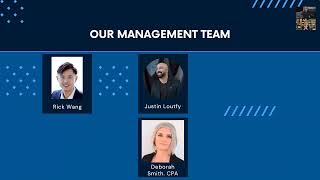
It's amazing to be able to do this and help people at the same time. So you see how much you Impact people. And so we also have a couple of other team members on our, on our team here that are helping with the process, that are helping manage this investment with us. Of course, you have to have a really awesome team to work with. And you know, Rick and Justin have both been on my team for a while now. Rick is actually been with me for an extremely long time. Actually my investment manager for years. Brings a lot of international clients to the table. Helps actually speaks multiple language. I actually met him at our For Investors by Investors nonprofit real estate event where we were teaching financial education and real estate education. And he is an engineer going, how do I get out of this? And you know, engineers and CPAs, it's all numbers and things like that. And we just hit it off right away. And he started working with me on helping me with all of the different strategies that we deploy in these different ways. And it's been great. Now we both have daughters that are. He has two daughters and I have a daughter and a son. And they hang out and cause chaos together all the time. So of course. So they make our ways, make us go to Disneyland consistently. I absolutely hate it. So strollers and lines and bad food. Anyway, so Justin is actually. He is basically one of my investment managers as well. Comes from the military and actually special special warfare military service and extensive strategic investment understanding. He comes with a COO background and helps people all over the country be able to invest in these different types of strategies that we actually bring to the table. So. And I'll let you talk about Deborah on your team, Catherine. So Titan, I love her too, because she's a cpa, so.
Right, yes. So Deb, she is. She's one of the smartest people I know. She is absolutely brilliant when it comes to this and when it comes to understanding numbers and spreadsheets and really diving deep into all of it, I really love her passion for that. And she comes from the real estate investing world. She literally. I found out that she actually grew up like her dad worked on construction sites. So she literally understands the boots on the ground stuff all the way through. And her level of detail is nothing short of extraordinary. But the bigger thing is really her heart inside of like really making sure that we are making that impact. You know, that really makes a difference. So you know who all these people are, Rick, Justin, you like again, all having that same heart. To leave every person, property and community better than we found them really is what it's all about.
Absolutely. And I get to geek out with Deborah on Excel spreadsheet. That's why I have two 47 inch wide monitors behind me for Excel modeling. So you know the dorky parts about CPAs. So it's pretty awesome. So, so some of the key points here of course are understanding the collateral here that you are collateralized against large pools of receivable contracts. And it's understanding the collateral to value that you're dealing with and the collectibility ratios of this debt in the first place. So like I mentioned, it's a 36 month investment term. We're doing a 50, $50,000 minimum investment. And if you're doing the math, on $100,000 investment, you're looking at $20,000 over the year or $5,000 a quarter on that specific deal. And we're looking at paying quarterly for one to up to three years as well. So they, they have, there's a 36 month term. The, the borrowers can pay off early potentially as well, because we're charging a higher interest rate, of course, and so we want to make sure that they have the ability to pay that back, because that's fair. So, so we go through and do that. And then what's happening though is we actually are collateralized by these pools of accounts receivable at 25% of what they're worth. So on $5 million, we have about $20 million worth of actual contracts that are typically 16 million or 80% collectible in the pool. And when you're investing in a pooled format like this, you actually get greater protection and greater risk reduction with the pool. And what's interesting even further is that you're able to actually go through and as they pay us back this, these funds, the borrowers go and buy more contracts and actually decrease our cost to the value even further, which is really cool from an additional risk mitigation standpoint. So what is debt invalidation? So the first thing is understanding. So Resolution Processing has attorneys that utilize the legal process to completely wipe out a consumer's credit card debt for every account that the, the actual collection company or the bank is doing something illegally or incorrectly or has a, you know, has a wrong strategy to use for collection in accordance with the Fair Credit Practices act and other types of laws like that, to protect the consumer. So they're going against consumer law, which enables these attorneys to wipe that debt off of the books where they don't owe it anymore, and it's actually not on their credit anymore, technically improving their credit even though they're not allowed to market that they're a credit restoration company. Because there's different legalities with that. And so what's interesting is that by doing this, they're able to go through and put them on a payment stream and they're finding that a big chunk of like 90% or 50 to 90% of the debt can actually be wiped out because of these different creditors that are going after them and using the wrong techniques to do this. And so they're able to absolve that debt off of their books and they analyze that up front to determine which specific accounts they can actually invalidate based on the communication that they've had and, you know, understanding the entire situation. So they go to do a significant due diligence process on each borrower up front. And so you're actually going through and taking someone that might be 20, $30,000 in credit card debt and a 1500 minimum payment with, with 30% plus interest and saying, hey, we're going to charge an $8,000 legal fee fully paid off with $400 payments over a, over a 24 month period. And now you are out of debt and there's no interest on those payments, is slowly reducing that principal balance on that particular debt. So what's happening here is the consumer puts together a repayment plan so they're completely out of debt within 24 to 36 months. And the historical collection ratio on this 80%, because we are actually waiting until they at least pay two payments before we are assigned that collateral piece. Because usually the biggest default rate is the first payment and the second payment on these particular contracts. And so what's really cool is they have a big incentive to pay because the attorneys are working on the invalidation of that debt over that entire 24 to 36 month period and invalidating over that period. So if they stop paying on the, the receivable, then they stop getting the legal services. And so they, they're highly incentivized to continue those payments, which is really our biggest protection is that 80% collection ratio when you're dealing with these big pools of debt like this. So really interesting to understand. And so right now what we're seeing is the approximate cost of each contract is approximately $1,500 with a receivable balance of around $6,000 each time. And so it gives investors that 25% to value ratio there on the debt. When you're multiplying that by, you know, $5 million as far as contracts go, it turns it into a bigger safety net than just relying on one contract or five contracts because you're really Your safety is in the pool. So the way this works is affiliate marketing companies are going out and looking for clients that have this problem. Their creditors are going after them because they can't afford these huge giant payments. And they're never getting out of debt because of this, you know, giant interest rate on the debt. So any payments they make is all going to interest and, and that it's just growing and growing at that point. And so they're out there marketing for these types of clients which costs quite a bit of money to actually market for them. And so what happens is those clients get those affiliates. For every client that signs up, passes the due diligence process and actually pays two payments, fifteen hundred dollars goes over to the affiliate as compensation for their marketing efforts on being able to help find the clients for resolution partners and the attorneys that are actually working on these projects. Then the client signs a receivable contract in place and they've got to make those two payments. And so typically you have a $250 processing fee going to resolution processing for their administrative services for setting this whole thing up, structuring it, doing all the communication, the servicing, and then the remainder of the funds go to the attorney for those legal services that have to be done for the invalidation process out of the monthly payment. And so that's usually about $100 a month going to the legal aspect of this for that, for that piece. And what's happening with the investors is we have our investor fund that goes and funds that $1500 and gets the $250 payment back for the actual or their share of it for the actual payment to the investors on the interest due on those loans with a balloon payment due at the end of the three year period. And so as these payments continue, you're talking about a significant cash flow stream not just for the investors, but for the operators as well, which enable them to not only pay the interest, but massively pay back the principal as fast as they really want to. And what their goal is is to reinvest into more and more contracts because it creates a massive snowball effect of cash flow across the board for this project. So they're incentivized massively for, because they get the back end profits of this after paying investors their returns and returning all the investors capital, of course. And so when we're looking at this fund, like I mentioned, our typical contracts are 24 months with pools of accounts receivable debt, 24 to 36 months on these pools of accounts receivable debt. We're raising minimum of 250,000, which have already surpassed that in interest already on this and up to about $50 million that we're going to be raising for this project. Class A1 members under a million dollars get a 20% preferred return and Class A2 members get 25% return and their manager gets the remainder after the investors are paid their preferred return. So there's proper incentive for performance along the way. And we don't have any asset management fees or upfront cost to investors at all. It's a straight interest on their funds. It's all built in to the financial model. So estimated up to 36 months with the $50,000 minimum and quarterly payments. A lot of these borrowers in different markets around the country and like I mentioned, their pools of accounts receivable debt to significantly reduce that risk across the board. So let's talk a little bit about that debt invalidation process. The, the, the, the step by step of how this happens. So first, like I mentioned, affiliate marketing companies are looking for people that have 20,000 plus in credit card debt that are in default and been sent to creditors that are not abiding by the Fair Credit Practices Act. Right. And which enables those attorneys to invalidate the debt through the legal process. The affiliate marketing companies assist to identify those clients and set them up for those debt resolution services for about $1,500 each. After that quality control is done and they are able to make at least two payments on that account. And they of course review every debt that that borrower has to make sure that they know they can invalidate it up front before they sign them up as a client. And their fee structure is based off of how much, how many debts they can actually absolve in that situation. The $1500, the $20,000, they're all averages from what we're actually seeing right now. And it's all dependent on the exact amount of debt they're able to absolve for those clients. The customer enters into a service contract and starts making payments on those receivables. And then the services receivable as approximately 40 to 50% of that debt. So an average of $6000 with about 1500 in cost on our side is the averages that we're seeing out there. As far as receivables go, the monthly payments are paid over an average of 24 months at $250. The average payment with that 80% collection ratio. And so the contract services then start to invalidate that debt as the company collects the payments for those Legal services that are being paid and the administrative services that are being serviced at the same time. And then at the end, the consumer does not, the customer does not owe any more money on that debt. It's wiped out, it's absolved, it's off of their books in 12 to 24 months. So doing the math, on a $5 million investment at a $1500 cost, you're looking at 3333 contracts times $250, that's $833,000 a month. On a 5 million dollar investment, which is absolutely insane as far as the profitability here and the safety, because the payments are so high in comparison to the initial investment amount, because our collateral is much higher than our investment amount in the first place. And so that turns into $20 million worth of receivables, which is $16 million historically collectible on that account. So that's really what your biggest risk mitigation factor is, looking at this and saying, hey, I have a historical 80% collection ratio on this giant pool of receivables and I'm starting out at 25% of what they're worth and it averages about 30% of the collectible value of this. And just like any lender, that's what we're looking for. We're looking for collateral to value or to cost, so that we know that we will have a high likelihood chance of getting all of our funds back and having everything perform, even if there's a problem on the investment as a whole. Right. So what happens for example, if 10% more or 15% more of the investors because of some financial crisis that occurs or some big problem that occurs, stop making payments on a lot of this debt, then you know, we're still in a very good shape with regard to collecting all of our funds back and our profits on these on the project. So here's what the payback schedule looks like. For each quarter, everybody gets 5% per quarter on their funds. So on a hundred thousand dollars investments, they're looking at $160,000 over a 12 quarter or 36 month term. And obviously they could pay back earlier. And it's interest only. So if investors get paid back, then of course the interest stops on any remaining principal that occurs. But they have plans right now of reinvesting funds consistently to keep that return going for investors across the board. Here's an example of that accounts receivable pool. So this is basically an example pool that we've, we've pulled up to show the, the details of some of the debt that's actually been canceled on these programs, the legal fees and the service fees, as well as the payment dates and the. The actual cancellation rates on the debt, which is really, really cool. As far as their total debt that gets canceled across the board. So we have data like this consistently on that we collect every single time on every loan where we get a UCC filing against these pools of contracts to protect our interest and secure our interest against those loans in the first place. So. So quick summary here. We're actually providing an amazing social benefit. I really love this part. I know, Catherine, you have a massive passion for this too, so I'd love for you to elaborate a little bit more on, you know, what we're able to do for people here.
So I think you can understand if anybody has been in credit card debt, which I don't know anybody who hasn't. You know, anybody who went through 2008, 9 and 10. Yeah, we were all impacted by all of this because we were like, what? The what? And the other piece is financial literacy. Right? Where did you all learn to be financially literate? You needed to be taught. And so having that impact of. Yes, we're helping them understand, you know, helping them get out of debt, you know, eliminate this credit card debt, having that relief again, Money is like oxygen. The more you have these years to breathe, we're literally giving them oxygen by, like cutting that debt significantly, giving them a very clear plan and path to get out of it, and then teaching them literally how to stay out of that and then start to invest. This literally is a very real world impact of exactly how all these first responders who literally give their lives, like from their heart, and we all know none of them get paid enough. You know, I have a son who's a Marine serving over in Japan. Like, again, they literally get paid almost nothing, but they give 100% of their hearts. This is your opportunity to say thank you and to make that impact for that family so that we literally can teach them how they can be creating multiple streams of passive income for their families so that they have that breathing room and then they can continue to serve the way that they serve, you know, our entire country. So this is. This is the impact that you get to be a part of. This is a really big deal. I hope you're really taking this to heart.
It's really cool. I just heard about a story from one of our military vets that got $70,000 removed off of their credit, which was absolutely insane. They're in the process of Resolving it right now and doing that, which is really, really cool to be able to get somebody out of a $70,000, you know, issue there. So it's absolutely crazy and exciting to be able to do that. So again, we're talking about 20% quarter, you know, 20% annualized payments that are paid out on quarterly and then we're looking at the 25% to the value of the receivable risk mitigation, of course, and then that 36% or 36 month term on the actual investment in the first place with immediate cash flow right at the very first quarter, which is super cool to see because so many of the value add projects and real estate and things like that, it takes a while to get that preferred return up and be able to get starting getting paid on a value add project like that. And a lot of different debt instruments don't pay this high of an interest rate because you're dealing with real estate debt and that type of stuff. So you're able to protect yourself through the collateral value at the same time of getting a higher interest rate types, you know, situation here, which is really cool. So, and you know, you're really creating this cash flow stream while providing a social good at the same time. It's really cool to be able to do that and be able to, you know, structure things this way. So. Right, so, so the, the way to the next steps are of course, review the documentation. If you have questions about that documentation, let us know. We love answering questions about this stuff. Of course I've had to read, you know, provision after provision out of tons of these documents and I know them very well. So trust me, I promise I'll try not to, you know, put you to sleep by the mic. My wife tells me when I talk to her about these things, so, but at the same time it's important to be able to review those things, ask those questions. You sign the docs, we have an investment portal that all that can be done right through and you can designate your investment as well. And then we'll obviously approve you to make sure that you're the right fit for this investment as well. And then we will have you send the wire at that point once you're approved and all set up with the docs and everything else and everything's good to go. So that's the actual process that we go through for the investment and, and that's it everybody. We really appreciate you guys coming today. It's been an amazing journey with Fund One and it's exciting to go to fund two now and be able to bring this to more and more people and help more people, you know, get out of debt and get on the right financial track.
Absolutely. Thank you, Matt. This is extraordinary. So, yes, make sure that if you have any questions, set up a call with us or get into the portal and read through the documents and yeah, let's get going. Let's make an impact while adding comments.
Thank you guys very much. We appreciate it very much. We'll talk to you guys soon. Let us know if you questions.
Bye.
Bye.










