Gas and Oil Fund | Titan Impact Group
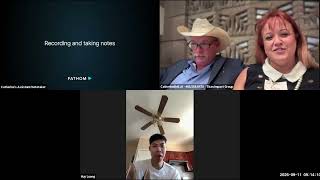
Live Deal Room session (Land Shark Mastermind + Titan Impact Group) hosted by Catherine Bell at the Biltmore economic breakfast. Main announcement: Titan Impact Group/Iron Horse Energy Fund — a $100M oil & gas fund vehicle aimed at fractional access for investors (claims of 75–100 wells per fund, track record cited). Key investor points discussed: large first-year tax depreciation (K-1 losses ~80–90%), investors reportedly recoup capital in ~18–24 months and receive distributions for ~25–30 years, first distributions planned January (after offering closes). The hosts also demoed Deal Hunter (an AI GPT underwriter) to parse the fund pitch deck, produced conservative case studies for a $250,000 investor, and discussed diversification, opportunity zone strategies, and private lending. Practical notes: offering closing date cited as November 30; documentation (PPM/LPA) and third‑party reserve/curve verification are required.
Questions this video answers
$100 million (Iron Horse / Energy Fund target mentioned in the pitch).
Offering closes November 30 (session statement).
First distributions start in January (session statement).
Investors are claimed to get their full investment back within 18–24 months (presenter statement).
Fund payouts are described as continuing for ~25–30 years (presenter statement).
Chapters
Morning and welcome to the Deal Room Live, the daily real estate deal tank powered by Titan Impact Group, a global leader in AI driven real estate investing and funding, where the real estate world meets speed, position and profit. And bring us your deal so we can put it into our AI model that analyzes and structures real estate deals in minutes, generates all the docs you.
Need to get the deal done, and.
Gives you a verified, unbiased breakdown of due diligence reports. The investors get the advantage of getting full, fully vetted AI analyzed deals that cut their due diligence time down by 60%.
So you're in the right place.
Let's open the Deal Room now and get into today's opportunity.
I gotta be able to talk.
Then let's talk. Okay, so we're gonna talk. So welcome everyone. We are. What are we doing? We're here at the Biltmore. We're actually at an economic breakfast, which was.
Turn your background off because my head getting chopped off is distracting me. I'm just like trying to move to make. Keep my head on the screen. All that craziness. Yeah, we're at the Biltmore. Tell them more about that. That's better. Yeah, see?
Yes, we're at an economic breakfast getting an economic update from an economist.
I, I called him an. An economistic, you know, kind of like a mystic truth, you know, fortune teller. Bad things are coming for you. We got. Hey, Hoy. What's going on, buddy?
Good morning.
Hey, how are you?
Where are you guys?
I'm gonna free Catherine out. You're too loud. Hold on, let's turn it down. Library.
We're fine.
No, we're in the library at the Biltmore Hotel.
Yeah, we're at the Biltmore Hotel. We're at an economic breakfast, so we had to come out and do this. In the meantime, where are you?
I am in the kitchen. We're eating breakfast. Creamy pasta.
Nice.
There's Katie right there. She's going to be joining the cough.
I love it.
That's great. So, yeah, we're at a. We're at a breakfast at the Biltmore today. It's. We were invited by the Columbia Bank. It's a business bank out here in, in Arizona. But it's like all over the, all over the West Coast. I think they said, what, 13 Western banks. So they've got a lot going on out in this area. So they had a, a breakfast this morning. They brought in an economist who had opinions that I didn't really agree with. So it was probably better to just jump out and go into a, a podcast instead of sitting in there listening to stuff that was making my head itch, like I ate a hot chili pepper.
So we're going to do a deal.
Well, we don't go right off into a deal within the first five minutes because we usually have to talk about all great things like, you know, Katherine Bell AI. I mean, you can't start a show without talking about Katherine Bell AI or.
Oh, he knows all about it.
Meet Katherine Bell dot com. Yeah, but you know who don't know all about it? All the people watching this after we record it. So we're going to talk about it. So. And we're going to talk about the Land Truck Mastermind. As a matter of fact, with Hoy being a member, a newest member of the Land Truck Mastermind, we had a, our onboarding call with Hawaii the other day and Hoy is going to be investing some money into properties and deals with us as a member of the Land Truck Mastermind. So we're super excited about that. The other thing is that we're excited about is that we're going to be doing, we're going to be doing podcasts through the C Suite Network starting in, I probably think we'll probably end up starting sometime at the end of September, if not October. Definitely by October we should be on the C Suite Network broadcasting our entire podcast or our weekly podcast from there. The podcast is just, it's the deal room by Land Shark. You know, Land Shark Mastermind is an organization of a group of individuals that are into moral and ethical development of real estate projects and properties. And we are, we are growing by leaps and bounds. And so one of our, one of our givebacks, value add to this is that we've partnered and gotten a sponsorship from Titan Impact Group who is, you know, ran by this lovely lady here. And what she's able to do is, is take all the deal that we get pitched, our residential deals, commercial deals, industrial deals. She takes those deals to her marketplace, to her network and is able to pack, we're able to package these, these projects up and these, these land deals up in, into nice little investor investor packages. Right? We had a meeting yesterday with a, a broker down in, in Fort Lauderdale, reviewed some of our, our documents and he was like, this is all I need. It's absolutely all I need. And Titan Impact Group was the one that helped put it all together. And Catherine got these things pre available for us to show these investment bankers, you know, what we got going on. We got everything from a 1.5 million dollar and 1.5 million dollar deal in Winden all the way up to the 100 million dollar land land stabilization fund that's going to be, that's going to be working to get shovel ready projects for, for the Opportunity Zone program. So some of the other things that Titan Impact Group is working on is the most biggest thing and I, I know I'm gonna like just like literally twist in the cork on a champagne bottle but I'm gonna say two words and then it's gonna go off like a champagne bottle. Ready? Oil and gas. There goes the champagne bottle. Go ahead.
No.
Okay. Titan Impact Group's going to be raising a hundred million dollars to.
It's a hundred million dollar fund. And there we go.
Boom. Champagne gone. Go.
Oh. Okay. So the 100 million dollar fund. And why does this matter? Because at the end of the day oil and gas, we're always going to need it. From everything that is manufactured from our cell phones to our glasses, like literally everything that we use requires it. It's not just an energy, it literally is used in all materials. And why does this matter in for my investors is because it's exactly what I talk about. One, diversification. That's really, really important inside of diversifying your portfolio. So when we lost everything in 09, it was because we had all of our assets were one single asset class. Net asset class went away. That's how we lost our entire portfolio. So learn from my mistakes and diverse mistakes.
I, I actually, I lost two, I was, I was what they call dirt rich and cash poor. Over 400 acres of land ready for, ready for houses and not one single house sold, not one single brand new house sold in 18 months.
Yeah, done. Diversified. Diversified. Oversight and economies are cyclical. So it goes up, it goes down. And when you're diversified then your portfolio is stable. So that's one.
Unless you're the guy in there who says that, that economies are like hermit.
Crab shells, let's not talk about him, okay? We're going to stay on track with what we know. And so why I love oil and gas because the need is always going to be there. Two, it's a, it's a beautiful example of how we've set this up. It's taken two years to actually get this structured the way we've structured it so that the benefit to the our is on several layers. One, making sure they're diversifying their portfolio. Then the diversification inside of the actual fund itself is that we're able to get into 75 to 100 oil wells. So what does that mean for our investors? It means that if a couple of them don't perform, it's actually going to be okay because when you're in that many, that's where the stabilization of the actual fund comes from, which is a really big deal. And the other piece is, is this is a beautiful example of who, not how. So because of my girlfriend that we're doing this with, she inherited her dad's oil and gas company and this is what he's always done, is he's always been, been able to go in and find and purchase the minority shares of the multibillion dollar oil and gas companies. So what that means is we are tapping into who already knows how. And they've literally spent hundreds of millions of do on engineering and all the scientific things that make sure that these wells are actually going to produce. So they've already done the work, spent all the money and we just get to be a minority shareholder inside of this because of who knew how to actually do this. And so that's why we get that. The third piece that I'm super excited about is that our goal is to keep a billion dollars of taxpayer money out of the government's hands. Because by doing that, you know, I believe that we can do good and do well at the same time. And by legally the country's tax structure is set up for investors and entrepreneurs and you know, again, learn the rules, play when these are the rules. And so by using this, this tax strategy, it keeps it in everybody's pockets. So now the impact that you want to make in the world, you actually can go make that difference in your community. You're not waiting for the government, well just to just piss it away because let's just face it, that's what they do so well.
And again, I mean, spoken like a true Canadian. I am 100 in support of keeping billions of dollars away from the government so they don't piss it away. And, and I focus on opportunity zone programs. That's another way that, that we're able to keep the tax dollars in the investors pockets. Right? The place where you're going to spend the money is going to be, you know, when the investor puts it back into the world. Right. Government, what they do is they just, they basically just squanders. Well, it's not squander, what they do is it spreads out, you know, I mean, how many cookie cookies are going to be in the cookie jar if you got, you know, 10,000 hands dipping into it, Right? So at the end of the day, it's just built. It's based on the nature of the beast, you know. And so what I was thinking is maybe what we can do is we could. Why don't we run an oil and gas. Today's our commercial land day. But right or not commercial they are land day. Industrial and land. A couple of our of your favorite things. Land. I like industrial. You like land.
Oh, this is a way of renting dirt. It's better because liquid dirt.
Right. And then something you discovered yesterday is that I've got a property that's currently making $14,000 a month and it's just dirt. That blew your mind.
That's crazy. She rents dirt.
What do you mean, what's on it? And I'm like, dirt. She's like, no, but what's on it? And it's like gravel. Dirt. I don't like. It's just dirt.
Gravel because people pay to tr. To park their equipment on it.
Yeah. So when you got. When you got, you know, that's why I say blue collar. Blue collar. Million dollars are. Are running around everywhere.
Look at this nice blue collar boy. He got a new shirt.
There we go. She's. She got to play dress up the Kendall this morning.
He is not a Ken doll.
No, I'm not. But I do. Never mind.
I ain't going there anyway. Squirrel. Okay, so back to the oil and gas.
So no, before we. We already did oil and gas. We're off to opportunity zones.
So many benefits.
And we're going to. We're going to talk about those benefits as soon as we run a deal. I got to finish paying homage to my favorite. My favorite sponsor, the Titan impact group, about how you guys are. Are focusing in on not just this oil and gas, but Titan impact group is investing and diversifying across all sectors. Data centers, that's the tech industry. You got oil and gas, which is, you know, where big money's at. You've got the opportunity zone fund. Had a great conversation with a guy yesterday, a group of investors about, you know, raising $100 million for the land stabilization fund. So what we were talking about was $14,000 per month rent on dirt and how that's, you know, that's. That's a massive amount of. Of income. But the blue collar million dollar boom, finally. It took me a minute to get through the woods on that. Quit dragging me off. Blue collar million dollars. You know, the blue collar million. The blue collar millionaire is an accredited investor and doesn't even know it. You know, and the Reason why, the reason why I say that he doesn't even know it is because the, the rules to being an accredited investor are you have to have $1 million of net worth or make as an individual $250,000 in your net income, or if you're a married couple, you know, then you got to make 350,000, I think. So these are the basic rules to discovering if you're an accredited investor. And I'm going to tell you right now, every swimming pool contractor with their license in the state of Arizona, credit investor, let me tell you why. They got easily $250,000 a year coming in. Most of them are not married, they're divorced. And I'm just speaking from, you know, from experience. And then the other side of that is they usually have enough equipment to dig a swimming pool. Did you know what the cost of all that equipment is?
No.
Let's just say one piece of equipment's over 250,000. They usually have at least five or six. So mathematically their net worth in just equipment alone is over a million dollars. And so that makes them an accredited investor. And so if, if, if, if you, if we could write a course about how to invest like a blue collar. That's what they do. You know, they go out and get things that make them money and then they write them off and they make more money. Right. And so that's what you're all excited about, that depreciation thing. Right? So rednecks, I'm sorry, let me rephrase that. Blue collars, some of them have rednecks, some of them don't. Blue collars actually know how to, to work the system better, probably better than most white collars because we literally put it to work. You know, so a CPA has to, has to buy assets, and those assets are usually multi family or industrial or retail, you know, marketplace stuff. But the guy that's building it is now becoming the guy that's blue collar. He's, he's building it. He's the one getting set up to do all this stuff, and he's right there in the same tax bracket.
Can I jump back to oil and gas? The most important part.
Oh, my goodness.
Well, you're going to annoy this. I'm gonna, I'm gonna educate you. So here's the cool thing about this particular fund is that you get that our investors are going to get their full investment back within 18 to 24 months. But here's the co. It continues to pay out for 25 years. Boom.
How does that work?
It takes about 25 to 30 years to actually empty a well.
She only has 120 seconds to answer that question.
Answered it. I already did.
So.
Done. Okay, number next.
So what, what we can do today, because today is about land and industrial. I'm thinking what we're going to try to do. We are remote today. Like I said, we're out at the Biltmore right now and we were at an economic breakfast talking to, listening to an economic, economic. An economist, economistic is what he was. And what, what we discovered is that there's two ways to look at everything. Glass half full, glass half empty. And when it's, when it's, when the market is the way it is right now. And it's, and it's pretty confusing. I could agree with him on that. The market is really confusing right now and it's because of so much stuff changing, not just, you know, at the market level, but also at the, at the decision making levels. Know you, you, a lot of people are not taking in consideration the, the effects or the things that are happening with these tariffs. They're like, hey, you know, the tariffs were supposed to hurt us and why is the GPD rising up if, if it was supposed to hurt us? And all these, all these things. And, and, and honestly the people that are up there making decisions right now, the analysts and all the smart people, they've never seen anything like this before. I love when they show graphs and they had these big giant spikes over the last two years and, and it's like never in history has that ever happened. So how are you able to be an expert on something that's never happened before? And so I just kind of look at it glass half full. How do I make, you know, I just use common sense. I use what I call monopoly sense. And in the game Monopoly, when do you buy property? Every time you have money. Right. So if you want to win the game Monopoly, you got to go around and make it happen.
When you land on it, you buy it.
Yeah, you land on it, you buy it, period. And there's ways about. Did you know in the game Monopoly you can actually auction property? Yes, it's exciting. It's super exciting. I love landing on it and auctioning it to myself just to tick off my sister when she was out of money, be like, oh, you don't have any money to bid on it. Looks like I get it at a discount. Yep, that's a lot of fun. And that's the mentality that, that you gotta kind of have and, and Land Shark Mastermind is kind of built on that mentality. We're not looking to take advantage of anybody. We're looking to take advantage of market options and market positions and stuff like that. And, and we want to help all people properties.
We leave every person, property, community better.
Than we found them. That's what we do. So and in a way that helps them too, you know, so it helps them in a lot of ways. So yeah, we're at, we're about 20 minutes after the hour. Why don't we see if we can share the screen and open up, open up a GPT open up Deal Hunter and walk people through how we get that started and so can you still hear us? Hoy yes. We're going to get, we're going to get our, our GPT started here and, and just a little, little lesson taking on, on how, how GPTs operate. When you go to GPT don't go down there yet. We got to show them how to find it. And you're going too fast. I don't talk that fast. So now that we're on this screen if you're not using the 20 version you need to be because it does all kinds of things. If you go to the GPT Explore store right there and you click on that, what it'll do is open up a marketplace of GPTs where you can find all kinds of GPT teas to, to choose from everything for writing, productivity, research, analysis, education, lifestyle, etc. If Katherine scrolls down a little bit, I'll show you. Oh that, that's the one I was telling you about the other day. Scroll back up that consensus right there. It does amazing world scientific literature research on, on things. It's called con consensus and so just like a, just like you know searching the, the census board, you could actually go here and do research on demographics certain areas and it provides data really fast. So some of the other things that are trending are like the astrology birth chart. You got a built in fortune teller there. I think that's what the Economistic was using this morning to tell us about the economy. Catherine likes that fitness workout and diet coach right there. What she's able to do, tell us what you're able to do with that one.
Well I haven't used this one. I built my own.
She built her own go figure like.
So my own because of all my health challenges. So I got my workouts.
My entire entire, her entire biological survey is right there all in one. On AI you can also research scholarly articles like a scientist, you can humanize your email before you send it out to your economistic and tell them how much of a phooey booey is so and then you can do other things like create images. We created an image the other day. It was our, our bubble image. If, if we were action heroes we know what we'd look like, don't we? I'd look like a really old man in, in a Yellowstone shirt. And you're a businesswoman with a hard hat. Pretty cool. If you haven't seen that one, it's pretty fun. But there's a whole bunch of them down there. We can go back up and show people how to get Deal Hunter though. Deal Hunter is a AI model that we designed and in the Land Shark Mastermind to help us underwrite deals really fast. But what it became was a just a beast at figuring out deals. And so we're going to test it today talking about oil and gas and, and kind of exploring how investing in oil and gas, you know to me that's an industrial land play, you know because you gotta, you gotta, you still gotta analyze the data before you invest in the company. And we never encourage people to just throw money after, not without doing due diligence. And so Deal Hunter by Landshark provides that opportunity. Myself, 30 years of real estate invest real estate development experience was put into this. I have Dr. Ning Young Chan, co founder. He's a commercial broker, private money broker. He's a scientist and sustainable, sustainable farming. He was integral in designing this AI model as well as our, our third partner and co founder to the Land Shark mastermind Roman Rubio. He is a economic development liaison at the border and, and helps a lot of things going on at the border between Mexico and the United States. So super pleased and super excited to have him in our team. And of course our sponsor Catherine Titan Impact Group with Catherine Bell. She's she's you know helping all this stuff come together by helping us develop our Rosetta stone and put together our Rosetta stone package that basically provided us with our own personal AI. We have our own in this. For example she was able to help us take all of our knowledge and put it into this, into this generative pre trained transformer. That's what GPT stats for. I like sounding smart. So the generative pre trained transformer of this, of this AI model is how we are able to underwrite deals. What used to take three to four weeks is getting done in three to four minutes. So why don't we fire it up and show people what's going on. Do you guys have a, you guys have a website or any kind of information about the oil and gas up yet?
Yeah, hold on. Need to grab it so I can get a drink.
And we're gonna surf over here and check it out. We got, We got some, some info here. Now the way Deal Hunter was designed, it's able to analyze, it's able to anal analyze pictures, it's able to analyze PDFs, Word documents, PowerPoints. It'll, it'll analyze all this information and then bring us back to finer points. And so that one looks like a pretty good, pretty good deck. Iron Horse fund. What is that? Can you tell us a little bit about what Iron Horse is?
This is a previous one. So it's the fun to fund deck and that's not what I want to share. Okay, this one will be good enough. Okay so then let's go back to data room. Let's go to due diligence. Okay. Projects master report.
It.
Okay.
So let's just stick to, to, to documents that are related to the deal, not any of the those last three.
So what explain it in layman's terms.
Well that's, I don't want that though because again you're, you're kind of defeating the purpose of, of feeding it to the GPT. You know what I mean?
Okay.
So I wanted to, to come like, because what you're pulling, what you pulled over there on the last three were basically what you got from doing this before. So we're going to feed it about four documents here. I don't want those.
And.
These documents are, are basically the deck the past five projects. Go ahead and click on the dictate button right there and let's see if we can get busy here. This dictate button helps us get stuff out. So Deal Hunter.
So right about here in the video we ended up going dead for I think a couple of minutes and looks like Hoy was still engaged on the call, kind of just chilling out. And so Hoy has joined the land shark mastermind and is currently working on building his portfolio. We've got a good one year, three or five year plan for him. And before the guy is 25 he is going to be a multi millionaire in real estate based on the plan we've come up with. So, so one of the things that Hoy is going to be working on is being a private money lender and we're going to be helping him find deals to get into where he can facilitate gap lending and, and bridge lending. Maybe Even some construction loans for projects. And this is going to be the way that he learns. This is going to be his apprenticeship into real estate and what it looks like to be in real estate as a. As an investor, not necessarily as the worker. So with Titan Impact Group, we teach all of the ways that, that resources impact real estate, real estate investing. The, The. The thing that a lot of people don't understand is that there's anywhere between three and 20 hands in the cookie jar when you're talking about a real estate investment. From your title company to your brokers, to your real estate agents to your surveyors, like, there's just so many contractors and you're an investor. And so when you're able to get your cookie jar down to about three or four or five people, that's when.
You'Re going to make more money.
You know, when you're spread out and you're, you know, you got to rely on 20 people, well, that's okay too, you know, but just don't expect to take more home, you know, And I'm not saying Getting down to 3, 4, or 5 makes it to where you can get more money either. It just means that means that you have a better, you know, a more efficient team. You know, football's played with 11 players, but golf has played with one. And without more golfers, the golf.
The game of golf is kind of boring.
So here we go. Catherine got it back on. There she is.
Here we go. We're back online. All right. There we go. Sorry about that. Something happened as soon as we started messing with the GPT. It was like we lost Internet and everything went fooy. So we got to go back and probably restart our GPT here. Let's give it a refresh.
I think uploading all these documents may have overloaded.
No, it kicked it off of your phone and put it over onto the Biltmore Honors. So the, the ppt, the pitch deck didn't go through the last time, so I'm going to wait for it to time out. So anyway, I think where we got lost was Deal Hunter by Land Shark was designed to. No, don't let. I want to wait until the customizable deck gets through. The, The. The. The Deal Hunter by Land Shark is. Is designed to be able to look at PowerPoints, PDFs, Word documents, screenshots, even, and analyze these things. Hold on. And analyze these things to, to give us, you know, some instantaneous results so that we can make good, educated decisions about what to do next. What Kathleen likes to call trust and verify we trust the system's going to work and then we verify what it did. So go ahead and hit the dictate button. And basically what I need now is for all four of these documents to be reviewed. Come back with a detailed breakdown summarizing all four of the documents so I can understand what we're looking at and we can start putting together a plan about this oil and gas investment. And so it's going to skip through and kind of check out the customizable deck. We've got a Word document in there. We got two PDFs in there. So it's doing all the things we're still live and online.
Corey's here with us.
Hey, Corey, what's going on, buddy?
Hey, Catherine. Hey, Tommy. Hey, Huey. Pretty busy day, but I wanted to jump in and see what's going on with the oil and gas stuff. It's kind of, it's kind of weird and funny and, and unique how our creator works.
It's.
It was just the beginning of the week. I decided, I don't know what happened, but I decided to start researching into the oil and gas area. So I was all already diving into it when you guys had mentioned it yesterday.
And I was like, well, I'll tell you right now, it's probably that captivating thing that Catherine has done with me. I keep trying to explain to people how she's, she's made me her hostage and nobody believes me. But Hoy testified last week. I had Helen testify yesterday. Or not Helen.
Mercedes.
Mercedes testified yesterday that Catherine's just captivating, bro. So she probably planted the seed subliminally. And there you go, it's all the things now, so. But yeah, the, the amazing thing about the way, you know, the way our creator worked and how it works with us, you know, not just, you know, just not, not just supernaturally, but here on this, on this planet. I, we walked into this breakfast this morning with new six people. So it's like, huh, okay. Kind of neat, you know, when you run in the same circles as other people and stuff like that. So. But yeah, and, and you're, you're, you're a member of our Land Truck mastermind. And Corey, you know, Corey's out there doing some great, amazing work right now trying to, to curb our, our housing crisis. You know what I heard this morning, Corey?
What's that?
We do not have a shortage of housing. All we have is a, is a screwed up economy. The economy. This housing shortage goes away because we got plenty of houses.
Yeah.
Oh yeah.
I Just come out around me. I can show you a whole bunch of empty ones sitting there.
Oh, I'm with you. I believe that they're there but again it's not the economy getting fixed that's going to make it better. So yeah, you know, it's a whole different gamut of things in my opinion. But oh yeah, We've got after 2 minutes and 29 seconds it came back with a, a good amount of information and so it's analyzed the pitch deck. Let's take a look at what it's saying there while it writes the rest of that stuff. So go back up a little bit if you could. There we go. So purpose and posture. It's templated investor deck for an energy fund. It leans hard on forward looking and financial disclaimers which you, which you would expect on a pre PVM strategy. Headlines partnering with a partner with major public private operations in top basins like the Permian, Eagle, Ford Andacaro, Niboria, Bacon, Beacon, Bakken. Bakken. There you go. And add 50 plus new wells, balance upstream production with some midstream for contract style. Cash flow emphasizes IDC depreciation, tax benefits. So that's where you're getting all excited about that, you know, keeping money out of Uncle Sam's hands. Y so track record, slide shows high level track record of 1100 wells, only 6 didn't produce. Claims of 170 plus partnership, 700 plus wells, 145 mmbbi oil and 750 bcf gas tied to prior efforts. So those fancy terms right there, I'm not quite sure what they mean but how many barrels? Barrels? Yeah. Million million barrels, something like that. So the Iron horse Energy Fund, $100 million. You got to have a million dollar minimum to get in. It's a seven year term. The first year K1 losses are 80 to 90%. That's your important part. Don't go past it. Yeah, you're getting 80 to 90% depreciation. So if you invest $1 million you're able to write off. That's not where.
Yeah, yeah, that's not true. Okay, so how it is is because we've set this up so I'm a partner in this fund, so now invest my investors can come in for 50,000 and get this 80% tax appreciation.
They don't have to put in a million.
No, I'm doing that.
So how does the depreciation work?
Because the way we've structured it is it flows right through to the investor. It's taken us two years to figure this out.
So if they get, if they invest thousand dollars they get to depreciate 80. 80 to 90% of that.
Yep.
That's pretty cool.
Yep.
So the next, any taxable income against any taxable income. Any, any and all.
And this offering's closing November 30th, so. November 30th we're done. You guys need to get in before then.
That's what she said.
And it pays out for 25 years again. Pretty cool.
Yeah.
And first distributions start in January.
Got it. So get your together portfolio summary. It provides a U&LP sample. The three hundred thousand dollar spread across, across the wells it looks like right there. W select yw the Wyoming two. I'm assuming those are wells. Wyoming two. Wyoming.
Yeah.
Number three. Those are wells already, right?
Correct.
And so in that investor report these are, these are basically just a, a.
Sample what's already been doing.
Yeah. Of how it's all been working out.
Yeah.
So through May it looks like they've done about $74,000 of revenue. So your, your, your other wells are producing pretty good. So you got all kinds of, of, of information in document two related to current, you know, conditions. Your third document is the asset snapshot, the well card. It's an, an example of a mature producer. The well which is called fistful of dollars North 1 is had been in production since 2023. 2013. 142 producing months through May 2025 accumulative 1.4 million barrels of oil and 9.3 million cubic feet of gas have been pulled off of that. And you, you can do the math. It's, it's pretty lucrative business right there for that well. So if, if you've got 75 of.
Those, I think you're gonna 75 to 100.
I think you're gonna be making money.
We're gonna be good.
Yeah. Go down to the next one there. And here we are on track record. One pager. You know, and, and here's the thing like before we go off onto the fourth, fourth document here, like why wouldn't I just put all my money in there? Why would I, Why would I, why would I diverse as we were talking about when I can make all this tons of money right here on this oil and gas phone.
Because economies go up and down. They're cyclical.
That's right.
It's about diversification. We put all of our eggs in the single family home basket and we lost it all. At least spread it across and diversified. We actually would have been okay. So this is about Diversification. This isn't about gluttony.
True enough, true enough. So and the other part of it is, is that these are little, you're literally coming in with fractions of what the minimum investment is.
Correct.
So this is, this is how the little guy gets in.
Yep.
This is the little guy's door.
This. Yep. This is letting all my blue collars in for like pennies on the dollar that get to play with the billion dollar companies that otherwise you would have no way into these.
Play with them.
Yeah. So people ask like, well why, why would these companies need our money? They don't need our money. We literally have the ability. We're buying the fractional shares from somebody who's already in it.
Right. And they're just looking to get out so they can go do other shit.
Exactly right, Exactly.
Got it, got it. Yeah. That's where it's key. That's where it's key because yeah, $100 million. Go look up, go look up the net worth of all the wells of Exxon. It's not, it's like $100 million in.
It's nothing.
Dropping a bucket.
Yeah.
So anyway, on our fourth document, we didn't, we didn't do it all, but it shows the track record, it's a one pager of the past five projects. It explains wells, the 12 wells in Wyoming. They're called Wyoming two. You got Wyoming eight with four wells. Coyote, Coyote, Colorado three with four wells and select number four there with eight wells. And, and what'd you say? Bakken.
Bakken, Bakken.
Like docking. Bakken number five is eight wells. And, and doing a, a massive amount of business out there. It looks like 84, one year tax benefit on Colorado 3. Look at that. And, and you know it just, it gets better after that. You got the select.
So if you imagine these are only like 12. 12 wells. 4 wells. 4 wells, 8 wells. Literally we're going to be in 75 to 100.
So what this all means and plain English or plain Canadian depends on which side of the border you're standing on. Scroll, scroll down there a little bit. Is that the DAC markets are markets a diversified fund within oil and gas that the big first year tax losses of 80 to 90% with a one time 10% fee and then a monthly distribution starting J1 20, 26 basically gets a, you know, get your investors to get real cash flow right off the bat. Get, get tax benefits right off the bat. So, and then they're going to get paid back all of their investment in a Very short period of time. Okay. So one of the key points to this was that, you know, getting the PPM taken care of, it shows the immediate shark plan right there. Because this is how it thinks. It thinks like me. So it says, you know, what we're going to need is to need to see a PPM and LPA subs.
So our attorneys, whatever, our, our SEC attorneys working on our PPM right now.
Right. And then we gotta, we gotta look at those tax loss claims and get an IDC allocation schedule. So we get that to our CPAs that, so there's understanding of that.
Yep.
And so you got the rocks and ops which are to obtain, you know, the curves and reserves of, of this mostly through a third party. We want to make sure that it's not coming from the source. That's literally like trying to buy, you know, buy a cart from the guy that's selling the horse. You know, so you never buy a cart and a horse at the same store. And so at that point we want to make sure that everything that they're proposing is legit and we're going to do that with, you know, with a third party source. The, the cash flow modeling is something that we want to understand the tax impacts we want to understand. And so just getting, you know, this is the beauty of Deal Hunter. It's getting into that I don't even understand. It's talking about stuff that I've never even heard of, which tells me that it's learning better than me. Right. And so these are pretty, pretty in depth documents that we fed to it. I think it's done a good job. Let's give it a thumbs up. It's always important to compliment your GPT and tell it how it did a good job. And so let's take a look and put right there in the, let's dictate something to it real quick. The information you provided looks wonderful. Give me a case study. If I was a new investor looking to invest 250,000 doll, how would it look for me in, in the next year? 3 years, 5 years and 20 years.
With the tax benefits and income.
With a tax benefits and income. Show me all the, all the, all the case studies on that breakdown. 1, 3 and 5 and 20 year breakdown. Let's see what Deal Hunter cooks up. So while that's cooking, let me see if I can get you guys to help us out. We, we noticed yesterday we had quite a few new visitors to the room. And I think it's because people were sharing it out like we I seen this, I seen our, our meeting shared out on a couple different platforms and I mean I know that we're going to be hosted on C Suite Network in a couple of weeks and we're going to be switching over to a new platform to do this from. It will be hosted on Zoom, but it's going to be a, it's going to be more of a podcast based program. It's not going to be where we have a room of people sitting here watching us. Right. And so what we're hoping is that all of you Land Shark Mastermind members will be grabbing the links that we send you in in private message. If you're in our Land Shark Mastermind chat group over on Facebook, you're going to get the link there. Copy that link, straight over to your Facebook page, straight over to your Instagram and tell people, hey, come check this out. Watch us burn deals. So that's what we're hoping to do. So case study of $250,000 investment. The conservative scenario is the cash flow comes in at, at 77,000. There's a shield of 212. So we have a MOIC of 1.16. And as you go down, you see that year three, there's that J, it's called a J curve. So you're going to end up with a dip at some point. And, and so that dip is where it typically then up trends from there. And you can see as you go down into your 5 year, 10 year, 20 year, that's going to be when it goes up to 2 point, you know, 2.2, 2.8, 2.2, 2. 8. And then we got a 3.5x and so you know. Oh, I was reading that wrong. On a conservative to, on a conservative to aggressive basis, you're just going to grow year after year. That's basically what I was trying to say. So at the end of 20 years your $250,000 investment is going to be bringing you basically $500,000. Yeah, that's retirement. Like I could reach some people. Yeah, I could retire on that blue collar, say 10 bucks like because blue collar don't need, blue collar don't need a 4,000, 4,000 square foot mansion. They need a 4,000 square foot barndominium. And that's, that's a quarter of what it costs to build a mansion. You know a French chateau runs at least $10 million. A redneck chateau costs like 250, 000. Very simple. Right. So that kind of money for somebody is, is is easy money. I invest 250000 and by year 20 it's making me $500,000 a year without doing a damn thing. It's called passive income. People learn about it. Right? Seven, seven streams of passive income to become a millionaire. Seven streams of income will, of, of active income will make you a millionaire too, but you're going to bust your ass getting it. So either way, like that's what contractors understand. Like in order for me to stay busy as a blue collar general, you know, as a general contract blue collar contractor, I gotta have seven jobs in the pipeline. I have to have two getting started, I have to have three underway and I need to have two finishing up. And that's seven jobs right there. And as long as I keep that pipeline moving like that, I will always have money, I will always have an income, I will always have work coming through, you know. And so if you're an investor and you invest like a blue collar guy, that, that's busy and making money, you're going to make more money, you know. So sra, Same rules apply, you know. So. Well, what do you think? What else you want to put in there? Catherine, what do you do? We want to ask Corey and Hoy.
And all these Corey and Hoy, do you have any questions about this? Was this helpful?
Yeah, the, the stimulated returns at the year three, you said an 18 to 24 months is that you get the capital back. So after the year three, three, is that just cash flow and you get all your capital back.
Y so yeah, you get, you'll have all your capital back within 18 to 24 months. And it just continues to pay out for the next 25 to 30 years. As long as those wells produce, continue to produce.
When they start falling offline and they quit producing, it doesn't necessarily mean that they quit producing. They just quit producing for the big guys. And so at that point what they'll do is they'll put them into skeleton, they'll put them into ghost mode. And a ghost mode means that they'll typically sell that lease to somebody else that doesn't need to produce 1.97 million barrels of oil per year. Say a smaller gas company or a smaller oil company wants to produce only like 0.5 million barrels per year. That lease will then go over to that smaller oil company. Because they're still going to pump it, right? They're still going to pump it.
Oh yeah. It just doesn't produce enough barrels for the big guys.
And so that'll go over and become A separate thing as well.
Yeah.
How about you, Corey? What do you think?
Yeah, so I'm really liking it. I kind of jumped in late. Those look like some pretty good returns are pretty good way to create some passive income. Where do we go to find, how do we, how do we get the information on this and how do we invest in it?
So it's for accredited investors and what you can do is just let me know that you want in and I'll put you on my VIP list. We're waiting for the attorneys to finish up all the documents, so it should be open here within three weeks. And we're going to push hard and I assert that we're going to have this question closed out well before the end of November. So it's first come, first serve and we're just going to get, get it done.
I'm going to be getting my, I'm going to be getting my ria. I'll be a certified RIA RIA hopefully by October. And so I'll be, I'll be certifying people to be accredited investors. And so I'll be able to analyze your portfolios, your incomes, etc, and give you a net worth and then certify that so that if you are an accredited investor, you'll be able to get it in this program. Okay. All right.
Sounds good.
Yeah. Yeah.
I think Hoy had another question.
Do you have another question?
Yeah. What, what's the. I don't really understand the returns on like after you receive your investment back. Is it just based on the performance of the wells?
Correct.
So, so to understand, like when we say you're going to get your investment back, you invested 250,000, but by year three, the cash flows on these things are almost 237 on the Conservative end. Right. So you're literally, if you invest 250,000 by year three, you've already received back your investment in cash return. Does that make sense?
So year one, 250,000 is. And year three, 250,000 is how, or is it 242,000?
What is the number right there? I took my.
Okay, so the investment's 250,000. Conservatively, you'll get 70,000, 77,000 back, aggressively, you'll get 245,000 back within the first year.
Mm.
Then conservatively, year three, by year three.
And I always go conservative. I never look at base, I never look at, I never look at aggressive models. I look strictly at the conservatives because again, under promise, overperform. And that's what I'm After. So at a conservative level.
Yeah, we'll go with that one.
The cash flow is literally 242,000. We've lost all tax shield by this point point. And so because again that's, see that tax shield right there, I'm able to write off the, I'm able to write off the, the, the $212,500 of that investment. Three years for that, for that first year. And so then at that point my, I'm only, you know, I'm only paying taxes on. What is that, $20,000? Yeah, maybe, maybe $40,000.
30, 35, 30, 30.
37.50. Yeah, how about that? So we're paying, we're paying taxes on $37,500 in year one instead of 250, 000 instead of 250, 000. That's a huge bonus. So when we get to year three, our cash flow is at 242,000. So we're going to cash $242,000 worth of checks out here. We're at a, we're at a.9.7x already in year three. By year five, year five, we're, we're looking at on a conservative basis making 1.6x. Our initial investment, our basis was 250,000. We're making 418,000 a year.
I think that's cumulative overall. Yeah, because they, or what we would.
Be making in that year.
No, because that you make the most at the very, very beginning and then as the well depletes, it makes less and less. So this is cumulative. So you've made up here, you've made your 77,000, right. And 77,000 and it just. So it keeps accumulating.
Do this, let's do this. Because I, let's. I appreciate the case study. Do me a favor. Break it down to a fifth grade economic level so that my blue collar brain can understand it. Click, Stop it and then go ahead, break it down to the fifth grade economic level so my blue color brain can understand it. And also only use the conservative numbers. Don't show us the base or the aggressive numbers. Ready, Go. So right there it says in year three you've collected 242,000 injects cat cash checks. Okay, so in year five, we've pocketed 418. So in year 20, our original 250,000 has gone over 550, right?
Yep.
So if I put a dollar of my money in at the end, I'll get back $2 and 20 cents, which means that's a total of $3 and 20 cents. Correct? Okay.
Yep.
But I'm also getting that big tax coupon right there at the beginning. Right. So which means I'm not having to pay for it.
Right. So you get your 250 back. 250, 000 back. You get to use that for something else. And it just keeps paying.
And let's just say we're used that250,000 investments.
Can you do that? How many investments can you get all of your money back and it just keeps paying for the next 25 to 30 years.
Not many. Not many. But that's why, that's why, you know, we. We are also diversifying.
We're doing exactly.
Opportunity zones. We're doing oil and gas, we're doing all the things. So it looks like. Looks like we're out of time. I'm gonna ask Corey to take us out with a quick prayer and let's wrap it up for today. We'll come back tomorrow at 9 o' clock and do opportunity zone discussions with Katherine Bell and, and have a. Have a wonderful day, people. Yeah.
Thank you, Tommy. So, dear Heavenly Father, we just thank you for everything you've continued to bless us with and we thank you for being able to meet new people in the area. We just ask you to watch over us, protect us, guide us throughout the rest of this week weekend. And we just thank you again for everything, Lord. And in Jesus's name I pray. Amen.
Amen. Everybody have a blessed day. Kiss your family. Yesterday was. Sergio showed up really late. Sorry, buddy, we're about to walk out. Made it in time for prayer. Yesterday, a tragedy happened in this world and I'm praying that our country doesn't get fractured by it. So kiss your. Kiss your loved ones, kiss your wife, kiss your children and pray for. Pray for that family that lost their dad and their husband yesterday. That's all I got. You all have a wonderful day. If you need. God bless you. I'm going to be open all day today.
Bye.
All right, guys. Bye.










