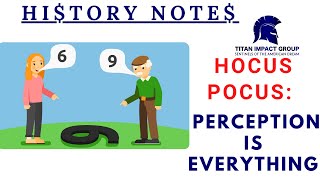
Catherine Bell and a co-host explore how perspective shifts unlock business opportunities and compassionate solutions. They use examples like McDonald's bag shortages and grocery bagging to show how simple problems become profitable when you see them differently, and share a three-question filter from Soundtracks by John Acoff to cut through overthinking.
Questions this video answers
"Is it true? Is it helpful? Is it kind?"
Chapters
My fellow compassionate capitalist. Happy Friday the 13th. I love it. Hey, you know what? Perception is everything. So let's kick off Friday the 13th perhaps with a little Hocus Pocus. Whoa, what is this? Is this. In addition to the Walzim, is this book from Hocus Pocus? Let's look inside. Hmm. Nope. It's just a holder for the movie. Imagine that. And where's Catherine today? Does this happen to be a huge 17th century French armoire? Or is Catherine really the world's smallest Canadian? I think Catherine may have found a new panic room. Anyways, what Today is all about again is, is perception. Things may not necessarily be what they look like. This week's articles that really intrigued me when it comes to perception was the one on McDonald's. McDonald's apparently is having a, a bag shortage problem due to not only the drive through, but all the carry out, sir, you know, carry out and delivery services for people who are at home now. So the solution, when further investigated, turned out to be that all they need to do to correct the bag shortage problem. Are you ready for it? Teach the employees to put the food on a tray for those customers who are dining in. Imagine that. You know, I mean, I know some of you may be shaking your heads like, oh man, what is this world coming to? There was another friend of mine sent a Facebook post on how she was at Walmart and was double bagging everything. And of course, some millennial or gen zer came by and asked her, why are you double bagging everything? And said, well, you know, first of all, I don't work at Walmart, but you're forcing me to because you won't do your job. So, yes, I'm double bagging everything. They're like, well, you're wasting too many bags. What? You need to. And she said, well, you know, it's because I, I don't, the bags are weak. I don't want them breaking. And so the solution that this person came up with was to just unload half the bag and put it in another bag. And then when explained, it's the same thing, okay, I'm using the same amount of bags. Anyways, there was this big argument going on and they just couldn't quite figure out how that was a problem. So speaking of problems and speaking of things that just may not give you much hope at all, I'm telling you, there is hope. Can you imagine if we're raising a generation or we're in a world where people's mental faculties are really that weak that the abundance of problems that can be solved for a profit are just. It's incredible. It is enough to bring hope to any compassionate capitalist. And to further expand on that, I'll go ahead and give it to my favorite little compassionate capitalist, Kathryn.
So I love this week's articles. It's really interesting inside of, you know, a bend in the road isn't the end of the road unless you fail to make the turn. And a lot of people don't like change. And change is inevitable. It's going to happen. So when we embrace change and we start looking things from other perspectives, then we can actually start to have a better solutions and outlook on life. It's interesting. I was actually reading a really great book this week. It was called Soundtracks by John Acoff. I think that's his name. Anyways, it was really great because what he gave us was the opportunity to stop overthinking stuff. And I think inside of this Covid thing, people have been way overthinking. And the overthinking causes us to not actually get into solutions. So there's three questions he gives us to actually ask ourselves so that the overthinking can actually stop and then we can get into solution. I thought was really great. Question number one, when you start overthinking something, is, is it true the thought that you're thinking?
True.
Two, the second question is, is it helpful? The thought that I'm thinking that's swirling around in my head, is it actually helpful? And then three, is it kind? Is it kind to myself? Is it kind to those around me? And what's interesting is when I actually took on that practice of really asking myself those questions, One, the monkey chatter definitely quieted very quickly, but I was able to actually move to a solution. So very cool practice. And then the other practice on back of that is to actually do something. Go clean your car, clean a drawer, do something. Because there's something inside of the doing that our brains disengage from whatever the problem is so that it can actually be a part of the solution. Very cool stuff. So that's what we do. We are compassionate capitalists and we provide solutions. What you know, we leave every person, property and community better than we found them. And so Steve always asks, what are we building? We're building thriving, solid, healthy communities. That's what we're building. Because when we are able to take these distressed mortgages from the banks, take it off of their hands, then the banks now have more money to be able to lend out to more businesses, then we're able to work with the borrowers to get them back on track and keep them in their homes. Because when we can keep people in their homes and in their communities, we. We don't have empty houses, which means vandalism, like all that stuff. The crime rate goes way, way down. So keeping thriving communities healthy, that's what we are all about. But again, we gotta, you know, quiet the monkey chatter in order to do that. So I hope that this helps you inside of maybe quieting your monkey chatter. And I'd love to know, what are you building, you know, what difference are you making in the world as a compassionate capitalist?
So with that, problems are they're abundant and we get to solve them. And that should bring so much hope because all the chatter, all of the noise that's going around that's negative can easily just be disappeared. They're all posers. They're a mile wide and an inch deep. All you gotta do is just give them a little poke. Boom, it goes away.
Ask three easy questions.
Ask the three easy questions. Get your mindset.
Is it true? Is it helpful? Is it kind of.
That's right. Get your mindset going the right way. And, you know, let's take this world back. Let's show them what it's like to be led by some compassionate capitalists. And so with that coming from Catherine's new panic room, may you never awake.