How to Handle Evictions Without Fear or Burnout (Landlord Guide) | Titan Impact Group
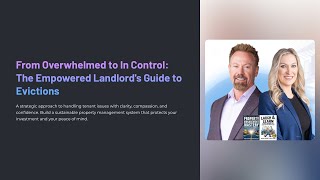
Catherine Bell talks with Michael and Ashley of Ashton Property Management about handling evictions without burning out. They cover tenant screening, the emotional toll on landlords, state-specific legal requirements like Colorado's 10-day cure period, and when to hire an attorney. A case study shows how proper documentation prevented costly mistakes on an 18-unit property.
Chapters
Okay, so welcome everyone. I am super excited to be doing this webinar podcast, whatever you want to call it, for all of you today because of what we're going to be talking about and who we have here, which I'm really excited about. So for those of you who missed last week, you're going to want to go back and watch that for sure. Because we've got Ashley and Michael here and this is the second one of multiple that we're going to be doing, which I'm really excited about. And just to give you all like a sneak peek, heads up. We are launching some co creating and launching courses and stuff together so that all of you can learn about creating more passive streams of income, which you all know that I'm all about. Because we know that the average millionaire has seven streams of passive income and we want you to have that many too. And so this is one of the ways of creating passive streams of income, which is buy and hold. And when you do it right, clearly not the way I did it, then it can actually be enjoyable. Cause I'm realizing when I did buy and hold and I talk about this, that apparently I don't do tenants and toilets. But had I have known how to do it the way you guys do it, I might have actually enjoyed it, which may have changed. Either way, I'm clear that hiring a team like your guys's company to come in and actually manage that, that's still the way that I would go. But understanding and knowing all of this is a really important part. So I'm really excited about what we're going to talk about today. And last week we talked about.
Tenant screening.
Yes, tenant screening, which helps avoid this piece, which is evictions.
The buildup.
Super happy to be doing this with both of you guys. And if you could just share a little bit about your story, because I think that's really important for people to hear because not everybody was here last week. But I love how your company got started and who you are as a father and a daughter, that this whole team and the whole family is involved. So let's go ahead and get started there and then we'll dive into all of this because I want them to know who you are.
Yeah, sounds good. Absolutely. I'm going to go to the next slide in theory, because it has a little bit of a overview of us. But really I got into, just to take it all the way back, I got into real estate investing when I got divorced. I mean, literally, I got divorced in February and then in March A buddy of mine said, hey, there's a Robert Kiyosaki Rich dad, Poor dad seminar in town. You want to go check it out? Well, at this time, so I had a software company that I had just started. It was only a couple years old. And so it was, you know, very early stages and very volatile at the time. And I was freaking out a little bit. Both kids moved in with me, I took all the debt, still had to pay maintenance, all that good stuff. And so I was like, okay, I need multiple streams of revenue. So seven streams to be exact.
College.
Yeah.
And Ashley had started college. And so I went to this Robert Kiyosaki Rich dad, Poor dad seminar and I realized all the different streams of revenue that are out there associated with real estate. And I said, you know what, I'm just going to start doing these. And so literally I dove in. I've done pretty much the fix and flips, the buy and holds, the lease options, the a whole variety of them, single family, multifamily, and that's really what got things going. And a couple years after, or a few years after, got that going. The portfolio was growing. I realized I couldn't scale it myself. And I looked around, I didn't like the property management companies that I saw out there. And so Ashley and I chatted and we said, hey, why don't we just do this ourselves? So the name Ashton comes from Ashley. Ashley and Brandon, those are my two older kids. And I thought it'd be super cool father daughter duo to go tackle this thing. And so that's how that all got started. And then unfortunately in 2010, my son, her brother Brandon, was killed in Afghanistan. He was in the U.S. marines. And that really recalibrates everything in your life. And so we, we decided, you know, take this to a different level, to be able to pay it forward, to be able to help other people in ways that, you know, I didn't get when I was starting and really wished I would have had. So that's really what this has become. We're now how many times, two times.
International best selling authors.
Yes. And so check those books out. They're here as well. And we want to be able to pay it forward. We want to be able to help people out and learn how this stuff goes, whether you do it yourself or you have you hire someone to do it. I really, we created this company because it's what I wanted as a concierge company, to be able to do the things as an investor that I needed done, that I wanted done. And so that's really how this all came about.
Yeah, yeah. And seeing how this can also provide for future generations is, is huge. Right. Generational wealth and just living the life that you've wanted to live and to be able to provide for your kids and all of those wonderful things like this is something that can do that. And so that's part of why we're doing what we're doing. It just resonates really to our core and then with our mission.
Absolutely.
I love this so much. Okay, now let's jump into the yummy stuff.
Yummy. You are the first person I've ever heard refer to evictions as yummy. But I love the enthusiasm. I like it.
Okay. Notes necessarily. But the passive streams of income. I'm going to focus on the good things.
Yes.
Otherwise if we focus on the bad things, we get analysis paralysis and we never do it. Right.
Exactly.
One of the things I teach is, look, do all the asset classes, do at least one full cycle of all the different asset classes. So you figure out what you love. Right. Like, you know, some people really love buy and hold. Some people like vacation rentals, some people like, you know, ground up development, some people like residential, commercial. Like there's all the things. Right. But because I gave myself permission to go full cycle on all of them, I discovered I like to be the bank and rent dirt. But I had to go through the whole process. And so that's the piece that I'm excited. And again, I'm still going to encourage people to go through all the cycles because some people love this. So that's the yummy stuff.
Absolutely. And I think depending on the market cycles that are out there in the economy that we're in, some of those different areas within the real estate are better than others. Sometimes single family is better than multi family, sometimes vice versa. Sometimes short term rentals are better. And again, if you pay attention what's happening in the economy and you take these, these underlying principles, single family, multifamily, buy and hold is the same principles that we're teaching here that apply to both. And then you can figure out again what works best for you for the passive income streams and just keep, keep moving.
Yeah. So dynamic with real estate. That's what's so great. You can pivot at any point and your portfolio can change and it's wonderful.
There you go. All right. So evictions, it used to be. I'm going to do a little preamble because it used to be so much easier in Colorado. In Colorado used to Be so much easier. Back in the day. I would post a notice, three days, and then if they didn't pay within three days, schedule court date, get it done, show up with the attorney at the court, and it was a done deal. It was pretty simple. Pretty simple. It's not that way anymore. And we'll go into more details about that. But fundamentally, there's a lot of fears that go along with the whole eviction process.
There's a lot of emotions with it. So. So there's the biggest thing that I hear from landlords that have that either call us and they say, we need you to help take over. We're in the middle of an eviction or we need to do an eviction. Is this fear of conflict? Evictions aren't fun, right? They're just not. They're not a pretty bow package anybody wants to unwrap. However, sometimes they are a necessity. So it's important that we understand and what they look like, what the parameters around them are. So when you can go to eviction, when not to all of those, what the timeline looks like. So that way you're prepared and ready to go. Because as I like to say, tenant screening is 99.9% accurate. But, you know, you can't. You can't screen personality, you can't screen other things like that, right? Like, sometimes there is just a rift and it's okay, but the biggest thing is, okay, is there a violation or delinquency or something happening? So the biggest thing I hear of is there's just a lot of emotional conflict with having to deal with an eviction. The other thing I hear is that landlords will really try to work with someone, which is wonderful, right? We always want to have people lend a hand and help, but there are abusers of that. And so sometimes we'll hear, okay, well, I've tried to work out a payment plan with them for five times now. This has been over the last seven months. They keep having issues with their car, with so and so's in the hospital, you name it. And while empathetically my heart goes out for anything like that, you have to be able to stick to the facts. Hope is not a strategy, and this is why we're doing this to today, is to make sure it's really clear you're trying to make sure you're protecting your asset as well. Because while they may be dealing with these issues here in their life, you're also still on the hook for your mortgage. They're not paying for that. And Nobody else is. So it is a business and it is a business. So you need to make sure and take care of your assets so it becomes a profitable business and not something that is draining you financially and emotionally.
So given that I gave the kind of the preface of what it used to be like when it was much, much, much easier. And guess what? The laws have changed and therefore so did the game.
Yes. So they've shifted a little bit. Right. And it depends on what state you're in. In Florida, they're going to be different from Colorado. In Colorado, things have changed dramatically over the last 10 years. So you're really like, when we talk about, you're really going to want to have an attorney that's already pre vetted that does property, property evictions in your state that knows exactly what legal parameters there are. There are great ones to talk to. And if you have questions, anything like that, absolutely amazing. So if you do have a property, you want to have somebody that you know, like a lifeline, with an attorney that you can contact for questions. But the biggest thing is you got to be aware that legislation changes and sometimes it changes. Every January in Colorado, we've got 11 new bills that are set. Well, they've passed so far. We'll see how far, which ones continue on and which ones will hit by January. But those are all the things that have been happening just now and it's only July, so things to be aware of. The other thing is there's sometimes that, you know, cultural shock of, oh, I'm the landlord, so I'm the bad guy.
You're not the bad guy.
You're not the bad guy, you're just.
And you're protecting your, your business.
Yes.
So you can't feel bad about protecting something that you worked hard for. You've gotten, you're using as another asset for your family to be able to go and do things as well or provide. So that's not something that you should feel bad about. At the same point, you need to make sure that you're playing by the rules. But that's what we're here for.
Absolutely.
And yeah, here we.
Yeah. So these are common mistakes. And I mean the number one, the sympathy delays, I mean, that's a really big one. And Ashley already touched on the emotional piece of it and feeling like you're the bad guy, it's hard. You're not, you're not the bad guy. So, um, I'll let you walk through each of these in detail a little bit. But always, always, always remember it's actually anything with real estate for that matter. It's not emotional, it's just business. And it's just math. Gee, I say that all the time. And truly, you do the math to figure out what makes your business work and then you do the processes and systems in place to make. Make those work in a way to keep. Keep it viable moving forward. So emotion is one of the number one things against you in real estate. Yep.
And so some of really quick going.
Back to what we talked about last week was that when you guys did this screening process, you did it by the numbers. Like you had a.
Absolutely.
An evaluation process that took all the emotion out of this. And so I just want to make sure that everybody's understanding that this can be emotional and you need to take the emotion out of it to protect yourself.
That's really the huge part.
I apologize. Wow.
Isn't it rookie? I get to douse about that later, everyone.
Oh, that was awesome.
So.
But you love my ringtone, don't you?
I was gonna say it's quite.
I like it. Hear anything, so.
Oh, you didn't?
No. Oh, your microphones are. Are filtering out.
Whatever that was.
I love that. Well, my ringtone is pretty awesome. So you missed.
That was pretty great. Anyway, well, so the biggest thing that I want to talk about today is kind of why we're ending up at an eviction.
Right.
Because it's important to understand how we even got here. Whether it was a tenant screening that gone wrong. Maybe it wasn't. Maybe it was something later that shifted in that person's life. And then, you know, this now has become financially a strain. And you know, only when these late payments or things like that are showing up, is there. Okay. This is actually becoming more of a habit. Not something that's a one off issue. So part of the things to watch for is you get to an eviction usually in a few ways. Either there's a delinquency or there's a violation of the lease. That's usually about it. Right? Violation of the lease, anything being criminal. This is where it's really important to make sure that your lease is attorney vetted. Because you want to make sure you have the proper language, you have the proper compliance information in your lease. Some people just grab leases off the Internet. I would not do that.
Start there, but have them vetted there if you want.
Exactly.
That's a great. You know, you can start there but have your attorney in your state go, okay, this is what I'm doing. This, you know, does this have the proper language. Is the late fee correct for my state, you know, now in Colorado there's no late fees charged until the 9th. You know, is that proper for your state? Find out. Because that's all going to be proper language that you want in your lease. Same thing like if you, your lease has to be in the tenant's primary language in Colorado, it does. So if they speak Japanese, your lease is in Japanese. I am not making that up. So you've got to make sure that you have your lease is, is kind of your manual for how your entire tenant relationship will go. What they're allowed to do all of those things.
And it's your backstop for when you end up in court in an eviction. So it's critical that you have that in place and that you've documented everything because it is truly, again, the court system is also very much by the facts and not emotional as well. But you must have your facts and your, your evidence available.
And if you've got a lease that clearly states there's no criminal behavior or anything like that happening, no, no drug use, anything like that, and you find out there's drug use that's been happening, that's a violation of the lease, you go through the notice posting and then it still, you know, continues, then you're going to eviction. But at least there's complete record, clearly stated, this wasn't allowed in the property. This continued to happen. We gave notice that this can't happen. Tenants ignored it and now we are where we are. So as the term eviction can be scary, but just looking at it as facts instead of the emotional part can help sometimes with that as well. So knowing why you ended up there with delinquency or a violation that occurred is going to be key. And then a lot of people say, well, I've accepted a partial payment after you posted a notice. Okay. Or you've gotten. I had. There was one other landlord and I'll tell the story.
We have a case study, we'll walk.
There's a case study with this in particular. And he did text messages with the tenants and they would text back and forth and make agreements. Well, every time he did that, he pushed his own case back.
Time wise, all the deadlines keep getting.
Reset, all the deadlines keep getting reset. And all the demand notices now become null and void because you've created other written agreements.
That's number three, procedural errors. So it's very critical to make sure you're following the process. And we'll walk through specifically what that process is on the next chart.
But so you do have to not accept payment if they are trying to make a partial payment. But if you are not accepting payment, don't cash it, don't cash their check, don't accept the payment. You know, if you're only going to accept a cashier's check in the format, you know, all of those things, just make sure you're really clear on where you are and if you are trying to work with that person or not. If somebody does fall on hard times, there's definitely a lot of resources that I like to have on hand for tenants that come into hardships. Covid was a perfect example. Covid came and, I mean, it took some people out at the knees, and there was nothing they could do about it. And so being able to have resources that you could help families stay in their homes was wonderful.
So we did a lot of outreach, very specific, the proactive outreach as well. A few people. Again, the communication between the tenant and us is extremely important. And knowing early on, if they're having issues, then Ashley was able to specifically reach out with them with specific programs that were available.
Communication. Right. And if you notice something's a little bit later and they're never late, hey, what's going on? You know, is everything okay? And, I mean, most people are pretty honest that said, okay, no, this isn't okay. I lost my job, or this happened, or this, this happen. Okay, well, this is what we can do about it now moving forward, you know, is there going to be a concrete solution? If not, then these are things to start thinking about.
But, yeah, we found that to be one of the most critical things was knowing all the. The different nonprofits and churches and government programs. And there were city, county, there's all sorts of resources. I mean, again, a lot of this came up through Covid that we just connected all of our tenants through and let them work through the process. A lot of times we had to write letters, you know, fill up forms, whatever, which is fine. Right. But ultimately, you know, we got paid. They got to stay in their home. So it was a win. Win.
Absolutely.
That's exactly what he did.
So if that works, wonderful. You know, at the same point, they have to take the action to actually fill out most of those applications. You can point a horse to water, but you can't make it drink. So, you know, that's also another key factor is that there's been times where we come in during an eviction and the landlord's so frustrated because they're like, oh my gosh, I gave them all of this and they just didn't fill it out. And at the end of the day, you know, you can't make somebody else's decisions and it's okay. But you did your best and you can say that you have tried to help somebody. So. But, but yeah, absolutely. Having on hand some, some areas that they can go for rental assistance is great too.
And yeah, avoid some of this for sure.
Yep.
And documentation is a big part. We've, we've said that with everything we do. Document everything, whether it's text, voice, email, have a file, have documentation that shows exactly the chronological sequence of events, what happened, what did not happen along that path. And then also that ties in directly with the procedural pieces as well, making sure that you are following along with those very specifically in relation to like delinquencies in rent, etc, because timeline becomes extremely important as you walk through this process.
Yeah, yep. Timeline and demand notice postings, demands. I mean, just in Colorado alone, there's specific county demands.
Go to the next chart for that. Yeah, yeah, this is part of the process. And so this ties directly.
Yes. So knowing what type of demand to post, noting, making sure that it's, you know, the attorney formatted form that's appropriate. This is also why it's key to work with an attorney because they have all of those forms and they just give them to you. The other key thing is, and we've actually switched to this with how Colorado has changed their demand postings so now they require where you can't just go and post a notice on someone's door and walk away. You actually have to try to serve it twice. So if you don't get a physical person the first time, you have to come back a separate day. Separate day. You have to log what time and day you've tried first physically come back another day and then repost the postings. Attorney processors are great at this. Yeah, this is what they do, guys. This is why it's so great to have an attorney relationship.
Doesn't have to be your time, it doesn't have. And this is all billable.
This is also why this is a business. So if you are looking, you're like, okay, this is scary, all this stuff. Well, just remember in your lease, all the attorney's fees can be passed through to a tenant. It. The language needs to be proper. It needs to be attorney vetted, make sure. But that is something another way you can protect yourself so you can use those services and not feel like, oh my gosh, I can't afford this. How am I going to do this? You can get that professional help. You need to be able to serve the demands appropriately, know which demands you need to serve. All of that good stuff. So they're a great to add to your team or I mean, ours are wonderful. Yeah, love them. And.
But just by the way, for 12 years.
Yeah.
Or more.
Yeah, yeah, they're great. So just a whole other thing I.
Need to add in is that those team members are critical. And I learned that years ago. So you always make sure you pay your accountant and you're like, you never ever miss those bills because they literally can make or break you.
Absolutely, absolutely true. Team is critical and you don't have to know all the pieces. But having the right people on your team who do know their pieces, that is the critical part for sure.
Yep. So attorneys are wonderful. They're going to vet your leases, they're going to make sure you got the right demand notices. They're going to let you know when new laws come out, all of these good things. Right. That partnership is going to be huge. And knowing what demands to serve, knowing how to serve them and when to serve them, because there's that period you have to wait. So now in Colorado it's a ten day demand. It used to be a three day. For anybody that's still on the three.
Day back in the day.
It's not that anymore, don't do it. But yeah, it's a 10 day wait period and it's basically a 10 day demand to cure.
Right.
They have 10 days technically to cure that violation that you're posting the demand for.
So sure, let's jump right here because it talks about that specifically.
There it is. So 10 day notice period before filing. So what that means is on the 10th day you can't say, okay, I'm going to go file it now. It's still not, they still have until midnight on the 10th day. So technically it's the 11th day that you can go file that with courts if nothing's been cured. Florida is a little bit different. Floor is still in three days. But this is why it's important to check your state because every state is going to be different on their HUD guidelines here they might have county specific forms, they might have different posting requirements, just like Colorado does.
Yeah, and that's a tricky one, by the way, the county piece is a tricky one because sometimes one county does, they require different documentation, different posting notices than a different county. So yeah, yeah, that's a, that's A.
Big different languages still.
Yes.
Colorado's big on the demand notices even being in the tenants primary language. So if you serve in English, a demand in English and the tenant is primary language is Spanish, it's not valid. So hold up. So those are all super, you know, be very clear and, and knowing your valid grounds for eviction, right. Delinquency, violence, if they're violating some portion of the lease, that's all verifiable and any illegal activities, anything like that. But those are going to be critical pieces that you're going to have in your lease that you know is not okay. It'll be documented, you'll have your notice postings and by the time you get to eviction it's pretty straightforward of why you end up, why you ended up here, who is in the wrong and then there's takes the emotion out of it still and you're able to regain possession of your property.
So you want to walk through a specific use case. Yes, this is a very specific example of a property.
Yeah. So this happened. We got a call through known landlord that we managed for, gave gave us a call, said I've got a friend, they're in it, they need some help, I'm going to give them your info. So we got a call from him and he had an 18 units and this property was great property. But he was in the middle of an eviction. It was horrible. He was getting harassment, text messages. It was just, I mean it was crazy at this point. So he's like, I need you guys to take over from here. This is where I'm at. Go. And so we did. And through these, taking the emotion out of it and truly by the book, going through, getting all the information on what the eviction was about, passing everything through through the courts, following it through the eviction, getting that tenant out. We actually had to go through physical eviction because they refused to get out. But we were able to complete several of the evictions for him and get those properties turned and re rented. But wow, this was, this one was a doozy. And I think the, the biggest thing here was there was no boundaries set for the owner so they would just. He was just getting mass texts constantly all hours of the day. And he was just at the point.
Where he's like, he's exhausted.
This is dad. Yeah, I don't want to be in this anymore. I need help.
I went off the ride.
I went off the crazy ride for sure. So he came in immediately, just implemented the boundaries of okay, hey, we're the managers, you know, the, the physical notice goes out that says, hey, this is who we are. This is what we're doing. This is who you need to reach out for, for maintenance, for this, for this, for this. And just immediately taking that off of him. Now obviously that took some time to get used to for all 18 units for the tenants, because they weren't liking the fact that they had to talk to management but first. But in the end, the whole thing actually got turned around. Everybody was super happy. All of the tenants liked us. After, I think it took like a month for them to like, really be like, okay, we have to go through management. We made, we made the owner stop communicating. We're like, by the way, that is a rule.
That's a cardinal rule. You are never the owner. Owner. When you're talking to the tenants, you are never the owner. I have been an inspector, I've been in a maintenance guy, just checking out what needed to happen for maintenance. And I've been part of the property management company. But you never, never, never say you're the owner because once they know you're the owner and they know your contact information, they have a lot of leverage that you don't want them to have. So that is a key, key rule. Do not ever do that.
Well, and if you have a management company, they're not going to call the management company anymore. If they have your info, they're going for you. Yeah, right, that, I mean, that's just case in point, they're just going to go, they're going to go right through to you. But, but yeah, we helped him through to two really big evictions that were pretty bad. And he was originally going to just buy or sell the whole thing. It was just gotten to the point where he was like, you know what? I'd rather lose money than continue this crazy train and, and just have somebody else deal with it. And instead we were able to turn both of those units, get everything profitable again. And, and yeah, so everything worked out. But that's just one example of where the texting and the trying to rely.
On those stories and, and being emotionally receptive to them. I mean, it's good to understand that timeline and to like we talked about earlier, to find some other resources that are available to help them pay their rents. But don't get caught up in the drama. It is just a business and it's not personal at all. And so don't get caught up in there. The key pieces don't wait. I think Ashton's been very clear on that one is that watch your timelines very carefully. Make sure that when you hit the delinquency date that you immediately file. You don't wait, you don't. If they get a phone call says, well check, I sent a check, it's in the mail, the famous checks in the mail thing, or I promise I'll pay it tomorrow. Do the documentation follow through because you are going to be the one who ends up losing later if you don't.
Yep. Well, and there's specific parameters.
Right.
For being able to like in Colorado, it's now changed on what you can non renew for. There's a set list of 6 items that you can not renew for. Otherwise you can't remove anyone from your property. It has to be one of these six cases. So with that, you're going to want to make sure if something is truly not working and there are lease violations happening, even if it's a late rent and it's a one off, you know, having a conversation with that tenant and saying, okay, great, you know, I totally understand you're going to have it next Tuesday, but guess what, just be aware, you're probably going to get a notice. It's we're going by the book. You're going to get a notice on this date, but if you have it in by Tuesday, you're within that window. So you should be good to go. And it keeps them honest for what they're.
And they understand the next steps.
They understand that you don't do their part.
Yeah. What's going to happen?
Yeah. So you, I mean you still have that conversation and they still understand that there's that window. But if that window passes and you know that didn't happen, then this is the next step. So making sure that your follow through is strong and, and that you're just abiding by those dates is going to be key also with the holdover costs for your proper because you're still, like I said, you're still paying mortgage, you're still doing all these other things that you're on the hook for and they're not. So if they're not paying rent. Yeah, goose eggs coming in. They don't want that.
What about the what ifs?
Right. And it goes back to like, we teach people how to treat us right. And so you're setting a precedent of like, well, I just want to be nice. You become a doormat.
Yes.
And then you're telling people like through your actions that it's okay to treat you like a doormat and that doesn't work. So it's why there's parameters set.
To protect you, to protect them.
Just. And I always say this to my kids, like listen, you may not like the rules, but just play the game, play by the rules and win. Right? Like you don't have to like vote on the rules, just know what they are playing when this is just it, this is, this is the way it goes. And it doesn't mean that if you're playing by the rules, you're the bad guy. It just means these are the rules to the game. Like if Monopoly, it doesn't mean that somebody lands on your space, you collecting rent from them as you're the bad guy. No, those are the rules to the game.
That's it exactly. If you want to stay, these are the rules. Right.
And if you miss that point, you feel like you're the bad guy. Play Monopoly with a seven year old, they'll kick you.
So true.
My kids love Monopoly, so I got younger kids too. They love Monopoly.
So love that though. I love that these are just the rules because it's true, right? I mean if you don't pay rent, okay, we all internally know what's going to happen next, right? But just vocalizing and say, okay, well that's great. And if you have the rent payment Tuesday, great. Also, just so you know, this is what happens next. You're going to get a demand notice. If you're paying within this window, you should be fine. Yeah, but those are the rules, you know, and making sure those are on.
The Monopoly board, you go to jail. Like on the.
Yes, exactly. Thank you.
It's just the rules.
It's just the rules.
If you're confused, go play Monopoly.
So true. Oh my gosh, I love that. I think that it should be rules of the game. Yeah, the game, it really should. So yeah, I mean the biggest, the other biggest thing I, I get here is just there's hesitation on well, am I qualified to go to eviction? And this is really where I just want you to understand. So common, common situations like I mentioned are going to be like the legal violations. If it's something where you know, it's criminal related, that's a given. If that's, you know, obviously no drug use, things like that in your lease, violence of any kind. If anybody's, you know, physically fighting with your neighbors or anything like that, or police have been called, anything like that, those are all going to be key violations. Noise disturbances are still violations. Upkeep of your property is still a violation. The unauthorized tenant A pet you that just came through that you don't know about, if they haven't gone through the proper steps to notify you, and maybe they haven't paid a deposit or you. You've requested one now that you know of the pet and they've refused, you know, these are all violations.
And they're just the rules. Yeah, I love that they're just the rules.
They're just. Your lease is just your set of rules. That's it. It tells you how the game is played. That's what you're leasing, how to win.
Player and how to win.
How to win. How everybody wins is really, you know, if the tenant wins with being a wonderful unit, these are the set of rules they gotta abide by. You know, you win with getting an awesome tenant that abides by all the rules, everybody wins. So, yeah, making sure that you're just playing by the set of rules, it really takes away all the stress and anxiety when you're dealing with anything like that. Um, if a. You get to the point where you're physically going through an eviction, you may have to go to a court or trial or anything like that. That's where that documentation is going to be key. Making sure.
And your team, your system that are your teammates that you have with the attorneys.
Yeah, attorneys will go for you, which is great. Yeah. So, you know, making sure that you have that team set up in advance is going to be critical.
Yeah, absolutely.
Yeah.
And then obviously, we all know it's going to lower your stress in the end. Faster resolution, time frames. Right. If you're playing by the rules and you're hitting those dates. So, you know, like Colorado, we'll just use as perfect example, we'll say, okay, late rent on the night, you give them a call, they say they're going to pay Tuesday. Great. Demand notice is created. You're posting it the 10th. Let's say you don't catch them on the 10th. This is your attorney doing this, not you. But they catch on the 11th and notice is given to them then. So then your 11th to, you know, 10 days after that. And so you're seeing this time frame. Right. Like how long just in Colorado this can take eviction wise, which is why it's critical.
You don't miss a cool.
You don't miss these deaths or get.
Them wrong because they reset.
Yes.
That is actually probably the one that we've seen the most that people, you know, they just. The look on their face is. Is, I guess, dismay. And just like they are completely worn out from the system, which, I mean, truly, I get it. I mean, I've been there in the past. But that's why you make sure that the process you follow is accurate. The timelines you follow, accurate. The documentation that you pro post and that you file is accurate for the county and the state that you're in. And knowing the rules is half of it. Once you know the rules. I love that, Catherine. Play. Play to win. Knowing the rules.
Yeah.
And so that's all this is.
Well, I'm giving you accurate thinking. Because when you have accurate thinking, then you tap, you take the emotion out of it. You're like, just like Monopoly. You roll the dice, you do your move, it's the next person's turn. That's it. You filed it for work, it's you rolled the dice, you did the thing, now it's their turn. Right. And they do or don't do it. And then it's the next person's turn. Maybe it's the attorney, maybe it's the court. Whoever it is, it's somebody else's turn until it comes back to you. And then you roll the dice and you do your turn. Next, like again, just Monopoly.
Yes, exactly.
But there's no emotion and you have accurate thinking. Right. Like, take the emotion out of it and just understand, here's a process, here's the steps, here's the timeline. Follow it. Play and win.
Yep.
Yes.
And timeline wise, I get this question a lot is what does that look like?
Right.
Let's say you're in an eviction. Now. Colorado's time frame looks different from Florida's. Florida's time frame looks different from Wisconsin.
New York is a nightmare.
Every state. This is where, you know, just make sure you're playing in whatever state you're in. Play in your rules, play in your sandbox with your set of rules. But in Colorado, I can go through the eviction timeline here as well, but it usually starts out with, so you've got your delinquency. That happened. A violation of some kind occurs. Right. You're notifying that tenant in writing with a demand notice. You can also have a conversation with them. A call. We like to do both. Have a call, an email and a demand. It covers all boundaries. Right. It's documentation at its finest.
So courts love that.
By the way, you can have a phone call and then you can have an email that recaps that phone call, and then you can have the demand notice that says, you know, even in the email it says you're going to get A violation notice for what happened. This is our conversation about it. But the demand notice is posted, right? That period, it's basically a waiting period for them to cure. They don't cure at that point. Then you're able to go file with the attorneys. And so the attorneys basically file it with the courts and you get your court date. Waiting for the court date. That's a little bit of a wait time now. And after the court date is there, then you can regain possession of your property. Now, in Colorado, regaining possession of your property is great. When the court says, okay, yes, you have, you have possession. However, the tenant may still be in the property. So even the court said, okay, you've got possession. There's no move date by maybe X date. But you know, you call the tenant and they're like, well, no, I'm still here. You say, okay, well, technically you're not.
This is the next step. If you make that choice, if you.
Make, then yes, then the next step would be the physical eviction. So then you tell your attorneys, okay, they haven't moved by the move date. Everything gets sent, a writ gets sent to the sheriff. So the sheriff gets it. Then they call you to schedule and you schedule a date for the physical eviction to happen. They basically physically are a presence during that entire eviction. And we'll make sure they're the ones that knock on the door during that time. They let the tenant know what's happening. Everything, you know, gets moved out. But you have to have people that usually move everybody out. So that's that timeline of what that looks like. And then obviously post physical eviction, you would physically and be in possession of that property again. And that's it.
I just have to say, like, worst case scenario, how often have you guys seen this? And like, what percentage of times have you seen it go all the way to this?
I mean, it depends. It really depends. Like when we were, when we took over that 18 unit, it went all the way. Like there was just. There was so much back and forth and there was. They knew the game so well, they played it to their extent, the fullest.
And the key, I think if people know the system and game the system and they know, I mean, there are people that will take advantage of, of a situation quote, knowing the rules and I guess in this case, knowing the loopholes and knowing what they can and can't do. So if they know, well, okay, fine, I'll go through the court thing that'll buy me this much time. And then, okay, if I refuse to move out that'll buy me this much more time. And some people will really game the system and just work it to their full advantage. And those are the people. I mean, there are people that are professional tenants that you've probably heard about that can do this. But that is why your tenant screening piece is absolutely critical to avoid this in the first place.
I was just gonna say that. Yeah, tenant screening is really where it comes into play and being able to take the emotion out of it. Right. So you're not relying on stories and things because then you could catch yourself here later with more stories and things and unfortunately be in a, in a worse feeling spot for sure. But I mean, it really doesn't get here unless there's things that are, like I said, tenant screening wise or there's major, major life changes where, you know, I mean, you can't prevent life happening to people. And I've seen just a complete mental breakdown before, so it's sad to say, but I would say it's rare. It's not, it's not a common occurrence. But you do need to be aware of what to do if it does happen. Or like the owner that was starting, starting with the eviction, where he's like, okay, we're starting here. It's good to know, okay, this is where we need to go. There is grass on the other side. We'll be okay, let's get everything to square one and then we, we can move from here.
So that's the. I want people to get. Is that what we're talking about is worst case scenario? Which means it's not common, it's not like the norm. It's like, be aware and protect yourself so that if, if a big if, hopefully you never go through this. But if now you're like, okay, got it. I've heard about this before and here's some steps and some people and team members. So again, you guys aren't saying that this is going to happen with every tenant.
No, not at all.
If you did the tenants training properly, you'll have tenants with you for decades who love you, who bring more tenants, like all of the things. And that's been, you know, my experience is we have hundreds of tenants and for the most part, most of them are like, great.
Yeah, Yeah.
I mean, I've gone through this process literally twice and literally once all the way to the point of having to have the sheriff there. So. Yeah, but that's like hundreds of tenants with. And that person was a professional. Yeah, they, they knew the loopholes. Let's Just say that.
I was going to say you chose your words very carefully on that.
Yes, but. Yes. No. I mean, here's the deal, right? Your tenants are. They're going to be. You're going to build that relationship with them. So we do have tenants that have been with us for over a decade and they're phenomenal. And we did just get her son in one of our units, by the way.
Oh, nice. Yeah.
But she's great.
Yeah.
So it's, you know, you build those relationships and this is an ongoing thing. This is why it matters to have those conversations. And like why I said, don't just slap a demand notice on their door, have a call.
Yes.
Right. Because you're still working this.
There's still people, they have issues. I mean, some people. Yeah, in the system, but most people, especially you've done this screening right in the first place. They're reasonable people.
Yes.
I've got a phrase. The three Rs. Reasonable people given reasonable options, will make reasonable decisions. And what that really means is reasonable people.
That was good.
Yeah. If you have reasonable people, that's key, by the way. Given reasonable options, what that means is for the things that are in front of them that they can make a decision on, they will make reasonable decisions. So I call it the three R's. And I truly have found that to be the case. And most of the people, again, the first are. Has to be there. They're reasonable people. But if they are reasonable, then if you show them the options that are in front of them, then they'll generally make good decisions.
So y.
It's my experience and I think we are there. We do have. You want to talk about the decision and clarity sheet? That is a yes.
Yeah.
Something available for them.
Yes. So this is going to be one of our takeaways. We've got another one on Thursday that'll kind of be a review of that timeline just so you can get a good idea. But this eviction action, decision and clarity sheet is pretty great. It's going to help you be able to confidently decide when you can go into eviction, what are the parameters, when to wait, when to post, when to escalate, when all of those good things. And there's going to be some other legal resources in there of where to go if you have landlord, tenant, state by state questions and guidelines. So awesome resource. Definitely grab one and it'll help you on your journey. But just remember, evictions do not mean you failed. Evictions do not mean you failed. Okay. It just means you're protecting your asset and you're enforcing your legal right to do so. That's it. And these are truly, you know, I hope we didn't, you know, scare anyone with the eviction conversation, but it's a reality. You just need to be aware of it. But it's not, it's not a common reality. It's not your everyday reality. Like, your everyday reality can be pretty awesome with tenants and rentals, but it's always great to know all the rules to the game. Like you need to know every rule. So this is just one of those rules.
And play and win.
Win.
So one of the ways that I know that they can play and win is by. You guys have a course coming up.
Yes.
And the Landlord Success Blueprint course. And just given who you guys are and your track record and everything, I think it's brilliant if anybody wants to go into this space because again, like I said at the very beginning, I want everybody to go through at least one cycle of all the different asset classes so you can figure out what makes your heart sing. That's really.
Yeah.
So, yeah.
And we go through everything in that Landlord Success Blueprint course. I mean, we cover evictions, we cover attendant screening, we cover setting up your.
Company in the first place to do it right, having the right systems, having the right teammates as part of your. Your team and scaling your portfolio. How to basically do all of the pieces accurately. We have a lot of people that are contacting, for example, they have elderly parents who've passed away. They have a house. They're like, well, do I sell it, do I rent it, what can I do with it? So one of the things that we can do there and is again, show people how that they can take that asset and again turn it into something that continues to perform and is again just another stream of revenue for. For the. The family.
Yeah.
Which is awesome. I love that. Okay, so is this the. Are we at the end?
We are. I was trying to mind the timing so that we didn't go over.
So. But I think what you guys are giving again, this, this has been beyond invaluable. The other thing I want you guys to be present to is the two books that they wrote, they talked about at the beginning. They're international best selling authors. Yep. Those are the people hang out with. And so get the books, sign up for the course again. This is all about knowledge, is power, but applied knowledge. Right. Like you can know all this but not do it and then none of it matters. Like I tell my twins I don't care what you know, only care what you do. So make sure that you get this and then do it. And then, of course, you can reach out to Ashley and Michael, and they're more than happy to talk to you if you don't want to do any of it like me, and just have them manage it all. Because I just want the income.
I don't want the work. I love it. I love it. That's awesome.
Yeah, definitely.
Check us out. Check out the books. If you have questions, reach out. Yeah, absolutely. Thank you. Yeah, thank you.
Absolutely. So we're gonna do a Q A session on Thursday with Deeper dive into this, which I'm really excited about. So everybody get registered for that. I'm super, super excited about this. And again, you guys, this has been, like, invaluable inside of what you guys are doing. So thank you for who you are, for your tenants. Right. And for the community. But then, of course, for people like me who like the passive income, but just don't want to go through the whole process.
I love it.
Thank you. Thank you for having us on.
I love it. Okay, you guys, we'll see you on Thursday. You're extraordinary.
Thank you so much.
Okay, bye, guys.
Thanks.










