Live April 20
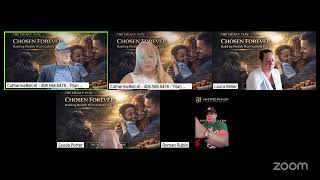
Catherine Bell presented her Chosen Forever initiative to adopt 120,000 foster children, sharing her Hero Club model at $555 per child with 69 adoptions so far. The Titan Impact Group discussed how wealth funds legacy rather than just accumulation, covering investment vehicles like Opportunity Zones and the psychological shift from survival to service.
Chapters
45 minutes or so.
Okay, I'm starting the webinar. Good morning, everyone. We're going to start here in just a moment. Everybody's coming online. Good morning.
Oops, I'm back now. Oh wait, what date is the last Saturday in the month?
30th.
Amor's in the group.
I got her. Katya will not be here. Uh, Cicely's on her way to New York. She won't be here. She'll be listening live. Katya's in final exams. Good morning.
Good morning.
Good morning.
Good morning.
Um, so it's 9:02. Would you like to start?
I mean, we can. I didn't know if you wanted to wait till like 9:05, see if more people come along, or, um, Blake.
I got Blake.
Yeah, why don't we wait until like we get like 5 minutes in and then I love that the picture actually has your picture in it, Catherine.
Well, I mean, that was funny because if you look at the picture, it's like, I don't know who he is and I don't know who he is, but the little Black kid that you adopted, it does look like you.
It does.
I was like, I don't remember my Black child though. It looks like me. I was like, wow, it does. Tommy's AI clearly knows who I am.
Yeah.
I mean, it's a super cute photo.
It is.
No, it is.
Yeah.
Or image, whatever.
Quickly, Amor, did you get a chance to look at the 4-day structure of like, yes, we're going to lay it out and then just creating a networking event instead of like a speaker event or a conference or whatever? Yes. Like, I think Catherine had a good example of that, with that experience we had with X, right? Where it was just, it was a group of people, but it wasn't like a conference. It was literally a networking event.
Yeah.
And it felt a lot more like, a lot more like FactRight did. Right, where FactRight felt like an actual networking event. Yeah. And they had intermittent speakers. Right. And so they announced when they were going to have deals being pitched, right?
Yeah.
But that was the thing was like these deals had to come pre-vetted, pre, pre, like pre-due diligence. These were not just hairball ideas that showed up that weekend.
Yeah. Did you see that video I sent you, Tommy? That was kind of like that.
Which one?
I sent you like a video that was kind of like an event like that. Where it was like the pitches and stuff.
Yeah, I think— yeah, I did see that video. Um, and you're right, it's, it's like that a lot. So, um, the goal would be to have, um, have that be kind of like what we're trying to get geared toward. I'm meeting with the website designers, um, today or tomorrow. Uh, they're supposed to make an appointment with me, but We'll see where that goes. Anybody else show up yet? Share this out on Facebook and all your social medias if you can. Hopefully we'll have some people logging in to watch from social media.
And I don't know if you saw, this was— I thought this was super cool, was Katya created, like, Lessons Learned.
I saw that. Yeah, I saw it. I forwarded it. Yeah, I forwarded it.
And I think we should do more and more and more of that. Like, here's all the lessons learned. Here's what we learned from this underwriting. Here's what you learned from this. Like, yeah, the more we can gather all the lessons, I think that would be really found.
Yeah, well, it adds back to like the value of what we're doing because you're learning, right?
Right. Hi guys, good morning. Victoria, morning. Super happy you're here.
I'm trying to find the script.
Okay, so it's 9:06. I have that pulled up for you. We should go see all the things. Okay, let me share my screen. You want me to help you? It's like it was over here.
I know it was over there, but then I hit the button and I don't know where it's at down at the bottom.
Yeah, uh, it's right here. Yeah, yeah. All right, you got it. You're good.
Yeah. So are you able to put it in like presentation mode? Does it go into that?
I'm trying to. Come on. Okay, ready to go?
Yeah, I tried to turn the radio down. All right, so you set?
Mhm. Cool.
So welcome to the, uh, Legacy Play, the Chosen Forever, uh, presentation, uh, where building wealth that outlives, uh, you is part of the entire spirit to everything that we do here. This is a big part. It is the part of the entire Titan Impact Group mission. This entire web series has been about helping people understand what Titan Impact Group does and what they're about and where they come from. And this is the soul of that. This is where the spirit of Titan Impact Group lives. And so I'm pleased to present this with Catherine Bell today as part of what it is that we do. So, um, Catherine, uh, go ahead and begin telling us about, uh, Chosen Forever and what it, what it breaks down to.
So, um, Chosen Forever is something really special to me inside of, um, it really is the, the why, my why behind all the things. And for everybody who's building, building an empire, building legacy, knowing what your why is, is super important. So my why happens to be about getting 120,000 adoptable children in the US foster care system adopted before their 18th birthday. And their 18th birthday, their called Black Trash Bag Day, and they're handed their final black trash bag. And, um, when that happens, statistically, these kids end up homeless. So 70% of our homeless population came out of foster care, which leads to drugs, prostitution, and being trafficked. 60% of the kids being trafficked came out of foster care, and two-thirds of our incarcerated population came out of foster care. So this really is the one, um, cause that solve so many of our social issues that we're dealing with. It would literally save billions of dollars in taxpayer money. It would help with the homeless situation, kids being trafficked, and then, of course, incarceration. So by doing this, I'm clear that it's not about having these kids have a home, like somewhere to live, or a job to go to after 18. It's not about that. It literally is about family, family for the rest of their life. Because they've actually done studies that when they have families, even when they're adopted later in life, like I was, that it changes their neuron pathways so that they literally can go on and form healthy bonds with other adults. So that means that they can now have the ability to go on and become productive, contributing members to society. So without that, literally, they just repeat the cycle that they were unfortunately born into. So it literally is about family. And so I adopted my twins out of the foster care system when they were 4 months old. They're now 21. And I was adopted when I was 16. So this literally can change lives forever. We've already gotten 69 kids adopted. $555 gets a child adopted. It's a donation to be a part of the Hero Club. So anyway, that's my why. Now I want to know what your why is. But so let's dig in.
No, we're not going to get into anything.
I know.
We got— you literally jumped to the end of the— all the way to the end of the presentation. Presentation's over, everybody have questions, let's talk. Like, we, we covered everything right there. Boom, done. So, um, no, well, up until this point we've been talking about the, the systems, the funds, the deals, the incomes. But, uh, we're, we're here to talk today about the deeper, and I'm glad you went into the deeper, like, straight into it. Um, and, and so to kind of back it up for people, because again Yeah, that's your why, but what's theirs? And so I don't want to, uh, I don't want to inhibit anyone from, from understanding what their why is because, um, uh, your why is so powerful that you'll suck people into your why and it's not their why, right? Right. And so we want to help people how to, uh, learn how to shift from strategy to purpose, you know, and how wealth is more than money and that, uh, this, uh, that doing this is about the meaning and the direction behind what— why we do all the things that we do.
Right, right. And that's the biggest takeaway I want everybody to get, is that wealth is more than just money. It really requires meaning and direction to possess true value. So when people talk about, you know, aligning, you know, energetically, like purpose, all of that, if you're not really crystal clear on what your why is, then no, it won't flow to you. So this is, um, all about you and your why, just like Tommy said.
So, uh, the question most, uh, uh, people are asking, um, or need to ask themselves is, oh, what do you— what are you spending your life focused on? Are you focused on earning money? Are you focused on saving money? Are you focused on just surviving? You know, um, but if you stop and ask, you know, what is it all actually about, um, and what is your driving force behind what you do— is it security, is it freedom, is it impact— then you're going to begin to understand, you know, the, the way that things come to you. Um, you know, without clarity on that question, wealth can feel empty. It feels like, uh, um, kind of like, how can I accumulate some, some more stuff to And it's like just pouring into an empty hole, you know, or a bottomless pit.
Yeah. So without clarity on what wealth is actually for, accumulation becomes that trap, just like Tommy said. So clarity creates the alignment necessary to break that loop.
If your why is just, I want to be rich and I want to, I want to take care of my family, that's not enough of a why. Yeah. And unfortunately, the reason why that's not enough of a why is is because it doesn't extend past what you live, right? So here in this slide, you know, we understand that Chosen Forever comes from a lived experience of building, losing, rebuilding, redefining what wealth truly means for us. You know, I've had, I've had several commas in the bank. I've had more than, more than 12 zeros in a bank account. And I lost all of that because I didn't have the right why. Right, without the, without the correct why, I was not able to sustain that level of, of, of bank account for very long, right? And this is not concept built in theory. This is rooted in real life challenges, decisions, and lessons learned over time. Like, I, I, I reflect on the understanding of what it is to not just accumulate, but about transform. And so with real world journeys that you and I have both had and shared, Uh, the lessons that come through this experience, uh, create, you know, uh, impact wealth, uh, as you, as you call it, impact wealth is changing lives forever, right? And changing, changing the world in, in a lot of ways.
Yeah.
So, um, speaking to that, you know, talk about how we, you know, we discovered in this mission of Chosen Forever how, uh, we, we need to focus on the system not the kids, not, not even the actual people, but the system that it supports.
Well, yes, and chosen forever. My chosen forever is these kids. But what is your chosen forever? Like, I want you to hear chosen forever as what are you choosing to make an impact in the world? What is your chosen that you're— again, you're, you're choosing to make this legacy forever. What is that for you? So it literally comes from lived experiences. So there was a building phase that I talk about that went through and we're building our empire. The losing phase, we lost everything in 2009, built everything back. And then my husband died in 2018 and having that year to really grieve and figure out that one, life isn't guaranteed and it's really, really short. And as I came back, getting really, really clear, any project that I had anything to do with was going to leave every person, property, and community better than we found them. So I want you to like take a hard look at like, what is your why? What are you choosing to make the impact forever in, right? So this concept is not built in a boardroom. It is forged through real life decisions, challenges, and lessons learned over time. So wealth is not about accumulation. It really is about transformation.
You know, and, and so, uh, the mindset is for us that, that, um, you're, you know, intentionally choosing, um, uh, you're intentionally choosing, uh, to build something that lasts beyond what you are and who you are, right? And, and for, for, uh, Catherine Bell, that comes by the, the way of 120,000 children adopted before their 18th birthday. You know, there's a, there's a different path where you can teach people how to, uh, how to live outside of adoption. But, um, that isn't the, the understanding of Catherine, and that's why her, her why was built out of, uh, that Chosen Forever, right? And, and so if she can make a difference to 120,000 children and then just 10% of those go to make a difference in the world, that's, that's what, what is known as the impact. Right? Imagine a pebble in a pond. It creates a wet ripple and it spreads out, right? And then eventually hits the shore. So, and for Catherine, it's a big thing about the intentional legacy and responsibility to these things as a capitalist, as somebody who's making money. I oftentimes hear her say, what?
Doing good and doing well.
If you, if you can do well, and if you can do good and do well, then you must.
Yeah.
Right.
So, um, so for you, I want you all to like really take a look at what this means for you. And it comes down to mindset, really intentionally choosing something that lasts far beyond your own lifetime. And when it comes to responsibility, stepping into that for yourself and A lot of people are like, well, how do I figure that out? And how I discovered it for myself, the meaning behind it was like that. I find that everybody always has a question in the back of their mind. And the question is, why isn't somebody doing something about that? And if that question keeps coming up, it's because it's you. You're the one that's meant to find the solution and be the solution for the that, whatever that niggly question is. So for me, it was, Why isn't somebody doing something about getting these children adopted? That was, that was my niggly that was in the back of my mind. So what is yours? I want you to lean in and to consider what that is for you. And then, you know, again, decide to choose to have your life, your daily work, and your capital that's going to generate lasting value through the answering the that question and the solution.
So yeah, because, you know, oftentimes our success is measured in short-term achievements like income, assets, status, legacy is different, right? If we're measuring in tangible products, we're not able to achieve legacy at that level, right? Because unless you're building a baseball stadium or a football stadium or a library, This is what the rich old-timers used to do. They built libraries because they wanted to leave legacy. And it was, they wanted just their name on the building, right? And so, and that's what's left is the impact, the influence in the lives you've affected. You know, one is temporary and the other one lasts way longer into the future. So success is a very short-term, long-term thing, but legacy is Definitely impact over status.
Yeah. And it really is a responsibility. So success is measured in what you hold today. Legacy is measured in what remains after you're gone. So think about that.
And what does that mean as far as like in Titan and what that means in the Titan world?
So the legacy. So one of the legacies is obviously the 120,000 children. My other legacy is that every single person and every family have a minimum of 7 streams of passive income. And then beyond that, to the additional streams of income to go make that impact in the world. And that is exactly what we're doing through this entire community.
Right. And, and because of that, um, it goes to a psychological thing, right? Because when you talk about the psychological effects of 120,000 children getting adopted, um, you're disrupting the neuron pathways and giving them this family path— neuron pathway that didn't exist prior to right, or their idea of what family looked like gets to be rewritten based on your ability to place them with the right type of family, right? And so this is why legacy— picking a legacy plan matters, right, is because when you begin to think in terms of decision, of legacy, you change the way your decisions are made, right? Like when, when you're, when you're in survival mode, you, you, you worry about like buying food first, paying rent second, right? Your, your, your mind is set on survival mode. So this is where you live, pay rent, pay bills, you know, buy food, do nothing, right? When you're in, when you're in generational wealth building and impact decision making, you become more intentional. You think beyond the immediate gratification or the instant survival situation, and you consider how your actions affect your family, your community, and even the future generations. Right? Legacy, uh, thinking creates discipline and purpose. So it's a whole different, like, the mindset is just completely different. And, and you become a, what I like to call service-minded. Amor can, uh, uh, probably speak to that very well. And in that, when you live in service-minded mode, you can't live in survival mode. It's absolutely, it's actually impossible. It's physically impossible to have a service-minded service mindset and a, and a survival mindset.
So, you know, when we start really understanding legacy and the deep intentionality, so your decisions really are moving you away from being reactive and short-term wins towards proactive, long-term alignment. So it's a very different way of actually experiencing and making these decisions. And then it has you expand your considerations. So your actions are now filtered through their impact on family, community, and future generations. And then the structural discipline— a clear purpose creates a strict discipline required to build enduring systems. So this is really important. So legacy, um, um, thinking acts as an unwavering compass for capital allocation and life choices.
The, you know, the biggest thing is, uh, at its core, legacy building is an emotional process. It's about love, about responsibility. It's about the desire of creating something meaningful and, and being able to provide opportunity, stability, and better futures for other people. Um, uh, this is what drives people beyond themselves. It's, uh, what I call in Maslow's hierarchy of needs— this theorist called Maslow discovered that we have our basic needs, we have our safety needs, we have our personal needs, we have our family needs, and then we have our, we have our self-actualization. And, and that, that growth pyramid of, of humanness, uh, exists because of, of, of, you know, our biology, the way we're made. So truly tapping into your legacy is important because of what it does for you mentally.
Right. And again, it's that understanding, like that hierarchy of needs. Yes, there's our emotional core and our needs get fulfilled on when we make that impact. But then there's a love and the responsibility of going beyond ourselves. And then the most important one, which is a meaningful contribution that really is like the peak of all of it. And so again, which is why I want you all to be thinking about this for yourselves.
Yeah, because, you know, at the end of the day, and this slide pretty much points it out great, is that wealth in its context becomes the tool, not the goal. It's the way, not, uh, uh, uh, it's not— it's the, the means to the end, not the end to the means, right? And so it's, it's a way to get us through to what we're trying to accomplish, um, and it helps support others and build systems that continue to operate and benefit people over time. Right, not just right now but for a long term, um, money becomes a vehicle for purpose alone, right? Um, where I made, made money in my earlier younger days was in creating something that changed an entire industry. Um, and I was blessed back then. I didn't realize it, but here I am today knowing that I've created 4 opportunities to change the world in 4— in 2 different industries, in construction and healthcare. I've provided industry-changing things and did that, and it generated a lot of money for the, you know, for the world, but it didn't generate any for me because I had the wrong why, right? I was doing it for the money, right? And guess what? The universe— the universe doesn't know my bank account number. Right.
But it knows your heart.
It knows my heart. And so it knew that like starting IV hydration clinics, important for people's health. Now this is a common thing across Arizona and it's across the country too. I didn't start it in the country. I started it by watching somebody else do it and had the bravery to start it here in this state and go against all odds, you know? So that's what, that's what legacy makes you do. Is I really just wanted to make people feel better with IV hydration and it worked.
So the other thing I think about when I look at this slide is that when you're building it, it's going to get hard. You're going to have a lot of hard days, but when you understand like what the why is and why it's so much bigger and you have this responsibility to it, like that becomes the jet engine fuel to keep you going to make it happen. Especially when it gets hard, and then has you be creative and, you know, bring out the— find the whos that know how to actually make all the things happen so that you have that targeted impact, enduring stability, and generational momentum.
Yeah, I mean, when you build with intention, every decision is aligned with the larger version, larger vision, right? There's a, there's a a point where you're not just reacting to opportunities, you're choosing them based on how they fit into your long-term plan, right? This creates consistency, clarity, and direction. So, um, some of the things that are important to understand is, um, that with absolute intention, anything is possible, right? Yeah.
So I love this because again, strategic alignment, that's one thing that's really important, but proactive selection, I love this. Because it stops the shiny object syndrome, all the other fun, cool things that we could be doing. It's like, hold on, does this actually align with and forward the mission that we're up to? And then again, that unwavering consistency, like being consistent, persistent, perseverance, like determination. This is what it takes to build anything long term. Because again, when you're building something, if it was easy, everybody would be doing it.
I had the luxury of going through a program where they said, you know, you got to pick a bigger, uh, a bigger mission, right? Solve bigger problems is what I was told. And, and so, uh, Catherine's mission aligns a little bit with, you know, with experiences I've had in life. And that's why I've been dedicated to helping her with Chosen Forever, because with just a little bit of research, I've discovered so much. You know, can be done in such a little bit of effort to change and fix, you know, a big, huge problem. And this is where, you know, it comes in. I mentioned the ripple effect. And so you can understand that it's— legacy is often most clearly seen through family. And when you build family, right? It's about creating opportunities. And, and with those opportunities comes stability and then education for the next generation. You know, they say that hard times make— hard times make strong men. Easy times make— you know, easy times make weak men. Right. And so I feel like that you can see this, especially in the foster care industry. Where it's just easier and, and, and it's a moneymaker now to keep children in foster care instead of trying to create families to get them out, right? And so it's about passing down not just the, uh, the, the values of, of, of, um, what, what family's about, but the assets that would help build that knowledge and value into, into a mindset of people that, that foster care is is morally wrong, right? And, and is it, uh, is it— it's almost become a norm, right? Uh, aside of being, being from a necessity standpoint, a temporary thing, it's become a permanent structure. Yeah, right. And so this is how, um, wealth can, can make a big difference in generations.
Yeah.
Is because you can then take wealth and go put it into a problem that the world thinks is normal and, and make a huge difference.
So one of the things that we're committed to doing here really is passing on that generational wealth, which I love. You know, we have our generation and we have the younger generations. Katya, Blake, like they're all here and we are passing on that wisdom to them.
Generational wealth doesn't necessarily mean my family. My daughters are experiencing what's called Genesis wealth. I created the first million dollars in my family bloodline. No one in my family has ever had it, right? And so what I'm able to do is just kind of just like God did. Here's the world, don't mess it up, and allow my kids to do what they do with it. How do I build generational wealth? I partner with Catherine Bell and Laura and our team in Titan Impact Group to pour into Katia's and Blake's and get these younger generations to, you know, pull, pull forward what we're, you know, what we're planning.
Yeah.
We, we ain't gonna live like Moses and go to 800 years old.
I think it might be fun.
Noah, 800 years old. He had kids at 150. Are you ready for that?
Wow.
Okay. Okay.
I don't, I don't have energy for kids at 50.
So, Laura, can I get a wow?
Wow.
Wow. That was a wow. I mean, if I was healthy, maybe.
So, um, but the purpose to this entire thing is, is based on the legacy, uh, is, is it, or, uh, the ecosystem is really based on the legacy of Titan Impactor, right? Uh, Chosen Forever represents the, the purpose layer, the, the literally like the, the underlying why, uh, for everything, the foundation behind it, right? Titan 23 provides Investment opportunities. Land Shark Mastermind provides deal flow. Wealth Wise Women provides income strategies, you know, through the 7 streams paths. OZ Wizard provides tax optimization. And our, our investment club provides access and participation for people to grow, grow their wealth. Like, this is the, the path through our ecosystem of what we're able to do. I love the representation here with the Roman Greek columns and stuff, right? But Chosen Forever answers the question of why we are all doing this. Why is Catherine doing this? Why did she recruit all of us? What is all of us doing here, going to, to support? And, and, and, you know, so when we're pushing out Titan 23, Land Shark, and Seven Streams, we're doing that, that in a way that creates this, this pathway for us to put together, um, bigger projects and, and bigger opportunities for us to expand and get those 120,000 children adopted, right? Yeah, there's more children that out there that need adoption, but for sure.
And for all of you, I want you to be thinking about like what your pillars are and understand that this comes from decades of us all building it individually and then coming to go together collectively. And we come together collectively, there's a bigger impact that all of us can make. And so that's why this is more than— this isn't like just me doing this all. No, no, no, this is literally the entire community, and everybody has a responsibility and plays a significant part in this.
Well, and to the point that like one of my whys— I have, like you, I have two nonprofit organizations. And, and this is kind of what we're speaking to today, is that if you're trying to build generational wealth, you understand your why, you go get a nonprofit. And start a nonprofit, um, because what you need is you need to be able to play the game like everybody else. Nonprofits allow you to get tax deductions. Nonprofits allow you to raise funds. Nonprofits allow you to set up endowments. Nonprofits allow you to get grant money. And you do all these things in the benefit, you know, toward the benefit of what your nonprofit is. I have a nonprofit that's focused on land preservation of property that has no voice and no advocate. So I go out and protect property that's basically historical or culturally sensitive and, and try to keep it from being destroyed during development and path of progress. And the other one I have goes to my healthcare side where I, I have what's called the Alternative Treatment for Chronic Diseases. And yesterday we went and looked at a piece of property that's going to be helping, uh, uh, veterans and, and, and, uh, people with PTSD and addiction, get through that. And we went and looked at a piece of property for that. So we're mixing our wives with other people's wives to get, you know, to get to our self-actualization, right? Get to the shift. So you can see this shift, uh, in, in, in your mindset, um, when you begin building wealth to build legacy instead of, you know, bank accounts, uh, when you stop thinking in short-term wins and start thinking in long-term impact, you move from accumulation to contribution. This is where the real fulfillment begins, right? Absolutely.
Yeah, this is, I mean, this says everything. It's like having that shift be from like whatever it is that, you know, would bring me fulfillment to now making that impact. That's where the true joy and everything comes to life.
So, you know, by now you should understand that wealth building without purpose is just incomplete, right? Legacy provides the direction that gives wealth meaning. It ensures that you will build contribution, that what you build will contribute and continue to matter long after you're gone. Right. This foundation is for everything else. Right? So, all the things that we do are purpose-driven to complete our wealth mission and create the legacy direction that's necessary for us to accomplish the things we're after. You know, the long-term meaning matters, and the short-term results or rewards are simply like fuel into the fire to keep the train moving.
Yeah. So, building this foundation, doing this work, This is the long, hard work. Like, this isn't the easy work. This is the work that, again, you know, has us become stronger as human beings and of course builds a foundation so that the legacy that we're building and building for others is actually going to last. So again, know that this isn't for the faint of heart, for sure.
Right. And so, you know, with that, It kind of rounds us off to, you know, what we're going to be talking about next, right? Which is to know how do we protect the profits that come in? How do we keep money from going out to the wrong sources? We're going to be talking about tax structures. And so we're going to return back to strategy, come back out of the emotions with a deeper understanding of why the why matters. You know, uh, Laura, have you ever heard that before? Why the why? Why the why?
Why the why?
So we will explore how tax strategies, and especially in the Opportunity Zone areas, can be used to protect and grow wealth more efficiently through the OC Wizard framework that we've designed here in Titan Impact Group. Um, and so by transitioning back to strategy and optimization of our, of our, uh, uh, resources, you'll understand how this works into our ecosystem and what you can do to be a part of it.
You know, and to understand this isn't just a tax strategy. This really is an extraordinary opportunity for everybody to be able to be a part of leaving every person, property, and community better than we found them. And literally, the government set this up like they're committed to that as well. So I'm really excited about this. And so definitely you want to lean in and, you know, come learn more about all of that.
Well, and on that last slide, it said that Christian Caliber might be on the show with us. We're still trying to get that to accomplish. But, yeah, you know, if not, it might be Brett Sigman. I don't know. We'll figure it out.
Right.
We gotta reach out to these guys and tap into it. But let's open up. We got about 5 minutes left before the webinar actually terminates. So I'd like to see if anybody be willing to answer these questions for us. What is the ultimate purpose of the capital you're currently building? Who are your primary beneficiaries for your legacy? And what does the current strategy align with as far as, as far as, you know, what your long-term intent is? Anybody willing to answer those? Do you have anybody in the audience wanting to answer those?
I think we're asking some pretty deep questions.
Yeah, I mean, they're questions that people should think about for sure. Yeah. Um, and, and taking away from this, uh, a way to, to answer those questions is to, to write them down, put them in a, put them in a little, uh, on a piece of paper and, and slide them under your pillow and then, and pray on them before you go to sleep and Wake up and see if you ain't got some answers, right? That's the way Grandpa used to tell me to do shit.
Yeah, well, you, you did it almost right, Tommy, until the last word.
More, I love you. You got one more.
So, so, Amor, do you understand what the acronym shit stands for?
What does it stand for?
So how I think. I gotta give it to God. I can't, I can't. So how I think is bad. That's why they call it— they call it shit thinking. So how I think, if I let— if I let God take over my thoughts, it'll probably be way better than what I come up with, right?
True, true.
No, I love these questions. They like— I think they're so important for us to think about and all of that. I know for myself, it's really women who have been like in abusive relationships and stuff like that is just really close to my heart. And just also, like, I think something important that you talked about is like setting up the right systems so that this is happening. Um, like, we can all have like big dreams of what we want to give to, what we want to support, but like making sure that how are we setting up those systems so that like that really is happening. And connect it to what we're investing in, what we're building towards, and then how do we support each other with it. So I really love these questions.
Correct. And to your point with Catherine's part of an organization called Hope Makers, right? And they're all striving to try and get something accomplished. And that's what Titan Impact Group is doing. We're opening up the opportunity. We had a conversation with a— a very strong, uh, female, successful, uh, young female yesterday about possibly working with her on a joint venture project. And, and literally, like, she's like, I just want to do what I'm good at, can you do the rest? Yes, absolutely. Like, what we, what we're experts at will help her, and what— by helping her, it's going to help us. And we have no intention for it to benefit us, but it will.
We have similar mission, like overall responsibility and mission.
So again, of going out and helping women, like Moore's mission with helping women.
Yep.
Uh, you know, I have, I have a particular, uh, interest in helping women. Um, but I, I come at it from a, a different perspective of like with, with my health and, and wellness. I, I focus on making men mentally healthy. I, I want to put, pursue and push on getting mental health AI operators and agents for men.
Yeah.
Right. And that directly affects and relates to the domestic violence mission a little more. We can then maybe keep families together, keep children from having to go into foster care.
Right.
Right.
Yeah. So true.
So true.
Right. So you see how all this webs together and ties— ties in— ties into each other. Right. So, and that's why we feel it's important to say, for example, set up fractional fundraising opportunities for people to raise their, their family wealth to a point that they can create, uh, what we call legacy wealth, where you're able to take that wealth that you're generating and give it away. Another guy that, that literally makes $100 million a year and gives 100%, not 98, not 99, 100% of his money every year goes to charity. He 100% donates 100% of his profits every year because he structured himself in a way that he never has to want for nothing based on all the companies he's got and all the structure that he has. Right.
And that's always been my vision, you know, to make enough money where I can comfortably live off of 10% and give the 90% away to making an impact in like meaningful legacy-driven ways. So again, lots of things to think about. I'd love to hear Blake's— Blake and Katya, they're like the youngest version of all of us.
I 100% at Blake and Katya's age accomplished 100% of everything I wanted because I had little goals.
Right.
And if you're achieving your goals on a weekly, monthly basis, you're not crushing it. You got little goals.
Hey, Roman's here.
So speaking of little goals. Wow.
One of my favorite people in the whole wide world. I gave him a wow for you, Roman.
This guy, this guy Roman right here, he actually, uh, he's been, uh, setting goals the size of, of soccer stadiums, uh, since I met him. And, and he fills the damn things up every time.
Hey, he's got that cool shirt on. Really quick, Roman, I'd love for you to come on and, um, share with everybody what you shared with me about um, your brand and that whole shirt?
Como Rey. He's stuck. I'll talk for him.
Okay.
Um, Como Rey is, uh, is his brand that, uh, he came up with. Roman, Roman does so many damn things, but he's a baseball glove designer. He, he custom makes baseball gloves. Roman is an all-star in Mexico, uh, on the, on a, uh, baseball team in, in San Luis, Mexico, I believe. Is that right? You're down in San Luis, right? So he's MVP in 2025. Um, at, at— you're what, 49 now? 50? What are you, 44? Uh, but as an old guy, he's out there still slugging it with the 24-year-olds. Um, because in baseball we all know 24 is old. But if you ever watch his Instagram, he's always in the gym, he's taking care of himself. And it's funny, I call him Superman a little bit because He goes to school and teaches kids all day and then comes home and rocks out, you know, as a rock star on, on, you know, being a sports agent, taking care of, taking care of celebrities on their investments into real estate. And then, you know, coming up with this brand called Como Rey. And I don't know what he told you over the weekend, but I've been Team Como Rey for a couple of years and what he's been doing with baseball gloves and stuff. So we're looking to and getting excited about I'm not going to spill the Mexican jumping beans, but we're looking to probably push this thing out to Amazon. Yeah. And get the Como Rey ball gloves up on Amazon because he's able to manufacture them. They're handmade in Mexico with some of the finest materials. And if you've never had anything made of leather, come from Mexico, you have no clue. Like, if you— if, like, you get champagne from France, right? You get Vidalia onions from Georgia. You get leather products from Mexico, period. Like, they just make the best stuff ever. So is that enough? If I keep going, you're gonna owe me about $20 grand by the time I'm done blowing you up, bro. Um, third-party endorsement is expensive these days, so But if nobody's got any questions, you're— we're excited to have everybody here today, and I want to just thank everybody for showing up. So does anybody have anything else they'd like to toss in and add to it?
If not, no, but I'm wondering if we could drop in here how to donate to Catherine's nonprofit.
Chosen Forever. And join the 555 Club. Um, we also have an event that we host here in Scottsdale that we're, we're going to be pushing out, hoping everybody that, that loves us and knows us— even we want people to advertise it from Florida because if the internet sees it and thinks it's popular, it's going to become popular. But we're, we're going to be doing a fundraising event here in Scottsdale every last Saturday of the month. We're going to be doing what's called Champagne and Cowboys. And, uh, we're going to be, uh, teaching line dance lessons, having, uh, having some delicious barbecue food and, uh, wine tasting, whiskey tasting, um, uh, all kinds of good stuff, uh, adult fun here at the exotic car club known as Club Scottsdale. So yeah, we'll be getting some info out about that as well.
Yep, I'm really excited. So yes, you can be a hero and be part of the Club 555, and that literally gets 5— gets a child adopted. We've already gotten 69 children adopted and we're working on more. So you literally can be a cause of literally changing a child's life forever. So with that, I just want to thank all of you. But more importantly, I would love for all of you to dig in further. And do whatever you need to do. Pray, meditate, get really, really clear what your why is and come back and share it with us.
Or go on CatherineBell.ai and have a conversation there. Yeah, it'll definitely help.
So we would love to know what your why is because we'd love to be here to cheer you on, champion you, support you, and even provide resources and connections to make that happen.
Yeah.
So with that, I hope you all have an extraordinary day. And as always, tomorrow, landsharkmastermind.com/webinar. Join us at 9:00 AM Arizona time. We're going to be running more deals and adding more commas to bank accounts.
40— we got 49 gas stations tomorrow to look at. We got a hotel in Scottsdale that we're going to look at.
Got some car washes Blake's bringing to the table. Yeah.
And Roman, uh, If Roman shows up, we'll get into some of the stuff we got going on with Imperium. All those—
sorry, uh, the hotel and all that business is something that, uh, for our opportunity parts, that it's very highly in demand in San Luis. But it's an issue now— not an issue, but it's been a, uh, news that they've been wanting to bring. And I think that's where we are gonna want to use our Opportunity Zone expertise and, and the raise money and everything that Eventually we're going to pitch them to that. I mean, they want it, and it's just a matter of us bringing in the people. And if you guys already made the connections with the hotels, uh, the hotels and the, uh, uh, gas industry that you guys are in, and this is going to be a good, uh, thing to kind of bring it forward to the, uh, municipalities out here because they're in high need.
Yeah, we'll get back. We're going to talk about that. Roman's going to be with us on our next podcast, which is on Thursday at 3. So make sure you go out and register for that and get onto that podcast. 3 PM on Thursday, we're going to discuss Opportunity Zones and keeping over $1 trillion out of the government's hands. We're going to keep it in the investor's hands and go spend it in the right spots. So everyone have a great day. I'll wrap it up with a prayer. Heavenly Father, thank you for the opportunity to do your will and do your service. We ask that you continue to push this onto our hearts to be at your service always. In your son's










